Anime You Should Be Watching: Record Of Lodoss War (Rōdosu-tō Senki)


“I don’t understand you humans at all. But then, maybe that’s what makes you so fascinating!” — Deedlit

Record of Lodoss War is one of those series that feels less like a single anime and more like a crystallized moment in the evolution of fantasy storytelling in Japan: ambitious, clunky, oddly moving, and unmistakably rooted in tabletop role-playing DNA. It is also a work that shows its age in both craft and politics, which makes revisiting it today a fascinating mix of admiration and frustration.

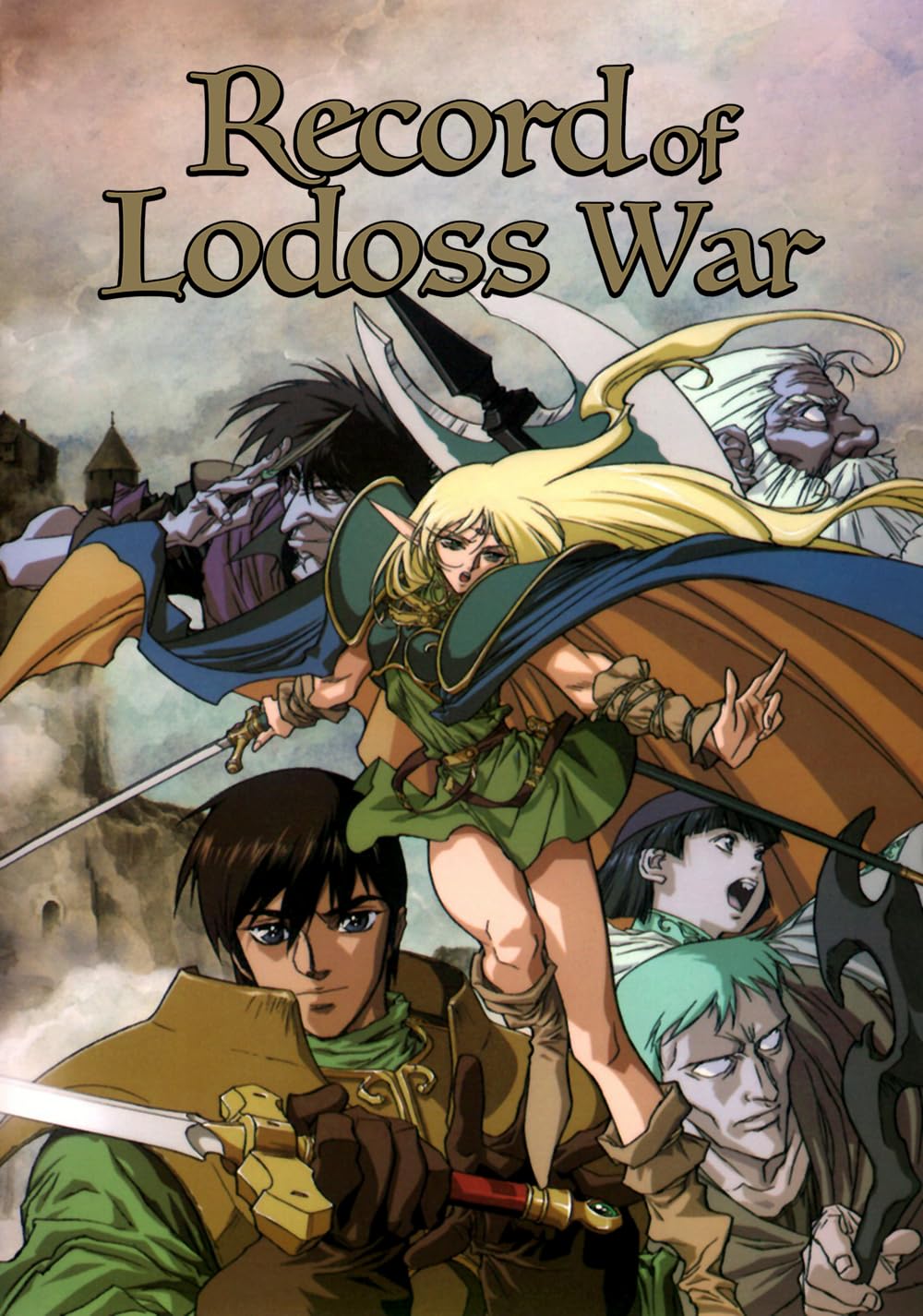
Set on the war-torn island of Lodoss, the story follows Parn, the disgraced knight’s son who sets out to restore his family’s honor, gathering around him the quintessential fantasy party: Etoh the priest, Slayn the mage, Ghim the dwarf, Deedlit the high elf, and Woodchuck the thief. On paper, this is pure campaign log: goblin attacks, dragon encounters, cursed relics, warring kingdoms, and an encroaching darkness embodied by Marmo and its champions, all framed as a grand war for the fate of the land. What makes Record of Lodoss War interesting is how openly it wears that structure; it rarely tries to hide its tabletop origins, and that transparency becomes both a charm and a structural limitation.

The narrative in the original OVA moves briskly to the point of feeling compressed, jumping between key battles, political shifts, and character revelations with very little connective tissue. Characters appear, declare their motivations, and are folded into the party or into the enemy ranks as though someone summarized last week’s game session before tonight’s adventure. That can be engaging—there’s a constant sense that something important is happening—but it also means emotional beats often rely on the audience’s familiarity with genre shorthand rather than carefully built arcs. The later TV series, Record of Lodoss War: Chronicles of the Heroic Knight, attempts to extend and reframe this story, moving the timeline forward and giving more room to Ashram and the continuing conflicts around the scepter of domination, but it still largely lives in that same campaign-style rhythm.

If you come to Record of Lodoss War for worldbuilding, it mostly delivers. Lodoss feels like a fully mapped fantasy setting, complete with divine factions, ancient wars, feuding human kingdoms, and a clear sense of geopolitical stakes. The franchise’s origins in novels and game material mean that offhanded references to past conflicts or legendary heroes feel like the tip of a much larger iceberg rather than improvisations thrown in on the spot. That sense of a lived-in world is one of the show’s enduring strengths, and it’s not hard to see why it earned “anime Lord of the Rings” comparisons for some viewers. At the same time, the story’s focus is surprisingly narrow in practice; we spend most of our time tracking a small cluster of heroes and villains, which can make the world feel oddly claustrophobic despite its epic framing.

Parn is a divisive protagonist, and your tolerance for him may shape how much you enjoy the series. He’s deliberately written as inexperienced and impulsive, a young man who rushes headlong into danger and has to be humbled, trained, and repeatedly corrected by those around him. That arc tracks the classic “wannabe hero becomes real knight” trajectory, and there is a certain sincerity to his straightforward commitment to honor that feels very of its era. On the other hand, his lack of nuance and his tendency to charge spellcasters as if basic tactics don’t exist can make him feel more like an archetype than a fully realized character, especially to modern viewers used to more subversive leads. The series wants you to root for Parn because he is earnest and good-hearted, and if you can accept that at face value, his journey has an old-school charm; if you can’t, he may come off as frustratingly bland.

The supporting cast generally fares better and often carries the emotional weight of the story. Ghim’s quest to free Leylia from the control of the enigmatic Grey Witch Karla has a tragic nobility that gives him more emotional complexity than his gruff dwarf stereotype suggests. Deedlit, meanwhile, is both a clear audience favorite and a bundle of contradictions: proud high elf, jealous love interest, powerful magic user, and emotional anchor for Parn’s growth. There are interesting dynamics scattered throughout—Karla’s manipulative neutrality, Ashram’s stern loyalty, and King Kashue’s charismatic leadership—but the limited runtime and brisk pacing mean that many of these threads feel more sketched than deeply explored. Still, the show does succeed in one key area: it communicates that no one is entirely safe, and deaths and sacrifices land with more impact because the narrative doesn’t treat the core party as invincible.

From a visual standpoint, Record of Lodoss War is a time capsule of late-80s and early-90s OVA aesthetics, complete with lush fantasy backgrounds, detailed armor designs, and occasional bursts of impressive sakuga. Dragons, enchanted forests, and battlefield panoramas often look fantastic, and when the animation budget aligns with central set-pieces, the result can still be striking. That said, the budget limitations are impossible to ignore: reused shots, still frames, and noticeably uneven animation quality crop up often enough to break immersion, especially during less critical scenes. The contrast between its best sequences and its weaker cuts is stark, and modern viewers accustomed to consistently polished fantasy action may find the inconsistency distracting.

Tonally, the series is earnest to the point of feeling almost old-fashioned now. Its focus on honor, duty, and chivalric ideals is straightforward and rarely interrogated, creating a cast of characters who largely operate within established moral frameworks rather than questioning them. That gives the story a kind of mythic simplicity—good kings, cursed knights, devoted priests—that can be comforting in the way classic fantasy often is. But it also means that viewers looking for moral ambiguity, systemic critique, or characters who challenge the underlying social order of their world may find Record of Lodoss War thematically limited. Some of its perspectives, especially regarding gender roles and heroic archetypes, feel antiquated when held up against contemporary fantasy anime that deliberately complicate or deconstruct those tropes.

One of the highlights of the anime series is its orchestral soundtrack composed by Mitsuo Hagita. Symphonic tracks underscore the grander battles with sweeping majesty, while softer themes highlight moments of connection between Parn and Deedlit or the quieter interludes between campaigns. The overall effect is to push the story closer to high fantasy melodrama, which suits the material perfectly; when the writing and visuals are in sync with Hagita’s score, you can see exactly why this anime lodged itself so firmly in fans’ memories. Voice performances, in both Japanese and English dubs, tend to lean into archetype—stoic knights, booming kings, mysterious witches—but that broadness pairs naturally with the show’s narrative style.

A fair assessment of Record of Lodoss War has to acknowledge its historical importance alongside its genuine flaws. It stands as a significant waypoint for fantasy anime, showing that a series could aim for a sweeping, quasi-novelistic epic with detailed lore and long-running political conflict. Many later works, from more grounded fantasy to meta-takes on RPG structures, benefit indirectly from the groundwork Lodoss and its peers laid in translating tabletop sensibilities to the screen. At the same time, its uneven pacing, underdeveloped character arcs, inconsistent animation, and sometimes simplistic moral framing keep it from feeling timeless in the way its influences clearly aspired to be.

Whether Record of Lodoss War is worth watching now depends heavily on what you’re looking for. If you have a soft spot for classic fantasy, tabletop RPG roots, or the particular look and feel of 90s OVAs, the series offers a rewarding, if imperfect, journey through a world that still feels distinct and carefully built. If you prioritize tight plotting, modern character complexity, or consistent visual polish, Lodoss may feel more like an important relic than a compelling contemporary experience. Taken on its own terms—as an earnest, sometimes clumsy, but heartfelt attempt to stage a sprawling heroic saga—it remains a notable, if not unassailable, part of anime history.

Anime You Should Be Watching: Wolf Children Ame and Yuki


Wolf Children Ame and Yuki

In late summer of 2010 the anime and film community lost one of its brightest stars with the passing of Satoshi Kon. With Miyazaki getting up there in age there was now a clamor to see who would take on the mantle that Kon had left behind with his passing. It didn’t take long for many fans of anime to finally look at Mamori Hosoda as the heir apparent. While Hosoda’s body of work as a feature-length animation film director hasn’t been as extensive as Kon’s or Miyazaki’s what he has done has garnered a near universal acclaim for their excellent storytelling, fully-conceived characters and lush, humanistic animation style.

In 2009’s most people were finally made aware of Hosoda’s skill as a director with the worldwide success of Summer Wars and this success made people look forward to what his next film would be. It took three years, but in 2012 Hosoda and anime fans were finally given his next film with the animated film Wolf Children Ame and Yuki (Ōkami Kodomo no Ame to Yuki). It would be a departure from the scifi themes which has been Hosoda’s go to themes for his first two films.

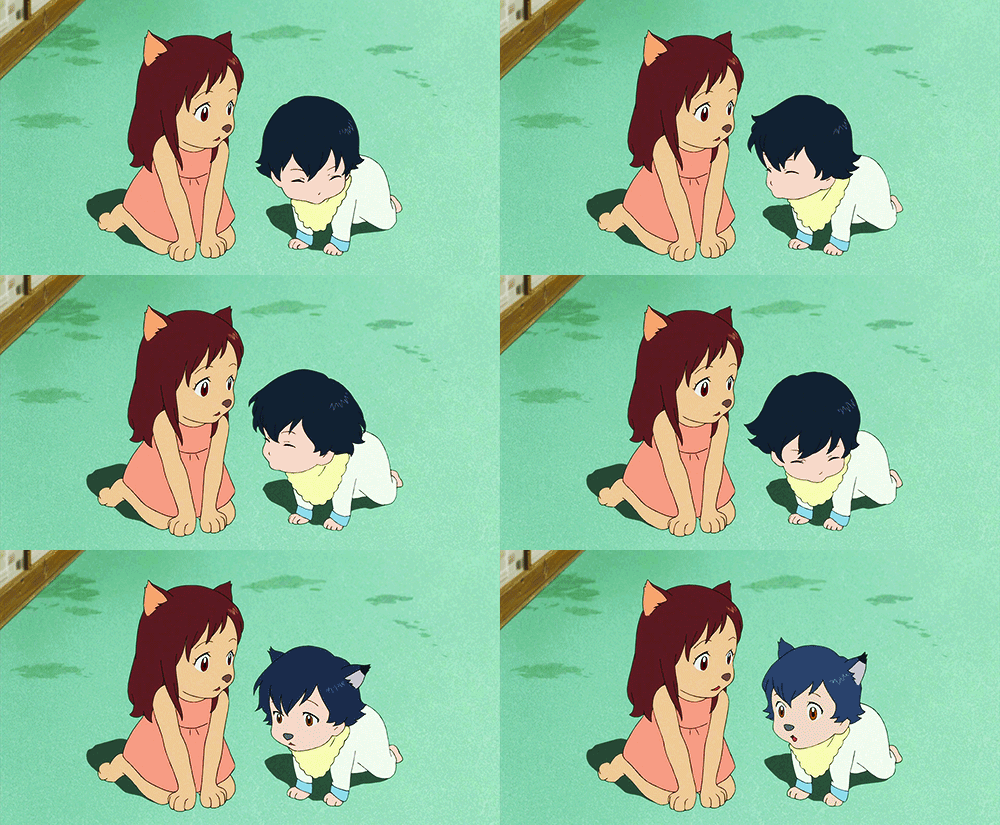
Wolf Children explores the themes of the unconventional family unit of a single mother of two children born of her love and relationship with an Okami (a sort of spirit-animal who can turn from human to wolf). It’s these two young children, Ame and Yuki (who have inherited their father’s gift for turning into wolves themselves), who become the focus of the film. The two children must navigate their childhood and teenage years knowing that they’re different from the rest of the kids in school and both must make the life-altering decisions to follow their own paths whether it be as a human or as a wolf.

tumblr_mk4qp8nT8M1qidzr6o2_500

To say that the film skews more towards the naturalistic and humanistic themes of the Hayao Miyazaki films would be an understatement. Hosoda doesn’t steal from the master, but instead takes what made the Miyazaki films such timeless and global classics to spin his own tale on the role of a mother’s love for her children even after suffering through a terrible loss and right up to the exploration of nature. So much of the wonder in this film comes from the two children exploring the wild nature around them. It’s a joy to see and at times will even bring tears to some.

It’s no wonder that Hosoda has become the latest name to be seen as Miyazaki’s next heir apparent. While it’s unfair to put so much on Hosoda to accomplish he seems to be more than willing to take on the task and have done so with surprising success.

Wolf Children Ame and Yuki might be a slight departure from Hosoda’s two previous works, but it just goes to show that he’s a director who is willing to branch out thematically and stylistically. This latest film might not be on the same level as his two previous, but it’s definitely one that should help build his reputation as one of the best director’s in the anime and film community.

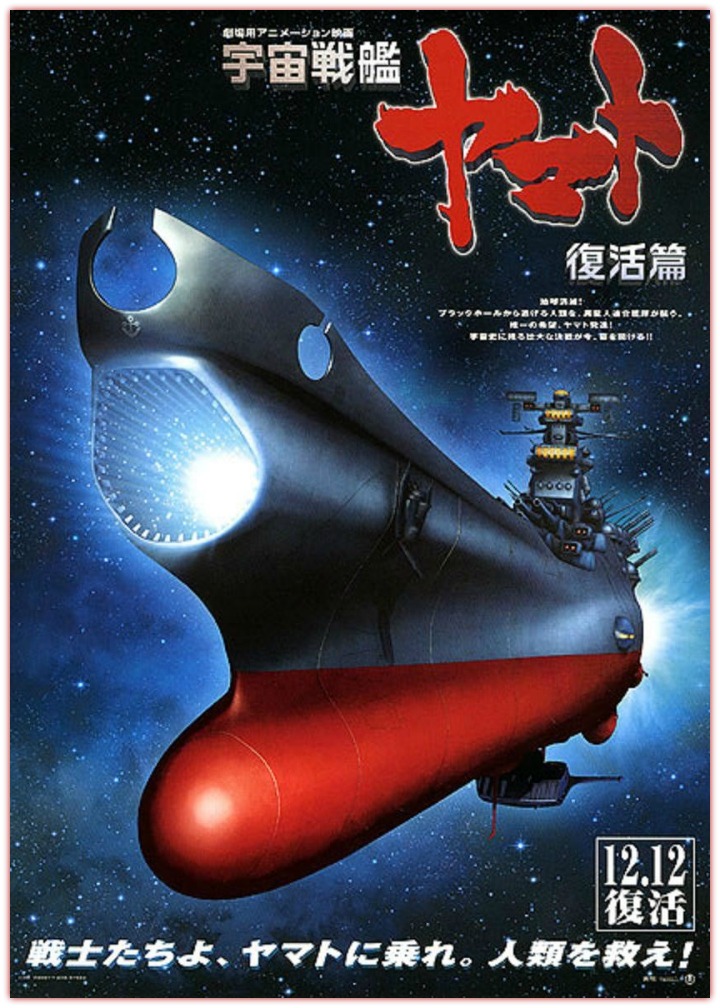
Space Battleship Yamato: Resurrection Licensed by FUNimation (w/ bonus)


This weekend was Otakon 2012. It’s sort of like the East Coast’s answer to Anime Expo. It’s the largest anime and Japanese pop culture convention on the East Coast and pretty much those who are not able to attend Anime Expo end up in Baltimore for this event. While pantsukudasai and I weren’t able to attend news still able to be had from the event by way of other means. Anime News Network has news from the FUNimation Entertainment industry panel during this year’s Otakon. This news is pretty much which new anime FUNimation has acquired the licensing rights to for the North American market.

One bit of news from this panel is that the company has acquired the North American licensing rights to the newest anime film bearing the title Space Battleship Yamato (Uchū Senkan Yamato). This Space Battleship Yamato Resurrection (Uchū Senkan Yamato: Fukkatsu Hen)and will take place 21 years after the events of the original series and 17 years after the anime film Final Yamato. This is very good news indeed with a new anime series already under way in Japan with the reboot Space Battleship Yamato 2199. It’s a good day to be a fan of the franchise.

It was the original series, retitled Starblazers in the US, that first hooked me into anime. I was barely 8 when I caught the series on syndication and to say that it blew my mind with it’s space opera action, drama and romance would be an understatement. For most American kids cartoons never involved such topics and themes as death, self-sacrifice, genocide and a host of other very heavy stuff. This series opened things up for me that cartoons need not be all safe and fun and games (though Tom and Jerry proved that ultra-violence wasn’t just in anime).

It’s going to be great to finally see a new series and film with the advancement in the animation process tackle this well-known franchise. It’ll be great to just see the Space Battleship Yamato ply the cosmos once again.

Here’s a 9-minute preview of the series that shows just how awesome the series is in addition to the film announced.

Source: Anime New Network

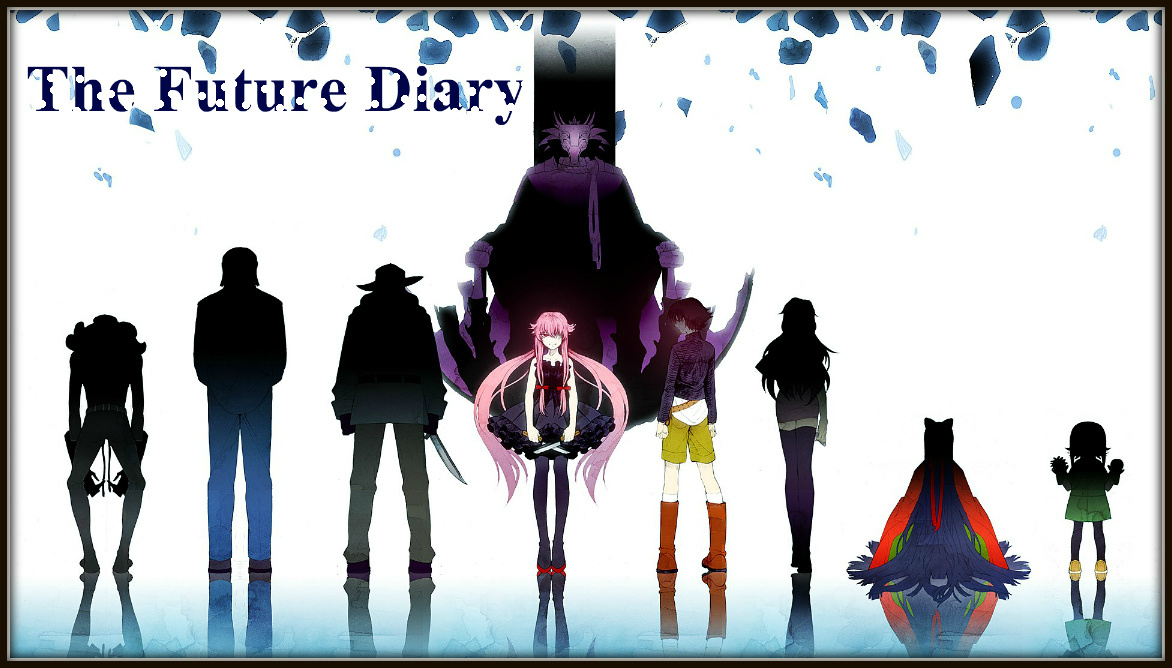
Funimation to license The Future Diary (Mirai Nikki) for US release


For anime fans there’s some very good news coming out of Anime Boston this weekend. Funimation has secured the home video rights for the anime series The Future Diary (Mirai Nikki). The series will get a US release through Funimation in addition to the further simulcast airings of any new episode of the 26-episode series which began airing this past October 2011.

The series has been a hit since it’s airing in Japan and it’s plot summary gives enough tantalizing details why such a series would appeal to anime fans…

“Yukiteru Amano (Yuki) is a loner who never really interact with people and prefers writing a diary on his cell phone with his only companion being an imaginary friend named Deus Ex Machina, the God of Time and Space. However, Yuki soon learns that Deus is not a figment of his imagination but real when Deus makes him a participant in a battle royale with eleven others. Within this “Diary Game”, the contestants are given special diaries that can predict the future with each diary having unique features that gives them both advantages and disadvantages.”

It’s not your typical magical girl or mecha series. It’s not slice-of-life drama or comedy. It’s not even of the fan-service variety. It’s a series that’s more rooted in some of the more mature and darker-themed anime that goes heavy on the psychological and the thriller aspect of the story. It is also a series with one of it’s main characters playing the role of yandere (def. a Japanese term for a person who is initially very loving and gentle to someone before their devotion becomes destructive in nature, often through violence.) almost to a perfect pitch.

So far, there’s no set release date for the home video (DVD/Blu-Ray) release of The Future Diary from Funimation.

Source: Anime News Network

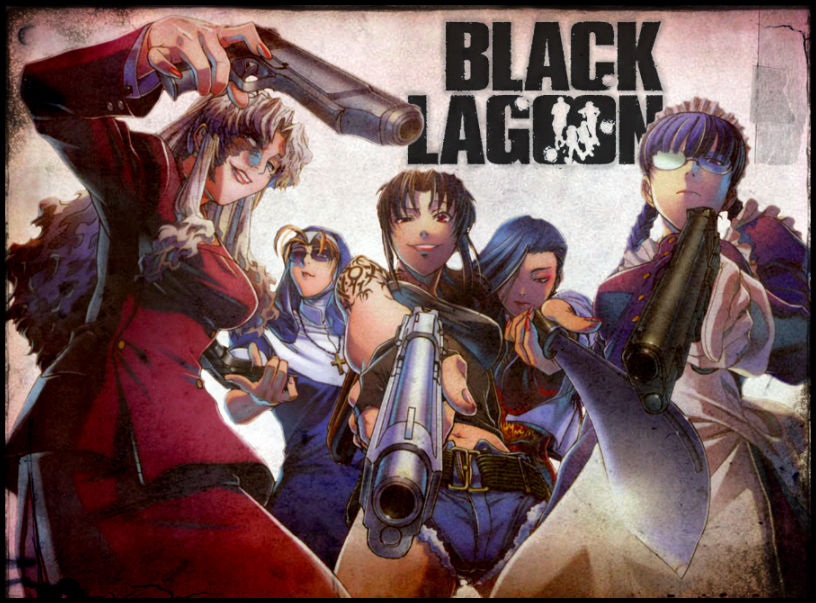
Anime You Should Be Watching: Black Lagoon (Burakku Ragūn)


As I continue my current binge on all things anime and manga there’s one anime series that I thought deserved to be profiled in the usual “Anime of the Day” segment. This series comes from the action genre and heavily promoted towards the seinen (Males 18-30) demographic. While girls and women love this show as much as their male counterpart it definitely appeals very much to boys and young men. The anime I speak of is Black Lagoon (Burakku Ragūn in its original Japanese title).

Black Lagoon is the brainchild of mangaka Horie Rei. The manga began in the Spring of 2002 and continues a strong showing to this day. Like most manga that gain a large following it was just time before an anime adaptation was made and in 2006 the first season was released by anime studio Madhouse with Katabuchi Sunao handling director duties. To say that the anime became as popular as the original manga source would be an understatement.

The book’s main leads in Revy and Rock became fan favorites. One cannot go into an anime conventions anywhere around the world without seeing at least a dozen young women in Revy cosplay. She’s a character that actually is the most kickass in the group of mercenaries she works with and they’re all men. That just showed how appealing she became not just to the boys and men who followed the manga and anime, but to girls and young women who usually do not see such a powerful and kickass female protagonist who puts her male counterparts to shame.

The animation by Madhouse is its usual excellent self which also one reason why this series has caught on with anime fans worldwide. Black Lagoon has been released in the US by now-defunct Geneon Entertainment. They released the first two seasons (the series is just now into it’s third) and with that companies folding it’s quite difficult to find those two season box sets. It’s the hope of legion if anime fans that FUNimation Entertainment (who took over some of the licenses that Geneon Entertainment used to have) will re-issue those two seasons and give fans a price respite.

Black Lagoon might have been targeted towards the boys and young men demographic, but it’s success and popularity across the board makes it one of the growing lists of titles who break through prescribed genre labelings and why it does continue to grow in popularity. Plus, I think it doesn’t hurt the show that it’s main character in Revy is one kickass example of why some of the strongest fictional female roles are in anime (despite being drawn to be sexy to draw the male audience). This past Spring’s Sucker Punch may not be anime, but it’s kickass female characters definitely owe some of their foundations on characters like Revy.

A sneak peek of Season Three: Black Lagoon: Roberta’s Blood Trail