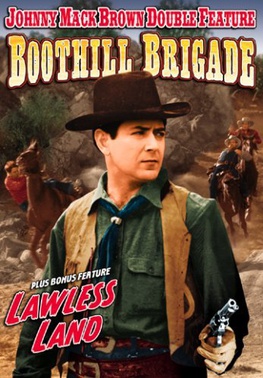
 Rancher Jeff Reynolds (Frank LaRue) used to be one of the good guys on the frontier but he’s recently changed. He fired all of his loyal ranch hands and instead hired a motely crew of outlaws. He’s buying up land and evicting the squatters who have been living there. About the only good thing he does is hire Lon Cardigan (Johnny Mack Brown) to be his new herd boss. Lon is engaged to Reynolds’s daughter, Bobbie (Claire Rochelle). With the help of Bobbie and comic relief cook Calico Haynes (Horace Murphy), Lon tries to figure out why Reynolds is now doing the bidding of the evil John Porter (Ed Cassidy).
The title is the most exciting thing about this movie, which is one of those old B-movies that puts the “creak” in creaky. There’s surprisingly little gunplay but there is a lot of horse riding. For a film that runs less than an hour, a surprising amount of it is just shots of people riding from one location to another. The horses’ hooves sound impressive on the soundtrack but it’s not exactly exciting. As always, Johnny Mack Brown is a convincing cowboy. It’s a good thing he looks like he knows what he’s doing when he’s riding a horse! The plot was standard B-western fluff. Johnny Mack Brown appeared in a ton of westerns and almost all of them seemed to feature the same range war. There are better Johnny Mack Brown movies out there. This one is for completists only.


 Through the Shattered Lens