October True Crime: Into Thin Air (dir by Roger Young)


Originally broadcast in 1985, Into Thin Air is a made-for-TV movie that is based on a true story.  It’s film that brings to life the horror of every family’s nightmare.  Brian Walker (Tate Donavon) is an intelligent, soft-spoken, and somewhat naive college student in Ottawa.  He’s been accepted into a summer writing program in Colorado.  As he gets in the van that he will be driving to Colorado, he promises his mother, Joan (Ellen Burstyn), that he’ll call her when he reaches Nebraska and again when he reaches Colorado.

Brian drives away and that’s the last time that Joan ever sees her son.  Brian calls from Nebraska and talks to his brother, Stephen (Sam Robards).  Joan arrives home just as Stephen is saying goodbye.  Brian never calls from Colorado.  He has vanished, seemingly into thin air.

Joan, Stephen, and Joan’s ex-husband, Larry (played the great character actor Nicholas Pryor) travel to America to search for him.  At one point, Stephen thinks that he’s spotted Brian’s van on the road and chase after it, just to discover that it’s a different van.  Joan talks to cops in Nebraska and Colorado and discovers that different jurisdictions don’t work together or share information.  As the days pass, Joan keeps hoping that Brian is somehow still alive….

I was about ten minutes into this film when I started sobbing.  I pretty much cried through the entire film.  Some of that was because I knew that they were never going to see Brian again.  Some of that was because of the powerful, heartfelt performances of Ellen Burstyn, Nicholas Pryor, and Sam Robards.  Most of it was because this film did such a good job of capturing the feeling of hopelessness and the dread that comes with not knowing what has happened to someone who you love.  I found myself crying for Brian’s lost potential.  He was a writer and he was engaging in a time-honored writing tradition.  He was taking a road trip and he was discovering the world.  He deserved better than whatever happened to him.  He deserved see his novel sitting in a bookstore.  Instead, he ran into the wrong people.

It’s the little details that really got to me.  Stephen flies into a rage when he sees his younger brother wearing one of Brain’s sweaters.  Joan momentarily gets her hopes up when she discovers that Brian reported some lost traveler’s checks, just to have that hope shot down when she’s told that the bank can’t reveal where Brian called them from unless Brian himself gives permission.  When the van eventually turn up in Maine, it’s been totally trashed by whoever took it from Brian.

Eventually, Joan hires a private detective and Robert Prosky is well-cast as Jim Conway, a seemingly cynical ex-cop who dedicates himself to trying to provide closure for the Walkers.  The scene where he finally discovers what happened to Brian is one of the strongest in the film and one of the most upsetting.  So many people could have saved Brian if they only had the courage to speak up.

Into Thin Air is a powerful film.  No one should ever be forgotten.
Lisa Reviews An Oscar Winner: Unforgiven (dir by Clint Eastwood)


The 1992 Best Picture winner, Unforgiven, begins as a story of frontier justice.

In Kansas, a young and cocky cowboy who calls himself the Schofield Kid (Jaimz Woolvett) rides up to an isolated hog farm.  He’s looking for Will Munny (Clint Eastwood), a notorious outlaw with a reputation for being a ruthless killer.  Instead, he just finds a broken down, elderly widower who is trying to raise two young children and who can barely even manage to climb on a horse.  Will Munny, the murderer, has become Will Munny the farmer.  He gave up his former life when he got married.

The Schofield Kid claims to be an experienced gunfighter who has killed a countless number of men.  He explains that a group of sex workers in Wyoming have put a $1,000 bounty on two men, Quick Mike (David Mucci) and his friend, Davey Bunting (Rob Campbell).  Quick Mike cut up one of the women when she laughed at how unimpressively endowed he was.  While Davey didn’t take part in the crime, he was present when it happened and he didn’t do anything to stop it.  The local sheriff, a man named Little Bill Daggett (Gene Hackman), had Davey give the woman’s employer several horses as compensation.  The Kid wants Munny to help him collect the bounty.

At first, Munny refuses to help the Kid.  But, when he realizes that he’s on the verge of losing his farm, Munny changes his mind.  He and his former partner, Ned Logan (Morgan Freeman), join with the Kid and the three of them head to Wyoming.  Along the way, they discover that the Kid is severely nearsighted and can hardly handle a pistol.

Meanwhile, in the town of Big Whiskey, Wyoming, Little Bill ruthlessly enforces the peace.  He’s a charismatic man who is building a house and bringing what many would consider to be civilization to the Old West. When we first meet Little Bill, he seems like a likable guy.  The town trusts him.  His deputies worship him.  He has a quick smile but he’s willing to stand his ground.  But it soon becomes apparent that, underneath that smile and friendly manner, Bill is a tyrant and a petty authoritarian who treats the town as his own personal kingdom.    Little Bill has a strict rule.  No one outside of law enforcement is allowed to carry a gun in his town.  When another bounty hunter, English Bob (Richard Harris), comes to town to kill the two cowboys, Little Bill humiliates him and sends him on his way but not before recruiting Bob’s traveling companion, writer W.W. Beauchamp (Saul Rubinek), to write Bill’s life story.  Bill’s not that much different from the outlaws that he claims to disdain.  Like them, Bill understands that value of publicity.

Unforgiven starts as a traditional western but it soon becomes something else all together.  As the Schofield Kid discovers, there’s a big difference between talking about killing a man and actually doing it.  Piece-by-piece, Unforgiven deconstructs the legends of the old west.  Gunfights are messy.  Gunfighters are not noble.  Davey Bunting is the only man in town to feel guilty about what happened but, because he’s included in the bounty, he still dies an agonizing death.  Quick Mike is killed not in the town square during a duel but while sitting in an outhouse.  Ned and Munny struggle with the prospect of going back to their old ways, with Munny having to return to drinking before he can once again become the fearsome killer that he was in the past.  And Little Bill, the man who says that he’s all about taming the west and bringing civilization to a lawless land, turns out to be just as ruthless a killer as the rest.  A lot of people are dead by the end of Unforgiven.  Some of them were truly bad.  Some of them were good.  Most of them were in the wrong place at the wrong time.  Everyone’s got it coming, to paraphrase Will Munny.

With its violent storyline, deliberate pacing, and its shots of the desolate yet beautiful western landscape, Clint Eastwood’s film feels like a natural continuation of the Spaghetti westerns that he made with Sergio Leone.  (Unforgiven is dedicated to both Leone and Don Seigel.)  Unforgiven was the first of Eastwood’s directorial efforts to be nominated for Best Picture and also the first to win.  It’s brutal meditation on violence and the truth behind the legends of the American frontier.  Eastwood gives one of his best and ultimately most frightening performances as Will Munny.  Gene Hackman won his second Oscar for playing Little Bill Daggett.

Unforgiven holds up well today.  Hackman’s Little Bill Dagget feels like the 19th century version of many of today’s politicians and unelected bureaucrats, authoritarians who claims that their only concern is the greater good but whose main interest is really just increasing their own power.  Unforgiven remains one Clint Eastwood’s best films and one of the best westerns ever made.  Leone would have been proud.

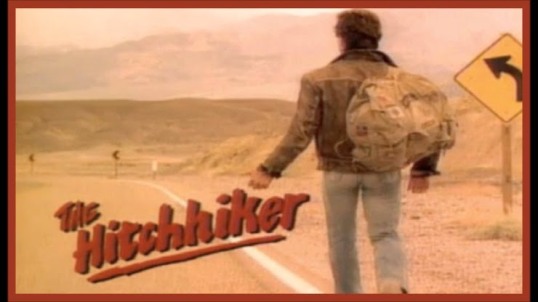
Horror on TV: The Hitchhiker 4.7 “The Legendary Billy B” (dir by Chris Thomson)


At the tail end of the 60s, the so-called king of acid rock, guitarist Billy Baltimore (Brad Dourif) was assassinated on stage.  Or was he?  When tabloid journalist Jane L. (Kirstie Alley) is told by her morally conflicted photographer, Hodie (Andy Summers of the Police), that he believes Billy Baltimore faked his own death and is actually living in a mansion and plotting his comeback, Jane L. decides to break into the mansion and find out for herself.

That turns out to be a big mistake.  But, as badly as things go for Jane L. and Hodie, this is an entertaining episode that features Kirstie Alley at her most neurotic and Brad Dourif at his most off-beat.  The ending might not make much sense but the journey is still worth it.  For the record, the Hitchhiker (Page Fletcher) really does not like tabloid reporters.

The episode originally aired on March 31st, 1987.