Deputy Marshal Ed Garry (Jon Hall) is pursuing two bank robbers in Wyoming when he comes across a wounded man. Harley Masters (Wheaton Chambers) has been shot in the gut but his main concern is holding onto his hat. Ed takes Harley into town. They go into the local saloon, where Harley reveals a map hidden in his hat. He slips the map to Ed before an unseen gunman shoots him a second time. This time, Harley does not survive.
With the current sheriff “laid up,” Ed decides to stay in town and not only catch the bank robbers but also solve Harley’s murder. Ed soon finds himself in the middle of a conflict between two rival women (Frances Langford and Julie Bishop) who own ranches and stand to make a lot of money when the railroad comes through.
Deputy Marshal is one of the B-westerns that was produced by Robert Lippert and directed by William Berke in the 40s and 50s. This one is a step above the usual Lippert production because it combines a murder mystery with the standard western action and there are enough suspects to keep the story interesting. Jon Hall was best-known for appearing in exotic adventure films, often playing islanders. His career was in decline when he starred in Deputy Marshal but he makes for a surprisingly believable western hero. It helps that Hall was older than the typical B-western hero. His weathered looks make him convincing as an experienced lawman who understood the ways of the west.
Frances Langford, who plays the nicer of the two ranchers, was married to Jon Hall when she appeared in this film. She gets to sing two songs because this is a Lippert production and Robert Lippert believed that every western should open with a horse chase and should feature at least one song.
While it obviously never won any awards for originality, Deputy Marshal is a better-than-average B-western with an interesting mystery story and a convincing hero.
The 34th film in Mill Creek’s Fabulous Forties box set is the 1943 musical, This is The Army.
This Is The Army is based on a Broadway musical that was specifically conceived and written by Irving Berlin as a way to boost wartime morale. The show, which was a collection of patriotic songs and comedic skits, was performed by members of the U.S. Army. The film version starts with dancer Jerry Jones (George Murphy) being drafted at the start of World War I and putting together an all-army revue called Yip Yip Yaphank. (Interestingly enough, this was also the name of a real-life show that Irving Berlin put together during World War I.) The show is a big hit and, when the soldiers in the cast receive their orders to head to France, they literally march off the stage and out the theater. It’s actually a pretty rousing scene but it’s almost immediately followed by a very sad one, in which we learn that only three members of the cast survived the war. Jerry Jones is shot in the leg and when he returns home, the former dancer now walks with a cane.
Twenty-five years later, another world war has broken out. Jerry’s son, Johnny (Ronald Reagan), has joined the army. Johnny is ordered to put together another revue, in the style of Yip Yip Yaphank. At first, Johnny is reluctant but orders are orders. Soon, Johnny and the cast of This Is The Army are touring the U.S. and even performing in front of President Roosevelt (played by Jack Young, though, from a historical perspective, wouldn’t it be neat if President Roosevelt had appeared as himself in a film with Ronald Reagan?). Along the way, Eileen (Joan Leslie) tries to convince Johnny to marry her even though Johnny wants to wait until the war is over.
It’s really not much of a plot but then again, the film is about showcasing the musical performances. The soldiers sing. The soldiers dance. The soldiers tell jokes and imitate people who were famous in 1943. There are several scenes that attempt to wring laughs from soldiers dressed up like women. What’s interesting is that, at a time when the army was still segregated, the performances in This Is The Army feature both white and black soldiers. Irving Berlin apparently demanded that black soldiers be allowed to appear in both the stage show and the film and, as a result, the unit that performed This Is The Army was, for a time, the only integrated unit in the U.S. Army.
Of course, that makes it even odder that there’s an extended sequence in which white soldiers perform while wearing blackface and standing on a set that’s been designed to resemble a pre-Civil War plantation. It’s a scene that pops out of nowhere and then it keeps going and going and going and I could only stare at the screen in shocked horror as it played out. It’s an odd contradiction that the same Irving Berlin who demanded that black soldiers be honored on stage and screen was also apparently the same Irving Berlin was put a minstrel show sketch into the middle of This Is The Army.
Interestingly enough, George Murphy later retired from acting and was elected to the U.S. Senate in 1964. Murphy’s success inspired his co-star, Ronald Reagan, to run for governor. If Murphy had never been a senator, Reagan would probably never have been a president. Both Reagan and Murphy give likable performances in This Is The Army and it’s easy to see how that likability, while it may not have often translated into great acting, did eventually lead to political success.
This Is The Army is a time capsule film, one that is mostly interesting as a view into the psyche of 1940s America. The humor is often corny and the storyline is predictable but there’s also a very sad subtext to the film. Since both the film and the stage show were performed by actual enlisted men, you watch with the knowledge that some of the men singing and joking on stage won’t return from the war. Often times, during the performances, we see random people in the audience crying as they realize the same thing. Even in an otherwise light-hearted film, the sobering realities of life during wartime are right beneath the surface.
So, today, I got off work so that I could vote in Texas’s Super Tuesday primary. After I cast my vote (and don’t ask me who I voted for because it’s a secret ballot for a reason!), I came home and I turned on the TV and I discovered that, as a result of spending February recording countless films off of Lifetime and TCM, I only had 9 hours of space left on my DVR. As a result, the DVR was threatening to erase my recordings of Bend It Like Beckham, Jesus Christ Superstar, American Anthem, an episode of The Bachelor from 2011, and the entire series of Saved By The Bell: The College Years.
“Acgk!” I exclaimed in terror.
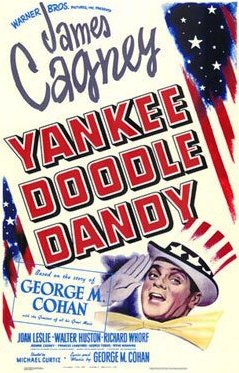
So, I immediately sat down and started the process of cleaning out the DVR. I started things out by watching Yankee Doodle Dandy, a film from 1942.
Yankee Doodle Dandy is a biopic of a songwriter, signer, and dancer named George M. Cohan. I have to admit, that when the film started, I had absolutely no idea who George M. Cohan was. Imagine my surprise as I watched the film and I discovered that Cohan had written all of the old-fashioned patriotic songs that are played by the Richardson Symphony Orchestra whenever I go to see the 4th of July fireworks show at Breckenridge Park. He wrote You’re A Grand Old Flag, The Yankee Doodle Boy, and Over There. Though I may not have heard of him, Cohan was an American institution during the first half of the 20th Century. Even if I hadn’t read that on Wikipedia, I would have been able to guess from watching Yankee Doodle Dandy, which, at times, seems to be making a case for sainthood.
And that’s not meant to be a complaint! 74 years after it was originally released, Yankee Doodle Dandy is still a terrifically entertaining film. It opens with George (played by James Cagney) accepting a Congressional Gold Medal from President Franklin D. Roosevelt. (We only see Roosevelt from behind and needless to say, the President did not play himself. Instead, Captain Jack Young sat in a chair while FDR’s voice was provided by impressionist Art Gilmore.) Cohan proceeds to tell Roosevelt his life story, starting with his birth on the 4th of July. Cohan tells how he was born into a showbiz family and a major theme of the film is how Cohan took care of his family even after becoming famous.
The other major theme is patriotism. As portrayed in this biopic, Cohan is perhaps the most patriotic man who ever lived. That may sound corny but Cagney pulls it off. When we see him sitting at the piano and coming up with the lyrics for another song extolling the greatness of America, we never doubt his sincerity. In fact, he’s so sincere that he makes us believe as well. Watching Yankee Doodle Dandy, I found myself regretting that I have to live in such an overwhelmingly cynical time. If George M. Cohan was alive today, he’d punch out anyone who called this country “Murica.”
Yankee Doodle Dandy is an amazingly positive film. There are a few scenes where Cohan has to deal with a few Broadway types who are jealous of his talent and his confidence but, otherwise, it’s pretty much one triumph after another for Cohan. Normally, of course, there’s nothing more annoying than listening to someone talk about how great his life is but fortunately, Cohan is played by James Cagney and Cagney gives one of the best performance of all time in the role.
Cagney, of course, is best remembered for playing gangsters but he got his start as a dancer. In Yankee Doodle Dandy, Cagney is so energetic and so happy and such a complete and totally showman that you can’t help but get caught up in his story. When he says that, as a result of his success, things have never been better, you don’t resent him for it. Instead, you’re happy for him because he’s amazingly talented and deserve the best!
Seriously, watch him below:
James Cagney won the Oscar for Best Actor for his performance here. Yankee Doodle Dandy was also nominated for best picture but lost to Mrs. Miniver.
I’m really glad that I watched Yankee Doodle Dandy today. In this time of overwhelming negativity, it was just what I needed!
It’s Oscar month and you know what that means! It’s time for TCM to do their annual 31 Days of Oscars! For the next 31 days, TCM is going to be showing movies that were nominated for and occasionally won Oscars. This is a great month for me because it has long been my goal to see and review every single film that has ever been nominated for best picture. Considering that close to 500 movies have been nominated, that’s no small task. However, over the past four years, I have definitely made some progress, as you can see by clicking on this link and looking at a list of every single best picture nominee. Thank you, TCM, for helping me get closer to my goal!
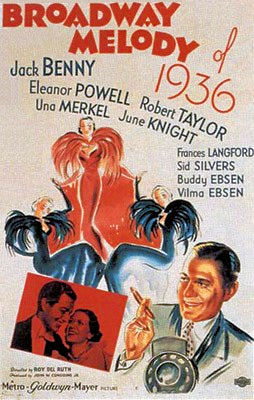
For instance, if not for TCM, how would I ever had the chance to watch Broadway Melody of 1936? Broadway Melody of 1936 was one of the twelve films to be nominated for best picture of 1935 but it’s now largely forgotten. When film loves discuss the best musicals of the 30s, it’s rare that you ever hear mention of Broadway Melody of 1936.
Technically, it can be argued that Broadway Melody of 1936 was the first sequel to ever be nominated for best picture, despite the fact that it has little in common with Broadway Melody, beyond taking place on Broadway and being nominated for best picture. (Broadway Melody won the award. Broadway Melody of 1936 lost to Mutiny on the Bounty.) Silence of the Lambs, The Godfather, Part II, Mad Max: Fury Road, Toy Story 3, and The Bells of St. Mary’s are all sequels that were nominated for best picture but Broadway Melody of 1936 did it first.
As for what Broadway Melody of 1936 is about … well, it’s really not about anything. Oh, don’t get me wrong. The film has a plot. Irene Foster (Eleanor Powell) wants her former high school boyfriend, Broadway director Robert Gordon (Robert Taylor), to cast her in his new show but Gordon refuses because he doesn’t want the innocent Irene to be exposed to the sordid world of show business. Fortunately, Irene has some allies who are willing to help her get that role. Ted Burke (Buddy Ebsen) is an appealingly goofy dancer who, at one point, wears a Mickey Mouse sweatshirt. Bert Keeler (Jack Benny) is a columnist who rattles off his “New Yawk cynical” dialogue in the style of most 1930s news reporters.
Broadway Melody of 1936 has a plot but it’s not really that important. The story is just an excuse for the songs and the dance numbers. And while none of the numbers are spectacular (especially when compared to other 30s musicals, like 42nd Street), they are all definitely likable.
Seen today, Broadway Melody of 1936 seems like an odd best picture nominee. It’s not bad but there’s nothing particularly great about it. To truly appreciate the film, it’s probably necessary to try to imagine what it was like to watch the film in 1935. At a time when the country was still in the throes of the Great Depression, Broadway Melody of 1936 provided audiences with an escape. Audiences could watch the film and imagine that they, just like Eleanor Powell, could leave behind the dullness of reality and find stardom in the glamorous and glitzy world of Broadway.
 Deputy Marshal Ed Garry (Jon Hall) is pursuing two bank robbers in Wyoming when he comes across a wounded man. Harley Masters (Wheaton Chambers) has been shot in the gut but his main concern is holding onto his hat. Ed takes Harley into town. They go into the local saloon, where Harley reveals a map hidden in his hat. He slips the map to Ed before an unseen gunman shoots him a second time. This time, Harley does not survive.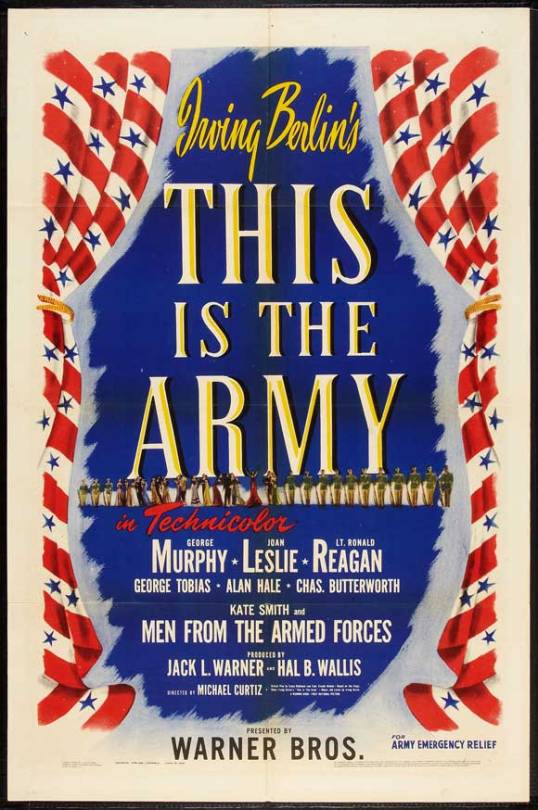
 Through the Shattered Lens