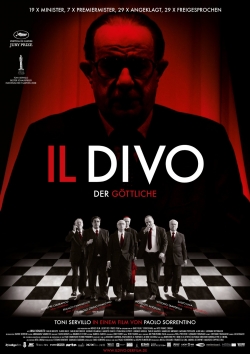
The International Lens: Il Divo (dir by Paolo Sorrentino)


Earlier tonight, as I watched the 2008 Italian film, Il Divo, it occurred to me that political corruption really is an international language.

The film is heavily stylized biopic of Giulio Andreotti.  Andreotti (who died five years after the release of this film) is nearly unknown figure in the United States but, in Italy, he spent several decades as a member of the country’s political elite.  He was a controversial figure, a man who served several terms as prime minister and was later appointed senator for life but who was also accused of being politically corrupt and affiliated with some of the worst elements of the Mafia.  People who threatened to investigate Andreotti or who could have contributed to his downfall had a habit of ending up dead.  No sooner has Il Divo begun then we’re treated to a lengthy montage of Andreotti’s associates getting killed in various ways.  Some are gunned down.  One is found hanging underneath a bridge.  One is in an exploding car.  The film also opens with a title card that informs us that, over the course of Andreotti’s long career, he was rumored to be one of the leading members of the P2, a masonic lodge that counted among its members some of the most powerful men in Italy.  P2 is one of those organizations that conspiracy theorists love to obsess upon.

Directed by Paolo Sorrentino, Il Divo is an Italian film that deals with the life of a prominent Italian political figure and, needless to say, it was made for an Italian audience.  For an American viewer like me, it was often impossible not to get confused as I tried to keep up with who was working with who and who had just been killed.  In short, this film was made to be viewed by people who already know who Guilo Andreotti was and who are familiar with the details of his long career.  It was not made for someone like me who is still struggling to wrap her mind around the fact that Italy has both a prime minister and a president.

But, in the end, it really didn’t matter if I occasionally struggled to follow every twist and turn of Andreotti’s career.  Il Divo may technically by a biopic of Giulio Andreotti but, on a larger scale, it’s about how power corrupts and the banality of evil.  Those are universal themes and you certainly do not have to be any particular nationality to be familiar with the fact that people who dedicate their lives to accumulating political power often turn out to be, at the very least, willing to cut some ethical corners.  I may not have always understood every detail of Il Divo‘s story but I did understand exactly what the film was ultimately about.

As played by Toni Servillo, Andreotti does not come across as being  particularly charismatic politician.  With his hunched back and his bat-like ears, Andreotti almost seems like a caricature of a corrupt leader.  In the film, one immediately sees that Andreotti hasn’t held onto his power because he’s particularly loved by the people.  Instead, he’s held onto power by being smarter than those who would try to defeat him.  No matter how determined his enemies may be, Andreotti is always just a little bit more ruthless.  Andreotti succeeds because he’s willing to do what he has to do to succeed and he’s willing to ally himself with people who have a stake in his continued success.  While the film never comes out and says that Andreotti was personally responsible for ordering the deaths of any of his enemies, it does suggest that he purposefully surrounded himself with men who would do anything to keep Andreotti in power, if just to protect their own fiefdoms of corruption.

There’s an early scene in Il Divo where Andreotti’s allies all arrives for a meeting with the prime minister.  Most of them are politicians.  One of them is a cardinal.  Another is simply identified as being a “businessman.”  They pull up in their expensive cars and then we watch as they walk across the screen in slow motion, arrogantly confident in the fact that they’re above any and all legal or ethical considerations.  They’re all wealthy men and they all seem to understand the importance of keeping Andreotti happy.  Carlo Buccirosso plays Paolo Cirino Pomicino, who was one of Andreotti’s chief allies.  Buccirosso plays Pomincino as being glibly hyperactive, a cheerfully corrupt ball of energy who seems to be having all of the fun that Andreotti denies himself.  Because Andreotti denies himself an interest in anything other than wielding and holding power, he is invulnerable to attack and prosecution but sometimes it’s hard not to wonder if he would have rather have been Pomincino, dancing at parties and sliding across tiled floors.

Indeed, Andreotti begins and ends Il Divo as an enigma.  How deeply involved is he in the murders occurring around him?  Is he ordering them or is he just turning a blind eye?  What makes Andeotti tick?  By the end of the film, his main motivation seems to be bitterness.  Death may be inevitable but he’s not going to go until everyone else goes first.  That is a motivation that many politicians across the world probably share.  Corruption is universal.
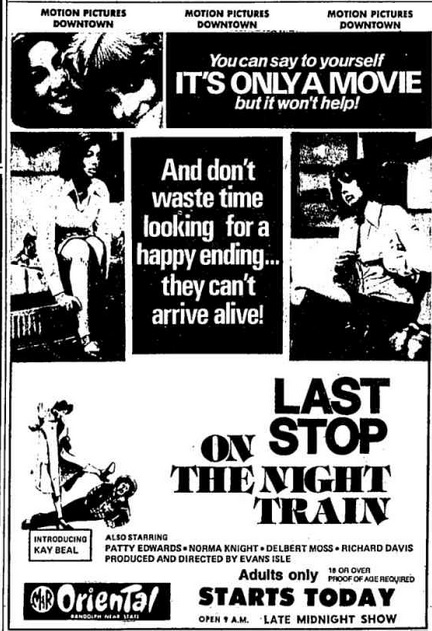
International Horror Film Review: Last Stop on the Night Train (dir by Aldo Lado)


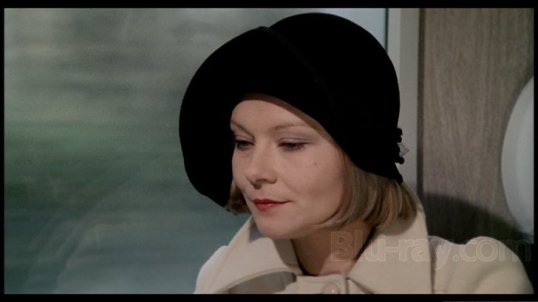
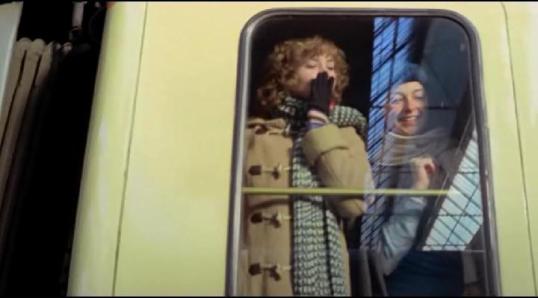
This Italian film from 1975 opens with two German teenagers — Lisa Stradl (Laura D’Angelo) and Margaret Hoffenbach (Irene Miracle) — happily looking forward to the future in general and spending Christmas with Lisa’s parents in specific.  (Of course, the Stradls live in Verona so Lisa and Margaret are going to have to take a train to visit them.)  Their happiness is reflected by the song that plays over the opening credits.  A Flower’s All You Need is perhaps the most obnoxiously happy song to ever show up in an Italian horror film.  Imagine my shock when I discovered that it was apparently co-written by Ennio Morricone.

Like many Italian exploitation films, Last Stop on the Night Train has been released under many different titles.  Here’s just a few: Night Train Murders, Xmas Massacre, Don’t Ride on Late Night Trains, Torture Train, New House on the Left and Second House on the Left.  As those last two titles indicate, this film was directly inspired by the financial success of Wes Craven’s Last House on the Left (which, for what it’s worth, was sold as being a remake of Ingmar Bergman’s The Virgin Spring).  According to an interview with director Aldo Lado, which was included with the film’s Code Red DVD release, the film’s producers approached him and told him that they wanted him to remake Last House On The Left.  Since Lado hadn’t seen Last House on the Left, the producers hastily filmed him on what happened in Craven’s film.  Based on what the producers told him, Lado proceeded to write the script for what would become Last Stop On The Night Train.

As a result, Last Stop on the Night Train follows the general plot of Last House on the Left but with some key differences.  Lado was a protegee of director Bernardo Bertolucci so, not surprisingly, he added a Marxist political subtext to the story, one that makes Last Stop On The Night Train a bit more interesting than the usual exploitation rip-off.  (Wes Craven, it should be said, always said that Last House On The Left was meant to be political, too.  Whether that’s true or not is open to debate.)  Like Craven’s film, Last Stop On The Night Train is about two innocent travelers who are abused and murdered by a group of thugs (played, in this case, by Flavio Bucci and Gianfranco de Grassi).  By an amazing coincidence, the murderers then find themselves staying at the home of one of the girl’s parents (Enrico Maria Salerno and Marina Berti).  When the parents discover the identity of their guests, they get revenge and prove themselves to be just as capable of violence and sadism as the murderers.

The main difference between Craven and Lado’s take on the story is that Lado adds a mysterious character who is identified as being only The Lady on the Train (played by Macha Meril, who also played the unlucky psychic in Argento’s Deep Red).  The Lady on the Train is apparently very privileged.  When we first see her, she is coolly and calmly talking to a group of other wealthy passengers.  The only hint that she’s anything other than an upper class passenger on a train comes when she reveals that she’s carrying a collection of BDSM-themed postcards with her.  Before meeting the Lady on the Train, the two criminals played by Bucci and de Grassi were portrayed as just being obnoxious and larcenous but not necessarily homicidal.  It’s the Lady on the Train who goads the two men into attacking and ultimately murdering Lisa and Margaret, largely for her own amusement.  (Disturbingly, the train’s other upper class passengers are portrayed as being aware of what’s happening but either not caring or being amused by the whole thing.  One passenger — who is later revealed to be an acquaintance of the Stradls — briefly joins in.)  Even at the end of the film, while the parents are savagely attacking the two men, the Lady on the Train watches with the confident certainty that her wealth and position will protect her from any form of retribution.

It’s a disturbing film and definitely not one for everyone.  Even if you appreciate the technical skill with which it was made, this is a film that you won’t necessarily want to rewatch.  (I rewatched it only so I could write this review.  For me, it certainly didn’t help that one of the victims was named Lisa.)  If Wes Craven’s film was ultimately about gore and the idea that violence only leads to more violence, Lado is less concerned with both of those and instead focuses on the idea that, when the privileged and the marginalized both commit the same crime, only the marginalized are punished.  Lado’s film is also far better acted (and, if we’re going to be honest, directed) than Craven’s film, which makes Last Stop On The Night Train the rare rip-off that’s better than its source material.

The Films of Dario Argento: Suspiria


I’m using this October’s horrorthon as an excuse to take rewatch and review all of Dario Argento’s films!  Today, we take a look at one of Argento’s best known and most popular films, 1977’s Suspiria!

suspiriaitaly

I’m going to start things out by admitting that this is an intimidating review to write.  I once had a discussion with fellow TSL contributor Leonard Wilson about why it’s always so much easier to write about films that we hate than it is to write about films that we love.  That’s certainly something that I’m thinking about right now, as I try to think of where to begin with Suspiria.

It’s not just that I like Suspiria.  Anyone who has ever visited this site before knows how much I appreciate Italian horror in general and Argento in specific.

No, it’s that I absolutely love this film.  I was sixteen the first time that I saw it and I’ve loved it ever since.  To me, Suspiria is not just one of the best horror films ever made.  It is truly one of the best films period.  And I know that I’m not alone in feeling like that.  Suspiria is a classic in every sense of the word.

Compared to almost every other film that Argento has made, the plot of Suspiria is remarkably straight forward.  Suzy Banyon, an American ballet student, enrolls at the prestigious Tanz Dance Academy in Frieburg, Germany.  From the minute she arrives, she gets the feeling that there is something strange happening behind the garish walls of the school and she’s right.  While the film may be best known for Argento’s directorial flourishes and Goblin’s classic score, the story itself unfolds with the simplicity of a fairy tale.

The film even opens with a narrator who informs us, “Suzy Banyon decided to perfect her ballet studies in the most famous school of dance in Europe. She chose the celebrated academy of Freiburg. One day, at nine in the morning, she left Kennedy airport, New York, and arrived in Germany at 10:40 p.m. local time.”  It’s the film’s equivalent of starting things off with, “Once upon a time…”  Having let us know that we’re about to watch a fairy tale and therefore having served his purpose, the narrator isn’t heard for the rest of the film.

Instead, we watch as Suzy first arrives in Germany:

As played by Jessica Harper, Suzy Banyon is yet another neurotic but brave Argento protagonist who has found herself in a strange land.  One of the things that I love about Suspiria is that Suzy is such an ordinary and relatable character.  She’s not “the chosen one.”  She’s not a witch or an aspiring witch or the daughter of a witch or the reincarnation of a witch.  She’s not desperately looking for a husband or dealing with a family tragedy or any of that other BS that we have to deal with in today’s cinema..  She doesn’t have any dark secrets or untapped magical powers.  She’s not seeking vengeance.  She has no trendy agenda.  She’s not the protagonist of the latest YA novel.  Instead, she’s a dancer.  She is someone who is attempting to pursue something that she is good at and that she loves.  In short, she is the viewer.  Suzy Banyon is us and we are Suzy Banyon.  Like us, she’s sometimes scared.  Like us, she’s sometimes brave.  And, like us, it’s just not in her nature to leave a mystery unsolved.

suspiria-008

It’s obvious, from the moment that Suzy arrives, that there’s something strange happening at the school.  We, of course, already know that it involves witchcraft.  This is largely because we’ve been listening to the film’s score and we’ve heard Goblin’s Claudio Simonetti chanting “WITCH!  WITCH!” as Suzy’s taxi drives through the woods and arrives at the school.  (The journey through the woods adds to Suspiria‘s fairy tale atmosphere.)

However, for Suzy, her initial concern is that everyone at the school appears to be trying to cheat her out of her money.  Madame Blanc (Joan Bennett) has arranged for Suzy to stay in an apartment on which she’ll have to pay rent.  When Miss Tanner (Alida Valli, a force of pure nature in this film) finds out that Suzy’s bags have yet to arrive and Suzy doesn’t have any ballet shoes, she tells her to borrow a pair from another student.  The student immediately offers to sell them to Suzy and is visibly deflated when Suzy says that she’s just needs to borrow them for a day.

And, of course, there’s Olga (Barbara Magnolfi), a student who thinks that names that start with S are the names of snakes.

(I have to admit that, as a former dance student, that scene brought back a lot of memories.)

But it’s not just money that Suzy has to worry about.  There are also maggots that fall from the ceiling, the result of a shipment of spoiled meat.  There’s the strange and labored breathing that Suzy occasionally hears behind the walls.  There’s the fact that her new roommate, Sarah (Stefania Casini), is convinced that the teachers are hiding a secret.  Sarah’s therapist, Dr. Frank Mandel (Udo Kier, playing an oddly respectable role) thinks that Sarah is suffering from delusions but is she?

And, of course, there’s all the mysterious deaths.

For instance, Daniel, a blind piano player, has his throat ripped by his seeing eye dog.  Interestingly enough, Daniel is played by Flavio Bucci who, in The Night Train Murders, played a murderer.  One of his Night Train victims was played by Irene Miracle, who would later have an important role in Suspiria‘s semi-sequel, Inferno.

Another former student, Pat Hingle (Eva Axen) is brutally stabbed to death and, after her body falls through a skylight, the shattered glass kills her best friend as well.  Of course, the killer wears gloves.  It wouldn’t be an Argento film otherwise.  (Pat’s murder is one of Suspiria‘s best known set pieces, one that is so brutal and violent that it retains its power to shock even after you’ve seen it a few times.  For the most part, if someone is going to stop watching or walk out on Suspiria, it’s going to happen during Pat’s murder.)

suspiria-2

And through it all, you have Goblin playing on the soundtrack.  The film’s score is so important and so relentless that, in its way, it becomes just as important a character as Suzy, Sarah, Madame Blanc, Miss Tanner, or even Udo Kier!  The score is relentless and, depending on how loudly you play the film, almost deafening.  I saw an interview with Goblin’s Claudio Simonetti where he said that he wanted the score to be “almost annoying” in its relentlessness.  The score overpowers you, in much the same way that the witches of Suspiria overpower their victims.

Suspiria was co-written by Daria Nicolodi, Dario Argento’s girlfriend and the mother of Asia Argento.  Nicolodi has long claimed that Suspiria is based on something that happened to her grandmother.  Argento, meanwhile, has said that nothing in the film was based on fact.  Reportedly, Nicolodi wanted to play the role of Suzy and was so offended with Argento instead offered her the role of Sarah that she went off and made Mario Bava’s Shock instead.

(Suspiria is often cited as the start of the long and acrimonious process that would eventually end with Argento and Nicolodi ending their relationship 8 years later.)

suspiria

Personally, I think that Nicolodi would have been wasted in the role of Sarah but, at the same time, it’s hard to imagine anyone other than Jessica Harper as Suzy Banyon.  For that matter, it’s also impossible to imagine anyone other than Dario Argento directing Suspiria.  Suspiria is Argento’s masterpiece, taking all of his frequent and familiar motifs (bloody murders, artistic protagonists, the constantly roaming camera, the use of primary colors) and pushing them to their natural extreme.  It’s hard to imagine anyone other than Argento telling Suspiria’s story.

Dario Argento on the set of Suspiria

Dario Argento on the set of Suspiria

And yet, that is exactly what is about to happen.  For years, of course, I’ve heard rumors of a remake and, perhaps naively, I’ve dismissed them.  I took some comfort in the fact that even Dario Argento himself came out and forcefully denounced the idea of anyone remaking his masterpiece.  Remake Suspiria? I would think to myself, Surely no one is that stupid.

Well, it’s happening and if that doesn’t outrage you, perhaps you should leave right now.  Reportedly, the remake is set to be released in 2017.  It’ll be directed by Luca Guadagnino and it’ll star Dakota Johnson, Chloe Grace Moretz, and Tilda Swinton.  Guadagnino says that his remake will be all about the “power of motherhood.”

Whatever, Luca.  Suspiria doesn’t need you and it doesn’t need to be remade.

Suspiria is perfect just the way it is.

suspiria-330