The TSL’s Horror Grindhouse: A Cat In The Brain (dir by Lucio Fulci)


Oh, A Cat In the Brain.

What a frustrating film!

Listen, as someone who loves Italian horror and who feels that Lucio Fulci made some of the best (if most misunderstood) horror films of all time, I certainly wish A Cat In The Brain was a great film.  Every time I watch it, I find myself hoping that it will turn out to be better than I know it’s going to be.  Don’t get me wrong.  I don’t necessarily think that A Cat In the Brain was a terrible film.  Especially when compared to some of the other films that Fulci directed towards the end of his career, A Cat In The Brain is competently made and it certainly proves that Fulci had a better sense of humor than many critics give him credit for.  It’s not really a bad film.  It’s just a disappointing one.

To understand why, you have to understand just who Lucio Fulci was and why horror fans hold him in such high regard.  Fulci was an Italian director, one who was responsible for some of the most visually impressive horror films of all time.  Even though Fulci did not start his career working in the horror genre, it’s those films that for which he is best remembered.  Many of his films, like Zombi 2, City of the Living Dead, The House By The Cemetery, and The Beyond, are rightfully remembered as classics.  By design, these movies often felt like filmed nightmares and they remain influential to this very day.  Literally every zombie film that has been released over the past few decades owes a debt to Fulci and The Beyond trilogy is perhaps as close as any director has ever gotten to truly capturing the feel of H.P. Lovecraft on film.

Unfortunately, many critics refuses to look past the violent content of Fulci’s films.  In some countries, his movies were banned outright.  In America, Fulci’s masterpiece, The Beyond, was released in a butchered, compromised form.  Following the release of his controversial and disturbing slasher film, The New York Ripper, Fulci’s career went into decline and, suffering from ill-health and often in desperate need of money, he found himself directing low-budget films that were unworthy of his considerable talents.  It’s one of the sadder stories in the history of Italian horror.

A Cat In The Brain was one of Fulci’s final films and it stars none other than … Lucio Fulci!  Fulci plays a horror director named Lucio Fulci.  Fulci is concerned that all of his recent work in the horror genre is starting to mentally damage him.  For instance, after editing a scene about cannibalism, Fulci goes to a nearby restaurant and orders a steak.  However, whenever he starts to eat his steak, Fulci flashes back to the movie that he’s just directed.  When he goes home, the sound of the handyman using a chainsaw causes Fulci to think about a scene that he filmed, one that involved a killer chopping up a body.  When a frustrated Fulci kicks a bucket of red paint, he visualizes blood.  Meeting a German reporter causes Fulci to fantasize about a Nazi orgy.  Is Fulci losing it?  Could it be that violent movies really do cause violent urges?

Worried about his mental health, Fulci goes to see a psychiatrist, Professor Egon Schwarz (David L. Thompson).  Schwarz puts Fulci order hypnosis and tells Fulci that, over the next few weeks, he will think that he has “done terrible things.”  It turns out that Professor Schwarz is an aspiring serial killer.  Schwarz wants to go on a killing spree and have Lucio Fulci take responsibility for it…

To be honest, the plot description probably makes A Cat In The Brain sound like it’s a lot more subversive than it actually is.  It has all the ingredients to be a great satire but, unfortunately, Fulci’s heart never seems to really be in the movie.  Oddly, considering that the movie is literally about his life, Fulci directs A Cat In The Brain in a rather detached and clinical fashion.  There’s none of the visual poetry that distinguished Fulci’s best work.

Even worse, probably over half of this film is made up of clips that were lifted from other Fulci films.  Unfortunately, the scenes don’t come from Fulci’s good films.  Don’t go into A Cat In The Brain expecting to see anything from Zombi 2 or Don’t Torture A Duckling.  Instead, all of the clips come from stuff like Touch of Death and The Ghosts of Sodom, films that largely represent Lucio Fulci’s declining years.

However, there is one good thing about A Cat In the Brain (beyond the title, which I think is adorable): the film ends with Fulci happy and literally sailing into the sunset.  Considering both Fulci’s lasting influence as a filmmaker and the sad details of his final years, it’s hard not to feel that A Cat In The Brain gave Fulci the final scene that this talented director deserved.

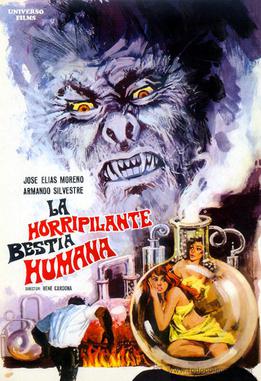
The TSL’s Horror Grindhouse: Night of the Bloody Apes (dir by Rene Cardona)


Okay, so this is a very weird movie.

Before I tell you too much about it, I do need to provide a few caveats.  In 1969, Mexican director Rene Cardona released a film called La Horripilante bestia humana.  When that film was released in the United States in 1972, it was retitled Night of the Bloody Apes.  The film was also badly dubbed into English.  The version that I watched was Night of the Bloody Apes, the dubbed version.  This editing in this version was notably ragged.  I don’t know if that was the result of the American distributors cutting scenes or if the Mexican version was just as bad.  American distributors were notorious for roughly editing foreign-language films but then again, director Rene Cardona was notorious for not exactly being the world’s most competent filmmaker.

I guess what I’m saying is that, for all I know, La Horripilante bestia humana could have been the greatest monster movie ever made before it was transformed into Night of the Bloody Apes.  However, I kind of doubt it.

Night of the Bloody Apes opens, like so many of Rene Cardona’s films, with a wrestling match.  Lucy Osorio (Norma Lazareno) is a famous wrestler who, during a match, seriously injures her opponent.  This leads to Lucy having a crisis of conscience.  Her boyfriend, Lt. Martinez (Armando Silvestre) tells her not to worry about it.  Her opponent will be fine and everyone understands that injuries are just a part of wrestling.  But Lucy isn’t so sure.  Is the fame worth it if it means hurting other people?

WELL, IS IT!?

Don’t worry too much about Lucy, though.  Immediately after providing Lucy with a huge subplot, the film pretty much abandons her.  Once Lt. Martienz encourages her not to give up, Lucy only appears occasionally throughout film, usually while naked in her dressing room.  Whatever inner conflicts she was dealing with, she apparently resolved them while no one was looking.  (This is one reason why I suspect that the film was re-edited by its American distributor.)

The film moves on to another plot.  Dr. Krallman (José Elías Moreno) is desperately trying to save his son’s life.  His angelic and kind of annoying son, who never says an unkind word about anything, is dying of leukemia.  Dr. Krallman thinks that he can save him by removing his defective heart and replacing it with the strong, healthy heart of gorilla.

Sure, why not?

Working in secret with the help of his deformed assistant, Dr. Krallman performs the operation.  (Cardona splices in footage of actual open heart surgery.)  His son survives but at what cost?  As a result of having a gorilla’s heart, Dr. Krallman’s son transforms into a body builder wearing a caveman mask.  His son is no longer a sweet, angelic, and dying.  Now, he’s a monosyllabic brute who runs around the city at night, attacking and killing women.  Lt. Martinez is assigned to the case but that doesn’t mean much because Lt. Matinez is kind of an idiot.

So, yes, Night of the Bloody Apes is one strange movie.  Actually, it’s more of a random collection of scenes than a movie.  It’s a mix of totally gratuitous nudity, over-the-top gore, random wrestling footage, actual open heart surgery footage, and scenes of the man-ape running through the city.  The film never seems to be quite sure whether the monster is actually an ape or some sort of hybrid.  Sometimes, he runs like an ape.  Sometimes, he staggers like Lon Chaney, Jr. playing the Wolfman after having had a drink or two.  It’s a very odd film.

And it’s the oddness of it all that makes the film watchable.  Some things are so weird that you just have to watch them once and that’s a fairly accurate description of Night of the Bloody Apes.  You probably won’t watch it a second time though.  It may be weird enough to sit through once but it’s never as compulsively rewatchable as an Ed Wood film or something like The Horror of Party Beach.  Once is enough.

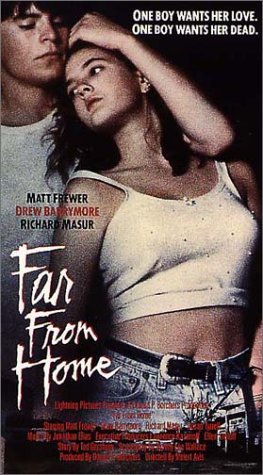
The TSL’s Horror Grindhouse: Far From Home (dir by Meiert Avis)


There are several lessons that can be learned from watching horror films.  One that is often overlooked is the importance of staying out of trailer parks.  Seriously, I have lost track of how many horror films have taken place within the confines of a trailer park.  Once you see someone surrounded by RVs and mobile homes, you know that they’re probably doomed.

Take 1989’s Far From Home, for instance.

Far From Home is set in perhaps the sleaziest trailer park in America.  This place sits in the middle of the Nevada desert and is run by chain-smoking Agnes Reed (Susan Tyrrell), who has a voice like a bullfrog, a daughter (Stephanie Walski) who is obsessed with watching TV and eating fishsticks, and a delinquent teenage son named Jimmy (Andras Jones).

The only law is provided by Sheriff Bill Childers (Dick Miller), who has a squad car but apparently no deputies.  Childers is gruff but not that bad of a guy once you get to know him.  However, he’s also played by Dick Miller and we all know better than to depend on Dick Miller to maintain the peace.

There’s a gas station nearby.  A mellow Vietnam vet named Duckett (Richard Masur) owns it.  Duckett is always willing to be helpful but he rarely has any gas.  This is one of those small towns where the gas truck apparently only rolls in every two months or so.  Still, Duckett’s a nice guy and he’s full of stories about how the government used to do atomic bomb tests in the surrounding desert.

(The scenes where Duckett drives around the desert feel somewhat out of place but they’re still enjoyable, due to Masur’s eccentric performance.)

Living in the trailer park, there’s a lot of odd people.  Some of them are permanent residents while some of them are just temporarily stranded.  14 year-old Pinky (Anthony Rapp, who would go on to appear in Dazed and Confused and Rent) lives with his mother and is a permanent resident.  His mother is rarely seen, though occasionally she can be glimpsed through a window, propped up in front of the TV.  Pinky says that, when he was a kid, he and Jimmy were best friends.  But now, Jimmy and Pinky are enemies.

And then there’s Amy (Jennifer Tilly) and Louise (Karen Austin), who are just waiting for enough gas to come in to be able to get Amy’s car to start running again.  Louise is intelligent and responsible.  Amy is flighty and undependable.  As soon as one of them accidentally pulls the handle off the driver’s side door, you just know one of them is going to end up getting trapped in that car at a bad moment.

When Far From Home opens, two newcomers have moved into the trailer park.  Writer, divorced father, and self-described “former angry young man” Charlie Cox (Matt Frewer) has just spent a month with his 13 year-old daughter, Joleen (Drew Barrymore, who was 14 when she made Far From Home).  It hasn’t exactly been a great vacation and it doesn’t get any better when Charlie’s car runs out of gas.  Joleen is about to turn fourteen and she doesn’t want to spend her birthday in a crummy trailer park with her incredibly dorky dad.

However, both Jimmy and Pinky are happy that Joleen will be spending at least a day or two at the trailer park.  At first, Joleen crushes on Jimmy and then, after Jimmy reveals himself to be aggressive and unstable, she crushes on Pinky, who protects her from Jimmy.  One of the two boys is so obsessed with Joleen that he is willing to commit murder to keep her from leaving the trailer park.  But which one?

(It’s actually pretty obvious but you probably already guessed that.)

Far From Home is a film about which I have mixed feelings.  On the one hand, the movie’s totally predictable.  Characters do dumb things for no real reason beyond needing to move the plot forward.  Charlie’s parenting abilities change drastically from scene to scene.  A traumatized character goes from catatonic to recovered to catatonic again with no real explanation.

One of my main issues with the film is that there’s no real surprise about who the killer turns out to be.  Even worse, once the killer’s identity is revealed, the killer suddenly turns into one of those psychos who can come up with a dozen one-liners while trying to kill someone.  I mean, seriously, who does that?  Are movie psychos required to take a year’s worth of improv clubs and do an apprenticeship with the Upright Citizens Brigade before they’re allowed to pick up a knife?  If I was the type to commit murder (and I’m not but let’s just say that I was), I would be too busy trying to make sure everyone was dead to be witty.  I’d save the jokes until I was safely on a beach somewhere, drinking pink lemonade and keeping an eye out for Ben Gardner’s boat.  That’s just me, I guess.

And yet, there’s a part of me that really likes this stupid, stupid movie.  It’s a surprisingly well-directed film, full of artfully composed shots.  The trailer park really does take on a life of its own and the film also makes good use of a nearby abandoned apartment building.  It’s a great location and, occasionally, it lends the film a dash of surrealism.  (Of course, I guess you could legitimately ask who would build an apartment complex in the middle of the desert, especially one that’s still humming with radiation from the Atomic bomb tests, but let’s not.)  Richard Masur, Dick Miller, and Susan Tyrrell all give good performances.  For that matter, the same is true of Anthony Rapp and Andras Jones.  Neither Rapp nor Jones are to blame for the fact that they were let down by a weak script.

Though I doubt either one of them would describe Far From Home as being their proudest cinematic achievement, Matt Frewer and Drew Barrymore are totally believable as father and daughter.  In the end, that’s why I like this movie.  Whenever I’ve watched Far From Home, I’ve always been able to relate to Joleen.  When I was thirteen, I basically was Joleen.

Fortunately, though, I was never found myself stranded in a trailer park full of homicidal maniacs.

I guess I just got lucky that way.

6 Trailers For The First Of October!


As a part of this October’s horrorthon, I am pleased to announce the return of Lisa Marie’s Favorite Grindhouse and Exploitation film trailers!  This used to be a regular (and fairly popular) feature here on the Shattered Lens.  Unfortunately, a few years ago, I discovered that I had shared almost every worthwhile trailer on YouTube and, as such, it became more of a “special occasion” type of feature.

However, enough time has passed that there are now new trailers on YouTube!  Yay!

So, let’s get things started with 6 Trailers for The First of October!

(Why six?  Because Lisa doesn’t do odd numbers!)

  1. I Drink Your Blood (1971)

Let’s start things off with I Drink Your Blood (1971), a film about what happens when hippies get rabies.  None other than Ryan C, the Trashfilm Guru himself, has described I Drink Your Blood as being one of the greatest grindhouse films of all time.

2. Psychomania (1973)

What’s the best way to deal with blood-crazed hippies?  How about an English motorcycle gang?  This was also the final film of George Sanders.

3. Werewolves on Wheels (1971)

Speaking of motorcycle gangs, you can check out Gary’s review of Werewolves on Wheels by clicking here!

4. The Beast Must Die (1974)

Not all werewolves ride motorcycles!  Some of them terrorize remote locations and are hunted by Peter Cushing, as seen in The Beast Must Die.

5. Shock Waves (1977)

Peter Cushing went from filming The Beast Must Die to appearing in Shock Waves, perhaps the greatest Nazi zombie film ever made.  Check out my review here!

6. The Loch Ness Horror (1982)

However, zombie nazis aren’t the only thing that live in the water!  Just ask the people of Scotland!

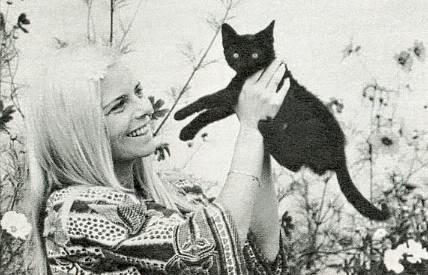
What do you think, random hippie with cat?

Cleaning Out the DVR #14: SEX & VIOLENCE, 70’S STYLE!


Lisa’s not the only person who needs to clean out their DVR around here!!

gary loggins's avatarcracked rear viewer

Groundbreaking 60’s films like BONNIE & CLYDE, THE GRADUATE, THE WILD BUNCH, and MIDNIGHT COWBOY led to the complete obliteration of the Production Code, and by the sizzling 70’s it was anything goes! Low budget exploitation filmmakers benefitted most by this loosening of standards as the following quintet of movies illustrates, filled with bouncing boobs, bloody action, pot smoking, beer drinking, and hell raising:

THE MUTHERS (Dimension 1976; D; Cirio H. Santiago) – A Filipino-made “Women in Prison” Blaxploitation actioner? Yes, please! Former Playboy Playmates Jeanne Bell and Rosanne Katon, future NFL TODAY commentator Jayne Kennedy, and ex-Bond girl Trina Parks are all trapped on a coffee plantation run by the sadistic Monteiro with no chance of escape… until there is! Loaded with gore, torture, kung-fu fighting, bare breasts, a funky score, pirates (that’s right, pirates!), and a slam-bang run through the jungle – what more could you ask for?…

View original post 717 more words

Familiar Faces #5: She’s Like A Rainbeaux!


gary loggins's avatarcracked rear viewer

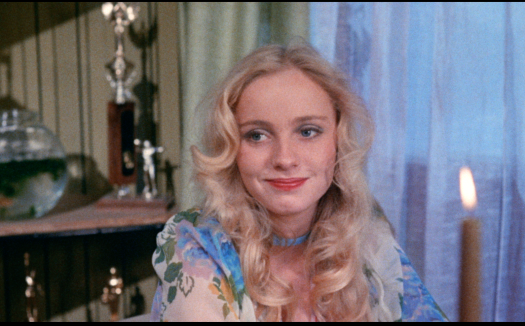
I’ve got a confession to make: I’ve had an insane crush on 70’s exploitation queen Cheryl “Rainbeaux” Smith ever since I first saw her brighten the screen in Jack Hill’s 1974 THE SWINGING CHEERLEADERS. Never a big star by any stretch of the imagination, the delightful, delectable blonde graced us with her presence throughout the 70’s and 80’s, making even the tiniest of parts memorable. This girl was just soooo damn cute!

Cheryl Lynn Smith was born on June 6, 1955. A typical California girl with blonde hair and freckles, Cheryl used to hang out on the Sunset Strip, a fixture at all the rock clubs: The Whiskey A-Go-Go, The Roxy, The Rainbow. She allegedly got the nickname “Rainbeaux” from the owner of these venues, the legendary rock impresario Mario Maglieri. Cheryl was well-known in the LA rock scene, and later in life played drums in an incarnation of The Runaways featuring…

View original post 753 more words

Kicking Off A Trend: FIVE FINGERS OF DEATH (Warner Brothers 1972)


gary loggins's avatarcracked rear viewer

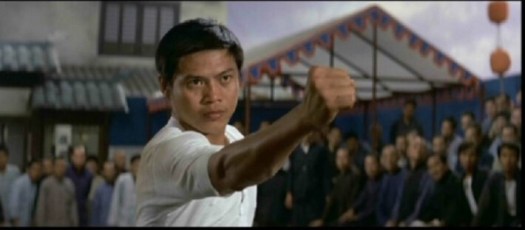
When FIVE FINGERS OF DEATH first hit the local multiplex back in the day, everybody in the neighborhood was kung-fu fighting, throwing chops and roundhouse kicks at each other, trying to be like star Lo Lieh. Bruce Lee’s movies hadn’t yet made it our way, but David Carradine’s KUNG FU was must-see TV for every adolescent boy (and some of the cooler girls). Pretty soon  chop-sockey action spread all over the city’s theaters, but it was FIVE FINGERS OF DEATH that reached New Bedford, MA first, and has always held a special place in my heart.

Hong Kong action star Lo Lieh plays Chao Chih-Hao, who’s sent to Shen Chin-Pei’s school by his mentor to train further and defeat Ming Dun-Shun’s “gangsters” in a martial arts tournament. Chih-Hao rescues damsel in distress Yen Chu Hung from some bad guys along the way, and though she comes on to him, his heart belongs to his mentor’s…

View original post 415 more words

The Legend of BILLY JACK Continues! (National Student film Co 1971, re-released by Warner Brothers 1973)


gary loggins's avatarcracked rear viewer

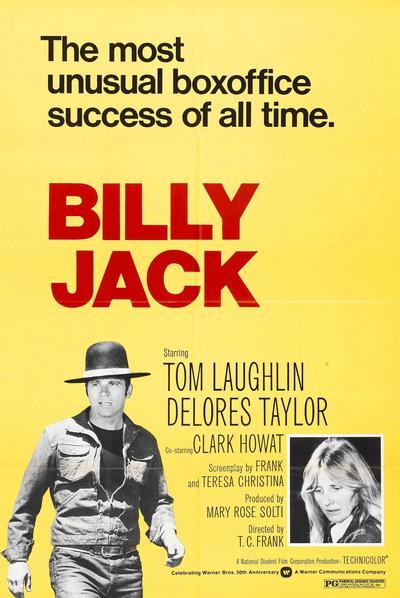
When last we saw Billy Jack, he was dismantling a brood of outlaw bikers in BORN LOSERS . This time around, he’s taking on a whole town’s worth of rednecks as Tom Laughlin’s half-breed ex-Green Beret returns in BILLY JACK, the wildly popular film that combines action with social commentary, and helped kick off the martial arts craze of the 70’s.

BILLY JACK almost never saw the light of day, as Laughlin’s financing was shut off by American-International Pictures. 20th Century-Fox then picked it up, but didn’t think it deserved to be released, so Laughlin went the indie route, under the banner of National Student Film Co. in 1971. Poor distribution and poor reviews caused the film to tank, but the good folks at Warner Brothers saw something in it, and gave it a national release two years later. Young audiences of the day flocked to it in droves, cheering as Billy Jack…

View original post 1,113 more words

The TSL’s Grindhouse: Giallo in Venice (dir by Mario Landi)


(I know this is a boring poster but it’s literally one of the few Giallo in Venice graphics that I can post without running the risk of getting the site in trouble.)

So, I finally saw the infamous (and, in many countries, banned) 1979 film, Giallo in Venice.

Back when I first decided to learn about the history of Italian horror, Giallo in Venice was a title that I frequently came across in the course of my research.  Everyone — and I do mean everyone — seemed to agree on three points: 1) it was one of the most graphic and mean-spirited Italian thrillers of all time, 2) it had never been released on DVD or Blu-ray in the United States and, as such, it was not the easiest film to see, and 3) the film was really, really bad.

Now, I have to admit that I probably wouldn’t have had any desire to see Giallo in Venice if not for the fact that I repeatedly read that it would be next to impossible for me to do so.  I hate being told what I can and cannot do.  Don’t get me wrong.  Everything that I read about Giallo in Venice was overwhelmingly negative.  Critics, some of whom I actually respected, were nearly unanimous in their dismissal of the film.  Unlike my hope that I’ll someday see fully restored versions of Greed and London After Midnight, seeing Giallo in Venice was never a number one priority for me.  Instead, it was just something that I kept in the back of my mind.  If I ever had a chance to watch Giallo in Venice, I told myself, I would just so I could say that I had seen it.

Last week,I got that chance.  I discovered that Giallo in Venice had not only been uploaded on YouTube but it was also the uncut version.   (I’m not going to include a link because of the film’s graphic content.  I don’t want to get either this site or the people who uploaded the video in trouble.  If you go to YouTube and search for “Giallo in Venice,” it should be one of the first videos to come up.) The only problem was that, along with being copied from a faded VHS tape, it was the Russian language version.  Basically, whenever any of the film’s characters spoke, you would first hear the line in the original Italian and then a rather angry man would shout the same the line in Russian.  Unfortunately, I know very little Italian and absolutely no Russian.

Needless to say, this led to a rather odd viewing experience.  If Giallo in Venice had been directed by a visual stylist like Lucio Fulci, Dario Argento, Mario Bava, or even Ruggero Deodato, it might not have been a problem.  Those four directors are all rightly renowned for their ability to create mood and atmosphere.  (And, for that matter, the best giallo films are often more concerned with visuals than dialogue.)  Unfortunately, Giallo in Venice was directed by Mario Landi, an veteran television director whose style can best be described as “turn on the camera at the start of the scene, turn it off at the end.”

(Landi also directed Patrick Still Lives, which is a smidgen more interesting than Giallo in Venice.)

As for the film’s plot — well, it’s hard for me to say for sure.  Not to overemphasize this point but, quite literally, I COULD NOT UNDERSTAND A WORD THAT ANYONE WAS SAYING.

The film opens in Venice, with a man being stabbed to death while a woman drowns in a canal.  Inspector De Paul (Jeff Blynn) is assigned to solve the murders.  He has poofy hair that wouldn’t be out of place in a stage production of Boogie Nights and, for some reason, Inspector De Paul is constantly eating hard-boiled eggs.  In just about every scene in which he appears, he is eating an egg.  Though it was hard to judge his overall performance (though the Russian seemed to enjoy repeating De Paul’s dialogue), Jeff Blynn really got into eating those eggs.  It got rather sickening to watch after a while.  As far as I could tell, De Paul’s investigation amounted to talking to one witness and then talking to the dead woman’s roommate.

The roommate, incidentally, is played by Mariangela Giordano, who also appeared in Patrick Still Lives, Burial Ground, and Michele Soavi’s The Sect.  Any fan of Italian horror will not only recognize Giordano but will also immediately know that her Giallo in Venice character is destined meet an unlucky end.  Patrick Still Lives, Burial Ground, and Giallo in Venice were all produced by Giordano’s then-boyfriend and, in all three films, she played a character who was graphically and gruesomely killed onscreen.  In Patrick Still Lives, she was skewered by a fireplace poker.  In Burial Ground, she made the mistake of trying to breastfeed her zombiefied son.  And in Giallo in Venice, one of her legs is slowly sawed off.  Seriously, if my boyfriend insisted that I suffer a terrible death in every film that he produced, it would probably be an issue.  Just saying.

Anyway, while Inspector De Paul is investigating the murder, this young couple keeps popping up.  They’re young, rich, and fifty shades of fucked up.  Fabio (Gianni Dei) has apparently been rendered impotent by all the cocaine that he’s been snorting and the only way he can get off is by forcing Flavia (Leonara Favi) to play out all of his kinky fantasies.  I found myself wondering why the film kept switching back and forth, between the not-quite-loving couple and the murder investigation.  Was Fabio the murderer?  Then, suddenly, I realized that Fabio and Flavia were the same couple who were murdered at the start of the film.  The Fabio and Flavia scenes were flashbacks.  I’m assuming that my confusion was due to the Russian dialogue but it says something about Landi’s visual style that it was impossible to tell, just from watching, that the Flavia/Fabio scenes were meant to be flashbacks.

(As far as I can — and again, dialogue problems — the flashbacks weren’t triggered by anyone saying, “I remember one time…” or anything like that.  Add to that, most of the flashbacks only featured Fabio and Flavia so, logically, there’s no way anyone could have been telling Inspector De Paul what happened.  Instead, the flashbacks just felt like random scenes that were sprinkled in between the violence and the eating.)

Giallo in Venice is a mix of egg eating, sex, and sadism.  The graphic murders are probably what Giallo in Venice is best known for, though I have to admit that I found the constant egg eating to be almost as disgusting.  As for the film’s gore, it was just as graphic and extreme as I had previously read.  But, with the exception of what happens to poor Mariangela Giordano, the violence has no impact on the viewer.  Since Landi directs with no discernible style, there’s nothing behind the murders beyond the fact that, when you title a movie Giallo in Venice, you’re obligated to include a few deaths.  It’s violence for the sake of violence and therefore, rather boring.  Admittedly, I’m sure it was rather shocking in 1979 but, today, audiences are more used to that sort of thing.  After all, everyone’s seen that tutorial on how to be a zombie for Halloween.

While watching Giallo in Venice, it was hard not to compare it to Lucio Fulci’s The New York Ripper.  Both films are deeply unpleasant but, due to Fulci’s energetic and, at times, subversive direction, there’s at least always something going on underneath the blood-drenched surface of The New York Ripper.  You can debate whether or not he succeeded but it can’t be denied that Fulci was going for something more than just sadism when he made The New York Ripper.  (If you doubt me, read Stephen Thrower’s analysis in Beyond Terror: The Films of Lucio Fulci.)  Landi’s style, in Giallo in Venice, is so flat that there’s not only nothing going on underneath but the surface itself seems to be pretty barren too.

To give credit where credit is due, I did appreciate just how ugly Landi managed to make Venice look.  I’ve been to Venice and I absolutely love it.  I would never believe that a director could make Venice look like a dump but Mario Landi managed to do it.  I don’t know if that was intentional on his part but it actually worked for the film.  Since all of the characters actually lived in Venice, it made sense that they wouldn’t be standing around and admiring the city’s natural beauty.  Instead, they all live and operate in the parts of Venice that tourists don’t see.

Finally, Landi did manage to get one interesting shot, when the reflection of one of the victims is seen in the killer’s sunglasses.  Unfortunately, Landi was so impressed by that shot that he kept using it over and over again until, eventually, it became far less interesting.

One final note: Giallo in Venice had a very odd score.  It sounded like it was being played by a cocktail lounge jazz quartet.  The music, itself, was actually rather boring but it was so totally out-of-place that it became oddly charming.  I found myself craving a drink with a little umbrella in it.

Anyway, that’s Giallo in Venice.  It’s not good, it’s not memorable, but at least I can now say that I’ve seen it.

From the VHS Vault 2: THE VIOLENT YEARS (Headliner Productions 1956)


gary loggins's avatarcracked rear viewer

The drama continues: I received a call from FedEx about the status of my new DirecTV receiver (the old one being fried beyond repair) . The new box is now sitting in a warehouse, undeliverable because DIRECTV GAVE THEM THE WRONG ADDRESS!! You’d think after almost two years they’d have my address, right? Wrong! FedEx told me I have to call DirecTV and have them fix the address or drive an hour out of my way to pick it up myself. So I proceeded to call the corporate beast and was transferred to a woman who barely spoke English, gave her all my information, then was transferred to another woman who spoke even worse English and repeated the process all over again! After a half hour of this nonsense, I was then told I’d have to wait an additional 3-5 days before my new box arrives… hopefully at the right address! ARRRGGGGHH!!!!

View original post 726 more words