Ed Gein was a farmer who lived in Plainfield, Wisconsin in the 1950s. Everyone in town agreed that Ed was a bit of an eccentric. He had been something of a recluse ever since the death of his mother in 1945. Having never married, he spent most of his time on his farmhouse, where he had a collection of pulp magazines and literature about Nazi war crimes. Ed supported himself by doing odd jobs around town. He was quiet and a little weird but he was considered to be harmless enough.
Or, at least, he was until November of 1957.
That was when Bernice Worden, the owner of the local hardware store disappeared. Her son told the police that Ed Gein has been the last person to talk to her the night before she disappeared and that Gein had specifically said that he would return to the store the next morning. When the police searched Gein’s property, they discovered that Gein’s house was full of body parts. Among other things, they found several skulls, a trash can made out of human skin, bowls made out of skulls, leggings made out of skin taken from human legs, nine vulvae in a shoe box, four noses, masks made from the skin taken from human heads, a corset made out of human skin, a pair of lips on a window shade drawstring, and the bodies of Bernie Worden and tavern owner Mary Hogan. The police who discovered Gein’s home were reported to have been haunted by nightmares for years afterwards. The officer who interrogated Gein later died of heart failure when he was informed that he was going to have to testify at Gein’s trial and relive the experience of hearing Gein’s story.
Gein confessed that he had started digging up graves after the death of his mother, collecting recently deceased women who he thought resembled her. Gein also confessed to murdering both Bernie Worden and Mary Hogan, though most observers felt that Gein had killed many more. Judged to be legally insane, Gein spent the rest of his life in a mental hospital, where he was said to be a polite and friendly patient. He died of cancer in 1984.
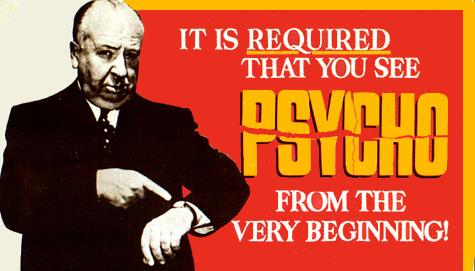
The story of Ed Gein has inspired many writers and filmmakers. Psycho was inspired by Gein’s crime, with the book’s version of Norman having far more in common with the real Gein. The Texas Chainsaw Massacre’s house of horrors was also inspired by Gein and so was The Silence of the Lambs‘s Buffalo Bill. The 1974 film, Deranged, featured Roberts Blossom in the role of Ed Gein, whose name was changed to Ezra Cobb.
In 2007’s Ed Gein: The Butcher of Plainfield, Kane Hodder plays Ed Gein. Best-known for playing Jason Voorhees in several Friday the 13th films (and for providing a great DVD commentary for Friday the 13th Part VII: New Blood), Hodder plays Gein as being a hulking and awkward farmer who, after losing his mother, comes to believe that death is the only thing that’s real in life. With his friend Jack (Michael Berryman), Gein digs up bodies from the local graveyard. When Jack finally says that he’s tired of digging up bodies and that he thinks Gein needs to get professional help, Gein responds by murdering Jack and dragging the body behind his pickup truck. Interestingly enough, Gein drives by Deputy Bobby Mason (Shawn Hoffman) who doesn’t even notice the body being dragged because he’s too busy fooling around with his girlfriend, Erica (Adrienne Frantz).
Bobby, in short, is a bit of a dumbass and that’s unfortunate for the people of Plainfield because Ed Gein is about to go on a rampage. First, he abducts the owner of the local tavern. Then, he abducts Bobby’s own mother, Vera (Priscilla Barnes)! And, to top it all off, he abducts Erica just a few hours later. This leads to a lot of scenes of Bobby running around, searching for his mother and then his girlfriend and managing to screw up just about everything that he attempts to do. Bobby being a total idiot wouldn’t be a problem except for the fact that Bobby is also supposed to be the hero of our story.
Ed Gein: The Butcher of Plainfield features a lot of gore and discarded body parts, to the such an extent that I had to actually look away from the screen more than a few times. That said, the story itself is only loosely based on the facts of the case. (For instance, Ed Gein never kidnapped the girlfriend of a deputy and instead, he reportedly never even tried to flee once it became obvious that the police were on to him.) The film is so haphazardly edited that it’s often difficult to keep track of how many days or night have passed from one scene to another and there’s quite a few scenes that feel as if they’ve been included to pad out the running time. That said, Kane Hodder gives a good performance as this film’s version of Ed Gein, proving that he can be just as intimidating when wearing a mask of human skin as when wearing a hockey mask.

 Through the Shattered Lens