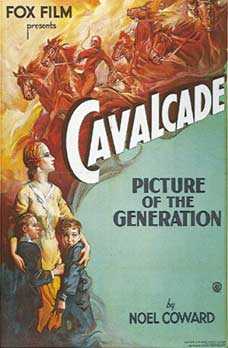
An Offer You Can’t Refuse: The Last Gangster (dir by Edward Ludwig)


In 1937’s The Last Gangster, Edward G. Robinson plays Al Capone.

Well, actually, that’s not technically true.  The character he’s playing is named Joe Krozac.  However, Joe is a ruthless killer and gangster.  He’s made his fortune through smuggling alcohol during prohibition.  Despite his fearsome reputation, Joe is a family man who loves his wife Tayla (Rose Stradner) and who is overjoyed when he learns that she’s pregnant.  To top it all off, Joe is eventually arrested for and convicted of tax evasion.  He gets sent to Alcatraz, where he finds himself being bullied by another inmate (John Carradine) and waiting for his chance to regain his freedom.

In other words, Edward G. Robinson is playing Al Capone.

Krozac does eventually get out of prison but, by that point, Tayla has moved on.  She’s married Paul North (James Stewart), a former tabloid reporter who was so outraged by how his newspaper exploited Tayla’s grief that he resigned his position.  Joe Krozac’s son has grown up with the name Paul North, Jr. and he has no idea that his father is actually a notorious gangster.

Krozac wants to get his son back but his gang, now led by Curly (Lionel Stander), has other ideas.  They want Krozac to reveal where he hid the money that he made during his gangster days.  As well, an old rival (Alan Bazter) not only wants to get revenge on Krovac but also on Krovac’s son.  Joe Krovac, fresh out of prison, finds himself torn between getting his revenge on his wife and protecting his son.  This being a 30s gangster film, it leads to shoot-outs, car chases, and plenty of hardboiled dialogue.

Edward G. Robinson and Jimmy Stewart in the same movie, how could I n0t watch this!?  I was actually a bit disappointed to discover that, even though both Robinson and Stewart give their customarily fine performances, they don’t spend much time acting opposite each other.  Indeed, it sometimes seem like the two men are appearing in different pictures.

Robinson is appearing in one of the gangster films that made him famous.  (Indeed, the film’s opening credits feature footage that was lifted from some of Robinson’s previous films.)  He gives a tough and snarling performance but also one that suggests that, as bad as he is, he’s nowhere near as bad as the other gangsters that are working against him.  His gangster is ultimately redeemed by his love for his son, though the Production Code still insists that Joe Krozac has to pay for his life of crime.

Stewart, meanwhile, plays his typical romantic part, portraying Paul as being an incurable optimist, a happy go-getter who still has a sense of right-and-wrong and a conscience.  Stewart isn’t in much of the film.  This is definitely Robinson’s movie.  But still, there’s a genuine charm to the scenes in which Paul romances the distrustful Tayla.  Not even being forced to wear a silly mustache (which is the film’s way of letting us know that time has passed) can diminish Stewart’s natural charm.

If you like 30s gangster films, like I do, you should enjoy The Last Gangster.  I would have liked it a bit more if Robinson and Stewart had shared more scenes but regardless, this film features these two men doing what they did best.  This is an offer that you can’t refuse.
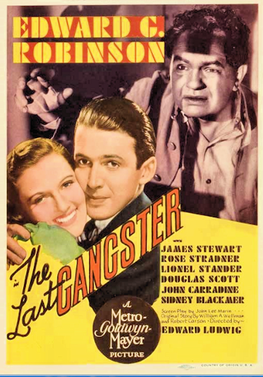
Cleaning Out The DVR, Again #11: Cavalcade (dir by Frank Lloyd)


Cavalcade_film_poster

So, I’ve been cleaning out the DVR for the past week.  Fortunately, I’m going to be off work for this upcoming week, which should give me a lot of extra film-watching time.  That’s a good thing because I’ve got 36 movies that I’ve recorded on the DVR since Thursday and, over the past seven days, I’ve only watched 13 of them!  That’s 23 movies to go and I hope to be finished by the end of the next week.

The 11th film that I found on my DVR was the 1933 film, Cavalcade.  I recorded it off of FXM on April 3rd.

The main reason that I recorded Cavalcade was because it was the 6th film to win the Oscar for Best Picture.  Now, I have to admit that I wasn’t expecting much from Cavalcade.  It’s a film that many Oscar historians tend to list as being one of the lesser best picture winners.  Cavalcade is often unfavorably compared to the films that it beat — movies like I Am A Fugitive From A Chain Gang, A Farewell To Arms, Little Women, and The Private Life of Henry VIII.  Cavalcade was the first British to ever win the Best Picture and its victory is often cited as the beginning of the Academy’s love affair with British productions.

And really, Cavalcade couldn’t be more British if it tried.  Based on a play by Noel Coward, Cavalcade follows two families through several decades in British history.  One family is wealthy and is anchored by a patriarch who is knighted in the Boer War.  The other family is lower middle class, anchored by a patriarch who starts out as a butler but who eventually manages to open up his own pub.  Through the eyes of these two families, we view what, in the 1930s, was recent British history.

For modern viewers, it may be helpful to watch Cavalcade while consulting Wikipedia.  For instance, the film starts with the two father figures preparing to leave to fight in the Boer War and I’m sorry to admit that I really wasn’t totally sure what that was.  I had to look it up in order to discover that it was a war that the British fought in South Africa.

But you know what?  That’s not really a complaint.  I may not have known what the Boer War was before I started the film but that had changed by the time that I finished watching Cavalcade.  Several times, I’ve mentioned on this blog how much I love history but watching Cavalcade made me realize that I still have more to learn.  Even more importantly, it encouragds me to learn.  That’s always a good thing.

Certain other historical events were more familiar.  As soon as I saw the title card announcing that the date was 1914, I knew that I would soon be seeing a World War I montage.  And, as terrible as World War I was (though, naturally, the film refers to it as being “the Great War,” and, for a few moments, I considered the fact that there was a time when nobody thought there would ever be a second world war), I was actually kind of happy for the montage because it got the characters out of the drawing room and out of the pub.  Cavalcade is a very stagey film.  Though there are a few attempts to open up the action, you’re always very aware that you’re essentially watching a filmed play.

Of course, the film’s best historic moment comes when a recently married couple goes on their honeymoon.  We see them standing on the deck of a cruise ship, talking about how much they love each other and how wonderful life will be.  They then step to the side and we see the name of the ship: RMS Titanic.

In many ways, those dismissive Oscar historians are correct about Cavalcade.  It’s stagey and it’s old-fashioned and some of the performances are better than others.  But, dammit, I liked Cavalcade.  As the upper class couple, Diana Wynyward and Clive Brook made for a likable couple and they got to exchange some sweet-natured dialogue at the beginning and the end of the film.   Add to that, it was a film about history and I love history.

Cavalcade is hardly a perfect film and it probably didn’t deserve to win best picture.  But it’s still better than its reputation suggests.