Retro Television Review: Decoy 1.1 “Stranglehold”


Welcome to Retro Television Reviews, a feature where we review some of our favorite and least favorite shows of the past!  On Thursdays, I will be reviewing Decoy, which aired in Syndication in 1957 and 1958.  The show can be viewed on Tubi!
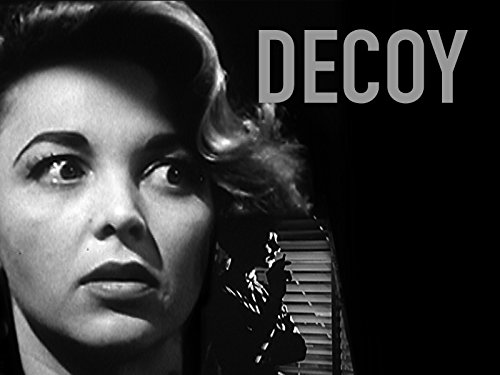
This week, we start a look at Decoy, a show that will hopefully be a considerable improvement on Malibu CA!

Episode 1.1 “Stranglehold”

(Dir by Don Medford, originally aired on October 17th, 1957)

“There are 249 of us in the Department. We carry two things in common wherever we go – the shield, called a “pottsy”, and a .32 revolver. We’re New York’s finest …. we’re police women.”

Those are the words that end the first episode of Decoy and they’re delivered by Casey Jones (Beverly Garland), a former ballet dancer who now works undercover as a member of the NYPD’s Department of Policewomen.  Casey holds up her revolver for the audience to see, leaving them no doubt that she’s telling the truth.  A woman who know how to handle a gun!?  Audiences in 1957 were no doubt stunned.

Of course, the audience had also just spent 25 minutes watching Casey work undercover.  After a merchant seaman is murdered and a woman named Molly Orchid (Joanne Linville) is caught with some of his jewelry, Casey is sent to live across the hall from Molly.  (Casey is also living in the dead man’s apartment.  Casey, a true New Yorker, comments that she’ll do anything to get a good apartment.)  After hiding her gun in a lighting fixture and hiding her badge under her blouse, Casey befriends Molly and tries to meet George, the mysterious boyfriend that Molly says gave her the jewelry.

Molly loves to talk about George but George never seems to be around.  Molly says that George is a musician and that he’s often out of town.  Casey comes to feel sorry for Molly, feeling that the emotionally vulnerable woman is being manipulated by George.  Whereas the male cops would just as soon shoot Molly than try to negotiate with her (this entire show is from the pre-Miranda era), Casey does her best to reason with Molly.  That is the difference between a policewoman and a policeman.

Of course, as you probably already guessed, there is no George.  Casey eventually figures it out after she realizes that Molly has been going to the movies alone as opposed to meeting up with George.  Molly, spotting Casey’s gun, grabs it and finally admits the truth.  The merchant seaman tried to assault her and Molly strangled him in self-defense.  George is a figment of her imagination, someone who she made up as a way to deal with her guilt.  A policeman barges into the apartment and points his gun at Molly but Casey steps in front of him and then manages to talk Molly down.

The first episode of Decoy was distinguished by some on-location shooting in New York City and the performances of Joanne Linville and especially Beverly Garland.  Garland’s empathetic but strong-willed performance dominates the show and it leaves us with little doubt that Casey Jones is the best at what she does.  Meanwhile, Linville, in the role of Molly, may be dangerous but she’s also sympathetic.  Her crime was initially one of self-defense and George was someone she created as her way of surviving in a world where no one was willing to look out for her.

Next week: Casey searches for a missing artist.

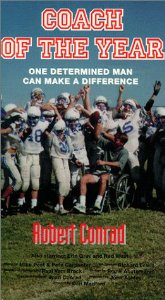
Coach of the Year (1980, directed by Don Medford)


Jim Brandon (Robert Conrad) used to be a member of the Chicago Bears, until he was drafted and sent to Vietnam.  While Jim was serving his country, he was wounded in battle and when he returns to the United States, he’s now in a wheelchair.  With his playing days over, Jim still wants to put his athletic abilities to good use.  When the Bears front office tells him that they want to place him in the PR department as a glorified mascot, Jim tells them to forget about it and then starts to search for any opportunity to work as a coach.  Unfortunately, no one is willing to take a chance on a coach who can’t walk across the field.

While he looks for a job, Jim is living with his sister (Erin Gray) and her son, Andy (Ricky Paull Goldin).  When Andy gets caught (not for the first time) breaking the law, he is sent to the local reform school.  It’s while Jim is visiting his nephew that he notices that the students at the Illinois State Training School for Boys like to play football.  Jim suggests that the school needs an official team and that he would be the perfect person to coach them.

At first, the boys are rebellious and refuse to show Jim any respect but Jim slowly wins them over.  When a prep school’s football team visits the reform school and makes some snide remarks, Jim challenges them to a game.  If Jim’s team wins, it will not only prove that Jim can coach but it will also give the members of the team a needed boost of self-respect.  If Jim loses, he’ll get fired and his team will probably try to escape before boarding the bus back to reform school.

Coach of the Year was a TV movie and there’s nothing surprising about it.  It’s a typical example of an “inspiring” sports film, where an underdog team is led to victory by an underdog coach.  The two teams play each other twice in the movie and, just as surely as you’ll be able to guess who wins the first game, you’ll also be able to guess who manages to beat the odds and win the second game.  The film’s main selling point is that Robert Conrad gives a good performance as Jim Brandon.  Conrad is believable as both a coach, a former star athlete, and a man who is not yet prepared to surrender his pride.  Though Jim’s clearly the hero, the movie doesn’t idealize him.  Sometimes, Jim can be too stubborn for his own good.  Supposedly, in real life, Conrad was always the celebrity who ended up taking his appearances on Battle Of The Network Stars too seriously and that’s the way that Conrad plays Jim.  It doesn’t matter if his team is made up of a bunch of juvenile delinquents or that their games are just for exhibition.  Jim’s determined to win.

Coach of the Year is on Amazon Prime.  Unfortunately, Battle Of The Network Stars is not.


18 Days of Paranoia #14: The Organization (dir by Don Medford)


Sidney Poitier played Detective Virgil Tibbs for the third and final time in the 1970 film, The Organization.

This time, Virgil is investigating a murder at an office building in San Francisco.  It’s a very odd murder, in that an executive was shot, a security guard was bludgeoned, and even though it looks like there was a robbery taking place, nothing appears to have actually been stolen.  Since neither the company nor the executive were believed to be involved in anything shady, Virgil finds himself perplexed as to why any of this has happened at all.

Fortunately, the local urban revolutionaries are here to help!  They contact Virgil and Virgil reluctantly agrees to meet with the group, which is made up of the usual collection of angry 1970s activists — i.e., a dissident preacher, a reformed drug dealer, a guy who won’t stop yelling, and a woman who is obviously going to be killed before the movie is over.  The revolutionaries explain that they were the ones who broke into the office but they also say that they didn’t kill anyone.  Instead, they broke into the office because they wanted the police to investigate the break-in and discover that the company was a front for a bunch of drug dealers.  “The Organization” is flooding poor and minority neighborhoods with heroin and the revolutionaries want to stop them.  In fact, the revolutionaries have stolen four million dollars worth of heroin.  Now, they want Virgil to help them.

Even though Virgil is sympathetic to the revolutionaries, he’s still a cop and he can’t get directly involved with illegal activities.  Instead, he agrees to not arrest the revolutionaries and to continue his investigation, in the hope of bringing down the Organization.  It’s not going to be easy, of course.  There’s evidence that the Organization may even have agents inside the San Francisco police department.

As far as the Virgil Tibbs movies are concerned, The Organization is slightly better than They Call Me Mister Tibbs! but it’s nowhere near as good as the one that started it all, In The Heat of the Night.  Probably the biggest flaw with The Organization is that Virgil has to share the spotlight with the revolutionaries.  With the exception of Raul Julia (who plays a former drug dealer named Juan), none of the revolutionaries are particularly memorable characters and their plan for taking down The Organization is so unnecessarily convoluted that it’s hard to believe that Virgil would go along with it.

On the plus side, The Organization works fairly well as a conspiracy thriller.  It does manage to create a consistent atmosphere of unease and mistrust.  This is one of those films where people are constantly getting shot by unseen gunmen mere minutes after getting arrested and the fact that even cool and in-control Virgil Tibbs can’t save them does a lot towards creating a nice sense of paranoia.  The films end on perhaps the most downbeat note of all of the Virgil Tibbs movies, suggesting that, in the end, everything we’ve just watched was for nothing.


Other Entries In The 18 Days Of Paranoia:

  1. The Flight That Disappeared
  2. The Humanity Bureau
  3. The Private Files of J. Edgar Hoover
  4. The Falcon and the Snowman
  5. New World Order
  6. Scandal Sheet
  7. Cuban Rebel Girls
  8. The French Connection II
  9. Blunt: The Fourth Man 
  10. The Quiller Memorandum
  11. Betrayed
  12. Best Seller
  13. They Call Me Mister Tibbs


A Movie A Day #258: The Hunting Party (1971, directed by Don Medford)


Old west outlaw Frank Calder (Oliver Reed) wants to learn how to read so he and his gang ride into the nearby town and kidnap Melissa Ruger (Candice Bergen).  Because he saw her reading to a group of children, Calder assumed that Melissa was a school teacher.  Instead, Melissa is the wife of a brutal cattle baron and hunter named Brandt Ruger (Gene Hackman).  Even after Calder learns the truth about Melissa’s identity, he keeps it a secret from his gang because he knows that they would kill her and then kill him as punishment for kidnapping the wife of a man as powerful as Brandt.  Stockholm Syndrome kicks in and Melissa starts to fall in love with Calder.  Meanwhile, Brandt learns that his wife has been kidnapped and, with a group of equally brutal friends, he sets out to get her back.  In Brandt’s opinion, Calder has stolen his personal property.  Using a powerful and newly designed rifle, Brandt kills Calder’s men one-by-one until there is a final, bloody confrontation in the desert.

Coming out two years after Sam Peckinpah redefined the rules of the western genre with The Wild Bunch, The Hunting Party owes a clear debt to Peckinpah.  Much as in The Wild Bunch, the violence is sudden, brutal, and violent.  What The Hunting Party lacks is Peckinpah’s attention to detail and his appreciation for the absurd.  Instead, The Hunting Party is just one shooting after another and, devoid of subtext or any hint of a larger context, it quickly gets boring.

Fans of Oliver Reed, however, will want to watch The Hunting Party because it features one of his best performance.  For once, Reed is actually playing the nice guy.  He may be an outlaw but he still cries when a mortally wounded member of his gang begs Calder to put him out of his misery.  Gene Hackman is also good, even though he’s playing one of his standard villain roles.  (The less said about Candice Bergen’s performance, the better.)  The Hunting Party may be dully nihilistic but Oliver Reed shines.

Horror on TV: Twilight Zone 3.6 “The Mirror”


TheTwilightZoneLogo

Tonight’s episode of The Twilight Zone is a political allegory about a communist dictator in Central America who gets a magic mirror that, he believes, will reveal who is plotting against me. It’s undeniably heavy-handed but, at the same time, it’s a lot of fun to watch Peter Falk play Fidel Castro.

This episode was written by Rod Serling and directed by Don Medford. It was originally broadcast on October 20th, 1961.