Retro Television Review: Fantasy Island 5.10 “A Very Strange Affair/The Sailor”


Welcome to Retro Television Reviews, a feature where we review some of our favorite and least favorite shows of the past!  On Tuesdays, I will be reviewing the original Fantasy Island, which ran on ABC from 1977 to 1984.  Unfortunately, the show has been removed from most streaming sites.  Fortunately, I’ve got nearly every episode on my DVR.
This week’s episode is about angels and Flying Dutchmen.

Episode 5.10 “A Very Strange Affair/The Sailor”

(Dir by Cliff Bole, originally aired on January 2nd, 1982)

This episode begins not with Mr. Roarke meeting the plane but instead with him heading out alone to the beach, where he meets a ghost ship that is being steered by Captain Hendrik Van Horton.  Captain Van Horton is the legendry Flying Dutchman, the sailor who cursed God when he failed to defeat the Spanish fleet and who is now cursed to sail the ocean until he finds a woman who not only loves him but who is “willing to sacrifice her life” for him.  Every seven years, Captain Van Horton is allowed to spend two days on dry land and he almost always comes to Fantasy Island.

And yes, this all sounds very intriguing and it is an interesting way to open this episode.  I’m so used to the stock footage of Roarke driving down to the docks that it’s always a bit jarring to see something different.  However, Captain Van Horton is also played by the reliably stiff (if likable) Peter Graves.  Graves’s deadpan and straight-forward acting style made him the ideal actor for certain roles, usually as a professional of some sort.  However, Graves’s rather stoic persona did not make him the best choice to play a tortured sea captain, cursed to sail on the ocean for an eternity.

As for his fantasy, the captain is lucky enough to be on the Island at the same time as Laura Myles (Florence Henderson), whose fantasy is to fall in love with an old-fashioned man’s man.  She falls for the Captain, despite the attempts of her ex-boyfriend, Bill (Brett Halsey), to win her back.  Unfortunately, the Captain loses his temper and punches the well-meaning Bill.  Bill is willing to forgive the Captain but Mr. Roarke explains that the Island police are not as forgiving.  (Doesn’t Mr. Roarke control the police?  It’s his Island!)  Captain Van Horton needs to marry Laura and then leave.

Captain Van Horton explains that he’s fallen in love with Laura but he can’t ask her to die for him.  Laura says that she would be willing to die for a man who she has known for a day and half.  Roarke then reveals that Laura doesn’t have to die.  She just has to be “willing to die.”  (Wow, what a silly curse!)  The Captain and Laura sail off together but you have to wonder how the Captain feels about discovering, after hundreds of years of wandering, that there was an easily exploitable loophole to the curse.

As for the other fantasy, Ron (Dick Smothers) needs some confidence so he’ll be able to talk notorious tightwad, J.D. Stoneman (Hans Conried) i,nto investing in an orphanage.  Roarke rings a bell and summons an angel, Miss Harbringer (Shelley Smith).  Miss Harbringer gives Ron a pep talk and even goes to talk to Stoneman herself.  Of course, Miss Harbringer’s real purpose is to make Ron’s wife, Elaine (Arlene Golonka), so jealous that Elaine will take over and encourage Ron to talk Stoneman into giving him the money.

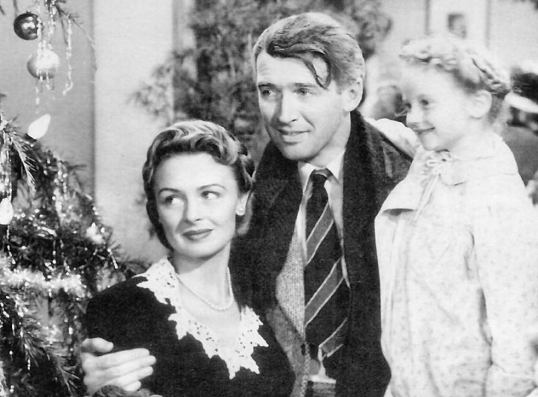
Anyway, Miss Harbringer flirts with Stoneman and convinces him to invest in a good cause.  But she allows Ron and Elaine to believe that it was Ron’s powers of persuasion that convinced Stoneman to invest.  It’s kind of sad that Ron and Elaine forget about Miss Harbringer as soon as they get their money but Roarke says that’s the way it is for angels.  I don’t think that’s true, though.  I bet George Bailey never forgot Clarence.

(Atta boy, Clarence!)
Tattoo is not in this episode so it’s Julie’s turn to assist Mr. Roarke.  What’s odd is that the episode doesn’t even offer up any explanation as to where Tattoo has disappeared.  This episode was a bit on the blah side so it definitely could have used Tattoo.  A random llama shows up at the end of the show and I liked that.  Llamas are cute.  But otherwise, this was a forgettable trip to the Island.

Film Review: Casino (dir by Martin Scorsese)


(Minor spoilers below)

Casino, Martin Scorsese’s epic, Las Vegas-set film from 1995, is one of my favorite films of all time.  It seems to show up on cable every other week and, whenever I see that it’s playing, I always make it a point to catch at least a few minutes.

Casino opens with veteran Las Vegas bookie Ace Rothstein (played by Robert De Niro) getting into a car.  He starts the engine and the car explodes.  The rest of the movie is an extended flashback as both Ace and his friend and eventual rival Nicky (Joe Pesci) explain how Ace went from being the most powerful man in Vegas to getting blown up in his car.

We are shown how Ace was originally sent to Vegas by a group of mobsters who are headquartered in the far less flamboyant town of Kansas City.  Ace keeps an eye on the city for the bosses and, as long as the money keep coming in, they leave Ace alone to do whatever he wants.  When Ace isn’t bribing government officials (including one particularly sleazy state senator who was reportedly based on future U.S. Sen. Harry Reid) and breaking the fingers of the unlucky gamblers who have been caught trying to cheat the casino, he’s busy falling in love with the beautiful prostitute Ginger (Sharon Stone, who was nominated for Best Actress for her work in this film).  Though Ginger warns Ace that she doesn’t love him and is still hung up on her manipulative pimp Lester Diamond (James Woods, who is hilariously sleazy), Ginger and Ace still get married.

Everything’s perfect except for the fact that Ace’s old friend Nicky (Joe Pesci) has also moved to Vegas.  As opposed to the calm and low-key Ace, Nicky has a violent temper and soon, he starts drawing unwanted attention to both himself and Ace.  When Ace attempts to control Nicky, Nicky responds by turning on his friend and soon, the two of them are fighting an undeclared war for control of the city.  Meanwhile, the bosses in Kansas City are starting to notice that less and less money is making its way back to them from Las Vegas…

There are so many things that I love about Casino that I don’t even know where to begin.

First off, I love the film’s glamour.  I love the way that the film celebrates the glitz of Las Vegas, presenting it as an oasis of exuberant life sitting in the middle of a barren desert that, we’re told, is full of dead people.  I love seeing the tacky yet stylish casinos.  I love seeing the inside of Ace’s mansion.  And Ginger’s clothes are just to die for!

I love that Scorsese’s signature visual style perfectly keeps up with and comments on the natural flamboyance of Las Vegas.  Consider how the film starts, with the shadowy form of Ace Rothstein being tossed through the air and then descending back down to Earth.  Consider the image of Ace standing in the middle of the desert and being submerged within a thick cloud of dust as Nicky’s car speeds away from him.  Consider how Scorsese’s camera glides through the casino, letting us see both the people who cheat and the people who are watching them cheat.  Consider Nicky standing outside of his jewelry stare and freezing the movement of the camera with his reptilian glare.  Consider the scene of cocaine being snorted up a straw, seemingly filmed from inside the straw.  Casino is a film full of the type of images that all directors promise but few ever actually deliver.

I love that Casino is built around a brilliant lead performance from Robert De Niro.  De Niro gives a performance that mixes both tragedy and comedy.  My favorite De Niro moment comes about halfway through the film, when Ace finds himself hosting a wonderfully tacky cable access show called Aces High. Ace interviews “celebrities” like Frankie Avalon, introduces the Ace Rothstein Dancers, and even finds the time to do some juggling.  De Niro makes Ace into an endearing and awkward character in these scenes, a permanent outsider who has finally managed to become something of a star.

It’s easy to compare Casino to Scorsese’s other classic mix of gangster film and social satire, 1990’s Goodfellas.  Both films feature De Niro, Pesci, and Frank Vincent.  (In a nice piece of irony, Casino features Vincent getting a little revenge after being attacked twice by Joe Pesci in two different Scorsese films.)  Both films are based on nonfiction books by Nicholas Pileggi.  Both films feature nonstop music playing on the soundtrack.  Both films feature multiple narrators who explain to us how the day-to-day operations of the  Mafia are conducted.  When Scorsese shows us Ace and Ginger’s wedding day, it feels almost like a scene-for-scene recreation of Henry Hill’s wedding in Goodfellas.

At the same time, there are a few key differences between Goodfellas and Casino.  Whereas Goodfellas was all about being a low-level cog in the Mafia, Casino is about management.  Casino is about the guys who the Goodfellas made  rich.  Goodfellas was about the drudgery of everyday life whereas Casino is about the glitz and the glamour promised by the fantasy world of Las Vegas.  Whereas Goodfellas was almost obsessively anti-romantic, Casino is a gangster film with heart.  No matter what else you might say about him as a character, Ace’s love for both Ginger and Las Vegas is real.  On a similar note, when Nicky turns against Ace, it’s because his feelings have been hurt.  In the end, Ace and Nicky come across like children who have, temporarily, been given the keys to the world’s biggest playground.

Casino is a glossy, flamboyant film that literally opens with a bang and ends on a note of melancholy and loss.  Not only is Ace reduced to being an anonymous old man working out of a nondescript office but our last two views of Vegas are of the old casinos being dynamited and an army of overweight tourists emerging from the airport like the unstoppable zombies from Dawn of the Dead.  This, then, is Scorsese’s view of the apocalypse. The world isn’t destroyed by a cataclysm but instead by an invasion of terminal middle American blandness.