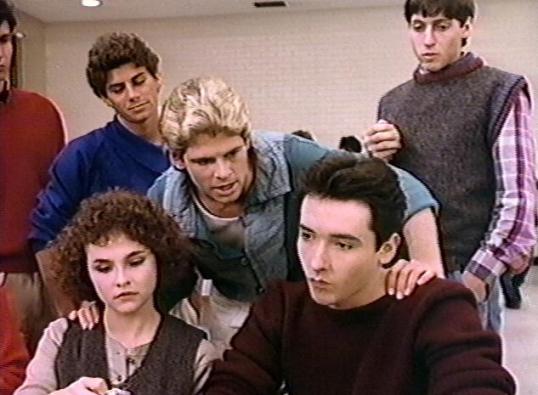
Late Night Retro Television Review: Freddy’s Nightmares 1.10 “The Bride Wore Red”


Welcome to Late Night Retro Television Reviews, a feature where we review some of our favorite and least favorite shows of the past! On Fridays, I will be reviewing Freddy’s Nightmares, a horror anthology show which ran in syndication from 1988 to 1990. The entire series can be found on Plex!
This week, who the Hell knows?

Episode 1.10 “The Bride Wore Red”

(Dir by George Kaczender, originally aired on December 18th, 1988)

This was a dumbass episode.

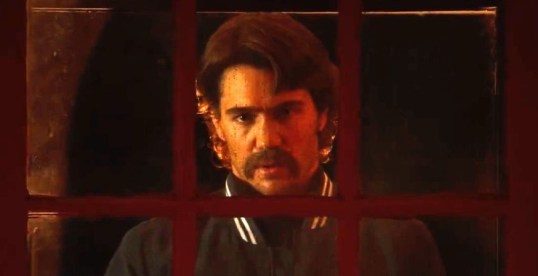
The first half of the episode dealt with Gavin (Eddie Driscoll) and his anxiety about his upcoming wedding to Jessica (Diane Franklin).  His friends take him out to a bar (called the Ball and Chain) where a stripper (Michele Pawk) ties him up and then taunts him about how bad marriage is going to be.  At the wedding, Gavin keeps seeing a mysterious woman (Katherine Moffat) who is dressed in red.  Then, we flash forward and see how miserable Gavin and Jessica are as a married couple.  Jessica no longer wear dresses and instead spends all day in sweatpants.  Gavin only kiss her when he wants sex.  He spends all of his time at the office.  Suddenly, we’re back at the church and Gavin says, “I do,” and kisses Jessica while the woman in red watches from her pew.

Obviously, the flashforwards were all a part of Gavin’s fantasy while standing at the altar.  But if the flashforwards were the fantasy, what are we to make of the equally cartoonish scenes at the bar?  Was all of that supposed to be real?  Even more importantly, who cares one way or the other?  There really wasn’t much of a story here.

The second half of the episode opened with Jessica and Gavin returning from their honeymoon.  Jessica is upset when she learns her father wants them to come over for dinner.  Jessica then goes out on her own, picks up a married man, ties him to a hotel room bed, and takes his picture.  She has an entire album full of pictures so apparently, she’s been doing this for a long time.

A dream sequence reveals that, when Jessica was a child, she caught her father cheating on her mother and he told her that if she ever told anyone, it would lead to divorce and Jessica would be carved up like a Thanksgiving turkey.

Back in the “real” world, Jessica and Gavin arrive for dinner but Jessica freaks out when she sees that her father (Arthur Roberts) is holding a carving knife.  Jessica reveals that her father cheated on her mother (Margaret Shinn) but her mother reveals that she already knows.  Jessica runs from the house and is kidnapped by the guy she previously photographed.  Soon, she’s the one who is tied to a bed while the guy sharpens a knife….

But then, suddenly, Jessica is tied down to a bed in a mental hospital and her husband is telling a doctor that “this always happens” whenever she has dinner with her parents.  Hey, Gavin — maybe y’all should just stop having dinner with her parents.  Just a thought.

Despite the presence of the talented Diane Franklin, this episode felt pretty superfluous.  Gavin’s story felt pointless.  Jessica’s story at least had a point but it still fell flat.  I’m not sure why Freddy would waste his time with either one of these nightmares.
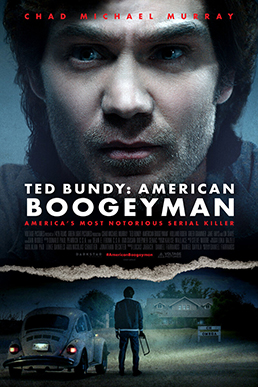
 

The TSL’s Horror Grindhouse: Ted Bundy: American Boogeyman (dir by Daniel Farrands)


The 2021 film, Ted Bundy: American Boogeyman, is yet another film about the life and crimes of America’s first celebrity serial killer, Ted Bundy.

In this particular film, Bundy is played as being a handsome nonentity by Chad Michael Murray.  The film follows Bundy as he moves from Seattle to Utah to Colorado and eventually to Florida, leaving a path of death in his wake.  Investigating his crimes are Seattle Detective Kathleen McChesney (Holland Roden) and FBI profiler Robert Ressler (Jake Hays).  McChesney not only has to track down Bundy but she also has to deal with her sexist police chief and his idiot son, both of whom think that Bundy’s victims are to blame.

Ted Bundy: American Boogeyman is the latest true crime horror film to be directed by Daniel Farrands.  The frustrating thing about Farrands is that, if you can overlook the subject matter of his recent films, he’s actually a talented horror director who knows how to create suspense and who can be counted on to come up with at least one effective jump scare in all of his films.  That said, he keeps making films that are almost impossible to defend because they exploit real-life tragedy.  Farrands’s best film, The Haunting of Sharon Tate, worked because of Hilary Duff’s committed performance in the title role and the fact that the film itself was fully on Tate’s side.  However, Farrands’s The Murder of Nicole Brown Simpson was a tacky piece of exploitation that, despite Farrands’s strong visuals, appeared to have little compassion for the woman whose murder served as the film’s inspiration.

Ted Bundy: American Boogeyman is neither as effective as The Haunting of Sharon Tate nor as bad as The Murder of Nicole Brown Simpson.  For the most part, the film plays loose with the facts of the case.  At one point, McChesney even shows up at one of Bundy’s crime scenes and takes a shot at him as he flees.  (Tarantino also played around with history in Once Upon A Time In Hollywood but, by allowing Brad Pitt and Leonardo DiCaprio to kill the members of the Mason family, he also allowed their victims to live.  Ted Bundy: American Boogeyman, on the other hand, is willing to change history to allow McChesney to arrive at the crime scene but it’s not willing to change history to allow any of Bundy’s victims to survive.  It’s hard not to feel that the film would have benefitted from following Tarantino’s approach and allowing Bundy’s victims to beat him to death.)  There are a few odd scenes in which Bundy is showing fondling several mannequins.  The scenes appear to pay homage to William Lustig’s Maniac but again, it doesn’t seem to be based on anything the actual Bundy did.  The film hints at the intriguing idea of Ted Bundy being America’s first celebrity serial killer but it doesn’t really follow up on it.  The whole thing feels rushed and rather icky.  It certainly doesn’t add any insight into Bundy or killers in general.

That said, our longtime readers know that I hate to end on a totally negative note so I will say that the film uses its low budget to its advantage.  The sparse sets and the small cast give the film something of a surreal feel, with Bundy as an evil specter who randomly shows up to haunt the dreams of a nation.  Lin Shaye and Diane Franklin appear in small roles.  Franklin plays a distraught mom who asks McChesney to kill Bundy rather than arrest him.  Shaye plays Bundy’s overprotective mother and gives a nicely creepy performance.  As I said earlier, it’s not so much that the film is badly made as the subject matter is so icky and the script is so bereft of any new insight that most viewers will wonder why the film needed to be made at all.

The TSL’s Grindhouse: The Amityville Murders (dir by Daniel Farrands)


Ronald DeFeo, Jr. may not be a household name but he’s someone who was indirectly responsible for a lot of cinematic schlock.

Of course, that’s the least of DeFeo’s crimes. When the 69 year-old DeFeo passed away in March, he was serving a life sentence in the state of New York. That’s because, back in 1974, the 23 year-old DeFeo grabbed a rifle and killed his entire family while they slept. When he was brought to trial, DeFeo claimed that he heard Satanic voices that urged him to kill his parents and his siblings. His lawyers tried for an insanity defense, though the prosecution successfully argued that DeFeo was lying about the voices and that he was in full control of his actions on the night that he killed his family. After being convicted and sentenced to life imprisonment, DeFeo sometimes claimed that he had been possessed by the devil and sometimes said that he committed the murders in self-defense and then other times, he said that he did it because he was hoping to inherit his father’s money. Out of all the excuses that he gave for his brutal crimes, DeFeo’s claims of being demon-possessed were the claims that everyone remembered.

Years later, the DeFeo house — which sat in Amityville, New York — was purchased the George and Kathy Lutz. The Lutzes made a small fortune by claiming that the house was haunted and that they had been forced to leave their new home by demonic spirits. (Their claims were apparently supported by paranormal investigators Ed and Lorraine Warren of Conjuring fame.) The Lutzes told their story to Jay Anson, who wrote a book called The Amityville Horror. That book was later turned into a movie and the success of that movie led to a series of sequels and spin-offs. At last count, there’s been at least ten books written about the Amityville case and there have been 30 films that, in one way or another, claim to be connected to the Amityville haunting. Few of those films share much, other than a haunting and the word “Amityville” in the title. There’s not a great deal of continuity to be found in the Amityville films.

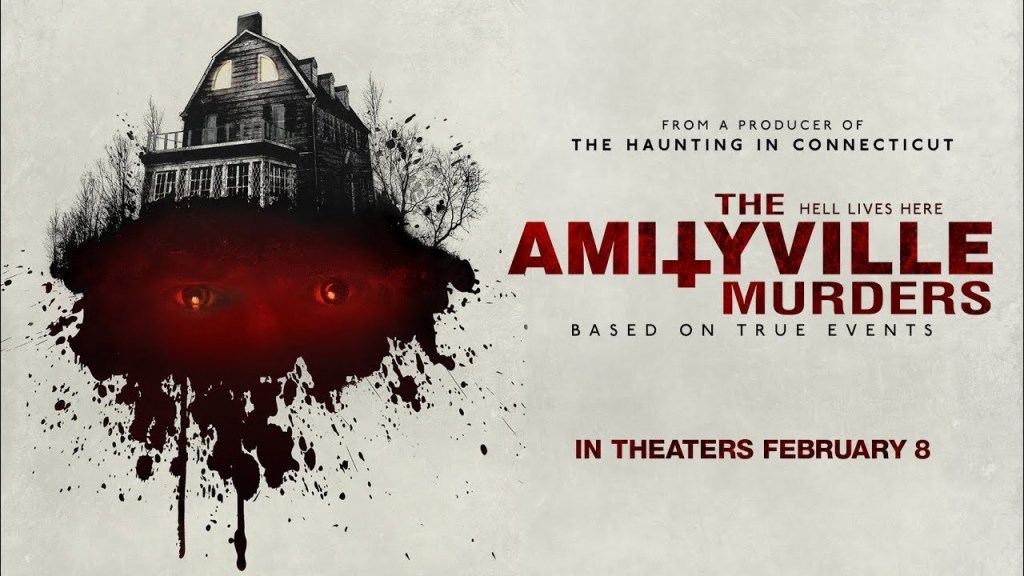
One of the latest of the Amityville films, 2018’s The Amityville Murders, deals with the actual murders that supposedly started off the whole cycle of possession and violence. (1982’s Amityville II: The Possession also dealt with the murders, albeit with Ronald DeFeo renamed Sonny Montelli. Two of the stars of that film — Burt Young and Diane Franklin — appear in The Amityville Murders.) John Robinson plays the bearded and withdrawn Ronald DeFeo, Jr. Chelsea Ricketts plays his concerned sister. Paul Ben-Victor plays their abusive father. The film covers the general facts of the DeFeo murders while trying to have it both ways as to whether or not Ronald was in control of his actions. Ronald DeFeo is portrayed as being genuinely unbalanced but, at the same time, potentially demon-possessed as well. The talented John Robinson does a good job of playing Ronald and there’s a few effective shots of his looking unbalanced but, for the most part, there’s nothing here that you haven’t seen in a dozen other Amityville-influenced horror films. As well, since you know from the start that Ronald is going to end up murdering his family, there’s really not any suspense to be found in the film. Instead, the entire movie is just about waiting for Ronald to pick up that rifle and start shooting people, including two children. It’s more than a bit icky, to be honest.

Whenever it comes to an Amityville prequel, the main question is always just how stereotypically the DeFeos are going to be portrayed. It only takes five minutes for DeFeo, Sr. to admonish Ronald with, “Oh! Watch how you talk to your mother!” Every cliché about Italian-American family life is present in The Amityville Murders, from the father hulking around in his undershirt to the mother decorating the house with religious iconography to the superstitious grandmother. Watching the film, I found myself imagining Tony Soprano watching a cheap Amityville film and exclaiming, “Oh! The mouth on this fucking kid over here, like he’s possessed by the devil or something!” The Amityville Murders hints that the DeFeos themselves may have had mafia connections. Indeed, before he decided to blame demonic possession for his crimes, Ronald DeFeo, Jr. claimed that his family had been taken out by hitmen from New York.

This film was directed by Daniel Farrands, who also directed The Haunting of Sharon Tate and The Murder of Nicole Brown Simpson. The Amityville Murders is neither as well put-together as the Sharon Tate film nor as offensive as the Nicole Simpson film. It’s somewhere in between, just another link in the endless chain of Amityville films. I will say that I personally think Farrands is a talented director and I’d like to see what he could do with a budget and a decent script. The Amityville Murders has its share of impressive shots, even if the end result isn’t exactly the last word in Amityville horror.

The TSL’s Daily Horror Grindhouse: Amityville II: The Possession (dir by Damiano Damiani)


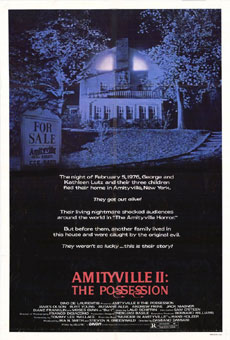
amityville_ii_the_possession

Agck!

The 1982 “prequel” Amityville II: The Possession is a film that is so grimy and icky and yucky and disgusting that you’ll want to take a shower right after you watch it.  And then you’ll probably end up taking two more showers, just to be sure that you’ve washed the film away.

Seriously, this is an amazingly disturbing film.

Claiming to show how that infamous house in Amityville, New York came to be haunted in the first place, this film opens with The Montelli Family moves into a big house with quarter moon windows.  The family patriarch is Anthony (Burt Young), a former cop who walks with a cane.  Anthony is an angry monster, an abusive husband, and a terrible father.  His wife, Dolores (Rutanya Alda), lives her life in denial, insisting that a new house means a new beginning and continually praying that her family will find peace.  Anthony and Dolores have four children.  The two youngest are at the mercy of their angry father.  Teenagers Patricia (Diane Franklin) and Sonny (Jack Magner) are both looking forward to the day that they can escape their family.

As soon as the Montellis move in, strange things start to happen.  It turns out that there’s a strange tunnel in the basement, one that appears to lead to nowhere.  When obscene messages appear on the walls of the house, Anthony starts to beat the youngest children but, fortunately, Sonny grabs a rifle and points it at his father’s head.  When the local priest, Father Adamsky (James Olson), shows up to bless the house, he ends up getting so disgusted at Anthony that he leaves without finishing.

In fact, Father Adamsy is a remarkable ineffectual priest.  When he attempts to talk to Sonny, he simply assumes that Sonny isn’t talking because he’s rude.  What Adamsky doesn’t suspect is that Sonny’s being rude because he’s been possessed by a demon for the basement!  When Patricia confesses that she and Sonny have been having sex, Adamsky doesn’t do anything about it.  When Patricia tries to call him to let him know that her brother appears to be possessed, Adamsky refuses to answer the phone and instead goes skiing for the weekend.

And, of course, while Adamsky is gone, Sonny grabs that rifle and, in a nightmare-inducing series of scenes, kills everyone in the house…

Of course, when Father Adamsky returns, he feels guilty and he decides to perform an exorcism.  MAYBE HE SHOULD HAVE DONE THAT EARLIER!  But no … he had to go skiing…

Anyway, Amityville II: The Possession is a deeply icky film.  It’s undeniably effective and has a lot of scary moments but it’s not an easy film to sit through.  Between Anthony beating his family and Sonny walking into Patricia’s room and asking her to “play a game,” this is a film that really gets under your skin.  You’ll never forget it but, at the same time, you’ll also never want to watch it again.

Interestingly enough, Amityville II was directed by Damiano Damiani, an Italian director who is probably best known for movies like A Bullet For The General and Confessions of a Police Captain, genre films that often featured a subversive political subtext.  Though Amityvile II is not overly political, the film’s portrait of the suburban Montelli family as a ticking time bomb does definitely fit in with Damiani’s other work.  Damiani reportedly set out to make the most disturbing film that he possibly could and he succeeded.

Back to School Part II #13: The Last American Virgin (dir by Boaz Davidson)


The_Last_American_Virgin_movie_poster

(SPOILERS BELOW!)

For the past week, I have been doing a chronological review of films about high school, college, and teenagers.  I started things off on Monday by taking a look at Teenage Devil Dolls, a film from the 1950s.  From there, I moved on to the 60s and then the 70s and now, finally, I am now ready to start in on the golden age of teen films — the 1980s!

I started things off by watching The Last American Virgin, a low-budget film from 1982 and oh my God!  Seriously, The Last American Virgin has got to be one of the strangest films that I’ve ever seen.  I can only imagine what teen audiences in 1982 must have thought when they went to see the latest sex comedy and discovered that it was actually one of the darkest and most depressing films ever made.

Actually, The Last American Virgin is two films in one.  The first film is pretty much a typical teen comedy.  Three friends — awkward but sweet Gary (Lawrence Monoson), handsome but shallow Rick (Steve Antin), and funny fat guy Dave (Joe Rubbo) — try to get laid and survive their senior year in high school.  They pick up three girls by pretending to have cocaine.  (They offer them sweet-n-low instead, which leads to a lengthy scene of the girls snorting the artificial sweetner and then saying stuff like, “This is the best Colombian that I’ve ever had.”)  They meet a lonely housewife who had sex with two of them before her husband arrives home.  (As usual, Gary misses out.)  They have sex with a crude hooker and all end up with crabs as a result.  It’s a typically crude teen comedy, distinguished only by the fact that Monoson, Antin, and Rubbo are a lot more believable as teenagers than the usual 25 year-old actors who often starred in these films.  (According to the imdb, Monoson was only 16 when The Last American Virgin first went into production.)

But, right there in the middle of the usual teen movie shenanigans, there’s this other movie taking place.  Gary is in love with Karen (Diane Franklin, who appeared in several teen films in the 80s, including Better Off Dead) but Karen is dating Rick.  When Gary finds out that Karen has lost her virginity to his best friend, he ends up sitting alone in a diner while Just Once (“I did my best … but I guess my best wasn’t good enough…”) plays on the soundtrack.  In fact, that song shows up several times during the movie.  Basically, whenever Gary tries to do anything, we suddenly hear: “I did my best … but I guess my best wasn’t good enough….”

I mean, seriously, poor Gary!  Even the soundtrack is implying that he’s a loser!

Eventually, Karen discovers that she’s pregnant.  Rick refuses to help out and promptly leaves on a ski trip.  Gary and Karen tell their parents but they’re going on the ski trip as well but instead, they go to an empty house that once belonged to Gary’s late grandmother.  Gary points out a huge, old-fashioned radio sitting in a corner and says that Karen can listen to it if she wants.  Karen starts to cry.  Gary starts to cry and swears that he’ll never abandon her.

Karen gets an abortion.  Shots of Karen at the clinic are mixed in with scenes of Gary desperately trying to raise the money to pay for her abortion.  He begs his boss for an advance on his salary.  He pawns his stereo.  All the while, U2’s I Will Follow plays on the soundtrack.

At this point, the film had gotten so serious that I was half-expecting for Gary to come to the clinic to pick up Karen, just to be told that she had died during the procedure.  But no, Karen survives.  They go back to grandma’s house.  Karen thanks Gary for all that he’s done for her.  Gary cries and says that he loves her.  Karen invites Gary to her birthday party.

Gary goes to the birthday party, bringing with him the gift of a ring.  But, as soon as Gary steps into the kitchen, what’s the first thing he sees?

Karen hugging Rick.  Both of them have tears in their eyes.  They look back at Gary.

Gary stumbles out of the party.  He gets in his car and drives away.  We get a close-up of Gary sobbing in the car…

I did my best …. but I guess my best wasn’t good enough…

AND THEN THE MOVIE ENDS!

I mean … MY GOD, HOW DEPRESSING CAN A MOVIE BE!?

And yet, that depressing ending is what sets The Last American Virgin apart.  I mean, it’s not a happy ending but it definitely elevates this low-budget and rather crude movie.  If nothing else, it feels more realistic than having Lawrence Monoson punch out Steve Antin and then live happily ever after.  Sometimes, stories don’t end with love and smiles.  Often times, they end with an awkward teenager sobbing as he drives home.

So, that’s The Last American Virgin.  It’s an odd little movie.  It was also a remake of a film that the same director had previously made in Israel and the film’s mix of low humor and high drama feels more European than American.  This is definitely a film made by an outsider, trying to imagine what American teenagers are like.  It makes for a movie that, though it may appear to be a typical teen sex comedy, is actually something else altogether.

Seriously, this is a weird one.  I’m as surprised as anyone to say that I recommend it.

Back to School #40: Better Off Dead (dir by Savage Steve Holland)


Better-Off-Dead

There’s something really sad about knowing that John Cusack does not like the 1985 teen comedy, Better Off Dead, despite the fact that he himself starred in the film.

Just how much he dislikes the film depends on who you talk to.  I read an interview with the film’s director — the wonderfully named Savage Steve Holland — in which he said that Cusack approached him after a screening of the film and told him that he totally hated the film and would “never trust” Holland again.  (What’s truly sad is that Holland also said that this encounter caused him to momentarily lose all interesting in film making.)  However, a few years ago, Cusack said, while answering questions on Reddit, that he didn’t hate Better Off Dead, he just felt that it could be better and that he was glad that other people still like it.  In another interview, Cusack said that the “absurdist humor” of Better Off Dead just wasn’t his thing.

John, I understand that you’re a serious actor and I’ve always had a lot of respect for the fact that you’re an outspoken liberal who is still intellectually honest enough to hold Obama up to the same standard to which you previously held Bush.  But honestly, John, maybe you should loosen up just a little.  Not all of your movies have to be The Butler!  There’s nothing wrong with enjoying yourself onscreen.  And there’s nothing wrong with entertaining an audience and leaving them happy.  Better Off Dead may be one of more lightweight films that I’m reviewing for this Back to School series but it’s a lot of fun!  It makes people smile.  And you know what?  A lot of those smiling people are going to be more willing to see you in a film like The Butler because they’ve also seen you in films like Better Off Dead.

Add to that, you give a pretty good performance in Better Off Dead.  In fact, you provide the film with a much-needed center.  A lot of the comedy in Better Off Dead may be absurd but John, your performance is so likable and so grounded that you keep the film from getting too weird.  You do such a good job as Lane Myer and are so convincing as a well-meaning but dorky high school student who is trying to win back his ex-girlfriend (Amanda Wyss) by skiing down a mountain that it allows everyone else to be as weird as the film will allow.  Without your excellent performance, John, the film would be a total mess.

BOD

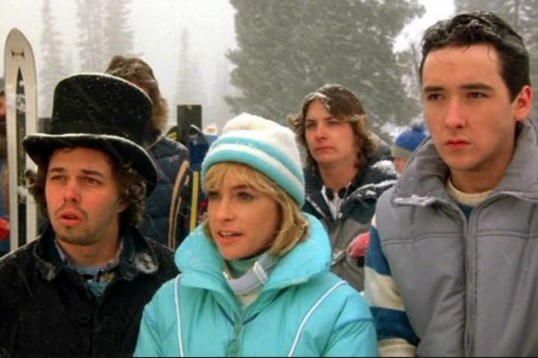
Better Off Dead is essentially a collection of skits.  There’s a plot but the plot is really only there as an excuse for the nonstop jokes.  For instance, there’s Lane’s best friend, Charles (Curtis Armstrong, essentially playing the same character he played in Risky Business) who spends the entire film looking for things to snort and who, when standing atop of snowy mountain, says, “This is pure snow!  Do you have any idea what the street value of this mountain is!?”

And then there’s Monique (Diane Franklin), the foreign exchange student who lives next door to Lane and who pretends that she can’t speak English because she’s trying to avoid being set up with creepy Ricky Smith (Daniel Schneider).

There’s Lane’s mother (Kim Darby), who cooks some of the strangest looking meals ever seen in an American film.  There’s also Lane’s younger brother, who never speaks but who knows how to build a laser gun.  Even Lane’s father (David Ogden Stiers). who seems relatively normal, still manages to destroy the garage door.

There’s the fact that Lane’s romantic rival is named Roy Stalin (Aaron Dozier).  Is that not just the perfect name for a villain?

There’s my favorite scene in the entire film, where a geometry teacher (Vincent Schiavelli) explains a complicated problem to his class and the class responds by cheering him along.  “Who wants to come up here and solve the problem?” the teacher asks.  The entire class raises their hands and goes, “Me!”

There’s quotable and memorable lines like: “I’ve been going to this high school for seven and a half years. I’m no dummy,” ” Now that’s a real shame when folks be throwin’ away a perfectly good white boy like that,” and “Gee, I’m really sorry your mom blow up, Ricky.”

And, of course, there’s that paperboy who wants his two dollars…

Seriously, John, Better Off Dead might not be your favorite movie but it’s really not that bad!

Want to see just how not bad Better Off Dead really is?  Watch it below!

http://www.youtube.com/watch?v=a3Q8oM_AnK8