
Jeremy Saulnier’s Green Room is one of the best films of the year but I don’t know if I’m ever going to be able to bring myself to watch it a second time.
Why?
There’s two reasons:
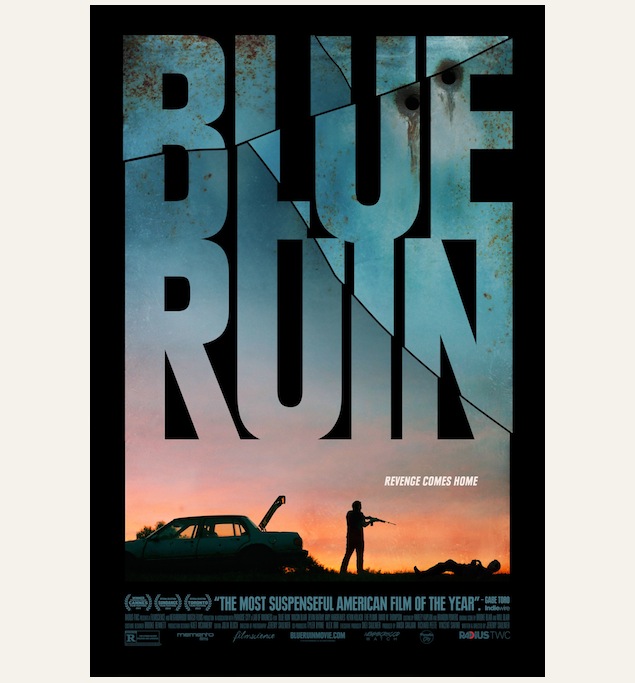
Number one, Green Room is one of the most intense films that I’ve ever seen. Much like Saulnier’s previous film, Blue Ruin, this is a violent movie that never makes violence look fun. The violence here is all too real and the pain that the characters feel is all too real as well. I watched a good deal of Green Room through my fingers, hiding my face behind my hands. Seriously, I’ve seen some pretty gory movies. (I’m an unapologetic fan of Italian horror, after all.) But Green Room still left me shaken. Occasionally, it even left me gasping for breath. It’s just that intense. It’s a film about four people battling for survival and I’m surprised (and a little proud) that I survived all the way to the end.
The other reason is that the film stars Anton Yelchin. It was one of the final films that he made before his death and he gives such a likable and committed performance that it’s impossible for me to think about the film without getting a little emotional. Far more than his supporting work in the Star Trek films, Green Room showcased what a good actor Anton Yelchin truly was. It’s impossible for me to think about Green Room without mourning a talent taken from us far too soon. And though it might be difficult to watch the film a second time, everyone should watch Green Room at least once. If you ever wonder why some of us still get emotional when we talk about Anton Yelchin, it’s all there in the movie.
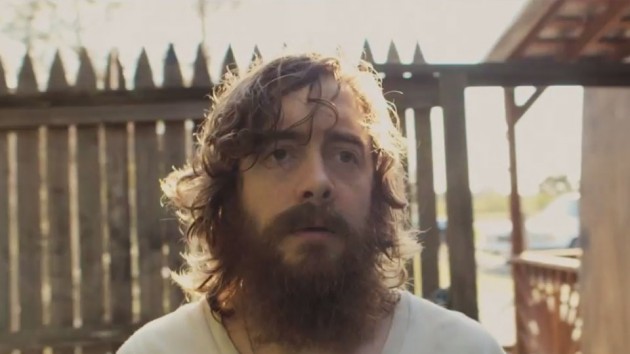
In Green Room, Yelchin plays Pat. Pat is the bass player for a punk band called the Ain’t Rights. The Ain’t Rights have been touring the northern part of the country. It’s a low-budget tour, one that perfectly reflects that anti-corporate politics of the Ain’t Rights. For them, the tour means crashing with friends, siphoning gasoline, and doing interviews with underground radio stations. In fact, one interviewer — the rather dorky Tad (David W. Thompson) — arranges for them to do a show at an isolated bar in Oregon. Tad tells them that the bar attracts a rough crowd but that they’ll be okay because his cousin Daniel (Blue Ruin‘s Macon Blair) works there.
The Ain’t Rights arrive and discover that the club appears to have a clientele that is exclusively made up of Neo-Nazi skinheads. After some hesitation, the Ain’t Rights take the stage and, for a few brief moments, Saulnier shows them performing in slow motion and those of us in the film’s audience — even someone like me, who would probably otherwise never listen to a band like the Ain’t Rights — are briefly caught up in the joy and excitement of their performance.
Unfortunately, while the band is performing, the Nazis are busy murdering a woman in the green room. And, after the band walks in on the aftermath of the murder, they soon find themselves marked for death as well. The band is smart enough to lock themselves in the green room and to take one of the Nazis as a hostage. However, they know that they can’t stay in that room forever. At some point, they’re going to have to figure out how to escape from the bar…
Green Room is a harrowing and violent film, one that maintains an almost feverish intensity from start to end. Making it all the more difficult to watch is that Saulnier keeps the horror rooted in reality. The Neo-Nazis never turn into cardboard movie slashers. Instead, they are a very real and disturbing threat. (It’s interesting to note that occasionally, a Neo-Nazis will express some doubt about killing the band but none of them have the courage to actually refuse any of the orders that they receive. We often hear that people need to respect authority. Well, Green Room shows what happens when people blindly respect authority to the extent that they can no longer think for themselves.) Though the film may be violent, it never celebrates that violence and when one character does get a chunk of arm chopped off, it’s literally one of the most painful images to ever be captured on film. You like every member of the band so, when they get hurt, you feel their pain as well. Though Yelchin may be the main character, the other members of the Ain’t Rights — played by Alia Shawkat, Joe Cole, and Callum Turner — all make a good impression as well. You want them all to escape and dread the realization that not all of them will.
As for the owner of the club, his name is Darcy and he’s played by Patrick Stewart. At first, it may sound like stunt casting. Patrick Stewart as a Neo-Nazi? But interestingly enough, Darcy doesn’t really seem to care about ideology. Instead, you get the feeling that he realized that there was money to be made by catering to racists so that’s what he decided to do. When he barks out orders and demands that the members of the band be killed, his main motivation seems to be pure greed. If the band escapes and reports the murder, he’ll lose his club. Stewart gives a chilling performance. When he first appears, you do think, “Hey, it’s Patrick Stewart!” But, within minutes, you forget who is playing him. He becomes Darcy and you’re scared to death of him and his followers.
Green Room is an incredibly intense and scary film. It also features perhaps the best performance of Anton Yelchin’s career. Green Room stands as a testament to a talent taken too early.
(On a purely personal note: I’m glad that Green Room took place in Oregon. Too often, movies tend to portray racism as being an exclusively Southern issue, one that somehow magically disappears once you head up north. It often feels as if people spend so much time talking about racism in other states that they fail to actually look at what’s happening in their own backyard. It’s easier to laugh at a state like Alabama than to ask why someone like Eric Garner died on the streets of New York City. Racism is an American issue, and that includes the states both below and above the Mason-Dixon line.)

 Through the Shattered Lens