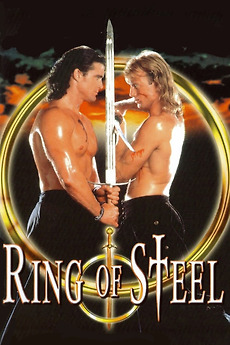
 After Olympics-bound fencer Alex Freyer (Robert Chapin) accidentally kills his opponent, he is blacklisted from the sport. His career seems like it’s over until he’s saved from a mugging by the mysterious Man In Black (Joe Don Baker). The Man In Black says that he’s been watching Alex and he knows that Alex could be “the best.” The Man In Black isn’t talking about the Olympics, though. He’s talking about taking part in a series of underground sword fights, know as the Ring of Steel. Alex is all for it, until he learns how high the stakes actually are. The Man In Black is determined to keep Alex fighting so he abducts Alex’s girlfriend (Darlene Vogel).
This is one of the many “underground fighting films” that were made in the 90s. The plot is nothing special but the use of swords instead of fists does add an unexpected spark to the fight scenes. Robert Chapin, who also came up with the film’s story (and who wrote an original draft of the screenplay that was considerably darker than the film that was eventually made), was a stuntman and an accomplished swordfighter so the fights in Ring of Steel feel authentic and are exciting even if the story is predictable. Joe Don Baker plays the villain, a character who actually is credited as being “The Man In Black,” and he does a good job tempting Alex to the dark side and then mocking his attempts to escape. Though I prefer Baker as a hero, he always really threw himself into his villainous roles.
Ring of Steel used to show up on cable when I was a kid. I always made a point to watch it. It’s on YouTube now and it’s still an entertaining fight film.
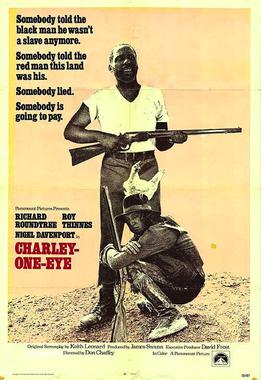 Welcome to the old west, where life is brutal and unpredictable. Ben (Richard Roundtree) joined the Union Army so he could kill white men. When his commanding officer caught Ben in bed with his wife, Ben was forced to commit murder and go on the run. When Ben stumbles across an unnamed Indian (Roy Thinnes) with a bad leg, Ben forces the Indian to accompany him. Despite Ben being loud, cruel, and mentally unstable, an unlikely friendship develops between Ben and the Indian, cemented by their mutual hatred of the white man. When they find a deserted church, Ben and the Indian settle in and start to raise chickens. The Indian’s favorite chicken is a one-eyed bird that he has named Charley. Meanwhile, the Bounty Hunter (Nigel Davenport), a British racist, retraces their every step.
 Through the Shattered Lens