Rest in Peace, Robert Carradine. The veteran character actor and son of John Carradine (as well as brother of Keith and half-brother of David) has passed away at the age of 71.
Most of the articles about his death describe him as being “Lizzie Maguire star Robert Carradine.” Robert Carradine, however, had a long career and it started long before Lizzie Maguire. Eternally youthful, he was still playing teenagers when he was in his 30s. (Let’s just say that he was a bit old to be a college freshman in Revenge of the Nerds.) Robert appeared in his share of 70s exploitation films but he also appeared in films directed by Hal Ashby, Walter Hill, and Martin Scorsese.
In fact, one of Carradine’s first roles was in Scorseses’s 1973 masterpiece, Mean Streets. Here he is, sharing an unforgettable scene with his brother David.
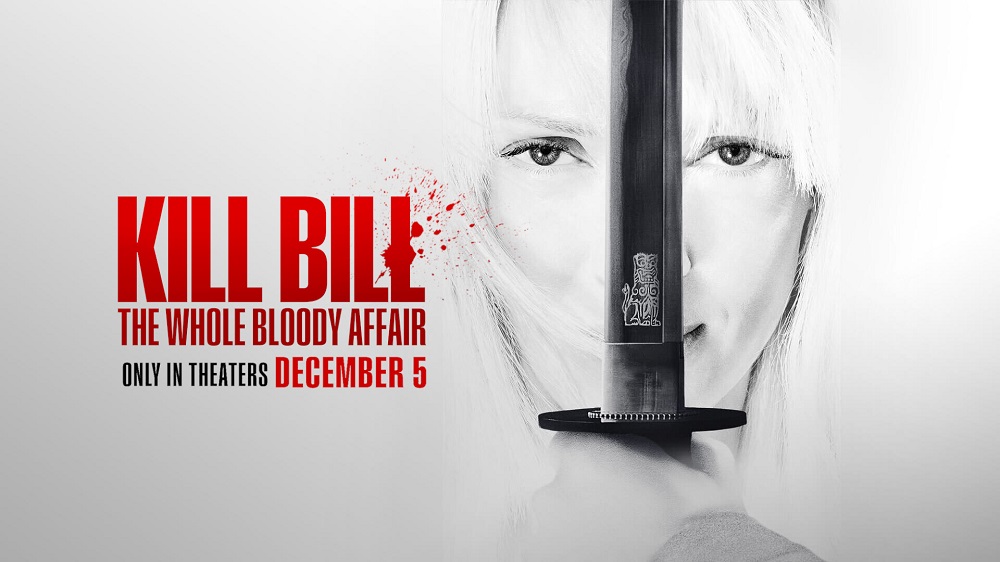
Anything new from Quentin Tarantino is a big deal at my house. When you consider that it’s been over six years since the auteur released his most recent film, ONCE UPON A TIME IN HOLLYWOOD (2019), I was understandably excited when I saw that the full “extended cut” version of the KILL BILL films, dubbed “The Whole Bloody Affair” was being released to theaters. Then, after seeing the trailer, I became really curious about the new scenes that were added, as well as the different presentations of the previous material. When I originally watched the separate volumes at the movie theater in 2003 and 2004, I enjoyed the first movie slightly more than the second based on the fact that it had more action. Now, I wanted to see how the two volumes flowed as one single film. My wife was working this weekend, so I had some time on my hands and decided to spend about four hours of that time watching KILL BILL: THE WHOLE BLOODY AFFAIR.
First, a quick summary of the film… on the eve of her wedding, a pregnant bride-to-be (Uma Thurman) and her entire wedding party is gunned down by the Deadly Viper Assassination Squad, commanded by her former lover, Bill (David Carradine). Somehow surviving the rehearsal massacre, the Bride, who was once a member of the same assassination squad, sets her sights for revenge on each of the members, beginning with O’Ren Ishii (Lucy Liu), and then moving on to Vernita Green (Vivica A. Fox), Budd (Michael Madsen), Elle Driver (Daryl Hannah), and finally Bill himself. It’s a simple premise, but Tarantino uses that premise as a springboard to share his love of kung fu movies, samurai cinema, spaghetti westerns and grind house fare and create something truly special. I loved the KILL BILL films when they were originally released, and the four hours seemed to go by very quickly today as I had a blast watching this definitive version with a relatively full theater of fans.
After watching KILL BILL: THE WHOLE BLOODY AFFAIR, my first thought is that it wouldn’t be that different if the theater just showed Volume One, had a 15-minute intermission, and then showed Volume Two. This isn’t putting down the new version in any way, but there are not a large number of changes that enhance the overall quality of the film itself, and screening the original volumes back-to-back would provide the context for the “big picture” of the story that was lacking when the movies were released in the separate years of 2003 and 2004. With that said, watching the film in this new version was a lot of fun for me, and it should become the norm moving forward as it is truly Tarantino’s vision. It does flow better, mainly by eliminating the unnecessary, late cliffhanger reveal of the daughter in Volume One, as well as the Bride’s “direct to the camera” update at the beginning of Volume Two.
For those who want to go see this new version, I did want to point out the significant differences I noticed while viewing KILL BILL: THE WHOLE BLOODY AFFAIR. The first sequence where I noticed obvious additions to the film occurred in the anime sequence that introduces the background of O’Ren Ishii. This extended version adds additional footage of the Yakuza assassin Pretty Riki to the sequence, and once O’Ren is a slightly older schoolgirl, we get to see her execute a plan of vengeance against him. I would guess somewhere between five and ten minutes of action was added to the sequence. I enjoyed it in Volume One, and I also enjoyed the extended anime sequence in this new version. Does the sequence really add to the overall quality of the film, though? Even though I enjoyed the new material and am glad it was added, I would say no. The next significant difference I noticed with this version concerns the addition of color to the fight sequence between the Bride and the crazy 88’s in the House of Blue Leaves, as compared to the sequence in Volume One that was shown largely in black and white. As a person who doesn’t enjoy a lot of gore in my movies, it never bothered me that the scene switched from color to black and white once the limbs and heads started getting lopped off. With that said, it was kind of fun watching all those limbs hacked off in glorious color this time around. Finally, there is a post-credits animated sequence called “The Lost Chapter: Yuki’s Revenge” where Gogo Yubari’s twin sister tries to get revenge on the Bride. It lasts about ten minutes or so, but honestly, it didn’t add much to the overall experience for me, and I doubt I’ll ever watch it again. As a completist though, I am glad that I stuck around and watched it. These are the only big changes I noticed while watching THE WHOLE BLOODY AFFAIR. I’m sure there had to be some more changes, but I don’t think they were significant.
I did want to share some final thoughts I had while watching KILL BILL: THE WHOLE BLOODY AFFAIR this afternoon. I noticed on the opening title card that the movie is dedicated to the great Japanese director Kinji Fukasaku, and you can definitely see his influence all over this film. It also affected me more watching Michael Madsen’s excellent performance as Bill’s brother Budd. Tarantino just knows how to get the best out of Madsen, and considering that he passed away a few months ago, I just really appreciated his work while watching the film. I also enjoyed the multiple shoutouts to my movie hero Charles Bronson in the film. First, there’s a MR. MAJESTYK poster hanging on the wall in Budd’s trailer that is featured often throughout the various shenanigans and fights that take place in the trailer. Second, Charles Bronson passed away in 2003, the year that Volume One of KILL BILL was released. In the final credits of the film, Bronson receives an RIP credit. I’ve always loved the fact that Tarantino loves Charles Bronson, and that’s on full display in KILL BILL: THE WHOLE BLOODY AFFAIR. I would have given anything if Bronson had been in better health as Tarantino was coming into his own as a filmmaker. I have no doubt that he would have been offered a chance to appear in one of the director’s films.
At the end of the day, I had a great time watching KILL BILL: THE WHOLE BLOODY AFFAIR. The four hours flew by, and I truly appreciated seeing Tarantino’s full vision realized on screen. While I do think this should be the definitive version moving forward, I loved the KILL BILL films before today. THE WHOLE BLOODY AFFAIR improves the overall flow of the film and adds some fun new stuff, but my love for the film didn’t really change that much today… it just runs a tad bit deeper.
To answer my own question, “I am!” I was checking my local movie theater listings for this weekend and came across the showtimes for the release of KILL BILL: THE WHOLE BLOODY AFFAIR, and I must admit I’m pretty excited about it. My wife is working this weekend so I have all Sunday to myself, and watching this Quentin Tarantino classic in a whole new way sounds like a lot of fun.
Check out the trailer below, and if you’re in the Little Rock area, I just may see you there!
4 Shots From 4 Films is just what it says it is, 4 shots from 4 of our favorite films. As opposed to the reviews and recaps that we usually post, 4 Shots From 4 Films lets the visuals do the talking.
I love to share movies that are filmed in my beautiful home state of Arkansas. There aren’t a lot of movies filmed in Arkansas, but there are definitely some interesting movies filmed in Arkansas. Check these out!
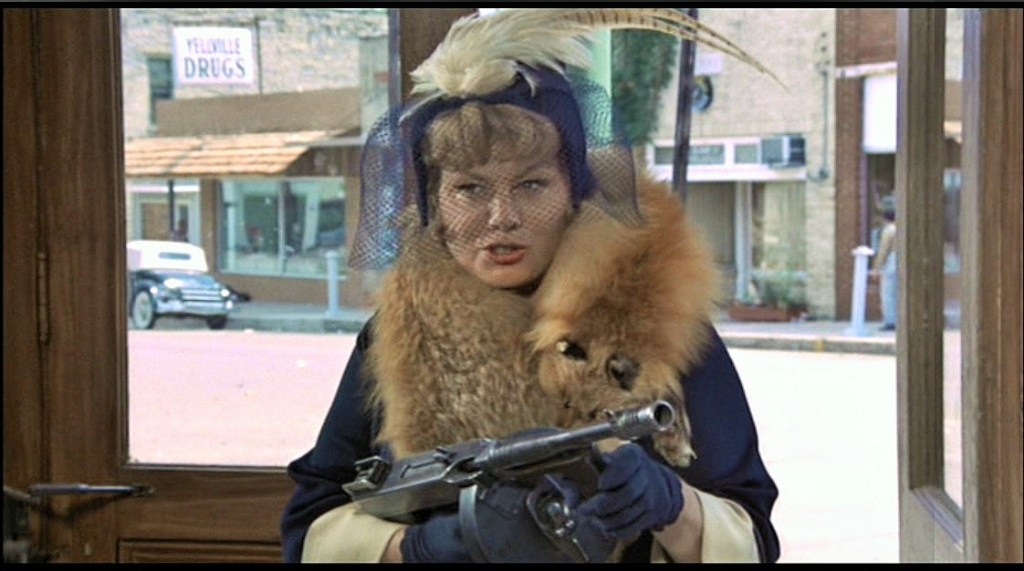
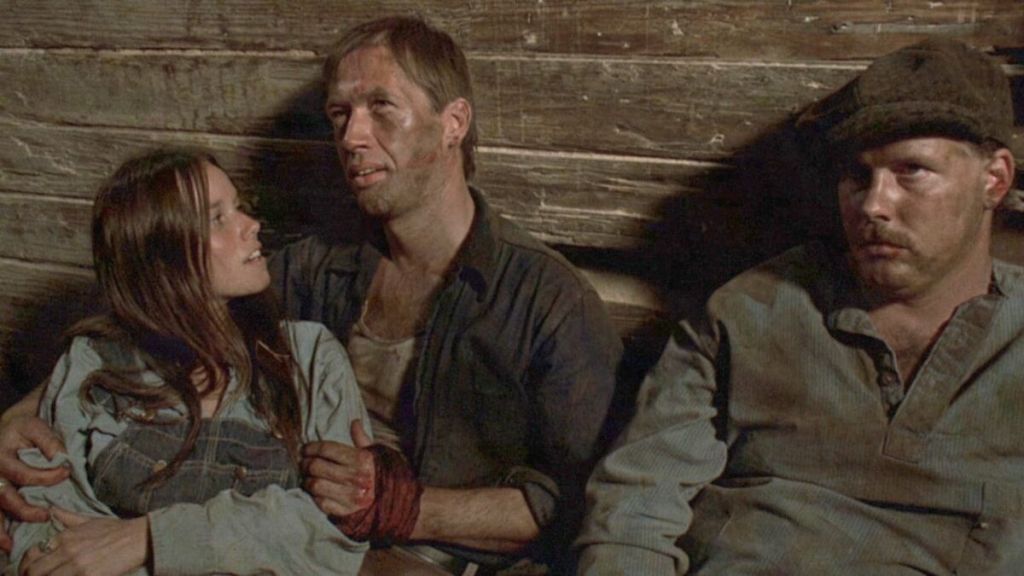
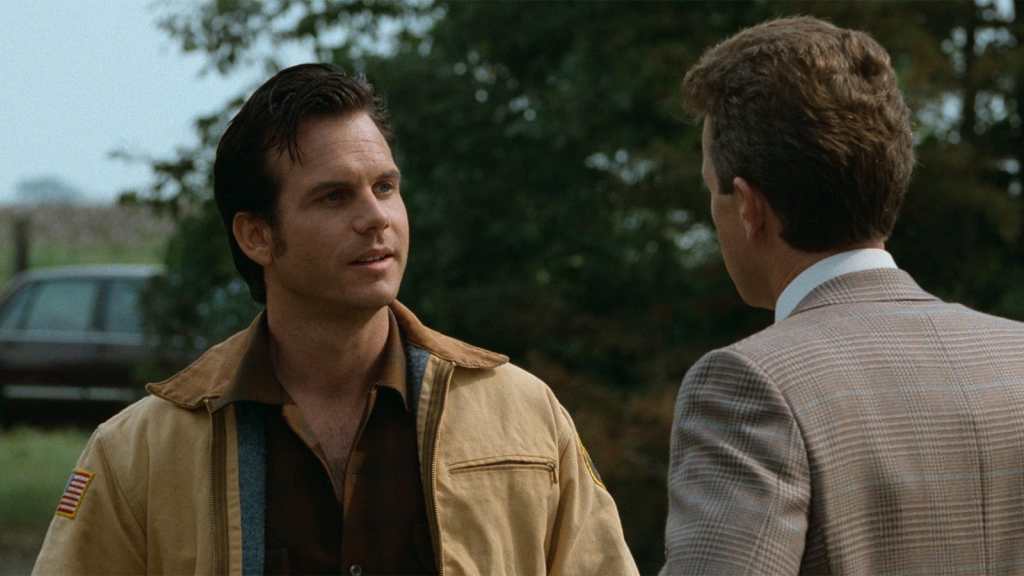
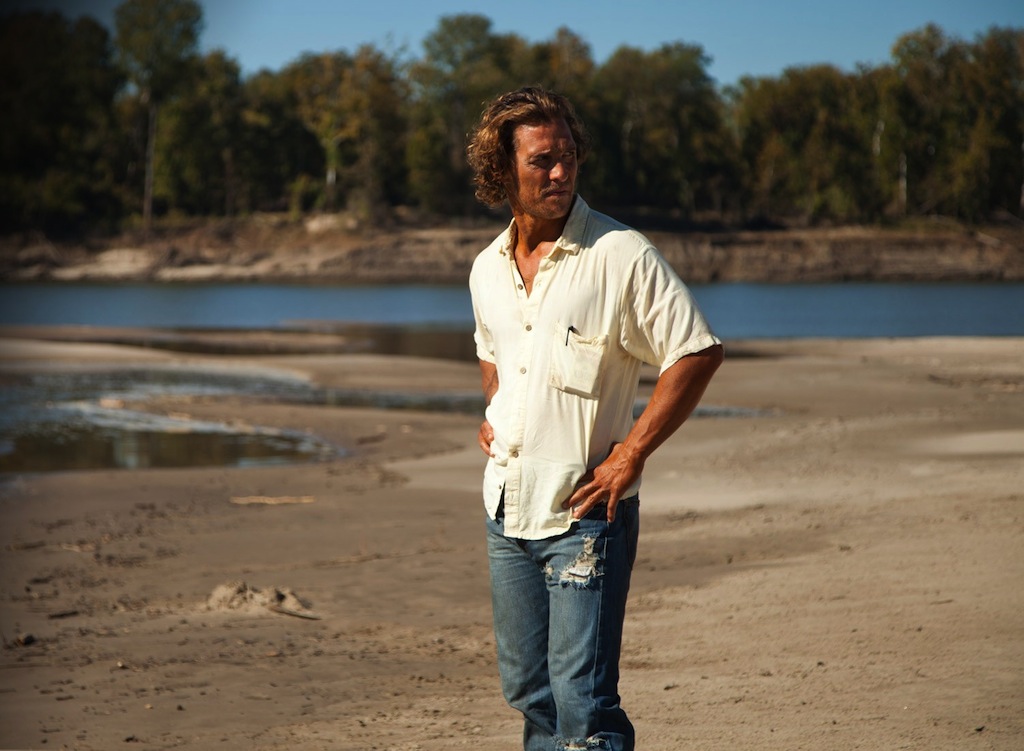
Bloody Mama (1970)Boxcar Bertha (1972)One False Move (1991)Mud (2012)
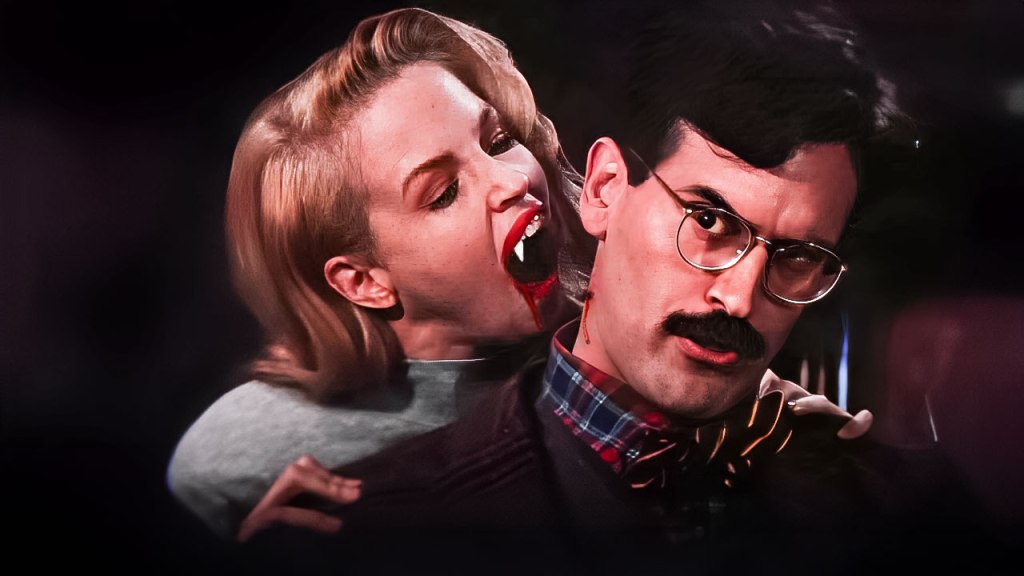
In honor of Bruce Campbell’s 67th birthday, I decided to watch a movie he’s featured in that I’ve never seen before. I thought the horror-comedy SUNDOWN: THE VAMPIRE IN RETREAT looked like it might be fun so I went for it!
In the desert town of Purgatory, a colony of vampires led by Count Mardulak (David Carradine) want to live in peace, abstaining from human blood, and instead, drinking a blood substitute called “Necktarine,” which is produced in a local factory. They also use high powered sunscreen that allows them to go out in the day time as long as they wear thick sunglasses, big hats or umbrellas, and gloves. Unfortunately, the blood factory begins experiencing production issues, so Mardulak asks David Harrison (Jim Metzler), the unsuspecting human who designed the production process, to come to town and fix their problems. Harrison brings his family with him, including his wife Sarah (Morgan Brittany), and their two daughters. The Harrison family soon find themselves in the middle of an other worldly war as Jefferson (John Ireland) and Shane (Maxwell Caulfied), rebellious local vampires, plot to overthrow Mardulak so they can return to their murderous ways. Meanwhile, Robert Van Helsing (Bruce Campbell), the great grandson of the famed vampire hunter, walks into town, ready to romance the local vampire beauty Sandy (Deborah Foreman) and drive stakes into the hearts of as many bloodsucking freaks as possible!
As far as I’m concerned, SUNDOWN is a blast as a completely absurd horror-comedy that puts an interesting spin on traditional vampire legend, with its endless sunscreen slathering and a growing local weariness over “Necktarine” adding to the good times. It’s campy and silly, with purposely terrible stop motion bat effects, over-the-top family drama, and lots of cheesy one-liners, but of course that’s all part of the charm.
The B-movie dream cast is what I enjoyed the most about SUNDOWN. David Carradine plays it pretty straight as the town leader Count Mardulak, which is effective when you consider all of the craziness going on around him. Bruce Campbell, and his mustache, steals all of his scenes with his goofy charm and misguided heroics. And, of course, the inimitable M. Emmet Walsh is perfect as old man Mort, a vampire who loses his temper and beheads a disrespectful city slicker. He just can’t help himself. Throw in other veteran character actors like Bert Remsen and John Ireland and it’s easy to enjoy the movie no matter how silly it all gets.
On a personal note, I did want to point out a couple of performances in SUNDOWN that have Arkansas connections. First, Jim Metzler had a solid part a couple of years after this movie in the crime thriller ONE FALSE MOVE (1991), which was co-written by Billy Bob Thornton and partially filmed in Eastern Arkansas. It’s a great movie and Metzler is good in it. Second, Elizabeth Gracen has a small part in the film. Gracen, whose actual name is Elizabeth Ward, won the title of Miss Arkansas in 1981 and then went on to win Miss America in 1982. My uncle Billy was her hair stylist as she made her run to beauty pageant immortality. Other notable Gracen life events include her affair with Arkansas Governor Bill Clinton in 1983, her appearance in Steven Seagal’s MARKED FOR DEATH in 1990, and her Playboy spread in 1992. Interestingly, 18 years old at the time, I saw the layout when my girlfriend’s mom bought the issue and let me look at it!
Overall, SUNDOWN lets us know right off the bat the kind of absurd movie we’re dealing with, so you’ll either be into it or want to just move on. I was into it, mainly due to its strong cast. It’s not perfect, and it overstays its welcome by a good 15 minutes, but SUNDOWN is a fun watch for fans of silly horror-comedies and the excellent cast. I had a great time with it!
Episode 17, the final episode of this short lived TV series, begins with Rufe Ryker (Bert Freed) in serious need of a cook at his cattle ranch. While lamenting the horrible state of the vittles that he and his men are being forced to consume to Sam Grafton (Sam Gilman), it’s suggested that he consider asking Marian Starett (Jill Ireland) to be his cook. Ryker ends up taking Sam’s advice and heads out to the Starett ranch to see her and even gets invited to stay for dinner. None of this is setting well with Shane (David Carradine) or Tom Starett (Tom Tully), as neither man trusts Ryker, especially since he has spent the better part of the first 16 episodes of the series wanting to take the ranch away from them. They make their feelings very obvious as Ryker plays nice and Marian seems to appreciate his suddenly more caring and complimentary nature. Later at Sam’s bar, Ryker begins telling Sam about how good it would be to have a woman to spend his time with. Sam tells him “You’re talking like a man in love.” It really seems that Ryker may be falling for Marian. He even gets a fresh shave and haircut. Shane walks in on Ryker getting his haircut and gets pissed all over again. He heads back to the ranch and tells Marian, who offers to give Shane his own haircut, that Ryker is “trying to court you,” hoping that she’ll put down the idea. Sensing what Shane is up to, Marian decides to play devil’s advocate and acts like dating Ryker isn’t such a bad idea. It drives Shane crazy, which seems to be making Marian quite happy. Ryker keeps pressing forward, even bringing Marian some excellent peanut brittle. As a jealous Shane tries to warn Marian that Ryker is dangerous, she asks Shane why he cares, clearly wanting him to answer honestly, which he doesn’t. Will Shave ever admit to Marian that he loves her?!! Will Ryker be able to convince her that he can give her a good life at his ranch? Will Tom threaten to kick Shane’s ass if he doesn’t handle his business with Marian? The good news is that all such questions are answered in this final episode.
While episode 17 presents a strange conundrum, Shane vs. Rufe Ryker for Marian’s attention, I must admit that I found it an excellent conclusion to the series for several reasons. First, Rufe Ryker’s best nature is finally revealed. Throughout the series Ryker has been a lot of bluster, but with a couple exceptions, he has mostly been a reasonable man and has even worked with the Starett’s multiple times for the good of the valley. His feelings for Marian bring out a sensitivity and kindness in him that we have not seen before. Being one of the more interesting characters, I liked that he was given even more depth this late in the series. Second, there’s a scene late in the episode where Tom confronts Shane, chews his ass out and tells him he’d kick that same ass if he was a little younger since he’s not “man enough” to take care of his business. So many times people dance around and do everything possible NOT to tell people how they feel in these shows. Not this time, as Tom tells Shane exactly how he feels and he doesn’t pull a punch even slightly. It pisses off an already pissed off Shane even farther, but these are words he needs to hear, and they spur him to action. I’ve mentioned some of Tom Tully’s excellent moments in the past, but he saved the best for last. I found it to be one of the best individual moments of the entire series. Finally, you’d think this storyline and the fact that it’s the very last episode would force Shane to finally tell Marian how he fills about her. I’m not going to spoil the ending, but throughout the entire series, Shane has been shown to be a man of action, not of words, and that aspect of his character remains unchanged to the very end. You’ll have to watch for yourself to find out exactly what I mean with that last statement.
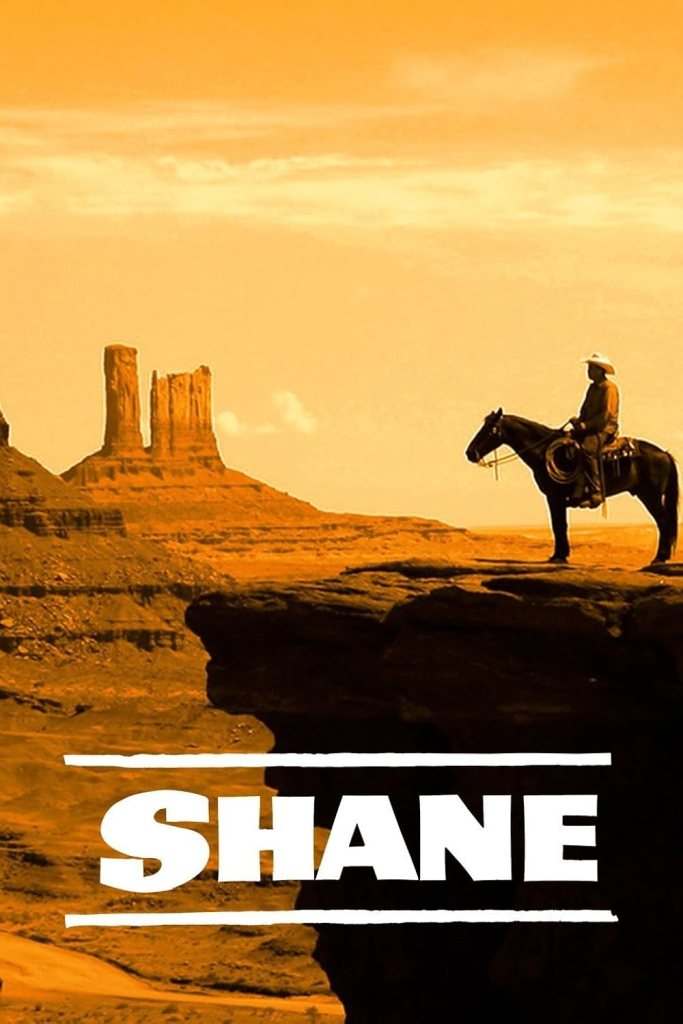
I started watching this series for two reasons; I loved the 1953 movie SHANE with Alan Ladd, and I wanted to watch Jill Ireland in an on-screen role that does not rely on Charles Bronson. After watching every episode, I can confidently state that SHANE is a solid TV series, and that Jill Ireland does a fine job as the beautiful Marian Starett. And even better, it’s been a lot of fun sharing my thoughts with the readers of The Shattered Lens. Thanks to all who have joined me!
Episode 16 opens with Shane (David Carradine) back in Cheyenne, WY. He has joined up with Major Hackett’s (Bradford Dillman) outfit to try to find out the Major’s plans for attacking the homesteaders. The first thing he has to do is have it out with Jed (Charles Grodin) who is still smarting from the ass-whoopin’ he took in the last episode. The two men get into another brawl that ends when Major Hackett shoots Jed in the knee and discharges him from his service for good. The next day, Major Hackett, Shane, the men, and the Gatling Gun head towards the valley after rustlers and homesteaders. Major Hackett assigns Shane to advance scout their next target, Bull O’Reilly. Shane heads out and forces O’Reilly to leave his home before the other men arrive. Shane tells them O’Reilly was gone before he got there, but Major Hackett doesn’t appear to be buying what Shane is selling and tells his men to keep an eye on him. When Shane finds out they are headed for the valley the next day, he beats up the guy he’s on night watch duty with and rides all night back to the Starett ranch. With Tom (Tom Tully) and Marian’s (Jill Ireland) help, he is finally able to convince the homesteaders and the cattlemen, led by Rufe Ryker (Bert Freed), to stand together and take on Major Hackett and his men. But do they have any chance against that gun?
Part 1 of the Great Invasion spent most of its running time setting up the backstory for Major Hackett’s invasion of the valley in order to get rid of all the rustlers and homesteaders. With all of that out of the way, Part 2 mainly focuses on the actions Shane takes in trying to stop Major Hackett from within. He engages in two fistfights. He convinces an old man to leave his home as soon as possible, giving him time to put on his boots but not time to put on his pants, which gave me a chuckle. And he stands with the homesteaders and the cattlemen as they trick Major Hackett into thinking the Ryker ranch is abandoned so they can attack with an element of surprise. David Carradine, of course, handles all of the action and drama very well. Part 2 is a pretty solid episode, but after the setup from Part 1, I was hoping for a little more. I can’t help but question Major Hackett’s judgement when it comes to Shane. There were plenty of red flags that would indicate Shane wasn’t very trustworthy when it came to executing the plan, but Hackett seemed willing to give him the benefit of the doubt anyway. His cockiness and over confidence in his ability to control the Gatling Gun also knocked him down a notch or two. Major Hackett turned out not to be as smart as we originally thought him to be, which was a little disappointing, especially with Bradford Dillman’s interesting performance. On a positive note, I was glad that Little Joey (Christopher Shea) gets a sweet moment in this episode. He’s mostly a background piece in the series but his childlike wisdom comes in handy at one point. He overhears the adults questioning whether or not Shane has really joined the invaders. Joey tells them matter of factly that he knows that Shane has a plan that will help everyone and finishes his statement with, “Y’all just don’t know him as well as I do.” Tom and Marian can’t help but smile with that innocent truth-bomb, and from that point never doubt Shane again. Tom Tully gets another opportunity to shine as well, as his Tom Starett gives an impassioned speech to his fellow homesteaders asking them join together and fight the invaders. It was a good moment for him.
Overall, “The Great Invasion” is an episode that builds a solid foundation in the first part that it doesn’t completely capitalize on in the second. It has its moments, though, especially with some good character moments from both the main cast and its guest stars. I also found the very final shootout to be exciting. The relationship between Shane and Marian does seem to be reaching a breaking point as her patience is wearing thin with his inability to share his true feelings with her. We only have one episode to go, so I’m expecting some sort of action in that department as the series reaches its conclusion.
Episode 15 opens with Shane (David Carradine) at a hotel in Cheyenne, WY. He hears a ruckus in the next room where a guy named Jed (Charles Grodin) is holding court with a group of men and women. Jed, who has clearly been drinking way too much, is going on about the honor of serving with Captain William Quantrill. He asks Shane to have a drink with him and Shane declines. Offended by this, Jed challenges Shane only to get his ass thoroughly kicked in about 10 seconds flat. One of the men in the group recognizes Shane as the great gunfighter. Soon the men force Shane at gunpoint to go see their boss, Major George Hackett (Bradford Dillman). It seems Hackett is putting together a group of men for a project and offers Shane the large sum of $75 per week to join up. Sensing something bad, Shane turns down his offer and leaves. Shane is right to leave as we soon learn that Hackett’s “project” is to eliminate any homesteaders who are not a part of the Cattlemen’s Benevolent Association, a large outfit out of Chicago.
While in Cheyenne, Shane also runs into his old friend Longhorn Jenny (Constance Ford) who is in town selling a herd of cattle. She’s accompanied by her assistant Dan (Archie Moore). The two swap some old stories, with Shane even asking how she came across that herd of cattle. They seem to hint that she didn’t necessarily come across them legally. Shane says goodbye and starts the journey back to the ranch. Before leaving Cheyenne, he reads a story in the paper that specifically mentions Longhorn Jenny, implying that she’s a rustler. The story in the paper, which seems to back the Cattlemen’s Association, plus Major Hackett’s offer convinces Shane that something truly bad is on the way. When he gets back to the ranch, he tells Tom (Tom Tully), Marian (Jill Ireland) and a few other local homesteaders that he’s concerned that they may all be in danger. Unfortunately, everyone he speaks to in the valley about this situation, including cattleman Rufe Ryker (Bert Freed), think he’s overreacting and don’t seem concerned at all. Then Major Hackett and his men ride out to Jenny’s ranch, unveil their Gatling Gun and proceed to kill Jenny and Dan, ultimately hanging her at the gate with a sign that says “Rustler.” Even after Jenny is killed, no one in the valley will listen to Shane and prepare to defend themselves. Marian tells Shane that she’ll prepare to defend their ranch, but she is not leaving. Not knowing what to do to keep those he loves safe, Shane heads back to Cheyenne and accepts Hackett’s offer to work for him. Credits roll for the end of Part 1.
A lot happens in the “The Great Invasion: Part 1.” All the main people are introduced, with Hackett and his plan coming into light. We also spend an inordinate amount of time with Longhorn Jenny as we meet her, learn about her and ultimately see her die. This being the first part of a two part episode, I’ll withhold my larger analysis for the next review, but I am looking forward to seeing where the story goes. I find the characters quite interesting. Bradford Dillman comes off as very odd and extremely dangerous as Major Hackett, a man who seems to relish the opportunity to use his Gatling Gun. Charles Grodin’s Jed appears to be your typical loudmouth killer at this point, but it will be interesting to see what happens to him. And I’m looking forward to seeing what Shane does to stop the madness before it takes out the people in their valley. There’s no way they can compete with Hackett’s Gatling Gun, so Shane will have to figure out a way to stop things from within.
There were a few other interesting things I noted while watching this episode. First, when Shane is heading back to the ranch from Cheyenne, we see the Grand Teton Mountain range behind him for the first time in the series. If you remember, the Tetons are prominently featured in the classic 1953 film SHANE, and it was cool seeing them here. Second, Shane goes on a rant to Marian at one point about how newspapers spin the facts in a way that distorts the truth. Just in case anyone thought that a dishonest media was only a current issue, this should lay that theory to rest. And finally, Marian Starett flat out asks Shane why he continues to stay at the ranch. She’s clearly wanting to know if it’s for her. Once again he won’t give her the satisfaction of confirming her thoughts, and it appears that his reluctance to be honest with her is starting to wear thin. Couple that with a crying Joey who doesn’t understand why Shane left and the interpersonal emotions are running high as the episode fades out. I’m all in for seeing how it plays out.
Episode 14 begins with one of Rufe Ryker’s men, Ed Bain, cutting barbed wire fence on the Starett ranch so their herd of cattle can go to a watering hole. As he’s cutting the fence, the sounds of gunshots from a “Big 50” rifle ring out as he’s shot and falls over. Shane (David Carradine) and Joey (Christopher Shea), who are riding through the area, hear the shots and find the wounded man. He rushes him to Sam Grafton’s saloon to see if Sam (Sam Gilman) can do anything to save him. Unfortunately the man was shot in the gut and there is no hope. About the time he dies, Rufe Ryker (Bert Freed) and his men come into the bar. He immediately asks Shane why he killed him. Shane, picking the wrong time to be a smartass, tells Ryker that if he had killed him it would have been for his cutting their fence, but that he didn’t do it. Ryker doesn’t believe him and neither do his men. They decide that Ed Bain deserves justice because “he was not only a good hand, but he was a good man.” Out for blood, Ryker decides he’s going to put Shane on trial for murder right then and there with only his men as the witnesses and jury. I call this the “Saint Bain” portion of the story. Harve (Lawrence Mann) tells us what a brave and hardworking man Bain was. Bain’s best friend Greevey (a guest starring Wayne Rogers) tells about all of their good times and card playing together. It seems that Bain is such a good guy that Shane clearly deserves to die even though none of them actually saw him shoot the man.
While the sham of the trial is going, the saloonkeeper Ben (Owen Bush) slips out the back and rides out to the Starett ranch to tell Tom (Tom Tully) and Marian (Jill Ireland) what’s going on. The two immediately set about trying to round up some of the homesteaders to go into town with them to try to stop Ryker and his men from hanging Shane. One by one, each of the homesteaders turn them down because “this is not their fight” and reason that Shane probably did it because “he’s a gunfighter.” Knowing they have zero chance against Ryker on their own, Tom and Marian come up with a plan. He’ll head to Laramie to get the U.S. Marshall, and she’ll go try to buy some time from Ryker with the only bargaining chip they have, the deed to the family ranch.
Episode 14 of Shane is a bit of a mixed bag. On the positive side, the gun that is used to kill Ed Bain at the beginning is a unique and interesting element of the story. The weapon is a Sharps “Big 50,” a .50 caliber rifle that was designed for buffalo hunting and introduced in 1872 by the Sharps Rifle Manufacturing Company. The Big 50 joins a tradition of powerful weapons in filmed entertainment that provide their users with an advantage over their adversaries. Other examples include the Winchester 73 rifle, Dirty Harry’s 44 Magnum and Paul Kersey’s 357 Wildey Magnum in DEATH WISH 3. At one point, the killer is firing the Big 50 into the Starett cabin at Shane, Marian and Joey. Based on the power of the gun as already shown, there is a real sense of danger that someone could be seriously hurt. There was also one good scene centered around the unspoken love between Shane and Marian, even if Shane wasn’t a part of it. With Shane’s life seriously in jeopardy, Tom reassures his daughter-in-law, “honey, you’ve only been in love with 2 men in your whole life. I’m gonna make sure you don’t lose them both.” She sure doesn’t protest. It was a sweet scene and I enjoyed that as well.
On the negative side, episode 14 featured the most lazy storytelling thus far in the series. The series has gone to great lengths to show Rufe Ryker as a man who’s hard-as-nails, but also mostly reasonable. The writers throw that out the window in this storyline and require him to behave completely irrational in his quest for vengeance for his hired man. It would be one thing if Ed Bain was his son or something, but Ryker’s line about him being a “good man” doesn’t get close to explaining the turnaround in his behavior. And not only do they present him as irrational, they make him incompetent to boot. Joey rides up and convinces Ryker that he’s only there to take Shane some food. Ryker even checks his slicker for a gun before letting him go in. Turns out Joey did have a gun under his jacket and Ryker just didn’t find it. The show had seemed to really be hitting its stride before this episode and the lazy storytelling surprised me. They should have introduced a new character if they were going to make him so irrational and incompetent. That description just doesn’t fit the Ryker of the first 13 episodes.
Overall, this may have been the least enjoyable episode so far. While it did have some good moments, I’m still struggling to let go of the way they changed Ryker’s character so completely for this one. We’ll see what happens with him over the last few episodes of the series. While I’m slightly disappointed with episode 14, I’m still looking forward to seeing what happens next.
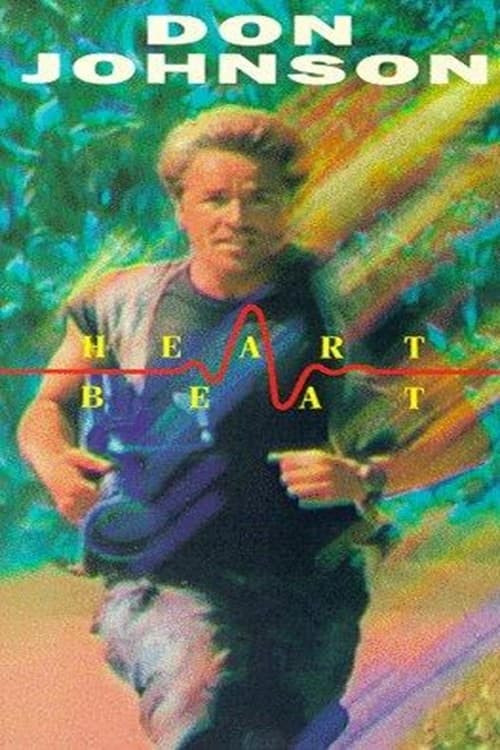
1987’s Heartbeat opens with Don Johnson in an unidentified Central American country.
Rebels are moving through the jungles. Helicopters are flying over villages and firing off missiles. In the middle of it all is Don Johnson, playing a character identified as being “The Documentary Filmmaker.” Johnson carries a large movie camera with him, recording all of the violence and the carnage. Is Johnson trying to expose the evils of the government? Is he trying to expose the rebels? Is he just an adrenaline junkie who can’t help but go to the most dangerous places in the world? I have no idea and I’m not sure that the film does either.
A bomb explodes. Johnson is thrown back. Soon, Don Johnson is being carried into a dark room on a stretcher. It appears that he might be dying but, even as his heartbeat is slowing down, his spirit is still hanging around and having flashbacks to the attack on the village, which we just saw less than a minute ago. Eventually, Johnson’s spirit has other flashbacks. He remembers talking to Paul Shaffer. He remembers his strained marriage to an unnamed woman played by Lori Singer. He remembers his youth as the son of a Las Vegas showgirl who is played by Sandahl Bergman. (Bergman also played a showgirl in Bob Fosse’s All That Jazz and her scenes in this film often feel as if they’ve been directly lifted from Fosse’s classic film.) David Carradine shows up as someone who might be Johnson’s father or who might just be some random guy rolling dice in the backroom of a strip club. Johnson remembers his friendship with a graffiti artist (Giancarlo Esposito), who has a sister (Angela Alvarado) who was a prostitute. The main message seems to be that the Documentary Filmmaker recorded the dangers of the world while also trying to remain emotionally detached, much like Robert Forster in Medium Cool. Now that he’s dying, he’s left to wonder whether he made the right choice in refusing to get personally involved.
Oh, and did I mention that this film is basically a 65-minute music video? Don Johnson sings through the entire movie, in a style that does its best to imitate the tough growl and soulful yearning of Southern rock and roll but which ultimately only serves to show that Johnson made the right decision in focusing on acting instead of singing?
After I came across this film on Lettrboxd and then watched it on YouTube, I did a bit of research (which is a fancy way of saying that I spent a minute reading a Wikipedia entry) and I discovered that, at the height of his Miami Vice success, Johnson released his debut country rock album, Heartbeat. Heartbeat the film was something that Johnson made in order to promote Heartbeat the album. Directed by frequent Miami Vice director John Nicollela, Heartbeat the film is so self-indulgent and determined to prove that Don Johnson is a soulful artist that it becomes oddly fascinating to watch. Johnson’s Documentary Filmmaker is a bit of a cad but the film seems to argue that 1) it’s not really his fault because women find him to be irresistible, 2) it’s really his mom’s fault for getting a job, and 3) it ultimately doesn’t matter because the Filmmaker is a great artist whose work will live on even after he dies. It’s a vanity film for a vanity album and it’s all so vain that it becomes hard to look away from.
In the end, both the music from the album and the promotional film leave one feeling that, in 1987, Don Johnson might have had an unreasonably high opinion of his musical abilities. That said, as anyone who has seen Cold In July can tell you, Don Johnson eventually did become a very good actor.


 Through the Shattered Lens