Music Video of the Day: Sweet Dreams (Are Made Of This) by Eurythmics (1983, dir. Jon Roseman & Dave Stewart)


Like Blue Monday 88, I’m not doing this because of Atomic Blonde (2017). Movin’ on.

Sweet dreams are made of these. Who am I to disagree?

Not me with this song or video. But I don’t think the 1985 biopic about Patsy Cline had the right to call itself Sweet Dreams.

It’s riddled with problems from the fact that it doesn’t have a story to tell to something as simple as continuity. It also has no dignity.
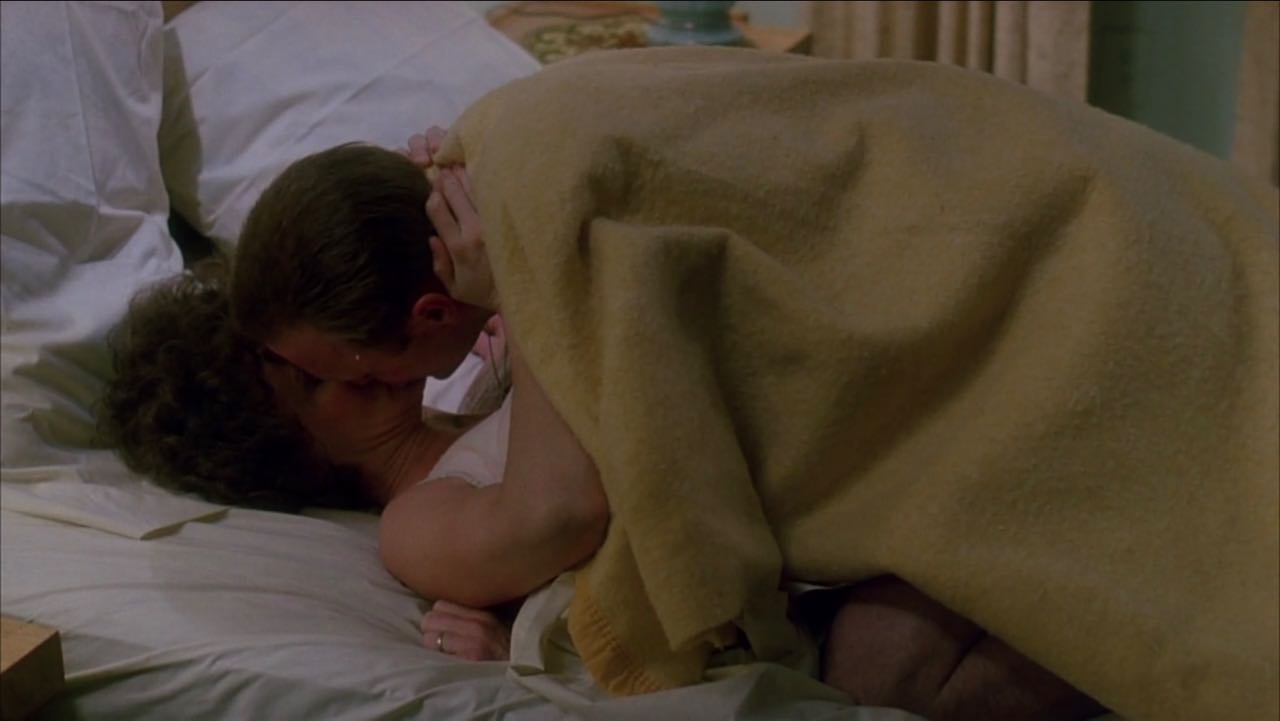
Sweet Dreams (1985, dir. Karel Reisz)
Sweet Dreams (1985, dir. Karel Reisz)

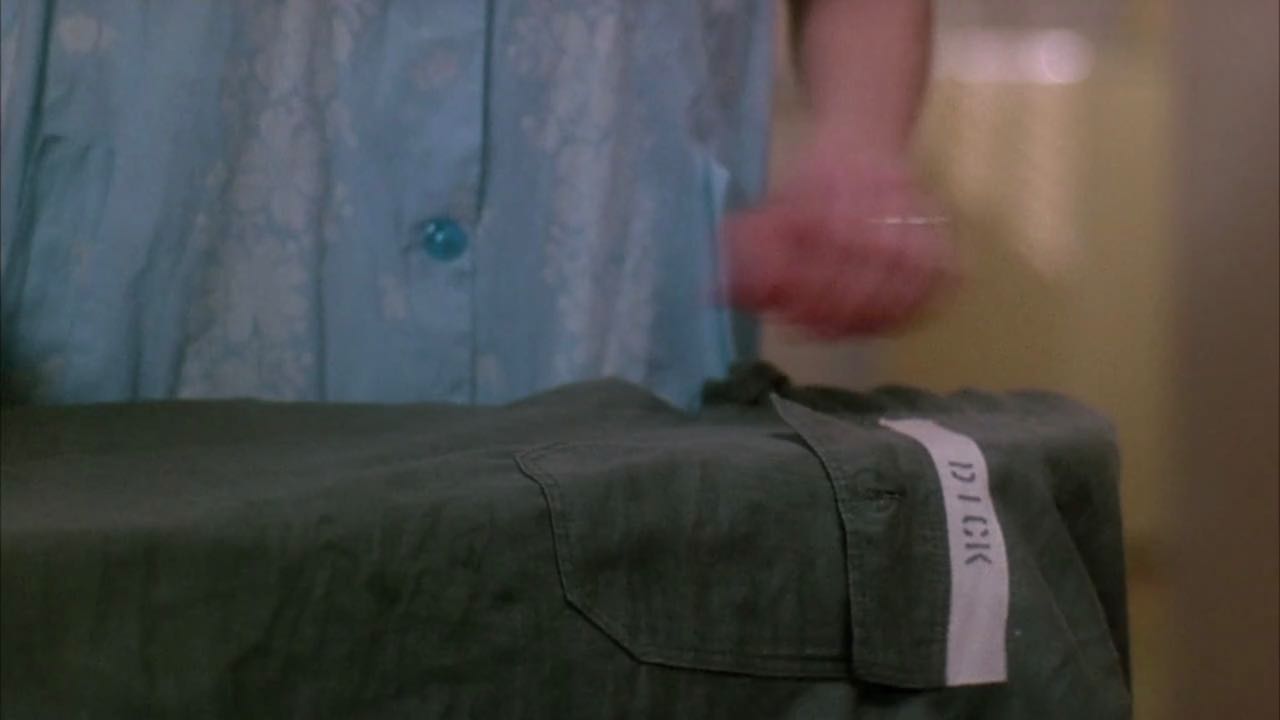
Yes, it really does cut directly from that sex scene to Patsy Cline ironing her husband’s shirt with a closeup of his last name–Dick. What a wonderful way to honor her memory. An obviously rushed production made to cash-in on the success of the producer’s 1980 film about Lorreta Lynn, Coal Miner’s Daughter.

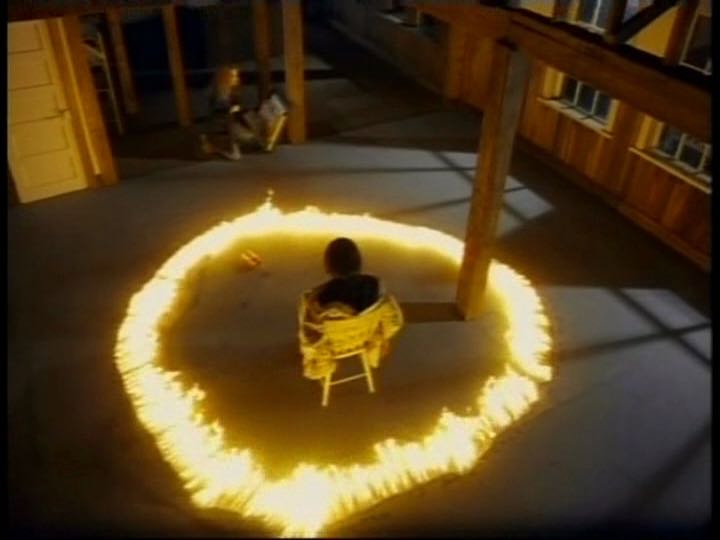
I knew about this song beforehand, but I will give credit to the 1996 NBC TV Movie, Sweet Dreams, for reminding me it exists by it featuring Marilyn Manson’s cover version.
Sweet Dreams (1996, dir. Jack Bender)
Sweet Dreams (1996, dir. Jack Bender)

Sweet Dreams (1996, dir. Jack Bender)

Sweet Dreams (1996, dir. Jack Bender)

I do have a copy of this movie where then Tiffani-Amber Thiessen gets amnesia. I spent a decade looking for it after its original airing in 1996, and that 1985 film didn’t help my search when the TiVo was looking for movies with the title Sweet Dreams. It’s not weird!

Neither is the fact that the origin of this video begins with Dave Stewart having a lung that kept collapsing.

In the book, I Want My MTV, he states that he was quite ill at the start of the group because he had a lung that kept collapsing. I don’t want to paraphrase what he has to say about how he came to love mixing images with music, so here’s an excerpt from the book:

I had just gotten out of surgery, and they must’ve given me tons of morphine or something, because my head started to explode with the idea of visual imagery and making music. From then on, I was obsessed with videos.

Just before that, a weird thing happened: I was walking down the street in Australia and stepped on something quite hard. I looked down and it was a solid gold bracelet. I picked it up, and as I turned the corner, I saw a pawnshop. I swapped the bracelet for an 8mm cine camera. From that moment on, I was always filming. I started to understand about putting imagery together with music.

There are two obvious questions that come up when you watch this music video:

  1. Why the cow?
  2. How did they get away with Annie Lennox wearing a matching suit with Stewart?

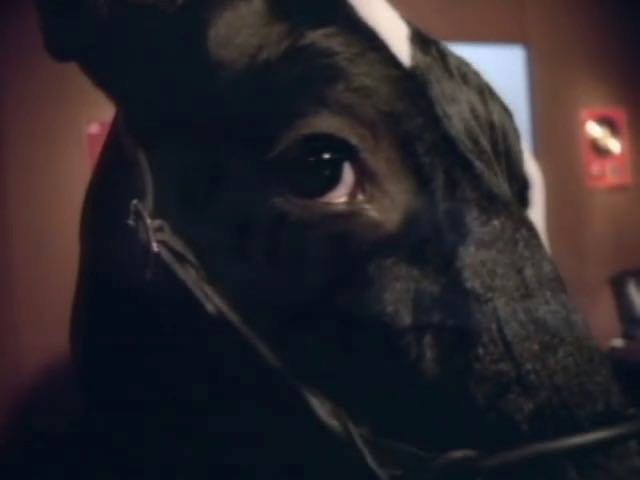
Jon Roseman, producer: Dave had a tremendous feel for images. People often ask me, “How did you come up with the idea of the cow?” I tell them, “Dave just said, ‘Let’s have a cow.'”

If Stewart wants to be a smoking caterpillar, then he gets to be a smoking caterpillar.

Don’t Come Around Here No More by Tom Petty And The Heartbreakers (1985, dir. Jeff Stein)

If Stewart wants a cow, then he gets a cow.
It doesn’t matter how difficult it may have been to do so:

Dave Stewart: I presented the treatment to the label, and they could not understand the bit with the cow. The cow was complicated, because we were in London, and the cow had to go down an elevator into the basement. The farmer who owned the cow was really agitated.

Annie Lennox: “Sweet Dreams” was shot in a basement studio in the middle of London. There was an elevator big enough to take the cow down from the ground floor. That was one of the most surreal moments I’ve had–being in a building with a cow walking around freely.

Little known fact, Dave Stewart is a Beastmaster.

Annie Lennox: During the scene where Dave is sitting at a prototype computer, tapping the keyboard, the cow’s head came really close to him.
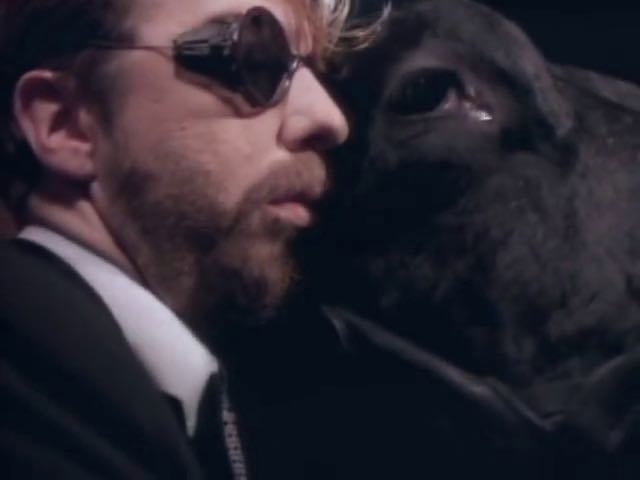
Annie Lennox: I could see that happening and I thought, Oh shit, what is the cow going to do? It was almost nudging him. And Dave is so intuitive, he just rolled his eyes, so it looks like there was some kind of understanding between him and the cow. Like the cow had been told, “Right, so you do this and then Dave’s gonna do this. And…ACTION!”

Look into the eyes of Dave Stewart!
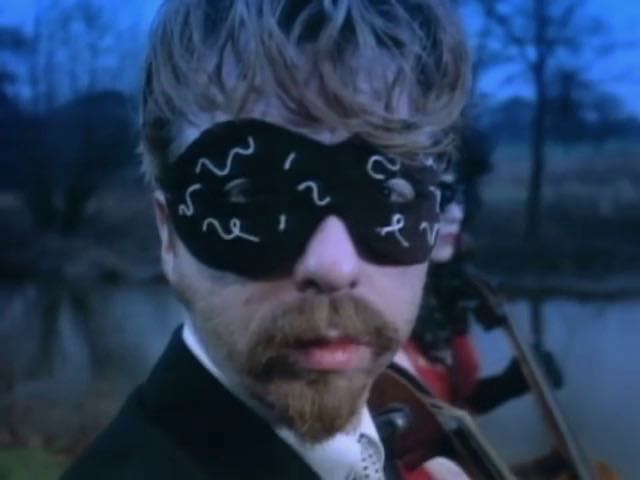
Lennox explains the purpose of the cow:

In a way, the video is a statement about the different forms of existence. Here are humans, with our dreams of industry and achievement and success. And here is a cow. We share the same planet, but it’s a strange coexistence.

As for how Annie Lennox got away with wearing a matching suit with Stewart:

Dave Stewart: “Sweet Dreams” prompted a big argument with the record company. They were pissed off when Annie and I turned up in matching suits, with Annie’s hair cropped off. They wanted her to wear a dress. They were like, “We don’t understand. Annie is such a pretty girl.” Then MTV got the video and it just went mad. It didn’t look like anything else. Annie’s hair was so different, and the colors in the video looked amazing. It was shot on 16mm film, but it was very rich. It became a phenomenon.

It’s not mentioned in the book, but I’d like to think that the ending was inspired by the ending of Jacques Rivette’s film, Celine And Julie Go Boating (1974).
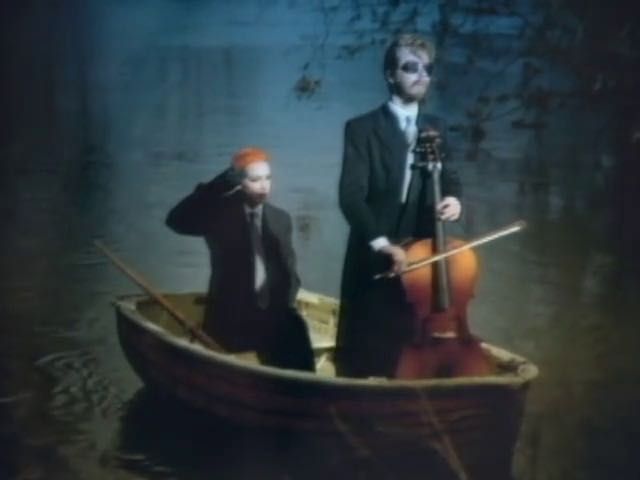
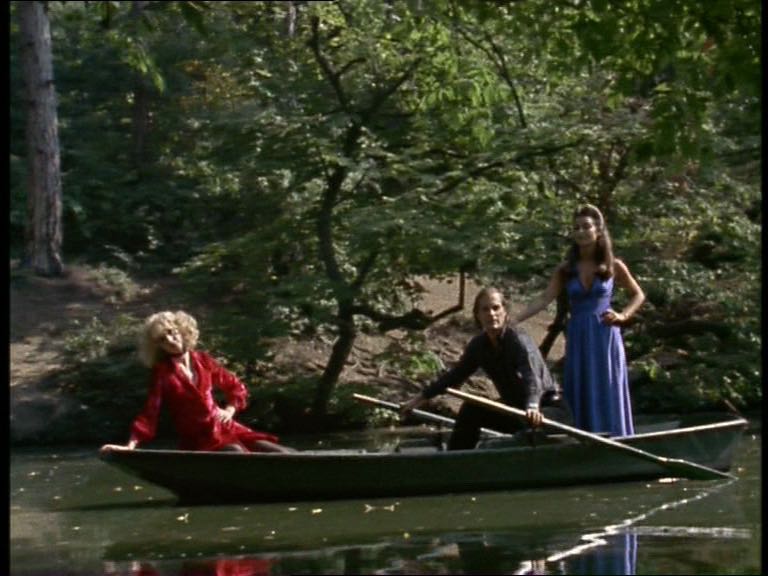
Celine And Julie Go Boating (1974, dir. Jacques Rivette)

After that, Lennox is shown waking up in bed with a book on her nightstand with the same title as the song. It goes to black when she turns off the light.

Celine And Julie Go Boating cuts back to the beginning of the film where Celine wakes up, and she and Julie have now switched places. It’s Celine who ends up following Julie after she drops a book in a park. Before, it was Julie who followed Celine after she dropped something in the same park.

If Going Back To Cali by LL Cool J was inspired by the likes of Godard, Chabrol, and Antonioni, then it’s not a stretch to think that Stewart saw that movie, and thought to mimic that shot which shoots us out of the film to simply repeat the same movie with the characters switched. Much like you can imagine that Lennox is going to sleep to end up back in the same dream she just had, based on what she read in the book–the cover appearing to show one Annie reaching out to touch another Annie.

Chris Ashbrook produced the video.

Enjoy! And for all of us who have misheard lyrics at one time or another: Sweet dreams are made of cheese. Who am I to disagree?

30 Days Of Surrealism:

  1. Street Of Dreams by Rainbow (1983, dir. Storm Thorgerson)
  2. Rock ‘n’ Roll Children by Dio (1985, dir. Daniel Kleinman)
  3. The Thin Wall by Ultravox (1981, dir. Russell Mulcahy)
  4. Take Me Away by Blue Öyster Cult (1983, dir. Richard Casey)
  5. Here She Comes by Bonnie Tyler (1984, dir. ???)
  6. Do It Again by Wall Of Voodoo (1987, dir. ???)
  7. The Look Of Love by ABC (1982, dir. Brian Grant)
  8. Eyes Without A Face by Billy Idol (1984, dir. David Mallet)
  9. Somebody New by Joywave (2015, dir. Keith Schofield)
  10. Twilight Zone by Golden Earring (1982, dir. Dick Maas)
  11. Schism by Tool (2001, dir. Adam Jones)
  12. Freaks by Live (1997, dir. Paul Cunningham)
  13. Loverboy by Billy Ocean (1984, dir. Maurice Phillips)
  14. Talking In Your Sleep by The Romantics (1983, dir. ???)
  15. Talking In Your Sleep by Bucks Fizz (1984, dir. Dieter Trattmann)
  16. Sour Girl by Stone Temple Pilots (2000, dir. David Slade)
  17. The Ink In The Well by David Sylvian (1984, dir. Anton Corbijn)
  18. Red Guitar by David Sylvian (1984, dir. Anton Corbijn)
  19. Don’t Come Around Here No More by Tom Petty And The Heartbreakers (1985, dir. Jeff Stein)
  20. Sweating Bullets by Megadeth (1993, dir. Wayne Isham)
  21. Clear Nite, Moonlight or Clear Night, Moonlight by Golden Earring (1984, dir. Dick Maas)
  22. Clowny Clown Clown by Crispin Glover (1989, dir. Crispin Glover)
  23. Black Hole Sun by Soundgarden (1994, dir. Howard Greenhalgh)
  24. Total Eclipse Of The Heart by Bonnie Tyler (1983, dir. Russell Mulcahy)
  25. Harden My Heart by Quarterflash (1981, dir. ???)

Music Video of the Day: Don’t Come Around Here No More by Tom Petty And The Heartbreakers (1985, dir. Jeff Stein)


It’s about time I got to a music video that lead to the PMRC. It may not look like one that would, but it did.

At the beginning of the book, I Want My MTV, there’s a whole chapter about the issue. The authors start off by talking about Tipper and her daughter’s experience watching Hot For Teacher. According to the book, her daughter said the following:

Mom, why is the teacher taking off her clothes?

I would love to know if that was Kristin Gore considering she went on to have a career in comedy. She and Tipper even played on a Diva Zappa comedy single. Frank Zappa having testified at the congressional hearings over this stuff. Although it sounds like it was Sarah LaFon Gore Maiani judging by her age when she saw the two videos.

On another occasion, Gore and her six year old saw Tom Petty’s “Don’t Come Around Here No More” video–some other parent, having gone through the “Hot for Teacher” incident, might have learned a lesson and banished MTV from the home–and the girl was “disturbed,” Gore said, “because the last scene showed [an actress] turning into a cake and being sliced up.

I have feeling the authors of the book think this is ridiculous.

In September 1985, Senator John Danforth, also married to a PMRC member, convened a congressional hearing to discuss the excesses of rock music in the age of cable TV. And that is how the Commerce Committee of the 99th Congress of the United States, like millions of other Americans, watched “Hot for Teacher” and Twisted Sister’s “We’re Not Going to Take It” when they should have been working.

You got me as to what bothered them with We’re Not Gonna Take It, considering it’s a song about civil rights and standing up for what you believe in. At least with Hot For Teacher you could make the reasonable argument that while harmless entertainment, it should be aired when a six-year-old isn’t likely to stumble across it. I’m really glad we live in a time when music videos aren’t taken down from YouTube for explicit content. Oh, right, that happens.

Anyhow, lets talk about the video, including some bits from Alice herself, Wish Foley (Louise Foley).

Here’s the genesis of the video according to Tom Petty:

Dave Stewart and I wrote and produced “Don’t Come Around Here No More.” We were talking about the video while we were in the studio, and he said, “I’ve always wanted to be the guy sitting on a mushroom with long nails and a hookah. You know, like in Alice in Wonderland.” And I said, “That’s it. We’ll do Alice.”

Thus, Dave Stewart got his wish:

Tom Petty: We didn’t use any special effects. Everything that’s big was big, and everything that’s small was small. It was a two-day shoot, and each day was fourteen hours, way into the night. Even for musicians, those were challenging hours. But we knew while we were doing it how shit-hot it was.

I don’t want to copy the entire section on this video, so here are the highlights:

Wish Foley: When I went to the audition, there were fifteen or twenty girls coming in at the same time. They were models, in skimpy leather outfits with short skirts. Boobs everywhere. It was kind of gross; they would stand in front of a mirror and do their “come hither” look. And here I am, dressed up like Alice in Wonderland.

She was 21. She had done a bunch of commercials along with some TV work. She says she had been the original Joanie (Happy Days), but that after they shot the pilot, she was told that she looked too much like Cindy Brady. It’s funny that after this video, Foley went on to work on Disney productions such as Beauty and the Beast (1991), The Hunchback of Notre Dame (1996), and Hercules (1997). She was also in the movie, Harper Valley P.T.A. (1978) before going on to do this video.

Harper Valley P.T.A. (1978, dir. Richard C. Bennett & Ralph Senensky)

Jeff Stein: We built a giant teacup out of an aboveground pool.

Jeff Stein: The doughnut was a giant inner tube. I asked for the water in the teacup to be warm, and it wasn’t. She was in cold water on an air-conditioned stage for quite some time, and never said anything. When she came out, she had hypothermia.

Wish Foley: If you look closely, you can see me shivering. They bundled me up and shoved me into an emergency-wash shower.

Tom Petty: For the last shot, where we cut a piece of Wish’s body and eat, we had a giant cake made in the shape of her body, and Wish slipped her head from underneath. That must have been uncomfortable as hell. There was only one cake, so we had one take to get it right.

Wish Foley: When people said that the cutting of the cake promoted cruelty to women, I had to laugh that people took it so damn seriously.

Jeff Stein: I was cited by a parents-teachers organization for promoting cannibalism.

It amazes me that this video was swept up in that whole thing. It’s a trippy music video based on a book that has been adapted into everything from an X-rated musical to a Goodtimes animated cash-in movie to an official Disney version.

I think my favorite part about this whole PMRC thing comes from Dee Snider. He both testified, and played himself in the VH1 movie about it called Warning: Parental Advisory (2002). In an interview, he said that he didn’t have a problem with there being a label on albums to tell parents about the content. He thought that was reasonable. He wasn’t happy about the way they were going about it. A bunch of wives of congressmen getting their husbands to hold sessions on the evils of music, which forced people like Snider, Zappa, and John Denver to have to come and testify in front of Congress about music and censorship.

John Diaz was the producer.

Tony Mitchell, Kathy Dougherty, and Peter Cohen did “special effects” for the video, according to mvdbase–despite what Tom Petty said about them not using special effects. They were probably the people responsible for creating the things, and that one special effects shot at the end.

Enjoy!

30 Days Of Surrealism:

  1. Street Of Dreams by Rainbow (1983, dir. Storm Thorgerson)
  2. Rock ‘n’ Roll Children by Dio (1985, dir. Daniel Kleinman)
  3. The Thin Wall by Ultravox (1981, dir. Russell Mulcahy)
  4. Take Me Away by Blue Öyster Cult (1983, dir. Richard Casey)
  5. Here She Comes by Bonnie Tyler (1984, dir. ???)
  6. Do It Again by Wall Of Voodoo (1987, dir. ???)
  7. The Look Of Love by ABC (1982, dir. Brian Grant)
  8. Eyes Without A Face by Billy Idol (1984, dir. David Mallet)
  9. Somebody New by Joywave (2015, dir. Keith Schofield)
  10. Twilight Zone by Golden Earring (1982, dir. Dick Maas)
  11. Schism by Tool (2001, dir. Adam Jones)
  12. Freaks by Live (1997, dir. Paul Cunningham)
  13. Loverboy by Billy Ocean (1984, dir. Maurice Phillips)
  14. Talking In Your Sleep by The Romantics (1983, dir. ???)
  15. Talking In Your Sleep by Bucks Fizz (1984, dir. Dieter Trattmann)
  16. Sour Girl by Stone Temple Pilots (2000, dir. David Slade)
  17. The Ink In The Well by David Sylvian (1984, dir. Anton Corbijn)
  18. Red Guitar by David Sylvian (1984, dir. Anton Corbijn)

Good News! You Don’t Need To “Starve” For A Great Read Anymore!


4621059-01

Don’t look now, but Brian Wood is on a roll.

The once-hot wunderkind comics writer, who was felled last year by allegations of sexual harassment at comics conventions, apparently did some sort of public mea culpa/’fessing up, and is now deemed to be perfectly employable again.

For my part — to the extent that it even matters — I guess I’m still a little bit uncomfortable about the whole thing, but let’s be honest : Wood is certainly not the first industry pro to attempt to play the “casting couch” card with eager young female talent, nor (sadly) will he be the last. And there have been a lot worse offenders than him over the years. But he was the first to get called out publicly on social media for laying on the “I can really help you get a break in the industry, let’s got up to my room and talk about it” line, and he deserved it. I give him credit for not ducking the issue once it came to light, and better still for not “victim-shaming” the target of his unwanted and unwelcome advances — and the fact that feminist colorist Jordie Bellaire is still willing to work with him on Rebels despite having a more-than-full-plate of assignments should probably tell us all that Wood does, in fact, “get it,” and is appropriately regretful for his sleazy, boorish behavior — but I have to confess,  the whole thing has seriously dampened my enthusiasm for a guy who was doing not just good, but often excellent work, and wasn’t at all afraid to pepper his narratives with spot-on leftist and progressive themes.

In short, I genuinely thought Wood was one of the good guys. Now, I’m not so sure.

starve-7

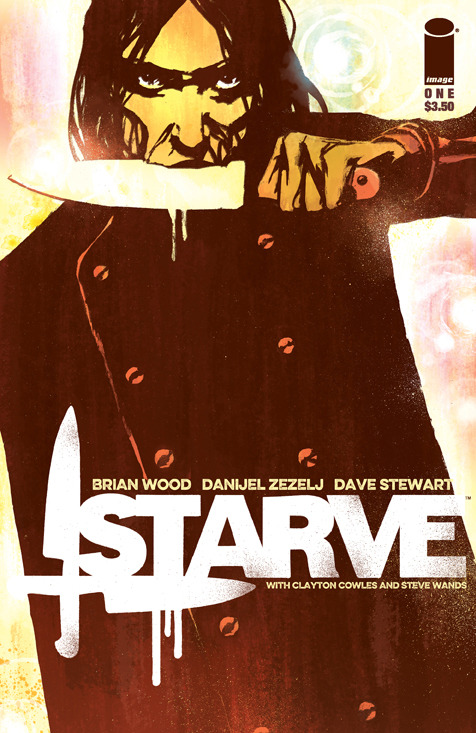
What I am sure of, though, is that he’s come out of his self-imposed exile and is producing some of the strongest work of his career. The aforementioned Rebels that he’s doing over at Dark Horse with artist Andrea Mutti is a supremely engaging Revolutionary War period piece that looks to be his next Northlanders-style historical epic, while assuming the role of his next DMZ-esque series about class politics in a dystopian future we have the just-released Starve from Image Comics, which sees him teaming up with artist extraordinaire Danijel Zezelj and superstar colorist Dave Stewart (who, in a classy move, has been credited along with the writer and artist as a third co-creator on the book and owns a one-third copyright on the material). Wood has come out with rhetorical guns blazing on both titles, and seems bound and determined to win back his fans’ loyalty by producing top-quality product. So far, I gotta say,  the results are very impressive indeed.

starve-8

Just how impressive? How about this — the debut issue of Starve actually has me interested in a story about a goddamn celebrity chef, an “occupation” for which I harbor not just zero respect, but a healthy amount of outright contempt (along with the entire sick, bloated, excessive, nauseating edifice of “foodie culture” in general — half the world is starving to death and we have the nerve to critique food based on its “presentation” and “flavor profile”? Give me a fucking break). What’s next, I ask you? A genuinely human and moving story about a member of the Bush family?

In any case, our main protagonist here is one Gavin Cruikshank (the coolest name for a new character in comics in quite some time), a sort of Anthony Bourdain-if-he-still-shot-smack who hosted, a lifetime ago, a semi-popular cable TV cook-off show called — you guessed it — “Starve,” but chucked the Hollywood glitz and glamour a few years back to go on an extended booze-and-drugs-fueled bender in Hong Kong. Sounds like a plan, right? There’s just one problem — he’ still contractually obligated to do eight more episodes of his show, and the network has called in its marker by cancelling his credit cards and sending a private plane over to bring him back Stateside ASAP.

Ah, well — no good thing lasts forever, I suppose. Oh, and did I mention that while Cruikshank was off on his heroically-extended “lost weekend” that the world economy collapsed, the rich bastards at the top took open control of all aspects of society, his show was transformed into a competitive “cook something good for the 1% or die” monstrosity that’s now hosted by his former chief rival and is the biggest thing on TV, and that his vindictive ex-wife, with whom he has a teenage daughter that he hasn’t seen in years, bulldozed her way to the top of the network that airs it and will therefore be his new boss? Yup, a lot of shit can go down when you’re not paying attention.

starve_2_10

Not that Cruikshank is necessarily the easiest hero to root for himself, mind you : the ex has good reason for hating him given that he was well into his 40s — and 17 years into their marriage — before he finally came out of the closet (ignore the scene where he appears to be flirting with a female flight attendant, I guess), but I still suspect his heart is generally in the right place when, after returning to his show and being commanded to cook “the common meat” (dog, in case you were wondering) in a way that his rich paymasters will find appetizing, he determines, with steely resolve, to use the next eight episodes to get his show back, get his money back, get his daughter back, and bring the network crashing down. No doubt about it, friends — flaws and all, I like this cat. Even if he is a chef.

Plus, how cool is is that we’re getting as our central protagonist a gay guy in his mid-5os with substance abuse problems? Seen anyone like that in any Marvel or DC books lately? I didn’t think so.

Nor will you anytime soon, of course, which is why independent comics aren’t just “important,” but vital. And while lots of creators are being offered all the freedom they want with publishers like Image, how many of them are really giving us something that falls all that far outside of standard super-hero adventure fare? Starve isn’t just out to nudge you out of your comfort zone, but to obliterate it altogether — how cool is that?

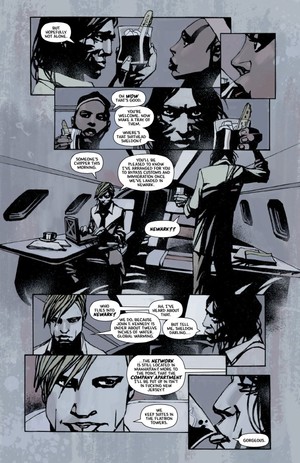
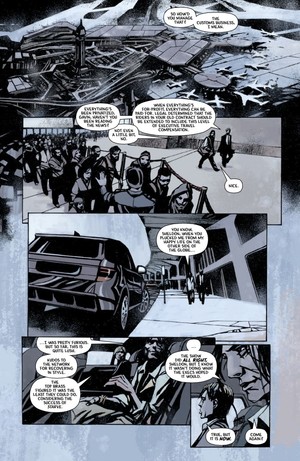
No doubt this is a sophisticated story,  and it’s a damn good thing that it’s presented in such a visually sophisticated manner. Zezelj employs highly inventive panel layouts, cinematic angles, and expertly-deployed shadowing to give his work almost an “updated Krigstein” feel (I say almost because, let’s face it, no one will ever be as flat-out awesome as Bernard Krigstein), and it’s no exaggeration in the least to say that this is the most artistically accomplished book on the racks right now with the possible exception of Alan Moore and Jacen Burrows’ Providence (even though Zezelj and Burrows’ art styles couldn’t be more different). This is just great art, it’s also smart art, and there are a number of panels here that are more than suitable for gallery framing.

Which brings us, finally, to Dave Stewart, whose amazing colors bring it all home. “Smart art” needs smart coloring, too, after all, and Stewart doesn’t miss a beat, knowing precisely which dominant hues to bring to the foreground at any given time while letting a limited-but-varying selection of secondary tones play out against each other in the background.  I’d fork over a 33% ownership stake to get this guy onboard, too, that’s how good his work is.

Are you sold on getting this yet? Because you really should be. About a year ago at this time, Vertigo was saying that their nine-issue series series The Names, by Peter Milligan and Leandro Fernandez, was going to be “the comic where the 1% finally get what’s coming to them” — and while it didn’t exactly deliver on that promise, Wood, Zezelj, and Stewart seem more than ready to do just that,  plus interest. I’ve had the distinct pleasure of reading this first issue three times already, and there’s no doubt that I’m — sorry — very hungry for more.