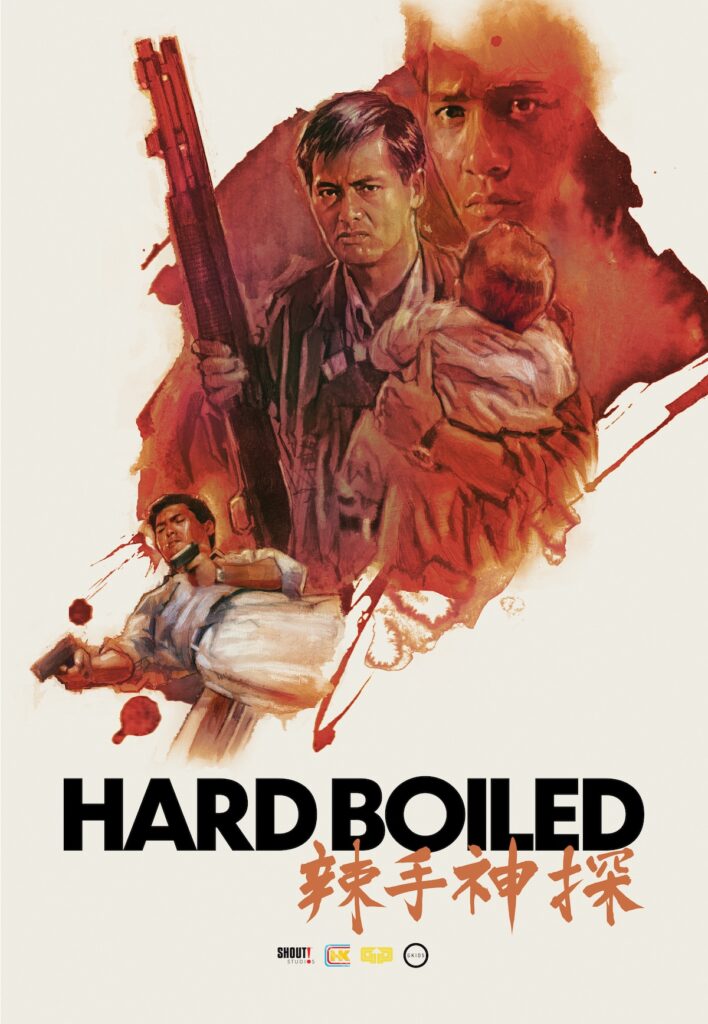
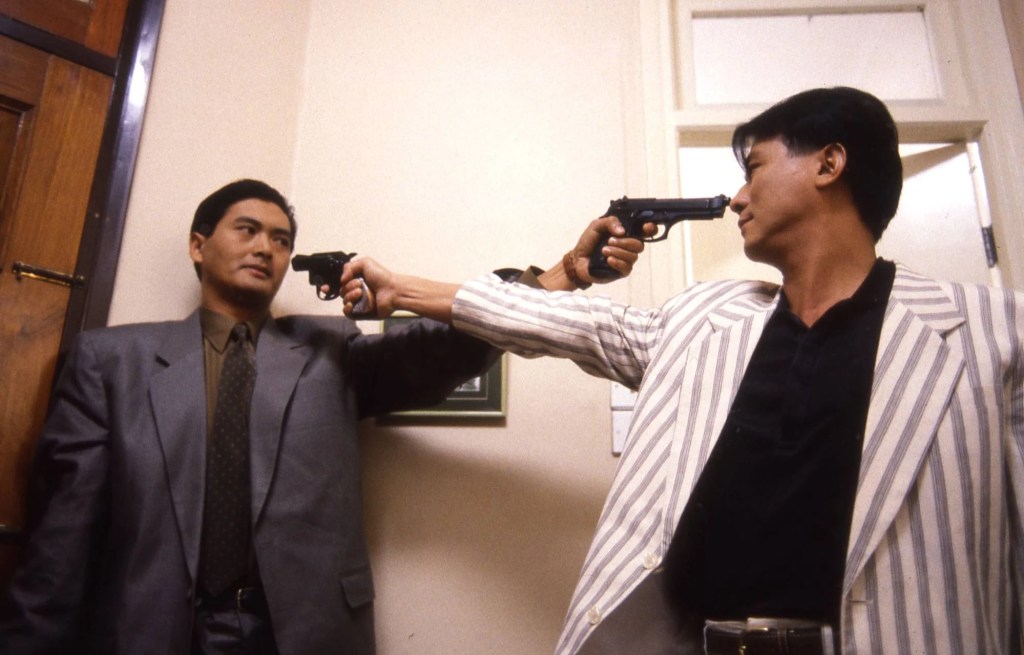
I just got an e-mail today from “Shout Studios!” that makes me very happy! In 2026, the John Woo / Chow Yun-Fat classics HARD BOILED (1992), A BETTER TOMORROW (1986), and THE KILLER (1989) will be getting extremely limited theatrical releases. If you love these movies as much as I do, or if you want to see some of the greatest action films of all time, I just want to make sure my readers are aware of this incredible opportunity. You can buy your tickets now, and I’ve checked and they’re even playing in Little Rock, Arkansas, so I know they’ll be playing all over the country. The schedule is as follows:
HARD BOILED – January 25th, 26th and 28th
A BETTER TOMORROW – March 1st, 2nd, and 4th
THE KILLER – April 5th, 6th, and 8th
These may be being released during tax season, but I usually take Sundays off and each of these limited windows include a Sunday. YAY!! This is finally my chance to see these iconic films on the big screen! I hope some of you will plan to watch them as well! To whet your appetite, enjoy this incredible action sequence from THE KILLER!
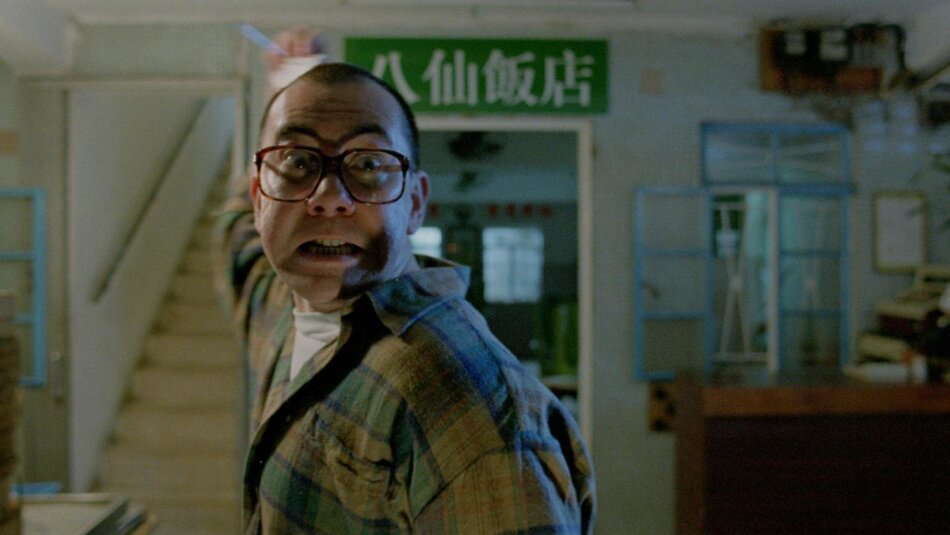
Loosely based on the real-life exploits of a serial killer in Hong Kong in the mid-80’s, THE UNTOLD STORY (1993) unfolds over a couple of different timelines. The film opens with a flashback to Hong Kong circa 1978, where we witness a horrific murder committed by Chan Chi-Leung (Anthony Wong) over a game of mahjong. In order to try to conceal the murder, we see the killer as he destroys his old identification documents and creates a completely new identity. As the opening credits end, we’re “in the present” and join a group of kids playing on the beach when they discover a plastic bag containing severed human body parts. Soon the police are on the scene, led by Inspector Lee (Danny Lee) and a ragtag team of wisecracking detectives. Their investigation leads them to the Eight Immortals Restaurant, a place that is known for its barbecued pork buns, and its seemingly polite but evasive owner, Wong Chi Hang, who just happens to be the same guy we saw committing vicious murder at the opening of the film. Wong claims he bought the place from Cheng Lam (Siu-Ming Lau), who along with his entire family, has mysteriously vanished. As the cops dig deeper, too many things just aren’t adding up, like the restaurant’s high employee turnover rate and Wong’s inability to produce ownership papers. The cops eventually arrest him and attempt to torture a confession out of him. The flashback timeline kicks back in after Wong is arrested and put through hell by his fellow jailbirds and by the police themselves. When he finally cracks, we learn the secrets of “the untold story!”
Right off the bat, I want to make the statement that THE UNTOLD STORY is not a film that’s meant for everyone. Unless you have a strong stomach and can handle extreme gore and vicious cruelty (of both a violent and sexual nature) depicted in graphic detail, you may want to stay away. As I’m definitely a squeamish viewer, I stayed away from this film for many years due to its reputation. My curiosity eventually overcame my good sense, and I gave it a watch a number of years ago. I mean, the film is a Hong Kong “Category III” rated landmark, and Anthony Wong did win the Best Actor Award at the Hong Kong Film Awards for his performance in the movie. It stands to reason that a guy who calls himself a true fan of Hong Kong cinema should give THE UNTOLD STORY a go! Let me just say this, as someone who grew up on Hollywood films, even the goriest films had certain lines that they would not cross. There are no such lines in this film. Director Herman Yau’s 1993 Hong Kong exploitation film is an unflinching punch to the gut in its willingness to go to unacceptable extremes without any apology to the viewer. Just know that going in.
Now that I’ve properly prepared you for the excessively cruel and gruesome nature of the violence in the film, I now have to try to put into words my actual thoughts on the film itself. One of the things that stood out to me as I watched the movie is the stark contrast between the horrific nature of the violence on screen and the “zany antics” of the police who are working the case. Led by THE KILLER’s Danny Lee as the distracted Inspector Lee, who always has a beautiful prostitute on his arm as he visits crimes scenes and the police station, this group of investigators spends a lot of their time acting like immature teenagers rather than serious cops. Imagine if you and your friends in high school were trying to solve a serial killer case, and we got to watch how you acted on stakeouts and in the police locker room, and you might get an idea of what I mean. My guess is that this is meant to make the violent content a little easier to swallow, as well as poke some fun at the “macho men” who are in charge of solving these kinds of crimes. In some ways it works, but there’s still no protection once Wong goes bonkers.
And speaking of Anthony Wong, he is absolutely incredible in this film as the unimaginably disturbed killer. We watch him explode with rage, commit the most heinous acts imaginable, and then just clean up his mess like he’s doing his daily household chores. I guess it helps that he’s a good cook! Hell, there’s a point near the end of the film where his performance almost leads you to having sympathy for him as the police and his fellow inmates are torturing him! Almost, because the worst flashbacks are still yet to come. Wong is one of the best actors to have ever worked in Hong Kong cinema, and his masterful acting elevates the film to a level of cinematic respectability not yet afforded to such a grisly exploitation film. This is the first of five Hong Kong Film awards won by Anthony Wong.
Overall, THE UNTOLD STORY is cinema as an endurance test, delivering an all too real depiction of a vicious killer committing unspeakable violence on screen. The goofy police squad provides some tonal relief, but this movie is not for the faint of stomach. However, for those brave viewers who can handle the graphic violence and who enjoy dramatizations of true crime from incredible actors, you will be rewarded because the filmmakers were able to come up with something special. As I type this, it’s streaming on Tubi for free!
It was 1997 and I was in an outlet mall in Branson, MO. Being a film buff, I found myself looking for entertainment related books and noticed a book with Jackie Chan on the cover called “Hong Kong Babylon.” Jackie was enjoying some popularity in the United States at the time due to the financial success of RUMBLE IN THE BRONX. I opened up the book and started browsing through the various chapters. I saw blurbs about a bunch of movies I had never heard of and blurbs about a bunch of people I had never heard of. Jackie Chan was the only person I knew anything about. I put the book down because I saw another book about Hong Kong movies. This one was called “Sex & Zen and A Bullet in the Head.” I opened it up and saw some of the same people and movies mentioned in the other book. I liked this book better because it had more pictures. I remember this second book opening with a chapter called “10 that Rip.” It was their listing of 10 movies that would determine if you were a potential Hong Kong movie fan or not. Watching these movies would either open up that part of your mind that got excited about Hong Kong movies, or you would be hopelessly lost and not a candidate for Hong Kong movie fandom. As I looked closer, I noticed this same man in both books. He was usually holding a gun and looking extremely cool. That man’s name was Chow Yun-fat, and somewhere in the back of my mind, I thought I remembered seeing him years earlier on a VHS box at our local Hastings Entertainment Superstore. Not really being a fan of foreign movies at the time of the Hastings notice, I didn’t pay much attention, but now I really took notice. Chow caught my attention, but I also found it interesting that there were so many other movies that I’d never heard of, and I thought I knew a lot about movies. I bought both books and took them home with me. It’s no exaggeration to say that these books changed my life, and I was soon lost in a world of Hong Kong films.
No film exemplified my newfound love for Hong Kong movies more than THE KILLER, which was directed by John Woo and starred my new obsession, Chow Yun-fat. I was happy to find that it was readily available on VHS. I watched it on repeat. I had not seen anything that I thought was so awesome. The story is simple. It’s about a hitman, the killer of the title (Chow Yun-fat), accidentally blinding a nightclub singer (Sally Yeh) when he’s performing a job. Feeling devastated that he hurt this beautiful woman, he spends the next few months hanging around the nightclub hoping to have a chance to help her. He finally gets a chance one night when a group of young hooligans attack her on her way home. Chow steps in and beats the crap out of the guys and sends them on their way. This starts a beautiful relationship and the two fall in love. The killer has to perform one more job to get the money needed for a surgery that will hopefully restore her eyesight. When performing that last job, a tough cop (Danny Lee) finds himself on the trail of the killer and will do anything to get his man. John Woo has somehow crafted a story where Chow Yun-fat is an honorable “killer” on a noble mission to protect this young woman, and who is now the target of the Chinese triads trying to eliminate him. While trying to bring down the killer, the tough cop finds himself caught in the crossfire between the killer and the triads. When Chow goes out of his way to take a hurt young girl to the hospital, our tough cop realizes the hitman isn’t that bad after all, and the two men begin to have a respect for each other. There’s no time to rest though, as they find themselves having to team up to take on an army of triad soldiers armed to the teeth and out for blood.
I had never seen anything like THE KILLER up to that point in my life. The action had a style and flare that aroused everything I love about movies. I soon learned it fit into a subgenre of Hong Kong films labelled “heroic bloodshed,” a genre that I would go deep, deep, deep, into! The opening action sequence features the impossibly charismatic Chow Yun-fat dressed impeccably, taking on an underworld boss and his henchman, with two guns blazing in stylish slow motion. John Woo’s work has been endlessly copied by this point, but that does not take away how I felt watching this movie for the first time. I also loved the shameless sentimentality in the film, first between the killer and the singer, and then later between the killer and the cop. For a movie that’s balls to walls action, it has a huge heart. I was hooked.
I immediately began searching out all of John Woo’s films including A BETTER TOMORROW, BULLET IN THE HEAD and HARD-BOILED. After I watched those movies, I started trying to find every Chow Yun-fat film I could. I’ll never forget how I felt when I saw GOD OF GAMBLERS for the first time. I realized that Chow could do anything, not just cool heroic bloodshed films. I will tell anyone who’ll listen that Chow Yun-fat is my favorite living actor. After being a fan for 27 years, I still search the internet for any news I can find about a movie he may be working on.
And it all started at an outlet mall in Branson, MO, and when I first got my hands on THE KILLER.
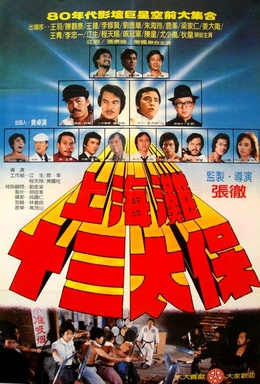
A Hong Kong-Taiwanese co-production that was first released in 1984, Shanghai 13 takes place during the early days of World War II in Asia, when the conflict was primarily viewed as being between Japan and China. With the help of a thief named Black Hat (Jimmy Wang Yu), a low-level but patriotic Shanghai bureaucrat named Mr. Gao (Chiang Ming) steals a report that details the collaboration between Japan and a puppet regime that has been installed in Northern China. Mr. Gao hopes to take the documents to Hong Kong, where he will be able to safely publish them and reveal just how corrupt the Chinese collaborators are. Needless to say, the collaborators would rather this not happen and they are determined to assassinate Mr. Gao before he boards the last boat to Hong Kong.
Fortunately, Mr. Gao is not alone. The 13 Rascals have been called in to protect Mr. Gao. Who are the 13 Rascals? They are a collection of talented marital artists and they are all patriots, determined to reveal the truth about what is happening in Northern China. The 13 Rascals are played by an ensemble of Hong Kong and Taiwanese film veterans. One appears after another, each getting their chance to show off what they can do while defending Mr. Gao. Many of the rascals lose their lives to protect Mr. Gao but that seems to be the point of the film. No sacrifice is too much when its done to protect the honor of one’s country.
To really understand what’s going on with Shanghai 13, it probably helps to know a bit about not only the Second Sino-Japanese War and the subsequent chain of events that led to the Republic of China relocating its central government to Taiwan. My knowledge of these events is pretty much Wikipedia-level and I’m not going to present myself as being an expert. That said, it’s pretty obvious that Mr. Gao, who is forced to leave his home city by a corrupt and ruthless government, is meant to serve as a stand-in for both Taiwan and Hong Kong (or, at least, Hong Kong before it was transferred to Chinese control). Just as the Rascals will sacrifice their lives to protect Mr. Gao, they would do the same for Taiwan and Hong Kong. The implication, of course, is that the audience should do the same.
Fortunately, if international politics are not your thing, Shanghai 13 can also be enjoyed as just a non-stop action film. Admittedly, the film does get off to a bit of a slow start. (If you’ve ever wanted to see every little detail of how to crack a safe, this is the film for you.) Once the fighting begins, it’s pretty much nonstop and more than a little bloody. Faces are kicked. Bones are shattered. Clawed gloves are worn. One man carries a killer fan and laughs whenever anyone tries to remove it from his hands. The film is full of Hong Kong and Taiwanese stars, all of whom get their chance to show off their moves and the majority of whom also get a dramatic death scene. One man gets impaled a pole and still announces that he would rather die with honor than surrender. (And, needless to say, he drops dead shortly afterwards.) There’s enough slow motion to keep any slo mo of doom enthusiast happy. The final battle takes place in a ship yard and features combatants jumping on top of shipping crates. It’s exciting and weird.
Throughout it all, Mr. Gao stands in the background and watches. Mr. Gao is not a fighter and he can only watch while everyone else in the movie sacrifices their lives so that Mr. Gao can reveal the truth about China’s puppet regime. If this was an American film, I’m sure that the last-standing hero would probably get angry with Mr. Gao, much as Snake Plissken did with the President in Escape From New York. But in Shanghai 13, all that matters is that Mr. Gao is a patriot. He’s a man trying to protect his nation from a corrupt government and, for that reason, 13 people are willing to risk their lives to protect him. We could use more people like the 13 Rascals.
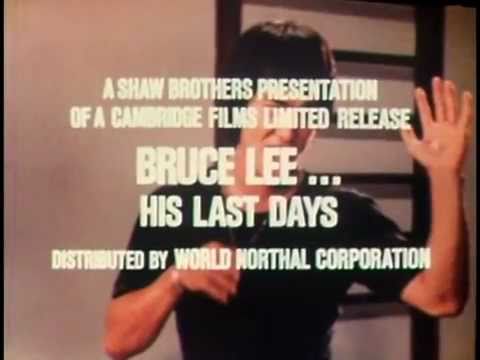
Also known as Bruce Lee & I, this films stars Betty Ting Pei as herself. At the time that the film was made, Betty was one of the most vilified women in the world. An actress who was best known for appearing in softcore sexploitation, Betty was a “friend” of Bruce Lee’s. It was while visiting Betty in her apartment that Bruce announced that he had a terrible headache. Betty gave Bruce Equagesic, a powerful type of aspirin, to help him deal with his headache. Bruce then fell asleep and, as we all know, never woke up.
Not surprisingly, after Bruce’s death, Betty was at the subject of a lot of unfavorable speculation and unsavory rumors. Some Bruce fans accused her of poisoning Bruce, either accidentally or on the orders of the organized crime figures who wanted to take over Bruce’s career. There was also speculation as to the nature of Bruce’s relationship with Betty. Bruce was married and had two children and, after he died, he was recast as almost a saintly figure. Betty’s claim that she was Bruce’s mistress did not fit in with that new reputation.
Bruce Lee: His Last Days, His Last Nights opens with Bruce (played by Danny Lee, who later won a critical respect by appearing in several John Woo films) filming a fight scene before then going to Betty’s apartment where, after the first of the movie’s many sex scenes, Bruce ends up dead in Betty’s bed. With both the press and even people in the streets accusing Betty of being evil, Betty goes to a bar and, while drowning her sorrows, tells the bartender about her life with Bruce Lee.
In Betty’s telling, she knew and loved Bruce long before he became a star. She met him when she was just an innocent schoolgirl and he saved her from some thugs in the streets. Later, they both met again while pursuing their film careers and they became lovers. Betty felt guilty about carrying on an affair with a married man but Bruce didn’t care. Bruce mostly cared about smoking weed, getting into fights, and getting laid.
This is one of the stranger Bruceploitation films. Most Bruceploitation films presented Bruce as being a real-life super hero who was either killed by his enemies or who faked his death so he could protect his family. This one presents Bruce as essentially being a petulant and cocky asshole who didn’t really care about anyone but himself. Some of that may be because the film was produced by the Shaw Brothers, with whom Bruce famously refused to work with early in his career. (It’s rumored, though, that Bruce was thinking of leaving Golden Harvest for the Shaw Brothers at the time of his death.) The other reason why Bruce comes across as being so unlikable in this movie is that it’s told from the point of view of Betty, who was often accused of having corrupted Bruce and of not being worthy of him. This film makes the argument that Bruce was not worthy of Betty.
Once you get past all of the controversy about how this film presents Bruce Lee and his relationship with Betty Ting Pei, it’s still not a very good movie. It’s too slow and they’re aren’t enough big fights. (When Bruce does fight, it’s usually to protect Betty from an unwanted admirer.) Bruce does don the yellow track suit but it’s just so he can debate philosophy with Betty. We expect more from our Bruceploitation films.
 Through the Shattered Lens