4 Shots From 4 Horror Films: The 1940s Part Three


This October, I’m going to be doing something a little bit different with my contribution to 4 Shots From 4 Films.  I’m going to be taking a little chronological tour of the history of horror cinema, moving from decade to decade.

Today, we look at the latter half of the 1940s.

4 Shots From 4 Horror Films

Strangler of the Swamp (1946, dir by Frank Wisbar)

Strangler of the Swamp (1946, dir by Frank Wisbar)

House of Horrors (1946, dir by Jean Yarbrough)

House of Horrors (1946, dir by Jean Yarbrough)

She-Wolf of London (1946, dir by Jean Yarbrough)

She-Wolf of London (1946, dir by Jean Yarbrough)

Scared To Death (1947, dir by Christy Cabanne)

Scared To Death (1947, dir by Christy Cabanne)

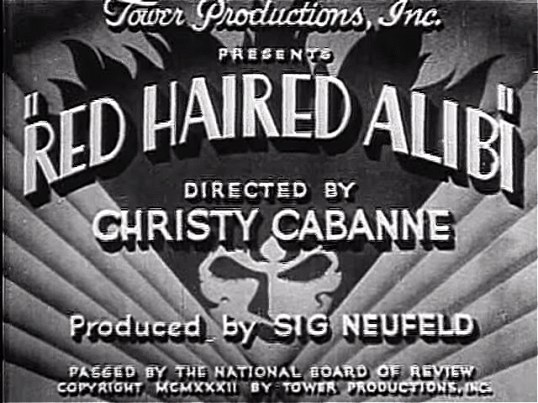
Love On The Shattered Lens: The Red-Haired Alibi (dir by Christy Cabanne)


1932’s The Red-Haired Alibi tells the story of Lynn (Merna Kennedy).

When we first meet Lynn, she is working at a store in Manhattan.  She has red hair.  The film is in black-and-white but we have no doubt that her hair is red because every single character who meets her mentions that she has red hair and she continually reminds people that she has red hair.  Everyone seems to be so stunned to meet a redhead!  And I have to say that this is the most realistic part of this movie.  I have red hair.  I’ve had complete strangers tell me that they like my hair.  I’ve also had complete strangers ask me if I’m a natural redhead (and I am!) and some other things that I’m not going to repeat here.  Personally, I love having red hair.  I’m a member of the proud 2%.  I don’t care if some people claim that people with red hair don’t have souls.  When you’ve got red hair, what else do you need?

As for the movie, Lynn meets a charming man named Trent Travers (Theodore van Enz).  Trent offers to give Lynn a job, away from the drudgery of working in sales.  Trent will pay Lynn to be his companion at night.  And since this is a pre-code film, Red-Haired Alibi is pretty open about what that means.  Lynn agrees.  Trent is handsome and rich and who couldn’t use the money during the Great Depression?  I imagine the film’s audience agreed.  One thing that always comes through in these Depression-era pre-code films is that morals don’t really matter when you’re struggling to pay your rent and not starve to death.

The problem is that Trent is a gangster.  Trent spends his nights committing crimes and then using Lynn as his alibi.  Eventually, Lynn realizes that she’s gotten herself into a dangerous situation.  The police suggest to her that she should get out of town before Trent takes things too far.  (I guess they didn’t have witness protection in 1932.)

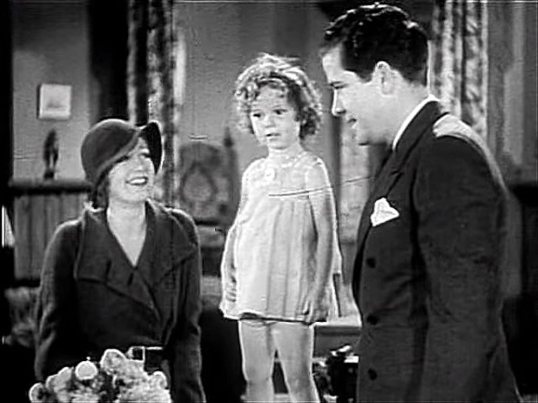
Lynn flees New York and builds a new life for herself in White Plains.  She meets a charming widower named Bob Wilson (Grant Withers).  They marry and settle into a life of domestic bliss.  Lynn becomes the stepmother to Bob’s young daughter (played by Shirley Temple, in what is believed to have been her film debut).  Everything seems to finally be perfect for Lynn.  Or at least it does until Trent shows up….

The Red-Haired Alibi is a generally well-acted but somewhat slow 1930s melodrama.  Comparing this film to some of the other films of the early 30s, it’s a relief to see a cast that knows how to deliver dialogue in the sound era but director Christy Carbanne sometimes struggles to maintain the sort of narrative momentum necessary to make a film like this compelling.  The ending feels a bit silly but, at least during the pre-code era, there wasn’t a need to try to punish Lynn for having a less-than-perfect past.

Dancer and former silent actress Merna Kennedy was best-known for her work with Charlie Chaplin and she gives a likable performance as Lynn.  Two years after making this film, she married Busby Berkley and retired from acting.  Tragically, she died of a heart attack in 1944, when she was only 36 years old.
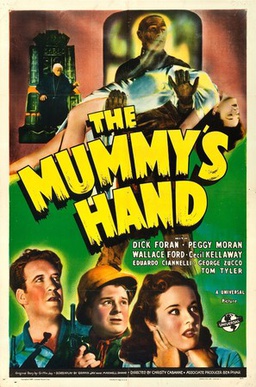
Horror Film Review: The Mummy’s Hand (dir by Christy Cabanne)


In 1940, having brought back The Invisible Man and Frankenstein’s Monster, Universal Pictures decided that it was also a good time to bring back The Mummy!

The Mummy’s Hand takes place in what we’re told is Egypt, though it’s obvious just a Universal backlot.  Two archeologists — Steve Banning (Dick Foran) and Babe Jenson (Wallace Ford) — are penniless and stuck in Egypt.  Babe wants to find a way to return to Brooklyn and his ex-girlfriend.  Steve is a bit more serious about archeology, though it must be said that he’s no Indiana Jones when it comes to discovering relics and taking them to museums.  If Indiana is the type who will risk his life to search a hidden cave in the Amazon Rain Forest, Steve is far more likely to just wander around an Egyptian market until he comes across someone selling an ancient vase.

Which is exactly what happens!  Steve finds someone selling a vase and, after he learns where it came from, he buys the vase.  He takes the vase to Prof. Andoheb (George Zucco), not knowing that Andoheb is an Egyptian high priest who has been sworn to protect the tomb of Princess Ananka.  When Andoheb realizes that the vase could lead to the discovery of the tomb, he lies and claims that it’s a forgery.  He then “accidentally” breaks it in order to keep Steve from showing the vase to anyone else.  Steve, however, is not deterred and a chance meeting with an American magician named Tim Sullivan (Cecil Kellaway) leads to Sullivan agreeing to finance Steve’s expedition to discover where the vase came from.  Sullivan’s daughter, Marta (Peggy Moran), worries that Steve and Babe are just trying to steal her father’s money so she insists on coming on the expedition with Steve.  Also following the expedition is Andoheb, who is himself starting to fall for Marta and who is hoping that he can use a secret serum hidden in the tomb to make both himself and Marta immortal.

Of course, the tomb itself is protected by Kharis (Tom Tyler, under a ton of bandages), a mummy who is immortal due to the serum and who has sworn to protect the tomb from any outsiders.  Kharis moves slowly but efficiently.  He’s a ruthless and silent killer, one whose eyes appears to just be two black holes, the better to reflect his own lack of a soul.

The main problem with The Mummy’s Hand is that it takes forever for the Mummy to actually show up.  This is only a 67-minute film and the Mummy mayhem doesn’t really start until around the 50 minute mark.  As a result, the viewer spends a lot of time watching Steve and Babe wander around Egypt and essentially act like stereotypical American tourists.  Even when the expedition finally gets started, the audience still has to sit through endless scenes of Marta accusing Steve of being some sort of con artist.  This is a movie that will truly leave you saying, “When is the mummy going to show up!?”

That said, The Mummy itself is a frightening creature, especially with his empty eyes.  Mummy’s are naturally frightening, especially when they’re walking towards you and dragging their decaying bandages  behind them.  The Mummy is effective, I just wish he had been featured in more of the movie.

Previous Universal Horror Reviews:

  1. Dracula (1931)
  2. Dracula (Spanish Language Version) (1931)
  3. Frankenstein (1931)
  4. Island of Lost Souls (1932)
  5. The Mummy (1932)
  6. The Invisible Man (1933)
  7. The Bride of Frankenstein (1935)
  8. Dracula’s Daughter (1936)
  9. Son of Frankenstein (1939)
  10. Black Friday (1940)
  11. The Invisible Man Returns (1940)
  12. The Wolf Man (1941)
  13. Ghost of Frankenstein (1942)
  14. Invisible Agent (1942)
  15. Frankenstein Meets The Wolf Man (1943)
  16. Son of Dracula (1943)
  17. House of Frankenstein (1944)
  18. The Invisible Man’s Revenge (1944)
  19. House of Dracula (1945) 
  20. Creature From The Black Lagoon (1954)

Halloween Havoc!: THE MUMMY’S HAND (Universal 1940)


gary loggins's avatarcracked rear viewer

Universal revived The Mummy in 1940’s THE MUMMY’S HAND, but except for the backstory (and judicious use of stock footage), there’s no relation to the 1932 Karloff classic . Instead of Imhotep we’re introduced to Kharis, the undead killing machine, as the High Priest of Karnak (Eduardo Cianelli in old age makeup) relates the tale of Princess Ananka, whose tomb is broken into by Kharis, who steals the sacred tanna leaves to try and bring her back to life. Kharis gets busted, and is condemned to be buried alive! For he “who shall defile the temple of the gods, a cruel and violent death shall be his fate, and never shall his soul find rest for all eternity. Such is the curse of Amon-Ra, king of all the gods”. So there!

The High Priest croaks, making Andoheb (George Zucco ) the new High Priest. Meanwhile in Cairo, Americans Steve…

View original post 591 more words

4 Shots From Horror History: Strangler Of The Swamp, House of Horrors, She-Wolf of London, Scared To Death


This October, I’m going to be doing something a little bit different with my contribution to 4 Shots From 4 Films.  I’m going to be taking a little chronological tour of the history of horror cinema, moving from decade to decade.

Today, we look at the latter half of the 1940s.

4 Shots From 4 Films

Strangler of the Swamp (1946, dir by Frank Wisbar)

Strangler of the Swamp (1946, dir by Frank Wisbar)

House of Horrors (1946, dir by Jean Yarbrough)

House of Horrors (1946, dir by Jean Yarbrough)

She-Wolf of London (1946, dir by Jean Yarbrough)

She-Wolf of London (1946, dir by Jean Yarbrough)

Scared To Death (1947, dir by Christy Cabanne)

Scared To Death (1947, dir by Christy Cabanne)

The Second Annual Academy Awards: 1915


Continuing to reimagine Oscar history one year at a time, LMB and I take a look at what 1915 could have been.

Jedadiah Leland's avatarThrough the Shattered Lens Presents The Oscars

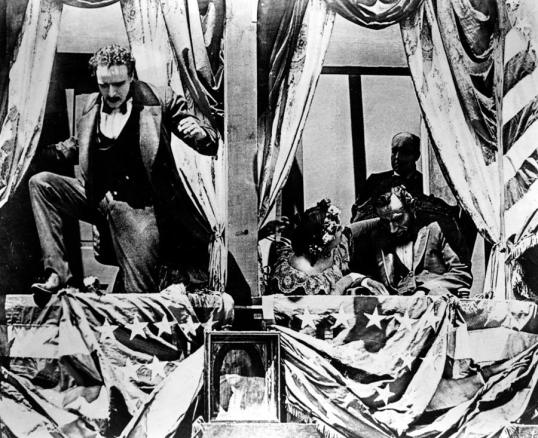
John Wilkes Booth (Raoul Walsh) flees after shooting Abraham Lincoln in D.W. Griffith's Birth Of A Nation John Wilkes Booth (Raoul Walsh) flees after shooting Abraham Lincoln in D.W. Griffith’s Birth Of A Nation

The second annual Academy Awards were handed out on January 20th, 1916.  For the second and final time, the ceremony took place in the Empire Room of the Waldorf Hotel in New York City.  Just as in the previous year, the awards were handed out after dinner and a speech from Academy President Mack Sennett.  Again, the winners were announced before the actual ceremony and were given certificates of achievement.  According to contemporary reports, the winners who were present all gave brief acceptance speeches but nobody bothered to record what anyone said.

As in the previous year, winners were selected by a jury of distinguished citizens.  The 1915 jury consisted of:

  1. Harry Chandler, businessman
  2. Owen McAleer, former mayor of Los Angeles, California
  3. Ellery Sedgwick, publisher of…

View original post 794 more words