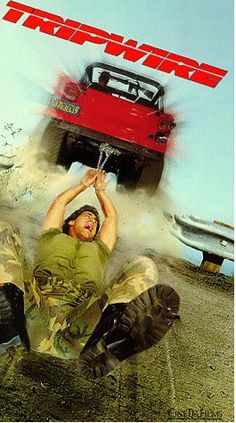
Terrorist Josef Szabo (David Warner) and his team (including Viggo Mortensen, Charlotte Lewis, and Sy Richardson) attempt to hijack a train that’s carrying weapons that they can use in their plans for world conquest. Renegade ATF agent Jack DeForest (Terence Knox) catches them in the act and, in the resulting crossfire, Szabo’s son is killed. Now looking for revenge, Szabo kidnaps Jack’s estranged wife (Meg Foster) and Jack’s son. Even though his supervisor (Yaphet Kotto) claims that Jack is dangerous and out-of-control, fellow ATF agent Anne (Isabella Hofmann) teams up with Jack to rescue his family.
This is a well-done B action movie, featuring villains who have more depth than usual and an interesting opening sequence that plays out with almost no dialogue. Terence Knox is not the most exciting of heroes (he was better served by television than the movies) but the supporting cast makes up for his character’s blandness. Where also can you see Meg Foster, David Warner, Yaphet Kotto, Viggo Mortensen, and Tommy Chong (!) all in the same movie? The mountainous Utah setting gives the film a modern western feel and, though this may be a direct-to-video B movie, the cast gives it their all. Tripwire is cinematic fast food, quick and just satisfying enough to leave you happy.
In this incredibly silly film from 1995, Martin Kemp plays The Vampire. He doesn’t get a name but he does get a backstory. Back when he was mortal, the Vampire pursued a secret and forbidden affair with a princess. One day, after making love, the man who would became the Vampire was laying down next to a stream when he was approached by three naked women who proceeded to bite his neck and vampirize him.
Centuries later, the Vampire is sickly and approaching the end of his existence. He only has three days to convince the reincarnation of his former lover to allow him to drink her blood so that he can continue to exist. And apparently it won’t work unless she’s a virgin and unless she rejects all others and loves only him. That sounds like a lot of rules to me and, to be honest, most of them seem to be kind of arbitrary. Not only does The Vampire have to find the reincarnation of the Princess but he has to find her before she loses her virginity or otherwise, what? She’ll cease to be the reincarnation? Her love will somehow be devalued? Her blood will no longer be worth drinking? If this vampire has had to spend centuries only drinking blood from virgins who were in love with him, no wonder he looks so sickly. I really think that maybe the other vampires were playing a practical joke when they explained the rules to him. Hazing the new guy, it has consequences!
Anyway, the princess has been reincarnated as Charlotte (a young Alyssa Milano). Fortunately, for the Vampire, Charlotte was raised in a convent and, even though she is now a college student, she’s still a virgin who blushes when she even hears the word sex. Unfortunately, Charlotte has a boyfriend named Chris (Harrison Pruett) and she’s thinking about losing her virginity if she can convince herself that she loves Chris more than any other person that she will ever possibly meet. So, the Vampire not only has to convince Charlotte to fall in love with him but he also has to make sure that she doesn’t have sex beforehand. It’s going to be difficult because everyone on campus is determined to get Charlotte laid. This has all the makings of Italian sex comedy but Embrace of the Vampire instead takes its plot very seriously.
The Vampire starts to appear in Charlotte’s dreams. He gives her an ankh to replace the cross that Chris gave her. Because the Ankh is a symbol of desire, just wearing it makes Charlotte more sexually aggressive and soon, she’s wearing short skirts, low-cut tops, and white stockings. She’s also making out with Sarah (Charlotte Lewis), the photographer who lives in the dorm room next to hers. (As played by Charlotte Lewis, Sarah is actually an interesting character and it’s a shame that the film pretty much just uses her for titillation.) But since the Vampire’s whole thing is keeping Charlotte from losing her virginity, why would he give her something that would make her more open to sexual experiences? Again, it’s hard not to think that the Vampire is just the victim of an elaborate practical joke.
As I said at the start of the review, Embrace of the Vampire is incredibly silly. It’s also a film that seems to be a bit popular with viewers of a certain age. I’m assuming that’s because of the frequent Alyssa Milano nudity and that one scene with Charlotte Lewis. For the most part, Alyssa Milano gives a bland performance in Embrace of the Vampire. It’s not so much that she’s bad as everything about her performance is on the surface. One gets the feeling that there’s really not much going on with Charlotte’s inner life, both before and after she starts dreaming about The Vampire. As The Vampire, Martin Kemp appears to be absolutely miserable. He comes across as if he’d rather be anywhere than appearing in this movie.
That said, the film’s director got her start working with Francis Ford Coppola and she has a good eye for gothic scenery and atmosphere. A scene where Charlotte imagines a frat party turning into a Hellish orgy is effectively done. Jennifer Tilly has a small role as a vampire and she has said that Quentin Tarantino approached her at the Oscars to tell her that he enjoyed the movie. It’s a silly movie (yes, third time I’ve used that specific term and that should tell you just how silly it is) but, for better or worse, it epitomizes an era.
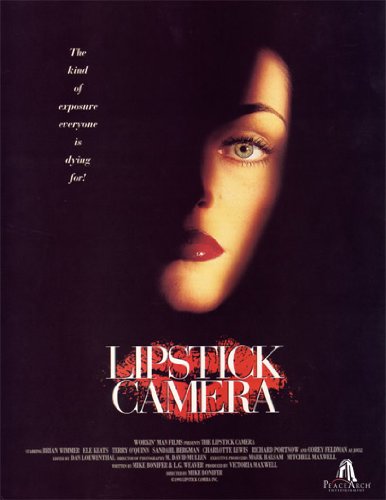
Omy Clark (Ele Keats) is an aspiring journalist who wants to work with the world famous videographer, Flynn Dailey (Brian Wimmer). When she shows up at Flynn’s studio and marvels at how much power the filmed image can wield, Flynn blows her off. While Flynn is busy ignoring Omy, Lily Miller (Sandahl Bergman) drops by and tries to hire Flynn to film her and her husband, Raymond (Terry O’Quinn), making love. When Flynn heads out to the Miller residence, Omy tags along as an uninvited guest. She happens to have a tiny camera that she stole from her best friend, Joule (Corey Feldman, sporting a beard and a beret). Omy plants the camera in Lily’s bedroom. Later, when Flynn, Omy, and Joule all return to the Miller house to retrieve the tiny camera, they discover that Lily has been murdered and that Raymond is a communist war criminal who fled East Germany following the collapse of the Berlin Wall.
Lipstick Camera has an intriguing premise and, even in 1994, it was trying to say something about media manipulation and what is today referred to as being “fake news.” You could say that it was a film that was ahead of its time. You could also say that it’s a complete mess or that it’s an erotic thriller that is neither erotic nor thrilling and you would be just as correct. The main problem with the film is that almost every plot development is set in motion by Omy being either extremely self-absorbed or extremely stupid. When she’s not manipulating Joule (who is not too secretly in love with her), she’s stalking Flynn and carelessly losing an expensive camera that didn’t even belong to her in the first place. And she, of course, is meant to be our hero!
In the 90s, former teen idol Corey Feldman was one of the mainstays of late night Cinemax. Even during his Cinemax years, Feldman would occasionally give a good performance. Lipstick Camera was not one of those occasions. In Lipstick Camera, Feldman wears a beard and a beret and spends a lot of time in a room that’s full of computer monitors and TV screens and that’s the extent of his characterization. He does get a dramatic death scene, in which Joule appears to be determined to stave off the grim reaper by giving a monologue of Shakespearean proportions but otherwise, this is Corey Feldman at his worst. Faring slightly better is Terry O’Quinn, who, at least, gets to deliver his lines in a light German accent.
With its focus on the media and communist war criminals, Lipstick Camera is an example of a direct-to-video film that tried to be about something more than just sex and murder. (Though, this being a DTV film, there is one brief sex scene that takes place in front of a TV that’s showing a video of a fireplace.) Unfortunately, nobody involved seems to know what that something was supposed to be.
During the 80’s there were three names who earned the title of megastars. There was Sylvester Stallone with his Rocky and Rambo films. There was also Arnold Schwarzenneger who was pretty much the biggest action star of the decade. Then there’s Eddie Murphy who pretty much redefined the role of comedic action star. Yes, Murphy was an action star in his own right.
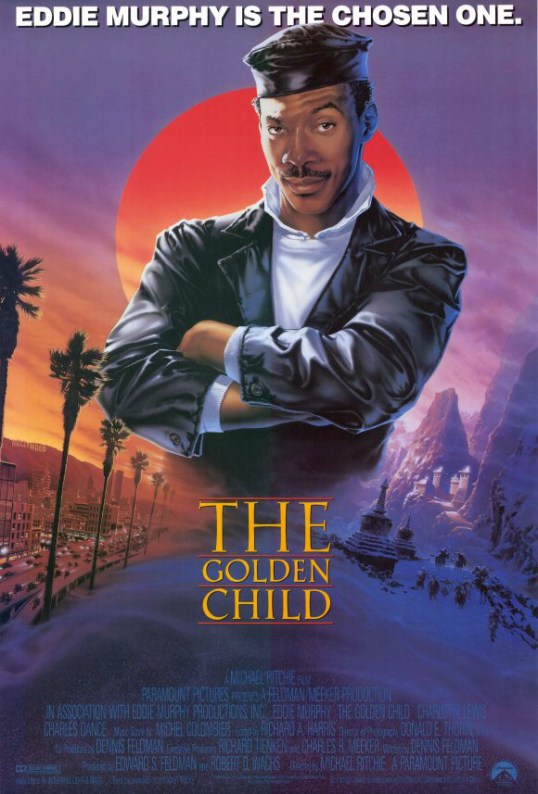
Once Murphy made a huge hit with the odd couple action comedy 48 Hours he began making one action comedy after the next. They all made money and to certain degree they were actually pretty good. There was one Murphy action comedy vehicle that was initially well-received by many when it came out in December of 1986, but has since seen a revisionist take from those who originally hyped up the film. I’m talking about The Golden Child.
Many who seem to have enjoyed and loved this film when it first came out has since backtracked to calling it one of the worst films of the 80’s. A film that indulges the ego of it’s star. While I agree with everything people have said about this film with each passing year I still can’t keep myself from enjoying it whenever it comes on cable (been awhile since it has). It was a fun flick when I first saw it as a 13 year-old and it continues to be fun.
Yes, it hasn’t aged well, but I think how it encompasses the kitchy-style of the 80’s not to mention the egocentricity of Murphy at the height of his stardom makes this one of my guilty pleasures. It even has a much y ounger, but still badass, Tywin Lannister playing the role of the main villain Sardo Numpsa aka Brother Numpsy.
 Terrorist Josef Szabo (David Warner) and his team (including Viggo Mortensen, Charlotte Lewis, and Sy Richardson) attempt to hijack a train that’s carrying weapons that they can use in their plans for world conquest. Renegade ATF agent Jack DeForest (Terence Knox) catches them in the act and, in the resulting crossfire, Szabo’s son is killed. Now looking for revenge, Szabo kidnaps Jack’s estranged wife (Meg Foster) and Jack’s son. Even though his supervisor (Yaphet Kotto) claims that Jack is dangerous and out-of-control, fellow ATF agent Anne (Isabella Hofmann) teams up with Jack to rescue his family.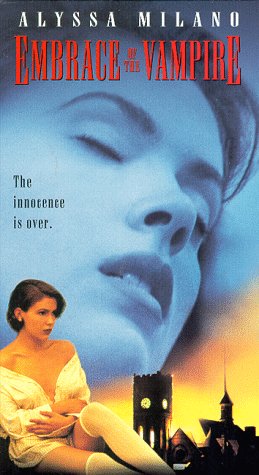
 Through the Shattered Lens