10 TO MIDNIGHT is probably Charles Bronson’s best film from the infamous Cannon Films. It’s a solid police procedural with a slasher twist. It also has a good soundtrack from Robert O. Ragland. When we meet the creepy killer Warren Stacy (Gene Davis) at the beginning of the film, “Look at Me” plays on the soundtrack as he checks himself out in the mirror and goes through the crime in his mind. On Charles Bronson’s 104th birthday, I’ve chosen this as my song of the day!
Tag Archives: Charles Bronson
Brad’s 2nd “Scene of the Day” – Harmonica arrives in ONCE UPON A TIME IN THE WEST (1968)! Happy Birthday, Charlie!!
On the precipice of becoming an international superstar, director Sergio Leone gave Charles Bronson one of the coolest introduction scenes in film history in ONCE UPON A TIME IN THE WEST. Enjoy my friends!
Brad’s “Scene of the Day” – Charles Bronson & Alan Ladd in DRUM BEAT (1954)! Happy Birthday, Charlie!!
Until 1954’s DRUM BEAT, Charles Bronson had been billed on screen as Charles Buchinsky. He then proceeded to steal the film right out from under star Alan Ladd. Bronson’s powerful performance as renegade Modoc indian Captain Jack is an early sign of Bronson’s immense talent and charisma.
Enjoy this action-packed clip from Delmer Davis’ excellent western, and happy 104th birthday, Charles Bronson!
6 Bronsonrific Trailers
Today is Charles Bronson’s birthday! I sent the trailer kitties out to gather the trailers for this week’s edition of Lisa Marie’s Favorite Grindhouse and Exploitation Film Trailers with one mission in mind. Make it Bronsonriffic! Let’s see how they did!
1) Once Upon A Time In The West (1968)
2) Someone Behind The Door (1970)
3) Death Wish (1974)
4) From Noon Till Three (1976)
5) Telfon (1977)
6) 10 to Midnight (1983)
What do you think, Trailer Kitty?
Music Video of the Day: Once Upon A Time In The West, performed by The Danish National Symphony Orchestra & Tuva Semmingsen (2018, dir by ????)
It’s Charles Bronson’s birthday so it only makes sense that today’s music video should be for a performance of the Ennio Morricone-composed theme of one of his best films.
Enjoy!
Happy Birthday to Katharine Isabelle who starred with Charles Bronson on YES VIRGINIA, THERE IS A SANTA CLAUS!
Charles Bronson came back to the world of movies after his wife Jill Ireland passed away with the sweet 1991 TV movie YES VIRGINIA, THERE IS A SANTA CLAUS. I’m wishing a happy birthday to Kartharine Isabelle who was so good as Virginia!
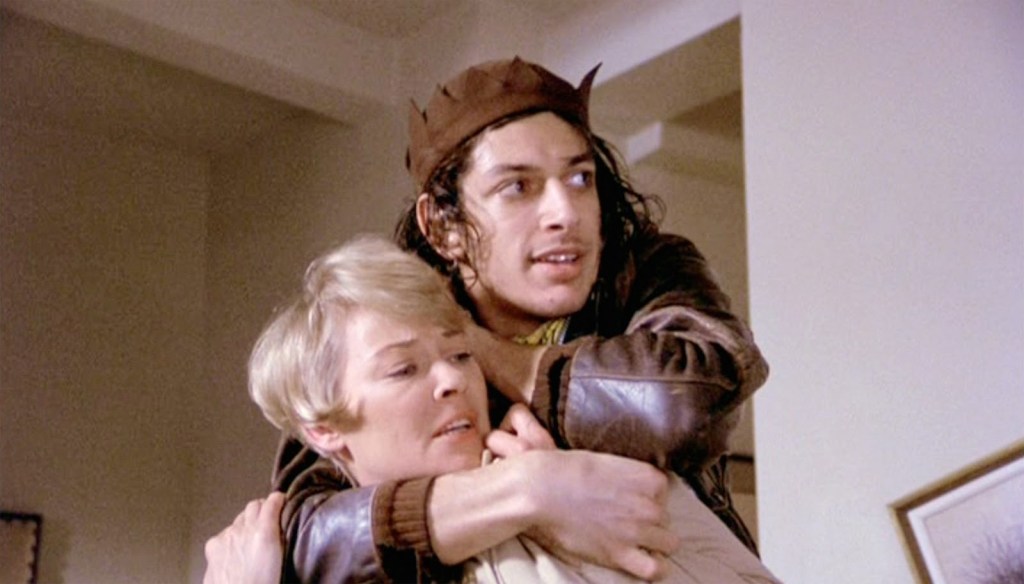
Brad’s Scene of the Day: Jeff Goldblum and Robert Englund attack Charles Bronson in ST. IVES (1976)!
Happy 73rd Birthday, Jeff Goldblum! 🎂🎉
I’ve been a fan of Jeff Goldblum for most of my life. The man has had an amazingly successful career, starring in some of the most financially profitable films ever made, like JURASSIC PARK and INDEPENDENCE DAY!! One of the main reasons that Goldblum is extra special to me, however, is because of his small roles as bad guys in two different Charles Bronson movies in the 1970’s. First, he played one of the thugs who breaks into Paul Kersey’s apartment and assaults his wife and daughter in the original DEATH WISH (1974). Second, he plays a thug who, along with Robert Englund and another less famous guy, tries to rob and assault Raymond St. Ives in the film ST. IVES (1976). I’ve loved telling people about his appearances in these two films for decades, and I don’t see any reason to stop now.
To celebrate Jeff Goldblum’s birthday on the Shattered Lens, I’ve included an “overly edited” video of his appearance in ST. IVES, if nothing else so you could also see the young Robert Englund (Freddy Krueger). I wish I could share the full scene, but this is all I could find on YouTube. Anyway, happy birthday, Jeff! I hope it’s been a great one!
Happy 86th Birthday to the excellent actor, Robert F. Lyons!!
Every so often in life something incredible happens when you least expect it. First, a little background… back in 2021, Charles Bronson celebrated his 100th birthday in heaven. At that point in my life, I had mostly celebrated my love of Bronson movies by myself. But back in 2021, I saw a news article that stated that Bronson fans around the world were celebrating his 100th birthday on social media using the hashtag #Bronson100. Following the hashtag on Twitter, I discovered a group of people who were doing a “live tweet” of the Bronson classic DEATH WISH 3! That night I met Doug Dietz, Chris Rauch, Lisa Marie Bowman, and many others who just wanted to celebrate Bronson like I did. These folks have become so important in my life! As I continued to search the world of social media for all things Charles Bronson, this time on Facebook, I came across the THIS WEEK IN CHARLES BRONSON PODCAST, run by a man from the Philadelphia area named Eric Todd. I made my request to join the page and was happy when they let me in. Soon I was sharing my love of Bronson, and they even asked me to be part of the podcast!! I guess they thought it would be nice to have someone on the podcast who sounded like the biggest hick in America. After all these years, I had found my people!! Eric and my friends in the THIS WEEK IN CHARLES BRONSON PODCAST Facebook group have become some of my very best friends. We would talk about Bronson and his movies on the show, but we thought it would always just be a bunch of Bronson geeks talking shop. And then another strange thing happened, we started reaching out to actors and actresses who had worked with Bronson and asked if they would come on the show. Lo and behold, many of them started saying YES! Soon Juan Fernandez (KINJITE: FORBIDDEN SUBJECTS), Jordan Rhodes (MR. MAJESTYK, THE INDIAN RUNNER), and Jan Gan Boyd (ASSASSINATION) had joined us for an episode!! It was so fun hearing their firsthand stories of working with Bronson. Which brings us back to Robert F. Lyons…
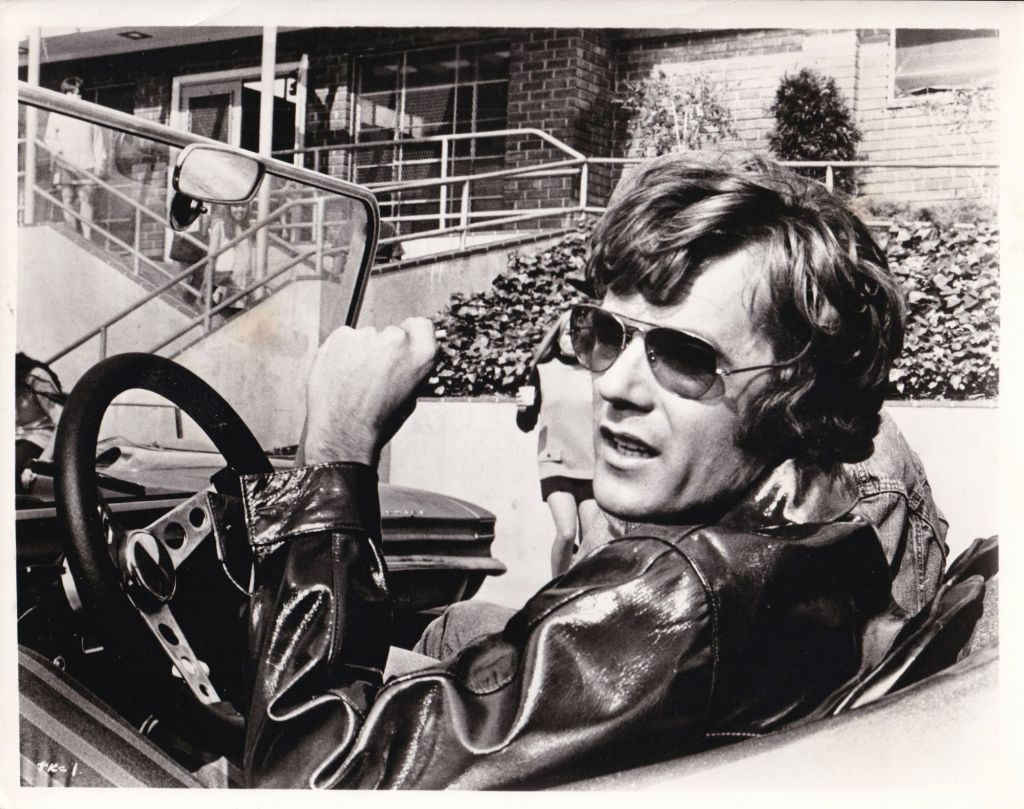
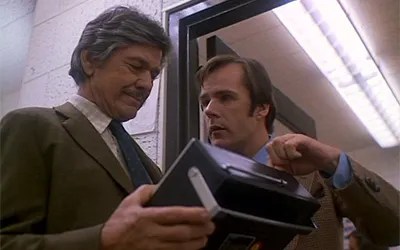
Robert F. Lyons was a hot young actor in the late 60’s and early 70’s. He was incredible in his debut film PENDULUM (1969) as the psychopath Paul Martin Anderson opposite George Peppard. Soon he was stealing scenes in movies like GETTING STRAIGHT (1970) with Elliot Gould and SHOOT OUT (1971) with Gregory Peck. Before long he was headlining his own films like the creepy THE TODD KILLINGS (1971) and the oddly titled DEALING: OR THE BERKELEY-TO-BOSTON FORTY-BRICK LOST-BAG BLUES (1972). As great as Robert F. Lyons is in these roles, his career as a leading man didn’t take off and he was soon back to character parts on movies and TV. He continued to play some really interesting parts along the way, like the awful Harrison Hancock in the Jesse Vint redneck action film BLACK OAK CONSPIRACY (1977) and the doomed vigilante Skeeter Norris in the TV horror film DARK NIGHT OF THE SCARECROW (1981). It was in the early 80’s when Robert F. Lyons, his friends call him Bobby, began working with Charles Bronson. It was also in the early 80’s when I discovered Charles Bronson. From 1982 to 1986, Bobby worked with Bronson in three of his classic Cannon films, first in DEATH WISH II (1982), followed by TEN TO MIDNIGHT (1983), and finally in MURPHY’S LAW (1986). I truly became Bronson’s biggest fan around the same time DEATH WISH 3 and MURPHY’S LAW were hitting home video. Lyons plays Bronson’s trusted partner Art Penney in MURPHY’S LAW, and I’ve watched the film at least 100 times in my life. Over the years, 10 TO MIDNIGHT has developed into my personal favorite Bronson / Cannon Films movie. If you’ve seen the film, Bobby’s in the interrogation scene where Bronson confronts the killer with his masturbation device and he’s also in the courtroom scene (spoiler alert!) where Bronson has to admit he planted the evidence against the killer. These are very memorable scenes in Bronson’s “slasher” film. Bobby, Charlie, and Jill Ireland got along great during these years, the same years I was becoming obsessed with my lifelong movie hero. In some ways, he was part of that obsession!
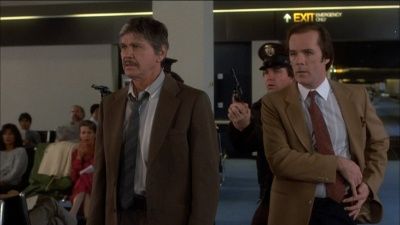
Later in his career, Bobby appeared on top notch TV shows like COLD CASE and CRIMINAL MINDS. He’s had a phenomenal, five-decade career as a working actor and teacher. Well, in 2024, Bobby agreed to join Eric Todd and me for an episode of the THIS WEEK IN CHARLES BRONSON PODCAST. Knowing how much I love Robert F. Lyons, Eric, who’s the host of the show, let me introduce him at the beginning. Introducing Bobby Lyons and being part of an interview with him is one of those incredible and unexpected things that have happened in my life. He’s the nicest guy, and he spent a couple of hours with us discussing Bronson, his movies, and everything else that came up. It’s one of the greatest nights of my life, and I’m sharing that podcast episode below! Please forgive me for totally fanboying out, but that’s just how it is. Happy Birthday Bobby Lyons! You’re in my film-watching Hall of Fame!
THE TWILIGHT ZONE (TV Series) – S3, E1: “Two,” starring Charles Bronson and Elizabeth Montgomery!
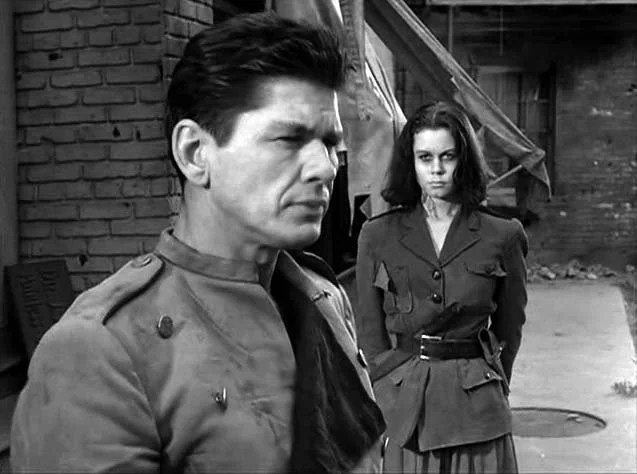
You know producer Buck Houghton had high hopes for the opening episode of Season 3 of THE TWILIGHT ZONE when it aired on September 15, 1961. It stars up and coming actors of the time, Charles Bronson and Elizabeth Montgomery, who were all over TV screens in the 50’s and early 60’s, with Bronson emerging as a strong character actor in movies as well. The two would be major stars within a few years, but they weren’t quite there yet.
This episode, titled “Two,” opens with “The Woman” (Elizabeth Montgomery), who is wearing a tattered dark military uniform, wandering into a bombed out, deserted city, and spotting the remains of a restaurant. Tired and hungry, she goes in and digs around until she finds an old can of chicken. As she’s opening the can, “The Man” (Charles Bronson), who’s wearing a tattered, light-colored uniform, walks in on her. Immediately attacking him with a combination of meat cleavers, bottles, pots and pans, The Man tries to hold her off until if becomes clear that he’s going to have to subdue her, which he does with one vicious punch that knocks her out cold. At this point it’s clear that these are the last two remaining survivors of a devastating war, on opposing sides no less, that completely destroyed the world. When The Man wakes The Woman up by dumping a pot of cold water on her face, he gives her back her chicken and tells her that there is no reason to fight anymore, as everyone else is dead. She doesn’t understand what he is saying so he walks off in frustration. The Woman doesn’t trust The Man, but she begrudgingly starts to follow him around to keep an eye on him. Will they kill each other? Will they join forces to survive? Could they even fall in love? Writer-Director Montgomery Pittman answers all of these questions over the course of the episode’s brisk 25 minutes.
The allegorical “Two” was a bold choice to open the popular TV show’s third season with its minimalist production set in a few sections of a single bombed-out town and featuring only two characters who barely even speak, especially Montgomery, who says two words throughout the entire episode. Not that much really happens either, so it’s the type of episode that lives or dies based on the performances of the lead actors, and Bronson and Montgomery both deliver outstanding work. Bronson, a dependable character actor at this point in his career, is especially good as The Man. His square-jawed stoicism unravels enough to reveal a weary vulnerability and desire for a connection with another person, even when they’re supposed to be mortal enemies. It’s ultimately a romantic part and Bronson kills it. For those who mostly know Bronson from his post DEATH WISH action star roles, parts like this are a revelation. Montgomery, still a few years away from beginning her iconic portrayal of Samantha in BEWITCHED, is quite beautiful even when she’s this grimy. Her performance as The Woman is even more challenging as it’s almost completely a physical performance, and she shines as her character transforms over the course of the episode.
Ultimately, “Two” may resolve its setup a little too quickly to be realistic, but I still enjoyed it immensely. The performances are outstanding and its hopeful denouement left me with a smile on my face.
ALFRED HITCHCOCK PRESENTS (TV Series) – S7, E18: “The Woman Who Wanted to Live,” starring Charles Bronson and Lola Albright!
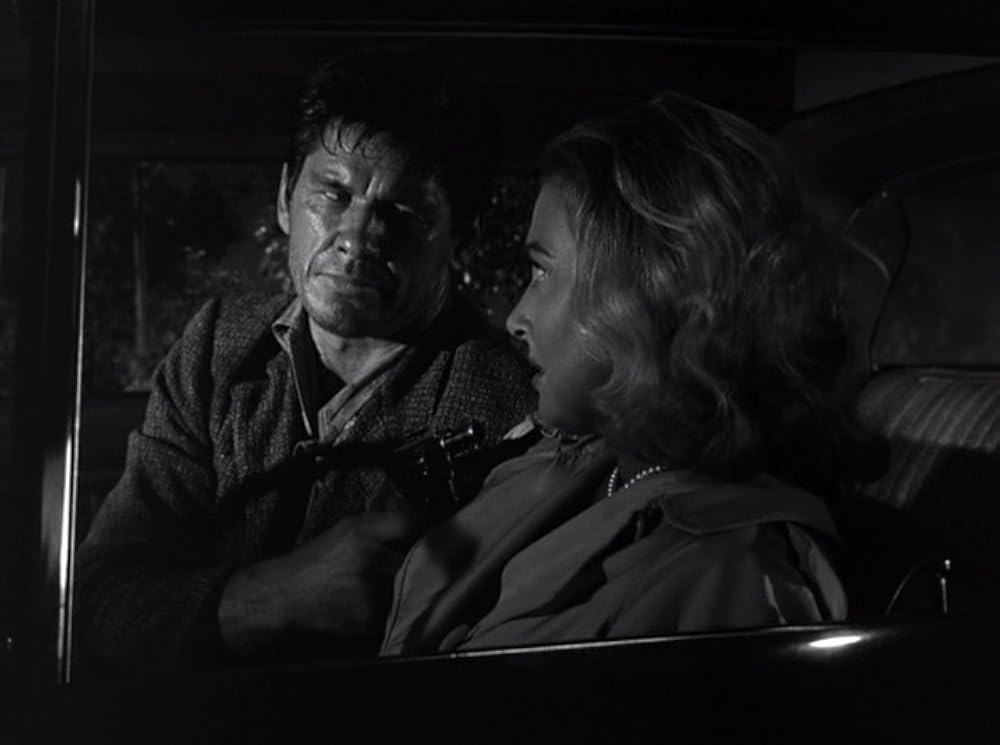
Charles Bronson appeared in three episodes of the ALFRED HITCHCOCK PRESENTS T.V. series. His first two appearances came in the first season in early 1956 when Bronson was still in the early stages of his career. When “The Woman Who Wanted to Live” aired on February 6th, 1962, Bronson’s standing in the film and television community had risen dramatically. Since those first two appearances, he had headlined several low budget films (MACHINE GUN KELLY and SHOWDOWN AT BOOT HILL), starred in his own television series (MAN WITH A CAMERA), and even co-starred as one of the seven gunmen in the western classic, THE MAGNIFICENT SEVEN! As opposed to those two early appearances, Bronson was a well known commodity to audiences in 1962, and he was on the precipice of breaking out in even bigger roles, as THE GREAT ESCAPE and THE DIRTY DOZEN were just over the horizon!
In “The Woman Who Wanted To Live,” we meet escaped convict Ray Bardon (Charles Bronson), a hardened criminal who was shot in the arm when busting out of prison. In serious pain and in need of some quick cash and a getaway vehicle, Bardon robs a remote gas station, even killing the attendant when he makes a move for his gun. Soon a beautiful young woman named Lisa (Lola Albright) drives up to the station. Bardon wants to steal her car and take off, but surprisingly Lisa, who sees his wounds, convinces him to let her drive him wherever he wants to go. As Bardon wonders why she’s willing to help him, Lisa assures him that she will do whatever he wants her to do as she just wants to stay alive. As they flee into the night, they have to deal with a flat tire and a gang of dangerous thugs, but Lisa continues to help Bardon and even passes up a couple of opportunities to take off to safety. Why is Lisa so invested in Bardon’s survival? If you’re guessing there’s more to the story, you would definitely be right!
After watching all three of Charles Bronson’s episodes of ALFRED HITCHCOCK PRESENTS, I believe that “The Woman Who Wanted To Live” just may be the best of the bunch. It’s not as creepy as “And So Died Riabouchinska,” and it certainly doesn’t play up the black comedy like “There Was An Old Woman,” but it does pack quite the emotional punch. First, the story is very effective, as we watch the bond that seems to be developing between the escaped criminal and his captive. You can’t help but wonder if we may be watching two twisted souls who may actually need each other. Hitchcock was always good at throwing people into desperate situations together, and script definitely goes that route here. In the short 25 minutes contained in this episode, each character is given the opportunity to truly help the other, as she helps mend his wounds and he protects her from roadside thugs with bad intentions. Even as the two help each other, as the story plays on, a tightening grip seems to take hold on the audience as to why Lisa hasn’t escaped when she’s had her chances. The strength of the episode just may be the fact that when the big reveal happens, it’s as plain as the nose on your face even though I never considered it a single time, something I have in common with our criminal, Frank Bardon. Second, this episode features two excellent performances from the stars. Interestingly, Charles Bronson and Lola Albright would appear together in the Elvis movie, KID GALAHAD, later this same year. As usual, Bronson brings a real world intensity to the role of the wounded and desperate criminal. With his lived in features, Bronson is incapable of presenting himself in a way that doesn’t seem true and authentic, whether he’s playing a cop or a killer, and his presence here is a clear indicator of his impending stardom. In a tribute to Albright’s performance, the two stars have quite a nice chemistry together, and she steals the final scenes as her character transforms right in front of our eyes and we understand why she’s refused to run away.
With its strong script and the excellent lead performances from Bronson and Albright, I easily recommend “The Woman Who Wanted To Live” as a superior episode of ALFRED HITCHCOCK PRESENTS. This episode truly surprised me and has lingered with me since I first watched it a few days ago.
 Through the Shattered Lens