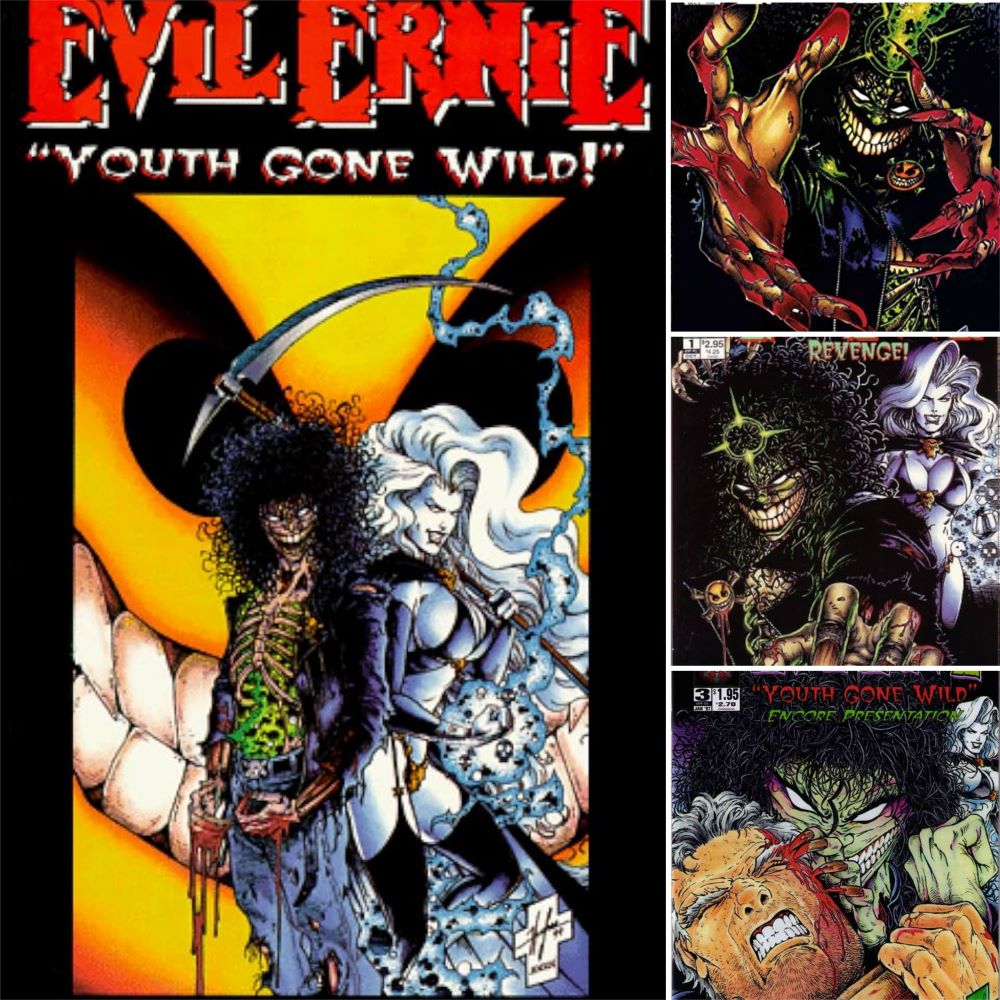
Evil Ernie’s legacy began with two key comic series that deeply shaped his character and cemented his place in horror comic history. Firstly, the original Evil Ernie mini-series, published in 1991 by Eternity Comics, introduced readers to Ernest Fairchild—a tortured, telepathic boy whose severe abuse and trauma spiraled into the transformation that birthed Evil Ernie. This five-issue series laid the foundation for the character’s dark mythology, blending psychological horror with supernatural violence and heavy metal influences. Here, Ernie’s pact with Lady Death and the introduction of his iconic “Smiley” button set the tone for his psychotically violent crusade against humanity, portraying him as a vengeful, undead antihero fueled by rage and heartbreak.
Following the original run, the Chaos! Comics imprint expanded on Ernie’s mythos with significant titles like Evil Ernie: Resurrection and Youth Gone Wild. These series pushed the narrative further into apocalyptic territory, showcasing Ernie’s increasing power, his undead army, and the world-spanning consequences of his rampage. Resurrection delved into Ernie’s return from death with amplified powers, setting the stage for his global campaign of destruction. Youth Gone Wild, evokes the rebellious spirit captured both visually and thematically, tying Ernie’s anger and chaos to a larger cultural moment reflective of 1990s heavy metal and punk ethos.
Crucially, the role of Lady Death in these series cannot be overstated. Initially a spectral figure who offers Ernie the love and acceptance he craves in exchange for his violent pledge, Lady Death evolved into the defining character of the Chaos! Comics universe. Her complex origins as the mortal Hope, betrayed and transformed into the queen of Hell, give the stories emotional depth and mythic resonance. Her “bad girl” gothic aesthetic and tragic backstory resonated powerfully with fans, propelling her to overshadow even Ernie himself in popularity and cultural impact.
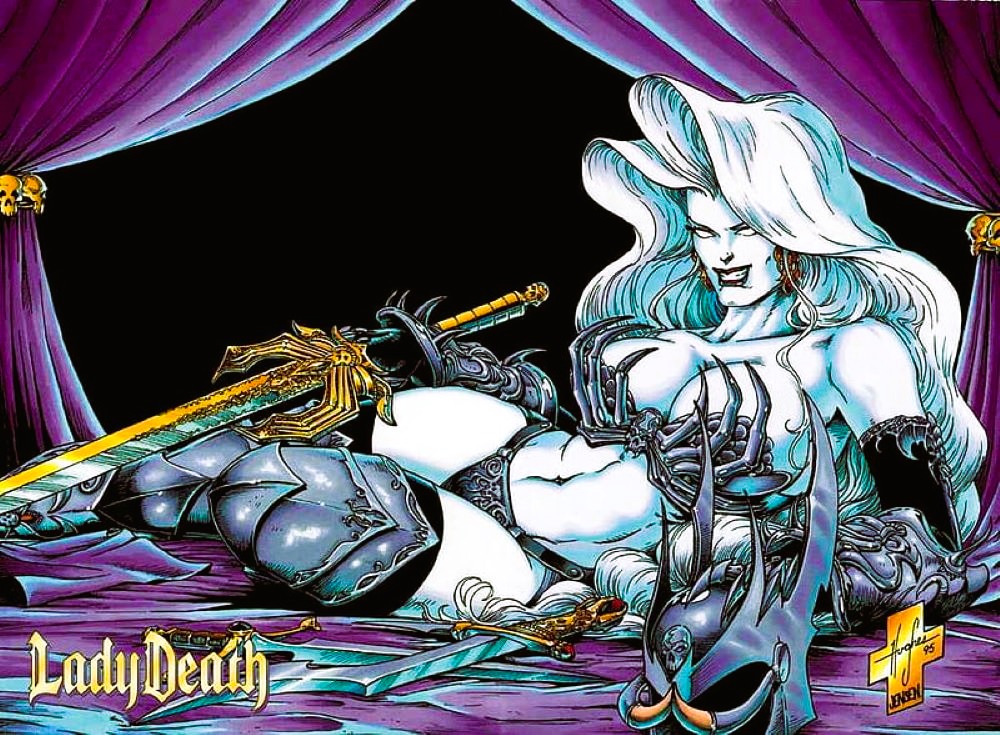
Evil Ernie’s narrative and character design were heavily influenced by the prevailing heavy metal and splatter punk subcultures of the time. His wild hair, leather attire, and violent, nihilistic persona echoed the sonic aggression and rebellious imagery of bands like Slayer and Overkill, who also explored themes of alienation, death, and wrath. This cultural synergy imbued the comics with an authenticity that attracted a dedicated fanbase attuned to these genres. The explicit violence and body horror scenes showcased the splatter punk influence, pushing boundaries in graphic storytelling to depict raw, unapologetic gore that underscored Ernie’s tragic antiheroism.
The Evil Ernie series was more than just a comic about zombies and destruction; it was a cultural artifact infused with the angst, aggression, and rebellion of ‘90s youth subcultures. It forged a new path in horror comics by blending psychological trauma, supernatural terror, and social outcast narratives while crafting a mythos that was both cosmic and personal. The enduring popularity of Ernie, alongside characters like Lady Death and Purgatori, validated Brian Pulido’s vision and solidified a franchise that remains influential in horror and dark fantasy comics.
In summary, the original Evil Ernie mini-series set the brutal, tragic tone that defines the character, while subsequent series like Resurrection and Youth Gone Wild expanded his mythic scope, fueled by a unique fusion of horror, metal, and punk. Lady Death’s rise within these narratives added emotional complexity and gothic grandeur that enriched the universe Pulido created, creating a layered, compelling world that still captivates cult fans today. Together, these series and characters have left an indelible mark on horror comics, affirming the powerful cultural interplay between music, graphic storytelling, and dark fantasy.
 Through the Shattered Lens