Days of Paranoia: The Gauntlet (dir by Clint Eastwood)


In 1977’s The Gauntlet, Dirty Harry is sent….

Oh wait, sorry.  This is not a Dirty Harry movie.  It sure feels like a Dirty Harry movie but it’s not.  And really, the character that Clint Eastwood plays in this movie, Phoenix Detective Ben Shockley, is different from Dirty Harry Callahan.  Shockley is a cynical (and single) detective who does things his own way.  He’s got that in common with Callahan.  But Shockley is also an alcoholic and that’s something that Harry would never allow himself to become.  Harry may be unpredictable but he’s disciplined and he’s always in control.  The other big difference is that Shockley has a little more faith in his fellow cops than Harry does.  As a result, Shockley gets set-up in a trap that Harry would have seen coming from miles away.

Shockley is sent to Las Vegas to pick up a prostitute named Augustina and bring her back to Arizona.  Augustina — who goes by Gus — is played by Sondra Locke.  This was the second film that Eastwood and Locke made together.  As a result of preparing for today’s Eastwood marathon, I watched all of the Eastwood/Locke films.  The Gauntlet features Locke’s best performance opposite Eastwood.  (She was good in The Outlaw Josey Wales but her role was also fairly small and simple.)  As opposed to her later films, Locke actually has a good deal of romantic chemistry when Eastwood in this film and, even more importantly, she actually seems invested in the role.  She plays Gus as being a feisty asskicker.  It doesn’t matter that she’s in jail or that she’s handcuffed or that she’s been escorted to another state.  Gus isn’t going to let anyone tell her what to do.   It’s impossible not to root for both her and Shockley in this film.

Of course, it turns out that Shockley has been set up.  Phoenix Police Commissioner Blakelock (William Prince) and District Attorney John Feyderspiel (Michael Cavanaugh) both have their own reasons for not wanting Gus to make it to Phoenix and they’re both willing to sacrifice Shockley to get to her.  They assumed that Shockley, being an alcoholic, would be easy to defeat.  Did they not consider that, alcoholic or not, Ben Shockley is played by Clint Eastwood?  Every attempt that is made to stop him just makes Shockley all the more determined to get Gus to Phoenix.  The film becomes a particularly violent take on It Happened One Night, going as far as to have Gus and Shockley take over a bus on their way to Phoenix.

Ah, the bus.  The Gauntlet climaxes with a scene in which literally thousands of bullets are fired into a bus that Shockley and Gus are driving through Phoenix.  It’s an exciting sequence, one that’s so gloriously over-the-top that you can’t help but feel that Eastwood was poking fun at his own persona.  At the same time, the sequence also works as a commentary on the blind obedience necessary for an authoritarian to come to power.  The cops who have lined up to shoot at the bus open fire when they’re ordered to, without asking why a bus has to be riddled with bullets.  Eastwood manages to mix a healthy dose of paranoia with his satire.

Though the plot (much like the bus) is riddled with holes, The Gauntlet‘s an entertaining film.  Between Eastwood and Locke’s chemistry and the explosive action sequences, The Gauntlet is a film you can’t look away from.
Film Review: Palm Springs Weekend (dir by Norman Taurog)


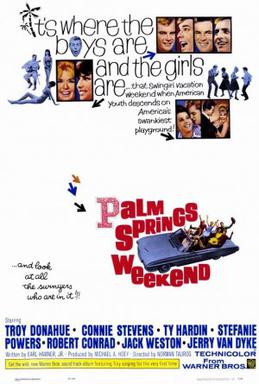
The 1963 film Palm Springs Weekend asks the question, “When is a beach film not a beach film?”

When it takes place in the freaking desert!

That’s right, Palm Springs Weekend takes place in the middle of the California desert.  There’s no ocean in sight nor are there any beaches on which to frolic.  Instead, there’s just a cheap motel and a swimming pool.  That said, Palm Springs Weekend pretty much follows the same formula as all of the beach films that were released in the early 60s.  A group of college students hop on a bus and head off for the weekend.  One student is wacky.  One student is rich, wild, and dangerous to know.  And, of course, one student is clean-cut, responsible, boring, asexual, and studious and all about doing the right thing.

Troy Donahue, the blandest teen idol of all time, plays the clean-cut student.  His name is Jim and he’s a college basketball star.  Even when he’s on the bus traveling to Palm Springs, he’s still got a book to study.  Jim’s the type who wears a suit and a tie to the pool.  He ends up falling in love with Bunny Dixon (Stefanie Powers) and the two of them spend a lot of time talking about sex in the most chaste way possible.  Bunny’s father (played by Andrew Duggan) is the chief of police and he doesn’t want any crazy college kids causing trouble in his town!  Well, it’s a pretty good thing that all he has to worry about is Troy Donaue asking his daughter if she wants to take a moonlight stroll in the middle of the desert.

(Trust me.  I’ve spent enough time in the desert to know that the last thing you want to do when you live near rattlesnakes is take a moonlight stroll.)

Jim’s best friend is Biff (Jerry Van Dyke).  Biff is the wacky college student, which means that he plays the ukulele and he gets all the comedic moments.  In this film, that amounts to getting babysitting an annoying boy and, at one point, falling into an extremely sudsy pool.  Luckily, Jim’s there to deliver CPR, which leads to soap bubbles floating out of Biff’s mouth and …. you know what?  I’m tired of writing about Biff.

Anyway, Biff and Jim really aren’t that important.  The entire film pretty much belongs to Robert Conrad and Connie Stevens, largely because they’re the only two actors who are allowed to break out of the trap of always either being bumbling and innocent or dramatic and self-righteous.  Robert Conrad plays Eric Dean, who is a spoiled rich kid who owns an expensive and fast car and who is basically a fun-loving sociopath.  Meanwhile, Connie Stevens plays Gail, who is a high senior and who is pretending to be a college student.  And while the film insists that we should somehow be disappointed in Gail because she’s acting wild and breaking curfew and doing more than just talking about whether or not it’s appropriate to kiss on the first date, she’s actually the most compelling character in the film because, at the very least, she’s actually setting her own rules and making her own decisions.  Since Palm Springs Weekend was made in 1963, it ultimately feels the need to try to punish Gail for thinking for herself but that doesn’t change the fact that she’s still a far more interesting character than the blandly innocent Bunny.  Gail’s a rebel.  Gail’s the future.  All hail Gail!

Anyway, Palm Springs Weekend is pretty forgettable and it’s never as much fun as any of AIP’s old Beach Party films.  That said, I’d still recommend it if you’re a history nerd like me.  It’s definitely a film of its time, a time capsule of an era.

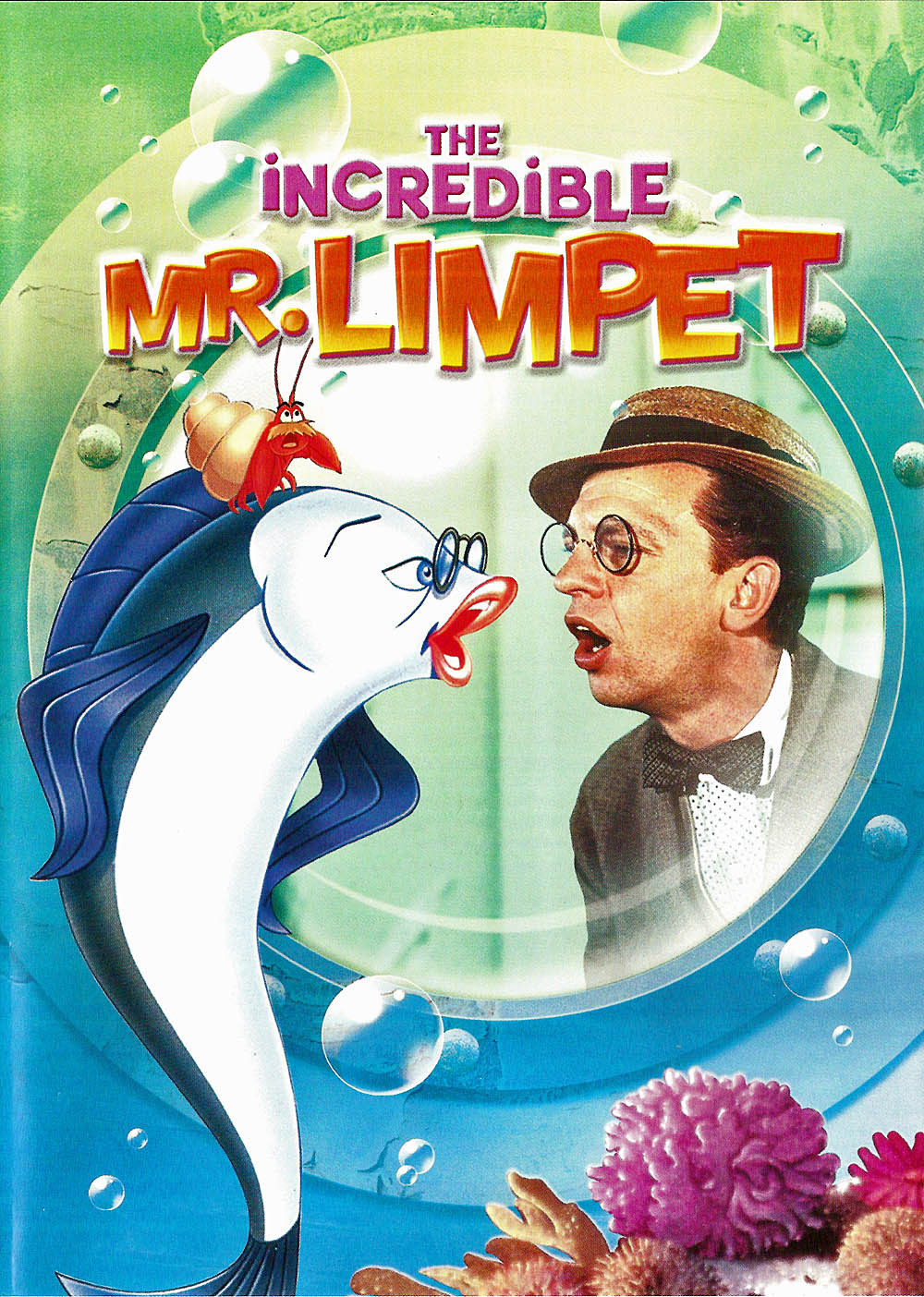
I Wish I Were A Fish: Don Knotts in THE INCREDIBLE MR. LIMPET (Warner Brothers 1964)


gary loggins's avatarcracked rear viewer

limpet1

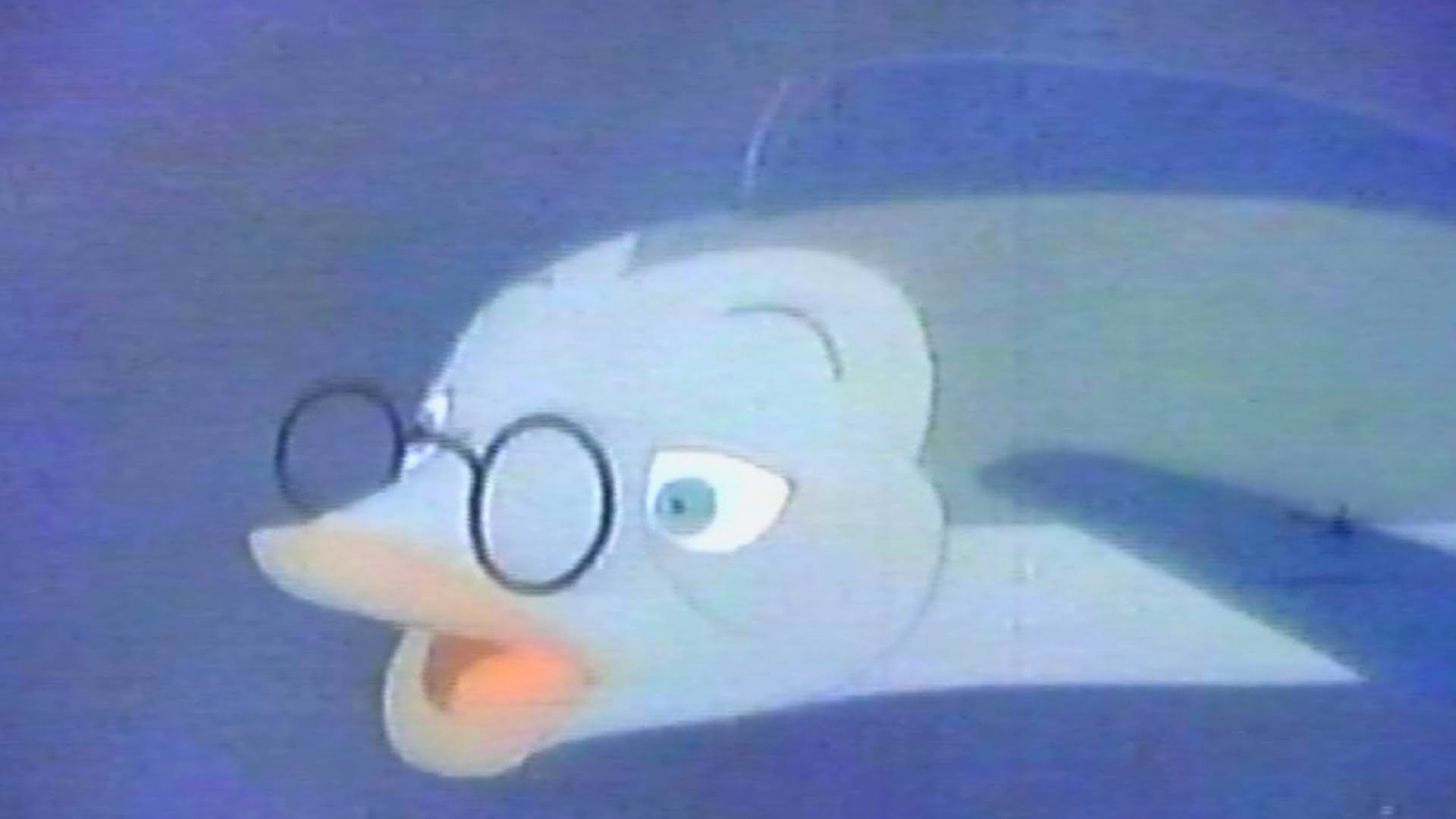
Don Knotts’ popularity as Deputy Barney Fife on TV’s THE ANDY GRIFFITH SHOW led to his first starring feature role in THE INCREDIBLE MR. LIMPET. Knotts plays milquetoast Henry Limpet, a hen-pecked hubby and military 4-F who longs to be a fish and magically gets his wish. This Disneyesque fantasy-comedy benefits greatly from Knotts’ vocal talents and the animation of “Looney Tunes” vet Robert McKimson. In fact, the whole film would’ve been better off as a complete cartoon, because the live-action segments directed by Arthur Lubin distract from the aquatic antics of Limpet as an animated fish.

limpet2

Lubin was a former Universal contract director noted for five Abbott & Costello films (including their first, BUCK PRIVATES), the Francis the Talking Mule series, and TV’s MR. ED. You’d expect lots of slapstick with a resume like that, but no such luck. Instead, Knotts is put through some domestic paces with shrewish wife Carole Cook…

View original post 306 more words

Back to School #35: Sixteen Candles (dir by John Hughes)


11171951_800

The 80s are often considered to be the golden age of teen films and that’s largely due to the work of one man, John Hughes. A  former advertising copywriter and a contributor to National Lampoon, Hughes went on to direct and write some of the most influential films of all time.  By deftly mixing comedy with themes of alienation, rebellion, and youthful disillusionment, Hughes changed the way that teenagers were portrayed onscreen and his influence is still felt today, in everything from Juno to Superbad to Easy A to … well, just about any other recent film starring Michael Cera.

(Okay, I know Michael Cera was not in Easy A but it really seems like he should have been…)

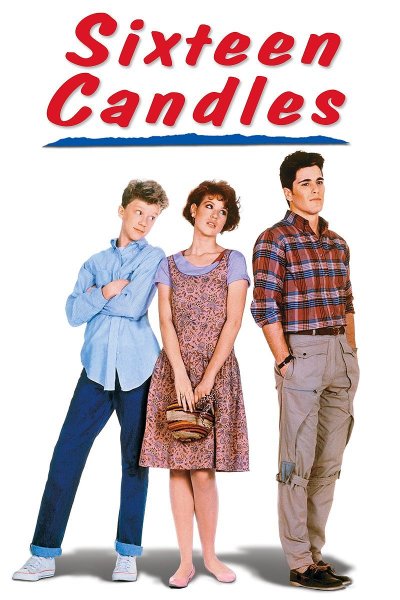
Hughes made his directorial debut in 1984 with Sixteen Candles, a comedy about love, birthdays, and weddings set in an upper class suburb of Chicago.  (I have to admit that, much like with My Tutor, one reason that I like this film is because I like seeing where everyone lives.)  As the film opens, Samantha Baker (Molly Ringwald) is not having a particularly good time.  For one thing, everyone is so wrapped up in her older sister’s wedding that they’ve forgotten about Sam’s sixteenth birthday.  Her house is full of wacky grandparents (and one foreign exchange student named Long Duk Dong).  At school, Sam is in the unenviable position of being neither popular enough nor unpopular enough to actually be noticed by anyone.  Instead, she’s just there.  She has a crush on Jake Ryan (Michael Schoeffling) but is convinced that Jake doesn’t even know that she’s alive.  (Of course, she’s wrong.)  She’s also being pursued by a character who is occasionally referred to as being “Farmer Ted” but is listed in the end credits as simply being “The Geek.”  (I’m going to refer to him as “The Geek” because Farmer Ted makes him sound like he should be killing people in a SyFy original movie.)  As played by Anthony Michael Hall, The Geek isn’t your typical high movie nerd.  Instead, he’s the outspoken and confident king of the nerds and he’s proud of it.  The Geek is madly pursuing Sam and has made a bet with his friends (including John Cusack) that he’ll not only have sex with her but he’ll prove it by bringing them her panties.  (BAD GEEK! — but fortunately, Anthony Michael Hall gives such an energetic and likable performance that you can forgive him.)

There are parts of Sixteen Candles that have not aged well.  And, by that, I’m mostly referring to the character of Long Duk Dong, who is so well-played by Gedde Watanabe that it’s tempting to ignore just how racist the portrayal of his character really is.  As well, I know that a lot of my more erudite friends would probably only briefly look away from their copy of Thomas Piketty’s Capital In The 21st Century, just long enough to pronounce that Sixteen Candles is essentially a film about “first world problems.”

Well, maybe it is.  But I don’t care.  I like it.  John Hughes’s script is full of classic lines and funny characters, Anthony Michael Hall is likable as the Geek, and, as played by Michael Schoeffling, Jake Ryan is the epitome of the perfect guy.  If your heart doesn’t melt a little when he says that he’s looking for true love, it can only be because you don’t have a heart.  And finally, Sam remains a character that we can all relate to.  As played by Molly Ringwald, she’s the perfect sullen everygirl.

Of course, an undeniable part of the charm of Sixteen Candles comes from the fact that it really is a film that could not be made today.  Sixteen Candles may take place in an entirely different world from films like The Pom Pom Girls and Suburbia, but it’s still just as much of a time capsule.

First off, there’s about a thousand apps out there that will make sure that you never forget anyone’s birthday.  If the film was made today, Sam’s parents would have checked their e-mail and found a message from Facebook telling them that “Samantha Baker has a birthday this week!”  They could have just written “Happy birthday to a wonderful daughter!” on her wall and half of Sam’s problems would have been solved.

Secondly, it’s doubtful that, if the film was made today, the Geek would be able to get away with just showing everyone’s Sam’s panties.  Instead, they would have demanded nude pics, which would have then been posted on the internet for the entire world to see.  And let’s be honest: “Can I send my friends naked pics of you?” doesn’t quite have the same ring to it as “Can I borrow your underpants for ten minutes?”

hero_EB19840101REVIEWS401010384AR

—–

*And, no, I haven’t read Piketty’s tome.  I have a life to live and movies to see.