Late Night Retro Television Review: CHiPs 3.24 “Dynamite Alley”


Welcome to Late Night Retro Television Reviews, a feature where we review some of our favorite and least favorite shows of the past!  On Mondays, I will be reviewing CHiPs, which ran on NBC from 1977 to 1983.  The entire show is currently streaming on Prime!
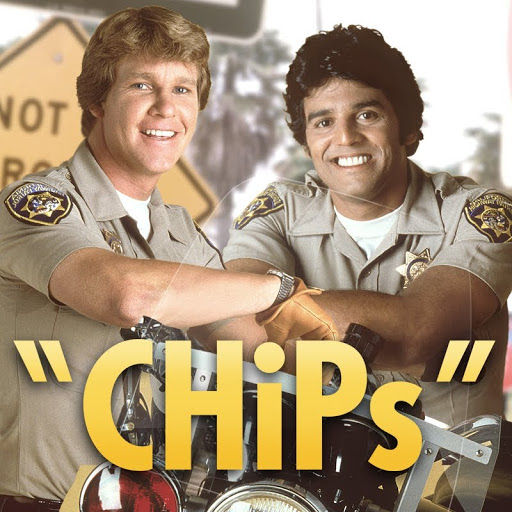
This week, season 3 comes to an end.

Episode 3.24 “Dynamite Alley”

(Dir by Bruce Kessler, originally aired on March 30th, 1980)

After testifying in a trial in Bakersfield, Bonnie (Randi Oakes) is driving back to Los Angeles when, somehow, she ends up flipping her squad car.  In the hospital, Bonnie swears that she had to swerve suddenly to avoid a truck that came out of nowhere.  The only witness to Bonnie’s accident is a pre-adolescent named Corey (Bryan Scott), who was watching as Bonnie drove by his house.  Corey says that he saw the truck but Ponch and Jon come to suspect that he might be lying because he doesn’t want Bonnie to get in trouble.  Meanwhile, Grossman is writing an article on how tired drivers can hallucinate seeing other vehicles and he comes to suspect that this is what happened to Bonnie.

And he’s right!  It’s interesting that, just last season, CHiPs did an entire episode about proving that Sindy Cahill was not responsible for a crash she was involved with.  Meanwhile, this season ends with an episode that’s all about Bonnie being a menace on the streets.  Of course, event though Bonnie flipped her car after imagining seeing a truck in front of her, she gets to keep her job and everyone has a good laugh about it.

My main issue with this episode is that Corey was 1) portrayed as having a stutter and 2) nicknamed Blabbermouth by everyone he knew, even the characters who were supposed to be sympathetic to him.  When he showed up in the hospital to confess that he didn’t really see a truck push Bonnie off the road, Bonnie replies, “Oh, Blabbermouth.”  Even Jon and Ponch call him Blabbermouth.  As a former stutterer, this episode really annoyed me.

As for our B-plot, the “funny car show” is in town.  All sorts of weird vehicles show up on the streets.  One man tries to drive a tank to the show and people start throwing bottles at him.  When Baker and Ponch show up to investigate the tank, Baker nearly gets hit by a glass bottle that’s thrown at him by two kids.  Ponch grabs one of the kids but then just laughs and lets him leave.  Really, Ponch?  BAKER COULD HAVE LOST AN EYE!

And that’s how the third season ended, with Bonnie crashing her squad car because she had a hallucination and a poor kid with a stutter being called “Blabbermouth” by the police.  That’s not the best way to end a season.

Season 4 starts next week!

Retro Television Review: Playmates (dir by Theodore J. Flicker)


Welcome to Retro Television Reviews, a feature where we review some of our favorite and least favorite shows of the past!  On Sundays, I will be reviewing the made-for-television movies that used to be a primetime mainstay.  Today’s film is 1972’s Playmates!  It  can be viewed on YouTube.

Playmates tells the story of two divorces.

Marshall Barnett (Alan Alda) is an attorney.  He went to Yale and Harvard.  He has a successful career.  He has rich and educated friends.  He has a nice bachelor pad.  He also pays hundreds of dollars in alimony.  He and Lois (Barbara Feldon) got divorced 3 years ago and Marshall is still bitter.  He’s bitter that he has to pay her so much money.  He’s bitter that he only gets to see his son on the weekends.  He’s bitter that he can’t seem to start a new, meaningful relationship with anyone.  He’s bitter that his wife still asks him to critique her modernist paintings.

Kermit Holvey (Doug McClure) is a blue collar welder.  He has only been divorced for a few months and his relationship with ex-wife Patti (Connie Stevens) is nowhere near as contentious as Marshall’s relationship with Lois.  Still, Kermit is struggling to adjust to being single and to only seeing his son on the weekends.

Marshall and Kermit meet one weekend while they are both taking their sons to the Kiddieland Amusement Park.  Marshall is so overjoyed to meet someone else who is dealing with divorce that he comes on a bit strong in trying to get to know Kermit.  Kermit, however, does eventually get over his initial weariness and soon, he and Marshall are best friends.  It doesn’t matter that Marshall has a tendency to be a little bit condescending and that Kermit often can’t follow what Marshall is talking about.  They spend most of their time talking about their ex-wives.

But then Kermit meets Lois and he discovers that her paintings really aren’t as bad as Marshall made them out to be.  And Marshall meets Patti and he discovers that she’s not as dumb as Kermit made her out to be.  Soon, Kermit is secretly dating Lois and Marshall is secretly dating Patti and anyone who has ever watched a comedy before knows that there is a big mess waiting in the future.

Playmates was one of those films that pretended to be a lot naughtier than it actually was.  For all the winking and the occasional sly smiles, all that happens is that Kermit and Marshall both end up going out with women with whom they really don’t have much in common.  And while it’s tempting to read a lot into how quickly Kermit and Marshall become friends and how they both end up dating the other’s female equivalent, I think that might be giving this film too much credit.  (If it were made today, things might be different.)  In the end, the film really has more to say about class than it does marriage, as both Marshall and Lois obviously view spending time with Kermit and Patti as being a way of slumming and building up some working class bona fides without actually having to be working class.  Patti, to her credit, calls Marshall out on this.  Marshall admits that she has a point but he still come across as if he’s talking down to her, largely because he’s played by Alan Alda, an actor who is a master at being somehow both likable and condescending at the same time.

Playmates is a well-acted film and there are some funny lines.  The four main characters are all ultimately likable, even if they all have their moments where you can tell why they would be difficult to live with.  It deserves some credit for following its story through to its natural conclusion, with one couple realizing that they still love each other while the other realize that they are better off divorced.  The film may not be as radical as it pretends to be but it still doesn’t cop out on the ending.  In the end, Playmates is probably best watched as a time capsule.  It’s here if you ever want to experience 1972 firsthand.