Shattered Politics: Harry’s War (dir by Kieth Merrill)


It’s Tax Day, which means that it’s a good day to remember that the IRS is not your friend.

That can sometimes be hard to forget, with all the talk of making people “pay their fair share” and all the drama that seems to accompany any suggestion that federal bureaucracy should be reduced.  Back in 2003, there was a big story about how the IRS was going to hire 3,000 new employees and it amazed me how the media tried to frame this as being a good thing to which no one could possibly object.  Whenever I turned on the news, I would see government official bragging about how they were going to bring in even more IRS agents to make “the billionaires” pay their fair share.  (They may say “billionaires” but one can be sure that those 3,000 IRS agents weren’t going to anyone near anyone who donated to the right people.)  In the recent election, I was always amused by analysts who were shocked to discover that many voters, especially those were struggling to pay their bills, weren’t enthusiastic about the idea of a supercharged IRS.

The fact of the matter is that people hate the IRS.  The IRS exists to make people’s live difficult.  The IRS exists to take our money away from us, money that we earned but which we are apparently not worthy of keeping.  The IRS is an agency that demands that you do you own taxes but then threatens to throw you in jail if you make a mistake.  When people hear 3,000 new IRS agents, they imagine 3,000 more people looking to take their money and toss them in prison for forgetting to carry the one.  I often think that if the IRS simply sent people a bill every year, people would actually get a lot less upset about having to pay taxes.  I get a property tax bill from the country and I have no problem paying it because it gives me an exact amount.  Instead, the IRS says, “We know how much you owe but we’re not going to tell you.  If you pay too much, you won’t get a refund and if you pay too little, we’ll destroy your life.”

On days like this, watching a film like 1981’s Harry’s War can be a cathartic experience.  The film stars Edward Herrmann (yes, the History channel guy) as Harry, a postman who was raised by Beverly Payne (Geraldine Page), an eccentric woman who collects military memorabilia and whose property is listed as being a church and is therefore tax exempt.  In her will, Beverly has named Harry as her heir.  Arrogant IRS district director Ernie Scelera (David Ogden Stiers) is convinced that Beverly is hiding a fortune from the IRS and he proceeds to harass both her and Harry in court until Beverly drops dead of a heart attack.  Harry inherits Beverly’s property and also her tax bill.  However, Harry has also inherited all of her military stuff and soon, he’s crashing Ernie’s press conference with a tank and then engaging in a lengthy stand-off with the government.  The film is a dramedy and you never really doubt that Harry will somehow triumph (even if his victory is ultimately a symbolic one) but the film still reminds us of how quickly the government will turn on its citizens when it’s being defied and the final few moments bring to mind some of the worst ATF and FBI excesses of the past 30 years.  That said, Harry is quick to point out that he’s not waging war on the government.  He’s waging war on the unelected bureaucrats who have forgotten that civil servants are supposed to work for the people and not against them.  “All that power in one place,” Harry says scornfully about the IRS and it’s hard to deny that he has a point.  It’s hardly a perfect film but, in this day and age, it’s a film that will leave you cheering.


4 Shots From 4 Films: Executive Produced by George Harrison


4 Shots From 4 Films is just what it says it is, 4 shots from 4 of our favorite films. As opposed to the reviews and recaps that we usually post, 4 Shots From 4 Films lets the visuals do the talking!

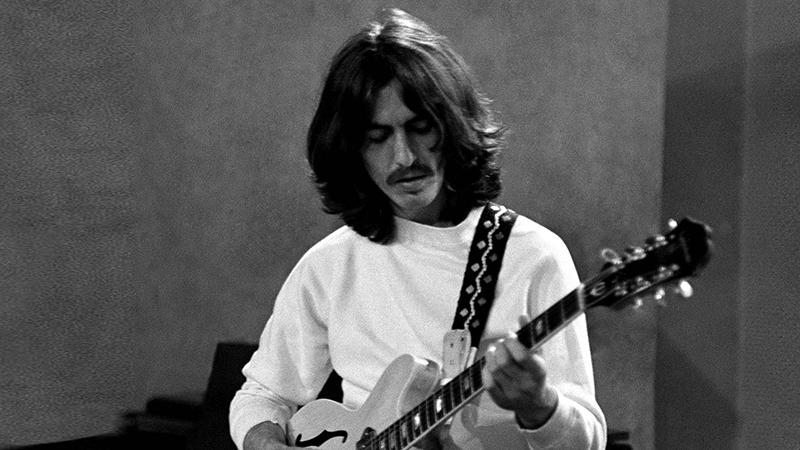
Today would have been the 77th birthday of my favorite members of the Beatles (not to mention The Traveling Wilburys), George Harrison.  Harrison died far too young but he left behind a legacy of music that is celebrated to this day and will still be celebrated long after the rest of us have moved on.

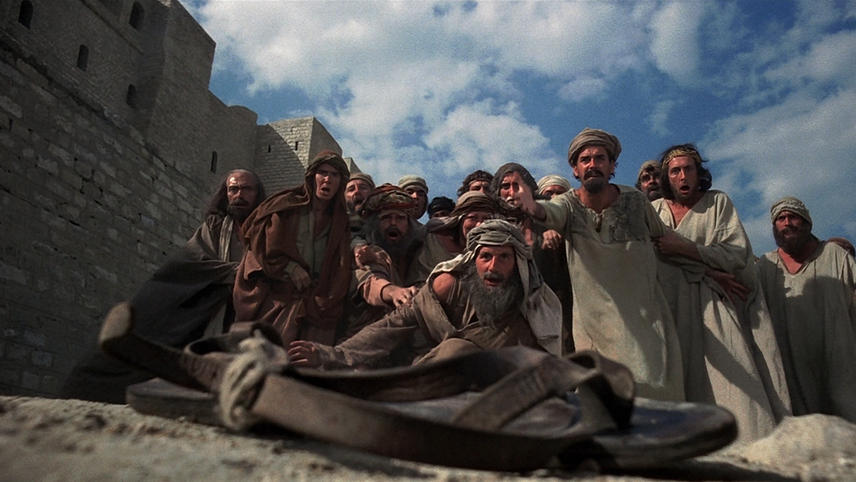
While everyone knows George from his music, what is often forgotten is that Harrison is also often credited with helping to revive the British film industry.  After the break-up of the Beatles, Harrison partnered with Denis O’Brien and formed HandMade Films.  At a time when British cinema was struggling both financially and artistically, Harrison served as executive producer for some of the best films to come out of the British film industry.  Harrison championed many talented British directors and he used his clout to get many otherwise difficult project produced.  It’s fair to say that, if not for his support, the members of Monty Python would never have been able to make the then-controversial Life of Brian, which is now widely regarded as one of the best British comedies ever made.

Today, on his birthday, here are four shots of four films executive produced by George Harrison.

4 Shots From 4 Films

Monty Python’s Life of Brian (1979, directed by Terry Jones)

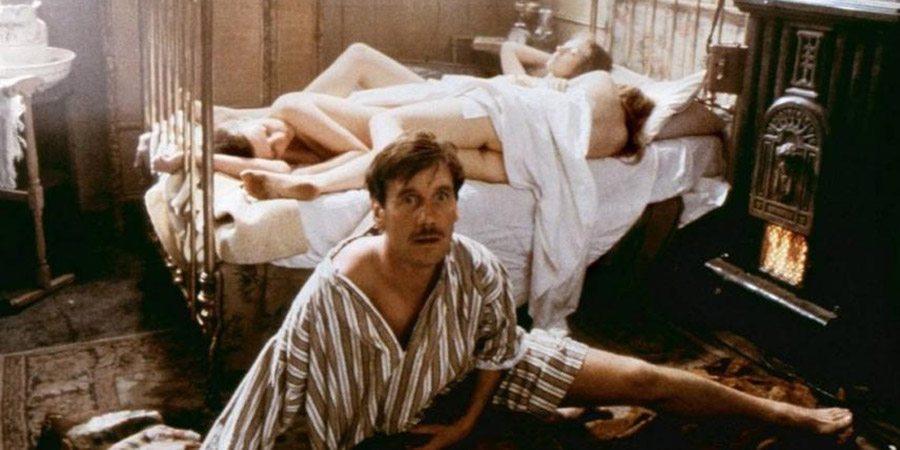
The Missionary (1982, directed by Richard Loncraine)

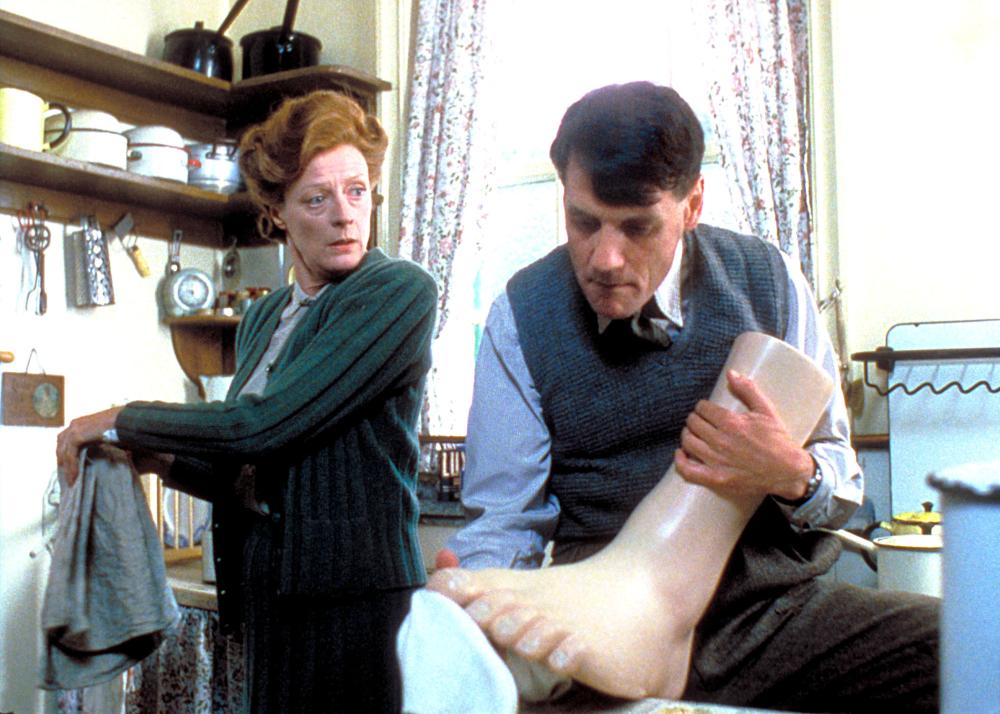
A Private Function (1984, directed by Malcolm Mowbray)

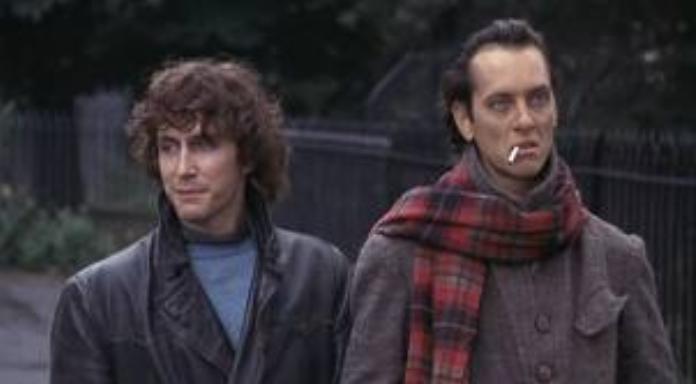
Withnail and I (1987, directed by Bruce Robinson)


Love On The Shattered Lens: Romeo and Juliet (dir by Franco Zeffirelli)


Happy Valentine’s Day!

Now that the Oscars and the Sundance Film Festival are over with, it’s time to start a new series of reviews here on the Shattered Lens.  For the rest of February, I will be looking at some films that deal with the universal topic of love.  Some of these films will be romantic.  Some of them will be sad.  Some of them might be happy.  Some of them might be scary.  Some of them might be good.  And some of them might be bad.  In fact, to be honest, I haven’t really sat down and made out a definite list of which films I’ll be reviewing for Love On The Shattered Lens.  Instead, I figure I’ll just pick whatever appeals to me at the moment and we’ll see what happens!

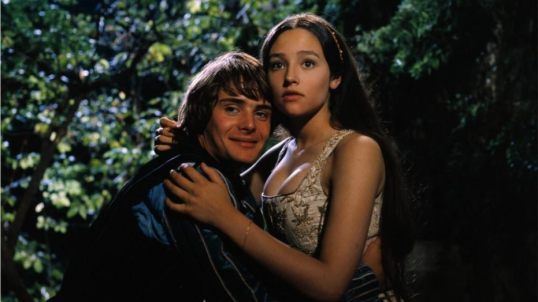
Let’s start things off with the 1968 film version of William Shakespeare’s Romeo and Juliet.

“Oh my God!  Romeo and Juliet are hippies!”

Well, that’s not quite true.  I mean, it is true that Romeo (played by Leonard Whitting) and Juliet (Olivia Hussey) are played by actual teenagers in this version of the classic play.  It’s also true that, even though the film is set in a painstakingly recreated version of 15th century Verona, almost all of the actors have what would have then been contemporary haircuts.  Romeo, Benvolio (Bruce Robinson), and Mercutio (John McEnery) all have longish hair, dress colorfully, and look like they could all be in the same band, covering the Beatles and writing songs about dodging the draft.  Even Tybalt (Michael York) seems a bit counter-cultural in this version.

As played by Olivia Hussey, Juliet comes across as being far more rebellious in this version of Romeo and Juliet than in some of the others.  It’s hard to imagine that Olivia Hussey’s Juliet would have much patience with Juliets played by Norma Shearer, Claire Danes, Hailee Steinfeld, or even the version of the character that Natalie Wood played in West Side Story.  Olivia Hussey’s Juliet is always one step away from running away from home and hitch-hiking to the free Rolling Stones concert at the Altamont Speedway.  Like the audience that the film was intended for, Romeo and Juliet both know that their parents are out-of-touch and that their friends are only temporary.  Embracing love and pursuing all that life has to offer is what matters.

Was this the first film version of Romeo and Juliet to make explicit that the two characters had consummated their marriage?  I imagine it was since it was apparently also the first version of Romeo and Juliet to feature on-screen nudity.  That’s quite a contrast to the largely chaste 1936 version, in which Norma Shearer and Leslie Howard both seemed determined to keep a respectable distance from each other.  Leonard Whiting and Olivia Hussey have an amazing chemistry together.  They’re the two prettiest people in Verona and they just look like they belong together.  From the minute they meet, you believe not only that they would be attracted to each other but that they’re also meant to be lovers.

Of course, we all know the story.  The Capulets and the Montagues are rival families.  Juliet is a Capulet.  Romeo is a Montague.  Juliet’s cousin, Tybalt, kills Romeo’s friend Mercutio.  Romeo kills Tybalt.  Juliet fakes her death.  Romeo commits suicide.  Juliet wakes up and does the same.  The Prince shows up and yells at everyone.  This film version moves around some of the events and it leaves out a few scenes but it actually improves on the play.  For instance, poor Paris (Roberto Bissaco) doesn’t die in this version.  Seriously, I always feel bad for Paris.

Throughout it all, director Franco Zeffirelli emphasizes the youth of the characters.  It’s not just Romeo and Juliet who are presented as young.  The entire Montague and Capulet feud is largely portrayed as being just a silly turf war between two competing high school cliques.  When Tybalt and Mercutio have their fateful duel, it starts out largely as a joke and, when Tybalt kills Mercutio, it comes across as if it was an accident on Tybalt’s part.  Tybalt appears to be just as shocked as anyone, like a scared kid holding a smoking gun and trying to explain that he didn’t know it was loaded when he pulled the trigger.  When Mercutio curses both the Capulets and the Montagues, it’s all the more powerful because Mercutio is undoubtedly wondering how the duel could have so quickly gone from playful taunting to a fatal stabbing.  The entire conflict between the Montague and the Capulets is a war that makes no sense, one in which the young are sacrificed while the old retreat to the safety of their homes.

Romeo and Juliet was a hit in 1968 and it’s still an achingly romantic film.  Whiting and Hussey generate more chemistry in just the balcony scene than Leonardo Di Caprio and Claire Danes did in the entirety of Baz Luhrmann’s version of the tragic tale.  Along with being a box office hit, it was also a critical hit.  The Academy nominated it for best picture, though it lost to Oliver!

A Quickie With Lisa Marie: The Rum Diary (dir. by Bruce Robinson)


My sister Erin and I went and saw The Rum Diary on Tuesday and wow, was it ever a disappointment.  The commercials make it look like a wild comedy featuring Johnny Depp looking all sexy and decadent but, in reality, the film is kind of a mess that is almost schizophrenic in its attempts to be more than the sum of its parts.

Johnny Depp plays Paul Kemp, an alcoholic writer who goes to Puerto Rico in the early 60s and takes a job writing horoscopes for the local newspaper.  The job leads to him drinking a lot and hanging out with characters who are sweaty and so generally grimy that it’s borderline revolting to even see them on-screen.  (Giovanni Ribisi, giving a distressingly bad performance, is the main offender.)  Paul also ends up kinda befriending (but not really) a businessman named Sanderson (Aaron Eckhart), who you know is a bad guy because he’s the only character who dresses in pastels.  Anyway, Sanderson has a girlfriend named Chenault (Amber Heard) and Chenault really has no purpose for existing other than for Paul to fall in love with her and save her from a terrible future of being married to a rich, handsome man.  The film starts out as a comedy and then, after about an hour, it suddenly turns all serious and preachy.  It’s as if the film can’t decide whether it wants to be an unfunny comedy or a laughable drama.

Luckily, Johnny Depp is on screen for nearly the entire film and, as we watched, Erin and I quickly learned that the best way to enjoy The Rum Diary is just to allow yourself to be carried away by the Deppness of it all.  Don’t think about how the film’s kind of a mess and how Aaron Eckhart is more of a designated villain than a real villain and ignore the fact that Chenault is a sexist fantasy and tune out the preachy dialogue and try not to think about how everyone appears to have had more fun making the film than you’re having watching it, and just concentrate on Johnny Depp being all kinds of sexy.  

If you do that, The Rum Diary is a tolerable 2 hours.