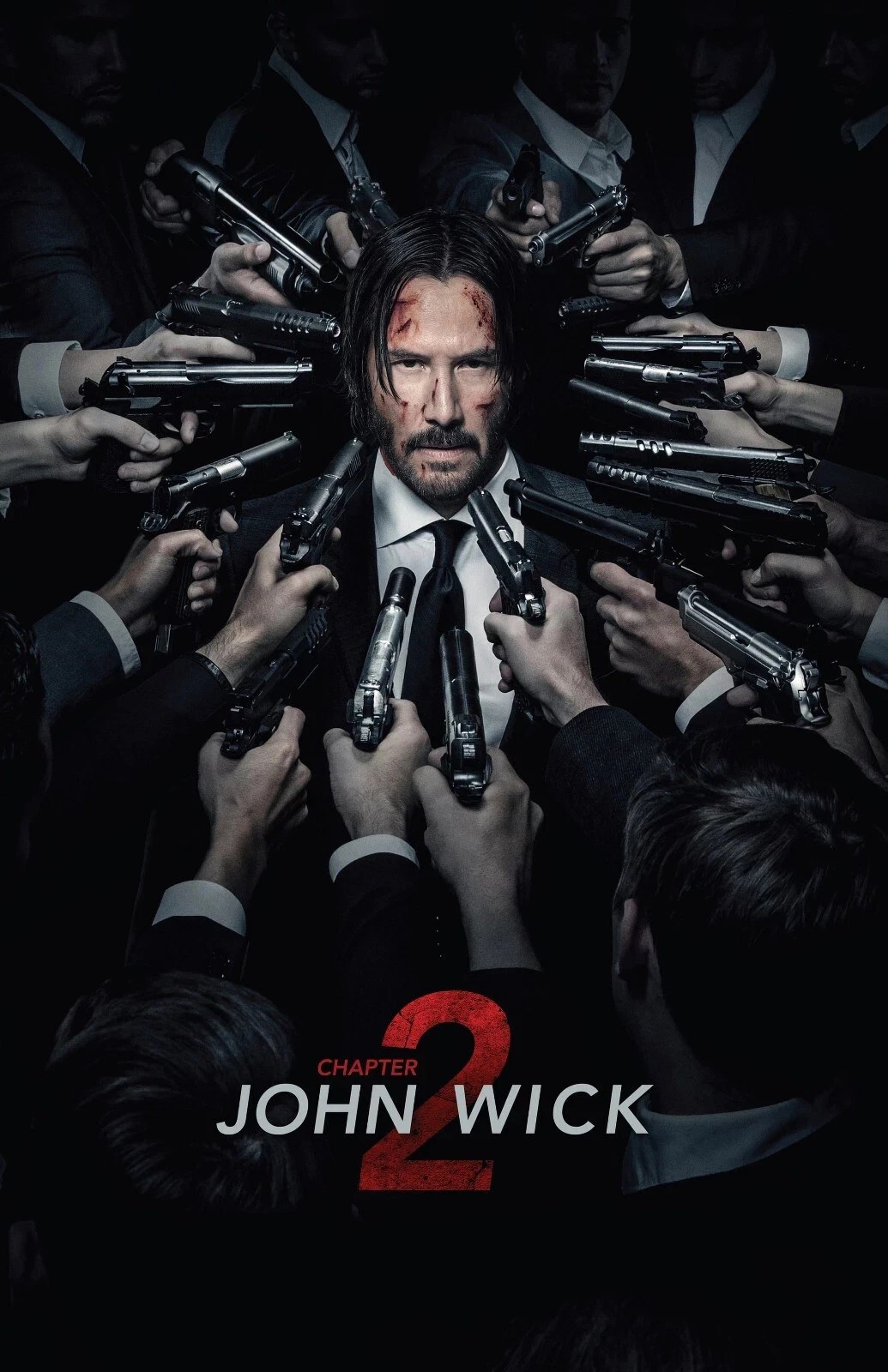
John Wick: Chapter 2 (dir. by Chad Stahelski) Review


“You stabbed the devil in the back and forced him back into the life that he had just left. You incinerated the priest’s temple, burned it to the ground. Now he’s free… What do you think he’ll do?” — Winston Scott

John Wick: Chapter 2 picks up right where the first film left off, diving headfirst into a world of high-stakes assassinations and stylish revenge with Keanu Reeves back as the grieving, unstoppable hitman. It’s a sequel that doubles down on the balletic action and expands the mythology without losing that raw, personal edge from the original. Directed by Chad Stahelski, it delivers non-stop thrills but occasionally stumbles with its sprawling plot and relentless pace.

John Wick is trying to lay low after avenging his dog’s death and reclaiming his car, but fate—or more specifically, a blood oath called a “marker”—drags him back into the game. An Italian crime lord named Santino D’Antonio cashes in that marker, forcing Wick to assassinate his own sister so Santino can take over the family empire. What starts as a reluctant job spirals into a city-wide manhunt, with Wick racking up bodies across New York and Rome while navigating the Continental Hotel’s strict no-kill rules and the politics of a shadowy assassin network. The story is still simple at its core—do a job, get betrayed, fight your way out—but it peels back more layers of this underworld, introducing gold coins as currency, tailors who outfit killers like runway models, and sommeliers who pair firearms with clients like fine wine.

Keanu Reeves owns the role here, his stoic intensity and physical commitment making every punch and headshot feel earned. He’s not exactly stretching himself as an actor—his deadpan delivery borders on monotone—but in this context, that restraint works, turning Wick into a mythic figure who’s equal parts broken widower and relentless killing machine. The supporting cast adds plenty of flavor: Common shines as Cassian, Santino’s loyal bodyguard and Wick’s equal in a fight, with their subway duel using silenced pistols becoming an instant standout for its mix of tension and dark humor. Ian McShane returns as Winston, the Continental’s suave manager, bringing a dry, almost amused detachment to the chaos, while Ruby Rose makes an impression as Ares, Santino’s mute enforcer whose sign-language threats and sharp physicality speak louder than words. Laurence Fishburne appears as the Bowery King, chewing scenery and hinting at deeper rivalries to come. Not every character is fully fleshed out—Santino himself sometimes veers into cartoonish villain territory—but the ensemble keeps the film lively and fun to watch.

The action is where John Wick: Chapter 2 truly shines, cranking the first film’s gun-fu into something close to operatic. Much of the authenticity in the gunplay choreography stems from Keanu Reeves’ legendary dedication to his craft—he trained extensively with celebrity gun trainer Taran Butler and Taran Tactical Innovations, becoming an expert 3-gun practitioner in the process. Taran Tactical not only provided the custom guns for this film and its subsequent sequels but also helped craft the realistic, fluid shooting sequences that feel like a masterclass in tactical movement. The opening car chase and warehouse brawl set the tone, with Wick dismantling goons using everything from knives to close-quarters takedowns. Later comes the much-teased moment where he turns a humble pencil into a lethally precise weapon. The Rome sequence is a highlight: Wick moves through catacombs and nightclubs like a walking arsenal, turning ancient corridors into a bullet-riddled maze, then facing a relentless wave of assassins amid concert lights and stone arches. The stairwell brawl with Cassian is brutal and almost slapstick in its escalation, as the two tumble down step after step, refusing to quit. A hall-of-mirrors shootout plays with reflection and distortion, turning gunfights into something visually playful as well as deadly. The camera stays steady and clear, letting you appreciate the choreography instead of hiding it behind shaky cam and quick cuts, which makes the violence feel both visceral and strangely elegant.

Visually, the film is a neon-soaked feast, trading the first movie’s moody blues for more varied, vibrant palettes. Cinematography leans into bold colors and strong compositions: the Continental’s warm golds, Rome’s stony greys and rich reds, New York’s cold night streets lit by harsh white and electric signage. The production design sells the assassin world as both stylish and slightly surreal. You get bespoke atelier shops that sell tactical suits lined with experimental ballistic-resistant fabric, underground vaults where every weapon looks museum-ready, and Continental sommeliers who double as gun experts, recommending the best weapons for whatever task is at hand. The score and sound design lean heavily into pulsing electronic beats and percussive hits that sync with the rhythm of gunshots and blows, giving big set pieces a musical, almost dance-like quality.

That said, the film is not without its flaws. At a little over two hours, it sometimes feels like it’s indulging its world-building at the expense of pacing. The explanation of markers, excommunication rules, and the High Table is cool in theory, but the movie occasionally pauses too long to explain its own lore when you’d rather keep the momentum going. Compared to the raw emotional drive of the first film—where a dead dog and stolen car were more than enough to get you fully on Wick’s side—this one’s central motivation feels more mechanical. He’s bound by honor and obligation here, which makes sense for the character, but doesn’t hit with the same gut-level impact. There’s also less room for genuine character development; Wick mostly shifts between “tired” and “angry,” and the supporting cast, as entertaining as they are, tend to orbit him rather than grow in their own right.

Tone-wise, John Wick: Chapter 2 leans even harder into heightened, borderline comic-book absurdity. The idea that there are assassins on every street corner, all answering the same call, is fun but pushes the world toward parody if you think too hard about it. The body count is enormous, the kill shots are almost always headshots, and the film rarely slows down to let the gravity of that register. There are moments of humor—deadpan exchanges, visual gags, Wick’s resigned reactions to yet another betrayal—that keep it from feeling grim, but they’re more like pressure valves than fully integrated wit. If you’re looking for commentary on violence or a deconstruction of the hitman myth, this isn’t that movie. It’s more interested in giving you the cleanest, slickest version of the fantasy and trusting you to go along for the ride.

On representation and subtext, the movie is pretty standard action fare: mostly male, mostly focused on coolness over any deeper exploration of gender, race, or class. Characters like Ares and Gianna D’Antonio hint at more interesting female perspectives within this world, but they’re quickly sidelined or removed from play. The Bowery King’s network suggests a class-conscious angle—homeless people as invisible eyes and ears of the city—but the film doesn’t dwell on it beyond the “secret army in plain sight” trope. None of this ruins the film, but it does keep it from feeling particularly fresh outside of its choreography and design.

Where the movie really succeeds is in firmly establishing John Wick as an ongoing franchise rather than a one-off surprise hit. The ending pushes Wick into even more precarious territory and sets up a larger arc without feeling like pure sequel bait. It expands the playground, raises the stakes, and leaves him in a place where you genuinely want to see what comes next. If the first film was a tightly contained revenge story, John Wick: Chapter 2 is the moment the series decides to become a full-blown saga.

Overall, John Wick: Chapter 2 is a stylish, hyper-violent, and extremely entertaining sequel that leans into its strengths—choreography, world-building, and Keanu Reeves’ physical presence—while showing a few growing pains in pacing and emotional weight. It may not have the purity or surprise factor of the original, but it compensates by embracing a larger, crazier canvas and delivering some of the most memorable action set pieces of the last decade. If you’re on board with the idea of a grief-stricken assassin turning his pain into an art form of meticulously staged carnage, this chapter absolutely delivers.

Weapons used by John Wick throughout the film

  • Glock 34 (TTI Combat Master Package): His go-to sidearm early on, customized by Taran Tactical Innovations (TTI); dual-wielded in the catacombs and against Gianna’s guards in Rome.​​
  • Heckler & Koch P30L (compensator-fitted): Opens the film disarming a henchman; buried post-use along with first-film gear.
  • Kimber Super Carry Custom (reverse two-tone, compensator): Provided by the Bowery King and used chasing Santino.
  • TTI TR-1 Ultralight (AR-15 carbine build): Iconic Rome rifle from the sommelier, with BCM mods, Trijicon scope, and PRI compensator; catacombs massacre shootout.
  • Benelli M4 Super 90 (TTI customized): Sommelier special in Rome; shredded through catacombs enemies.

John Wick Franchise (spinoffs)
Review: John Wick (dir. by Chad Stahelski)


“John is a man of focus, commitment, sheer will… something you know very little about. I once saw him kill three men in a bar… with a pencil, with a fucking pencil.” — Viggo Tarasov

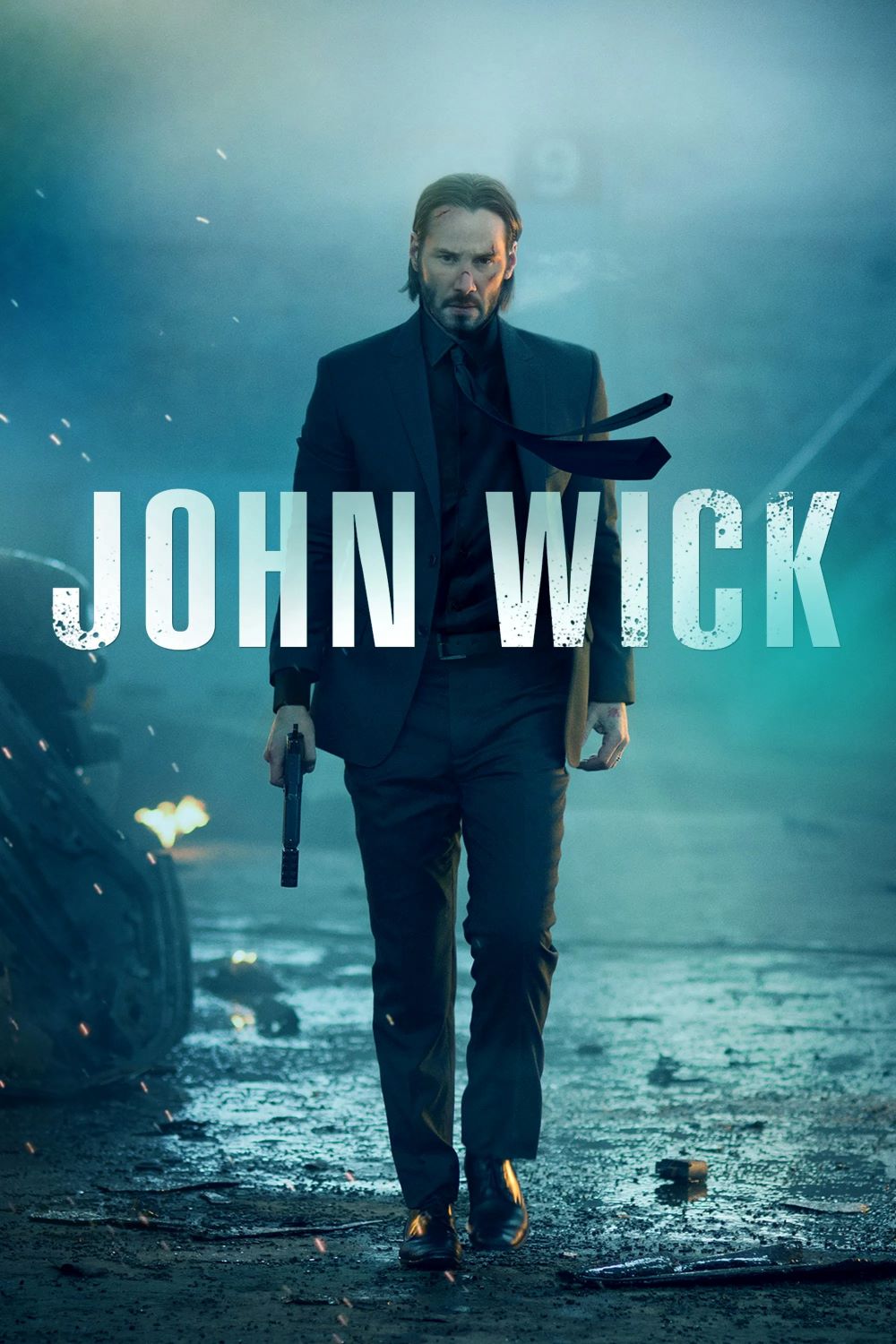
John Wick kicks off with a simple, gut-punching premise that hooks you right away. Keanu Reeves plays the titular character, a retired hitman trying to leave his bloody past behind after the death of his wife. She leaves him a beagle puppy as a final gift, symbolizing a chance at normalcy, but some punk Russian mobsters steal his prized Mustang and kill the dog, setting off a revenge rampage. It’s a revenge story done right—straightforward, no frills, and fueled by raw emotion rather than convoluted twists. Directed by Chad Stahelski and David Leitch, who share a stunt background, the film feels like a love letter to classic action flicks from the ’80s and ’90s, but with a modern polish.

What sets John Wick apart from the glut of forgettable action movies is its relentless focus on craftsmanship. The action sequences are balletic and brutal, blending gun-fu—a mix of precise gunplay and martial arts—with practical stunts that avoid overreliance on CGI. This gun-fu draws directly from the Center Axis Relock (CAR) system, a real-world self-defense close-combat technique where the pistol is held close to the chest at a forward cant for better retention and control in tight quarters. Reeves, at 50 when the film was made, moves like a man possessed, his long-limbed frame perfect for the choreography. Watch the nightclub shootout: bodies drop in waves as Wick reloads with one hand while pistol-whipping foes with the other, all grounded in CAR’s principles that have since become a staple in action films. It’s exhilarating, almost musical in rhythm, thanks to a thumping soundtrack featuring artists like Aloe Blacc and Kaiser Chiefs that amps up the tension without overpowering the visuals.

Keanu Reeves carries the film on his stoic shoulders, and it’s one of his best turns since The Matrix. John Wick isn’t a chatterbox; he’s all simmering grief and quiet menace, his thousand-yard stare conveying depths of loss that words don’t touch. That opening montage of him and his wife—tender beach walks, her terminal illness—hits hard because it’s so understated. Reeves sells the puppy’s death not with histrionics but a single, shattered sob, making his vengeance feel earned. Supporting players elevate the mix too: Michael Nyqvist chews scenery as the mob boss Viggo, Willem Dafoe shines as a sympathetic mentor figure, and Ian McShane adds suave authority as the Continental hotel’s manager. Alfie Allen, pre-Game of Thrones fame, nails the cocky antagonist role without caricature.

The world-building is another standout, introduced efficiently without info-dumps. The Continental Hotel emerges as a neutral ground for assassins, complete with gold coins as currency and strict no-business-on-premises rules—hints at a larger universe that sequels would expand. It’s a clever nod to pulp noir and spy thrillers, giving the violence a code of honor. Stahelski’s visual style, with its neon-drenched nights and stark lighting, evokes The Raid while carving its own path. The Mustang chase is a highlight: tires screech, bullets ping off chrome, and Wick dispatches goons from the driver’s seat with cold efficiency. Production design shines in details like the mobsters’ gaudy mansions contrasting Wick’s minimalist home, underscoring his outsider status.

John Wick isn’t flawless. The plot is paper-thin, essentially “bad guys kill dog, hero slaughters 100 dudes,” with little character depth beyond Wick. Supporting characters get one-note arcs; Viggo monologues about Wick’s legend, but we learn more through reputation than growth. Some viewers find the 101-minute runtime padded by repetitive shootouts—after the first dozen kills, the thrill dips into redundancy for all but the most action-addicted. Women are scarce and sidelined: Wick’s wife appears mostly in flashbacks, and the few female roles are functional at best. It’s a dude-bro fantasy at heart, prioritizing spectacle over substance, which alienates if you’re craving nuance or social commentary.

Pacing stumbles early too. The first act drags with somber setup, mourning the wife and puppy, before exploding into chaos. Once it hits gear, though, it rarely brakes, building to a cathartic finale at Viggo’s compound. Some criticize the violence as gratuitous—headshots galore, blood sprays like a Tarantino wet dream—but it’s stylized, not sadistic, with clear rules (headshots for efficiency) that heighten tension. Compared to contemporaries like Taken, which leaned on gruff one-liners, John Wick opts for silence, letting deeds speak. It’s refreshing, but purists might miss emotional beats amid the bullet casings.

Stylistically, the film borrows heavily yet innovates. Influences from Hong Kong cinema (Hard Boiled, John Woo) shine in the balletic-style of action, while the “gun fu” term coined by critics fits perfectly, elevated by that CAR-inspired hold that’s now echoed in blockbusters everywhere. Cinematographer Jonathan Sela’s work—wide lenses for spatial awareness in fights—makes every room a battlefield, unlike shaky-cam hacks. The music for the film was courtesy of Tyler Bates and Joel L. Richard, pulsing with industrial beats that sync to gunfire like a heartbeat. Budgeted at $20-30 million, it grossed over $86 million worldwide, proving audiences craved this stripped-down revenge tale amid superhero fatigue.

Reeves’ commitment deserves props; he trained rigorously in judo, jiu-jitsu, and firearms, selling every beatdown with authentic CAR posture. Stahelski, his longtime stunt double, directs with intimacy, framing close-quarters brawls to feel visceral. The film’s legacy? It revived Reeves’ career, birthed a franchise (now four films deep, plus spin-offs), and influenced action design industry-wide—expect “John Wick”-style choreography, complete with Center Axis Relock grips, in everything from Netflix shows to indies. Yet its simplicity invites backlash: online threads buzz with “overhyped” takes, arguing it’s style sans soul. Fair point—it’s not Heat‘s operatic depth—but as popcorn entertainment, it delivers uncut adrenaline.

Culturally, John Wick taps male grief mythology: the Baba Yaga legend (Wick as unstoppable boogeyman) mirrors real loss through mythic fury. No preachiness, just catharsis. Drawbacks persist—predictability (you know Wick wins), thin Russian accents straining credulity, and a sequel-bait ending that feels calculated. Still, it revitalized the genre post-Avengers dominance, proving solo heroes endure. For fans of Die Hard or Léon, it’s essential; others might yawn at the body count.

In a landscape of quippy Marvel flicks, John Wick stands tall for earnestness. It doesn’t pretend to be profound, owning its B-movie roots with A-grade execution. Reeves mourns, fights, repeats—rinse with blood. Flaws and all, it’s a blast: taut, stylish, and unapologetic. If action’s your jam, dive in; just don’t expect Shakespeare.

Weapons used by John Wick throughout the film

  • Heckler & Koch P30L: His signature primary pistol (custom compensator), used throughout—from the home invasion to the Red Circle club.
  • Glock 26: Backup compact pistol, pulled out during the bathhouse shootout when ammo runs low.
  • Coharie Arms CA-415: Short-barreled rifle (HK416 clone) for the church assault and parking lot shootout.
  • Kel-Tec KSG: Bullpup shotgun commandeered from goons after church assault and parking lot shootouts.

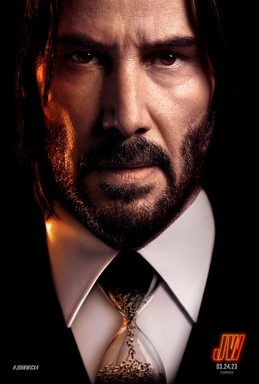
Film Review: John Wick: Chapter Four (dir by Chad Stahelski)


Yesterday, I finally watched the hit film of March 2023, John Wick: Chapter Four.  It left me overwhelmed and I mean that in the best possible way.

The film picks up where the last film left off.  John Wick (Keanu Reeves), the dog-loving, formerly retired professional hit man, is still traveling the world and killing the leaders of the High Table.  As becomes apparent from the start of the film, it’s a bit of a fool’s errand as killing one leader only leads to another leader being installed.  When John travels to Morocco to kill the leader known as “The Elder,” he discovers that the Elder he knew is gone and has been replaced with a new Elder.  He still kills the new Elder because that’s what John Wick does.  He kills people.  He’s a literal killing machine, one who audiences like because he loves dogs, is still mourning for his dead wife, and he’s played by Keanu Reeves.  On paper, the relentless and ruthless character of John Wick is horrifying.  But, when he’s played by Keanu Reeves, he becomes the killing machine that audiences can’t help but love.

The arrogant and brilliantly named Marquis Vincent Bisset de Gramont (Bill Skarsgard, giving a wonderfully hissable performance) is currently in charge of the efforts to track down and kill John.  The Marquis establishes himself as being evil by not only killing Charon (Lance Reddick) but also blowing up the Continental.  Upset by the murder of Charon and the destruction of his business, Winston (Ian McShane, playing his role with the perfect amount of wounded dignity) tells John that he can end his entire war with the High Table by challenging the Marquis to a duel.  Unfortunately, to do that, John has to convince another criminal organization to sponsor him and just about criminal organization on the planet wants John did.  To make things even more difficult, the Marquis has brought the blind assassin, Caine (the incredible Donnie Yen), out of retirement to track down John.  Caine and John are old friends but Caine knows that his daughter will be killed unless he kills John.

Clocking in at 169 minutes, John Wick: Chapter Four is a big, flamboyant, and at times overwhelming production.  John Wick travels across the world and every country in which he finds himself is home to someone who wants him dead.  And since everyone that John Wick knows seems to have a unlimited supply of guards and henchmen, the fights are nonstop and the violence is over the top but the film is so energetic and cheerfully excessive that it’s never boring.  Each fight scene feels like it could be a separate film on its own, with each member of the cast getting a chance to show off what they can do.  The water-filled fight in a Berlin night club is the film’s best moment but it’s closely followed by an extended combat sequence that’s set in a hotel in Japan.  With its vivid cinematography and ornate production design and its spectacular stunts, John Wick Chapter 4 is a work of pure cinema, an thrill ride of glorious excess.  Along with providing an ending to John Wick’s story, it also pays tribute to everything that audiences love about action cinema.  It’s a film for people who love action and, even more importantly, it’s film that has as much love for its audience as it does for itself.

The film ends on a note of apparent finality, one that becomes more ambiguous the more that one examines it.  This may be the last chapter of John Wick’s story or it may not.  (Considering the film’s box office and critical success, I suspect that it will not be the last.)  John Wick Chapter Four serves as a fitting (if perhaps temporary) end to the saga and also a tribute to both the action aesthetic and Keanu Reeves’s innate likability. 

Trailer: John Wick


hr_John_Wick_2

I usually have a good idea of upcoming action films once they’ve been announced into production, but I have to admit that Keanu Reeve’s upcoming action film, John Wick, has been quite the ninja. I’ve not heard one thing about this project until I came across the just released trailer earlier today.

The trailer itself pretty much lays out what looks like a basic premise for the film. The title character seems to be some sort of retired badass who is brought out of it to get his revenge on the idiots who killed his cute little dog (given to him by his dying wife) during a home invasion robbery.

I know there are many whose brain starts to wander and/or seize up whenever they hear the name Keanu Reeves. I, fortunately, am not one of those people and I actually think that Reeves has been much-maligned throughout his career. For one thing he does seem to handle action scenes pretty well and this trailer for John Wick just continues to reinforce that thought.

John Wick will be setting wrongs right and bringing killer of dogs their just due this October 24, 2014.

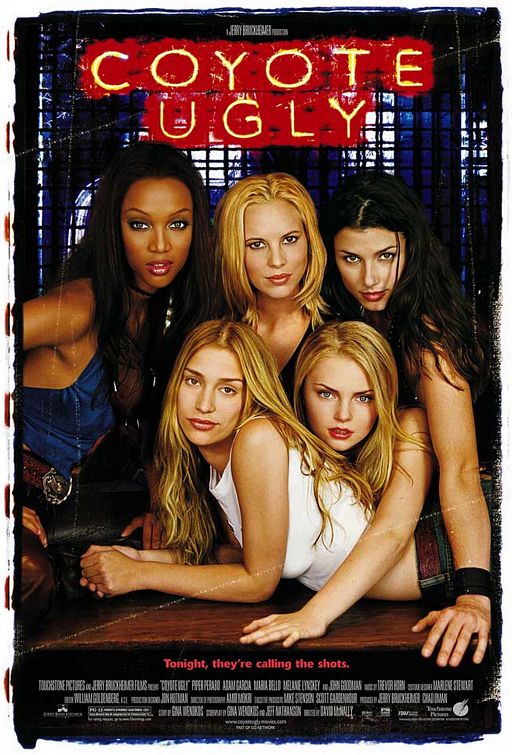
Embracing the Melodrama #48: Coyote Ugly (dir by David McNally)


coyote_ugly

“Never give up on your dreams!” is such a familiar movie cliché that I have to admit that there’s a part of me that really wants to see a mainstream, big budget studio film that proudly declares, “Give up!”  We’ve seen so many films about photogenic people who leave pretty but predictable small towns and end up in big, scary New York City that we pretty much know exactly what’s going to happen as soon as they step off that bus.  They’re going to get robbed.  They’re going to end up at an all-night dinner.  They’re going to meet the lover of their dreams.  They’re going to get quirky friends.  They’re going to become a success.  And, most importantly, they’ll be advised to “never give up on your dreams!”  It’s not that I’m cynical or that I don’t enjoy watching people succeed.  It’s just all so predictable that I found myself yearning for a film that will not slavishly follow the formula.

Unfortunately, 2000’s Coyote Ugly is not that film.  In fact, Coyote Ugly is such a thoroughly predictable film that it’s perhaps not surprising to discover that it’s also a film that’s been embraced by a lot of people.  It never ceases to amaze me how, whenever Coyote Ugly shows up on cable, twitter is full of viewers declaring their love.

Coyote Ugly tells the story of  Violet (Piper Perabo), who may look like an ordinary waitress from New Jersey but who aspires to be a songwriter in New York City.  As the film begins, she is in the process of leaving her loving but overprotective father (John Goodman) and her best friend (Melanie Lynesky) so that she can move to the big city and never give up on her dream.  Before she leaves, she’s asked to sign a piece of paper so that it can be tacked to the wall of the local pizza place.  It’s a tradition, apparently.  Before anyone leaves town for New York, they’re asked to leave behind an autograph.  The wall is covered with signatures, indicating that apparently every waitress in New Jersey thinks that she’s a songwriter.

Violet moves to New York and, at first, it seems like she might not make it.  Her apartment is a dump and her neighbors get mad whenever she sings.  (Violet responds by setting up a small recording studio on the roof of her building.)  Nobody is willing to listen to her demo.  About the only good thing that happens to Violet is that she meets Kevin (Adam Garcia), an Australian who encourages her to never give up on her dreams.

Eventually, Violet finds herself in one of those all-night diners that always seem to pop up in movies like this.  She notices that the girls seated at a table near her seem both to be happy and to have a lot of money.  It turns out that they work at the Coyote Ugly Saloon and since one of them (played by Tyra Banks, in a cameo) is quitting so she can go to law school, that means that there’s soon going to be an opening at the bar.

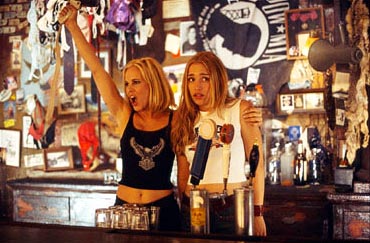
After talking to the Coyote’s owner, Lil (Maria Bello), Violet manages to get a job as a bartender.  Along with serving drinks to a combination of hipsters, frat boys, and stock brokers, another part of Violet’s job is to jump up on the bar and dance.  Eventually, she even gets a chance to sing when it’s discovered that the sound of her voice (or, to be technical about it, LeAnn Rimes’s voice since Rimes provided Violet’s singing voice) can somehow inspire drunks to stop fighting and act civilized.  Violet bonds with her fellow bartender Cammie (Izbella Miko) while the other bartender, Rachel (Bridget Moynahan) takes an instant and almost pathological dislike to her.  Lili is tough, Cammie is a flirt, and Rachel likes to set things on fire.  That’s about all we find out about them.

Even when her father disowns her for working at the Coyote and even when she and Kevin have a fight over her extreme stage fight and Kevin’s refusal to talk about his troubled past, Violet never gives up on her dreams!

And, if you can’t guess every single thing that happens in Coyote Ugly before it happens, then you really need to start watching more movies.

Despite the fact that the movie is named after the Coyote Ugly Saloon and it’s full of scenes of Violet and her co-workers dancing on top of that bar, the Coyote Ugly itself is actually pretty superfluous to the overall film.  The film itself is all about Violet pursuing her dream to become a songwriter and the bar itself really doesn’t play that major of a role into her eventual success.  Instead, it’s just a place where she works.  Violet could just as easily have worked at a particularly rowdy Dave and Buster’s and the overall film would have turned out the same.

And that’s a shame because, while watching the film, it’s hard not to feel that a movie about either Lil, Cammie, or Rachel (or, for that matter, a film about Tyra Banks going to law school) would be a thousand times more interesting that any film about boring old Violet.  I mean, here we have a film named after a business that is owned by a woman and that specifically employs and potentially empowers other women and what does the movie do with all of this material?

It tells a story so predictable and so simplistic that it could just as easily been generated by a computer program.

Coyote Ugly is a massive mixed opportunity but, for whatever reason, some people seem to love it.

https://twitter.com/jhali_/status/487998680163561472

And good for them.

ii7t6bbe89ch6tbi