George Foreman, RIP


George Foreman was one of those guys who I expected would be around forever.

When I was growing up, I knew George Foreman as the good-natured boxer who would throw punches for 12 rounds and then make jokes immediately afterwards.  On HBO, he was usually the commentator who showed the most concern for the well-being of the fighters in the ring.  On that infamous night in 1997, when Oliver McCall had an apparent mental breakdown while facing Lennox Lewis in the ring, while the other ring announcers spent their time talking about how bad the night was for the sport and how Don King was destroying the integrity of HBO Boxing, George Foreman was the only one to express any concern about what was happening in Oliver McCall’s head and to say that he hoped McCall would be okay once the fight ended.  That made a big impression on me.  George Foreman may have fought for a living but he never gave up his humanity.

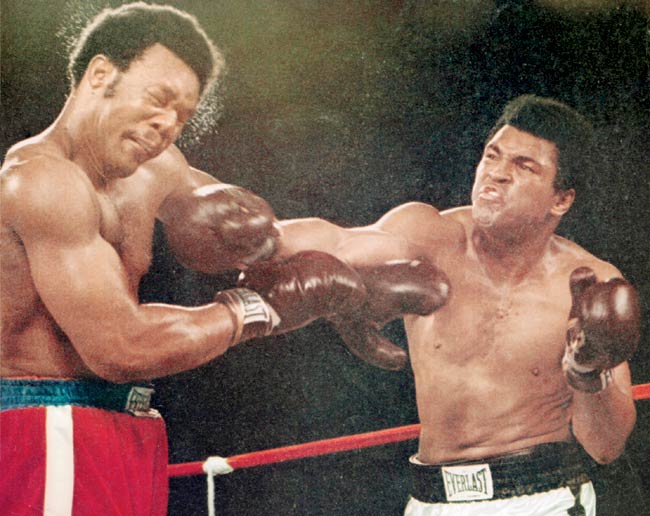
It was only later that I saw the clips of young George Foreman, fighting Ali in Zaire, and I realized how intimidating Foreman had been before he made his comeback in his 40s.  Foreman said that losing Ali in Zaire hurt, both because of the defeat and also Ali’s constant taunting.  Foreman, who famously declined to join in the protests when he was on the 1968 U.S. Olympic team, resented Ali’s claim that Foreman was a sell-out.  (These were the same accusations that Ali tossed at every opponent that he fought but for Foreman, someone who had struggled with poverty when he was younger and who credited boxing with saving him from a life of crime and prison, they especially stung.)  Foreman could have joined Joe Frazier in spending his entire life bitter over his treatment by Ali but Foreman forgave him.  When the documentary about the fight, When We Were Kings, won the Oscar for best documentary, Foreman was at the ceremony with Ali and helped his former opponent step up the stairs to the podium.

George Foreman in Zaire

It’s always hard to believe that the scowling and uncommunicative Foreman of the 70s was the same George Foreman who became an American institution, selling the George Foreman Grill and proving that he still had what it took to be a champion at age 45.  Foreman credited finding religion with giving him a new outlook on life.  At the same time he was making his comeback in the ring, Foreman was working as a minister and working with at-risk youth in Houston.  He was a man who found success but he was also a man who gave back.

Foreman didn’t win every fight.  He lost to Ali in Zaire and to Jimmy Young in Puerto Rico.  After he made his comeback, he lost to Evander Holyfield, Tommy Morrison, and Shannon Briggs.  Holyfield and even Morrison won their fights fair and square.  (Morrison was booed after he won not because he didn’t deserve the victory but because he was Tommy Morrison.)  A lot of people, including me, felt that Foreman was robbed by the judges when it came to the Briggs fight but Foreman accepted the decision with grace.  As I get older, I feel more and more appreciation for what George Foreman accomplished.  He made a comeback when most people had written him off and he did it with humor and humility.

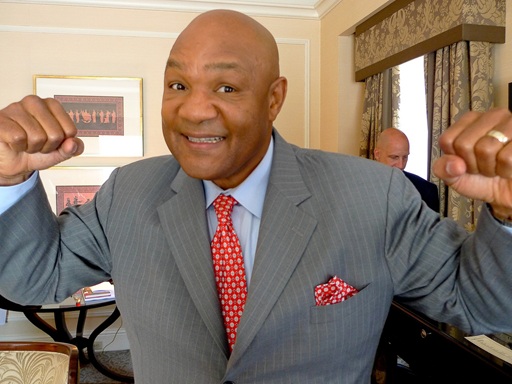
Yesterday, Big George Foreman passed away at 76.  I’ll miss him.
Mike Tyson vs Jake Paul: The Aftermath


You can’t always get what you want.

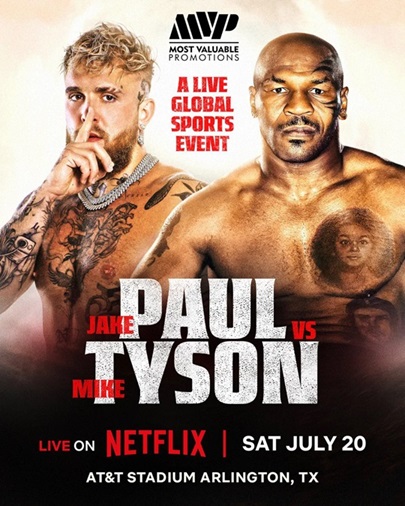
Last night, almost every true fight fan wanted to see Mike Tyson knock out Jake Paul.  It didn’t happen, because Tyson is 58 years old and Jake Paul is 31 years younger.  Tyson started out strong but, after the third round, it was obvious that he was exhausted and it even looked like Jake Paul was going easy on him as things reached their conclusion.  Mike made it 8 rounds without collapsing, which was a personal victory considering how tired he looked by the end of the fight.  Jake and Mike both got paid and I imagine that was their main concern.

Last night was hardly the worst thing that I’ve ever seen as far as boxing is concerned.  I lived through the 90s and the era when Don King would shove any fighter, regardless of how mentally unstable or drug-addicted, into the ring.  I am old enough that I can remember Oliver McCall having a nervous breakdown in the ring and refusing to defend himself against Lennox Lewis.  I can remember Andrew Golota throwing away two certain victories because he just couldn’t stop hitting Riddick Bowe below the belt.  I can remember Mike Tyson biting off a chunk of Evander Holyfield’s ear.  I can even remember Montell “Ice” Griffin.  Trust me, I’ve seen a lot worse that Paul vs. Tyson.  But watching Iron Mike lose to a YouTube star, that’s definitely the type of thing that will hurt the soul of any 90s kid.  The new generation has arrived and the man who was once the greatest boxer in the world lost to a former Disney star.

The biggest loser last night was not Netflix, despite all of the technical difficulties that they had trying to broadcast a live event.  The biggest losers were the people who purchased a Netflix subscription just to watch the fight and instead spent most of the night staring at error messages and a buffering image.  Did the Netflix engineer not consider that Mike Tyson coming out retirement to fight a YouTube star would put added stress on their servers?  Netflix still made their money, though.  They got what they wanted, even if fight fans didn’t.

I have no problem acknowledging that, even past his prime and two years away from sixty, Mike Tyson could easily beat me up.  But now I have to live with the knowledge that Jake Paul could beat me up too.  That’s the real tragedy of Paul vs. Tyson.

Michael B. Jordan and Jonathan Majors square off in the trailer for Creed III!


After working with Ryan Coogler since 2013, Michael B. Jordan’s making his directorial debut with Creed III. The trailer seems to share along with Jordan’s character Adonis Creed finding a new adversary both in and out of the boxing ring in The Harder They Fall‘s Jonathan Majors as Damian. Tessa Thompson, Wood Harris, and Phylicia Rashad are also on hand.

Creed III is set to release next March in theatres.

Lisa Marie’s Week In Television: 12/12/21 — 12/18/21


Again, I didn’t watch much this week.  I was busy getting ready for Christmas and my boyfriend’s birthday and watching and writing reviews for 2022.  So, not much television this week!  However, here’s a few notes on what little I did watch.

Boxing (ESN, Sunday Night)

Yikes!  I’m not sure who was fighting who but everyone certainly did seem angry.  I have to admit that I do have an odd weakness for the spectacle of men hitting each other but I also cringe whenever the blood starts flowing.  The best thing about boxing is when everyone hugs after the match and you realize that none of it was personal.  Awwwwwww!

Curb Your Enthusiasm (HBO, Sunday Night)

Larry David annoyed a lot of people.  It’s what he’s good at.  Now, I haven’t really been keeping up with this season but, as far as I can tell from watching Sunday’s episode, Larry is sleeping with a really annoying local politician because he’s hoping she’ll change the zoning laws and this somehow will allow Larry to fire an actor who he dislikes.  And apparently, someone drowned in Larry’s pool and now Larry is being blackmailed or something.  (Actually, I kind of got the feeling that maybe Larry killed whoever it was.)  I don’t know.  It was confusing but it was funny just because Larry doesn’t know when to stop.

Dexter: New Blood (Showtime, Sunday Night)

I wrote about the latest episode of Dexter: New Blood here!

The Love Boat (MeTV, Sunday Night)

There was a definitely lack of Christmas cheer on the Christmas cruise but luckily, Mickey Rooney played an angel who brought everyone together, taught the children how to sing, and saved the marriage of Donnie Osmond and Maureen McCormick.

Mom (Friday Afternoon, Paramount)

I swear, have the people on this show ever met anyone who they didn’t automatically accuse of being an alcoholic?  On Friday, Paramount showed a quartet of depressing Christmas episodes.  Yikes!

Seinfeld (Comedy Central, Sunday Night)

I watched three episodes on Sunday night.  Jerry learned how to express his emotions and George sold computers.  George lost his keys in a pothole and Jerry had a panic attack after a toothbrush fell in a toilet. (Ewwwwww!  I don’t blame him.)  And then George killed his fiancée with toxic envelopes.  Unfortunately, Jerry had just gotten engaged so the tragic end of George’s engagement was a bit awkward for all involved.  Line of the episode: “I can’t be with someone who reminds me of me!  I HATE MYSELF!”

The 70th Miss Universe Pageant (Fox, Sunday Night)

Miss Paraguay should have won.  Also, Steve Harvey needs to get some new material.  I mean, Steve — we know you announced the wrong winner a few years ago.  We’ve moved on.  The only person who keeps bringing this up is you.

SERIOUSLY, STEVE, IT’S OKAY!

Survivor (CBS, Wednesday Night)

I wrote about the season finale of Survivor here!  This was an okay season.  I was happy to have Survivor back but Jeff Probt’s new happy and enthusiastic persona didn’t really work for me.  Of the final three, Xander probably should have won but the jury was a bit bitter so congrats to Erika on her victory!

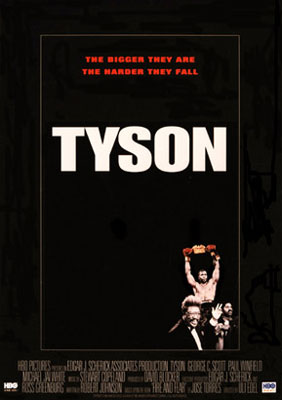
A Movie A Day #232: Tyson (1995, directed by Uli Edel)


If any heavyweight champion from the post-Ali era of boxing has lived a life that seems like it should be ready-made for the biopic treatment, it is “Iron Mike” Tyson.  In 1995, HBO stepped up to provide just such a film.
In an episodic fashion, Tyson tells the story of Mike Tyson’s rise and fall.  At the start of the movie, Tyson is a child trying to survive on the tough streets of Brooklyn.  The events that unfold should be familiar to any fight fan: Mike (played by Spawn himself, Michael Jai White) gets sent to reform school. Mike is taken under the wing of the legendary trainer, Cus D’Amato (George C. Scott). Mike becomes the youngest heavyweight champion, marries and divorces Robin Givens (Kristen Wilson), and eventually falls under the corrupting influence of the flamboyant Don King (Paul Winfield).  After failing to train properly for what should have been a routine fight, Tyson loses his title and subsequently, he is convicted of rape and sent to prison.

Tyson aired shortly after the real Mike was released from prison and announced his return to boxing.  Unfortunately, much of what Mike Tyson is best known for occurred after he was released from prison.  As a result, don’t watch Tyson to see Mike bite off Evander Holyfield’s ear.  Don’t watch it expecting to see Mike get his famous facial tattoo.  All of that happened after Tyson aired.  Instead, Tyson tells the story of the first half of Mike’s life in conventional biopic style.  There is even a montage of newspaper headlines.

The best thing about Tyson is the cast.  Even though the film does not delve too deeply into any aspect of Tyson’s life, all of the actors are well-chosen.  In some ways, Michael Jai White has an impossible role.  Tyson has such a famous persona that it had to be difficult to play him without slipping into mere impersonation but White does a good job of suggesting that there is more to Tyson than just his voice and his anger.  Scott and Winfield are both ideally cast as Tyson’s contrasting father figures, with Winfield especially digging into the Don King role.

HBO’s Tyson is a good starter if you do not know anything about Mike’s early career but the definitive Mike Tyson film remains James Toback’s documentary, which also happens to be titled Tyson.

A Movie A Day #230: Champs (2014, directed by Bret Marcus)


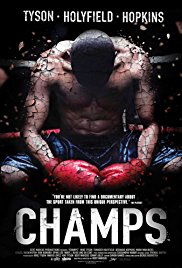
Bernard Hopkins.  Evander Holyfield.  Mike Tyson.  Three men who came from similar backgrounds and who eventually became three very different heavyweight champions.  Bernard Hopkins was the ex-con who transformed himself through boxing.  Mike Tyson was the ferocious and self-destructive fighter whose legendary career eventually became a cautionary tale.  Evander Holyfield was the underrated fighter, whose discipline and self-control made him a champ but also ensured that he would never get as much attention as the other boxers of the era.
Featuring extensive interviews with these three fighters, Champs is a documentary that not only follows their careers but also tries to place boxing within a greater sociological framework.  As several people in the film state, rich kids do not grow up to become professional boxers.  Instead, they are the ones who grow up to charge people $100 to watch Mayweather vs McGregor on Pay-Per-View.  Boxing has always been a sport that has been dominated by men who grew up poor and marginalized.  That was certainly true for Hopkins, Tyson, and Holyfield.  For all three of them, boxing provided an escape but it also provided temptation.  Unlike players in other sports, boxers rarely have anyone looking out for their best interests.  Tyson’s career was derailed by a prison sentence and he has struggled with both financial and mental issues.  Holyfield made millions for promoters but still ended up declaring bankruptcy.  Champs does not shy away from examining the physical and metal toll of boxing.

As a documentary, Champs is sometimes too slick.  There are too many interview with celebrity boxing fans.  Ron Howard may be a good director but he does not have much to add to a discussion about the correlation between poverty and boxing.  Champs works best when it allow Hopkins, Holyfield, and Tyson to tell their own stories.  Hopkins speaks movingly about how the experience of being in prison not only changed him but ultimately made him a better person.  Mike Tyson is candid about his own demons.  Meanwhile, Holyfield talks about what it was like to always be underestimated and underrated by the boxing world.  All three of them are compelling in their own different way.  For fight fans, Champs has much to offer.

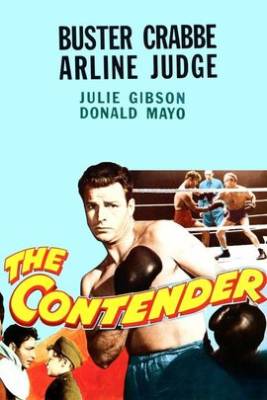
A Move A Day #190: The Contender (1944, directed by Sam Newfield)


Gary Farrell (Buster Crabbe) is a widowed truck driver who wants his son to have a better life than his old man.  Good luck pulling that off on a salary of $45 a week.  Gary enters a boxing tournament, just hoping to win enough money to pay for his son to go to military school.  But, under the tutelage of veteran trainer Pop Turner (Milton Kibbee), Gary becomes a real contender.  He also becomes a first class heel, turning his back on his old, honest lifestyle and getting involved with fast-living socialite, Rita London (Julie Gibson).  Can Gary’s friends and newspaper reporter Linda Martin (Arline Judge) get Gary to see the error of his ways?
The Contender, which is in the public domain and can be viewed at the Internet archive, is a typical poverty row production, with all the expected boxing clichés.  Gary’s initial rise is just as predictable as his downfall and eventual redemption.  For fans of Buster Crabbe, though, it is a chance to see Crabbe playing someone other than Tarzan, Flash Gordon, or Buck Rogers.  (Crabbe was the only actor to play all three of these roles over the course of his long career.  He also appeared as Billy the Kid in several westerns.)  Though he was a swimmer and not a boxer, Crabbe’s natural athleticism made him a good pick for the role of Gary.  Julie Gibson is sexy and fun as the bad girl and be sure to keep an eye out for Glenn Strange, who plays Gary’s best friend.  Just as Crabbe was forever typecast as Flash Gordon, Strange will always be remembered for replacing Boris Karloff in the role of Frankenstein’s Monster.

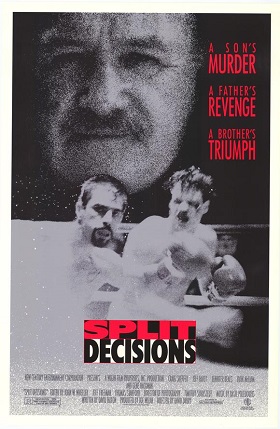
A Movie A Day #164: Split Decisions (1988, directed by David Drury)


Craig Sheffer seeks symbolic revenge and Gene Hackman picks up a paycheck in Split Decisions!

Ray McGuinn (Jeff Fahey) is a contender.  Ever since he let his father’s gym and signed with a sleazy boxing promoter, Ray has been waiting for his title shot.  His father, an ex-boxer turned trainer named Dan (Gene Hackman), has never forgiven Ray for leaving him.  Meanwhile, his younger brother — an amateur boxer and Olympic aspirant named Eddie (Craig Sheffer) — worships Ray and is overjoyed when Ray returns to the old neighborhood to fight “The Snake” Pedroza (Eddie Velez).  But then Ray is told that if he doesn’t throw the fight, he’ll never get a shot at a title bout.  When Ray refuses, The Snake and a group of thugs are sent to change his mind and Ray gets tossed out of a window.

Eddie is determined to avenge his brother’s death.  Does he do it by turning vigilante and tracking down the men who murdered his brother?  No, he turns pro and takes his brother’s place in the boxing ring!  Dan reluctantly trains him and Eddie enters the ring, looking for symbolic justice.  Symbolic justice just doesn’t have the same impact as Charles Bronson-style justice.

The idea of a barely known amateur turning professional and getting a chance to fight a contender feels just as implausible here as it did in Creed.  The difference is that Creed was a great movie so it did not matter if it was implausible.  To put it gently, Split Decisions is no Creed.  The boxing scenes are uninspired and even the training montage feels tired.  Look at Craig Sheffer run down the street while generic 80s music plays in the background.  Watch him spar in the ring.  Listen to Gene Hackman shout, “You’re dragging your ass out there!”  In the late 80s, Gene Hackman could have played a role like Dan in his sleep and he proves it by doing so here.  Underweight pretty boy Craig Sheffer is actually less convincing as a boxer than Damon Wayans was in The Great White Hype.

Split Decisions is another boxing movie that should have taken Duke’s advice.

RIP MUHAMMAD ALI: The Greatest at the Movies and on TV


gary loggins's avatarcracked rear viewer

ali1

I’ve sadly written way too many RIP posts this year. It seems 2016 hasn’t been kind to many of the greats in entertainment. Muhammad Ali, formerly known as Cassius Clay, truly transcended his role as the Greatest Heavyweight Boxing Champion of All Time. His stance against the Vietnam War and subsequent stripping of his title for refusing to enter the draft on religious grounds (he converted to Islam shortly after winning his first title) made him a divisive character during the tumultuous 1960’s and cost him three prime years of his career. He came back and won the championship twice and, love him or hate him, no one could deny his skills in the ring or the strength of his convictions.

Ali was a flamboyant showman in a sport full of monosyllabic bruisers. He made outlandish predictions (“Count on me, he won’t last three”), spouted poetry (“I float like a…

View original post 406 more words

Film Review: The Greatest (1977, dir by Tom Gries and Monte Hellman)


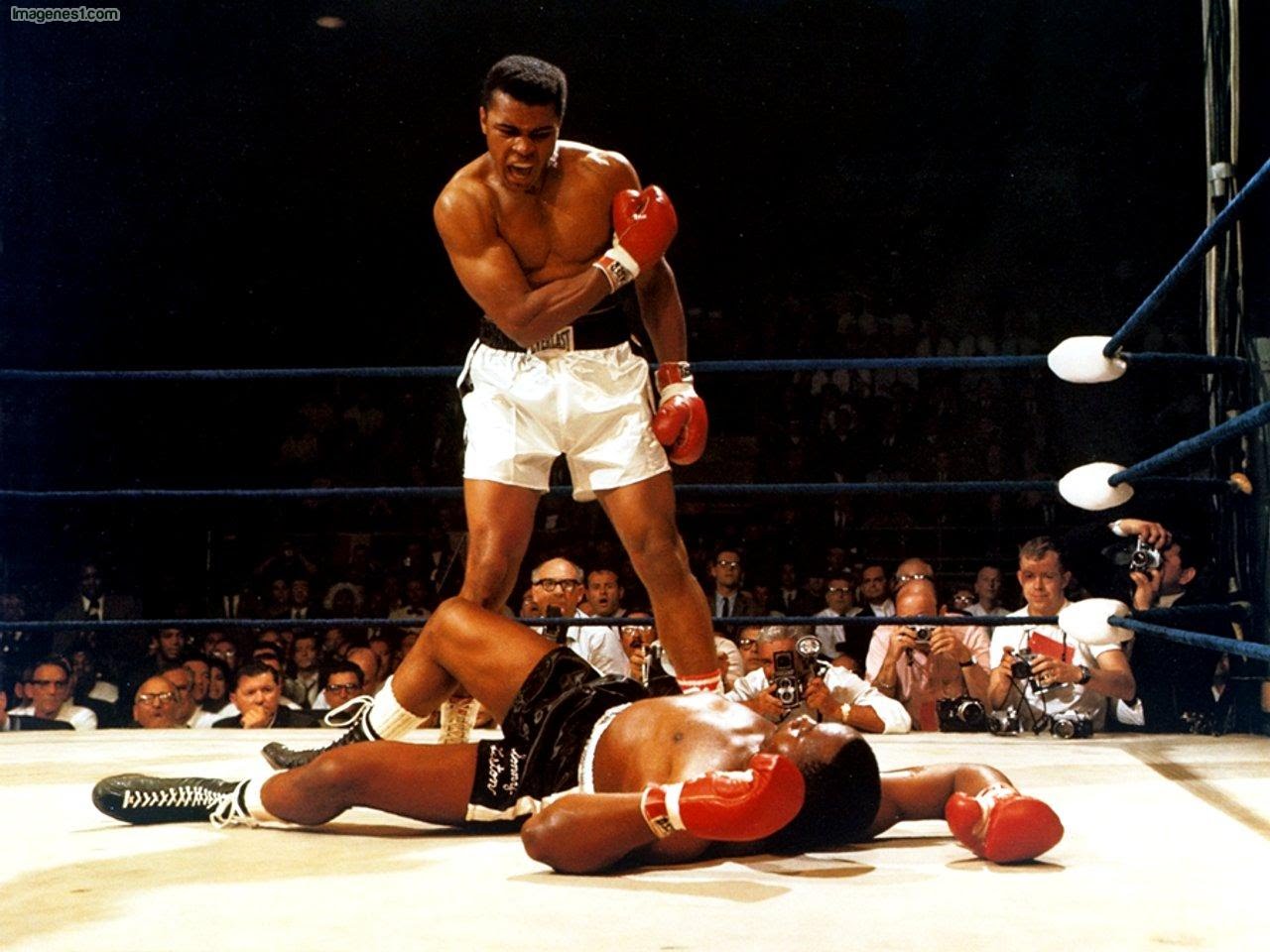
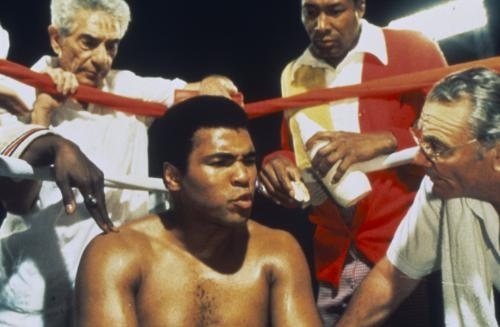
the_greatest_1977_portrait_w858The Greatest opens with 18 year-old Cassius Clay (played by Chip McAllister as a teenager and, as an adult, by Muhammad Ali himself) winning the light heavyweight gold medal at the 1960 Rome Olympics.  Returning home to Kentucky, Clay discovers that not even a gold medal can protect him from racism.  Angered after a restaurant refuses to serve him and his friend, Clay throws his gold medal into the Ohio River.  Under the training of Angelo Dundee (Ernest Borgnine), Clay turns pro and defeats Sonny Liston (Roger E. Mosley) for the heavyweight championship.  Inspired by Malcolm X (James Earl Jones), Clay also joins the Nation of Islam and changes his name to Muhammad Ali.  As heavyweight champion, Ali battles not only his opponents in the ring but racism outside of it.  The Greatest follows Ali as he loses his title for refusing to be drafted and concludes with the famous Rumble in the Jungle, where Ali won the title back from George Foreman.

Sadly, Muhammad Ali has never been the subject of a truly great feature film.  Even Michael Mann’s Ali failed to really capture the mystique that made Ali into such an iconic figure.  The Greatest is interesting because Ali plays himself.  Unfortunately, The Greatest proves that Ali may have been a great showman but he was not a natural actor.  You only have to watch the scene where Ali tries to hold his own with Robert Duvall to see just how stiff an actor Muhammad Ali really was.  Ali’s best scenes are the ones where he is trash talking his opponents or training.  The film opens with Ali jogging while George Benson sings The Greatest Love Of All, a scene that is made all the more poignant when you compare the athletic and confident Muhammad Ali of 1977 with the frail, Parkinson’s stricken Ali of today.

29Muhammad-Ali-1Instead of recreating any of Ali’s legendary fights, The Greatest instead uses actual footage of the matches.  The real life footage is the best part of the film.  After all these years, Ali’s fights against Sonny Liston, Joe Frazier, Ken Norton, and George Foreman remain exciting to watch.  Otherwise, The Greatest is too episodic and low budget to do justice to Muhammad Ali’s story.

If you want to see a truly great film about Ali and his legacy, watch the 1996 documentary When We Were Kings, 2009’s Facing Ali or 2013’s The Trials of Muhammad Ali.  Ali is such an iconic figure that it may be impossible for any feature film to properly do justice to his life and legacy.  These three documentaries come close.

(Director Tom Gries died during the filming of The Greatest.  The movie was completed by Monte Hellman.)