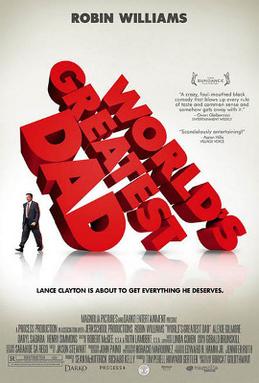
World’s Greatest Dad (2009, directed by Bobcat Goldthwait)


Lance Clayton (Robin Williams) is an English teacher who has a rotten teenage son named Kyle (Daryl Sabara).  Some teenagers go through a rebellious phase.  Some teenagers are troubled because of how they were raised or a recent trauma.  Some teenagers are misunderstood.  Kyle is just a disrespectful and stupid jerk who seems destined to do nothing his life.  He’s the type of fifteen year-old boy who uses his phone to secretly take upskirt pictures of his Dad’s girlfriend while they’re all out for dinner.

Those upskirt pics prove to be the last thing that Kyle sees as he’s looking at them where he dies in a case of autoerotic asphyxiation gone wrong.  Lance impulsively stages Kyle’s death to look like a suicide, both to preserve Kyle’s dignity and his own.  Lance, a frustrated writer, composes a suicide note and signs it with Kyle’s name.  When the note is leaked to the press, Kyle is hailed as a sensitive young man and becomes a hero to the former classmates who used to hate him.  Lance goes on to forge and publish a journal, which he claims was written by Kyle.  Kyle is hailed as a hero and Lance as the “world’s greatest dad.”  Lance enjoys the fame, until he doesn’t.

World’s Greatest Dad is a dark comedy, one that has the courage to often be downright unpleasant in its portrayal of how Kyle’s memory is idealized after his death.  It also features one of Robin Williams’s best performances.  Almost every performance that Williams gave had at least a hint of sadness to it.  In this film, he plays one of his saddest characters, a well-meaning teacher who cannot understand how his son has become such a jerk.  By writing the journal, Williams is not only deceiving the rest of the world but also himself.  He’s recreating Kyle as the son that he wanted as opposed to the one he got.  It’s one of Williams’s most emotionally honest and open performances.

For obviously reasons, it’s not easy to watch Williams playing such a depressed character, especially one who staes a suicide but the film really does show what a great actor Robin Williams could be.  In the end, his talent is what we should remember and celebrate.
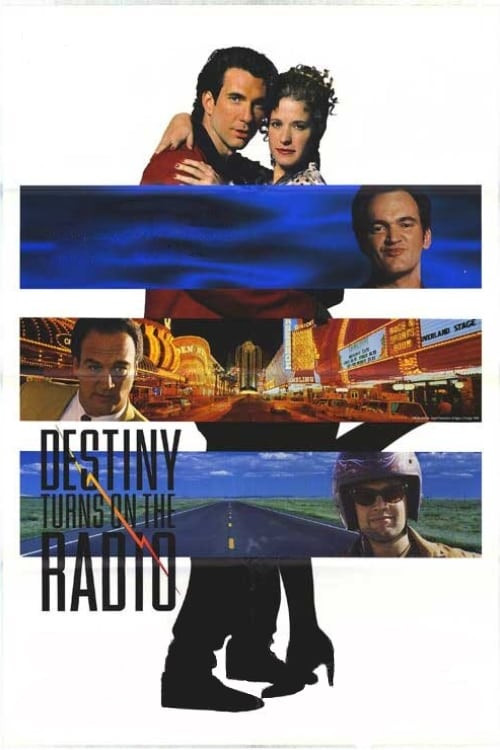
 

Destiny Turns On The Radio (1995, directed by Jack Baran)


Today, it can be easy to forget what an impact Quentin Tarantino had on pop culture in the 90s.  The one-two punch of Reservoir Dogs and Pulp Fiction inspired a generation of young and aspiring filmmakers to believe that anyone could make their own film.  Suddenly, you didn’t have to be a film school graduate to call yourself a filmmaker.  You could just be someone who loved movies and who was willing to keep hustling until you had something you could slip into Sundance.  That was the feeling, anyway.  The 90s were full of films about eccentric criminals who talked a lot and who loved pop culture, only three of which were directed by Quentin Tarantino.  Some of them were good.  Most of them were not.

Destiny Turns On The Radio was one of the first films to rip-off Pulp Fiction and it felt more cynical than most because it was directed by Jack Baran, who wasn’t even a video store clerk.  He was a producer of films like The Big Easy and Barfly, an industry veteran ripping off two films directed by someone who was, at that time, still an outsider.  The film tells a story that had plenty of Tarantino elements, including Quentin Tarantino himself.  Tarantino signed to play Johnny Destiny right after Pulp Fiction won the Palme d’Or at Cannes.

Johnny Destiny is a gambler who is apparently also a God.  He emerges from a lightning-filled pool and his dialogue is full of pseudo-philosophy.  He is driving through the desert when he picks up Julian (Dylan McDermott) and gives Julian a lift to Las Vegas.  Johnny Destiny is taking prison escapee Julian on a ride so that Julian can face his destiny.  Julian wants to recover some money from a bank job that he pulled off with Thoreau (James Le Gros) but it turns out that, when Johnny Destiny emerged from that pool, he also stole all the money.  (There’s no specific reason for Thoreau to be named after the famous philosopher, beyond the film trying to make itself seem deep by drawing in everyone who read Walden in AP English.)  Julian wants to get back together with Lucille (Nancy Travis), a singer who performs songs more appropriate for a 20s speakeasy than a Las Vegas lounge.  Lucille is involved with a gangster (Jim Belushi).  Belushi sings Vivia Las Vegas but otherwise, this is one of his more boring performances.

Like so many of the Pulp Fiction rip-offs of the 90s, Destiny Turns On The Radio is all self-conscious attitude and cool style, full of references to pop culture that fall flat because there’s no real thought behind them.  Reservoir Dogs and Pulp Fiction were full of style but they also told compelling stories.  Destiny Turns On The Radio is all style and little else and the cast never comes together the way that the actors in Tarantino’s first two movies did.  Watching this film, I realized why Dylan McDermott and Nancy Travis both found more success on television than in feature films.  The film posits Tarantino (as Johnny Destiny) as the epitome of cool but it then burdens him with the type of dialogue that he would have cut by the time he started a second draft.

Coming hot on the heels of the success of Pulp Fiction, Destiny Turns On The Radio actually led to a few years where many critics assumed Tarantino would be a two-trick wonder.  It was thought lightning struck twice but it would never strike a third time and Tarantino would spend the rest of his career as almost a parody of his earlier success.  Luckily, Tarantino proved them wrong and Destiny Turned On The Radio turned out to be not his career’s destination but instead just a detour.

Film Review: Massive Retaliation (dir by Thomas A. Cohen)


The 1984 film, Massive Retaliation, was made before I was even born but I still feel as if it was specifically designed to annoy me.

Consider this:

The movie begins with an endless folk song playing over the opening credits.  It’s one of those peace and love folks songs that goes on forever.  I recently did some research on the folk music of the 50s, 60s, and 70s and what I discovered is that folk singers were (and are) essentially the most self-important people on the planet.  (Pete Seeger apparently went to his grave convinced that he was single-handedly responsible for getting Lyndon B. Johnson to withdraw from the 1968 presidential election.)  When a film about nuclear war opens with a folk song, it’s never a good sign.

The film then cuts from the folk singers to a bunch of screaming kids in a van.   I mean, seriously …. AGCK!  The kids are on a road trip and the van is being driven by their older brother, Eric (Jason Gedrick).  Eric tries to keep the kids quiet but it doesn’t work, mostly because Eric is kind of a wimp.  Unfortunately, Eric picked the wrong time to go on a road trip because it looks like a nuclear war is about to break out and his parents and their friends are all heading up to a compound that they built up in the hills.

(It’s supposed to be a secret compound but it’s sitting right out in the open and there’s a paved road leading up to it so ….. yeah.  Good job.)

Anyway, the first half of the movie is divided between scenes of the adults and the kids heading to the compound.  This leads to the two groups encountering a lot of other people who are reacting to the threat of war.  This also leads to a lot of half-baked monologues about war and human nature.  The rednecks are excited about the prospect of the world ending.  Eric’s dad (Peter Donat) is looking forward to restarting civilization in the compound.  Every old person who shows up in the movie says something like, “There’s always been a war.”  The film tries way too hard to be profound, which is always an annoying trait.

Eventually, Bobcat Goldthwait shows up as a member of an evil redneck crew who wants to steal some gasoline.  Despite the fact that this is meant to be a serious film, Goldthwait uses a variation of his Bobcat voice in the role and it creates a weird effect.  Perhaps that’s the message of the film.  When society collapses, comedians will become warlords….

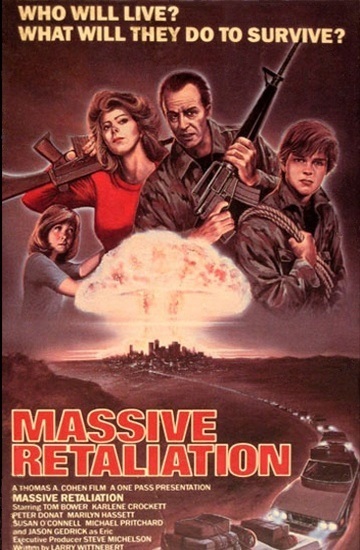
Anyway, Massive Retaliation is one of those self-righteously liberal and largely humorless films has a lot that it wants to say about war and humanity and society but …. eh.  Who cares?  I mean, I guess if I wanted to, I could make the argument that there are parallels to the film’s depiction of society collapsing over the possibility of war to the way some people are reacting to the COVID-19 pandemic but that would just be me trying to make this film sound more interesting than it actually is.  To be honest, the best thing about the film is the poster below, which looks like it was made for a different, better movie:

Massive Retaliation is nowhere as fun as this poster.  Instead, it’s a film that begins with folk music and ends with children forming a circle of peace.  Seriously, was this film just made to give me a migraine?

Police Academy 4: Citizens on Patrol (1987, directed by Jim Drake)


Long before the end credits of 22 Jump Street imagined Jonah Hill and Channing Tatum going to culinary school, the flight academy, and into outer space, the Police Academy films bravely tested just how far one already thin premise could already be stretched.

In Police Academy 4, Commandant Eric Lassard (George Gaynes) comes up with another plan to make the city safer.  (Since Lassard has been coming up with plans for three years without any success, it may be time to let the old man retire peacefully.)  This time, he wants to institute Citizens on Patrol, which would mean training citizens to act like cops.  It sounds like the type of terrible idea that could get a city sued into bankruptcy but considering that this is a city where a human sound effects machine and the former head of the 16 precinct’s biggest gang can become decorated police officers, I guess it’s as good an idea as any.

As usual, Carey Mahoney (Steve Guttenberg) and the gang are ready to help Lassard.  Bruce Mahler’s Fackler is no longer a part of the ensemble but Bubba Smith, Bobcat Goldthwait, Michael Winslow, David Graf, Tim Kazurinsky, Marion Ramsey, and Brian Toschi are all back.  Also returning, after skipping out on the first two sequels, is Capt. Harris (G.W. Bailey).  Harris wants to see Lassard fail so that he can take over the police academy.  It’s the same thing as the first three films.  As in previous Police Academy films, there’s a visit to the Blue Oyster leather bar and a last minute crime wave to give the Citizens on Patrol a chance to prove they belong in the program.  The Citizens on Patrol include Billie Bird, Brian Backer, David Spade, wrestler Tab Thacker, and Corrine Bohrer as a love interest for Bobcat Goldthwait.  Sharon Stone also makes an appearance, playing a journalist and improbably falling for Steve Guttenberg.  Watching the film, it is obvious that the idea was that, in future Police Academy films, the Citizens on Patrol could replace any of the regular cast members who wanted too much money to return.  As a result, almost every veteran of the cast has a doppelganger in the Citizens on Patrol.  Brian Backer could replace Steve Guttenberg.  Tab Thacker is there to put Bubba Smith on notice that no one is irreplaceable.  Is Bobcat Goldthwait being difficult?  Just remind him that David Spade can play a crazy eccentric too.

Police Academy 4 is the most crowded of the Police Academy films and, even by the franchise’s undemanding standards, most of the jokes fall flat.  Jim Drake took over as director after the director of the previous two films, Jerry Paris, died of a brain tumor and Drake struggles to balance low comedy with police action.  Guttenberg and company don’t have the same energy in this installment as they had in the previous three and the new cast members all feel as if they’re out place sharing scenes with the veterans, like a group of underclassmen who have been invited on the senior trip.

This would be the final Police Academy film for Steve Guttenberg.  Would the franchise be able to survive without him?  Check here tomorrow to find out with my review of Police Academy 5!

Police Academy 3: Back in Training (1986, directed by Jerry Paris)


Police Academy 3 opens with a state in the middle of a fiscal crisis.  Money has to be saved somewhere and the governor (Ed Nelson) has decided that it’s not necessary for the state to have two police academies.  I am not sure why the governor would be the one to make that determination since the previous two Police Academy films established that the academies are run by the city but I guess I should remember that I’m watching a Police Academy film and not ask too many questions.

Which academy is going to be closed down?  Will it be the academy run by Commandant Lassard (George Gaynes) or the one run by Commandant Mauser (Art Metrano, returning from the second film)?  Mauser is willing to use any dirty, under-handed trick to keep his academy open.  Meanwhile, Lassard has his most recent graduating class returning to instruct his latest batch of recruits.  Can Mahoney (Steve Guttenberg) and Michael Winslow’s human sound effects machine save the academy?

When I watched Police Academy 3 this weekend, I was surprised to discover that it wasn’t as bad as I remembered.  Maybe it’s because I watched it immediately after the first two films and my senses were dulled but Police Academy 3 turned out to be an amiable and enjoyably stupid comedy. It helped that two of the new recruits were played by Tim Kazurinsky and Bobcat Goldthwait.  Returning to the roles that they first played in the second movie, Kazurinsky and Goldthwait make for a good comedic team.  As for the rest of the Police Academy regulars, they all do their usual comedy bits like pros and without any fuss.  It’s predictable and sometimes, funny.

Police Academy 3 was the first Police Academy film to have a PG-rating and, as a result, the jokes were still as juvenile and crude as the first two movies but, at the same time, Police Academy 3 seems to have made peace with the fact that it’s target audience was a bunch of adolescent boys dropped off at the theater by their mothers.  Mauser is still regularly humiliated but no one gets a blow job while standing in front of a podium.  This is a Police Academy for the entire family, assuming that your family is easily amused and not too demanding.

Police Academy 3 is a dumb movie and the recurring joke about policemen accidentally entering the Blue Oyster Bar is even less funny the third time that it’s used.  There’s also a Japanese recruit who only seems to be included because, back in the 80s, American films were obsessed with making fun of Japan.  Despite all that, Police Academy 3 is still not as bad as the usual Police Academy sequel.

But what about Police Academy 4?  Check in tomorrow to find out if it’s also better than I initially remembered.

(It’s not.)

Police Academy 2: Their First Assignment (1985, directed by Jerry Paris)


In an unnamed city that is probably meant to be Los Angeles but which looks like Toronto, a criminal gang known as the Scullions have taken over the 16th precinct.  Led by the loud, marble-mouthed Zed (Bobcat Goldthwait), the Scullions are terrorizing the citizens and harassing one shop owner, Carl Sweetchuck (Tim Kazurinsky), in particular.  The captain of the 16th precinct, Pete Lassard (Howard Hesseman), calls his brother, Eric Lassard (George Gaynes), and asks for the best cadets to have recently graduated from the police academy.

Carey Mahoney (Steve Guttenberg) and a few other of the cadets from the first Police Academy movie end up in the 16th.  Tackleberry (David Graf) is there and so is accident-prone Douglas Fackler (Bruce Mahler).  Bubba Smith is back as Hightower and so is Michael Winslow, the human sound effects machine.  They’re determined to help Lassard’s brother but it’s not going to be easy because they have to work with Lt. Mauser (Art Metrano) who is basically a dick who wants to be captain.  Mauser is exactly like Harris from the first film, except his name is Mauser and, instead of getting his head stuck up a horse’s ass, he gets his hands super-glued to his head.

Police Academy 2 is less raunchy than the first film but still not quite as family friendly as the films that would follow.  There’s still one f-bomb dropped and a few adult jokes, as if the film wasn’t fully ready to admit that it was destined to become associated with juvenile viewers who would laugh at almost anything involving a bodily function.  There is one funny moment where Steve Guttenberg goes undercover to join Zed’s gang, mostly because he’s Steve Guttenberg and he’s even less believable as a gang member than he was as a cop.  The closest thing that movie has to a highlight is Bobcat Goldthwait’s manic turn as Zed and Tim Kazurinsky’s desperation as he watches his store get repeatedly destroyed.  Tackleberry also gets an amusing romantic subplot, where he meets a police woman (Colleen Camp) who loves guns almost as much he does.  Unfortunately, Tackleberry’s romance gets pushed to the side by all of the gang activity.

Police Academy 2 is stupid but, depending on how much tolerance you have for Bobcat Goldthwait, sometimes funny.  It’s not as “good” as the first film but it’s still better than most of what would follow.  Speaking of which, tomorrow, I will be reviewing the first Police Academy film to get a PG-rating, Police Academy 3: Back in Training.

Music Video of the Day: Leader of the Pack by Twisted Sister (1985, directed by Marty Callner)


Since today is Dee Snider’s 65th birthday, it makes sense that today’s music video of the day would come to us from Twisted Sister.  It might not make as much sense for that video to be for their cover of Leader of the Pack, which is widely considered to be one of the worst covers of the 80s.  Personally, I think both the cover and the video are a good example of Snider’s sense of humor.  Watching this, it’s hard to believe that Snider and the band were once considered to be a threat to young minds.  I may be picking Leader of the Pack because I think its underrated or I might be picking it because Valerie already did the video for I Wanna Rock.  Take your pick.

The Leader Of The Pack video is from the 80s and it features something that I always love to see in videos from that era: bad green screen special effects.  The anti-Twisted Sister notes from Mom and Dad float through the video like a weatherman superimposed in front of a map of the continental United States.

The video is about a girl who apparently only has room in her heart for Twisted Sister and Leonard Nimoy.  Just check out that giant poster of Spock that she’s got in her bedroom.  Her parents are probably alright with her love of Spock but they can’t stand the thought of their daughter liking Twisted Sister, probably because they think that Tipper Gore has a point about labeling music.  As for the girl, she may be in love with the leader of the pack (Dee, of course) but that doesn’t make her a good driver.  Not only does she wreck that bulky car but she barely survives.  Was it all worth it?

Just ask Bobcat Goldthwait, who plays her boss for some reason.  Goldthwait is instantly recognizable.  I haven’t been able to find the name of the girl in the video, though she looks familiar to me.

This video was directed by Marty Callner, who directed videos for everyone.

Enjoy!

Horror On TV: Tales From the Crypt 2.10 “The Ventriloquist’s Dummy”


For tonight’s excursion into the world of televised horror, we have the 10th episode of the 2nd season of Tales From The Crypt!  This episode, which originally aired on June 5th, 1990, is called The Ventriloquist’s Dummy!

Who doesn’t love a creepy ventriloquist story?  And this is certainly a creepy one, with an ending that you’ll either love or hate.

This episode was directed by Richard Donner and written by future Shawshank Redemption director and Walking Dead showrunner, Frank Darabont!

Enjoy!

Film Review: Hot to Trot (1988, dir. Michael Dinner)


Don (John Candy)

Don (John Candy)

Before I talk about the film, I need to make some apologies:

1. I apologize to Bobcat Goldthwait for reminding people that this movie exists.
2. I apologize to everyone for reminding them that Bobcat Goldthwait once had starring roles in movies. From what I can gather from IMDb, he did the Sofia Coppola and now works behind the camera. His movies seem to get decent reviews too.
3. I’d like to apologize to anyone involved in the production of the Francis movies.

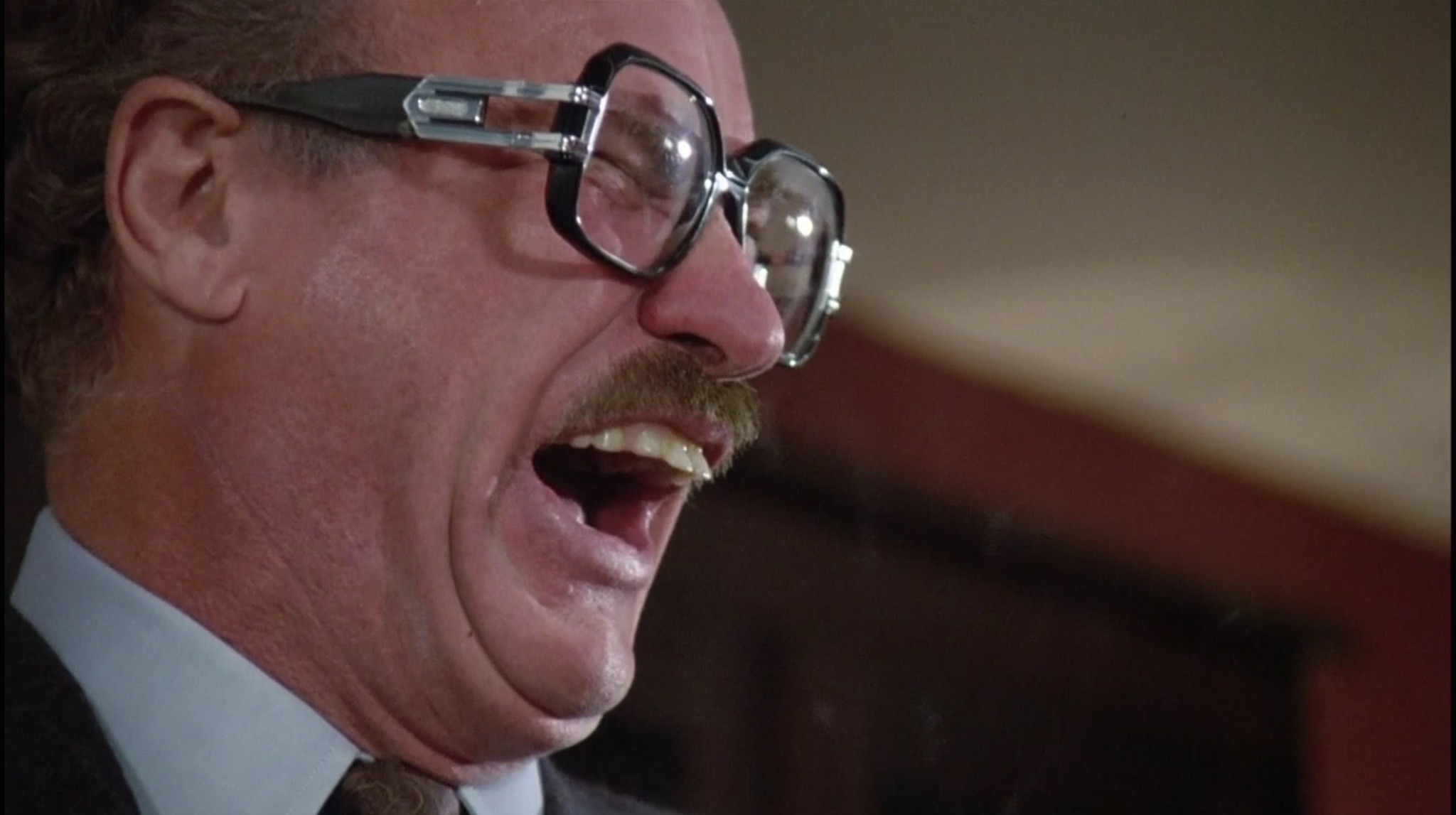
This is about a moron who came across a movie about a talking horse that had bad ratings on IMDb, then discovered it was available for streaming and thought it would be funny to watch. Oh, wait, that’s my story. The movie is about a moron whose mother dies and leaves him a talking horse. This moron named Fred P. Chaney (Bobcat Goldthwait) works at a stockbroker firm. The firm is run by Walter Sawyer (Dabney Coleman) who really needs some dental work.

Walter Sawyer (Dabney Coleman)

Walter Sawyer (Dabney Coleman)

Let’s apologize to Dabney Coleman while we are here too. Anyways, Sawyer offers to buy the talking horse whose name is Don and is voiced by John Candy. Apologies to John Candy…and horses. This movie really is a blatant ripoff of those movies from the 1950’s about a smart ass talking mule named Francis and his buddy played by Donald O’Connor. Except those are kind of funny. This is painful.

Sex Doll

That’s a blow up horse sex doll by the way. Getting ahead of myself. After acquiring Don, Chaney is introduced to Don’s family. Apparently, Don’s Mom is curious what it’s like to be facing someone while having sex with them. I say it a lot, but no joke, that happens in this movie. We return to the brokerage firm and Don calls Chaney with a hot tip. Of course it pans out and now Chaney has some dough. This is where another set of apologies needs to be issued:

1. I apologize to Little Richard that Tutti Frutti is used in the movie.
2. I apologize to The Replacements that their song Shooting Dirty Pool is in this movie.
3. I apologize to the Beastie Boys that their song (You Gotta) Fight For Your Right (To Party) is in here too. We now know that the Beastie Boys also divorced themselves from their first album because it was featured in Hot to Trot.

Oh, and Virginia Madsen is in this for some sort of love interest, but when horses are saying things like “Eat shit and die!” you can’t bring yourself to care about it. Don’t believe me that one of the horses says that? Here you go!

Bad Words

The meat of the movie basically goes like this. Chaney gets into some zany situations like hanging from the side of a building while a dove tries to do him in. Sawyer and his friend try and figure out how they can also make money using whatever secret Chaney seems to have discovered. Don has a house party with a dog, a cat, a bird, and probably some other animals. It all comes down to a horse race that Don needs to win with Chaney as the jockey. A stock deal goes south for Chaney and this is some sort of final showdown between him and Sawyer.

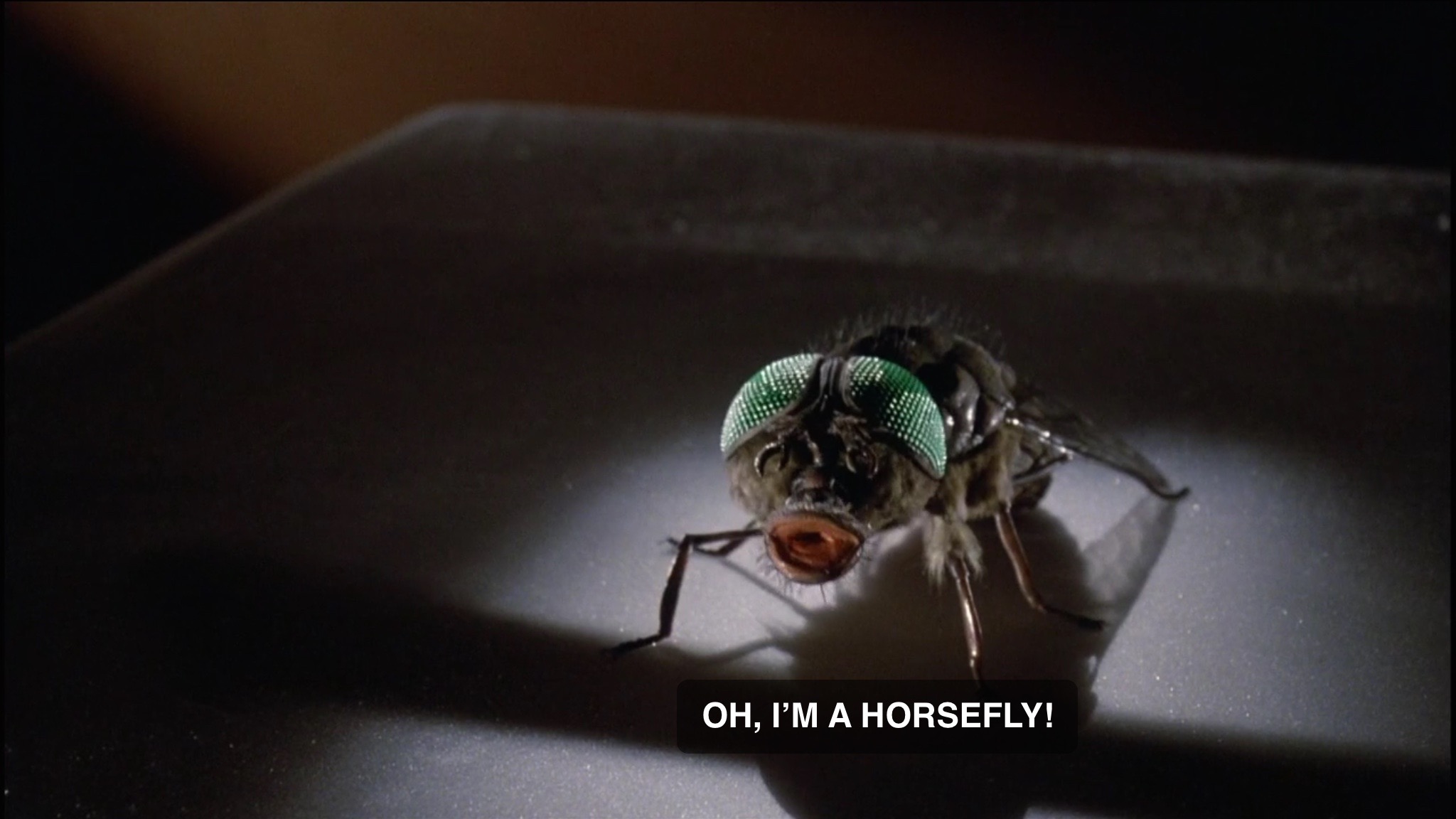
Oh, I forgot, Don’s Dad dies. Presumedly because they had already made an animatronic horsefly and needed to have some excuse to use it. Don’s Dad is reincarnated as it.

Horsefly

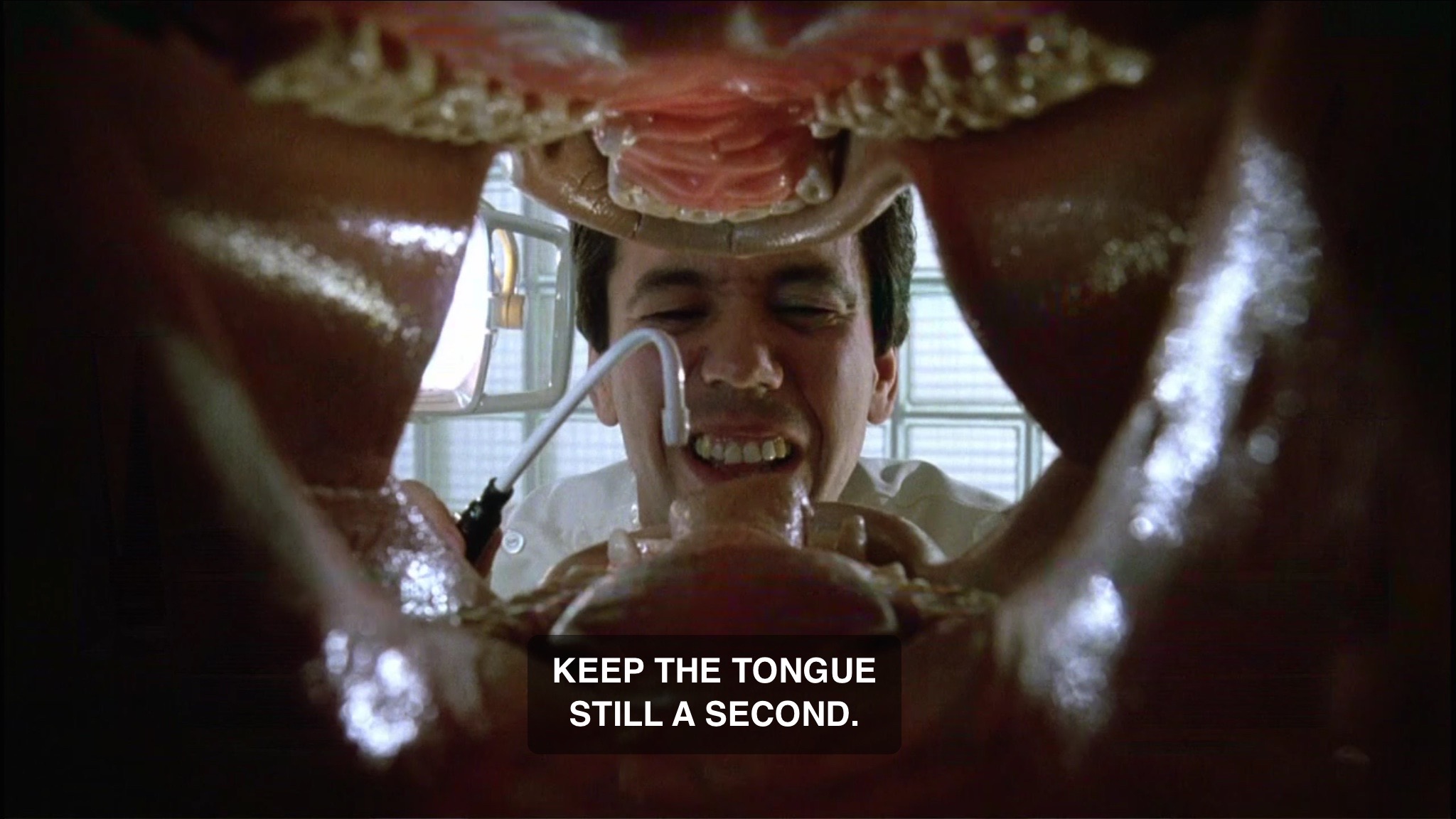
Of course Don and Chaney win the race. They do it by having Don say things to the other horses. He tells one horse that the winners are being turned into glue. He tells another one, who I guess is Spanish, that immigration is here. The jokes are so awful in this movie. And just for one final cherry on top of this dung heap, we get a short appearance by Gilbert Gottfried. Why? Because Don wants a diamond on his tooth like that bad guy in Remo Williams: The Adventure Begins (1985) and Gottfried is the dentist.

Straight From The Horses Mouth

Straight From The Horses Mouth

The one good thing about this movie is that I don’t even need to put in a final verdict sentence. The movie does it for me.

Verdict