4 Shots From 4 Films is just what it says it is, 4 shots from 4 of our favorite films. As opposed to the reviews and recaps that we usually post, 4 Shots From 4 Films is all about letting the visuals do the talking.
In memory of Udo Kier, here are…
4 Shots From 4 Udo Kier Films
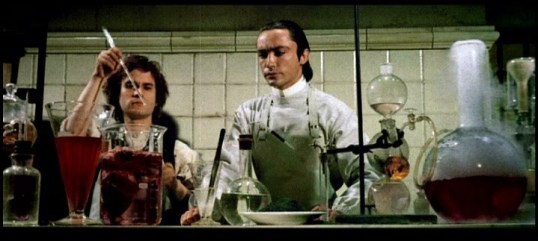
Flesh For Frankenstein (1973, dir by Paul Morrissey, DP: Luigi Kuveiller)
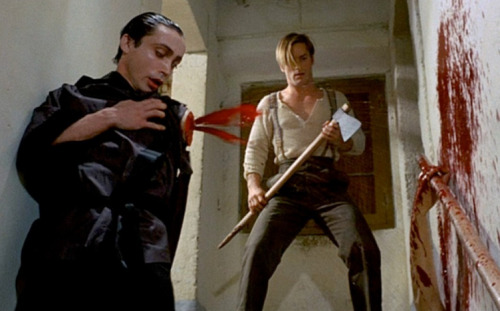
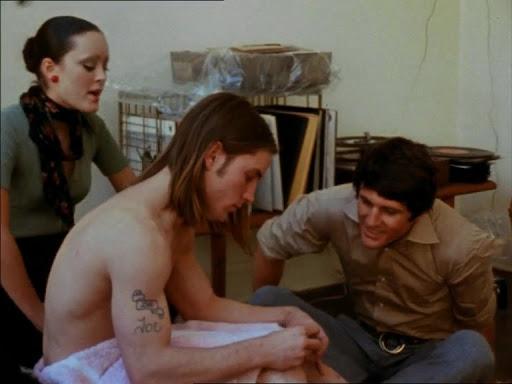
Blood For Dracula (1974, dir by Paul Morrissey, DP:Luigi Kuveiller)
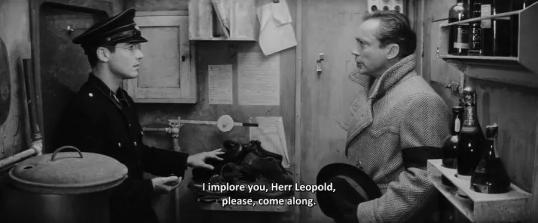
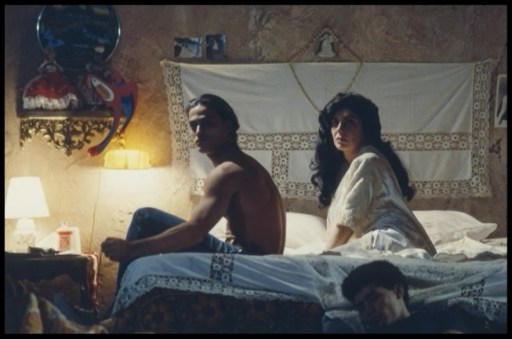
Europa (1991, directed by Lars Von Trier, DP: Henning Bendtsen, Edward Kłosiński, Jean-Paul Meurisse. Released as Zentropa in North America)
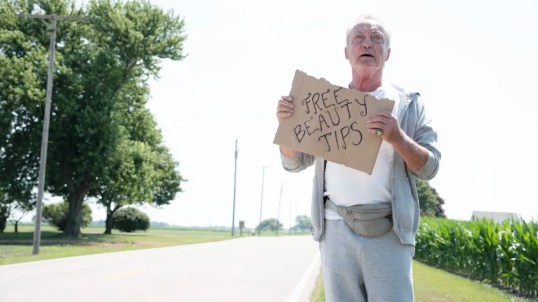
Swan Song (2021, dir by Todd Stephens, DP: Jackson Warner Lewis)
4 Shots From 4 Films is just what it says it is, 4 shots from 4 of our favorite films. As opposed to the reviews and recaps that we usually post, 4 Shots From 4 Films lets the visuals do the talking!
Today, the Shattered Lens honors Paul Morrissey, a pioneering director who passed away yesterday at the age of 84.
Though he may not have been as well known as some of his contemporaries, Paul Morrissey was one of the godfathers of independent film. He first came to notice as a collaborator of Andy Warhol’s. Morrisey’s first films were shot at the Factory and starred the members of Warhol’s entourage. At a time when the indie film scene barely even existed, Morrissey was making boldly transgressive films and distributing them largely on his own. In fact, it could probably be argued that, if not for Paul Morrissey, the American independent film scene would never have grown into the impressive artistic and financial force that it is today.
There’s always been some debate over how much influence Warhol had over Morrissey’s films. Morrissey always said that Warhol had next to nothing to do with the films, beyond occasionally taking a producer’s or a co-director’s credit. Others have disagreed. What can be said for sure is that, even after Warhol retreated from directly involving himself in the cinematic arts, Morrissey continued to make fiercely independent films.
Paul Morrissey made films about outsiders. While other directors were telling stories about the middle and upper classes, Morrissey was making movies about junkies, prostitutes, and people simply trying to make it from one day to another. His films also frequently satirized classic Hollywood genres. In fact, his two best-known films, Flesh for Frankenstein and Blood for Dracula, not only satirized the old Universal horror films but also the Marxist-themed films being made in Europe. A devout Catholic and a political conservative, Morrissey took a particular delight in tweaking the left-wing assumptions of the counterculture. Who can forget Joe Dallesandro’s gloriously shallow revolutionary in Blood for Dracula?
Here are….
4 Shots From 4 Paul Morrissey Films
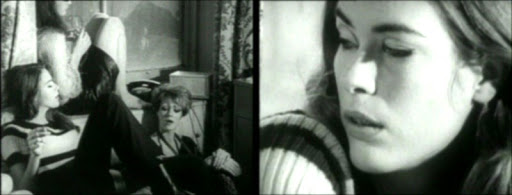
Chelsea Girls (1966, dir by Paul Morrissey and Andy Warhol)
4 Shots From 4 Films is just what it says it is, 4 shots from 4 of our favorite films. As opposed to the reviews and recaps that we usually post, 4 Shots From 4 Films lets the visuals do the talking!
Today, the Shattered Lens wishes a happy 82nd birthday to the one and only Paul Morrissey!
Though he may not be as well known as some of his contemporaries, Paul Morrissey is one of the godfathers of independent film. He first came to notice as a collaborator of Andy Warhol’s. Morrisey’s first films were shot at the Factory and starred the members of Warhol’s entourage. At a time when the indie film scene barely even existed, Morrissey was making boldly transgressive films and distributing them largely on his own. In fact, it could probably be argued that, if not for Paul Morrissey, the American independent film scene would never have grown into the impressive artistic and financial force that it is today.
There’s always been some debate over how much influence Warhol had over Morrissey’s films. Morrissey has always said that Warhol had next to nothing to do with the films, beyond occasionally taking a producer’s or a co-director’s credit. Others have disagreed. What can be said for sure is that, even after Warhol retreated from directly involving himself in the cinematic arts, Morrissey continued to make fiercely independent films.
Paul Morrissey made films about outsiders. While other directors were telling stories about the middle and upper classes, Morrissey was making movies about junkies, prostitutes, and people simply trying to make it from one day to another. His films also frequently satirized classic Hollywood genres. In fact, his two best-known films, Flesh for Frankenstein and Blood for Dracula, not only satirized the old Universal horror films but also the Marxist-themed films being made in Europe. A devout Catholic and a political conservative, Morrissey took a particular delight in tweaking the left-wing assumptions of the counterculture. Who can forget Joe Dallesandro’s gloriously shallow revolutionary in Blood for Dracula?
Here are….
4 Shots From 4 Paul Morrissey Films
Chelsea Girls (1966, dir by Paul Morrissey and Andy Warhol)
Count Dracula (played by Udo Kier) has a problem. In order to stay strong and healthy, he needs a constant supply of virgin blood. (Or, as Kier puts in, “weergen blood.”) Unfortunately, he lives in 1920s Romania and apparently, there just aren’t many virgins left in Eastern Europe.
However, Dracula’s assistant, Anton (Arno Juerging) has a solution. Dracula just needs to move to Italy! After all, Italy is the home of the Vatican and it’s just been taken over by Mussolini and the fascists. Surely, no one in Italy is having sex! Dracula should be able to find all the virgins that he needs in Italy!
So, Dracula climbs into his coffin and Anton drives him to Italy. Once they arrive, they meet an Italian land owner, Il Marchese di Fiore (played by Italian neorealist director Vittorio De Sica). The Marchese is convinced that Dracula is a wealthy nobleman and he says that Dracula can marry any of his four daughters. He assures Dracula that they’re all virgins but Dracula soon discovers that two of them are not. It turns out that, thanks to the estate’s Marxist handyman, Mario (Joe Dallesandro), it’s getting as difficult to find a virgin in Italy as it was in Romania!
After completing work on Flesh For Frankenstein, director Paul Morrissey and actors Udo Kier, Joe Dallesandro, and Arno Juerging immediately started work on Blood for Dracula. Though Blood for Dracula never quite matches the excesses of Flesh for Frankenstein, it still taps into the same satiric vein that provided the lifeblood that gave life to Flesh for Frankenstein. Once again, the sets and costumes are ornate. Once again, the frequently ludicrous dialogue is delivered with the straightest of faces. Once again, Udo Kier goes over-the-top as a famous monster. And, once again, Joe Dallesandro plays his role with a thick and anachronistic New York accent and he looks damn good doing it.
Ironically, one of the differences between Flesh for Frankenstein and Blood for Dracula is that there’s quite a bit less blood in the Dracula film. Then again, that’s also kind of the point. Dracula literally can’t find any blood to drink and, as a result, he’s become weak and anemic. Udo Kier is perhaps the sickliest-looking Dracula in the history of Dracula movies. By the time that he meets the Marchese’s four daughters, he’s so sick that he literally seems like he might fade away at any second. As ludicrous as the film sometimes is, you can’t help but sympathize with Dracula. All he wants is some virgin blood and the communists aren’t even willing to let him have that. Blood for Dracula is, in its own twisted way, a much more melancholy film than Flesh For Frankenstein. Or, at least it is until the finale, at which point one character gets violently dismembered but still continues to rant and rave even after losing the majority of their limbs.
When Blood for Dracula was released in 1974, it was originally called Andy Warhol’s Dracula, though Warhol had little to do with the movie beyond allowing his name to be used. As with Flesh for Frankenstein, Antonio Margheriti was credited in some prints as a co-director, largely so the film could receive financial support from the Italian government.
Sadly, there would be no Andy Warhol’s The Mummy or Andy Warhol’s Wolfman. One can only imagine what wonders Kier, Dallesandro, and Morrissey could have worked with those.

 Through the Shattered Lens