In a frontier town, land baron William P. Donavon (James A. Marcus) finds his control challenged by the arrival of a English cattleman named John W. Tunston (Wyndham Standing). Donavon orders his henchmen to gun down Tunston on the same day that Tunston was to marry the lovely Claire (Kay Johnson). Tunston’s employee, an earnest young man named Billy The Kid (Johnny Mack Brown), sets out to avenge Tunston’s murder. When Billy starts killing Donavon’s henchmen, it falls to Deputy Sheriff Pat Garrett (Wallace Beery) to arrest him. When Billy escape from jail and rides off to be with Claire, Garrett pursues him. Garrett is a friend of Billy’s and he knows that Billy’s killings were justified. But he’s also a man of the law. Will he be able to arrest or, if he has to be, even kill Billy? Or will Garrett let his friend escape?
There were two silent biopics made about Billy the Kid but neither of them are around anymore. This sound movie, directed by King Vidor, appears to the earliest surviving Billy the Kid film. It’s a loose retelling of Billy’s life and his friendship with Pat Garrett and it doesn’t bother with sticking close to the established facts but that’s to be expected. It’s an early sound film and, seen today, the action and some of the acting feels creaky. Wallace Beery was miscast as Pat Garrett but I did like Johnny Mack Brown’s performance as the callow Billy. The movie goes out of its way to justify Billy’s murders and it helps that Billy is played by the fresh-faced Brown. King Vidor shows a good eye for western landscapes, a skill that would come in handy when he directed Duel In The Sun seventeen years later.
There are better westerns but, for fans of the genre, this film is important as the earliest surviving film about one of the most iconic outlaws not named Jesse James. It’s interesting to see Brown, usually cast as the clean-cut hero, playing a killer here. The film’s ending is pure fantasy but I bet audiences loved it.
(Lisa is once again cleaning out her DVR! She recorded the 1931 film Night Nurse off of TCM on May 3rd.)
Night Nurse follows the sordid nights and quiet days of Lora Hart (Barbara Stanwyck), a high school dropout who dreams of becoming a nurse. Fortunately, she manages to get hired on as a trainee nurse at a big city hospital. Along the way, she gets a new BFF (Joan Blondell), a potential new boyfriend named Mortie (Ben Lyon), who is not only handsome and nice but a bootlegger too, and valuable life lessons on how to defend herself against smirky male doctors. Yay!
Unfortunately, even if you manage to survive the rigorous training program, the life of a night nurse is never easy. For instance, Lora gets hired to help look after the Ritchie children. The Ritchies may be rich but they’ve got so much drama going on that maybe it would be better if they were poor. The kids, for instance, are always sick and their doctor (Ralf Harolde) is apparently hooked on morphine. The mother (Charlotte Merriam) is always passed out drunk. Meanwhile, the family’s chauffeur, Nick (Clark Gable!), is a total brute who appears to have dangerous plans of his own.
Made in 1931, Night Nurse is a pre-code film, which is to say that it was made before the production code mandated what was and was not acceptable in the movies. Occasionally, among film fans like myself, there’s a tendency to assume that any pre-code film is actually going to be some sort of subversive, over-the-top masterpiece. We always think about the epic orgies that Cecil B. DeMille would slip into his silent films or maybe Douglas Fairbanks playing a constantly sniffing detective named Coke Ennyday in The Mystery of the Leaping Fish or the old stories about anonymous stagehands accidentally getting gunned down during the filming of Little Caesar or The Public Enemy. However, just as often, the pre-code label just means that a film is going to feature a few winky double entendres, a bootlegger hero, and at last one scene of the film’s heroine getting undressed. If you want to become an expert on 1930s lingerie, just spend a weekend watching pre-code films.
That’s certainly the case with Night Nurse, which only takes 7 minute to reach its first scene of nurses changing out of street clothes and into uniform. As for the bootlegger hero, that’s taken care of as soon as Mortie shows up and flashes his charming smile despite having a bullet in his hand. As played by Ben Lyon, Mortie is not exactly the most convincing gangster to ever show up in a pre-code film but no matter! He’s got charm and not every gangster can be Edward G. Robinson…
If it sound like I’m being critical of Night Nurse, I’m not. I watch Night Nurse every time that it shows up on TCM and I actually love the film. It’s a cheerfully silly melodrama, the type of innocently risqué film that could only be made during the pre-code era. Stanwyck and Blondell are a perfect team and whenever I listened to them trade sarcastic quips or watched them as they try to get away with breaking curfew, I couldn’t help but think of my own friends. Seriously, everyone should be as lucky as to have a BFF like Joan Blondell. And finally, you get Clark Gable as the bad guy. Gable is really mean and hateful in this movie and it takes a while to get used to seeing him without his mustache. To be honest, he’s not as handsome without the facial hair. But still — he’s Clark freaking Gable and, even in this early role, he had so much charisma and screen presence that it’s impossible not to watch him.
I was going to start this review by saying that Night Nurse sounded like a good title for an MCU film. However, my boyfriend informed me that apparently, there actually was a Marvel comic book called Night Nurse. Apparently, it had nothing to do with this movie. That’s a shame but hopefully, someone at Lifetime will read this review and decide to remake Night Nurse with an all Canadian cast. I’m keeping my fingers crossed on this one!
Anyway, Night Nurse shows up on TCM constantly. Keep an eye out for it!
For those following at home, Lisa is attempting to clean out her DVR by watching and reviewing 38 films by the end of today!!!!! Will she make it? Well, it depends on whether or not she can finish the review below!)
Before I talk too much about the 1934 film It Happened One Night, I want to tell a story about legs.
I’ve always been insecure about having a slightly large nose and once, when I was 17 years old, I was giving my mom a hard time about the fact that I had basically inherited it from her. I was going on and on and being fairly obnoxious about it. (Yes, believe it or not, I can occasionally be obnoxious…)
Finally, my mom held up her hand and said, “Yes, you got your nose from me but you also got my legs so stop crying!”
And you know what? I glanced down at my legs and I realized that she was right and that made me feel a lot better. Ever since then, I’ve taken a lot of pride in having a good pair of legs.
Now, you may be asking yourself what that has to do with It Happened One Night. Well, It Happened One Night is one of the ultimate “good legs” movies. That’s because It Happened One Night features the famous scene in which Claudette Colbert teaches Clark Gable the proper way to hitchhike. (If I ever take up hitchhiking, I’m planning on using the same technique.)
That’s the scene that It Happened One Night is justifiably famous for. However, It Happened One Night is more than just a film about hitchhiking.
It’s also a romance, one that features Claudette Colbert at her wackiest and Clark Gable at his sexiest. Reportedly, the sell of undershirts plummeted after Clark Gable took off his shirt and revealed that he wasn’t wearing one.
It was one of the first road movies and it was such a success that it remains influential to this very day. Any time you watch a movie that features two seemingly different characters getting to know each other on a road trip, you’re watching a movie that exists because of It Happened One Night. (And yes, that includes Tom Hardy and Charlize Theron in Mad Max: Fury Road.)
Frank Capra won his first Oscar for directing this film and It Happened One Night remains one of his most likable and least preachy films. Just compare the unpretentious, down-to-Earth style of It Happened One Night to Meet John Doe.
Perhaps most importantly, It Happened One Night was the first comedy to win the Oscar for best picture. It Happened One Night is a film that announces that a film doesn’t have to be a self-serious, pretentious epic to be great. Before the victory of It Happened One Night, the top prize was exclusively reserved for films like Cimarron and Calvalcade. (Seriously, just try watching some of those early winners today.) It Happened One Night‘s Oscar victory was a victory for the future of entertainment.
(By the way, as I sit here typing up this review, I keep accidentally typing It’s A Wonderful Life instead of It Happened One Night. That’s the power of Frank Capra.)
It Happened One Night tells the story of Pete Warne (Clark Gable). Pete is an out-of-work reporter. Though he may be down on his luck, he’s still confident and lovably cocky in that way that only Clark Gable could be. While riding on a bus from Florida to New York, Pete recognizes one of his fellow passengers as Ellie Andrews (Claudette Colbert), an heiress who has recently eloped with a buffoonish big game hunter named King Westley (Jameson Thomas). Ellie’s father wants to get the marriage annulled and has people all over the country searching for his daughter. Pete agrees not to call Ellie’s father if Ellie will agree to give him an exclusive story when she meets up with Westley in New York.
For the rest of the film, we follow Pete and Ellie as they cross the United States, spending awkward nights in motel rooms, getting kicked off of buses, and hitchhiking. Ellie gives lessons on how to get a car to stop. Pete delivers a long monologue on the proper way to undress before going to bed. Along the way, Pete and Ellie fall in love. It also becomes obvious that Ellie’s father is right about Westley only marrying her for her money.
They also meet a large cast of increasingly eccentric characters. Whether they’re dealing with the passengers on the bus or the cranky people staying at a rest stop or a motorist who won’t stop singing, Pete and Ellie do noy meet anyone who doesn’t have at least one odd quirk. Like many classic screwball comedies, It Happened One Night takes place in a world where everyone — from a bus driver to a desk clerk to a group of women waiting to use a shower at a rest stop — has something to say about everything. Some of the film’s funniest moments come from watching the normally smooth Pete have to deal with the increasingly crazy world in which he’s found himself.
(For her part, Ellie is at her happiest when things are at their strangest. Ellie’s the best.)
The other great moments come from simply watching Gable and Colbert interact. They have an amazing chemistry and it comes through in their performances. It’d odd to read that apparently neither Gable nor Colbert were happy to be cast in It Happened One Night because their performances are so much fun to watch. A love story only works if you love the characters and the love story in It Happened One Night definitely works.
As I stated above, It Happened One Night was the first comedy to win Best Picture. Beyond that, it was also the first movie to win all of the top 5 Oscars: Picture, Director, Actor, Actress, and Adapted Screenplay. (Those were also the only 5 nominations that It Happened One Night received.) For once, the Academy got it right. It Happened One Night remains a delightful film.
(Oh my God, y’all, I did it! That’s 38 films reviewed in 10 days and my DVR now has space to record all sorts of things! And making it all the better is that I finished this project by reviewing a truly wonderful comedy like It Happened One Night!)
Reportedly, Ernest Hemingway hated the 1932 film adaptation of his great novel, A Farewell To Arms. The novel, of course, tells the story of ambulance driver Frederic Henry (played in the film by Gary Cooper), his service in World War I, and his doomed love affair with an English nurse named Catherine (played by the very American Helen Hayes). The novel was acclaimed for being tough and unsentimental. The film is the exact opposite, revealing itself to be more typical of the work of director Frank Borzage than Ernest Hemingway.
How romantic was Borzage’s adaptation of A Farewell to Arms? It was so romantic that it even changed the novel’s famous ending. The novel ended with Catherine dying and Frederic Henry walking away, alone and in the rain. The film, however, ended with Catherine miraculously recovering. Never mind, of course, that having Catherine survive pretty much defeated the entire purpose of the story. What was important was to give American audiences a happy ending!
However, European audiences got a more downbeat ending. In the European version, Catherine does die. After she dies, Frederic picks up her body and looks up into heaven, which is certainly far more dramatic (and, in its way, sentimentally spiritual) than anything to be found in Hemingway’s novel. If, like me, you see A Farewell To Arms on TCM, you’ll see the European ending.
So, yes, I can understand why Hemingway would have hated this film. But I have to admit that I rather enjoyed it. The film adaptation makes for terrible Hemingway but it’s great Borzage. Borzage specialized in making grand, lyrical, and sweeping romantic melodramas and that’s what his version of A Farewell To Arms truly is. Helen Hayes may not be convincingly English and Gary Cooper may be a bit overly earnest for a Hemingway hero but they both look good together and they have great chemistry. (Plus, Adolphe Menjou gives a good supporting performance as Frederic’s best friend.) As a director, Borzage keeps the story moving at a steady pace and plays up the romance in every single scene. There’s a great sequence that’s filmed entirely from the wounded Frederic’s point-of-view as he’s brought into a hospital and looked over by a series of officious nurses. We see everything through Frederic’s eyes until Catherine finally enters the room and kisses him. Only then do we see Frederic and Catherine together, leaving us with no doubt that these two belong together. A Farewell To Arms may not be a great literary adaptation but it is a great cinematic romance.
A Farewell To Arms was nominated for best picture but it won to a largely forgotten film called Cavalcade.
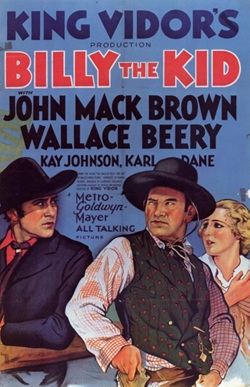 In a frontier town, land baron William P. Donavon (James A. Marcus) finds his control challenged by the arrival of a English cattleman named John W. Tunston (Wyndham Standing). Donavon orders his henchmen to gun down Tunston on the same day that Tunston was to marry the lovely Claire (Kay Johnson). Tunston’s employee, an earnest young man named Billy The Kid (Johnny Mack Brown), sets out to avenge Tunston’s murder. When Billy starts killing Donavon’s henchmen, it falls to Deputy Sheriff Pat Garrett (Wallace Beery) to arrest him. When Billy escape from jail and rides off to be with Claire, Garrett pursues him. Garrett is a friend of Billy’s and he knows that Billy’s killings were justified. But he’s also a man of the law. Will he be able to arrest or, if he has to be, even kill Billy? Or will Garrett let his friend escape?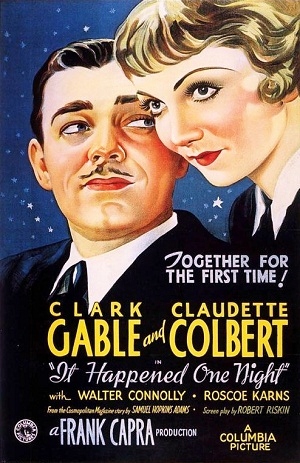

 Through the Shattered Lens