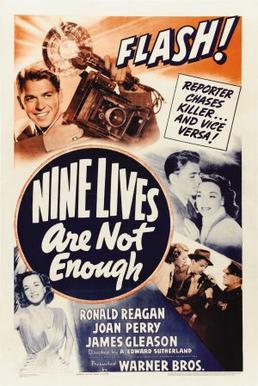
 Matt Sawyer (Ronald Reagan) is a junior reporter whose enthusiasm for breaking the big news is always getting him in trouble. Sometimes, he runs with a story before getting all of his facts straight and the newspaper gets sued. If not for his enthusiasm and his affability, Matt would have been fired a long time ago. Instead of losing his job, Matt just finds himself demoted to riding in a squad car with Sgt. Daniels (James Gleason) and the slow-witted Officer Slattery (Edward Brophy). Matt still manages to find a story when he and the cops discover a dead man in a flophouse.
The man turns out to have been a millionaire. The coroner rules his death a suicide but Matt is convinced that it was murder. How could the man have shot himself if he died with his hands in his pockets? Over the objections of the police and his editors, Matt investigates the man’s death. Helping him out is the man’s daughter, Jane Abbott (Joan Perry).
Nine Lives Are Not Enough is one the many B-pictures that Ronald Regan made for Warner Bros. It’s only 63 minutes long and, despite the murder mystery, the emphasis is more on comedy than drama. For all of his reputation for being a stiff actor, Reagan proves himself to be surprisingly adroit when it comes to exchanging snappy dialogue with his editor. This film showcases the innate likability that made Reagan a success as both an actor and a politician. What he lacks in range, he makes up for in sheer affability. Watching Reagan in movies like this, it is easy to see the limitations that kept him from being a major star while also revealing why he later had so much success asking people to vote for him.
Considering how the press felt and still feels about Ronald Reagan, it’s entertaining to see him cast as a reporter who has a reputation for getting the story wrong. When it’s really important, though, Matt Sawyer gets it right.

 Through the Shattered Lens