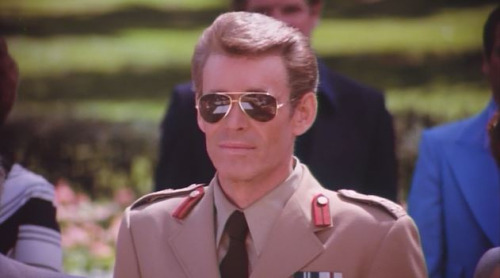
The Martian Chronicles: Episode 3: The Martians (1980, directed by Michael Anderson)


Episode 2 of The Martian Chronicles ended with Sam Parkhill (Darren McGavin) helplessly watching as Earth was consumed by nuclear fire.  Episode 3 opens with Col. John Wilder (Rock Hudson) returning to Earth in 2006 and discovered that the entire planet is dead.  He had hoped to find his brother and rescue him but instead, all Wilder finds is a video of his brother being vaporized by an atomic blast.

Back on Mars, the planet is nearly deserted.  Most of the human colonizers were ordered to return to Earth before the war broke out and, as a result, they died in the atomic inferno.  Only a few humans remain on Mars.  One of them, Ben Driscoll (Christopher Connelly), is excited to discover another survivor named Genevieve (Bernadette Peters) but he abandons her when he discovers that she’s too high-maintenance for him.  He decides he’d rather live alone.  (Too mean-spirited to really be funny, this was the weakest short story in Rad Bradbury’s collection and it’s also the weakest segment of the miniseries.)  Wilder and Father Stone (Roddy McDowall) visit another survivor, a scientist named Peter Hathaway (Barry Morse).  Peter lives with his devoted wife and daughter but when he dies of heart attack, they barely notice because they’re robots.

The first hour of the final episode of The Martian Chronicles is considerably weaker than the two episodes that proceeded it.  After the effective scenes of Wilder exploring Earth, the series is suddenly taken over by Christopher Connelly, playing a character that we’ve never seen before and who isn’t very likable.  The Ben and Genevieve sequence is weak and never that funny, despite Peters’s skill with comedy.  The sequence with Dr. Hathaway and the robots feels like a dry run for something Ray Bradbury would have written for The Twilight Zone.

Fortunately, the final segment of The Martian Chronicles swoops in to save the series.  Col. Wilder and his family spend the day camping at the same ancient Martian city where, during the first episode, Spender tried to convince Wilder not to allow Mars to be colonized.  While walking around the ruins of the city, Wilder meets what is either the ghost or the future projection of a Martian.  They have a friendly and philosophical conversation.  They talk about how The Martian doesn’t know if he’s from the past or if he’s from the future but it doesn’t matter.  Returning to his family, Wilder looks at their reflection in Briggs Canal and he say that, with Earth gone, they are now the Martians.  With Earth in ruins and only a few humans left, it’s up to the survivors to combine the ways of Earth with the ways of Mars and create a new world.  Though Hudson is usually held up as being the epitome of a stuff actor, when he made The Martian Chronicles, he had the right amount of gravitas to make the final scenes work.

The Martian Chronicles is an uneven miniseries.  The first episode is so good that the two that follow struggle to keep up.  But just, as in Bradbury’s book, the ending is perfectly realized and it still work, ever after all these years later.

You Say You Want A Revolution: Power Play (1978, directed by Martyn Burke)


PowerPlay1978

When I was 16, I would spend every weekend down at a small, used video store that was a few blocks away from my house.  One afternoon, I was looking for a video to rent when I came across a battered VHS box.  On the front of the box, Peter O’Toole smoked a cigar and sat on top of a tank.  The back cover described the film as being about revolution and promised exciting action.  A critic was quoted as saying that the movie was “an intelligent political thriller!”  Because I was obsessed with politics, that caught my attention.  I rented the movie, took it home, and watched it twice.

The name of the movie was Power Play.

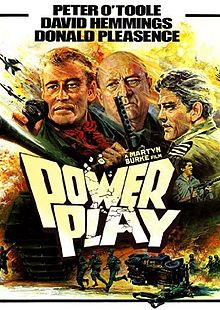
In an unnamed Eastern European country, a corrupt and despotic dictator rules with an iron hand.  Dissidents are regularly arrested and executed.  Corrupt government officials live in luxury while the rest of the country is trapped in poverty.  After a friend’s daughter is tortured and murdered by the secret police, Colonel Narriman (David Hemmings) teams up with Dr. Rosseau (Barry Morse) to plot a coup.  In order to the overthrow the government, the conspirators have to hide their plans from Blair (Donald Pleasence), the sadistic head of the secret police, and convince Colonel Zeller (Peter O’Toole) to join them and bring his tanks over to their side.

power

Power Play may be forgotten today but it made a big impression on me when I first watched it.  Power Play not only showed what it was like to live in a totalitarian society but also attempted to realistically portray what it would take to overthrow a dictatorship.  Power Play spends as much time on the plotting of the revolution as it does on the revolution itself, with special attention given to Rousseau’s attempts to secure international support for the coup.  David Hemmings is great in the main role and Donald Pleasence is Himmleresque as Blair.  Even Peter O’Toole’s infamous 1970s hamminess seems appropriate for the character of Col. Zeller.  Power Play is a must see for aspiring revolutionaries every where.

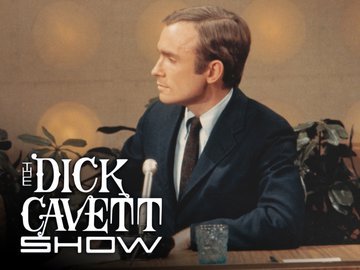
Incidentally, Power Play opens with one of the conspirators being interviewed by Dick Cavett, meaning that Power Play can be added to Annie Hall and A Nightmare On Elm Street 3: Dream Warriors on the list of films in which Dick Cavett has played himself.

the-dick-cavett-show

Shattered Politics #45: The Changeling (dir by Peter Medak)


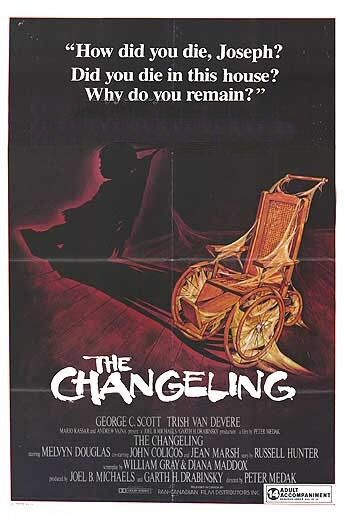
Changeling_ver1If you love horror movies, you have to track down and see The Changeling.

First released in 1980, The Changeling stars George C. Scott as John Russell, a composer.  At the start of the film, he watches helplessly as both his wife and his daughter are killed in a horrific auto accident.  The grieving John leaves his New York home and relocates to Seattle, Washington.  With the help of a sympathetic realtor, Claire Norman (Trish Van Devere), John finds and rents a previously abandoned Victorian mansion.

At first, it seems that John is alone with his grief.  But, as you can probably guess, it quickly becomes apparent that John isn’t alone in his house.  Windows shatter.  Doors slam.  And, most dramatically, every night a mysterious banging sound echoes through the house.  Slowly, John comes to suspect that his house might be haunted…

And, of course, it is!  It’s no spoiler to tell you that because the film is admirably straight forward about being a ghost story.  And what a clever ghost story it is.  I don’t want to give too much away so I’ll just say that the story behind the ghost involves a powerful family, an age-old scandal, and a powerful U.S. Senator (played, with a mixture of poignant sadness and menace, by Melvyn Douglas).

The Changeling is a very well-done and effective ghost story.  For the most part, director Peter Medak emphasizes atmosphere over easy shocks, the end result being a film that maintains a steady feeling of dread and sticks with you long after the final credit rolls up the screen.  George C. Scott is well-cast as John Russell, capturing both the character’s grief and his curiosity.  (There’s actually a very interesting subtext to the film, in that investigating death actually gives John a reason to live.)  At the time the film was made, he was married to Trish Van Devere and the two of them have a very likable chemistry.  And, as previously stated, Melvyn Douglas makes for a great quasi-villain.

(It’s interesting to compare Douglas’s intimidating work here with the far more sympathetic performances that he gave, around the same time, in Being There and The Seduction of Joe Tynan.)

My favorite scene in The Changeling comes when John and Claire hold a séance in order to try to discover what the ghost wants.  The séance team is made up one woman who asks questions, one woman who channels the spirit and writes down his answers, and one man who reads the answers after they’re written.  It’s a wonderfully effective scene, dominated by the eerie sounds of questions being asked, answers being scribbled, and then being shakily read aloud.  It’s probably one of the best cinematic séances that I’ve ever seen.

The Changeling is a wonderful mix of political intrigue and paranormal horror. It was also the first film ever to win a Genie award for Best Canadian Film, which just goes to prove the 90% of all good things come from Canada.