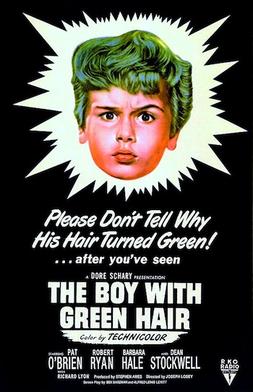
The TSL’s Horror Grindhouse: The Giant Spider Invasion (dir by Bill Rebane)


Welcome to rural Wisconsin, where everyone’s running around in their underwear and getting attacked by giant spiders!

That’s not meant to be a dig at the 1975 film, The Giant Spider Invasion, either.  I mean, let’s be honest.  If you’re going to be running around the trailer park in your underwear, the last thing that you want to do is walk straight into a giant spider web.  That happens a few times in The Giant Spider Invasion and I cringed every time because …. AGCK!  I mean, it’s a scary thought and The Giant Spider Invasion understands that.  Years ago, I was riding a horse and I rode head first into a spider web and oh my God!  I lost track of how many hours I spent washing my hair afterwards.  Of course, fortunately, I wasn’t in my underwear when I rode into that spider web.  So, it wasn’t as bad as it could have been.

Anyway, The Giant Spider Invasion opens with a meteorite crashing down to Earth.  As I previously mentioned, it lands in Wisconsin.  I can’t help but think that the alien spiders were a bit disappointed when they emerged out of their meteorite and discovered that they were in Wisconsin.  One would imagine that they were probably aiming for Washington D.C. and maybe they got off track.  Still, it works to the spiders’ advantage in that they’ve managed to land in a place so filthy and messy that no one is going to notice a few extra tarantulas crawling around.  Or, at least, they don’t notice until the tarantulas are gigantic and wandering through the fields.

(Go ask Alice …. when she’s ten feet tall…..)

We follow as various people deal with the giant spider invasion.  What we quickly discover is that, in 1975, America just wasn’t ready to make contact with alien spiders.  While Dr. Langer (Barbara Hale) and Dr. Vance (Steven Brodie) investigate the meteorite crash, the rest of the town is too busy with their own personal dramas to be of much help.  The Sheriff (Alan Hale, Jr.) is a buffoon who tries to coordinate a response from the safety of his office.  Dan (Robert Easton) and Ev (Leslie Parrish) obsess on whether or not the meteorites contain diamonds as well as spiders.  Dan has an affair with barmaid Helga (Christine Schmidtmer) while Ev’s younger sister, Terry (Dianne Lee Hart) dates Dave (Kevin Brodie), the son of the local newspaper editor.  Every 15 minutes or so, a crazed-looking preacher pops up and starts ranting about how the world’s going to end because of the sins of people like Dan, Eve, and Helga and, to be honest, the preacher seems to be the only person in town who understands just how much trouble they’re all in.

It’s all kind of silly but, because this is a Bill Rebane film, it all plays out with a certain unbridled enthusiasm that’s impossible to resist.  Rebane was never one to let a low-budget get in the way of his ambitions and the special effects in The Giant Spider Invasion may be cheap but they still have a charm all their own.  I mean, let’s face it.  Spiders are scary and any scene that features a giant one sneaking up on someone is going to be at least somewhat effective.  (I’ll even go on to say that a shot of a “giant” spider super-imposed over a field was actually rather effective and creepy.)  Add to that, The Giant Spider Invasion has only an 84-mintue running time so it doesn’t waste any time getting to the spiders.  This is a fun movie and a perfect one to watch in October.
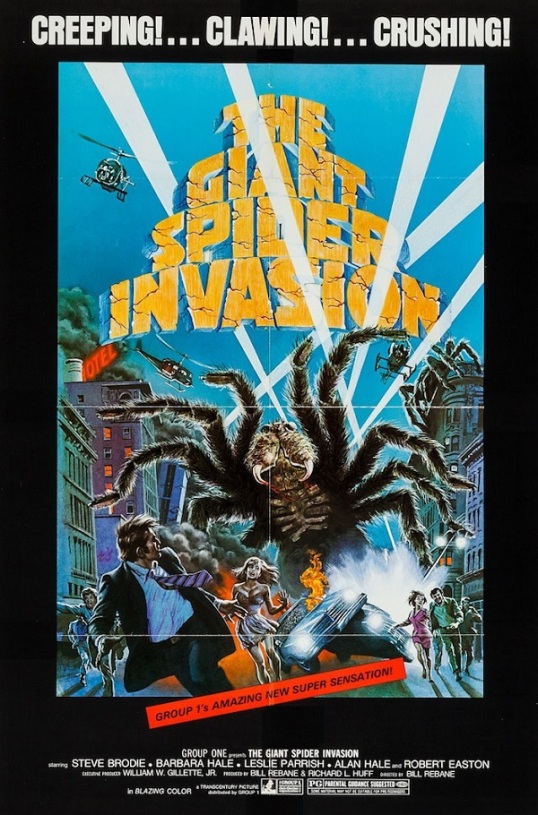
Film Review: The Boy With Green Hair (dir by Joseph Losey)


Who is Peter Fry (played by a 12 year-old Dean Stockwell), the young boy at the center of the 1948 film, The Boy With Green Hair?

When we first meet him, Peter is a nearly mute child who has had all of his hair shaved off and who refuses to talk about either one of his parents.  He’s mysteriously shown up in a small town and it’s only after a kindly psychologist (played by Robert Ryan) speaks with him that we discover that Peter is an orphan.  Both of his parents are dead, victims of the Second World War.  Fortunately, a retired actor named Gramps (Pat O’Brien) is willing to adopt Peter and raise him as his own.  Gramps has all sorts of stories about the times that he performed in Europe.  The film hints that Gramps might be a damn liar but he’s well-meaning, nonetheless.

Peter starts to attend school and slowly, but surely, he comes out of his shell.  Soon, he appears to be just another carefree child and his hair even grows back.  But then, one day, he sees a poster featuring other war orphans, children like him who have lost their families to war.  When Peter overhears adults talking about how the world may go to war again and how there are now even bigger and more destructive bombs that can be dropped on America’s enemies, Peter start to get upset.  What’s the point of going to school and preparing for the future if there’s not going to be any future?

One night, Peter goes to sleep.  When he wakes up in the morning, he discovers that his hair has turned green!

Why has Peter’s hair turned green?  It’s hard to say but the town is remarkably unsympathetic.  It’s perhaps understandable that Peter’s classmates would make fun of him because they’re children and children are the worst about not being able to handle change.  But not even the adults seem to be able to handle Peter having green hair!  They want to shave his head again!

With even kindly old Gramps prepared to take away Peter’s green hair, Peter flees into the woods.  There’s where he runs into the spirits of all the children who have either died or been orphaned by war.  They have a message for Peter….

The Boy With Green Hair is both an antiwar parable and a plea for tolerance.  There’s not a subtle moment to be found in the entire film but, considering that it was made at a time when the world was still in ruins and people were still getting used to living in the shadow of the atomic bomb, it’s perhaps understandable that the film would be a bit heavy-handed.  It was, after all, made during a heavy-handed time.  That said, the film actually works better as a parable about racism than as a pacifist statement.  It’s kind of hard to see how Peter having green hair could convince people to pursue world peace but the way that Peter is ostracized for being different from everyone else is something to which many viewers could undoubtedly relate.

There’s some weird padding in the film.  For instance, there’s a weird musical number involving Gramps that comes out of nowhere.  Still, one can see why the film made an impression on some viewers.  Dean Stockwell gives a sympathetic and, most importantly, naturalistic performance as Peter and the film’s message is a sincere one.  One could easily imagine and also easily dread the prospect of this film being remade with Peter’s hair turning green over climate change.  I’m a little surprised that hasn’t happened yet, especially considering the amount of coverage that was once given to Greta Thunberg, whose pronouncements and fame have made her a somewhat angrier version of the boy with green hair.  Hopefully, a remake won’t ever happen, as the original film works just fine as it is.  Not everything has to be remade.

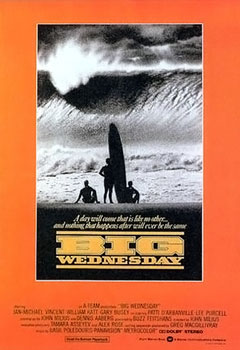
A Movie A Day #165: Big Wednesday (1978, directed by John Milius)


If there is a male bonding hall of fame, Big Wednesday has to be front and center.
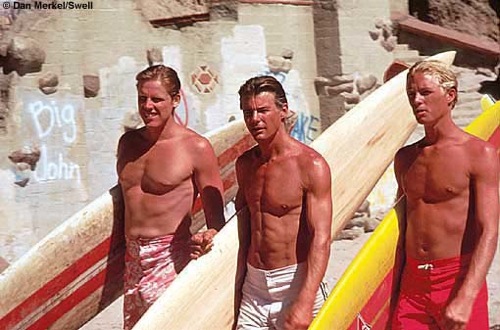
This episodic movie follows three legendary surfers over twelve years of change and turmoil.  Jack Barlowe (William Katt) is the straight arrow who keeps the peace.  Leroy “The Masochist” Smith (Gary Busey) is the wild man.  Matt Johnson (Jan-Michael Vincent) is the best surfer of them all but he resents both his fame and the expectation that he should be some sort of role model for the younger kids on the beach.  From 1962 until 1974, the three of them learn about love and responsibility while dealing with cultural turmoil (including, of course, the Vietnam War) and waiting for that one legendary wave.

After writing the screenplays for Dirty Harry and Apocalypse Now and directing The Wind and The Lion and Dillinger, John Milius finally got to make his dream project.  Big Wednesday was based on Milius’s own youth as a California surfer and he has said that all three of the main characters were based on different aspects of his own personality.  Expectations for Big Wednesday were so high that Milius’s friends, George Lucas and Steven Spielberg, exchanged percentages points for Star Wars and Close Encounters of  The Third Kind for a point of Big Wednesday.  The deal turned out to be worth millions to Milius but nothing to Lucas and Spielberg because Big Wednesday was a notorious box office flop.  Warner Bros. sold the film as a raunchy comedy, leaving audiences surprised to discover that Big Wednesday was actually, in Milius’s words, a “coming-of-age story with Arthurian overtones.”

I can understand why Big Wednesday may not be for everyone but it is one of my favorite movies.  It is one of the ultimate guy films.  Some of the dialogue and the narration may be overwrought but so are most guys, especially when they’re the same age as the surfers in Big Wednesday.  We all like to imagine that we are heroes in some sort of epic adventure.  The surfing footage is amazing but it is not necessary to be a surfer to relate to the film’s coming-of-age story or its celebration of the enduring bonds of friendship.  Katt, Vincent, and Busey all give great performances.  Considering their later careers, it is good that Big Wednesday is around to remind us of what Gary Busey and Jan-Michael Vincent were capable of at their best, before their promising careers were derailed by drugs and mental illness.  Be sure to also keep an eye out for infamous 70s character actor Joe Spinell as an army psychiatrist, a pre-Nightmare on Elm Street Robert Englund, playing a fellow surfer and providing the film’s narration, and Barbara Hale, playing the patient mother of her real-life son, William Katt.

One final note: At a time when the shameful stereotype of the psycho Vietnam vet was becoming popular and unfairly tarnishing the reputation of real-life vets, Big Wednesday was unique for featuring a character who not only joins the Army but who appears to return as a better person as a result.