10 Shots From 10 Horror Films: 1973 and 1974


The Texas Chainsaw Massacre (1974, dir by Tobe Hooper, DP: Daniel Pearl)

4 Or More Shots From 4 Or More Films is just what it says it is, 4 shots from 4 of our favorite films. As opposed to the reviews and recaps that we usually post, 4 Shots From 4 Films lets the visuals do the talking!

This October, I’m going to be doing something a little bit different with my contribution to 4 (or more) Shots From 4 (or more) Films.  I’m going to be taking a little chronological tour of the history of horror cinema, moving from decade to decade.

Today, we take a look at two very important years: 1973 and 1974!

10 Shots From 10 Horror Films: 1973 and 1974
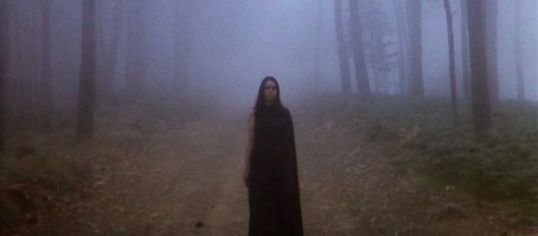
Female Vampire (1973, dir by Jess Franco, DP: Jess Franco)
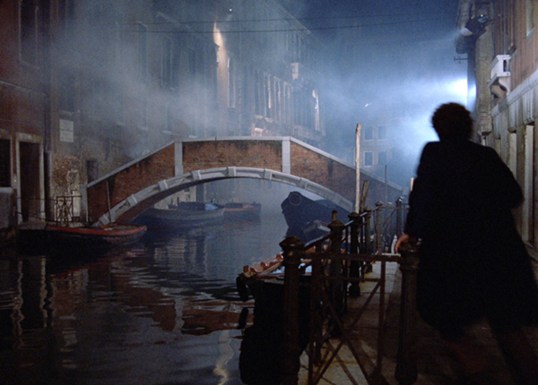
Don’t Look Now (1973, dir by Nicolas Roeg, DP: Anthony Richmond)
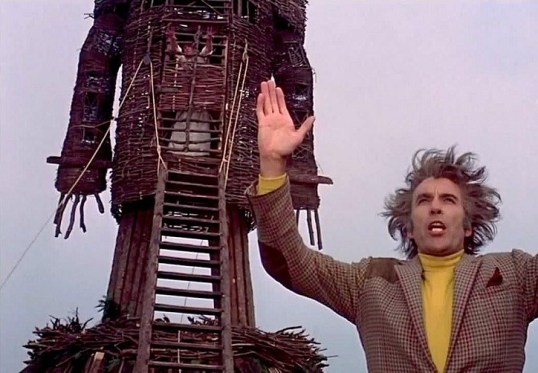
The Wicker Man (1973, dir by Robin Hardy. DP: Harry Waxman)

Lisa and the Devil (1973, dir by Mario Bava, DP: Cecilio Paniagua)
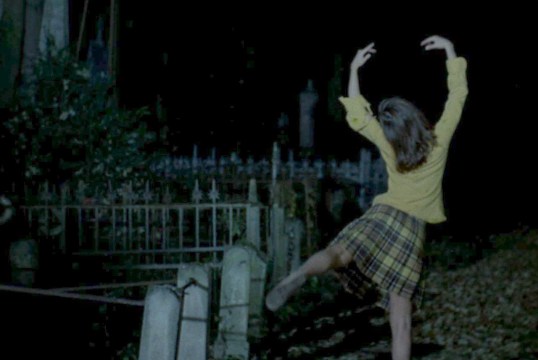
The Iron Rose (1973, dir by Jean Rollin)
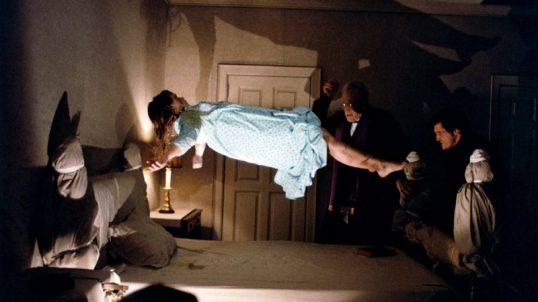
The Exorcist (1973, dir by William Friedkin, DP: Owen Roizman)

Black Christmas (1974, dir by Bob Clark, DP: Reginald H. Morris)

Deathdream (1974, dir by Bob Clark, DP: Jack McGowan)
The Ghost Galleon (1974, dir by Armando de Ossorio, DP: Raul Artigut)

The Texas Chainsaw Massacre (dir by Tobe Hooper, DP: Daniel Pearl)

6 Trailers On The Way To A 1,000


Hi.  Good morning.  I’m sitting here in my beloved Pirates shirt with my hair a big mess and an aggressive kitty trying to dig his claws into my thigh as a sign of affection as I try to complete this thing known as “waking up” but I’m still a happy girl and I’ll tell you why. 

First off, we’re only six posts away from hitting that magical 1,000th post.  And, once we hit a thousand, Arleigh is going to give us all a 50% raise on our current Shattered Lens salary.  Yay!  I know I can really use the money as I’m getting ready to go back to school and get my master’s.

Secondly, I’m happy because it’s Saturday!  And that means it’s time for 6 more of Lisa Marie’s Favorite Grindhouse and Exploitation Trailers.

1) The 10th Victim (1965)

This trailer is for the Italian satire/sci-fi film The 10th Victim.  As this trailer makes clear, the film’s American distributor wasn’t quite sure how to sell this particular film.

2) Chained Heat (1983)

By contrast, the distributors of Chained Heat appear to have known exactly who would be sitting in their audience.  Chained Heat has a reputation for being one of the sleaziest of the Women in Prison films and that’s saying something.  I actually saw this playing on cable once though I was kinda *ahem* tied up at the time and as such, didn’t pay too much attention to it. 

3) Penitentiary (1979)

Continuing on a prison theme, here’s the trailer for Penitentiary.  This film was made by Jaama Fanaka, the director of Welcome Home, Brother Charles.

4) Delinquent Schoolgirls (1973)

Yeah, I haven’t actually seen this film but I’m going to guess that the trailer is probably more exploitive than the actual film.  This is a classic example of the exploitation tease.  Also, this is yet another example of a ’70s trailer that makes me go, “Ewwwwww!” at the sight of a dumpy man running around in his  man panties.  I mean, seriously — ewwwww, 1970s, ewwww!

5) Manhattan Baby (1982)

The title makes it sound like a second-rate Broadway musical but actually, Manhattan Baby was (along with the far better remember New York Ripper) Lucio Fulci’s follow-up to the brilliant Beyond trilogy.  I’ve sat through this film a few times and I’m still not sure why it’s called Manhattan Baby.  Maybe Fulci was trying to start a trilogy of New York-themed horror films.  Maybe The House By The Bronx was meant to be next…

6) Return of the Evil Dead (1972)

This is the sequel to Armando De Ossorio’s Tombs of the Blind Dead and, arguably, the best of the Blind Dead films.

The Daily Grindhouse: Tomb of the Blind Dead (dir. by Amando de Ossorio)


TombsoftheBlindDeadIt is once again time for another offering of The Daily Grindhouse. This time around our latest grindhouse flick comes straight from Spain. I speak of the classic zombie flick, Tombs of the Blind Dead.

The film was shot and filmed wholly in Spain in 1971 by one of Spain’s foremost horror directors, Armando de Ossorio. His film became part of what he became famous for in the horror circles and that is his Blind Dead Tetralogy. This first film in the series I still consider the best of the bunch. While it helped bring about the renaissance of the European zombie cinema craze of the 1970’s this film by Ossorio takes on a different tack from its more gross-out and gore-laden Italian cousins.

Ossorio’s film was all about supernatural and less about zombie apocalypse. His zombies were the ressurected Templars (evil in the way the film portrays them) whose eyes were plucked out by birds during their executions by way of the gallows. The film described them as demon-worshipping knights who performed Satanic rituals to gain power and immortality (propaganda pushed by the French king of the 13th Century and the Catholic Church in Rome to paint the knightly order in a bad light). These zombie knights never did get a full explanation why they rose from their tombs during the film, but for films such as these the scant explanations were always part of their charms. One either bought into the premise in the first 10 minutes or they didn’t. I, for one, bought into it hook, line and sinker the moment the first zombie knight rose.

The film was gory but not in the flesh-eating variety most zombie flicks tended to be. Tombs of the Blind Dead in its international version also showed a lot of sexuality in some of the scenes with nudity part of the norm. The film also was quite good in establishing dread and horror by the use of a creep atmosphere not just from the dark Spanish countryside but from the way the zombies hunted. Being blind they hunted by the sound of the living victims’ breathing and heartbeat. This premise led to some very tense moments as those trying to escape the zombie knights would try to stay silent as the zombies approached their hiding places.

It’s a shame that Ossorio never got the budget to truly pull of what he envisioned with this film and the rest of the tetralogy, but for having as low-budget that he had to make them he definitely created some of the higher-quality grindhouse flicks of the 1970’s.