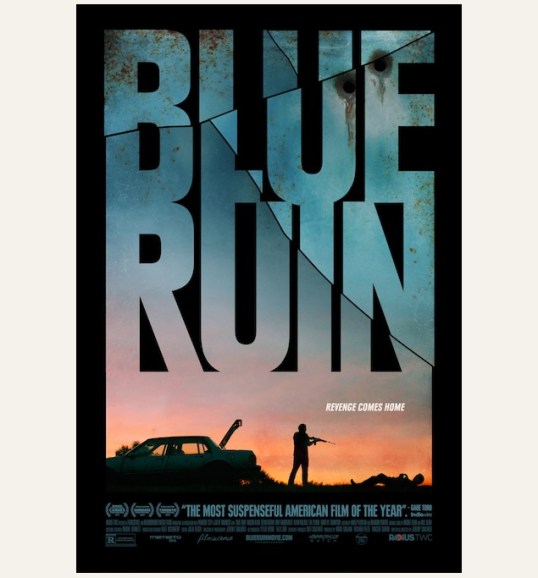
Well, all good things must come to an end and here it is. This is the final entry in a little series that I like to call Embracing the Melodrama. For the past two weeks, I’ve been reviewing, in chronological order, 60 of the most and least memorable melodramas ever filmed. We’ve looked at everything from films that were nominated for (and occasionally won) Oscars to films that played in a few grindhouses and drive-ins before disappearing into obscurity. We’ve reviewed big budget spectaculars and movies that were apparently filmed for less money than I typically spend during a weekend shopping spree. I hope that you’ve enjoyed reading these reviews as much as I’ve enjoyed writing them. If I’ve introduced you to a film you previously did not know or if I’ve inspired you to track down and watch an old classic, then I’ve accomplished what I set out to do and I’m happy. We started this series by looking at a film from 1916 and now, we end it with a movie that was released into theaters just a few months ago.
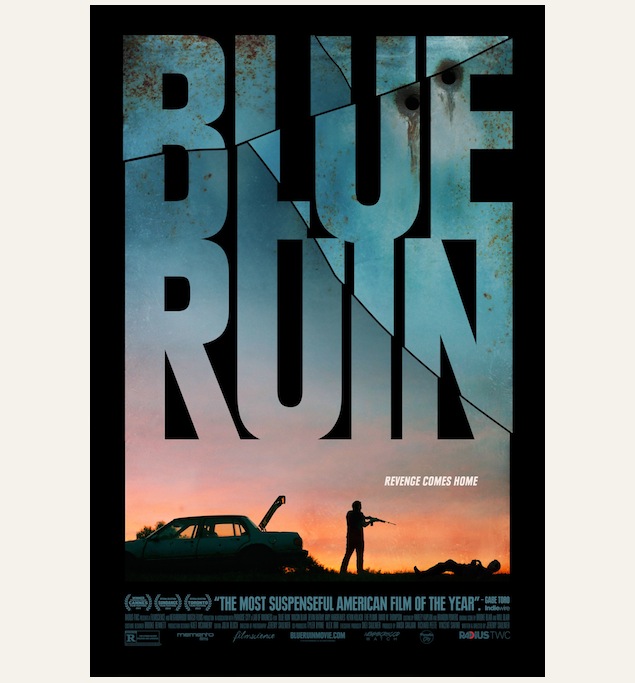
That film is Blue Ruin and, if you haven’t seen it yet, you really should.
Now, I want to be careful just how much I tell you about Blue Ruin‘s story because, much like the thematically similar Cold In July, Blue Ruin may start out like a standard thriller but it soon moves in unexpected and surprising directions. It’s not so much that the film’s plot is unpredictable (in fact, one of the film’s strengths is that the story told is essentially a simple one) as much as it’s the fact that the film adds an element of ambiguity to that plot that forces you to reconsider all of your preconceived notions. Blue Ruin is a revenge film for people who like to think.
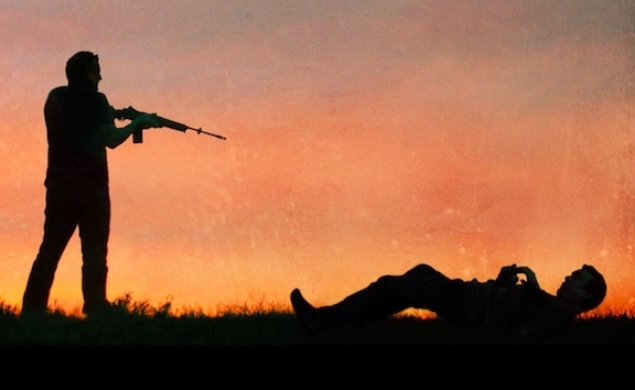
Blue Ruin opens with the bearded and clearly unstable Dwight (Macon Blair) going through trash cans and dumpsters in search of food. Dwight lives in his filthy car and it quickly becomes obvious that, despite Dwight’s disheveled appearance, he’s not really much of a threat to anyone. Instead, he simply wants to be left alone. However, one day, Dwight is approached by a friendly police officer who tells him that a man named Wade Cleland has been replaced from prison. The suddenly motivated Dwight responds by driving his car to the prison and watching as Wade is released. Dwight than manages to get a knife (after first trying to steal a gun and failing so completely that you can’t help but feel sorry for him) and goes to the small country bar where Wade and his family are celebrating his freedom. Dwight manages to get into the club and, after a brutal fight, fatally stabs Wade in the temple.
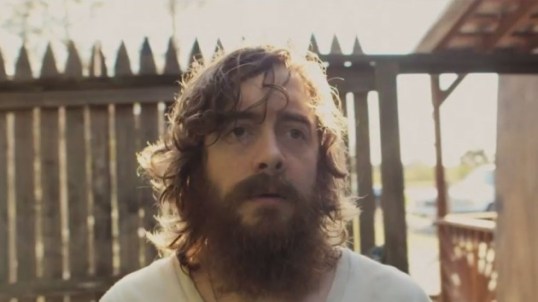
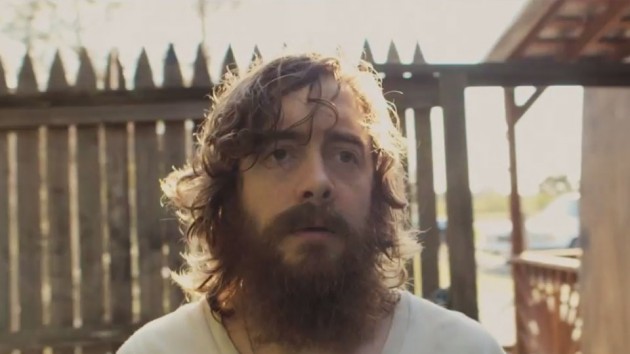
Macon Blair in Blue Ruin
The rest of the film deals with both the reasons behind and the consequences of Dwight’s actions and it would not be right for me to spoil the film any more than I already have. Let’s just say that neither Dwight nor the Clelands turn out to be quite who we believed them to be. The crimes of the past aren’t quite as clear-cut as either Dwight or the Clelands initially assumed. All that is clear is that now that Dwight has taken his revenge, the Clelands now feel the need to take their own revenge. It’s an endless cycle that’s made all the more complicated by the fact that neither Dwight nor the Clelands are as good at this whole revenge thing as they think.
Chances are that you’ve never heard of Macon Blair. I hadn’t heard of him until I saw him in this movie. But, obscure or not, that doesn’t change the fact that, in the role of Dwight, Macon Blair gives one of the best performances of the year so far. He turns Dwight into a sort of mentally unstable everyman and, as a result, Dwight is a truly memorable and unexpectedly poignant lead character.
It’s interesting that 2014 has seen the release of several films that feature unlikely and morally ambiguous protagonists dealing with violence, revenge, and secrets in the South. Blue Ruin joins Cold In July and Joe as one of the best films of 2014. And it also provides a high note for which to close out Embracing the Melodrama.
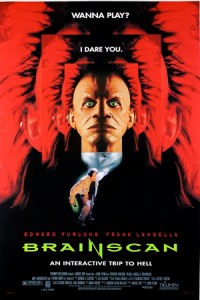 Michael Bower (Edward Furlong) is a 15 year-old loser who walks with a limp and still has nightmares about the night his mother was killed in a car wreck. Brainscan is the new PC game that Michael makes the mistake of playing. In the game, Michael is encouraged by The Trickster (T. Ryder Smith) to kill both his friends and complete strangers. When Michael starts finding body parts around his house, he realizes that whenever he kills someone in the game, he kills them in real life too.

 Through the Shattered Lens