Welcome to Late Night Retro Television Reviews, a feature where we review some of our favorite and least favorite shows of the past! On Mondays, I will be reviewing CHiPs, which ran on NBC from 1977 to 1983. The entire show is currently streaming on Prime!
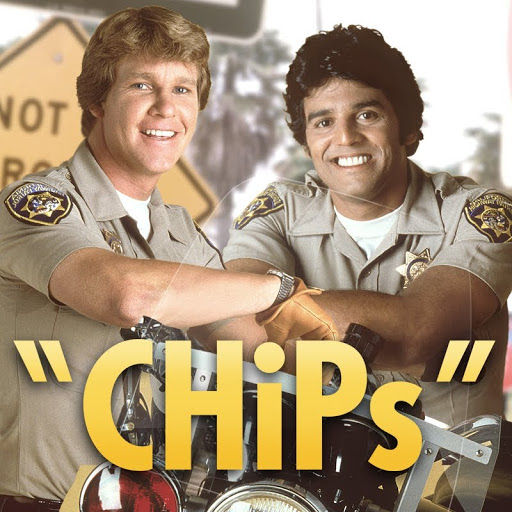
Who will be Jon’s partner this week? Read on to find out.
Episode 5.8 “Diamond in the Rough”
(Dir by Leslie H. Martinson, originally aired on November 22nd, 1981)
Erik Estrada is not in this episode which means that a pre-transition Caitlyn Jenner is back as Officer Steve McLeish. Yay! Jenner is just as off-putting and unconvincing as the last time that he appeared on this show. Unfortunately, it appears that the show’s producers picked up on the fact that he wasn’t a particularly good (or even appealing) actor and, as a result, neither Jon nor Steve do much in this episode. It’s almost as if the show’s producer didn’t realize that Jenner’s inability to show emotion or deliver his lines without smiling like a goofball was the most entertaining thing about the episodes without Estrada.
Instead, the episode is split between a veteran thief (Henry Jones) plotting his next robbery and an angry kid named Pat (Nicky Katt, in one of his first roles) who stays with the Getraers while his mother is recovering after a car accident. As the car accident was caused by the thief’s car, Pat is in a position where he can identify the thief. But first, Pat has to stop getting angry at everyone.
This episode didn’t add up too much. The whole thing felt a bit half-baked and one gets the feeling that the script was hastily thrown together so that it wouldn’t require Estrada (who was recovering from a stunt-gone-wrong at the time) while, at the same time, it also wouldn’t require Jenner to do much more other than stand around and direct traffic. Robert Pine gets to do a bit more than usual, which is good because he was the best actor on the show. But still, on the whole, this just didn’t feel like a proper episode of CHiPs.
One final note: Nicky Katt was really good as Pat. Most child actors tend to go overboard and come across as being cutesy. Katt, on the other hand, seemed to be sincerely angry in the role of Pat. Your heart really broke for him. Even as a child actor, Katt was a smart and intuitive actor. He is definitely missed.
 Through the Shattered Lens