Billy The Kid and the Green Baize Vampire (1987, directed by Alan Clarke)


This is the story of two rival snooker players and their grudge match.

Billy The Kid (Phil Daniels) is an up-and-coming snooker player.  Cocky and cockney, Billy is arrogant but he is also beloved by the working class.  His manager, The One (Bruce Payne), has fallen into debt to a loan shark known as The Wednesday Man (Don Henderson).  The Wednesday Man agrees to release The One if he can convince Billy The Kid to play a 17-frame snooker match against Maxwell Randall (Alun Armstrong).

Maxwell Randall is the reigning world champion snooker player.  Supported by the upper class, Randall has been playing snooker for centuries.  He’s known as the Green Baize Vampire, both because of his resemblance to Bela Lugosi and also because he actually is a vampire, complete with fangs, a casket that doubles as a snooker table, and a London mansion that looks like a castle.

With the help of an unscrupulous tabloid reporter (Louise Gold), The One generates a generational and class rivalry between Billy The Kid and the Green Baize Vampire.  The two agree to meet in a snooker match, with the requirement that the loser of the match never play another game of snooker.

Billy The Kid and the Green Baize Vampire is many things.  It’s a satire of sports films and the British class system and it is certainly no coincidence that the upper class is represented by a vampire.  It’s also a musical, with the cast performing Brechtian songs about how snooker is life.  Unintentionally, it’s a tribute to the ability of the British to get caught up in some of the most boring sports even invented.  At first, it seems like the last thing that you would expect to be directed by Alan Clarke, though the film does feature his usual political subtext and a few of his trademark tracking shots.

The film is memorably strange and it features strong performances from Phil Daniels, Alun Armstrong, and Bruce Payne but, at times, it can be a chore to sit through.  If you’re not already a fan of snooker, this film won’t change your mind.  (However, if you are a fan of snooker, you’ll probably enjoy the match between Billy and Maxwell.)  For me, the main problem was the songs, none of which are really good enough to justify their inclusion in a film that already felt too self-indulgent even without being a musical.  I can understand why this film has a cult following but it didn’t really work for me.

A Gary Oldman Scene That I Love: The Hotel Scene From The Firm


The Firm (1989, directed by Alan Clarke)

Since today is Gary Oldman’s birthday, I decided to share a scene that I love from The Firm.

Directed by Alan Clarke, this 1989 film was originally made for the BBC and it stars Oldman as Bex Bissell.  During the week, Bex sells real estate.  During the weekend, he’s a football hooligan and the leader of his own firm.  Though The Firm is not as well-known in the States as some of his other films, I think that Gary Oldman’s performance here might very well be the best of his career.

In this scene, Bex and his firm meet with two other firms in a London hotel.  They’re arguing about who is going to be the “top boy” during the upcoming international football tournament in Holland.  Mostly, they’re just trying to out-intimidate and one-up each other.  Oldman controls the scene through pure attitude.

We leave you with the ICC motto — “we come in peace, we leave you in pieces.”

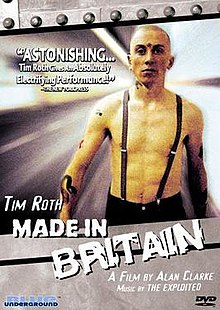
Made in Britain (1982, directed by Alan Clarke)


If you want to see a truly great performance, watch Tim Roth in Alan Clarke’s Made In Britain.

Roth, who was 21 years old at the time, plays Trevor, a working class British teenager who is also a racist skinhead, one who has a swastika on his forehead.  Trevor is sometimes clever, occasionally quick-witted, always angry, and often remarkably ignorant.  He’s smart enough to know that he doesn’t have much of a future but he’s still too immature to accept that he’s largely to blame.  Instead, Trevor blames the immigrants who he claims have invaded Britain and taken away all of the opportunities that should otherwise go to him.

After Trevor gets arrested for both shoplifting and for throwing a rock at a Pakistani, Trevor is taken to an assessment centre, where he’ll be expected to regularly check-in until his punishment is handed down.  Despite facing the prospect of being sent to a borstal (which, for our American readers, is essentially a reformer school), Trevor continues to defiantly commit crimes.  He steals a car.  He vandalizes a job centre.  He huffs inhalants and even pays another taunting visit to the Pakastani man.  Accompanying Trevor on some of his journeys is Errol (Terry Richards), his roommate at the assessment centre.  (It may seem strange, especially to viewers in the States, that the white supremacist Trevor would befriend the black Errol but, like many British skinheads in the 80s, Trevor focuses the majority of his hate on immigrants.)

It’s easy to dislike Trevor and Trevor often seems to go out of his way to alienate everyone who he meets.  Trevor is angry about the lot that he’s been given in life.  His parents are nowhere to be seen.  He has no prospects.  He has no future.  He spends all day surrounded by poverty and he resents the immigrants who have somehow found success in Britain while he’s struggling to get by.  Trevor has nothing to look forward to in the future and he’s pissed off about it, which has left him vulnerable to the poisonous philosophy of racism.  Trevor is always angry and he’s always looking for way to act on that anger.  He’s also intelligent enough to secretly realize, even if he won’t fully admit to himself, that he’s full of shit but he’s trapped himself in his role.  One gets the feeling that Trevor had the potential to make something out of himself but his rage and his impulsive manner have, at only the age of 16, left him with no futre.  Even if he eventually rejects racism, the swastika on his forehead is going to leave him branded for life.  It’s only towards the end of the film, after a police officer explains — in painstaking details — just hopeless Trevor’s situation is, that Trevor allows his mask to slip a little.  But Trevor only allows himself to appear defeated for a few minutes before his defiant smirk returns.

Tim Roth was only 21 years old when he made his acting debut in the role of Trevor and he gives a brilliant performance.  If you didn’t know who Tim Roth was, you would be excused for thinking that director Alan Clarke had gone out and cast an actual skinhead in the role.  Roth tears into the role with a frightening intensity.  Also of note is the gritty cinematography of Chris Menges, who uses a Steadicam to follow Trevor as he walks through his daily routine and to capture why someone like Trevor feels as if there’s no future to being made in Britain.

4 Shots From 4 Film: Special Gary Oldman Edition


4 Shots From 4 Films is just what it says it is, 4 shots from 4 of our favorite films. As opposed to the reviews and recaps that we usually post, 4 Shots From 4 Films lets the visuals do the talking!

Today is the 62nd birthday of one of the best actors currently working, Gary Oldman!  In honor of both this day and also Gary Oldman’s amazing versatility as a performer, here are…

4 Shots From 4 Films

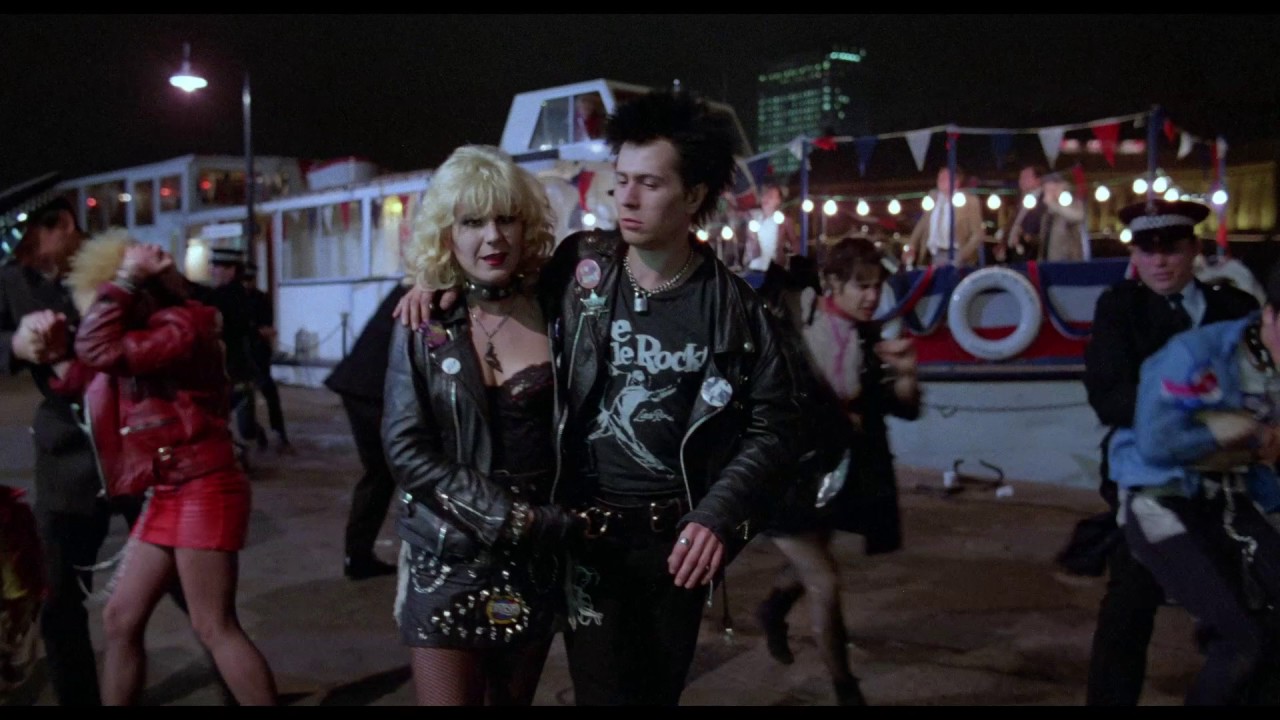
Sid & Nancy (1986, directed by Alex Cox)

The Firm (1989, directed by Alan Clarke)

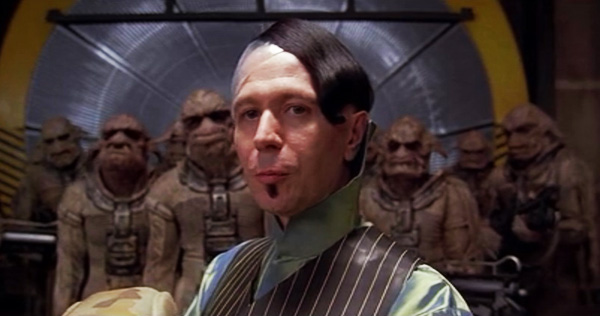
The Fifth Element (1997, directed by Luc Besson)

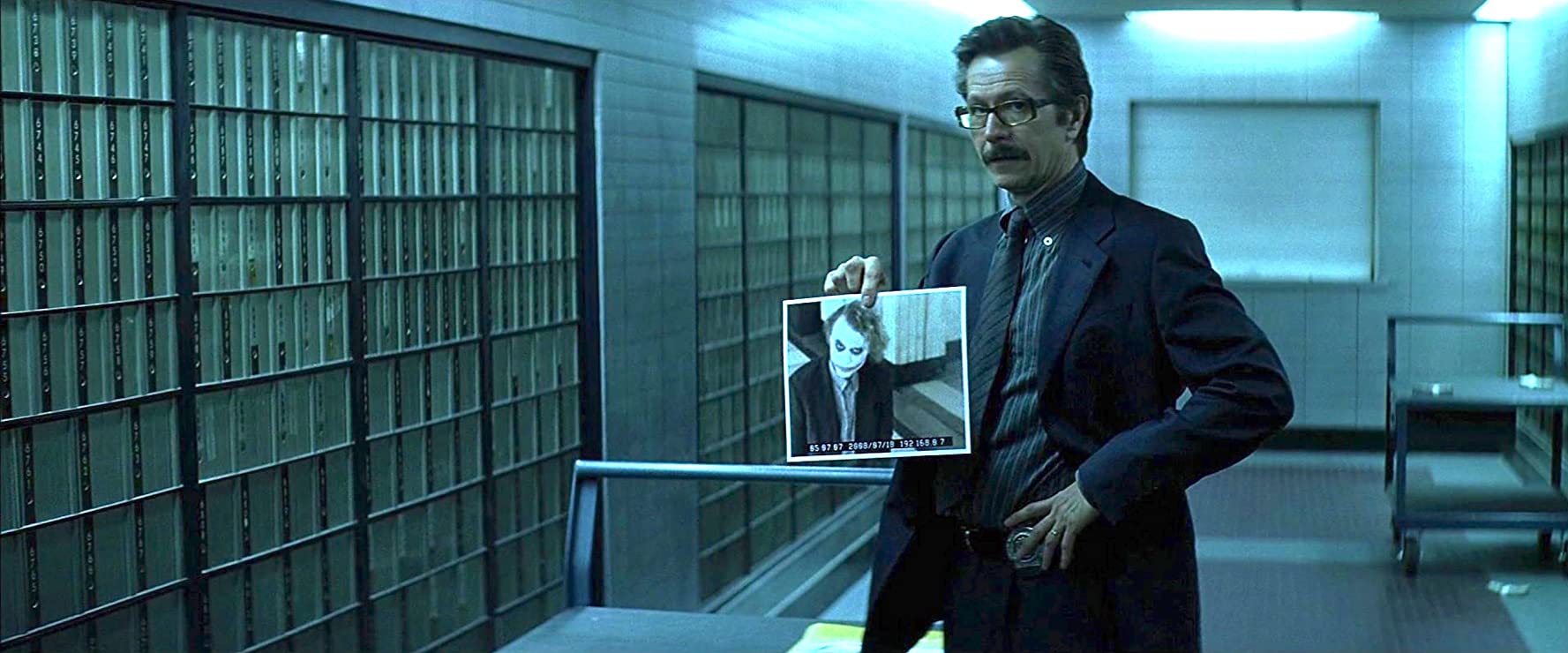
The Dark Knight (2008, directed by Christopher Nolan)

A Movie A Day #3: The Firm (1989, directed by Alan Clarke)


the-firm1The Firm, which should not be confused with the John Grisham novel or the Tom Cruise film adaptation, was a 70-minute film about football hooliganism that was made for the BBC’s Screen Two in 1989.  In the United States, it has never really been understood just how big a problem football hooliganism was in the United Kingdom in the 1980s.   That’s because, despite the best efforts of ESPN, most Americans don’t care about soccer.  In America, “soccer riot” sounds like the punchline of a bad joke.  But in Europe, it was a very real problem.  If you want to understand why some people call football hooliganism “the English Disease,” The Firm is the film to see.

Clive “Bex” Bissell (Gary Oldman) has a nice home, a well-paying job as an estate agent, a loving wife (played by Lesley Manville, who actually was married to Oldman at the time), a newborn son, and a large circle of friends.  He’s also the head of the Inner City Crew, a violent group of football hooligans (known as a firm) who follow West Ham United across Britain and pick fights with other firms.  (Bex is actually a second-generation football hooligan and his father is constantly complaining that the new generation isn’t tough or violent enough.)  Bex does it for the buzz.  As another member of the ICC puts it, after listening to a fatuous television commentator going on about how football hooligans are actually searching for some sort of larger meaning in their lives,  “Why doesn’t he just say that we like hitting people?”  With the 1988 European Championships coming up, Bex wants to unite all the regional firms into one national organization, with himself in charge.  To do that, he’ll have to defeat two rival firm leaders, Oboe (Andrew Wilde) and Yeti (Phil Davis).

For a film about people about who are willing to kill over association football, very little soccer is actually seen in The Firm.  The ICC plays a game, which is interrupted by Yeti driving across the field.  Later, Yeti and his lieutenants walk through a stadium, looking for a fight and ignoring the match being played in front of them.  Bex’s childhood bedroom is covered with newspaper clippings about West Ham United but Bex is more interested in the buzz than in football.

The Firm is full of classic scenes, from Bex initiating the newest member of the ICC to the disturbing moment that Bex’s son gets a hold of his knife to the final bar brawl.   For me, my favorite scene is when the three rival firms hold a meeting in a posh hotel room:

Along with featuring one of Gary Oldman’s best performances, The Firm was also the last film to be directed by the great Alan Clarke.  Making good use of the steadicam walking shots that he was famous for and taking an unflinching approach to the story’s violence, Clarke not only directed the definitive film about football hooliganism but also provided a portrait of life in the final years of Margaret Thatcher’s Britain.

For tomorrow’s movie a day, we stay in Britain as Anthony Perkins fights terrorists in The Glory Boys.

the-firm