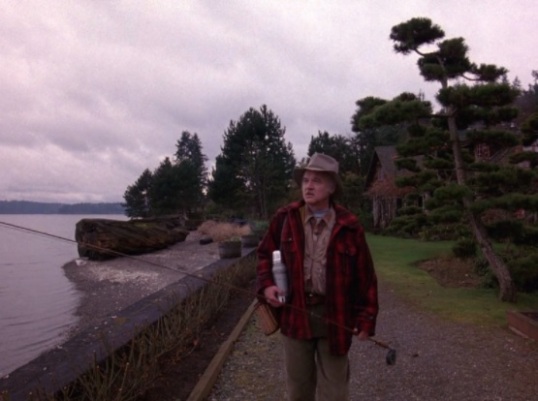
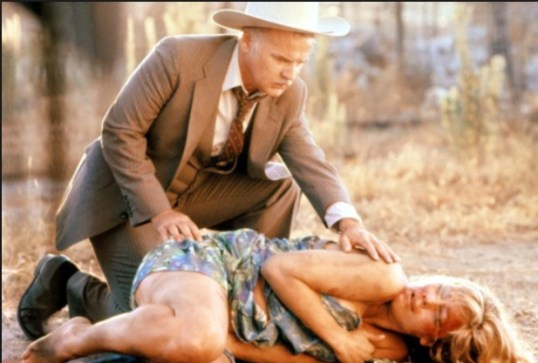
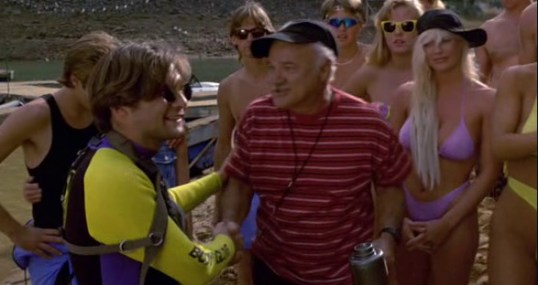
Today would have been the 82nd birthday of Jack Nance, the talented but troubled actor who was a favorite of David Lynch’s and who died under mysterious circumstances in 1996. Born in Massachusetts but raised in Texas, Nance first won acclaim as a star of the stage show, Tom Paine. The director of Tom Paine later received a fellowship to the American Film Institute where he met a young director named David Lynch and recommended that Lynch cast Nance as the lead character in his film, Eraserhead. Lynch and Nance were kindred spirits, two all-American eccentrics with their own unique view of the world. Lynch went to use Nance in almost every film that he made up until Nance’s death. Nance would also appear in small roles in films from other directors, usually cast as quirky and obsessive characters. Outside of his role in Eraserhead, Nance is probably best known for playing Pete Martell on Twin Peaks. Pete’s discovery of Laura Palmer’s body launched the entire saga.
Twin Peaks 1.1 — The Pilot (dir by David Lynch)
In honor of Jack’s talent and legacy, here is today’s song of the day!
This is apparently not the official video for The Waitress’s Christmas Wrapping. Instead, it’s a video that someone else put together using other clips of the band. I haven’t been able to find an official version so there might not be one. Or, at the very least, if there is one, it does not appear to be on YouTube. (If I’m wrong, let me know.)
Anyway, I like the song and tis the season. Interestingly enough, it’s often missed that the song is more about the chaos of the season than the joy of it.
Murray books Bret and Jermaine for a concert at “Central Park,” but he insists that they tour first to prepare for it. Bret continually causes havoc that Murray blames on Jermaine. In the end, it turns out that the concert is at a central park not The Central Park. Jeff and I watched that classic episode on Wednesday. It made me cry a little.
Frasier (Prime)
Jeff and I watched three episodes of the original 90s version of Frasier on Tuesday. The first episode featured Frasier getting into a war of words with a columnist who wrote a column about why hated Frasier’s radio show. It almost led to an actual physical fight before the police intervened on the behest of Martin Crane. (John Mahoney was a treasure!)
The second episode was “The Candidate,” in which Frasier endorses Phil Patterson for Congress, just to discover that Phil Patterson is convinced that he was abducted by aliens and taken into outer space. The scene where a stunned Frasier attempted to record a commercial for Patteson (“the sane choice”) made me laugh so much that I almost fell off the couch.
Finally, we ended with a Christmas episode! Frasier wants to get his young son a Christmas gift that will make him think. Martin argues that Frasier should get him a gift that he’ll have fun with. Frasier and Niles have to go to a mall. The closing scene, with Martin revealing that he had purchased the gift that Frasier’s son actually wanted, made me cry.
What a great cast this show had! Watching these three episodes, I was reminded why the revival didn’t work. As good as a job as Kelsey Grammer did in the revival, no one wants to think of Frasier moving back to Boston and no longer having anything to do with his family in Seattle.
The Office (Peacock)
On Tuesday, Jeff and I watched several classic episodes of The Office. We started with season 2’s Christmas Party. Then, we watched Season 4’s Did I Stutter, followed by Season 6’s Scott’s Tots, and we followed it all up with Season 3’s The Convict and A Benihana Christmas. I know I’ve been pretty critical of the direction that The Office eventually ended up going. But the first three seasons were about as good as any sitcom that has ever aired and seasons 4-6, while uneven overall, still produced some classic episodes. I will always enjoy the Christmas episodes, no matter how much that annoying actress from A Benihana Christmas whines about it.
Saved By The Bell: The Next Class (Prime)
Saved By The Bell: The Next Class continues to be my preferred background noise for when I’m struggling to get some sleep.
Seinfeld (Netflix)
On Tuesday, Jeff and I watched two Christmas episodes of this classic 90s sitcom. We started with the episode where Elain was dating a communist and Kramer got fired from his department store Santa job because he was spreading propaganda. Meanwhile, Jerry’s high school rival resurfaced and demanded a rematch on a race that Jerry won after getting a head start. I loved this episode! Everything from Jerry and George pretending to randomly run into each other at the coffee shop to the race at the end to the little kid yelling, “Hey, this guy’s a commie!”
We followed that episode with the Festivus episode. I love the scene where Jerry Stiller (as George’s father) casually talks about seeing someone else grab the doll that he was planning to buy for his dolls. “As I rained blows upon him, I realized there had to be a better way!” Also, I totally would have wanted to be Submarine Captain too. Free sub? Give me my ticket!
The Philadelphia Film Critics Circle have named One Battle After Another as the best film of 2025. I guess it makes sense. When you live in Philadelphia, life is one battle after another.
Best Film Winner: ONE BATTLE AFTER ANOTHER Runner-Up: SINNERS
Best Director Winner: Paul Thomas Anderson – ONE BATTLE AFTER ANOTHER Runner-Up: Ryan Coogler – SINNERS
Best Actress Winner: Jessie Buckley – HAMNET Runner-Up: Rose Byrne – IF I HAD LEGS I’D KICK YOU
Best Actor Winner: Michael B. Jordan – SINNERS Runner-Up: Ethan Hawke – BLUE MOON
Best Supporting Actress Winner: Teyana Taylor – ONE BATTLE AFTER ANOTHER Runner-Up: Wunmi Mosaku – SINNERS
Best Supporting Actor Winner: Benicio del Toro – ONE BATTLE AFTER ANOTHER Runner-Up: Delroy Lindo – SINNERS
Best Screenplay Winner: SINNERS Runner-Up: ONE BATTLE AFTER ANOTHER
Best Score/Soundtrack Winner: SINNERS Runner-Up: ONE BATTLE AFTER ANOTHER
Best Directorial Debut Winner: Charlie Polinger – THE PLAGUE Runner-Up: Eva Victor – SORRY, BABY
Best Breakthrough Performance Winner: Chase Infiniti – ONE BATTLE AFTER ANOTHER Runner-Up: Miles Caton – SINNERS
Best Cinematography Winner: SINNERS Runner-Up: ONE BATTLE AFTER ANOTHER
Best Documentary Winner: GRAND THEFT HAMLET Runner-Up: ORWELL: 2+2=5
Best Foreign Film Winner: IT WAS JUST AN ACCIDENT Runner-Up: SENTIMENTAL VALUE
Best Animated Film Winner: KPOP DEMON HUNTERS Runner-Up: ZOOTOPIA 2
Best Ensemble Winner: SINNERS Runner-Up: ONE BATTLE AFTER ANOTHER The Steve Friedman Award For a person or film that drives major public discourse on a topic or issue
SINNERS
The Elaine May Award For a deserving person or film that brings awareness to a story from a woman’s perspective
IF I HAD LEGS I’D KICK YOU
The Cheesesteak Award (Sponsored by Philips Steaks) Winner: SUPERMAN Runner-up: PREDATOR: BADLANDS
The Boston Online Film Critics Association has announced its picks for the best of 2025. And here they are:
TOP TEN FILMS OF 2025 1. ONE BATTLE AFTER ANOTHER 2. SINNERS 3. MARTY SUPREME 4. NO OTHER CHOICE 5. IT WAS JUST AN ACCIDENT 6. SENTIMENTAL VALUE 7. WEAPONS 8. HAMNET 9. THE SECRET AGENT 10. TRAIN DREAMS
Best Director Paul Thomas Anderson – ONE BATTLE AFTER ANOTHER
Best Actress Rose Byrne – IF I HAD LEGS I’D KICK YOU
Best Actor Wagner Moura – THE SECRET AGENT
Best Supporting Actor Benicio Del Toro – ONE BATTLE AFTER ANOTHER
Best Supporting Actress Amy Madigan – WEAPONS
Best Screenplay Paul Thomas Anderson – ONE BATTLE AFTER ANOTHER
Best Ensemble SINNERS
Best Score Ludwig Göransson – SINNERS
Best Cinematography Adolpho Veloso – TRAIN DREAMS
Best Editing Ronald Bronstein & Josh Safdie – MARTY SUPREME
“I see now. I can’t save my family by running. This is our home. This is our fortress. This is where we make our stand.” — Jake Sully
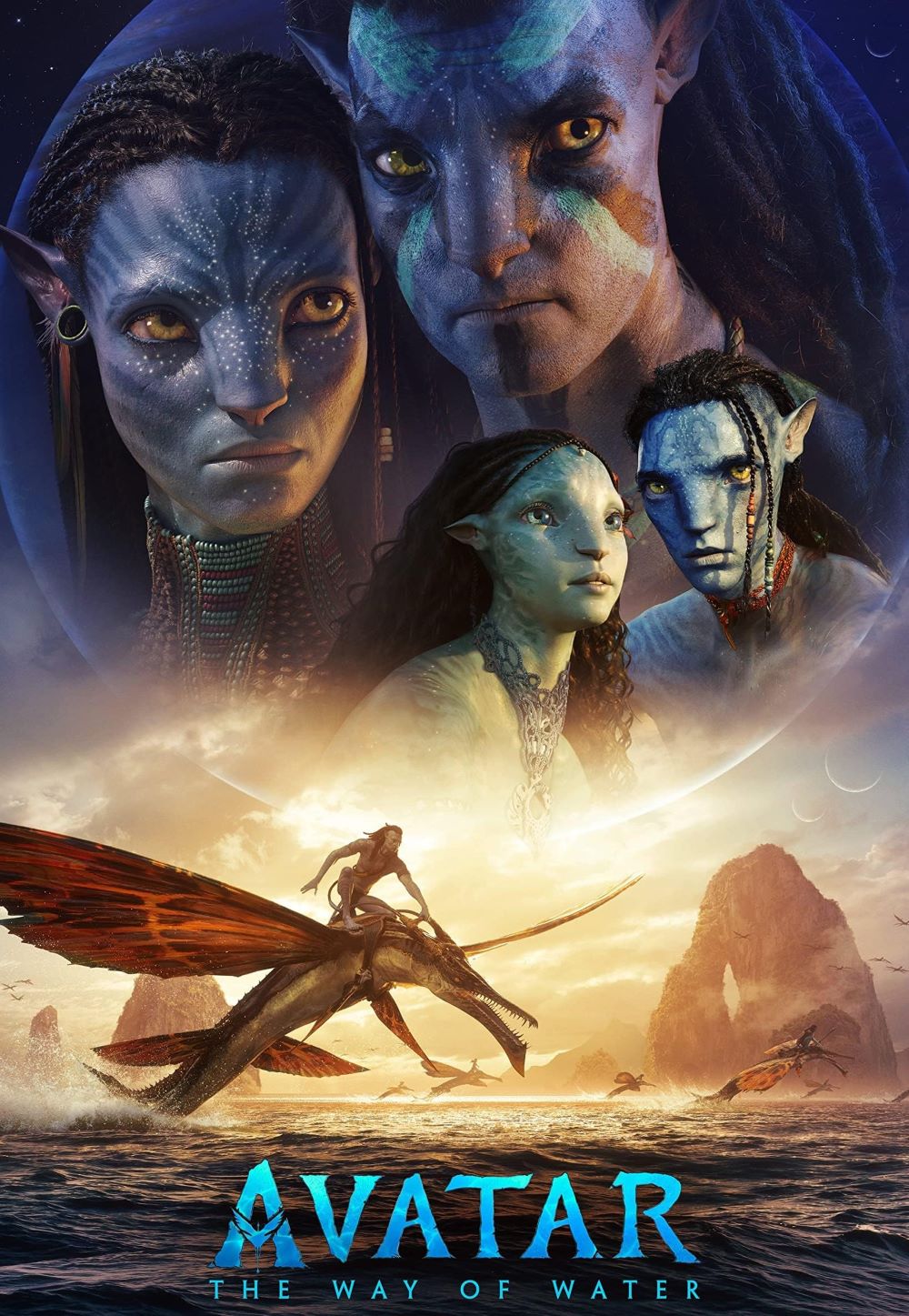
Avatar: The Way of Water delivers jaw-dropping visuals and a sincere dive into family struggles, but it drags under its three-hour weight with repetitive plotting and uneven character depth that keeps it from breaking truly new ground.
James Cameron returns to Pandora over a decade after the original Avatar, catching up with Jake Sully and Neytiri as they’ve built a sprawling family amid fragile peace—only for human colonizers, the so-called Sky People, to crash back with upgraded tech, ruthless determination, and a deeply personal grudge led by a vengeful Colonel Quaritch reborn in Na’vi avatar form. This forces the Sullys into a desperate flight to the Metkayina, a reef-dwelling Na’vi clan whose ocean-adapted physiology and customs—broader tails for swimming, gill-like breathing aids, a deep spiritual bond with marine life—present a whole new cultural and environmental challenge, transforming the story from the first film’s jungle rebellion into a watery survival tale laced with themes of displacement and adaptation.
What truly sets the film apart, even if the story treads familiar “pursued heroes vs. imperial baddies” territory without bold twists, is how it masterfully expands the Avatar universe’s worldbuilding, turning Pandora from a singular bioluminescent jungle into a teeming planet with diverse ecosystems and cultures. The Metkayina villages perch on floating lattices of woven kelp and coral, lit by phosphorescent anemones pulsing like underwater stars, while daily life revolves around symbiotic ties with ilu (skittish six-finned mounts) and skimwings (leathery ocean skimmers); nomadic Tulkun society—intelligent, philosophical whale-like beings communicating via sonic songs—clings to a strict non-violence “tulkun way” brutally shattered by human whalers.
These layers emerge organically through the Sullys’ awkward integration, like mastering fluid sign language or breath-holds for deep dives, and the spectacle dazzles relentlessly, powered by advancements in hyperrealistic CG that continue to erode the uncanny valley effect on characters—Na’vi faces now convey micro-expressions of pain, joy, and exhaustion with lifelike subtlety, their skin textures responding to water and light in ways that feel organic rather than synthetic.
Bioluminescent reefs glow in electric blues and greens, iridescent fish schools dart through sun-dappled shallows, and massive Tulkun glide with skyscraper grace and scarred hides. Cameron’s pioneering underwater motion capture—actors in massive tanks layered with tactile CG—makes every bubble, flipper stroke, and coral sway palpably real, as Na’vi teens free-dive twisting kelp forests and maze-like atolls in lung-burning tension. The film also pushes 3D technology to new heights since the first film, baked natively into every frame rather than tacked on as a post-production gimmick—this integral approach ensures depth pops organically, from swirling plankton clouds enveloping swimmers to layered reef foregrounds framing distant horizons.
The action peaks in the third-act frenzy of ship crashes against waves, flare-lit dogfights, Tulkun rams crumpling hulls, and a claustrophobic flooding vessel breach where air dwindles second-by-second. Cameron’s chaos clarity—echoing The Abyss or Titanic—ties stakes to family peril, amplified by thundering sound (crashing surf, whale calls, Na’vi gasps) and Jon Landau’s IMAX polish into sensory overload.
Family drives the lived-in, flawed emotional core: Jake (Sam Worthington’s gravelly gravitas) wrestles fatherhood’s math—stern orders backfiring into guilt—as he clashes with impulsive Lo’ak (Britain Dalton’s sulky edge), whose outsider rage forges a bond with scarred Tulkun Payakan, flipping “monster” tropes for real agency; dutiful Neteyam buckles under expectations, innocent Tuk (Trinity Jo-Li Bliss) witnesses horrors, and mystic Kiri—Grace’s avatar-born daughter linked to Eywa—teases lore like planetary souls, while Neytiri (Zoe Saldana’s fiery sorrow) simmers with grief-fueled, mama-bear savagery, her outbursts piercing deeper than rifles.
These arcs convert invasions into gut punches on protection, belonging, parental failures, and war’s selfish costs—specific melodrama over generic heroism. Yet simplicity amplifies flaws over runtime: a chase loop (hunts, hides, teen trouble, repeat) grates, with middle sags of cultural lessons (sign language, ilu taming, Tulkun reverence) feeling like filler; humans are greed caricatures—whalers gutting pacifists for longevity goo amrita, suits enabling genocide—lacking nuance despite Earth’s biosphere desperation nods, preaching eco-colonialism to the choir. Neytiri gets benched post-roars (a co-lead letdown), Quaritch dangles complexity (death memories, Spider ties) but snarls relentlessly; reef archetypes (wise Tonowari, omen-Ronal, bully-to-ally Aonung) lopsided the cast, Tulkun elders out-nuancing humans.
The film’s themes land with sincere force: whaling atrocities, from harpooned flesh and bloodied seas to a mother’s primal rage, hammer home human irredeemability without much subtlety, while family adaptation explores “forest people” taunts, strained bonds, and Eywa’s mystical interventions that weave personal growth into planetary balance—heartfelt without ironic quips, either refreshing in its earnestness or manipulative depending on your taste. Pacing remains deeply polarizing, offering immersive vibes for world-huggers who savor the slow builds but feeling bloated and front/back-loaded for plot purists impatient with the expansion-heavy middle.
Ultimately, Avatar: The Way of Water triumphs as a visual banquet and saga extender, hooking viewers with its aquatic marvels, raw parental fears, peerless craft (hyperreal CG and improved 3D elevating it), and smart universe growth through new clans, beasts, and lore seeds—all sans true narrative reinvention, as bloated length, repetitive echoes, and flat foes keep it from pantheon status. Fans of Pandora dive in sated; skeptics surface impressed by the technical wizardry yet impatient with the sprawl. It’s pure Cameron—huge swings promising more sequels ahead. Worth submerging for the spectacle.









 Through the Shattered Lens