In Memory Of Steve Ditko


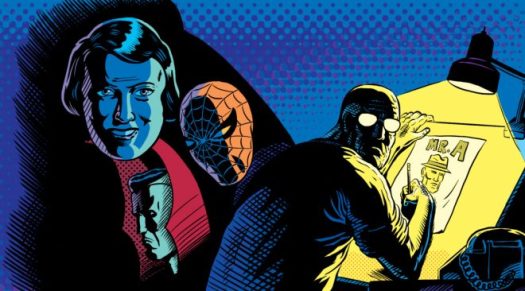
Self-Portrait of Steve Ditko

To many of us longtime comic book fans, Steve Ditko was an enigma.

We knew that, as the original artist on The Amazing Spider-Man and as the creator of Doctor Strange, Steve Ditko was responsible for much of Marvel’s early success.  Though he would never make a cameo appearance in an MCU film and the mainstream media will probably always continue to act as if Stan Lee is solely responsible for every character in the Marvel Universe, true fans know that, without Steve Ditko, Benedict Cumberbatch would never have cast as spells as Doctor Strange and Tom Holland would never have swung through New York as everyone’s favorite web slinger.

We all knew of Steve Ditko’s talent but the man himself remained a mystery.  He rarely gave interviews or made public appearances, saying that he preferred to let his work speak for itself.  And what work it was!  With Spider-Man, Ditko’s art captured not just the excitement of fighting criminals and saving the world but also the angst and anxiety of being young and overburdened.  With Doctor Strange, Ditko brought magic, both literally and figuratively, to the Marvel Universe.  Filling the pages with surrealistic images and out-of-this-world creations, Ditko kept Marvel relevant even as youth culture made the transition from the optimism of the Kennedy era to the drug-influenced psychedelia of the late 1960s.

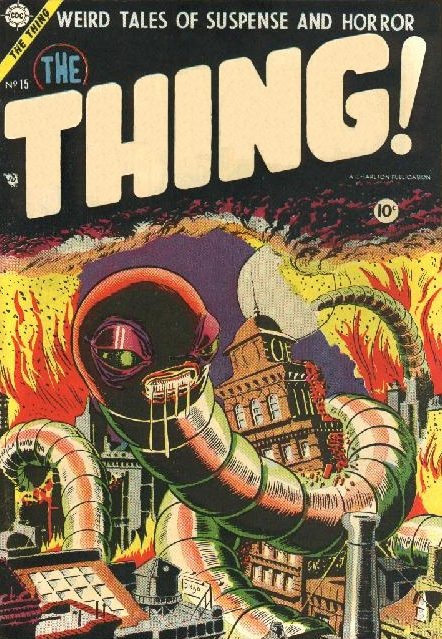
Ditko left Marvel in 1966.  The exact story of his departure are unknown.  Perhaps, as a committed and outspoken Objectivist, Ditko chafed at the editorial restrictions that Marvel put on his work.  While Stan Lee wanted to sell comics, Steve Ditko wanted to reach minds.  After leaving Marvel, Ditko worked for several different companies, including Charlton and DC.  (He even returned to Marvel in 1979 and regularly contributed freelance work to the company.)  The best-known of his later creations was Mr. A, a reporter-turned-masked-vigilante who dispensed of criminals with uncompromising justice.

Despite his reputation for eccentricity, most people who worked with him described Ditko as being personable and cheerful.  According to Charlton’s Frank McLaughlin, “He was a very happy-go-lucky guy with a great sense of humor at that time, and always supplied the [female] color separators with candy and other little gifts.”

On June 29th, Steve Ditko was found dead in his New York apartment.  Rest in peace, Mr. Ditko.  Thank you for sharing your imagination with us.

From The Amazing Spider-Man #33:

In Strange Tales, Ditko introduced my favorite of all of Marvel’s “cosmic” entities, Eternity:

And finally, the character who may have been closest to Ditko’s worldview, Mr. A:

Rest in Peace, Steve Ditko (1927-2018)


gary loggins's avatarcracked rear viewer


The world lost a true artistic visionary when Steve Ditko passed away at age 90. He had supposedly been dead two days before his body was found in his New York City apartment, an ignoble ending to one of comic book’s most unique artists, the man who co-created Spider-Man and Dr. Strange, two characters currently riding high in the Marvel Cinematic Universe. That their spiritual father should leave this mortal coil so anonymously is a tragedy, and a crying shame.

Ditko’s work will never be mistaken for a Jack Kirby or Neal Adams, or any of their myriad imitators. His art was deceptively simple, yet so complicated in its execution. He’s all angles and motion, with lots of empty spaces. His was a style all his own, a style that fans loved for its singularness. Ditko, after a post-war stint in the Army, entered the comics field in 1953, working…

View original post 475 more words

Celebrate Independence Day with Ray Charles and “America the Beautiful”


gary loggins's avatarcracked rear viewer

Today is the 4th of July, American Independence Day, and I can’t think of a better way to kick off the festivities than watching the great Ray Charles sing “America the Beautiful” at Game 2 of the 2001 World Series:

Happy 242nd birthday, America! Have a safe 4th of July celebration from Cracked Rear Viewer!

View original post

One Hit Wonders #14: “The Ballad of The Green Berets” by SSgt. Barry Sadler (RCA Victor Records 1966)


gary loggins's avatarcracked rear viewer

The year was 1966. The month was May. The Vietnam War was dividing the country as the U.S. made their way into Cambodia, civil rights marchers were  protesting across the nation, and China set off their third nuclear bomb. Rock and roll ruled the pop charts, as The Rolling Stones were having their 19th nervous breakdown, Nancy Sinatra’s boots were made for walkin’, Bobby Fuller fought the law (and the law won), but it was Staff Sgt. Barry Sadler, an Army medic who served in Vietnam, who began a five-week run at #1 on the Billboard charts with “The Ballad of The Green Berets”:

The music charts weren’t as polarized then as they are now. Besides all the latest rock hits, you could find traditional pop (“My Love”, Petula Clark), R&B (“Uptight”, Stevie Wonder), country (“Cryin’ Time”, Ray Charles), instrumentals (“Theme from Zorba the Greek”, Tijuana Brass), even blues (“Scratch…

View original post 220 more words

Remembering Cheyenne: RIP Clint Walker


gary loggins's avatarcracked rear viewer

At six-foot-six, Clint Walker certainly rode tall in the saddle. The actor, who died yesterday at age 90, was television’s first cowboy hero developed for the medium, and his popularity opened the floodgates for a slew of TV Westerns to follow. Walker also fared well on the big screen, and while not in the same stratosphere of John Wayne or Clint Eastwood, his movie career deserves a second look.

As Cheyenne Bodie (1955-63)

Born in Illinois in 1927, the seventeen year old Norman Walker joined the Merchant Marines for a spell, then worked a series of blue-collar jobs before being discovered by talent agent Henry Willson, who got him a small part in the 1954 Bowery Boys comedy JUNGLE GENTS, playing an ersatz Tarzan. Bit parts followed, until his burly presence and rugged good looks landed him the lead in a new TV series called CHEYENNE. Cheyenne Bodie was television’s…

View original post 760 more words

In Memory Of Bill Gold


Yesterday, the prolific artist Bill Gold passed away.

Over the course of a 70 yeas career, Bill Gold was responsible for some of the most best known movie posters of all time.  He was a favorite of everyone from Alfred Hitchcock to Stanley Kubrick to Clint Eastwood.  His designed his first film poster, for Yankee Doodle Dandy, in 1942 and came out of retirement to do his final poster, for J. Edgar, in 2011.  He is also well-remembered for the famous poster for Casablanca.

I first profiled Bill Gold for this site in 2012.  In honor of his career and his memory, here are even more film posters from Bill Gold:


RIP, Margot Kidder


Margot Kidder was born in Yellowknife, a mining town in Northern Canada that was so remote that it didn’t even have a movie theater.  She didn’t see her first movie until she was 12, when she and her mother were visiting New York City.  Kidder later said, “I saw Bye Bye Birdie, with people singing and dancing, and that was it. I knew I had to go far away.”

Kidder started her career in her native Canada, appearing in 1968’s The Best Damn Fiddler from Calabogie to Kaladar and going on to appear in films like Black Christmas and Quackser Fortune Has A Cousin In The Bronx.  Even after Kidder found stardom in the United States, she continued to appear in Canadian films and won two Canadian Film Awards and one Genie Award for her performances.

In 1973, she played dual roles in Brian DePalma’s Sisters.  As detailed in Peter Biskind’s Easy Riders, Raging Bulls, it was during this time that she and her Sisters co-star Jennifer Salt shared a Malibu beach house that became a gathering place for such up-and-coming Hollywood directors as DePalma, John Milius, Martin Scorsese, George Lucas, and Steven Spielberg.  Briefly, she and Spielberg even dated.


For a generation of filmgoers, though, Margot Kidder will always be Lois Lane!  In 1978, Kidder beat out over 100 other actresses for the role of Lois.  (Among the others who tested:  Anne Archer, Susan Blakely, Lesley Ann Warren, Deborah Raffin and Stockard Channing.)  Superman was the first great comic book film.  In the aftermath of both Watergate and Vietnam, Superman made audiences that a man could fly.  As important as Christopher Reeve was to the success of Superman, Margot Kidder was just as important.  In many ways, Kidder’s Lois was the audience surrogate.  We saw Superman through her eyes.  At the same time, Kidder gave such a lively performance that it was impossible not to join Superman in falling in love with Lois.  When Superman spun the world backwards to bring her back to life, nobody questioned it because they would have all done the same thing.

Kidder was even better in Superman II but, unfortunately, she was also forever typecast as Lois.  In her later years, she would be better known for her health struggles than her acting.  After having a widely publicized manic episode in 1996, Kidder became just as well-known as an outspoken mental health activist as an actress.  Though her acting career may have slowed down, Kidder never stopped working, appearing in movies and television shows up until her death.

Margot Kidder died yesterday in Montana, at the age of 69.  To many, she’ll always be Lois but she was so much more as well.  Rest in Peace, Margot Kidder.

Familiar Faces #7: Gordon Jones, Working Class Hero


gary loggins's avatarcracked rear viewer

Brawny actor Gordon Jones (1911-1963) was never a big star, but an actor the big  stars could depend on to give a good performance. Stars like John Wayne, Roy Rogers, and Abbott & Costello knew Gordon could deliver the goods in support, and he spent over thirty years as a working class actor. Not bad for a small town kid from Alden, Iowa!

Gordon as The Green Hornet with Keye Luke as Kato

Jones originally came to California on a football scholarship, playing guard for UCLA. Like his fellow Iowan John Wayne , Gordon began his film career in uncredited parts, and soon moved up in casts lists with films like RED SALUTE (1935), STRIKE ME PINK (1936), and THERE GOES MY GIRL (1937). Gordon’s big lug persona made him ideal for second leads as the hero’s pal, though he did get some leading roles in Poverty Row vehicles like…

View original post 669 more words

Music Video: Feeling Good by Avicii (2015, dir by ????)


Today’s video is for Avicii’s Feeling Good.  It’s a great video from a talent who was taken from us far too early.  I’ve been listening to Avicii nonstop ever since Friday afternoon and I imagine that I’ll continue to do so for many days to come.

Enjoy!