Some movies are merely good. Some movies are undeniably great. And then, a handful movies are so amazingly brilliant that, every time you watch, you’re reminded why you fell in love with cinema in the first place.
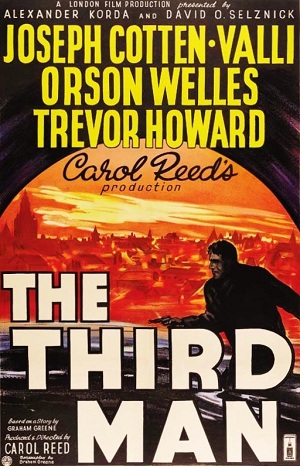
The Third Man is one of those brilliant films.
Directed by Carol Reed and scripted by novelist Graham Greene, The Third Man takes place in the years immediately following the end of World War II. Pulp novelist Holly Martins (Joseph Cotten) comes to Vienna to search for his old friend Harry Lime (Orson Welles). Upon arriving, Holly is shocked to learn that Harry makes his living selling diluted penicillin on the black market.
In the classic scene below, Harry and Holly have a clandestine meeting in a Ferris wheel and Harry justifies both his actions and the lives that have been lost as a result of them.
While Orson Welles’ performance is (rightfully) celebrated, I’ve always felt that Joseph Cotten’s work was even more important to the film’s success. While Welles made Harry Lime into a charismatic and compelling villain, it was Cotten who provided the film with a heart.
I know this latest “Scenes I Love” is quite an extended one. It’s pretty much the entire opening to the original George A. Romero classic where we see the four main leads of the story introduced dealing with the crisis that’s been on-going around them for what could be weeks.
I could have easily taken so many smaller scenes from this extended sequence and used them as favorites since they’re all that and more. This sequence was Romero at his best as a screenwriter. While some of the heavy handedness would later plague his writing in his later zombie films in this one they take on the right balance. He’s telling the audience through the screaming outbursts, arguments and general chaos of every scene that we as a society were fucked the moment the zombie apocalypse began. It doesn’t matter whether it’s the civilian expert trying to explain how to deal with the crisis in such logical terms while everyone around him reacts with irrational outbursts of disagreements. Or it could be how the police and the civilians they’re sworn to protect and serve become warring tribes on opposite sides when the true enemy is shambling all around them.
This makes the crippled priest’s words in the end of the scene even more telling.
Though some might find it hard to believe, I usually try to keep my personal politics separate from my film reviews.
If there’s anything that truly bothers me about critics like Roger Ebert and his kind, it’s that they often seem to be more concerned with promoting their own personal political views than with actually reviewing the film that they’ve just seen. That’s why you find Ebert throwing a fit over a merely mediocre film like Atlas Shrugged while, at the same time, going out of his way to praise the ludicrous remake of Straw Dogs. That’s also why you find a website like Awards Daily devoting a month to posts attacking a “documentary” like 2016 while, at the same time, praising the latest piece of propaganda from Michael Moore (often times before either one of the documentaries has even been viewed).
I won’t claim to be totally unbiased in my reviews. I’ve always been open about the fact that 1) I’m a civil libertarian and 2) I view all politicians (including both our President and the majority of the people who ran against him in 2012) with a certain amount of disdain. That said, for the most part, I try to set aside my own political beliefs when it comes to talking about the movies. When I find that I can’t set those beliefs aside, I make it a point to be honest about my bias.
For instance, today’s scene that I love is a great scene from a great film. But I’d be lying if I said that this selection had nothing to do with Rand Paul’s 13-hour filibuster about why the President (and, by that, I mean any President) does not have the right to blow up American citizens on American soil. While I would hope that everyone understands that my opinion does not necessarily reflect that opinion of any other contributor to the TSL, I’m still not ashamed to admit that both me and my sister, the one and only Dazzling Erin, found the time to watch at least a few minutes of C-Span 2 yesterday and cheer Rand Paul on.
During Paul’s filibuster, a lot of people on twitter made the comparison between his filibuster and Jimmy Stewart’s filibuster in the classic 1939 film, Mr. Smith Goes To Washington.
However, the genius of Frank Capra’s classic look at one idealist trying to survive in a cynical world is that you can enjoy the filibuster scene regardless of whether you’re a Republican, Democrat, or Independent. Whether you think that the comparison between Sen. Paul and Sen. Smith is fair or not, you can still appreciate the scene as an iconic moment in American cinema and as a reflection of the idealism that far too few of our current leaders seem to possess.
Without further ado, here’s the filibuster scene from Mr. Smith Goes To Washington…
Incidentally, just for the sake of humor, I also wanted to include the filibuster scene from Mr. Smith’s unnecessary 1977 remake, Billy Jack Goes To Washington. Unfortunately, the Billy Jack version has not been uploaded to YouTube. So, here’s the trailer for Billy Jack Goes To Washington.
(Billy Jack Goes To Washington, incidentally, proves just how important Jimmy Stewart was to the success of Mr. Smith Goes To Washington. The Billy Jack version is an almost shot-for-shot remake but, without Stewart’s likable sincerity, the story comes across as being so heavy-handed and preachy that you actually find yourself rooting for the members of the corrupt political establishment.)
It’s a slow Friday night and once again boredom has hit him until I came upon a great idea. What better way to relieve myself of this boredom than to watch one of the funniest moments in NFL history. It also happens to be one of the most embarrassing moments for the NY Jets, their fans and their hapless and useless of a starting quarterback Mark Sanchez.
The scene is straight out of the late season game between heated AFC East rivals New England Patriots and the NY Jets. What makes this a favorite scene of mine even though I’m a diehard San Francisco 49ers fan is the fact that it’s a sequence that never gets old and continues to entertain.
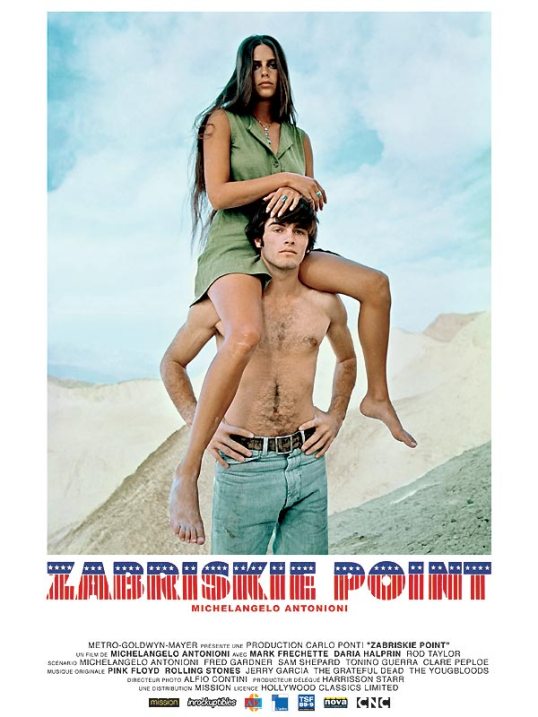
Released in 1970, Zabriskie Point was the great Italian director Michelangelo Antonioni’s attempt to make the definitive film about both America and the counterculture. While most critics feel that Antonioni failed on both counts, it is also generally agreed that he captured some beautiful images of an America struggling to definite itself culturally.
The film ends with one of Antonioni’s most iconic images as hippie-turned-revolutionary Daria Halprin watches as her lover’s house explodes. Is what Daria sees real or is she just fantasizing about the end of capitalism? Antonioni leaves the answer up to the viewer.
First released in 2006, Richard Linklater’s A Scanner Darkly is one of the unacknowledged great films of the past ten years. The scene below, featuring Rory Cochrane as the hapless Charles Freck, is all the stronger for being adapted almost word-for-word from Philip K. Dick’s source novel.
This scene (which, be warned, is a huge spoiler) is from the original Django (1966) and features the one and only Franco Nero. If you liked Django Unchained, you’ll love Django.
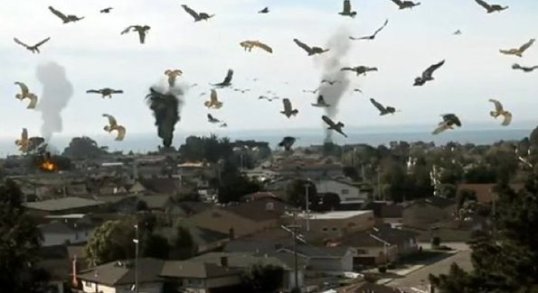
As I sit here writing this, I am the most tired girl in the world but I could not let this day pass without sharing one of my favorite dance scenes. In this romantic scene from the infamous environmental “horror” film Birdemic, our main characters end a perfect day by dancing to a song called Hanging Out With My Family.
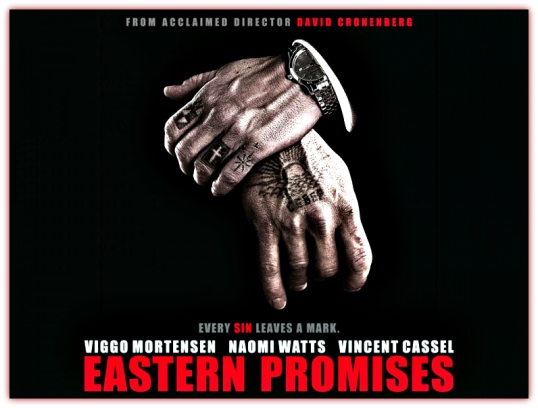
News that the sequel to Eastern Promises was one of the few pieces of news that really bummed me out when it made the rounds late 2012. The first film was one of my top ten for 2007 and consider it one of the better films about organized crime in the 21st century. A sequel to this film wasn’t needed, but most fans of the film wanted one just to see a furthering of the storyline between Viggo Mortensen’s character and that of Vincent Cassel’s character.
While the sequel may not be happening there’s still hope that it will get resuscitated in the future. Until that happens let’s take a look at what has to be one of the most realistic fight scenes on film. It’s the infamous (or famous depending on how you feel about the scene) Russian bath house scene near the end of the film. The scene sees Viggo Mortensen’s character of Nikolai Luzhin set upon by a couple of Chechen hitmen in the bath house where he proceeds to fight for his life in the most vulnerable fashion anyone can ever find themselves in.
Cronenberg has always been one of my favorite filmmakers and I continue to believe that his work body of work throughout his career puts him in the upper echelon, if not the elite level, of filmmakers living and working today. This fight scene has nothing glamorous about it. The cool factor that some attribute to the scene just emphasizes Cronenberg’s recent observation about the hypocrisy of those who denounce violence yet look at the violence he creates on film and call it art.
I consider this a scene I love just for the base simplicity of the scene itself. It’s primal and almost Darwinian in the lengths a person will go through to keep themselves alive for one second more. The scene also reminds me why Viggo Mortensen remains one of this era’s most underrated and greatest actors. Yes, it’s just a fight scene, but he gives so much into making it authentic that one could almost believe that his life was in danger and he did the fight for real (in fact Mortensen did injure himself so much during the several takes of the scene that his bruises afterwards became a problem for the make-up department who had to apply his vory v zakone tattoos every day).


 Through the Shattered Lens