A Glorious Fantasy: The Original Klingon


Columnist’s Note: This article has been edited from its original form to include some thoughts about the Master Calculator and the battle with Belias the Gigas in response to compelling arguments made in the comments. This was an important change, and it expands humankind’s capacity for growth.

Abbreviated boilerplate! Once again I return to this ongoing series, in which I attempt to play through every game in the Final Fantasy franchise that I can get my hands on, from FF1 through Lightning Returns, and a variety of the spinoffs and other titles not included in the ‘main series’. This list continues to undergo revision, and I seriously considered removing Final Fantasy 9 from it for personal reasons. In addition, no MMO titles will be played. Sorry, folks?

I think all of this is extremely important knowledge, and that the human race will be improved by my research. Let’s move on!

Previously in this series!

FFT

As is customary, let’s start with some mood music.

Version Played: “War of the Lions” PSP remake, complete with incredibly Shakespearian translation.

Final Fantasy Tactics is sort of the gold standard for tactical RPGs. It is also a game around which many PSX-era Final Fantasy fans rally together as a point of shared joy. In my entire life, I have never met someone who actively disliked this game. That, in and of itself, is incredible. I mean, who doesn’t know someone who dislikes Final Fantasy 7, 8, 9, 10, etc. ? Tactics rises above that crop to my mind for three major reasons.

1) The gameplay mechanics are deservedly the gold standard for tactical RPG play. Yes, I love Fire Emblem too. But there’s something about the job system and the customization available to the player in Tactics which hits the spot. Oh, and you get a variety of broken NPCs if you’d rather just use the cheater sword abilities the AI has been trying to best you with all game. I won’t blame you if that’s how you feel.

2) The story appeals to people in a kind of ‘Game of Thrones’ way. Despite all of the magic present, it’s not utterly fantastic. The focus of the story is on ambitious jackoffs who would sacrifice anything to advance their own ambitions… and one guy who is kind of the opposite. It’s a semi-kind-of-realistic middle ages type setting. It feels to the player like a place that could actually exist, which is simply not the case for other Final Fantasy titles.

3) Ramza Beoulve, despite ultimately not being that interesting, is a very easy protagonist to root for. He doesn’t have the capital-letter ISSUES that plague Cloud and Squall. He doesn’t have a bizarrely oversized head and a tail like Zidane. And he doesn’t narrate the whole game with inner monologues that caused some people to bleed into their brains like Tidus. No, Ramza is quite straightforward, and quite heroic.

But it’s mostly about #1. The mechanics are deep (sort of. They’re deep if you’re not just chasing the absolute optimum party, at any rate). They’re fun to play around with. They can make the game either embarrassingly easy or fairly challenging depending on which route you decide to go. It’s like the awesome job system from Final Fantasy V writ large in the PSX era! Only you also get many NPC characters with unique and interesting skill sets! I chose not to use any of them (except Agrias. I don’t hate myself) in this particular play through, but FFT certainly facilitates any style of play that you like.

The standout mechanic, of course, which you won’t find elsewhere – even in other incarnations of Final Fantasy’s own job system – is the Calculator or Master Calculator job. This job is very straightforward – it uses the battlefield metrics such as elevation, remaining wait time to act, and individual character level, and then devastates targets with magic. The Calculator need not spend MP to do his work, nor is he subject to the questionable charge times that render powerful spells like Holy of limited utility. Instead, the Calculator picks a metric to hit, then which multiple (3, 4, or 5) he wants to lash out at, and then gleefully rains fire down upon eligible targets… friend and foe alike. Because the Calculator class has abysmal stats and is unbelievably, unfathomably slow, I didn’t find it worth the time to train one of my party members in the skills this time around. But veteran players all know that the deployment of a Calculator’s skillset (preferably equipped on a better job: try Black Mage!) on the battlefield can easily win this war almost single-handedly.

Even using weak classes and abilities, and without the timely intervention of Count Orlandeau or the mighty Calculator, it’s perfectly possible to complete Final Fantasy Tactics. Once you have mastered the mechanics of the game and know what truly poses a danger to your group, I like to think the obstacles of this game are fairly easy to navigate. A standout, fairly brutal exception to this is a battle roughly halfway through the game at Riovanes Castle. You should save your game in a different slot before attempting it. In fact, keeping two different saves is always a good idea in this game, to avoid a possible soft lock of your file, where you’re locked into a battle that is too difficult for you to defeat, without the means to leave and level up or acquire better equipment.

There are a couple other possible exceptions, which revolve around a mechanic that simply doesn’t work as well as the designers probably intended. I consider it one of FFT’s flaws that several story battles involve “guest” characters. Early on, this takes the form of Delita and Algus, your supposed friends, who are there to make sure you can’t take a full party of 5 on a mission until the start of Chapter 2. They’re not always helpful, but they also can’t die, so they’re no liability either. Later, however, most such missions involve saving other “guest” characters from getting their dumb asses killed. Unfortunately, since guests are always under the control of the AI… this isn’t always possible. There is one battle (Castle Riovanes Roof. You know what I’m talking about) where the guest character routinely gets killed in the first round of action. Or any any subsequent round. In one shot. By some brazenly unfair enemy characters. This battle can be one of the most frustrating ones in the game because you have very little ability to impact its outcome. Either your “guest” behaves rationally and avoids the deadly enemy assassins… or she doesn’t… and it’s game over. Bummer.

One thing I want to mention in this space, before I get too far afield, is the translation. The original translation for FFT is in the same vein as the Ted Woolsey translations of earlier games. You still get the gist of it, but a lot of it is nonsense. It’s much worse than the original translations for Final Fantasy VII and VIII in this regard. Lots of stuff, even seemingly obvious stuff, is mistranslated, to the detriment of the story. PSP’s War of the Lions is heralded as a vast improvement, and in some ways that’s true. However, having now played both versions, I have to say, there’s a lot to dislike about the War of the Lions translation as well. It may simply be the original material to blame, which is fine, but this translation is insanely talky at times. We might as well be reading the original Shakespeare in some of the cutscenes. Melodrama and unnecessary wordiness abound, and the ultimate effect is a little bit off-putting to a modern player. Don’t misunderstand – by no means did I hate the War of the Lions treatment of the script. I just am not sure that it deserves the near-universal praise that it has received amongst gamers and critics alike. It’s talky. Often unnecessarily so.

By its nature, a game that you can play through with only Ramza and a party of generic characters (in fact, you can dismiss any of the story characters after they’ve formally joined) has to be light on character development. Characters like Agrias, who are central to the plot up until they join, disappear immediately upon doing so. As a result, the only meaty characterization is ultimately of the Beoulve family… Ramza, his sister Alma, and his two other brothers Zalbaag and Dycedarg. They are at the center of the conflict ripping Ivalice apart in any case, and they’re also the characters (along with Ramza’s best friend, Delita) who get the most screen time. Delita receives some additional attention in the War of the Lions, to where you could consider him one of the game’s better-explored characters. Still, you’ll actually find a lot of the most intriguing characterization actually belongs to the game’s various (and, boy, there are a lot of them) antagonists. This is definitely an intriguing reverse from the “norm”, but it works well here.

Ultimately, this is probably one that we can all still agree on. FFT kicks ass. It combines excellent and deep tactical gameplay with an intriguing story that might be a little less clear with the new translation… but certainly isn’t any worse. It might be one of the more cohesive FF plots around. It’s also got at least one more song I’ll share.

Join me next time, as I return to Final Fantasy’s roots, with Final Fantasy IX!

A Glorious Fantasy: Hyper-Realism and Time Travel


Abbreviated boilerplate! Once again I return to this ongoing series, in which I attempt to play through every game in the Final Fantasy franchise that I can get my hands on, from FF1 through Lightning Returns, and a variety of the spinoffs and other titles not included in the ‘main series’. This list continues to undergo revision, and I seriously considered removing Final Fantasy 9 from it for personal reasons. In addition, no MMO titles will be played. Sorry, folks?

I think all of this is extremely important knowledge, and that the human race will be improved by my research. Let’s move on!

ff8-logo

Why not start with some music?

Version Played: Steam-client PC port, with largely unnoticed upscaled resolutions!

Final Fantasy VIII, notable for its awesome FMVs and its mixed reviews, received a lot of hype. A lot of hype. Coming off of the cultural sensation that was Final Fantasy VII, how could it not? Unfortunately, the truth is, Final Fantasy VIII was disappointing for a lot of people. More than enough people for it to be considered a disappointment overall. Even I, who have always loved FF8, have no choice but to admit its faults. We’ll get to those in a minute.

To my mind, that FF8 fell victim to its own hype machine is a shame. Because as a kid, there were very few games that I enjoyed as much or as completely as I enjoyed Final Fantasy VIII. And this is going to lead to my most controversial opinion about this game (well, maybe not, we’ll see). But it’s also an opinion that needs to just get out there. Let’s talk about it. Leave some feedback in the comments. Let’s talk about the protagonist, Squall Leonheart.

Squall is one hell of  a fighter. But what the hell is his problem?

Squall is one hell of a fighter. But what the hell is his problem?

Ultimately, Squall isn’t that likable. I recognize that now. But I’ve always identified with him on some level. It’s important to remember that the characters in this game are all intended to be teenagers. Teenagers with teenager problems. Squall is misunderstood in his own mind. In everyone else’s, he can’t communicate, so they can’t get to know him, so they misunderstand him. In a lot of ways, he’s a very realistic character. He’s devoted himself to his studies, but he’s awkward around everyone, because he never considered that he might need social or leadership skills, because his childhood taught him not to rely on other people for anything. His arc, over the course of the game, is coming to terms with the fact that people aren’t islands. Everyone needs help sometimes, and together, we can be greater than the sum of our parts. I believe his arc, so I like Squall.

Oh, and there’s a love story with Rinoa.

This is the first Final Fantasy game which has a focus upon a love story of any kind. We’ve seen the theme of love before; Cecil and Rosa create a love triangle of despair with Kain in Final Fantasy IV. Locke sees the love of his life come again in Celes in Final Fantasy VI. Cloud was totally oblivious to the various beautiful women hitting on him in Final Fantasy VII. It’s not until Final Fantasy VIII where we actually explore a love story as a central idea in the plot. Squall and Rinoa meet early in the game, get off to a great start, then fall apart when they get to know each other a little. Only to come all the way back around once they get to know each other a lot. The sequence I personally associate most with their relationship is best captured on video. It can (and probably should!) be argued that this is not only not the most important sequence, but doesn’t even make the top five. Among other highlights, Squall carries a comatose Rinoa on his back across like, literally, half the world, along some train tracks in a probably-futile effort to save her. Later, he attacks head-on a garrison of the most technologically sophisticated troops in the world with uhh… with his steel balls, mostly. Oh, and probably the 255 STR you’ll have Junctioned by then, as it’s very nearly the last bit of the game.

The rest of the characters are kind of incidental to this process. Quistis doesn’t become jilted when she realizes that Squall’s just not that into her. Zell, Selphie, and Irvine don’t grow up. None of them gets an especially deep treatment. Quistis and Zell get to have a little more fun since they’re around early in the game, but there’s just not much for us to know about most of these characters. They’re mercenaries. They’re time-travelers. They’re hyper-realistic.

The hyper-realistic style of FFVIII was another significant departure for the game when it first launched. Obviously, the later technology of the PS2, and the XBox 360 rendered this distinction irrelevant, but it was a big deal at the time, and the relatively lukewarm reception that the realistic character models got informed the design choices in FF9, which ultimately became all about going back to the ‘roots’ of the series. Squall and his friends have realistic proportions, and while on my HD monitor they looked pixelated and kinda crappy… they looked that way on the PSX too. The technology didn’t really exist to bring them to life. While some sequences show off the realistic motion of the characters (Quistis and Rinoa both speak in a lot of subtle gestures), the motions of Squall and Zell – particularly Zell – are often hugely exaggerated, and not really at home with the character models themselves. Luckily, the monsters and Guardian Forces don’t suffer from this same issue – they’re as grand as ever.

I probably mentioned a couple times about the time-travel. I assume at this point everyone has played FF8, but a reminder is always helpful, yes? The basic plot of Final Fantasy VIII is this: In the world, there exists a succession of powerful, female, spellcasters. They are called, creatively enough, Sorceresses. This condition is not genetic, but it is inherited, with the Sorceress either voluntarily relinquishing her powers to another, or when that Sorceress is very near death, they pass on by default. Of the four Sorceresses we meet in Final Fantasy VIII, one is a power-hungry madwoman, one is a time-traveling psychopath, and the other two are possessed by a time-traveling psychopath. Fortunately, since this is a world that knows Sorceresses could go crazy at any time, a man named Cid Kramer established a military academy at Balamb. Balamb Garden, as it is called, trains SeeD, an elite force. To finance Balamb Garden, SeeD undertakes military operations all over the world. SeeD’s true purpose, however, are to be warriors ready to contend with these Sorceresses. That much all seems pretty grounded. Now let’s take a magic carpet ride. All of the party members but Rinoa – but including major Plot MacGuffin Ellone – were raised together in an orphanage. Only none of them remember that because the Guardian Forces (the game’s summons, and the beating heart of the Junction system) steal memories in order to function. The sacrifice for becoming powerful soldiers is a loss of memories, starting with early childhood. Only Irvine actually does remember, he just doesn’t tell anyone, until everyone figures it out. Huh.

Ellone, meanwhile, has the very special power to send people’s consciousnesses back in time. She uses this ability on Squall and his friends repeatedly, sending them back into the bodies of deuteragonist Laguna Loire and his friends Kiros and Ward, who had their own misadventures 20 years earlier. Because time travel, Laguna and his friends survived many battles with the super-powerful SeeDs from the future dumping rocket fuel into their minds. Ellone just wanted to change the past for her own selfish – if understandable – reasons. She failed. But her powers are also very much desired by the time-traveling psychopath Sorceress from the future – Ultimecia – who is trying to cast a spell from three different time periods called Time Compression that does… eh, let’s actually not worry about what it does. We don’t know what it does. “Time Compression” doesn’t sound good for us though. In fact, it’s only good for Ultimecia. That’s all we know. So in order to stop that, we hatch an elaborate plan to let it happen, only, before it finishes, Squall and the gang will go rough Ultimecia up. She has a spooky castle, it has a superboss in it, and Ultimecia herself has got roughly five forms. And some great battle music. She’s also actually pretty hard if you cut a lot of corners on the way to her, and get unlucky during the battle.

So that’s the story of FF8. Only, what may or may not be interesting is that the game isn’t really about most of that stuff at all. It would be disingenuous to say that Laguna Loire’s story doesn’t matter, because you spend a fair amount of time playing as him… but the rest? That’s just stuff that’s going on while Squall tries to grow as a person, he and Rinoa fall in love, and he eventually does a series of very brave and very stupid things in order to rescue her. Then, in the end, she saves him when he’s lost in the vagaries of time travel. Time travel!

Final Fantasy VIII’s take on the battle system is also controversial. What can I say? It’s a controversial game. The Junction system works like this: You have an “inventory” of Magic, up to 100 copies of each spell, rather than using MP or spells per day or whatever else. In general, these spells never get cast, because they are “Junctioned” to your stats, like strength and defense, or your defenses. 100 Firagas to your elemental defense, for example, will put you at about 25% “absorb” on all incoming fire damage. The better the magic, the stronger the effect. Ultima junctions well to just about everything, and if you’re patient enough to accumulate 100 of them, it will raise any stat as high as it can go. So, it’s very customizable, you can basically do whatever with the characters you like best. As with FF7, the specific differences between characters are primarily in Limit Break techniques, although in FF8, Squall’s is so powerful it’s virtually required to defeat the superboss Omega Weapon. So if you’re not familiar with the game, the question you should be asking right now is “how do you get this magic?” Well, the game has a sophisticated system for refining items into spells, said items both being won from battle and from playing the (incredibly addictive) card mini-game, Triple Triad. Oh, how do you get magic before you have the right item? Or if you can’t find the right item? Well… unfortunately… you ‘draw’ it from enemies. As a command in battle. Very slowly.

Oh.

Yep. This is why people hate the Junction system. The first few hours of FF8 – assuming you already know where the right monsters are to draw from – are spent largely of sucking enemies dry of their magic to power yourself up. This process is occasionally helpful through the rest of the game, as if you know where to look, you can get early access to very powerful spells. Bosses often have good spells as well, and there are also several Guardian Forces you must ‘draw’ from bosses throughout the game. Unfortunately, unless your – I think? – Magic stat is pretty good… you’ll draw spells at a rate of 0-5 with each use of the command. You really need 100 of your spells, as the quantity affects the power of the Junction. So drawing sucks. This is where one feature of the Steam version is quite handy; the magic booster! With this turned on, all your party members receive 100 of a bunch of core spells. None of the best stuff, mind you, but some solid spells so that there is NO time lost drawing early in the game. Since the later drawing is entirely optional – everything can be obtained from items, often more easily – the Junction system’s worst feature can just be switched off. All other versions will have to go through the grind.

But FF8 isn’t about the Junction system. Junction is just something you have to deal with. And if you can get past it, you might appreciate the game a little. It’s by no means a bad entry in the series. Its plot is full of holes. Most of its characters are pretty shallow. But there’s some really good stuff at the core of FF8, and it certainly has its place in the development of the franchise as well. I think it deserves a little bit of our love.

And now I shall leave you with another one of FF8’s beautiful cutscenes. Good day.

Maximum Regression: DotP 2015


magic2015announcement610

Let me ask you, dear readers, a question.

What happens when you fundamentally misunderstand your audience? When you think you know what people want… and you’re… just wrong? Or is it not a lack of understanding, but a lack of interest? Is it just that you know one way you can make some money, and you don’t really care what quality your product turns out to be?

Magic: Duels of the Planeswalkers 2015 answers pretty much all of these questions, by being one of the fundamentally worst games published yet this year. While I might have spent some energy making fun of Diablo, I didn’t understand how cynical, how shitty, and how worthless a moneygrab could be…. apparently… until I played Magic DotP 2015.

This is ten steps backward – in virtually every way – compared to even DotP 2014, a game which I did not have as much fun with as I would have hoped.

Duels of the Planeswalkers was touted for years as a beginners’ introduction to Magic. Obviously, Wizards would prefer for serious players of its CCG to get invested in Magic The Gathering: Online, instead… if they’re not going to play paper Magic. Speaking from experience, I can say that MTG:O has its own ups and downs. Its interface is shockingly primitive. At the time I last played a Draft tournament on MTG:O (admittedly, at least a year and a half ago), it was more primitive than free, user-generated programs to play cards on the internet. Not exactly a glowing endorsement. I preferred (greatly) to simply log into Xbox Live and fire up a game of Duels of the Planeswalkers 2013.

Nowadays, I’d rather play neither. Regardless of how MTGO might have improved itself, this isn’t an economic climate in which I want to spend money to stay competitive in Standard format Magic; nor is it a format where I would like to regularly pay for draft cards. This makes it all the more egregious, then, when my annual bill of roughly $10 US for Duels of the Planeswalkers is compromised by a ridiculous new microtransaction element. Most of the rare cards available in the game’s card pool are now, quite literally, unavailable unless you’re willing to shell out cash for additional “booster packs” full of rare cards.

Are you serious, Wizards?

Can I get my initial $10 back?

And none of this even addresses the fundamental problems in gameplay. Instead of the (already incredibly grind-y) card unlocking process from previous games, you now must take a limited starter – one you are locked in to! – against fully comprised enemy decks in order to unlock random boosters of around 3 cards – sans the aforementioned rares – which may or may not even improve your deck in any functional way. Hooray?

Beyond that, where are all of the modes? Multiplayer boasts 1v1… and that’s it? Where is 2HG? Where is … anything else? Remember how people complained that 2014 didn’t have cool mutliplayer modes? One of my most favourite things about DotP is the ease of running some low-maintenance 2HG with my friends. Now that’s gone, too? Why did I buy this game? It’s pretty much horse shit. I know that they already have my money, but hopefully I can save you from spending yours.

As far as I’m concerned, there’s basically nothing to like here. This game is a waste of your money, and you should exercise your power as a consumer by not spending it. Don’t fall into the same trap that I did.

A Glorious Fantasy: A World of Three Dimensions


Abbreviated boilerplate! Once again I return to this ongoing series, in which I attempt to play through every game in the Final Fantasy franchise that I can get my hands on, from FF1 through Lightning Returns, and a variety of the spinoffs and other titles not included in the ‘main series’. This list continues to undergo revision, and I seriously considered removing Final Fantasy 9 from it for personal reasons. In addition, no MMO titles will be played. Sorry, folks?

I think all of this is extremely important knowledge, and that the human race will be improved by my research. Let’s move on!

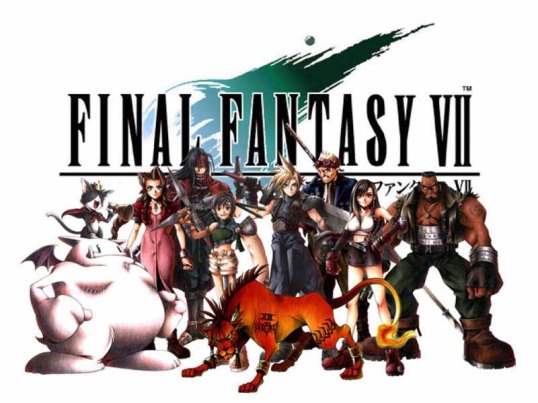
FF7

And, actually, let’s give this a little music, shall we? I hear that particular music in my head every time I see an image on the internet of the city of Midgar, or the logo for Final Fantasy VII.

Yes, that’s right. It’s time to talk about Final Fantasy VII.

Version Played: Steam-client PC port, with fun upscaled resolutions!

For those of you who have been following this series from its start, you probably already know that Final Fantasy VI is my favourite game in the series, and that this exercise was very unlikely to topple VI from its stance, astride the Final Fantasy world like a colossus. Despite having rediscovered how much of a bridge VI is between eras of the games, and despite gaining a much deeper and more interesting understanding of the franchise through this play experience… the dominance of VI, at the very least, has not changed. It is keeping this in mind, and knowing some of what must follow, that I want to preface this piece by saying the following: Final Fantasy VII is irrefutably a great game, and I wholeheartedly believe that, no matter what the rest of this article may contain.

What should also be apparent to everyone, already, is the degree to which Final Fantasy VII infected our cultural consciousness. The fact is, the beautiful CGI video sequences and 3-D scenario of Final Fantasy VII make it perhaps the most memorable of any game in the whole series. It is worth noting that on this day, far more games have been released after VII than came before it. I actually find that statement astonishing, now that I consider it. Just imagine how a sequence like the incredible Opera House performance in Final Fantasy VI might have captured our imaginations if it had been given a full CGI treatment on the PSX… or the PS2… or the 360… Incredible, right? (Don’t bring up the ill-executed “Final Fantasy Anthology” collection). Well, while no single sequence in Final Fantasy VII might equal up to the Opera House performance, or Kefka seizing the statues and destroying the world, the truth is lesser sequences are more memorable for many of us (those who exist in both the 2D and 3D era, meaningfully)… and, in many ways, that is the power of Final Fantasy VII.

It has other things to recommend it. Final Fantasy VII follows a large, diverse party. Each character gets to experience complex characterization as things progress, with a couple notable exceptions…. including side quests, some unique abilities, and the powerful and diverse Limit Breaks that really set them apart in mechanical terms. Each character I used in Final Fantasy VII felt very distinct and different… for a while. But unlike a game like Final Fantasy IV, or even VI, where they have absolutely distinct features, many of which come into play every single battle… the primary – non-cosmetic, let’s get real! – differences between characters in Final Fantasy VII deal with their unique Limit Break techniques. Some of those Limit Breaks are incredibly memorable, and will probably come to define the characters of Final Fantasy VII in many ways for you as a player… but you don’t see them every battle, and they don’t establish an identity in the way that “this character can use Steal” does.

This is because the characters in Final Fantasy VII are so customizable. While it is true that Aeris Gainsborough is a better magician and a (far) worse physical attacker than Barrett Wallace… I could make Barrett into a magician if I wanted to. It would involve loading him down with Materia to change his stats, but equipping him that way is a matter of seconds of work. And, if I change my mind later, it will take only seconds to change him back. Final Fantasy VI eventually allowed a player to control the stat growth of each party member by strategic use of Espers, but the changes were a) permanent and b) permanent.

I suspect that this trend – this gameplay quirk – will be significant in the immediate future of Final Fantasy. But we’ll see.

When I see people extol the virtues of Final Fantasy VII, I typically see three big arguments. There’s simply no way to talk about this game independent of the billions of words and millions of hours that have already been spent on it.

1) THE STORY, MAN. I don’t even know if this is legitimately the #1 argument made in favour of Final Fantasy VII, but it’s a common one, and it is compelling. Does Final Fantasy VII’s story plot tightly together, eliminate all holes, answer all questions, etc? No, it sure doesn’t. But that’s not everything. Final Fantasy VII’s storyline (in case you somehow don’t know…) traces the fortunes of a group of people who have decided to resist the oppression of the ShinRa Electric Power Company. ShinRa provides electricity to the world to power all manner of modern conveniences, which they obtain through the harvest of Mako energy. Of course, as we quickly learn, Mako energy is also the literal life energy of the world of Gaia. In condensing that energy into Materia and using it to power TV broadcasts, the ShinRa company is quite possibly destroying the planet. Literally. Of course, it’s not that simple. Sephiroth, the greatest of ShinRa’s genetically engineered warriors (called SOLDIERs, cryptically enough) returns to the great city of Midgar, slaughters many of Shinra’s top personnel, and flees. Much of the rest of the game is spent in the pursuit of Sephiroth, whose objectives are unknown, but are almost assuredly not benevolent.

When things come together, about 75% of the way through the game, we know that Sephiroth has used the ultimate black magic, Meteor. In VII, this magic literally summons a wandering planetoid, diverting its course through space toward Gaia. It will strike the surface, causing incredible damage. Unlike Earth, however, Gaia has a defense mechanism to protect it against such catastrophic damage. The Mako energy – actually called the Lifestream – will be gathered at the spot of the gaping wound caused by Meteor. Sephiroth will stand there, become one with all of the planet’s energy, and become a God. Not a benevolent one.

Heavy stuff, man. And ultimately very satisfying. We don’t need all the ends tied off on this story. We don’t need to see every detail hashed out to the end. And, if you [i]do[/i] want that, there are actually resources available! Such is its popularity, that there is now an actually thing called Compilation Final Fantasy VII. The expanded universe around Final Fantasy VII probes many of its deepest mysteries, expands upon fan-favourite characters, and in general should give you the satisfaction that you desire.

I have not yet decided whether to include any of these Compilation titles in my own quest to explore Final Fantasy’s depths.

2) It was my first Final Fantasy.

This one is more difficult to break down point by point, but it is definitely worth addressing. My first Final Fantasy (that I completed) was VI. I know for a fact that this creates a nostalgic bias on my part toward the game. Now, of course, Final Fantasy VI is universally heralded as excellent, so my opinion has never proved unpopular. But so many people were introduced to the genre by Final Fantasy VII at a ripe, young age that the game’s explosive – and enduring – popularity make total sense.

3) It was the first 3-D game in the franchise.

Let me add on to this that the 3-D combined nicely with the sheer scope of this game, to create something that – at the time – was utterly without precedent. This is another reason why this game’s flaws are less important than its triumphs. They were when it was released, and they still are today. When I played this game for the first time, in my buddy’s basement (he had the PSX before I did), he and I decided to trade off the controller periodically, and counsel each other on game decisions and so on. All of that was fun, but one thing I remember as much as anything else, was how incredible this game looked by the standards of the time. To this day, some people still prefer the sprites and the beautiful hand drawings of games like Final Fantasy VI… but the first time I saw this game, I knew that we were never going back.

Well. That was a load of nostalgia. Let’s talk about the game when looked at through modern sensibilities. I’m going to knock this out in list format.

1) Was it any good?

It sure was. I had a lot of fun playing this one. I enjoyed it enough to explore all of its various nooks and crannies, including breeding the Golden Chocobo, and using the power of Knights of the Round to unseat the mighty Emerald and Ruby WEAPON monsters. I played the shit out of Final Fantasy VII, and it didn’t matter how many times I had played it before.

2) How’s it hold up?

Unfortunately, Final Fantasy VII’s graphics have aged even more poorly than the sprites from early consoles. The nice resolution upscale of the Steam port made the character models look unusually sharp, while the matte backgrounds through most of the game looked fuzzy and out of focus at best. Unfortunately, even ‘sharp’ looking polygonal character models still look crappy compared to modern games. But what do you want? It’s between 17 years since Final Fantasy VII dropped. And, ultimately, it held up well enough for me to sink 50+ hours into it, and defeat the superbosses, so the graphical considerations weren’t so bad.

Of equally important note is that Final Fantasy VII has one of the series’ better soundtracks. While I personally think several games have better battle music – and yes, that includes the widely beloved One-Winged Angel, Final Fantasy VII has a vast soundtrack that includes a number of mood-setting tracks that are simply superb – tracks like Great Warrior, which plays as Red XIII learns the truth about his family legacy. Within the game, it plays only twice to my recollection, but it’s an incredibly compelling track. The same could be said for Launching a Dream Into Space, a theme composed explicitly for flashbacks about the failed Shinra space launch. Considering scope as a major factor, some would argue that VII’s soundtrack is Nobuo Uematsu’s triumph. I’m not sure that I would agree, but I do think that it was squarely at the center of the “golden age” of Square’s music, which ranged from Final Fantasy VI through Final Fantasy VIII.

3) Is Final Fantasy VII really overrated?

Perhaps.

It probably depends on whose rating you use as a baseline. The manic Sephiroth fans of the world probably do overrate the game. I think, however, most modern gamers who go far enough back to have played and enjoyed Final Fantasy VII when it was shiny and new have given it the due it deserves, and have come to accept its faults as well.

Well, this piece was probably not exceptionally helpful, since everyone has played the effing game, but thanks as always for reading. Next time, I’ll plunge into the depths of Final Fantasy VIII.

The Relevant Irrelevant Expo


Some reactions to games “unveiled” at E3, and some reasons why one would care… or not. Note that this is not intended to be absolutely comprehensive coverage of E3 at any level, but is instead simply one man’s opinion.

If you visit IGN today you can gain access to a fairly comprehensive review of the Electronic Entertainment Expo, or E3, the yearly convention that has ranged from absolutely industry defining to utterly without meaning in its scope of relevancy. To say that its current iteration is overrated might not be entirely correct, but it is within the scope of the discussion. In general, most of the games that were “revealed” or “unveiled” or whatever at E3 were things that were already in the public consciousness – at least at some level. To say that E3’s tech demos fleshed some of these games out significantly would likewise be stretching the truth – a demo is a demo is a demo. Those are words to live by.

Until we hold these upcoming titles in our hands, we know nothing. This is a truth that should have been driven deep into each gamer’s brain by this late stage. In case you are a newcomer, or one of the very young, please internalize this lesson right away: Game companies are trying to sell shit. If they incidentally create a great game… so much the better. But if you buy the game they are peddling, regardless of its comparative quality, then they have achieved their goals. Their salaries are secure for another round. Never make the mistake of assuming that a great demo will yield a great game. Ever. No matter the pedigree of the franchise, or the publisher involved, or whatever else.

Obvious, given that paragraph of raw cynicism, I would not advise you – dear reader! – to take any of the following impressions any more seriously than they are intended to be. I am simply reacting on instinct to things that I have seen from E3. Not even all things I saw from E3. In fact, in my more candid moments, I would probably admit to you that I would be delighted to see people argue with me in the comments section below. So keep that in mind.

Alright, all that’s done. Let’s take a look at some upcoming releases swept from behind black curtains at E3…

Alien: Isolation

Billed as the Alien game that fans have always wanted, Alien: Isolation is a survival horror title published by SEGA, and created by The Creative Assembly, the studio behind innumerable “Total War” franchises. What Total War has to do with evading an unbelievably lethal xenomorph is a question best left to the philosophers. This is a game that people have ostensibly actually played. For real. And those people liked it. I remain incredibly skeptical, but not totally immune to the charms of the idea…. After all, many serious gamers have labored many long years hoping to see an Alien game that captured the essence of the original film. At this point, though, aren’t we looking for survival horror rooted firmly in the unknown? How many surprises are there left for the xenomorph to gift us?

My Prediction: For achievement whores and survival horror junkies only. Ends up on a stack of “Oh, yeah, that was pretty good. I haven’t finished it…” for … everyone else.

Assassin’s Creed: 5,6,7…

Does anyone else remember when this was trumpeted as a trilogy of revolutionary action games, with contextual controls, a fascinating science fiction plot… and… well… three games? The first of the two Assassin’s Creed games talked about at E3 would bring the total number of distinct AC titles listed by Wikipedia to 16. The original Assassin’s Creed was released in 2007. I’ll let you do the math here.

Incidentally, I freely admit that Assassin’s Creed IV: Black Flag, was heralded almost universally as an improvement over a series that I had long since lost interest in… but why are people still hooked? Is there even a story being told here? I’m all the way out on Assassin’s Creed. I’d much rather Ubisoft just kept the engine and released something altogether new. Does this have to be the “Spider-Man” of gaming?

My prediction: An embarrassingly overrated (critically) offering from a series that was tired eight offerings ago. The announcement of Asssassin’s Creed 7 (or whatever) follows almost immediately.

Batman: Arkham Knight

This opinion is going to be unpopular… but… did you really love the third Arkham game? Are you even sure you loved the second Arkham game? Believe me, I am the first to admit that Batman is something of a badass. To be put in his skin, with a variety of his capabilities, like stringing villains upside down beneath statues on cables, is rewarding to say the least. Honestly? I got my fill the first time around. Increasingly implausible setups revolving around the same core gameplay just serve to make things even more thin and stretched than ever. Barring a significant improvement in gameplay, this is just another clone.

You should be waiting for a substantial Steam sale here, folks.

My Prediction: Increasingly thin premise leads to thin reviews and even thinner popular support. The end of this latest revival of Batman video games.

Bayonetta 2

Wii U exclusive? I am, in fact, laughing out loud.

My Prediction: Exclusives are a disaster when you’re the Wii-U.

Battlefield: Hardline

I have heard preliminary reports that this is… underwhelming. At best. I am not surprised. From the footage, it looks like the folks at DICE have decided to merge the successful Battlefield franchise with Payday: The Heist. I’m not sure why. Battlefield’s appeal, to me, has a lot to do with its portrayal of a battlefield. I have no patience for this nonsense. After the catastrophic launch of BF4, and its continuing problems, I have very little patience for DICE, either. This one is going to have to prove a lot to get back into my good graces.

My Prediction: Absolute disaster. The least successful BF since before Bad Company brought it back.

Borderlands: The Pre-Sequel

I, personally, might be out on Borderlands.

But it’s not because of some fundamental flaw that I see in the games. The infusion of humour into a “Diablo”-style game model of increasing loot drops makes for a very refreshing experience. For some. Your own mileage may vary. Still, this is a franchise that has the liberty to extend itself, from my perspective, in ways that Assassin’s Creed has not earned. The simple fact about Borderlands is that a simple frame story is adequate… as long as it’s stitched together with hilarity.

I think we can assume that it will be.

My Prediction: The new Diablo. I grow ever further from people conceptually, as I have an increasingly difficult time understanding why anyone would want to keep playing.

Call of Duty: This Year’s Call of Duty Star Wars Battlefront Advanced Warfare

Is any franchise more predictable? My own experience, and people that I personally have met, were turned off by CoD: Ghosts. Were you?

My Prediction: It’s CoD, for whatever that’s worth.

Civilization: Beyond Earth

Any new Civ is a big announcement since the advent of Civilization 4, which probably still remains the gold standard by which all similar titles must be judged. Civilization 5 failed to employ Leonard Nimoy to read its narrative dialogue, but otherwise improved substantially in some areas even upon Civ 4. There is little reason to doubt that this latest foray, whatever its inevitable practical issues might be, will provide new and unique opportunities to “civ”. I expect that all serious Civilization players are already planning to buy it. But if that list doesn’t include you yet…

… Why not?

Perhaps this is, finally, the Civ you’ve been looking for. I’d be the first to accept you if you said that Alpha Centauri was simultaneously what you wanted Civ to be, and yet fell short of all your expectations. Alpha Centauri definitely had its problems, even though I would defend it as a superior game of the last twenty years or so. Beyond Earth has the potential to far exceed anything that has come before in Civilization, however. One disappointing idea is that it may also mean that Civilization has explored Earth’s history as thoroughly as it can. I suppose I’ll be pouring out a 40 as I board my shuttle to the moon.

My Prediction: A game that is absolutely worse than Civ IV (no crime, actually!), but is almost as good as Civ V. Shows the potential of the franchise.

Dragon Age: Inquisition

Inquisition has vowed to return more to the ideals of the original DA (gameplay wise). I think this is undeniably a good thing. In fact, you could generate an almost perfect WRPG experience if you combined the tactical gameplay of DA:O with the sophisticated characterization and long-reaching multi-layered plot of DA2. Name games for me in each respect which are superior to DA:O (tactical RPG gameplay) and DA2 (characters). Do not use the phrase “Baldur’s Gate 2”. Go.

My Prediction: Disappoints both fans of DA:O and DA2. Becomes overly conservative after chance-taking DA2, but also unwilling to create the tactical difficulty levels that players are hungering for. Demonstrates a continuing lack of awareness from Bioware of what their players actually want.

Fable: Legends

Something literally no-one wanted! An RPG that can only be played online with other people.

No, I’m sorry. I can’t say for certain that no-one wanted it. If you wanted it, please respond in the comments below.

My Prediction: HAAAAAAAAAAAAAAAAHAHAHAHAHAHAHAHA.

Far Cry 4

Considering the games in this franchise have literally nothing connecting them.. do they really need to be a franchise? Seeing the number “4” after almost anything just bums me out. Still, Far Cry 3 was a triumph. If Ubisoft can continue on that successful path this is a game that is worth serious consideration as it releases.

My Prediction: A series of incredible trailers that make the game look better and better by the day.

FIFA 15

😀

My Prediction: A competently arranged sports game. C’mon. There’s a 0% chance that there will be any surprises here, one way or the other.

Forza Horizon 2

This really is a disappointment to me. Forza Motorsport 5 continued the successful Forza franchise on next-gen consoles, and it is an adequate representation of the genre. Forza Horizon (take one!) was a pleasant diversion from the world of racing established tracks with established racing cars, and so on, and so forth… The “refreshing” part starts to dilute right away when you make it into a sub franchise though, right?

All that being said… there’s promise here. The original Horizon was an undeniably fun game. A worthy side-diversion from the historically great Forza Motorsport 4. This one probably bears watching.

My Prediction: Less compelling than Horizon 1. Less compelling than Forza 4. A misguided attempt to score twice with the same franchise in the same year. Bad, bad…

Gears of War 4

R.I.P.

My Prediction: Does anyone give a shit anymore?

Halo 5

R.I.P.

My Prediction: R.I.P.

Halo: The Master Chief Collection

Presumably realizing that there’s no new ground left to tread (and there hasn’t been since Halo 3), now there’s an HD collection which brings all of the previous Halo titles up to snuff. Everything will be in 1080p. All the old multiplayer environments will return. All the old games have been remastered. What Microsoft really wants here is a time machine… if we could actually go back to the era of Halo 2’s multiplayer, that would be one thing… but just recreating it now? Let’s just say that I have my doubts.

Please don’t buy this collection.

My Prediction: Startlingly unpopular. Please don’t buy this collection.

Kingdom Hearts 2.5 ReMix

It’s sort of like the FFX/FFX-2 remasters, only it doesn’t bother to include Kingdom Hearts 1. The staggering volume of peripheral titles is well represented here, so your own mileage may vary.

My Prediction: If this is the HD collection you wanted, buy it. If not, boycott it.

Kingdom Hearts 3

zzzzzzzzzzzzzzzzzzz…

My Prediction: More to say, have you?

Mass Effect 4

We don’t know that much yet, even after E3. Still, it sounds like there will be a new, original story, with new characters, in the universe of Mass Effect. Given the scope of the setting, and the absolute masterpiece that was Mass Effect 1-3… I’m going to give Bioware some slack here. I’m going to wait until I have some solid information on what they’ve come up with before I start trying to hack it to pieces.

My Prediction: This will spawn 70 billion angry emails and internet comments, and 63 billion angry fanfics. It will also probably be excellent, if you can get over yourself.

Middle-Earth: Shadow of Mordor

We all know this game is going to be terrible right? I mean, people who love the lore of Tolkien are going to riot… it’s going to be mechanically or emotionally inferior to Bioware products like Mass Effect, or to the sophisticated blend of The Witcher…

I guess the jury is still very much out on this one. But I just don’t have high hopes at all.

My Prediction: My least fair judgment of all. I think this game will fucking suck.

Mirror’s Edge 2

Top of my “did not need a sequel” list. Great cash grab, guys! I loved the first one, but it actively bothers me that you can’t come up with another brightly lit setting to run athletic characters through. Booooooooooooooooooo.

My Prediction: The birth of another unnecessary series. Still, if the games remain bright and colourful, they have a niche over the browns, greys, brown and greys of, say, Gears of War, or Call of Duty.

Mortal Kombat X

Please make Story Mode repeatable.

Sincerely,
Gamers

My Prediction: Mortal Kombat was already a pretty good start on rejuvenating this franchise. I think it has an upward trajectory… but it needs to make some smart decisions. I don’t think it will. Underwhelming filler game!

Pokemon Alpha and Omega

The beginning and the end.

The first and the last.

My Prediction: Doth thou desire the power?

Rainbow Six: Siege

One of those oddball franchises that pops up with no regularity whatsoever. Still, I gleaned a great deal of enjoyment both out of Rainbow Six: Las Vegas and Rainbow Six: Las Vegas 2: The MGM Grandening. Or whatever. This is one of very few franchises that inspires an immediate “perk up” from me, instead of a sad shake of my head. This is a game that I will be keeping my eye on in the coming months.

My Prediction: My top multiplayer game for exactly three weeks. Then back to business as usual.

Star Wars Games

Star Wars games suck. They sucked before Disney acquired the rights, and they still suck now. Don’t get your hopes up.

My Prediction: Lens flares. They put JJ Abrams in charge, right?

Warhammer 40k: The Eternal Crusade

Too much lore, too much backstory. You will never find what you’re looking for in a video game. I’m sorry. I feel your pain.

My Prediction: A competently executed but ultimately very forgettable title.

The Witcher 3

As soon as censors get hold of the good sex cards, the appeal ends. Well, that’s not fair… this is definitely an above average RPG series. Actually, I have high hopes for the third installment. They still range about 35% lower than the average retail price. Bummer.

My Prediction: Way less nudity than everyone is hoping for. Bummer.

A Glorious Fantasy: The Magitek Revolution


Once again I return to this ongoing series, in which I attempt to play through every game in the Final Fantasy franchise that I can get my hands on, from FF1 through Lightning Returns, and a variety of the spinoffs and other titles not included in the ‘main series’. This list continues to undergo revision, and I seriously considered removing Final Fantasy 9 from it for personal reasons. In addition, no MMO titles will be played. Sorry, folks?

I think all of this is extremely important knowledge, and that the human race will be improved by my research. Let’s move on!

FF6-logo

This is a bittersweet entry for me. Final Fantasy 6 has always been my favourite Final Fantasy. It is the first one that I played to completion, and I still think of it as the absolute pinnacle of the JRPG form. There are things about later games that I like, individually, better than certain aspects of Final Fantasy VI. But unless I really undergo a transformation moving forward in the series (or if Lightning Returns is somehow the greatest game ever released… and I doubt it) … this is the high point. This is the pinnacle. For me, this is the definitive FF experience, and the game I would recommend throughout this entire odyssey without hesitation to anyone, anywhere, anytime.

Version Played: GBA Remake

Version Notes: Having played the original SNES version 90282834 times (all numbers approximate) and the GBA version 0 times, this was kind of fun for me. The primary feature of the GBA version is a new, upgraded translation over the Ted Woolsey original. Obvious upgrades include the names of characters no longer being in all caps for whatever reason, and the expansion of several characters. I never thought that the original translation of FFVI was particularly egregious, but I will freely admit to liking the GBA translation better. The GBA version also fixes a number of rather infamous bugs from the original game, including the Evade bug. I would highly recommend this version to both new players and returning ones alike.

So… where to begin, really, with Final Fantasy VI? At the risk of exposing my knowledge of future games, I can certainly say that FFVI’s style paved the way for the characters and combat systems of Final Fantasy VII and Final Fantasy VIII. It also represents the only real departure (let’s not count FFI and FFIII where you have only ‘generic’ characters) in the entire Final Fantasy series from the idea of a single protagonist, with supporting characters around her. In this case, while Terra Branford is an obvious protagonist type, and does start the story as its central character, she remains such only until the first major split in the party, when Terra leads a group trying to escort the rebel leader Banon to safety on the Lete River… meanwhile, Locke Cole attempts to delay the impending invasion of the Gestahlian Empire from overrunning the peaceful realm of Figaro… and Sabin Figaro is lost on the Lete, and must make form new alliances to get back home.

Let the idea of that sink in, just a little. It’s a truly novel concept, and one that is not really used in any other RPG-style game that I can recall to mind. The ensemble cast of FFVI is not held together by the glue of Terra Branford, nor by any other single character. Certainly, the game has a few characters much more ‘major’ than others (Terra, Celes, and Locke receive a large amount of development over their fellow cast members), particularly if you don’t indulge in some of the sidequests that the game offers once you reach its second half.

If any single character provides focus to the narrative, then, it has to be the bad guy. Actually, in this case, as is often the case, there are a couple of them. The villains provide us with a single thread to follow through the complex characterizations and variety of locales that the party will explore. Ultimately, this game is about stopping the mighty Kefka from literally grinding the people of the world into dust, until nothing at all remains. While this has basically been the goal of every antagonist we’ve faced thus far (spoiler alert: probably most of the upcoming ones have the same plan in mind), Kefka begins to realize his goals in a visceral way which is, again, unusual for this game series.

Final Fantasy VI is also the first game to depart in a major way from several of the core story themes that we’ve seen before in every other installment. Gone are the crystals (Earth, Wind, Air, and Fire). Gone are prophecies of any kind – the people of Final Fantasy VI’s world are more worried about repeating the mistakes of the past through a cataclysmic conflict called the War of the Magi, which destroyed the world and erased magic, but also gave rise to the steam engine, and modern technology. It’s this technology, and this complete departure from the series’ roots that gives this game it’s unique flavour, and also very much sets the stage for the succeeding games.

Here, too, is another innovation, which in some ways builds on the stylings of Final Fantasy IV, but not entirely – each character here possesses a unique skill, such as ‘Steal’ for Locke, or ‘Morph’ for Terra (Cecil, for example, had ‘Darkness’, and Kain ‘Jump’). However, beyond that unique skill and their individual equipment lists, the characters have many interchangeable features. Their ability gain at level up is determined entirely by the Esper system, which also teaches characters magic. It is possible (albeit, pointlessly difficult and unrewarding) to turn even the most magically inept character like Edgar into a spellcasting powerhouse with the Ultima ability by the game’s end. While this was previously a function of jobs, the character ‘jobs’ in FFVI are immutable, though you have many characters to choose from by the end, unlike in Final Fantasy IV.

Final_Fantasy_VI_OperaNone of this is why the game is so effective, however, or why its memory has lingered with me far beyond any other game in the series. The truth is, all of that has to be attributed by incredible moments, like the Opera House sequence, which elevate this game from a story perspective far beyond any previous offering. Its combat system may not be quite as fun to play with as FFV’s deep and immersive job system… but the characters will draw you in in a way that perhaps no other game in the series will.

After so many years, there’s not too much more to add here. Just know that if you have never experienced Final Fantasy VI, you are missing one of the great games of all time. That would be a shame.

Artist Profile: Hyung-tae Kim (1978 — )


HtK00

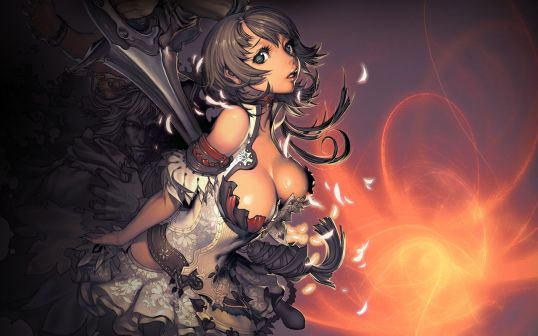
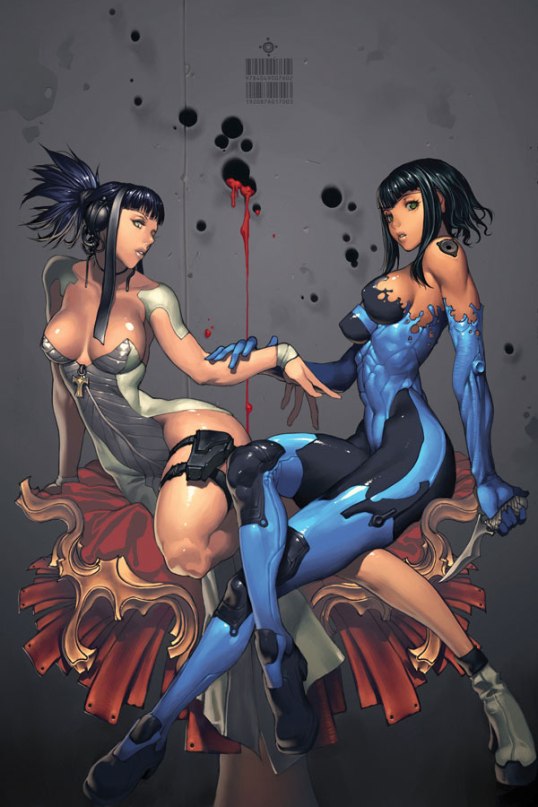
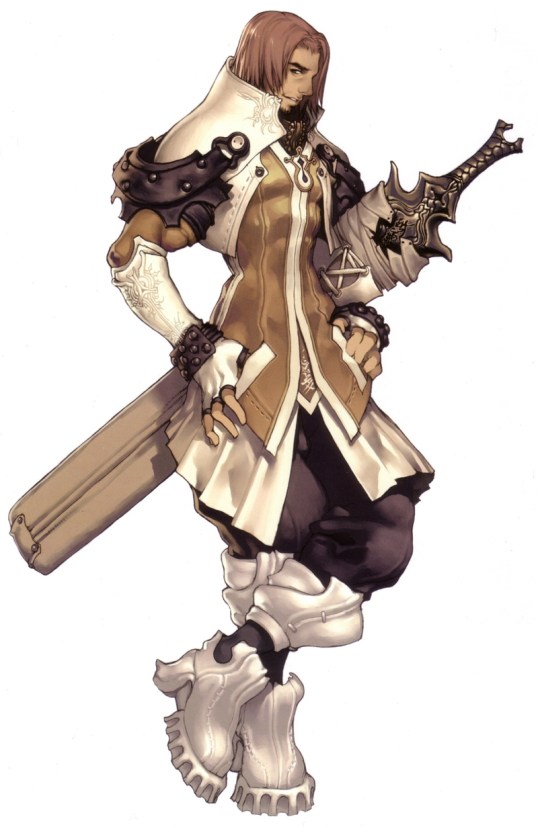
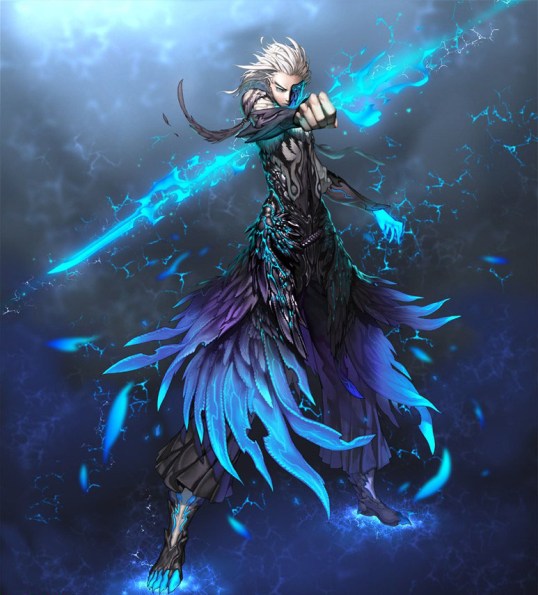
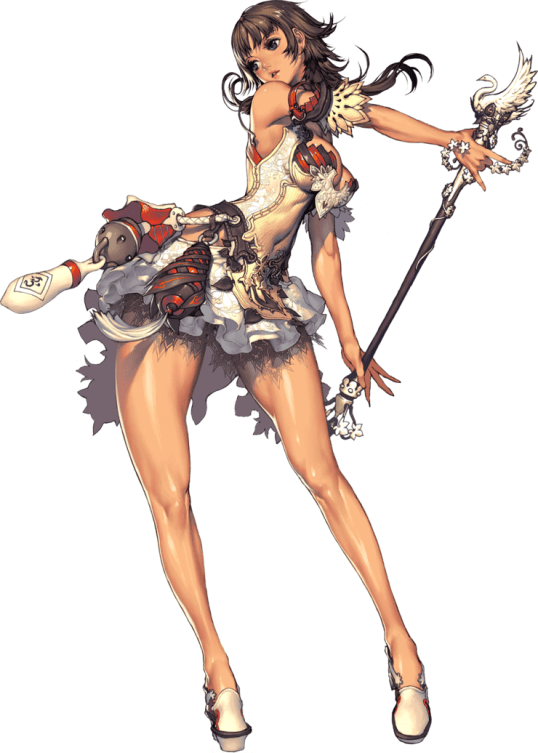
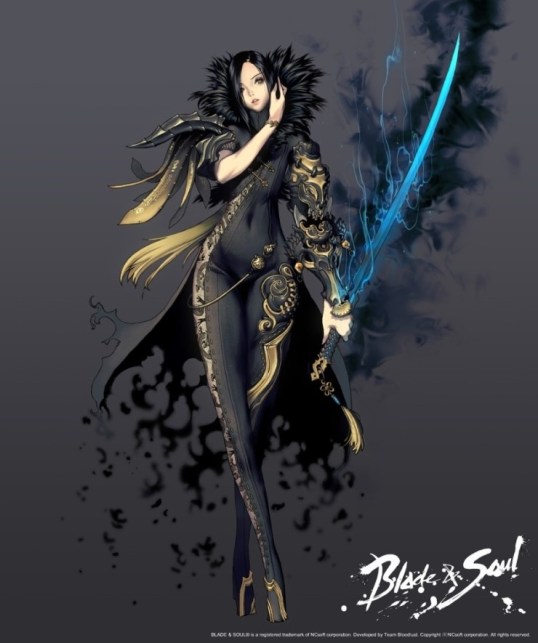
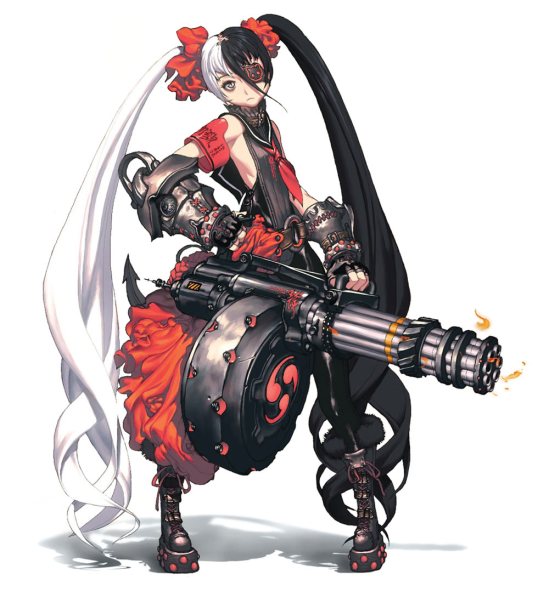
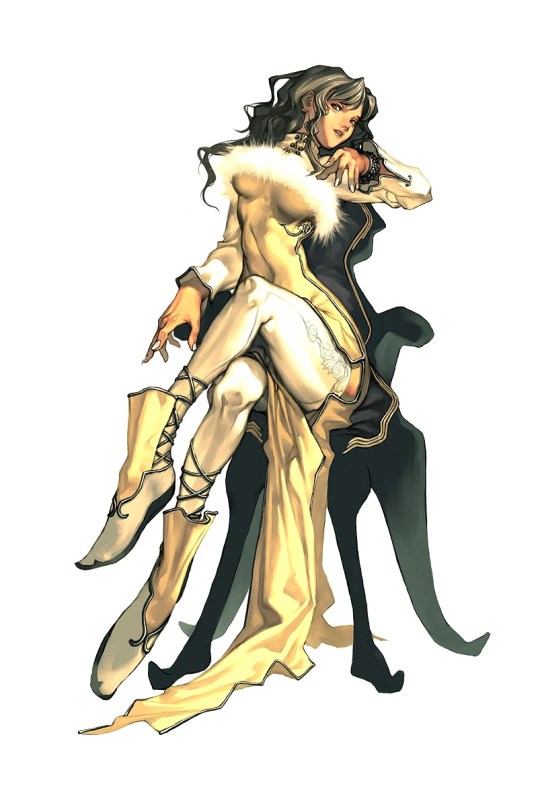
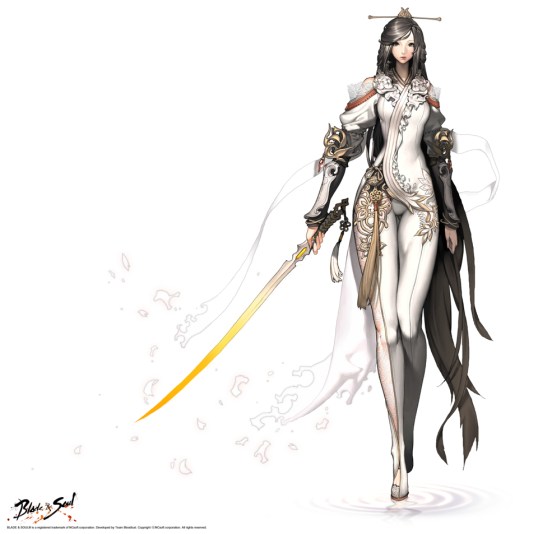
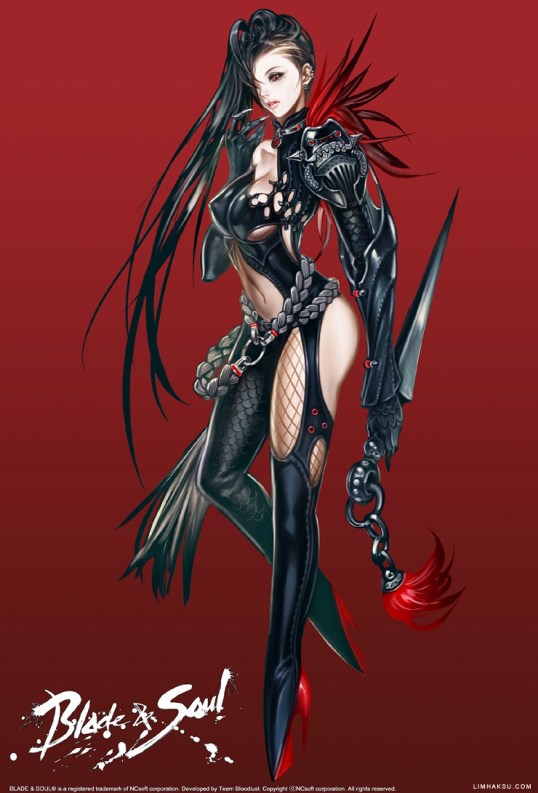
Korean manwha artist and illustrator Hyung-tae Kim has become famous for his video game illustrator and art design work.

Born in February 1978 in Seoul, South Korea, Kim began his career in the video game industry creating background music for games, but he soon moved on to the art and design phase of the game process. His most notable works has been the covers and art design for the console rpg series Magna Carta and the Korean mmorpg title Blade & Soul for software studio NCSoft.

His style of artwork has been described as anatomically incorrect which is true, but he uses this deformation technique as a way to allow the unique individual personalities of each character to come out through the design. The unique look of his artwork has made his art books and art pieces highly sought after (both of which are very limited in nature) once they come out and then afterwards in secondary collectible markets.

HtK01

HtK10

HtK02

HtK09

HtK03

HtK08

HtK04

HtK05

HtK06

HtK07

FTL – Advanced Edition


When Faster Than Light first launched, in the before time, in the long long ago… the developers talked about updates. Upgrades. Expansions. For a long time, we had nothing.

But then, as good developers are wont to do… we got everything. We got FTL – Advanced Edition. It’s more than just an expansion to the amazing space-based Rogue-like that we already played. It’s more than a remake which provides tons of extra features and cosmetic improvements that would have helped the initial release. It’s both an expansion and a remake all at once. It’s a huge upgrade to the core game filled with many quality-of-life improvements combined with an expansion that introduces many new mechanics, a new cruiser, a heavy load of new weapons and augments… even a new alien race. It’s pretty good.

And before I go a step further, let me tell you about the best part: It’s free!

It’s free because you already bought Faster Than Light on my recommendation. If you didn’t… well, I feel for you. Because a great game has been out for years without your knowledge. Luckily, it’s not too late. Things haven’t changed. Even if you’re just buying now, the game is still going to cost you only $9.99 US. For everything! If you have any interest in this deep, strategic, space-based Rogue-like… this is an excellent price point. It could get better on the Steam sale… but in general, this isn’t too dear a price to pay to support an excellent indie developer who has produced an excellent product.

So what’s so good about FTL Advanced Edition? I guess everything. Let’s talk about the improvements, in no particular order.

– A new alien cruiser, provided free of charge to owners of Advanced Edition. It’s a totally unique ship. The new alien species (no surprise) mans this craft… and their special characteristic is being awesome… but also draining oxygen out of any room they’re in. Obviously, you can create an awesome ship out of these aliens alone. But that’s not guaranteed in FTL. Still, it’s brutally hard for boarders to take a ship with no oxygen. I’m sure we’ve all tried and been burned horribly by automated ships in the past!

– A new alien species! They suck oxygen, but otherwise are pretty awesome. Wait, it’s easy to turn no air to your advantage? Maybe they’re just awesome.

– Tooltips. The game has had a staggering upgrade in UI. One of the biggest and most immediately apparent differences is in UI. I think literally one zillion (technical term) tooltips have been added to the game. More or less everything now has some information associated. In some ways, you’re still flying blind, but in others… there’s a degree of transparancy which will help you decode what to do.

– Piles of new stuff. New equipment. New weapons. New events. Old events re-worked. It’s the same game, but it’s different enough. If you thought, for example, Reaper of Souls, was a very nice quality of life upgrade with some new content… this is at least that good. Only it’s free to game owners. Pretty rough, huh?

– New qualities, new hazards. Ion events in deep space. Freezing. Fire! Totally new qualities. In many ways, this is the same FTL that you already knew… except there’s a thousand more variables now. The expansiveness of the game has increased dramatically.

– Let’s talk more about those UI upgrades. Simple quality of life stuff. Making a jump on the sector map? You can now see what jumps are ‘in range’ and you can make from your destination. Ever been frustrated, being stuck in a random corner you thought you could escape, fighting Rebel cruiser after Rebel cruiser? Nah, no big deal now.

– More ship layouts. More ship access. You can now unlock any ship in the game (except for the Crystal cruiser) by beating the game. If you’re good, you’ll get access to ship after ship… and eventually, you’ll begin to gain access to C-style layouts. They include many of the new…

– New ships systems. Replace your medical healing bay with a Clone Bay that heals crew members only on jump, but also clones new copies of dead crewmates. Gain a battery backup that gives you a gigantic reactor boost for 30 seconds, giving you overwhelming power in those nebulae. Gain a hacking module which lets you close doors and cripple opposing ships. Gain the mind control module, turning opposing crewmen into your crewmen. Try deploying MC tech against the Rebel flagship, and make a winning strategy even better!

– A new sector. This exists, but I have not yet been able to produce it, through the games I’ve played. I apologize. Rumour holds that it centers around the new alien race, and their oxygen-sucking ways. It’s probably awesome.

– It bears repeating that the script has been revisited, expanded, and improved. This includes both old events and new. The overall experience is more streamlined, and more awesome, than it was before.

Do I seriously need to keep stumping for a free upgrade with bullet points?

Buy the game! Upgrade the game! Enjoy the game!

The Reaper of Souls


Diablo_3_reaper_of_souls_box_art_0

There’s no need to be afraid. Spoilers do follow (to the extent that a Diablo game can be spoiled). You have been warned.

So, in the relatively recent (surprisingly still recent!) past… Blizzard Entertainment released a hilariously long-delayed sequel, which is sort of their hallmark, in Diablo 3. Probably everyone who had some interest in the Diablo franchise played it. And, in several ways, it was sort of the ultimate evolution of the Diablo formula and format. Is the storyline silly? Yes. In fact, it borders on preposterous. But it also holds together in a ‘good enough’ way to propel the action through a variety of beautifully rendered locales killing everything in sight. Reaper of Souls does not alter this formula. Presumably none of us tuned into Diablo for storytelling, right? It’s not an RPG. It’s a game where you click on monsters and kill them. Your reward is better loot, which makes it easier to click on monsters and kill them. It is weirdly absorbing in its way, but it is not high art. This is a game about a visceral experience; it is purely about fun.

And Diablo 3 was fun. It improved heavily upon Diablo 2. Each class can now be either sex! Each class now has a half dozen abilities in play at a given time, rather than just ‘left click’ and ‘right’ click… and the procedural generation, while still present, is a little more structured… or, at least, it feels a little more structured. Some areas seem to vary little between different playthroughs. To be perfectly honest, while it is a very competently produced game, a tight experience, with lovely graphics… I didn’t feel like I had $60 worth of game when I acquired Diablo 3. I think I eventually got enough play hours out of it to where I can shrug and move on… but I didn’t expect to find myself shelling out another $40 for Reaper of Souls. I did it anyway, though.

The good news is, for what fence-sitters may remain… Reaper of Souls is pretty good! Let’s discuss several reasons why:

– Act V. Act V is a massive act, easily twice the size of any of Diablo 3’s four acts. It comes complete with an entirely new selection of monsters, three major bosses with complex battle mechanics and a variety of environments, all of which are pretty cool. It’s hard not to respond to Act V as the best overall Act available in the game now. Act V, for those who haven’t been paying attention, follows the Nephalem’s quest to save the entire world of Sanctuary from a renegade angel, Malthael, whose exact plan remains unknown.

– Crusader. Crusader is the new class, a melee attacker like the Barbarian or Monk. The Crusader uses a weapon and shield style, though the weapon can be two-handed with the use of a passive skill slot. In play, they feel strong defensively, with a good area of effect capability. I have yet any of their legendary items with my own eyes, but the class does represent a new way to experience the game. I certainly can’t claim to have 60’d a Crusader, let alone 70’d… but I have played the Crusader, and it is good.

– Loot 2.0. I know this actually launched at the start of March, but it was part of the build-up to Reaper of Souls. I get how a company seeking profit would clamp onto the idea of the real cash auction house. I get how the economic power of the World of WarCraft Aution House could invite the creation of a similar body in Diablo 3… but even the most hardcore players I know would suggest that the existence of both cash and gold AHs was a mistake in Diablo 3. At best, they did nothing to improve the experience. In the real world, they significantly harmed it.

Now that the Auction House is gone… we get Loot 2.0. A universal improvement over loot 1.0, randomly generated loot now tends to generate according to your needs. Stats are much more likely to roll for your class, legendaries will (almost) always be for your class. Sets? I haven’t seen much of, despite a good number of hours invested… but I assume they adhere to similar principles.

– Bosses 2.0.

One area where Reaper of Souls really shrines is in boss design. Did you like the act bosses in Diablo 3? Because loot 2.0 comes with boss 2.0, and even without the expansion, the purple encounters throughout the game have been tweaked, revisited, improved… and it goes double for Reaper of Souls itself. Uzrael, the first of three significant act bosses, was more complex than the act bosses in Diablo 3… more complex than Baal had been in Diablo 2… Blizzard applying lessons learned from years of creating raid encounters for increasingly sophisticated MMO players. But there are balances to be struck, and they differ between products. A single character has to be able to confront Malthael at the finale of Reaper of Souls, and ultimately that’s as much a part of the game as 10/25 man raids are for World of WarCraft. This is a process that easily could have been screwed up, but instead it’s been implemented beautifully. Malthael’s encounter is an epic affair, featuring no easily discernible pattern, with Malthael possessing at least a dozen different types of attacks, some of which are not easy to dodge. He will test both your skill and your gear, and it was awfully satisfying to finally see him fall.

– Difficulty 2.0

Reaper of Souls heralds a new dynamic difficulty system for Diablo.. one that is based, more or less, on your gear… rather than your level. In Diablo 2, and again at Diablo 3’s launch, difficulty consisted of Normal, Nightmare, Hell, etc. difficulties, each higher difficulty “unlocked” by completing the previous one. In order to proceed, you have no choice but to play through the entire storyline, consecutively. It made it harder to just “jump in” to games with your friends unless they were in the same difficulty of the game, and the difficulty jumps generally were quite drastic.

Difficulty 2.0 attempts to smooth all of this with a much more dynamic difficulty system. Now, the player has access to a several ‘standard’ difficulty levels, and then Torment levels which are designed for high-level (60+ minimum) play. The higher the difficulty you play on, the bigger the bonus is to the player’s experience points earned, gold and item find. Since this sliding scale also stacks with the inherent bonuses from having multiple players in the game, high level runs on Torment difficulties with your friends can produce quick dividends in terms of loot. Of course, there’s always better loot just around the corner…

These are the most substantive changes. They were needed, they are positive, and if anything could re-invigorate the Diablo 3 experience for you… this patch and expansion will probably do it. The game features many other improvements, like customising items (both a single property of a given item can be swapped out, and its appearance ‘transmogrified’, using a new artisan in town), an expanded stash, re-worked items and class features, and so on.

There are two big negatives, however. They are intertwined, and they are compelling.

– $39.95 U.S.. And that’s not me getting overcharged for physical media at Wal-Mart. That’s from Blizzard’s digital store, through my Battle.net account. For an expansion? Ouch. Now, obviously, they did a lot of work on this one. Act V is big, Malthael is a bad ass, and all of the other updates and improvements were welcome… but it’s still a stiff price tag to pay for a game add-on. I’m suspicious of the idea that a new character class is really that big of an addition to this type of game. But there it is. They’ve already got my money.

– It’s still Diablo. That means that its replayability mileage for you [i]may vary[/i]. Just keep that in mind, before you shell out your hard-earned money. Still, if Diablo has always been something you’ve enjoyed, you will find this the most pleasing offering so far.

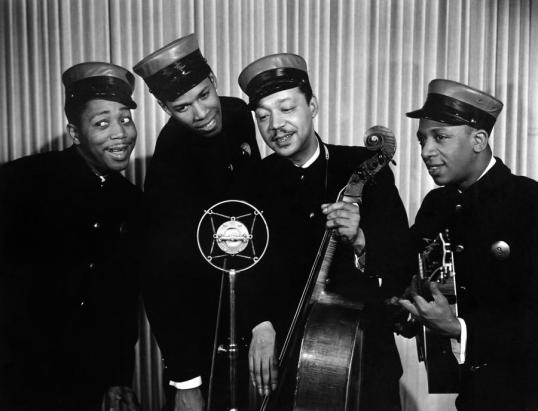
Song of the Day: Maybe (by the Ink Spots)


The Ink Spots

Tonight’s episode of The Walking Dead began with a tune recognizable to many gamers who played through Bethesda’s Fallout 3.

“Maybe” by The Ink Spots have been used many times to highlight simpler, idyllic times when compared to post-apocalyptic wastelands. It worked well for Fallout 3 and definitely lent an eerie, disturbing quality to the flash forward opening to the latest episode of The Walking Dead.

Maybe

Maybe you’ll think of me
When you are all alone

Maybe the one who is waiting for you
Will prove untrue, then what will you do?

Maybe you’ll sit and sigh, wishing that I were near
Then maybe you’ll ask me to come back again
And maybe I’ll say maybe.

Maybe you’ll think of me
When you are all alone

Maybe the one who is waiting for you
Will prove untrue, then what will I do?

Maybe, you’ll sit and sigh, wishing that I were near
Then maybe you’ll ask me to come back again

And maybe I’ll say maybe.