The Reaper of Souls


Diablo_3_reaper_of_souls_box_art_0

There’s no need to be afraid. Spoilers do follow (to the extent that a Diablo game can be spoiled). You have been warned.

So, in the relatively recent (surprisingly still recent!) past… Blizzard Entertainment released a hilariously long-delayed sequel, which is sort of their hallmark, in Diablo 3. Probably everyone who had some interest in the Diablo franchise played it. And, in several ways, it was sort of the ultimate evolution of the Diablo formula and format. Is the storyline silly? Yes. In fact, it borders on preposterous. But it also holds together in a ‘good enough’ way to propel the action through a variety of beautifully rendered locales killing everything in sight. Reaper of Souls does not alter this formula. Presumably none of us tuned into Diablo for storytelling, right? It’s not an RPG. It’s a game where you click on monsters and kill them. Your reward is better loot, which makes it easier to click on monsters and kill them. It is weirdly absorbing in its way, but it is not high art. This is a game about a visceral experience; it is purely about fun.

And Diablo 3 was fun. It improved heavily upon Diablo 2. Each class can now be either sex! Each class now has a half dozen abilities in play at a given time, rather than just ‘left click’ and ‘right’ click… and the procedural generation, while still present, is a little more structured… or, at least, it feels a little more structured. Some areas seem to vary little between different playthroughs. To be perfectly honest, while it is a very competently produced game, a tight experience, with lovely graphics… I didn’t feel like I had $60 worth of game when I acquired Diablo 3. I think I eventually got enough play hours out of it to where I can shrug and move on… but I didn’t expect to find myself shelling out another $40 for Reaper of Souls. I did it anyway, though.

The good news is, for what fence-sitters may remain… Reaper of Souls is pretty good! Let’s discuss several reasons why:

– Act V. Act V is a massive act, easily twice the size of any of Diablo 3’s four acts. It comes complete with an entirely new selection of monsters, three major bosses with complex battle mechanics and a variety of environments, all of which are pretty cool. It’s hard not to respond to Act V as the best overall Act available in the game now. Act V, for those who haven’t been paying attention, follows the Nephalem’s quest to save the entire world of Sanctuary from a renegade angel, Malthael, whose exact plan remains unknown.

– Crusader. Crusader is the new class, a melee attacker like the Barbarian or Monk. The Crusader uses a weapon and shield style, though the weapon can be two-handed with the use of a passive skill slot. In play, they feel strong defensively, with a good area of effect capability. I have yet any of their legendary items with my own eyes, but the class does represent a new way to experience the game. I certainly can’t claim to have 60’d a Crusader, let alone 70’d… but I have played the Crusader, and it is good.

– Loot 2.0. I know this actually launched at the start of March, but it was part of the build-up to Reaper of Souls. I get how a company seeking profit would clamp onto the idea of the real cash auction house. I get how the economic power of the World of WarCraft Aution House could invite the creation of a similar body in Diablo 3… but even the most hardcore players I know would suggest that the existence of both cash and gold AHs was a mistake in Diablo 3. At best, they did nothing to improve the experience. In the real world, they significantly harmed it.

Now that the Auction House is gone… we get Loot 2.0. A universal improvement over loot 1.0, randomly generated loot now tends to generate according to your needs. Stats are much more likely to roll for your class, legendaries will (almost) always be for your class. Sets? I haven’t seen much of, despite a good number of hours invested… but I assume they adhere to similar principles.

– Bosses 2.0.

One area where Reaper of Souls really shrines is in boss design. Did you like the act bosses in Diablo 3? Because loot 2.0 comes with boss 2.0, and even without the expansion, the purple encounters throughout the game have been tweaked, revisited, improved… and it goes double for Reaper of Souls itself. Uzrael, the first of three significant act bosses, was more complex than the act bosses in Diablo 3… more complex than Baal had been in Diablo 2… Blizzard applying lessons learned from years of creating raid encounters for increasingly sophisticated MMO players. But there are balances to be struck, and they differ between products. A single character has to be able to confront Malthael at the finale of Reaper of Souls, and ultimately that’s as much a part of the game as 10/25 man raids are for World of WarCraft. This is a process that easily could have been screwed up, but instead it’s been implemented beautifully. Malthael’s encounter is an epic affair, featuring no easily discernible pattern, with Malthael possessing at least a dozen different types of attacks, some of which are not easy to dodge. He will test both your skill and your gear, and it was awfully satisfying to finally see him fall.

– Difficulty 2.0

Reaper of Souls heralds a new dynamic difficulty system for Diablo.. one that is based, more or less, on your gear… rather than your level. In Diablo 2, and again at Diablo 3’s launch, difficulty consisted of Normal, Nightmare, Hell, etc. difficulties, each higher difficulty “unlocked” by completing the previous one. In order to proceed, you have no choice but to play through the entire storyline, consecutively. It made it harder to just “jump in” to games with your friends unless they were in the same difficulty of the game, and the difficulty jumps generally were quite drastic.

Difficulty 2.0 attempts to smooth all of this with a much more dynamic difficulty system. Now, the player has access to a several ‘standard’ difficulty levels, and then Torment levels which are designed for high-level (60+ minimum) play. The higher the difficulty you play on, the bigger the bonus is to the player’s experience points earned, gold and item find. Since this sliding scale also stacks with the inherent bonuses from having multiple players in the game, high level runs on Torment difficulties with your friends can produce quick dividends in terms of loot. Of course, there’s always better loot just around the corner…

These are the most substantive changes. They were needed, they are positive, and if anything could re-invigorate the Diablo 3 experience for you… this patch and expansion will probably do it. The game features many other improvements, like customising items (both a single property of a given item can be swapped out, and its appearance ‘transmogrified’, using a new artisan in town), an expanded stash, re-worked items and class features, and so on.

There are two big negatives, however. They are intertwined, and they are compelling.

– $39.95 U.S.. And that’s not me getting overcharged for physical media at Wal-Mart. That’s from Blizzard’s digital store, through my Battle.net account. For an expansion? Ouch. Now, obviously, they did a lot of work on this one. Act V is big, Malthael is a bad ass, and all of the other updates and improvements were welcome… but it’s still a stiff price tag to pay for a game add-on. I’m suspicious of the idea that a new character class is really that big of an addition to this type of game. But there it is. They’ve already got my money.

– It’s still Diablo. That means that its replayability mileage for you [i]may vary[/i]. Just keep that in mind, before you shell out your hard-earned money. Still, if Diablo has always been something you’ve enjoyed, you will find this the most pleasing offering so far.

A Glorious Fantasy: Jobs, Jobs, and more Jobs!


Once again I return to this ongoing series, in which I attempt to play through every game in the Final Fantasy franchise that I can get my hands on, from FF1 through FF13-2, and a variety of the spinoffs and other titles not included in the ‘main series’. This list continues to undergo revision, and I seriously considered removing Final Fantasy 9 from it for personal reasons. But we’ll get there. I promise.

For those who are unfamiliar with my premise, here’s an almost comically thorough recap:

Most people have already played many/most/all of the games that I’m going to write about in this series (weirdly, as I compiled the list of games, I personally have not played a fair number of them). I don’t care. I’m going to look at all (most? I’m bad with structure, we’ll see how long this lasts) of the following things from these games:

– Some objective data. What version of the game did I play, and why did I select that one. This will be less important when I reach the PSX era, but we’re not there yet! One thing I’d like to do is discuss some of the changes between the “original” and the version I end up playing.
– Is the game any good? Seriously! I’m sure some of these games suck! <- Weirdly, most of them do not. Sadly, I believe our time with this bullet point might be done.
– Is the answer to that question, “It just doesn’t hold up”? Why? <– Let's see how Final Fantasy 7's polygons look in 2014.
– How would I place this game in a historical context? I want to watch the series evolve, devolve, side-volve and revolve as I go.
– Did I enjoy this game? What were the emotions and insane facial expressions I went through while playing it?
– How many times I frantically Googled maps for enormous maze-like dungeons because I no longer have the patience to solve them on my own?
– Was it… challenging? Were these games ever hard? Does the challenge ebb and flow?
– No MMORPGs. Sorry FF14 fans, I don’t ‘do’ MMORPGs anymore. Plus, the plan here hopefully doesn't involve spending a bunch of money acquiring and (especially) subscribing to games.

I think all of this is extremely important knowledge, and that the human race will be improved by my research. Let's move on!

FF5

Version played: GBA

When FF5 first became available in the United States via the hilariously subpar PSX port… I did play it. I promise. And aside from the horrific loading times and comically bad cinematics, I enjoyed it. I don’t recall why I stopped playing, or exactly how far into the game I’d progressed… but I do know that I had never actually finished the game when I fired it up on the GBA for this series. I only vaguely recalled the story pieces, and even many of the dungeons, from my prior experience… but it was also distinctly different than coming into the game cold, because I did remember some useful stuff.

The GBA version of FF5 features a much cleaner translation than the PSX port, and one more faithful to the original script. As far as I could tell, that was the only substantive change between the version I played and the original. The GBA version has more content of course, in a bonus dungeon that I didn’t spend too much time on, as well as four new job classes, one of which is only obtained by spending more time in that aforementioned bonus dungeon. I did obtain the other three, however, and got at least some use out of the Gladiator class, which proved to be a fairly potent physical fighter.

The first thing you have to understand about Final Fantasy V is that the game is not at all serious. It is the polar opposite of the heavy, heavy, heavy drama of Final Fantasy IV, with its drearily serious characters and situations, people getting offed all the time, and the mighty Golbez. Instead, the characters spend a fair amount of time goofing around, and the villain is the hammiest of hams. Imagine what you might expect to see if you genetically recombined the most flamboyant bond villain with a cacklin’, teleportin’ evil warlock who is actually a tree. That sounds about right. Will he capture the heroes and put them in easily escapable situations? Yes, my friend, he will! Will he talk incessantly about his evil plans, and how it’s already too late to stop him? You better believe it! Is he actually a tree? Damn straight. Exdeath!

The second thing to understand about Final Fantasy V is that its story is really stupid. No, really, it’s no good at all. It doesn’t make much sense, doesn’t bear any kind of scrutiny, and just kind of arbitrarily bounces the characters from situation to situation with logic that ranges from questionable to absurd. In a way, it all comes together at the end, but it still doesn’t amount to much.

To give you some idea of the Job Menu if you've never seen it.

To give you some idea of the Job Menu if you’ve never seen it.


Given that, why would you bother playing Final Fantasy V? Well, because the game play itself is a mountain of fun. It’s a considerable improvement over all of the previous installments in this area. Why? I’m glad you asked. Because JOB SYSTEM! Yes, the famous Final Fantasy job system makes its triumphant return, and it has been upgraded a lot since the heady days of Final Fantasy III. Not only does Final Fantasy V feature up to 26 jobs (with the GBA jobs), but now each character can master skills (and ultimately entire jobs), then pass those skills around even while in another job. When battling superbosses or the final boss, you might even switch your characters to ‘bare’, which allows you to equip any items in the game, and completely customize your battle abilities. The possibilities here, as you can probably guess, are staggering. There is simply no equal to this level of customization to be found in earlier Final Fantasy titles. It probably seems pretty routine for those who are mostly familiar with the later games in the series, but this literally had no precedent at the time!

Of course, as I said, this job system is shackled to the lame story. The characters are pretty generic, though obviously realized in a way that far surpasses our friends from the NES era, or from the oft-maligned Mystic Quest. Bartz, for example, is afraid of flying. It comes up a couple of times. It doesn’t go much deeper than that. I’m in the very unusual position of having to recommend a Final Fantasy title only for those who like the sound of the job system and its customization options… because a compelling narrative, this ain’t.

Final Fantasy V is also the first game in the series to really introduce the concept of ‘superbosses’. The iconic vision of the super boss is probably still the mighty Emerald and Ruby Weapons from Final Fantasy VII… and truthfully, those battles are far more epic in scope than Final Fantasy V’s Shinryu or Omega. This does not mean that Omega or Shinryu are easy by any means, however. With some luck, a lot of fire protection, some more luck, and a somewhat over-leveled party, I was able to defeat Omega. Essentially, he just puts down an initial barrage of damage which will totally overwhelm an unprepared party of any level. If you can survive this (with Fire Rings and other such items), get a bit of luck that Omega doesn’t use his most powerful possible combination of moves, and then begin to lay down some damage, it actually pans out that he’s not too difficult. Shinryu is another matter. I know of a strategy to kill him, but it involved too many rare steals from rare monsters for my taste. However, from this point on, I will at least attempt Final Fantasy super bosses where available. I’m not putting too many rules on myself.

I can already assure you that I’m unlikely to have the patience to create Nemesis in Final Fantasy X, for example. But I am going to try and make monsters in the Monster Arena, and talk a little bit about that experience. I know from past experience that the games are about to get a good deal more side quest-y… sometimes absurdly so. I will breed chocobos, I will become a world class Triple Triad master, and I will try to remember how to find Ozma so he can kick my ass in Final Fantasy IX (okay, so I’ll probably just look it up on the internet). I plan to talk a little about these side quests, just for fun, and for those who are enjoying this on-going series.

Oh, and I did a fair amount of Googling in Final Fantasy V. Just as a word to the wary, I would point out that Final Fantasy V has many bosses that require a more tactical approach than simply ‘hit things’. It does ultimately boil down to that, of course, but Final Fantasy V shakes things up with some interesting battle mechanics. This really is a game that can entertain you, if you let it.

Just don’t expect the works of Shakespeare.

A Glorious Fantasy: Mystic Quest


Once again I return to this ongoing series, in which I attempt to play through every game in the Final Fantasy franchise that I can get my hands on, from FF1 through FF13-2, and a variety of the spinoffs and other titles not included in the ‘main series’. This list continues to undergo revision, and for today, Final Fantasy 9 has been removed. Out of spite. Sigh. I know I’ll end up playing it when I get there, though.

Here’s an almost comically thorough recap of my basic premise:

Most people have already played many/most/all of the games that I’m going to write about in this series (weirdly, as I compiled the list of games, I personally have not played a fair number of them). I don’t care. Here are some things I promise I at least thought about when playing through each of these games:

– Some objective data. What version of the game did I play, and why did I select that one. What are the version differences?
– Is the game any good? Seriously! I’m sure some of these games suck! <– So far, they do not, with one notable exception.
– How would I place this game in a historical context? I want to watch the series evolve, devolve, side-volve and revolve as I go.
– Did I enjoy this game? What were the emotions and insane facial expressions I went through while playing it?
– How many times I frantically Googled maps for enormous maze-like dungeons because I no longer have the patience to solve them on my own?
– Was it… challenging? Were these games ever hard? Does the challenge ebb and flow?

I think all of this is extremely important knowledge, and that the human race will be improved by my research. Let's move on! Today's adventure…

Final_Fantasy_Mystic_US_boxart

The seemingly-but-not-really universally maligned Final Fantasy Mystic Quest! I did some research into this one, because I remember playing it as a kid… and the parts I remember from that experience (full disclosure: did not even come close to completing the game, just played it at a buddy’s house a few times)… were not bad. But it seems like what most people know about this game is that it’s bad. It sucks. It’s awful. Well…. is it? It’s a more complex question than it might appear on the surface. I’ll dive into it in detail, I promise. First though, the basic stuff.

Version played: Original SNES version.

As far as I know, this is the only ‘official’ version. There is a fan remake, “Final Fantasy Mystic Quest Remastered” – for which no current website seems to exist – which I did some research on. Apparently someone enjoyed Mystic Quest enough to go through the difficult process of remaking it on the popular “RPG Maker VX” software. I guess there would be harder games to remake, for what it’s worth!

Final Fantasy Mystic Quest says entry-level right on the NA box, as you can see. And that’s not far off… compared to other Final Fantasy games, the game is very simple. It has a point-by-point world map (ironically, a feature that didn’t become common until games later in the series) instead of an open-world one. The random encounters are gone, replaced with enemies that can all be seen on the screen. You command only two characters at a time, and even then, your second character by default is under ‘Auto’ computer control. Because none of the enemies require a particularly strategic approach, the computer’s auto control isn’t even un-usable: they prioritize healing the player, and never use nonsense attacks that would heal the opponent or be ineffectual. Healing spells and abilities are extremely powerful, items are plentiful. Oh, and instead of a traditional Final Fantasy inventory/equipment system, Mystic Quest’s system much more closely resembles that of a “The Legend of Zelda” title: the menu has a number of icons for your consumable items and equipment, but the best possible equipment is always on your character. The hero can use all of the available weapons in the game, and he always has the best of each one he’s received equipped. Each weapon has a field menu ability, such as the sword’s ability to thrust forward and ‘poke’ buttons, the axe’s ability to cut down trees, and the claw’s ability to (somehow) hookshot you across gaps. In fact, your hero also has a jump ability, so in some ways, this game has an adventure game feel.

Most simple of all? The story, unfortunately. The setup is a familiar one: there are these four elemental crystals. Only, some unpleasant rabble swung in and stole them all. Now the world is all out of whack. Prophecy says that the legendary knight-hero captain awesome will save everyone from disaster. The first character you meet, a bearded geriatric, is pretty sure that the Benjamin (the hero’s default name) really is this prophesized knight. Well, that’s good enough for Benny, who heads off into danger. Although each character in this game is a unique one, with their own skills and abilities, and unique personalities, the limited scope of the storytelling and dialogue doesn’t explore them in much detail. However, they are oddly somewhat less bland than other characters I’ve played with recently… despite that same limited scope. Huh.

Our most egregious example of multi-stage final bosses yet: The Dark King!

Our most egregious example of multi-stage final bosses yet: The Dark King!


Trying to place this game in the context of the series is a challenge. It’s definitely a sideways-move from the main series, with many ideas that will never re-appear in any future titles in the franchise (at least, not that I’ve ever heard of!). At a time when the main series is firmly entrenching itself in ATB, this game’s battles actually remind me more of Dragon Quest than anything. While Final Fantasy IV and V have colours of mages all over the place, and codify the mighty summon spells, Benjamin can learn all of the game’s magic, and he does so by finding (or being given) spells as treasure items throughout the game (note, then, that all party members in Final Fantasy VI, VII, VIII…, can be as versatile, magically, as you desire…). The point-based navigation of the world, even, is something that we will see later in the series a couple times at least. Obviously, the adventure game elements would never become firmly entrenched in an RPG franchise, but it’s interesting that for a game which is so widely maligned… well, is it, though?

It seems like many people who pan the game haven’t actually bothered to play it. They’ve just ‘heard’ about how dumb it is. Or seen some screenies, read some of the description of the game I gave above, and decided, “that sounds terrible”. And to some extent, you’re right. I would much rather have the vast customisation of Final Fantasy V, mastering jobs and mucking about, and the detailed storytelling that defines many of the series’ games. But Mystic Quest has a few things going for it that many people, and maybe this is a ‘retro’ fad thing, have seemingly come to appreciate over the years:

– A rockin’ soundtrack (not by series stalwart Nobuo Uematsu, but by Ryuji Sasai and Yasuhiro Kawakami). Seriously. Give attention to such essential tracks as all of the battle themes (especially Battle 3, the final boss’ music), City of Fireburg, Doom Ca… look, just check it out, okay? Or choose to trust me.

– A nice, tight play time. Even if you wipe out all of the ‘battle locations’ (basically, places with more monsters, in case you somehow aren’t tired of fighting them. You do get some prizes for ‘clearing’ them though), there’s no sidequest padding on this bad boy. I estimate it did not take me any more than twelve hours to complete… and I had no idea what the eff I was doing through the whole affair.

– Surprisingly entertaining gameplay. For all the bells and whistles that Mystic Quest is lacking, I didn’t feel the absence of more than a couple.

Of course, the game has problems. It could never have gotten such an unsavory reputation without them. If you’re looking for a compelling story, deep character motivations, lots of party chatter, or whatever… you’re barking up the wrong tree here. The game also has a wildly uneven difficulty curve, which can be frustrating at times. While for the most part Mystic Quest is not very difficult, some of the enemies have some cheeseball moves or abilities which can decimate your party (though, since you can’t get a Game Over unless you want one, obviously, you can’t really lose to poor luck), but more importantly, some of the boss fights become serious marathons, where your party’s resources simply might not be enough to outlast the boss. The solution, unfortunately, if you can’t fight any smarter, is to level up…

And boy, it is not fun to try and grind levels in Final Fantasy Mystic Quest. If you find yourself at an impasse, hope that there’s a nearby battlefield that you haven’t cleared yet… because otherwise, the amount of experience provided by monsters in a given area becomes trivial once you hit a certain point. If you can’t beat the boss at that point, you’ll have to track down and destroy every monster stack in sight. Luckily, this didn’t happen to me often, and it’s far from an unknown in these pre-PSX JRPGs. Final Fantasy VII is the first game in the series where I know before I go in that I’ll feel absolutely confident running straight through with no grinding for levels, spells, job points, or whatever else.

If the game still sounds terrible, then, honestly, don’t play it. It was definitely not the best game in the series, even so far. It’s a better game in virtually all ways than, say, Final Fantasy I, which really is just stumbling blindly by on nostalgia alone… but it doesn’t stack up to games like Final Fantasy IV which have so much to offer the player in terms of silly-but-much-longer stories and guys named Cid. Just don’t fool yourself into thinking this game has no merits at all based on some nebulous negative reactions to it from twenty years ago. There are worse games, even within the series, and yes, I’m looking strongly toward Final Fantasy XII here, though I won’t name any names.

A Glorious Fantasy: Final Fantasy IV


Once again I return to this ongoing series, in which I attempt to play through every game in the Final Fantasy franchise that I can get my hands on, from FF1 through FF13-2, and a variety of the spinoffs and other titles not included in the ‘main series’. This list continues to undergo revision, and I seriously considered removing Final Fantasy 9 from it for personal reasons. But we’ll get there. I promise.

For those who are unfamiliar with my premise (read: I would think most everyone), here’s an almost comically thorough recap:

Most people have already played many/most/all of the games that I’m going to write about in this series (weirdly, as I compiled the list of games, I personally have not played a fair number of them). I don’t care. I’m going to look at all (most? I’m bad with structure, we’ll see how long this lasts) of the following things from these games:

– Some objective data. What version of the game did I play, and why did I select that one. This will be less important when I reach the PSX era, but we’re not there yet! One thing I’d like to do is discuss some of the changes between the “original” and the version I end up playing.
– Is the game any good? Seriously! I’m sure some of these games suck! <- Weirdly, most of them do not. This one might get redacted, and you might just have to deal with me bitching about Final Fantasy 9.
– Is the answer to that question, “It just doesn’t hold up”? Why? <– This hasn't come up yet. I'm considering redacting the question.
– How would I place this game in a historical context? I want to watch the series evolve, devolve, side-volve and revolve as I go.
– Did I enjoy this game? What were the emotions and insane facial expressions I went through while playing it?
– How many times I frantically Googled maps for enormous maze-like dungeons because I no longer have the patience to solve them on my own?
– Was it… challenging? Were these games ever hard? Does the challenge ebb and flow?
– No MMORPGs. Sorry FF14 fans, I don’t ‘do’ MMORPGs anymore. Plus, the plan here hopefully doesn't involve spending a bunch of money acquiring and (especially) subscribing to games.

I think all of this is extremely important knowledge, and that the human race will be improved by my research. Let's move on!

final-fantasy-iv-snes-logo-73917

Version played: Nintendo DS remake

Wow! Now this is a crazy remake. So, with FF1 and FF2, there were ‘updated’ graphics, which basically amounted to 16-bit+. Not like this though! FF4 has been totally remastered since I last played it on the Super Nintendo Entertainment System… to be rendered in 3-D (sketchy 3-D, but 3-D all the same). It’s been upgraded with voice acting! And, I’m told, the difficulty has been ‘restored’… or even ‘upgraded’. Because here’s the thing. I remember Final Fantasy IV. I played it on the SNES. Granted, it didn’t happen until shortly before I played “Xenogears” for the first time, but it did happen. The fact is… the game was really easy! It was toned down for American gamers, for reasons which were probably solid, but are also infuriating. In the original version, I did not need strategy to face the Four Fiends, even the mighty Rubicante! I just blasted them with my spells / stabs and patted myself on the back.

One thing I will say for the DS remake. It does not pull any punches. Rubicante will end you, if you don’t know what you’re doing. And something about that really appeals to me. Because here’s the truth: Final Fantasy IV’s story is kind of silly. So are its characters.

There, I said it.

Go ahead, cast stones. I can wait.

This is one of the titans of the JRPG genre. It’s Final Fantasy Freaking Four. 4^4. Yeah, your nostalgia is telling you things that aren’t true. The story of this game is silly. Partway through, the writers just start making shit up. It’s okay, because the game is still a lot of fun. Having some voice acted cutscenes actually makes things better, even if the 3-D makes Cecil into a weird cartoon character who is both stocky enough to wear heavy armor and swing a big sword and take some hits, but skinny enough to fit into women’s pants. But the story is still fundamentally silly. This does not mean that I did not enjoy it; it means exactly what I said. It’s silly! And, as an aside, all villains in all genres should take notes from Golbez… who is pretty much undefeated throughout the whole game, until a major plot twist changes things around. Spoilers? C’mon. It’s a SNES game.

I forgive FFIV for its faults. You didn’t even have to ask me. It has The Soundtrack (does anyone recognize the Red Wings’ Theme? It has The Characters. Rydia of Mist? Well, she’s the first proper Summoner, she anticipates characters like Terra Branford and Yuna. And she has green hair. Seriously. How cool is Rydia?

I know that I talked about the ‘connective tissue’ of story, and how it makes games like Final Fantasy I almost unrecognizable when put up against games like Final Fantasy VII. You can see the gradual evolution of this point through the series, like a straight line leading away from audience insert ‘generic’ characters toward fully realized characters that the player ‘watches’ or ‘guides’ rather than ‘owns’. This is fundamentally different from how WRPGs evolved, where the ‘create your own D&D guy’ aspect has remained integral to the experience. With a JRPG, you don’t make any of the characters, and you don’t choose how they respond to stuff. Even the Light Warriors in FF1 are game to save the world, no matter how you, the player, feel about it. At least in “Baldur’s Gate” you were perfectly free to bitch about it to everyone who would listen.

Different doesn’t mean worse. Here, we’re essentially along for the ride as some broken adults work out their issues. Cecil became the Dark Knight of Baron on his King’s suggestion, and in doing so, he gave up his soul. Kain Highwind, despite being the son of a legendary dragoon, has lived in Cecil’s shadow all his life… including in the courtship of the beautiful white mage, Rosa. These characters feel like people in an insane high-powered fantasy story, at least to some extent. This is a significant achievement in the evolution of the RPG. It would be difficult for me to overstate how much influence it feels like “Final Fantasy IV” had on subsequent games of many genres. Forget the sillier plot points. This game remains demonstrably important when placed in a historical context.

It is silly though.

Also, the DS remake is hard! This bears repeating. I had to google the strategy to defeat Rubicante (this was weirdly one of my only Googles during this one. I guess I remembered it pretty well!). I thought that I was a Final Fantasy tough guy entering this game after Final Fantasy III. But weirdly, a lot of the same themes repeat themselves here with bosses… and won’t disappear entirely until (I suspect) Final Fantasy VII. We’re not talking superbosses here. We’re talking about enemies that you have to defeat in order to progress… and those enemies requiring a strategy, not just a level mark. This is something that the RPG genre has kind of abandoned in favour of a more cinematic approach. You can hardly blame them. When the storytelling takes center stage, something has to suffer, and it’s typically the difficulty (notable exception: Baldur’s Gate II. Try a dry run of that game and tell me it doesn’t have its share of brutal challenges). If that’s the game you’re looking for, you’ll prefer the original SNES (American) release of FF4. The DS version has bosses capable of wiping out your whole party with routine moves. Somehow, that was fun for me! I don’t know what my deal is. Also, how did this not apply to the final boss? Your guess is as good as mine, readers! It’s probably related to the ‘defend’ command also reducing magic damage though. Shhh. Don’t tell anyone.

Dodging attack patterns based on visual cues is more of a ‘Megaman’ thing anyway.

I’m honestly not sure what else to say. This is one of the great pillars of the genre. It’s deservedly beloved. It’s a girthy, fun, game, with characters that are given motivations… lives, hopes, and dreams. The story is ultimately quite silly, but it’s not nearly as silly as Final Fantasy V (oh, we’ll get there!). Crystals, fiends of the elements, and the meteor spell. It was fun to play. I appreciated that it was harder than it was when I played it as a kid. Viva FF4! Let the legend live on.

2013 in Video Games


2013 was a year. And video games were released. And many of them were played by millions. Some of them were enjoyed!

This what I theoretically write about, right?

So let’s talk 2013. In video games. Unfortunately, I didn’t play many terrible games this year. I managed to nail most of my selections, and then I spent some time dealing with serious family problems that repressed my desire to game. Also, I spent a lot of time playing Final Fantasy games. But I do have some thoughts on what happened this year… I’m going to hand out a couple of awards. I’m going to do a couple of lists. Listen, guys, I’m not always great with structure.

Five Games Not Enough People Played*, In No Particular Order
1. Skulls of the Shogun. Critically acclaimed (like, really acclaimed. With good reason) I’m still the only human being I know who has actually played this game. Unless some of you have been holding out on me.
2. Space Hulk. I promise, it’s not bad. Uhh… anymore.
3. Mechwarrior Online. Somehow, the Mechwarrior franchise is not dead… just dying and gasping for air. Still, you can play a real Battletech game for the first time in like 10 years.
4. GTA V! No, but seriously guys, did you play Rogue: Legacy? It’ll make you want to remove your own brain. Or you’ll really have fun. Or, probably both.
5. Saints Row 4. I don’t care how many people played it, there are people who didn’t. And that’s a shame.
*This figure was scientifically determined by a sampling of people I know personally. They represent all of you.

The Five Games I Enjoyed Most in 2013
5. Final Fantasy Mystic Quest Tomb Raider. I understand the criticisms that a) the characterization of Lara Croft is a little uneven. B) It’s uncomfortable to watch Lara become increasingly sneaky and (especially) brutal as the game goes along. No matter how much visceral pleasure one might gain from murdering crazy rapey cultists with a climbing pick. C) The puzzles which were the entire point of the series have been relegated to optional side-missions. I get all of that. I promise. This game was still really, really good, and it gave me hope that the Tomb Raider series is moving in a cool direction.
4. Grand Theft Auto V. The release of a Grand Theft Auto game is, basically, An Event. It’s not just another video game release. It’s Grand Theft Auto. It’s an institution. Everyone takes a couple days off work, buys a case of red bull/”Code Red” Mountain Dew/a couple grams of coke and a hundred hours simply disappear. Right? Well… GTA V definitely did a lot of things right. But as usual, I was left with the feeling that the game was working harder to impress me than to let me have fun. Consider me impressed. But I definitely wasn’t always having fun. And yes, I was deeply disturbed by the torture mission. And no, I’m not ignorant of the fact that it’s supposed to be biting satire.
3. Heart of the Swarm. The long (long, long, LONG) awaited sequel to StarCraft II: Wings of Liberty, finally dropped this year. Only 4? 5? more years to go for the epic conclusion! Heart of the Swarm is basically a vast improvement over the original StarCraft II without really changing that much stuff. A couple new units, a very good new campaign (not that WoL’s was at all unenjoyable), and a consistent multiplayer experience. Just because I suck at the multiplayer does not mean it’s bad.
2. Payday 2. Just in terms of hours wasted, it’s hard not to rank this one #1. Or it would be, if the #1 slot wasn’t so preposterously clear that it doesn’t even merit discussion. Anyway, Payday 2 can be frustrating, still has a number of infuriating bugs, and occasionally feels like it doesn’t have nearly enough content. Plus, I’m tired of getting ‘The Jaw’ masks. Do you guys know how many ‘The Jaw’ masks I have? I don’t want to talk about it. Anyway, one of the great time wasters.
1. Saints Row IV.

A Game That Somehow Didn’t Make the Above List But I Want To Discuss
To: Magic: The Gathering Duels of the Planeswalkers 2014.
Quite a mouthful. I actually think it may just be ‘Magic 2014’ this time around. I think it’s okay for me to refer to it that way. This franchise has been putting out an excellent game every year for four years. It is not a replacement for MTG: Online if you’re looking for real constructed formats. This game is its own limited format, and if you don’t want that, then don’t buy it, you’ll hate it. 2014 incorporates all of the gripes I can remember people mentioning since the first (MTG:DTP, no year the first time around!) iteration dropped: You have full control over the 80 cards (or whatever it is) that can be unlocked for each deck. You have full control over the land in each deck. You can manually select which lands tap so the AI can’t cause you to “tap out” of a colour you still need. However, 2014 can’t make the top 5 list because it has some real problems with the balance of its constructed format (the top tier decks are too top tier) and the Steam version was totally assassinated by rampant cheating in the Sealed format early on. Rough year. Still, this is a franchise people should know about.

The Bethesda Softworks Award
For: Most inexcusably buggy release that still has serious problems after a couple major patches
To: Battlefield 4
This award was originally going to go to Space Hulk until I recently revisited it. Fortunately for Space Hulk, the major patches fixed all of the problems for me, at least! Fortunately for everyone, Dice’s Battlefield 4, while incredible in its recreation of a battlefield environment that I can drive an attack boat around and kill people in… is almost hilariously bugged out. A couple of major patches have seemed to create just as many problems as they have solved. And that’s on the (relatively) stable XBox 360 release. I am told that the releases for PS4 and XBox One did not go smoothly. I don’t own either of those consoles yet, so I can’t speak personally… but I have no reason to doubt my sources (they include everyone I know who has played BF4 on a new console). This is particularly infuriating for me because I really want to play and enjoy Battlefield 4. But if I’m the only person who can play it without their bullets shooting sideways and their save data being corrupted… uhh… I guess I don’t have much reason to play at all, under those conditions. Thanks for nothing, Dice.

The Blizzard Entertainment Award
For: Wait, HOW long has that been in development again?
To: Defense of the Ancients 2
This isn’t really fair, since Dota 2 has been in beta for much of the long development cycle, and thus people have been able to play it. Still, the game had been in playable beta for over two years before it ‘dropped’. That having been said, it’s free to play on Steam, so what the hell do I care?

Baldur’s Gate Enhanced Award
For: ‘HD’ remake, ‘updated’ version, or whatever, that I randomly enjoyed
To: Age of Empires II: HD Edition
I seriously think I enjoyed it more than I did when the game first dropped. Mercifully, while this HD version is nothing (so far as I could tell) then a new coat of paint slapped on an ancient game… it was a very pretty coat of paint. And the game runs stably on my 64x OS. And it’s fun! What more could I ask for, really?

Game of the Year
For: Game of the Year
To: Saints Row IV.
C’mon. If you’ve never dipped your toes into the franchise… Saint’s Row IV concludes the story of ‘The Boss’, the nameless player-avatar protagonist who rose from being a nothing street punk to the leader of the Third Street Saints, which then became a massive media empire, to becoming elected as the President of the United States. I believe the tagline for the game on Steam is: “Gloriously Stupid” “Stupidly Fun”. That’s about right, except I don’t know how ‘stupid’ it really is. Saints Row IV is deeply referential; it pays flippant homage to essentially the entire history of gaming. Many of the references range from shrewd to brilliant, and many of them are simultaneously hysterical. It doesn’t have the size or scope of Grand Theft Auto V, but it’s every bit as much fun to play (this is a lie: it’s like 90283048x more fun to play). The absurdity of the game may not be to all tastes, I suppose, but all video games are absurd in one way or another. Give it a chance. Let it win you over. Oh, the PC version has some bugs. I didn’t find that they dampened my gameplay experience too much, but they are there, and they do suck when they crop up. Stupid ports.

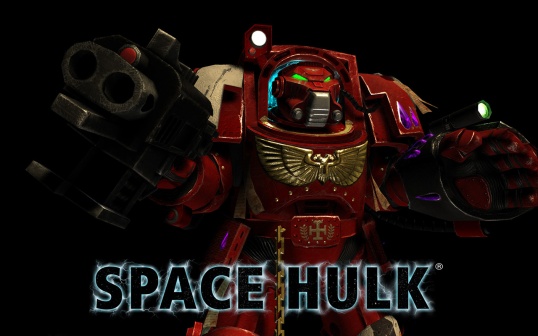
Space Hulk


space-hulk-03

A long time ago, Games Workshop released a board game for their popular “Warhammer 40,000” game franchise. It featured a web of interlocking pieces that could be fashioned together to create the claustrophobic interior of a derelict spacecraft, adrift an unknowable period of time in the great beyond. Obstacles such as doors (both functional and not) populated the game board, and then one player took control of an incursion team of elite Space Marine Terminators as they attempt to secure the derelict. In the lore of the universe, this is done because such derelicts, or “Space Hulks”, have the awesome potential to harbor lost technologies from the distant past. Also, such ships could be full of random marauding Orks, or much worse… the Tyranid Genestealers controlled by Space Hulk’s second player.

You don’t need to know what all of that stuff is to understand that the game was fun. The Space Marine player deploys their squad of Terminators and attempts to achieve their objective, while the Genestealers spawn into the map after play begins as ‘radar blips’. Until visual contact is made, the Terminators can’t know how many Genestealers each blip represents… and even a single one of them is a mortally dangerous adversary at close quarters. Of course, the Terminators prefer to do most of their fighting at range, and have stormbolters (think assault rifles), assault cannons (think miniguns) and heavy flamers (think heavy flamers!) they can deploy to wipe out the Genestealers before they can close to close-combat range. Combat within the game is capriciously lethal, and the whole experience was half an hour or so of good, clean fun.

Fast forward to 2013. Space Hulk (even its re-issue!) has been out of print for a long time. It is now very expensive to acquire, and must be procured second-hand (‘new’ copies exist, but you’ll more than likely have to resort to various hobbying or miniatures sites on the Internet to find them). Enter Full Control Studios, a UK-based developer with several other turn-based strategy credits to their name, who on 15 August of this year dropped “Space Hulk”, a fully realized 3-D recreation of the board game experience that some of us will remember. You know, from a long time ago. Their stated goal was to faithfully recreate the board game experience. The tension of that game primarily came from the uncertainty facing both the Genestealer and Terminator players. The Terminators knew their objective and had prior knowledge of the spawn points for the Genestealers, but had no way of knowing which spawn location they might choose to use, and as I mentioned before… the Genestealers always ride single file, to hide their numbers. The Genestealers need these advantages to make up for their deficiencies in long-range firepower, which the Space Marines have brought in spades.

At the time of the game’s launch, it was met with very mixed reviews. I’ll get to some of the game’s high points in a moment, but it was rightly criticized at launch for an obscene number of bugs. I’m happy to report (in fact, it’s the reason that I’m doing this review now) that with the advent of the 1.3 version patch and the release of the new DLCs, that the game has been running smooth and bug free for me ever since I revisited it. I have not even noticed any jarring graphical anomalies, though they seem like an inevitability in modern game experiences. With the game now smoothly playable, I feel like I can much more authentically recommend it to the interested player. If you are interested… read on, I guess!

Couched in these terms, the video game experience is a very pleasing one. The 3-D graphics are pretty (maybe nothing awe-inspiring, but this is 2013, you’d have to work very hard to impress me with game graphics), and more importantly, the environments have been well constructed to recreate the claustrophobia of the original game. Because, my friends, the corridors aboard the space hulk are only one square wide. You can’t just have your marines spread out in a fire line and advance under a withering hail of machine gun bullets. Instead, the winning tactic tends to be advancing slowly using the ‘Overwatch’ command to fire at moving Genestealers off-turn, or to deploy the heavy flamer or the powerful psionics of the Terminator Librarians to deny certain passageways to the Genestealers completely. Otherwise, what tends to happen, is that a whole bunch of Genestealers charge your position, and your guys die one after another. Oh, and that’s one thing to keep in mind if you do try out Space Hulk: Some of your guys will die. Trying to prevent all friendly casualties? That way lies madness.

If some of this stuff sounds at least a little reminiscent of another recent release (specifically, 2012’s XCOM: Enemy Unknown) that’s because the interfaces share some similarities. Veterans of the new XCOM game will probably find that they have an upper hand in some respects, as you’ll understand what kind of tactics work against enemies that you don’t always know the position of, and who are hilariously deadly if approached in a cavalier fashion. Each of your Terminators, by default, has four ‘Action Points’ available in a turn. One AP allows your space marine to take a step, change his facing 90 degrees, or discharge his firearm (the Heavy Flamer requires 2 action points). You can also use 2 AP to enter Overwatch or Guard (Guard gives you a marginally better chance of success in melee, can be effective on units who already have a leg-up in melee combat)… AP is also used for things like opening doors, acquiring mission critical objects, and so on.

The Genestealer player’s traditional disadvantage, on the other hand, is that she does not know how many command points the Terminator squad has on a given turn, which (in the original version) allowed them to do certain things ‘out of turn’. In the 2013 video game release, command points are rolled at the start of turn (1-6, and you can re-roll them if your squad’s ‘Sergeant’ is still alive), and can be used (at a 1:1 exchange rate) to supplement a Terminator’s normal limit of 4 AP in a turn. In addition, when autofiring while on Overwatch, any roll of ‘doubles’ (1s, 2s, 3s, 4s, whatever) will jam the overwatching weapon…but your Terminator can automatically unjam at the cost of a leftover Command Point.

The game is entirely tactical, without any sort of overarching strategic framework. You enter each scenario (or multiplayer match) with the Terminator’s forces and objectives pre-determined. Only the tactical combat on the map is in play. For that, I find it to be both engaging and fun… in small doses. The game play deepens when you add in all of the game’s potential features, like the Genestealers being able to loose Broodlords into the hulk, and the full Terminator arsenal, including heavy melee weapons, assault cannons, heavy flamers, and psionic Librarians, rather than just the vanilla stormbolter guys…but still doesn’t really match the tactical depth of a game like XCOM, which has many varied enemy types, special unit skills, and a wider arsenal of weapons. An average scenario can clock in at 40 minutes or so, which is not at all disagreeable for me, and, unlike XCOM, Space Hulk is quite amenable to the idea of saving, taking a break, and coming back to your game later.

Oh, one more thing: Space Hulk normally retails at $29.99 from Steam, but is featured in the 2013 year-end sale at 50% off!

A Glorious Fantasy, Part Three: Final Fantasy III


Once again I return to this ongoing series, in which I attempt to play through every game in the Final Fantasy franchise that I can get my hands on, from FF1 through FF13-2, and a variety of the spinoffs and other titles not included in the ‘main series’.

For those who are unfamiliar with my premise (read: probably everyone), here’s an almost comically thorough recap:

Most people have already played many/most/all of the games that I’m going to write about in this series (weirdly, as I compiled the list of games, I personally have not played a fair number of them). I don’t care. I’m going to look at all (most? I’m bad with structure, we’ll see how long this lasts) of the following things from these games:

– Some objective data. What version of the game did I play, and why did I select that one. Since it is now obvious to me that I’m going to play a fair number of ‘remakes’ in the early Final Fantasy games, I’m also going to research the differences and try to note some of them here. This was a big part of my experience with FF1, which I am now intending to revisit as a part of this series later.
– Is the game any good? Seriously! I’m sure some of these games suck!
– Is the answer to that question, “It just doesn’t hold up”? Why? <– This question is not going to last into the more modern games, but I suspect it could affect games even as recent as FF7, the graphics of which I'm afraid will hurt my brain.
– How would I place this game in a historical context? I want to watch the series evolve, devolve, side-volve and revolve as I go.
– Did I enjoy this game? What were the emotions and insane facial expressions I went through while playing it?
– How many times I frantically Googled maps for enormous maze-like dungeons because I no longer have the patience to solve them on my own?
– Was it… challenging? Were these games ever hard? Does the challenge ebb and flow?
– No MMORPGs. Sorry FF14 fans, I don’t ‘do’ MMORPGs anymore. Plus, the plan here hopefully doesn't involve spending a bunch of money acquiring and (especially) subscribing to games.

I think all of this is extremely important knowledge, and that the human race will be improved by my research.

FF3

Version played: ‘Unofficial’ NES fan-translation by Alex W. Jackson and Neill Corlett.

This time, I played Final Fantasy III – not to be confused with Final Fantasy VI, which was originally brought to North America and Europe as “Final Fantasy III” on the Super Nintendo (as was done with Final Fantasy IV, brought over as Final Fantasy II). No, this was the original Final Fantasy III, another game in the series that I had never played before (this is becoming a thing with me! And here I always called myself a ‘fan’!). After my experience with a questionable remake of Final Fantasy I, and the relative ordeal of playing a long JRPG on my phone, with Final Fantasy II… I decided that with this installment I would try to get the ‘true’ experience.

Much like Final Fantasy II, it’s not particularly surprising that I, and presumably many others, have never played this particular installment in the series. It was never translated in its original form, leading (ultimately) to the confusing disparity in the main series’ numbering, which in English releases goes FF1, “FF2” (actually 4), “FF3” (actually 6)… then Final Fantasy 7. I think everyone is familiar with this by now, but it’s worth pointing out. The very first ‘official’ translated release of FF3 in North America was in late 2006 (it was originally going to be released on the WonderSwan Colour… a system presumably no one ever actually owned). The 2006 release was over 15 (!!) years after the game was originally released. This version was on the Nintendo DS, and was a full remake, using 3-D graphics. My research indicates that they also re-balanced classes, changed the relative power of individual enemies, and created backstories for the heroes of the piece. Well, screw that noise, am I right?

No, I played the original NES experience.

The Onion Kid is an iconic Final Fantasy image... from a game many people have never played!

The Onion Kid is an iconic Final Fantasy image… from a game many people have never played!

Like Final Fantasy 2, Final Fantasy 3 uses the basic connective tissue of a storyline to take us from place to place. As is the case in the first five main series games, the plot revolves around elemental crystals, which have a dramatic impact on the world. In this case, the crystals were used by an ancient civilization, which was both advanced and powerful. Unfortunately, they inadvertently created a ‘flood of light’ which washed over the land. In order to prevent this from destroying the world, four Warriors of Darkness arose, countering the effects, and bringing the world back into balance. Prophecy speaks of a time in the future when the world will be threatened instead by a wave of darkness, and that Warriors of Light will go ahead and take care of that nonsense.

However, unlike Final Fantasy II, which does not really advance the premise of the game beyond its initial shell (Palamecia has declared war on everyone, watch out!), but simply takes us through a series of events related to it, the basic premise of Final Fantasy 3 evolves as we go along. While the player characters are still just proxies or avatars of the player (for the last time, at least in the main series) and lack distinct personalities or backgrounds, other characters in the world are fleshed out well beyond the basics. This game is also the first one of the series where the motivations of the villain are explored in any detail (it’s not much detail, but it’s definitely there). Later Final Fantasy villains are often explored in a great deal of detail (not all of them, but many!), so this was definitely something that struck me.

Final Fantasy 3 is much more significant, however, because it introduces the famous ‘Job’ system. While Final Fantasy 1 contains many of the same classes, they are picked at the start, evolved once in the story, and otherwise cannot be changed. Final Fantasy 3 introduces the concept that characters can change jobs at almost any time outside of combat. Each character gains levels within the specific jobs in addition to advancing in character level. The ‘job levels’ don’t do as much in this game as they will in later ones (notably Final Fantasy V, and Final Fantasy Tactics, among others), seeming to determine mostly damage dealt or healing performed. More jobs are unlocked as the player progresses through the game, culminating in the ‘ultimate’ jobs, Ninja and Sage, which are capable of using all weapons and armor and casting all spells, respectively. Also introduced in this game is the Summoner job! Yes! It’s the dawn of Chocobo, Ifrit, Shiva, Ramuh, Titan, Odin, Leviathan, Bahamut, the mighty summons which can have a dramatic effect on the battle. Bahamut, in fact, seems clearly to be the strongest magical attack in the game!

I really enjoyed this one, guys! I will admit that the game can be quite difficult. I found a number of bosses throughout the game that I was forced to grind before I could realistically challenge. This was particularly true of the final boss, who could be the most (unfortunately, mindlessly) challenging final boss in the whole of the franchise. I think that honour is generally considered to reside with Zeromus, but I honestly found the battle with Cloud of Darkness to be much more frustrating. Other bosses, I felt like I defeated with little more than dumb luck.

Also, unfortunately, jobs just not that well balanced… later jobs are strictly better. To an extent, this is understandable: as your party’s level increases, it’s fitting to gain more powerful abilities, but it’s to the point where there’s little reason to overthink your party composition. Aside from a couple of very specific challenges which can be made easier with specific classes, I found it was generally best to adhere to three powerful physical attackers, and one healer, until the very end, when it made sense to have two Sages since they can both Summon and heal. At times, my party actually consisted of four physical attackers with one off-healer and Hi-Potions serving as my only means of recovery… and I honestly felt like I was better off that way. Magical attacks in particular seem pointless after the first third of the game or so (this logic does not apply to Summons, which become one of the most effective forms of attack later in the game, especially against groups of regular enemies).

I spent a fair amount of time on Google for this game, but I would say definitely less so compared to Final Fantasy II or (especially) Final Fantasy I. I guess I just don’t like big maze-dungeons anymore, if I ever did… I like to know where I’m going, avoid some random encounters, and keep progressing steadily. I already spent enough time grinding in this game, so I’ll make no apologies.

Oh, and as for the game holding up? Obviously, the graphics are totally primitive when you decide to play the original NES version! However, the parts of this game that really feel a little ‘primitive’ (not the right word, I need a better one, one thing I really liked about this game was being able to see the origin point for stuff like the job system, the focus on the villains and their sad/tortured motivations, etc., that are hallmarks of many later games) were more mechanical. The job system here just isn’t as good or as fun as it is in later games where it becomes much more customizeable, and Xande and the Cloud of Darkness are certainly not going to rank among the ‘great’ video game villains of all time. The game was good, clean, fun though… I’d probably recommend it to any true fan of the JRPG form.

And that’s it for FF3. Comment away. Join me next time, when this ongoing series will take on a true juggernaut of the Final Fantasy franchise… Final Fantasy IV!

Glorious Fantasy, Part Two: Final Fantasy II


And now for Part 2 of my recurring series in which I ambitiously try to play through every single game in the Final Fantasy franchise, from FF1 through FF13-2, with as many of the ‘side’ titles, spinoffs, and other games along the way as I can manage.

For those who are still unfamiliar with my premise (read: probably everyone), here’s a recap:

Most people have already played many/most/all of the games that I’m going to write about in this series (weirdly, as I compiled the list of games, I personally have not played a fair number of them). I don’t care. I’m going to look at all (most? I’m bad with structure, we’ll see how long this lasts) of the following things from these games:

– Some objective data. What version of the game did I play, and why did I select that one. Since it is now obvious to me that I’m going to play a fair number of ‘remakes’ in the early Final Fantasy games, I’m also going to research the differences and try to note some of them here. This was a big part of my experience with FF1, which I am now intending to revisit as a part of this series later.
– Is the game any good? Seriously! I’m sure some of these games suck!
– Is the answer to that question, “It just doesn’t hold up”? Why? <– This question is not going to last into the more modern games, but I suspect it could affect games even as recent as FF7, the graphics of which I'm afraid will hurt my brain.
– How would I place this game in a historical context? I want to watch the series evolve and devolve and side-volve as I go.
– Did I enjoy this game? What were the emotions and insane facial expressions I went through while playing it?
– How many times I frantically Googled maps for enormous maze-like dungeons because I no longer have the patience to solve them on my own?
– Was it… challenging? Were these games ever hard? Does the challenge ebb and flow?
– No MMORPGs. Sorry FF14 fans, I don’t ‘do’ MMORPGs anymore. Plus, the plan here hopefully doesn’t involve spending a bunch of money acquiring and (especially) subscribing to games.

I think all of this is extremely important knowledge, and that the human race will be improved by my research.

FF2logo

Now that that’s out of the way, let’s talk about the second game in the Final Fantasy series…another that I had never played before… Final Fantasy II.

It’s not surprising that I hadn’t played this game before, and it’s probably true for a lot of people, even now. FF2 was never translated into English on the NES system, and, indeed, was not widely available in other languages until the “Dawn of Souls” release (with FF1!) in late 2004 (exact date varying based on your nationality). The reasons for this are murky. I have heard that Square didn’t think FF2 and FF3 would sell well in the United States and other markets outside of Japan, as well as a handful of other explanations. Suffice to say, it hardly matters now, over 20 years later.

What version did I play? Why, oddly enough, I played the iOS version. I had purchased it as a game to play during downtime at work, so I already possessed the version. I had not gotten as far as I’d expected to during said downtime, but I hit the afterburner after I decided to take this series a little bit more seriously. The main differences from the original, according to my research, are the the graphics are much prettier (muuuuuuch prettier, and high res!), you can dash, and the game does away with the ‘ineffective hit’ if your target dies after you’ve input a command but before it is executed. I have also heard that in the original game, your HP only upgraded if your character took significant damage, whereas the version I played seemed to award an HP up to all characters every ten battles or so. I do not think I could have completed the game relying on just that HP-up.

FF2 is the first game in the series (well, it is only the second game…) to feature that story-connective-tissue I discussed in the original. In this case, the basic premise is that four youths were attacked by soldiers of the Palamecian Empire near the town of Fynn. Three of them later wake up in the city of Altair, having been saved by Rebel sympathizers. The three friends join the Rebellion and, frankly, do most of the heavy lifting themselves. Although the narrative certainly isn’t as comprehensive as some of the later titles (indeed, Final Fantasy IV is the first game that begins to look like a ‘modern’ JRPG title), it does do a little more to guide you from place to place. I will admit that I still used a world map to help me figure out what was where, but I found my overall need for outside assistance in making it through this game in a reasonable amount of time was much less than Final Fantasy.

Okay, now, let’s talk about the elephant in the room. The thing everyone either seems to tolerate or completely loathe about FF2… and that’s the leveling system. Unlike every other game in the series (at least, that I’ve played), you do not gain experience levels in FF2. At all. Instead, your stats raise when you use them, or need them. For example, attacking repeatedly with your weapons begins to raise your strength. Having a shield equipped and being attacked begins to raise your evasion. Using magical spells raises your intelligence (Black) or spirit (White). Suffering damage raises your max HP, but also your Stamina (which determines how much HP you gain when your HP goes up). Spending 30 minutes casing spells in one battle slowly may eke out some extra MP for you if you have the patience. Now, obviously, this makes some of your stats comparatively hard to raise (max MP, again, anyone?), and since you need some of everything to be successful in this game, I can see how it would cripple some parties, and make it unfun to play. I’m totally with you.

But I kind of secretly really enjoyed it.

If only because it gave me the freedom to turn the girl of the party, Maria (who as you might expect starts out fast and with good magic, and terrible physical stats) into a frenzied dual-sword-wielding dervish, while the typical FF hero, Firion, became a Red Wizard, standing in the back row and slinging spells. Of course, I could have mixed and matched those attributes any way I wanted, and, indeed, Maria also had some of the most formidable spells (such as Flare) at her command, and youth #3, the hulking Guy, was an excellent back-up White Mage. Balance can be hard to achieve in FF2, however, because once you’ve passed a certain point with Strength or Spirit or Intelligence, the magic stats begin to lower your strength, and vice versa. As a result, if you want to have a balanced character, you have to always be using a mix of abilities and never go into auto-battle mode or spend every turn curing wounds.

Fortunately, mixing abilities also has its benefits, as your spells and weapons gain ‘levels’ as well, as they are used, becoming more powerful (and in the case of spells, more expensive).

The plot of the game is still pretty rudimentary, but it does introduce a couple of key staples of later games: FF2 is the first title to feature chocobos, Cid as an airship commander, and the order of Dragoons. It was also the first game to use the MP system that would be a series staple for about fifteen years or so, though it would not reappear in the next title.

I should also note that FF2 can be quite difficult. I often felt the enemies were challenging during the early-mid part of the game, but I also think I hit kind of a critical mass with leveling up stats and eventually became overpowered. Because of the mechanics of the game, that condition never really changed; no matter how high my warrior woman’s strength got, it seemed that it could always get a little bit higher. I occasionally found it beneficial to grind out a couple levels of new spells (most of them are pretty ineffective at level 1) but this was a fairly painless process. The difficulty is also tempered by the easy availability of powerful items like HiPotions and Ethers, which are not as expensive as they should be given how much they alleviate the difficulty of the later dungeons.

I suppose my overall impression of the game was pleasant…but it’s not one of the series’ stronger entries in my mind. It stands as a bit of an odd duck; not really influential on later titles, except perhaps as a failed experiment. While it advances in some ways from the original game, these are not significant advances, and even the unique character sprites won’t be carried over into the next title… which I will write about soon.

Payday 2


Payday2_logo_white

A little while back, a little studio called Overkill put a game on Steam called Payday: The Heist. The release completely passed me by. In fact, I was totally ignorant even of the existence of the title until a group of my friends all bought it and decided to start robbing banks together. They were so taken with it that they demanded that I join them, and I couldn’t have been happier with the purchase. We passed many nights (and into the early mornings, sometimes!) trying to grind our way through harder difficulties, and try to learn more advanced ways to stealth through the various ‘heists’, which included stuff ranging from your standard-issue bank job through a Left 4 Dead inspired hospital mission called, fittingly, No Mercy, where a shadowy anonymous buy was willing to pay bank in exchange for a sample of infected blood.

The game was marked by a number of good ideas. It includes minor RPG elements in that your account ‘levels up’ as you play more heists, granting access to useful abilities. In the original game, most of these bonuses were tied directly to weapons and armor and your ability to last in combat against the inevitable waves of police and SWAT forces that would attempt to keep you from escaping with your ill-gotten gains. Being stealthy at the start of a heist by using silenced weapons and preventing any civilian hostages in the area from escaping to summon help could pay significant dividends as you waited for your large thermal drill to bore its way into this vault or that one. A variety of weapons and gadgets rounded out your heisting arsenal, modeled off of real-life weapons augmented by just a bit of fancy. The game included multiple difficulty levels for every heist which would affect the number and types of enemies that spawn, and add other random factors that could make heists substantially more challenging. Indeed, that random AI Director feature of the game also helped its replayability dramatically, as heists could play out very differently if things went right – or very much wrong.

Payday 2 improves noticeably upon almost all of this. The heists are now more elaborate, including multi-day criminal enterprises (such as a ‘Watchdog’ mission where you must first secure a shipment of cocaine against an FBI operation, then in ‘day 2’ load the coke onto a drug boat at the docks, all while under police assault), and a wider variety of possible objectives – your crew are no longer strictly robbers, but rather highly skilled specialists for higher, men of limited principles and significant hardware.

The skill trees (Mastermind, Enforcer, Technician and Ghost, respectively) now include a wider variety of abilities, many of which can be directly employed for greater speed or stealth in the missions. Now, being a high level player with access to the best gadgets can make the simpler heists significantly easier, allowing the players to focus on the greater challenges of high difficulty level multi-day jobs. I personally find it very rewarding to try and work through missions in a stealthy way. Not only can some rewards become greater when you don’t have to battle you way through police lines, but the heists can also (often) be done cleaner and more quickly with the application of stealth. Returning is the oft-failing thermal drill which is the centerpiece of a number of missions where you try to gain access to a safe or other place you shouldn’t be, but this can now be circumvented if your technician is skilled enough to deploy shaped charges to blow off hinges, or if your ghost has an ECM Jammer that can bypass electronic security. The Mastermind can talk down inquisitive guards on the other end of the phone, easily intimidate and control civilians, and provide a slew of buffs to the group, and the Enforcer can (among so many other things) bring a powerful rotary saw to slice open less-imposing lockboxes, ATM machines, and encroaching enemies who draw too close.

Also notable in Payday 2 is a more credible electronic opponent. In the original game, the challenge was typically increased by sending more powerful units earlier in the mission, legions of ‘special’ units, and an unending stream of SWAT goons and their guns. To an extent, this is still completely true. However, the enemy now employs lesser raw numbers in favour of better tactics, and more threatening enemy units. Of course, stealth your way through the missions, and you may never have to suffer their wrath…

Payday 2 is not by any means a perfect game, however. The mission select is now done through an interface called Crime.net, which is a black and white overhead map of a city on which missions appear as ‘pings’ (as if the job just became available, complete with a timer before the job eventually disappears). Because of this system, if your crew is in favour of running a particular heist, it quite literally might take as long as half an hour of ‘browsing’ Crime.net for it to appear (or perhaps even longer!). In the most recent update, Overkill added some very basic filters to the Crime.net interface, allowing you to opt out of missions below a certain difficulty level… but this seems woefully inadequate. Though the game contains 10 heists, they re-use a couple of maps between them, and some of them are completely basic – there’s almost nothing to them. These are offset by some very complex heists higher up in pay scale, but some of them start to feel less replayable after a couple of solid nights with the group. This happened in the first game too, of course, but it’s much more annoying now with the obstacle of Crime.net possibly throwing you copy after copy of an undesirable heist that you are totally burned out on… instead of something you’d really like to do. I frankly do not understand the creative choice behind not offering better filters for this system.

While it is true that the police do not attack in such great numbers as before, they do still leave a lot of artifacts around the map, with corpses, piles of ammo, and miscellaneous gear (such as riot shields) strewn about, and I have seen the game start to chug on systems that are powerful enough to run many other contemporary games without issue. By its nature, this is probably something that’s hard for this game to overcome, but it’s a frustrating problem to have when the key resource that you need to enjoy this game to its fullest is friends who can also play it with you.

Yes, Payday 2 has in-game voice chat, and yes, you can jump into public games with strangers anytime you want. Some people might really enjoy doing so, in fact, and I don’t really mind it…. but I would much rather gather a group of 3 friends to roll with and work in tandem to complete heists. The AI team-mate can be valuable in combat because of their accuracy (though sometimes the team AI seems bewildered in a way the police AI rarely is… failing to respond even in a dire emergency) but is also frustratingly useless as they cannot transport filthy lucre, or drugs, or whatever, cannot advance mission objectives, and will occasionally blunder into unwinnable firefights against a legion of police in the middle of the street… where they can’t even be reached for a quick revive. As a result, you really want a full party, regardless of how you have to get it.

One thing to admire entirely about Payday 2 is its price point. At $29.99 on Steam (it’s also available on Xbox 360 and Playstation 3, the physical media involved means your price point will be $39.99 instead), this game has real value, though I can’t necessarily recommend it if you don’t have at least one friend who would be willing to buy the game as well and commit to playing it with you. Your mileage may vary with teaming up with strangers (I’ve had a mixed bag of results, myself) but I wouldn’t have purchased the game without friends I knew for certain would play, so I certainly won’t tell you to do it!

What I Played Today: Tomb Raider (2013)


tomb-raider-2013-wallpaper1

I hate to call this a “review”… because the game came out months ago, and I just now finished it. By now, probably everyone who is interested already knows that this game exists, that it is awesome, and that it needs to be played. But we here at The Shattered Lens also exist to serve the conservative buyer, the type who wonders to themselves “Is any single player game worth $60 anymore? How much of that $60 is being taken up by a Tomb Raider multiplayer nobody asked for or wanted?” “Oh God, another Tomb Raider?” I imagine that last line being accompanied by an outward eye roll, but with a quiet inner voice whispering, God, I hope it does not suck.

Well, fortunately for that tiny segment of the population… I am here to help you. I finished Tomb Raider today, and I have plenty to say about it, some of which I’m going to truncate in acknowledgment of the fact that this take would be a lot fresher if I’d written it two days after the game came out. I pre-ordered it. Obviously, there is no excuse for my having dismissed the game for even an instant. Now, with all that preamble managed…

Let’s look at Tomb Raider.

Of olde, Tomb Raider was a PC (first) and Console (adaptations, later simultaneous releases) puzzle / platformer game that starred well-endowed protagonist Lara Croft as she went about exploring ruins of the ancient world. As with any good “archaeology” narrative, the lines between historical fact and myth are blurred, and Lara would go on to discover things like oh, I dunno, the lost continent of Atlantis. The games focused heavily on platforming with some puzzles, which had (unfortunately) been forced into a relationship with a perennially awkward and not-optimal combat “system” which allowed for varying degrees of athleticism and varying degrees of inaccurate bullet spraying.

Tomb Raider (2013) is built on a more stable foundation. The game here essentially plays like any third person shooter you know of – there are plenty of chest-high obstacles available to shield you from enemy fire, ammo can be found everywhere (I’d say there’s a real argument that the game offers way too much ammo to the player, in fact), and like any good shooter in the Call of Duty era, you have several weapons that can be aimed down their sights and fired accurately at a precisely determined target. Not bad, right? Actually, it improves from there, hybriding in several elements that fans of the wildly popular Batman Arkham: (whatever) franchise. Lara, like Batman, learns skills and acquires new equipment as she proceeds through the story. That stuff can be used to go back and open up previously inaccessible secret areas and retrieve formerly inaccessible historical relics (though, to be honest, very little serious backtracking is required even if you intend to complete 100% of the collectibles). Lara has a predictable array of athletic moves at her disposal, including running, jumping, and climbing (including climbing-with-an-axe-climbing [the axe doubles as debatably Lara’s most powerful weapon]) as well as being a 100 pound girl who also happens to be qualified to pass the Presidential Fitness Test (try to outlast Lara Croft doing pull-ups. I dare you.) The action reminds me of Batman or Assassin’s Creed in the big picture, but the devil is in the details, and those details really do a lot to differentiate Tomb Raider from the gameplay that definitely influenced it.

Tomb Raider (2013) takes place on a lush, temperate island in the Dragon’s Triangle (a real-life region of water which extends from the southeastern Japanese coast toward the Phillipines) that was home to the ancient Yamatai civilization. Things immediately go totally awry, of course, and the rest of the game chronicles Lara’s individual journey to survive her experiences on the island – something complicated by savage and seemingly malevolent storms, and the discovery of a whole nation of crazed cultists who call the island home. Your mileage will probably vary with the actual storyline, particularly the endgame where Lara discovers the truth behind the island’s various mysteries (no fear, Lost fans, it’s all spelled out in the end!), and with the supporting characters, who are pretty one-note. To be frank, the supporting characters just don’t have much to do with this story, which is all about Lara Croft.

Lara herself is characterized extremely well, both through the excellent voice acting of Camilla Luddington, as well as through her physicality. As the player acquires new skills for Lara, she becomes demonstrably more capable in the game… and also more brutal. I have heard it argued that the game is diminished by the extent to which Lara – who has a hard time with the first occasion on which she kills another human being to survive – indulges in increasingly brutal violence as the game goes on. I would argue the opposite. I thought the game was very effective in putting myself in Lara’s shoes, so to speak, from the way the camera hovers close to her to the way she talks to herself, trying to encourage herself in grim situations, and reflecting on the madness and horror in which she has become buried. Far from objecting to Lara’s thought progression – and “morality” progression, if you want to call it that – I found myself snapping earlier than she does, at one point cursing her enemies and resolving to destroy them. Perhaps all of that pales in comparison to what I think is the strongest, best, part of Lara Croft’s character, however: Lara is never a victim. During the game, she is captured more than once, and encounters a variety of terrible situations, some of which she needs a little (very little) help to escape. But time and again, Lara draws deep into her own reserves of resourcefulness and willpower and not only extracts herself from increasingly dangerous situations… but attempts to drag the other survivors of her wrecked ship, and their would-be rescuers, with her to safety.

Fans of the series who were primarily interested in the puzzle-solving action of previous Tomb Raider games are almost certainly going to find this game a bit of a disappointment. Certainly, there are puzzles around – particularly in the optional ‘Hidden Tombs’ which can be completed for a bounty of salvage parts and experience points to upgrade Lara – but they definitely aren’t the core focus of the game in the way that they have been in previous titles. Once you have learned what to look for in the environment, the method of advancing through each open-roam area should be fairly obvious – it’s simply up to you to make the necessary jumps, climbs, etc. to reach your goals. It’s worth restating that the combat is quite a bit smoother than it was in previous installments, with obvious influences from other modern shooters giving it a much more polished feel. You may occasionally find the combat difficult, however, depending on your personal ability at sneaking around the island and murdering guards noiselessly (or avoiding them entirely). I consider myself good at stealth mechanics, but that I often prefer a straightforward solution if it will save me a lot of time (this goes triple for games where I know I’m going to be running around searching for collectibles. Better to just wipe out the whole population of badguys so they can’t harass me later).

Oh, and as for those pesky collectibles? There are a lot of them, and some of them are super hard to see in the game environment, but don’t go rushing off to find a game guide just yet… The game contains plenty of ways to find them (try setting a waypoint on the object of your desire and using Lara’s “Survival Instincts” if you really get stuck!) between the treasure maps and some of the skills you can purchase for Lara.

For me, even as a fan of both puzzles and previous installments… I really loved Tomb Raider (2013). This is one of the best pure single-player experiences I’ve gone through in a while (and, it’s worth noting, the game is not short by any means, although obviously it could be completed much faster than I managed if you were avoiding collectibles and time-killing puzzles). I encourage any of the remaining fence sitters to check this one out.