Documentary Review: Back to the Drive-In (dir by April Wright)


When I was 11 years old, I spent about a month and a half living in a motel with my mom and my sisters.

We were between homes and, since my mom didn’t really have the money to pay for our rooms, she and my two oldest sisters would work as maids during the day while my sister Erin and I stayed in our own room and watched stuff on the television that we probably shouldn’t have been watching.  (“What are you watching!?” mom would say as either Erin or I grabbed the remote and tried to get the TV off of HBO as quickly as possible.)  In retrospect, I know that all probably sound very dramatic and traumatic but I have to admit that, at the time, it just felt like an adventure.  I was jealous of my mom and my sisters getting to wear uniforms every day and basically go anywhere they wanted to go in the motel.  I would ask my mom and sisters about what they found in the rooms that they had to clean and I would beg for a chance to go with them because I figured it had to be fun to see how other people lived.  They always refused and years later, my sister Megan would tell me that they usually just found discarded underwear, used condoms, and half-eaten fast food.  Sometimes, I would sit in the front lobby, bothering whoever was working behind the desk and trying to overhear conversations.  I would love watching the various people who checked in and out of the motel and I would imagine amazing identities and life stories for them.  At night, I would listen for sounds coming from other rooms.  One time, the police were called because the people below us were fighting and I remember watching the reflection of the red lights flashing across the walls of my room.

That said, I think my main memory of living at that motel was that there was a creek right next to the hotel (though I always envision it as being a raging river whenever I think back to those days) and, on the other side of that creek, there was a drive-in movie theater.  Every night, I would go out on the balcony and look into the distance, at the silent images flickering across the giant screens.  The fact that I couldn’t actually hear what Stallone and Schwarzenegger were saying only made the experience more enjoyable.  I could make up my own stories to go along with the images.  Watching those movies became a bit of a ritual for me.  I had to watch every night and at the same time and if anyone tried to keep me from doing so, I would throw a fit.  Though I didn’t fully realize it at the time, for me, that drive-in came to represent stability.

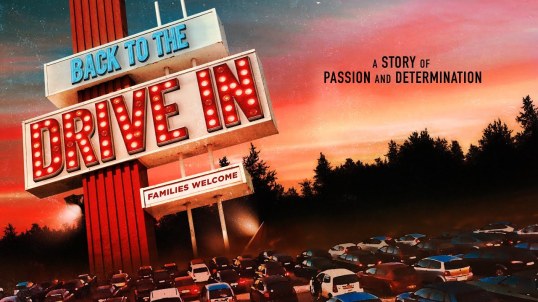
I found myself thinking about that drive-in as I watched the documentary Back To The Drive-In.  Shot in 2021 and 2022, Back To The Drive-In cut backs and forth to tell the stories of drive-ins around the country and how they dealt with the pandemic.  Every owner has their own reason for owning and loving their drive-in.  Some of them are friendly eccentrics.  Some of them are full of nostalgia and recreating the past.  Some of them are hard-nosed businessmen who make sure to enforce the rules.  My favorite was the guy who decided to that his backyard was the perfect location for a drive-in.  (He calls it The Field of Dreams.)  However, they all have the same basic story.  Business was suddenly good during the Pandemic because their competition was closed down.  However, in the post-Pandemic world, they’re facing an uncertain future.

The documentary, of course, was made before box office successes of Top Gun: Maverick, Oppenheimer, and Barbie proved that people are willing to return to theaters but the fate of America’s drive-ins are still up in the air.  And that’s a shame because, as this funny and wonderfully humanistic documentary shows, the drive-in is more than just a theater.  It’s an experience and once they go away, our culture is going to be just a little bit more dull.  As I watched the documentary, I made note of which drive-ins are within driving distance of my home.  I’ll do my part to support these temples of Americana and I hope everyone else will as well.

Save the Drive-In!

Film Review: Big George Foreman (dir by George Tillman, Jr.)


Big George Foreman is a biopic about …. well, it’s right there in the title, isn’t it?

The film follows George Foreman (Khris Davis), from his poverty-stricken childhood in Houston’s infamous Fifth Ward to his current life as a beloved member of the American pop cultural pantheon.  The film portrays Foreman as someone who learned how to fight early, punching out the children at his school who taunted him by calling him “George Poorman.”  As a teenager, he drops out of high school and attempts to make a living as a mugger.  Spending the night in a sewer and hiding from the police inspires George to try to change his life by joining the Job Corps.  It’s while in Job Corps that he meets Doc Broadus (Forest Whitaker), a former professional boxer who takes George under his wing and teaches him how to work out his anger in the ring.  Foreman marries, gets rich, cheats on his first wife, becomes the world champion, and is then humiliated when he loses his title to Muhammad Ali (played, in a not particularly convincing performance, by Sullivan Jones).  Mired in depression and self-loathing, Foreman has a combination of a heart attack and a religious experience.  He leaves behind boxing to become a preacher but, years later, an alcoholic accountant loses all of Foreman’s money and Big George is tempted to return to the ring at an age when most boxers have long since retired.

Some people know him as a fearsome boxer while others know him as the friendly face who sells grills but, regardless of what he may represent to the viewer, George Foreman’s real-life story is a compelling one and it’s pretty much impossible not to like him, even when he’s being played by an actor who is clearly not George Forman.  (Personally, I’ll always remember George Foreman for his cameo on King of the Hill.  “Novelty grill!?  The fight’s on!”)  Foreman is credited as being an executive producer on Big George Foreman and the film is evenly divided between the life of the young, decadent George who threw money around and cheated on his wife and the older, religious George who is committed to his family, his church, and his community center.

From a cinematic point of view, Younger, self-centered George is more fun to watch than Older, likable George.  That’s because Younger George throws big parties, lives in a big mansion, and owns a fleet of luxury cars.  Everyone around Younger George wears the height of 70s fashion and the soundtrack is full of 70s music.  Younger George does stuff like put an exhibition match where he tries to knock out five fighters in one night night.  Older George may be the better person and it’s good to see that he got his life together but it’s hard not to miss the decadence of the film’s first half once it skips forward in time and focuses on George Foreman as a surprisingly conventional suburban Dad.

Again, Foreman’s real-life story is a compelling one and George Foreman is an inspiring human being but the film itself is a rather conventional biopic, one that hits all of the expected moments without digging too much underneath the surface.  Watching the film, one can respect the biopic’s obvious love for its subject and appreciate Khris Davis’s lead performance while also feeling that an interview with the real George Foreman would have been more compelling.

A Blast From The Past: Hired!


Since today is Labor Day, I figured this would be a good time to share a short film about management….

Wait, that doesn’t sound right.

Well, no matter.  The boss in Hired! may not be eligible to join a union but, as we can see in this 1941 film, he’s still willing to work hard.  Or, at least, he’s willing to work hard after his father drunkenly calls him out for not being a very good boss.  On the surface, this short film might look like it’s about Jimmy and his struggle to convince people to buy a new car.  But, actually, it’s about a boss who needed to be reminded of the importance of working with his employees and helping them out.  Of course, it could also be possible that Jimmy is struggling because he’s incredibly awkward for a salesman.  And the boss could be struggling because he’s a middle-aged man who apparently still lives at home with his parents and takes orders from his cantankerous father.  One gets the feeling that there’s enough underlying resentment in this film to fuel a season’s worth of Arthur Miller plays.

Hired! was made for Chevrolet and it was meant to teach managers how to inspire their salesmen.  Of course, given that the film was made in 1941, it’s probable the Jimmy enlisted in the armed services after Pearl Harbor and eventually came back home as such a big war hero that he really didn’t need a job selling cars anymore.  Instead, Jimmy ran for Congress and eventually chaired the House Oversight Committee.  That’s what I hope happened.

Enjoy Hired!

Concert Film Review: The Chemical Brothers At Glastonbury 2007


We all need our writing music.

By that, I mean the music that puts us immediately in the mood to create.  It’s the music that helps us to clear our mind and to focus on figuring out how best to say what’s on our mind.  I think, like most writers, I have a lot of different writing music.  The music that I listen to depends on what I’m trying to write.  If I’m writing about my boyfriend, I’ll listen to EDM.  If I’m writing about my health, I’ll go with the Run Lola Run soundtrack.  If I’m writing my childhood, I often tend to use Britney Spears and Coldplay as my background music.  If I’m writing about current events, I’ll use Muse.  If I’m writing about something fun, I’ll go with Saint Motel.  Both Moby and Bob Dylan work for when I’m writing about history.  I’ll listen to Adi Ulmansky if I’m writing about my best friend.  When writing about Texas, I’ll listen to someone local, preferably from Denton.  When it comes time to write about Canada (and by Canada, I mean Degrassi), I go with Jakalope.  For any movie about New York, it’s Blondie.  If I’m trying to impress everyone with my maturity, I’ll listen to something classical.

And if I need to listen to something that I know will make me feel happy and that I know will leave me feeling as if there’s nothing that I can’t accomplish, I’ll listen to The Chemical Brothers.  And 9 times out of 10, I’ll probably listen to their 2007 performance at Glastonbury.

Originally airing on BBC Three, The Chemical Brothers At Glastonbury 2007 captures Tom Rowlands and Ed Simons at their best, energetically performing in front of a enthusiastic audience that refuses to allow a little torrential rain to keep them from experiencing The Chemical Brothers live.  Towering over the stage is an astounding graphics display and, as the duo moves from song to song, the images on the display tell a hypnotic story of their own.  Colorful shadows of men with guns and overcoats appear to stalk each other before dancing.  3-D shapes spin with the music.  Strobe lights briefly illuminate the night sky.  At one point, a clown appears and repeatedly orders the audience to “Get Yourself High,” and occasionally it seems like a suggestion and other times it seems like an order.  Sometimes, the clown appears to be friendly and other times, he appears to be almost threatening.  The clown is my favorite part of the show, though I’ve had others tell me that they find the image of it to be creepy and disturbing.  My friend Jason shouts, “GODDAMMIT!” whenever I present him with the Get Yourself High Clown and, as you can probably guess, I usually find just about any excuse I can to trot the Clown out.

But the graphics wouldn’t mean anything if not for the music and, as always, Tom and Ed put on an amazing show.  The frequent cuts to the overjoyed (and soaked) audience only adds to the communal feel of it all.  The transition for Get Yourself High to Hey Boy Hey Girl to Song of the Siren to All Rights Reserved represents everything that makes The Chemical Brothers great.

As I write this, there are apparently a lot of people trapped by the weather at Burning Man.  I hope the best for all of them but, for me personally, I think the only festival I need is Glastonbury, especially if The Chemical Brothers are on the bill.

Cleaning Out The DVR: Abducted By My Teacher: The Elizabeth Thomas Story (dir by Shawn Linden)


Based on a true story, Lifetime’s Abducted By My Teacher opens with a situation that I related to all too well.

15 year-old Elizabeth Thomas (Summer H. Howell) is the newest student at the local high school.  She’s starting school in the middle of the year and she doesn’t know anyone at the school.  Everyone is wondering why she’s enrolling so late in the semester.  No one wants to run the risk of being the new girl’s friend.  Elizabeth can’t even find a table where she can eat her lunch.  Now, when I was growing up, my family moved frequently.  I started and left a lot of different schools and that meant that I got used to being the new girl.  I got used to people asking me questions about my past.  I got used to having to fit into a social system that had been established long before I arrived.  I learned how to make friends without becoming so close to them that it would hurt when I inevitably had to leave and go to a new school.  It never became easily but I do think I managed to handle it about as well as anyone could.  (Fortunately, I also had three older sisters to help me out.)

Elizabeth, however, has a problem that I never had to deal with.  She’s not only the new girl but the high school is also the first one that she’s ever attended.  Previously, Elizabeth was home-schooled by her unstable mother.  Now, her father has custody of her and Elizabeth is experiencing public school for the first time.  All of the teachers and her classmates know about Elizabeth’s past, leaving Elizabeth feeling like a freak.

However, things start to look up when one of her teachers, Tad Cummins (Michael Fishman), invites her to join the group of students who eat lunch in his classroom.  Tad is one of those self-consciously cool teachers who insists that his students refer to him by his first name.  He takes an immediate interest in Elizabeth and he even invites her to attend church with him and his wife.  At first, Elizabeth isn’t sure how to react to Tad but, eventually, she comes to trust him.  After all, he’s the only person at school who seems to care about her and he even helps her to get a job at a restaurant.  (Elizabeth’s boss so respects Tad that she’s willing to hire Elizabeth on his recommendation alone.)  Eventually, Elizabeth’s father (Gino Anania) grows suspicious of Tad’s interest in his daughter but, by that point, Tad has Elizabeth so in his thrall that he’s able to convince her to run off with him.

It’s a disturbingly familiar tale of grooming and abduction, one that features a sympathetic lead performance from Summer Howell and a memorably creepy one from Michael Fishman.  From the minute that we first see Tad, we went to tell Elizabeth to stay away from him but, as this film show, things often look different when they’re actually happening to you than they do when you’re on the outside looking in.  Tad is eventually reveled to be a messianic lunatic but, at the beginning, he’s simply the only person willing to give encouragement to someone who desperately needs it.  Having no experience with public education and the outside world at all, Elizabeth is easily manipulated but eventually, she reveals an inner strength that even she didn’t know she had.  Summer Howell does a wonderful job portraying Elizabeth’s transformation from being meek and easily manipulated to being strong and confident enough to face down her abductor in court.

This film was executive produced by Elizabeth Smart and Smart introduces the film.  Elizabeth Smart is someone who has survived a trauma that most of us couldn’t even imagine but she’s since spent her life helping others who have been in similar situations.  She deserves all the credit in the world.

Retro Television Reviews: Class of ’63 (dir by John Korty)


Welcome to Retro Television Reviews, a feature where we review some of our favorite and least favorite shows of the past!  On Sundays, I will be reviewing the made-for-television movies that used to be a primetime mainstay.  Today’s film is 1973’s Class of ’63!  It  can be viewed on YouTube!

It’s college reunion time!  Alumni of all ages and from all over the country are returning to the place where they became adults and spent the best years of their lives.

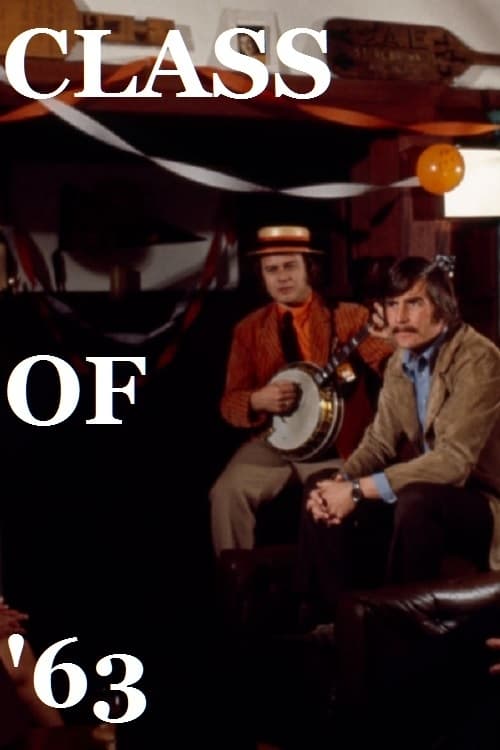
Joe Hart (James Brolin), of the Class of ’63, returns to the campus but he immediately feels like a bit like an outsider.  As opposed to his former classmates, many of whom are desperately trying to recapture their fading youth, Joe is quiet and sensitive and he’s aware of the passage of time.  He hasn’t come back to college so that he can relive his carefree fraternity days.  Instead, his main interest is whether or not his former fiancée will be there.

And it turns out that Louise Swerner (Joan Hackett) is there!  She’s accompanied by her husband and fellow member of the Class 0f 63, Mickey Swerner (Cliff Gorman).  From the minute that Mickey appears, it’s obvious that he has both a chip on his shoulder and a lot of insecurity.  He is visibly annoyed when people fail to immediately recognize him.  He and Louise have a strained marriage and he’s not particularly happy with how excited she is to see Joe again.  While Mickey tries to convince everyone that he’s grown up to be a winner, Louise and Joe get reacquainted and it becomes obvious that they still love each other.  Will Louise and Joe leave the reunion together and should they be more concerned with the fact that Mickey just happens to have a sniper rifle in his luggage?  And what to make of Dave McKay (Ed Lauter), the former classmate who seems to be just a little bit too excited to see everyone?

It’s an interesting film and I have to say that it didn’t quite go the direction that I was expecting it to.  Despite the presence of the rifle and Mickey’s obvious instability, the film is less a thriller and more a look at what it means to grow up and the difficulty of letting go of the past.  None of the characters are caricatures.  Joe and Louise may seem perfect together but the film makes clear that they’re also idealizing their time together.  With neither one of them really happy with their current life, they’ve both fallen into the trap of wondering, “What if?”  Meanwhile, Mickey may be flawed but it’s impossible not to have some sympathy for him.  As hostile as Cliff can be, it’s obvious that the person that he hates the most is himself and Cliff Gorman does a good job of capturing Mickey’s raging insecurity.  Gorman’s intensity provides a good balance to Brolin’s more laid back performance and, by the end of the film, one can understand why and how Louise was able to fall in love with two men who superficially seem to be so different.

Class of ’63 is a good drama, one that requires a little patience but which ultimately rewards the audience for sticking with it.

Cleaning Out The DVR: To Kill A Stepfather (dir by Peter Sullivan)


As with so many Lifetime films, To Kill A Stepfather opens with a murder.

Matthew (Dan Golden) is a pillar of his small town’s community.  He’s well-liked by all and he’s renowned for the way his voice sounds whenever he sings with the choir.  His wife, Kate (Elyse Mirto), is a bit less popular with the community but everyone agrees that Matthew has been good as stepfather to her daughter, Riley (Kelly McCart).

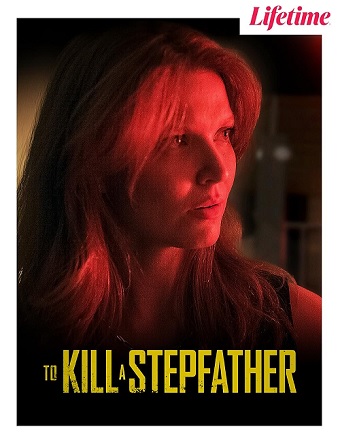
Of course, Riley is not Kate’s only daughter.  Nicole (Alex Camacho) is a high-priced defense attorney who left home a long time ago and who has never really made peace with her memories of her mother being an alcoholic.  Nicole barely knows Matthew.  She’s been too busy pursuing her career to keep up with what’s happening at her former home.  Nicole is one of those lawyers who gets yelled at by strangers because so many of her clients are guilty.  Now, of course, Nicole’s job is to defend her clients.  Guilty or not, anyone accused of a crime is entitled to representation and the job of a defense attorney is to serve as their client’s advocate and help them make their way through the complexities of the American legal system.  In other words, Nicole is doing her job.  Get off her back, people!

One night, Matthew and Kate’s neighbors hear an argument coming from their house.  Inside the house, someone shoves Matthew down a flight of stairs and kills him.  When the police arrest Kate for the crime, Riley calls the only attorney that she knows, her older sister Nicole.  Nicole returns to her hometown and discovers that, even in jail and desperately needing an attorney, her mother still isn’t happy to see her.  Indeed, Kate even says that she would prefer a different lawyer but Nicole takes one look at the ambulance chaser who has been assigned to the case and declares that she’s taking over her mother’s defense.

Apparently, this film was inspired by a true story but it plays out like a typical Lifetime courtroom drama.  That’s not a complaint, of course.  The familiarity is one of the things that people love about Lifetime movies.  From the minute that Nicole meets Kate in prison, the viewer will suspect that they know where the story is heading but that’s okay.  The destination is less important than the journey and the journey is enjoyably melodramatic.  Alex Camacho and Kelly McCart are instantly believable as sisters and Elyse Mirto gives a good performance as the mother who wants to hold onto her secrets, even if they mean possibly going to prison.  In the end, the important thing is that the film embraces the melodrama.  That’s really the main thing that we ask from our Lifetime films.

That said, I was kind of amused by how “slick” all of the attorneys in the film were.  I’ve worked as an administrative assistant in a law office.  I’ve known a few lawyers.  I’ve been to the courthouses.  Attorneys are usually the most shabbily-dressed people in the courthouse and, usually, they’re juggling way too much to have time to stand around and exchange snarky bon mots.  But again, one doesn’t watch a legal drama on Lifetime because they’re looking for a realistic portrait of the American legal system.  On Lifetime, all lawyers are perfectly dressed and have not a hair out of place and that’s more than alright.

A Blast From The Past: How To Keep A Job


Just in time for the Labor Day, here’s a short film from 1949 about How To Keep A Job!

Edward is kind of a dummy.  He goes to a job interview and spends the whole time not only trashing his former employer but also trying to avoid admitting that he was fired from his previous job.  Fortunately, the man interviewing him can tell that Edward still has potential, despite the fact that he’s kind of a squirmy idiot.

The interviewer tells Edward the story of twin brothers who worked in shipping.  One brother was smart and responsible and always a good worker.  That bother is now on the verge of being promoted.  The other brother, Walter, was irresponsible and more concerned with getting ready for a date than actually doing his job.  The message would seem to be that Edward is running the risk of turning into Walter but wait a minute!  There’s a twist!

This is certainly an earnest short film.  Of course, when seen today, it’s more goofy than educational.  I have to admit that films like this always used to make me feel guilty because they’re like, “You must follow these exact steps to get and keep a job,” and I’m over here like, “Or you can just wait for a friend of your mom’s to give you a job!”  But anyway, here’s How To Keep A Job!

September Positivity: A Town Called Parable (dir by Scott Hester)


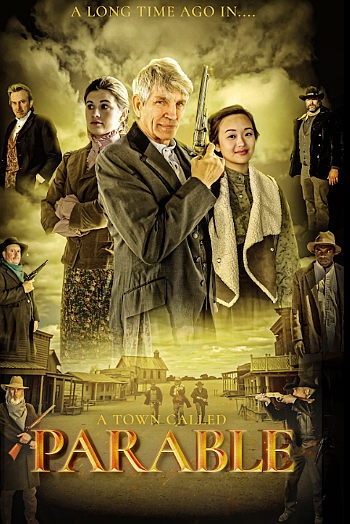
In 2021’s A Town Called Parable, Eric Roberts plays Reverend John Corell.  He’s a pastor who lives in a small frontier town called Parable.  It’s a town that’s full of gunslingers, gamblers, and businessmen.  It’s the Old West, as long as you’re willing to overlook the fact that most of the characters have modern haircuts and wear clothes that look like they were purchased from the neighborhood costume shop.

John Corell is having a crisis of faith, due to the fact that some gunslingers gunned down his brother in the middle of the night.  Corell is not sure how he can possibly be expected to forgive the men that killed his brother.  He wants revenge but he knows that seeking revenge will mean rejecting everything that he believes in.

Now, to be honest, the idea of Eric Roberts playing a morally conflicted, old west preacher-turned-gunfighter actually does have some potential and I was totally looking forward to the sight of Roberts walking down a dusty street and demanding that his enemies “Draw!”  Unfortunately, the majority of that potential is unrealized.  The film only runs for a little over 70 minutes and most of Eric Roberts’s scenes feature him performing a monologue in his church.  As Corell speaks, he remembers things that have happened to other citizens of Parable.  Needless to say, there’s a lesson to be found in every flashback.  The town isn’t called Parable for nothing.

For instance, Corell remembers the starving man who kept knocking at everyone’s door until he finally found someone willing to give him some food.  He remembers the widow who kept demanding that the sheriff do something about the men who killed her husband and how she refused to stop demanding until justice was served.  He also remembers the drunken employee who was forgiven once by his employer but who didn’t change his ways and who was savagely beaten as a result.  (His wife and child were also sold to the highest bidder …. YIKES!)  The stories all roughly correspond to a Biblical parable but, at the same time, they don’t offer up much of a solution as to what Corell should do when the men who killed his brother gather outside of his church.

It’s a disappointing film and one that does not take advantage of the presence of Eric Roberts.  I mean, if you can actually convince Eric Roberts to spend more than day on your set, you need to do something more with him than just have him pace around one location.  Fortunately, there are other Eric Roberts westerns out there that make better use of his unique talents.

Previous Eric Roberts Films That We Have Reviewed:

  1. Star 80 (1983)
  2. Blood Red (1989)
  3. The Ambulance (1990)
  4. The Lost Capone (1990)
  5. Love, Cheat, & Steal (1993)
  6. Love Is A Gun (1994)
  7. Sensation (1994)
  8. Dark Angel (1996)
  9. Doctor Who (1996)
  10. Most Wanted (1997)
  11. Mr. Brightside (2004)
  12. Six: The Mark Unleased (2004)
  13. Hey You (2006)
  14. In The Blink of an Eye (2009)
  15. The Expendables (2010) 
  16. Sharktopus (2010)
  17. Deadline (2012)
  18. Miss Atomic Bomb (2012)
  19. Worth: The Testimony of St. James (2012)
  20. Lovelace (2013)
  21. Self-Storage (2013)
  22. This Is Our Time (2013)
  23. Inherent Vice (2014)
  24. Road to the Open (2014)
  25. Rumors of War (2014)
  26. Amityville Death House (2015)
  27. A Fatal Obsession (2015)
  28. Stalked By My Doctor (2015)
  29. Joker’s Poltergeist (2016)
  30. Stalked By My Doctor: The Return (2016)
  31. The Wrong Roommate (2016)
  32. Stalked By My Doctor: Patient’s Revenge (2018)
  33. Monster Island (2019)
  34. Seven Deadly Sins (2019)
  35. Stalked By My Doctor: A Sleepwalker’s Nightmare (2019)
  36. The Wrong Mommy (2019)
  37. Free Lunch Express (2020)
  38. Her Deadly Groom (2020)
  39. Top Gunner (2020)
  40. Just What The Doctor Ordered (2021)
  41. Killer Advice (2021)
  42. The Poltergeist Diaries (2021)
  43. My Dinner With Eric (2022)

A Blast From The Past: Maintaining Classroom Discipline


Since this is Labor Day weekend, it seems like an appropriate time to share a short film about one of our most valuable professions, teaching.

In 1947’s Maintaining Classroom Discipline, Mr. Grimes is a Math teacher who is disappointed in his stupid, stupid students.  How should he deal with them?  This short film gives us two options.  The first half of the film (which, if we’re going to be honest, is the more fun half of the film), Mr. Grimes is hard-nosed and sarcastic, telling the students that he’s very disappointed in them and giving them all detention when they make fun of him.  (One of them even misses football practice!)  This approach does not work and, instead, leads to montage of Mr. Grimes giving detention to student after student.  One student is kicked out of class and told not to return until he’s ready to apologize.  I mean, seriously, Mr. Grimes is basically telling him that he can just leave the school if he wants.

The second half of the film features Mr. Grimes instead being polite about the low test score and patiently explaining to his students how ratio works.  When one student tries to make fun of Mr. Grimes, the entire class rolls their eyes.  Earth-2 Mr. Grimes is a good teacher and his class would die for him!

Personally, if I was a teacher, I have no idea how I would maintain discipline.  I’d probably just make sure that my classroom was near the principal’s office so I can pull him in whenever I wanted to.  To me, the worst thing about giving a student detention isn’t the fact that the student will resent you for it but that apparently, you’re required to stick around until detention has been served.  Seriously, I enjoy working and all but I also like going home.

Anyway, let’s all learn from Mr. Grimes, shall we?