Book Review: Steve McQueen: Portrait of An American Rebel by Marshall Terrill (1994 edition, Donald I. Fine)


Last night, I watched Tom Horn.

This western was the actor Steve McQueen’s second-to-last movie.  He died a few months after it was released in 1980 and McQueen looks frail throughout most of the movie.  Despite his obvious ill-health, McQueen still gave a strong performance as a real-life former frontier scout and cowboy who was executed for a crime that he probably did not commit.

After I watched the movie, I searched through my collection of film books until I found my copy of Marshall Terrill’s Steve McQueen: Portrait of an American Rebel.  Terrill’s book is one of my favorite actor biographies.  It covers all the details of McQueen’s underrated acting career and his turbulent personal life, including both the time he ran into the Manson Family and his relationship with Ali MacGraw.

Best of all, the book ends with a detailed list of every film that McQueen turned down over the course of his career.  After he appeared in The Towering Inferno, McQueen became very selective when it came to picking his film roles.  He was tired of just doing action movies and he also didn’t want to spend too much time apart from MacGraw.  Directors still wanted to work with McQueen but McQueen didn’t always want to work with him and, as a result, the movies that McQueen turned down make for a truly impressive list.

Here’s just a few of the films that McQueen was offered but turned down:

  • Breakfast at Tiffany’s (The George Peppard role would have been a rare intellectual role for McQueen)
  • Butch Cassidy and the Sundance Kid (McQueen was the first choice for the Sundance Kid but he and Paul Newman could not agree on who would be billed first.  This same issue nearly kept them from working together in The Towering Inferno.)
  • The French Connection (The French Connection was greenlit due to the success of Bullitt so it’s not a surprise that McQueen was offered the role of Popeye Doyle.  McQueen, however, was tired of playing cops.)
  • Dirty Harry (Again, McQueen was tired of playing cops.)
  • The Great Gatsby (This film was originally envisioned as starring McQueen as Gatsby and Ali MacGraw as Daisy, both of whom would have been better cast in the roles than either Robert Redford or Mia Farrow.  As a former juvenile delinquent who became one of the richest men in Hollywood, McQueen was Jay Gatsby.)
  • Jaws (Spielberg considered McQueen for the role of Brody.)
  • The Driver (Ryan O’Neal was cast instead and gave a performance that was clearly influenced by McQueen’s style of cool)
  • A Bridge Too Far (Everyone who was anyone was offered a role in A Bridge Too Far.  McQueen was one of the few actors to turn it down and, as happened so often in his career, the role instead went to Robert Redford.)
  • The Gauntlet (This was originally envisioned as starring McQueen and Barbra Streisand.  It was eventually made with Clint Eastwood and Sondra Locke.)
  • Close Encounters of The Third Kind (McQueen turned down the role of Roy Neary because he didn’t feel that he could convincingly cry on screen.)
  • Sorcerer (William Friedkin later said that the biggest mistake of his career wasn’t fighting harder to get McQueen to star in his remake of The Wages of Fear.)
  • First Blood (McQueen was one of many stars considered for either Rambo or Sheriff Teasle before Sylvester Stallone came aboard.)
  • The Bodyguard (Famously, this was written for McQueen and Diana Ross.  It was eventually made with Kevin Costner and Whitney Houston)
  • The Cannonball Run (After McQueen turned down the project, the script was rewritten to play up comedy over action and Burt Reynolds was cast in the lead role.)
  • For me, the most intriguing project that McQueen turned down was Apocalypse Now.  McQueen was Francis Ford Coppola’s first choice for Capt. Willard but McQueen turned him down because he didn’t want to leave Ali MacGraw alone for the months that would be required to make the film.  Even after being turned down the first time, Coppola offered the role to McQueen twice more, once after firing Harvey Keitel and once after Martin Sheen’s heart attack.  When McQueen again refused to play Willard, Coppola tried to interest McQueen in playing Col. Kurtz.  While I think McQueen would have been a good Willard, I also believe he would have been a great Kurtz.  McQueen would have been more believable as a feared warrior than Marlon Brando.

And that’s just a few of the roles that McQueen turned down!  Terrill’s biography includes a comprehensive list.

Even after his death, McQueen has remained an icon of cool.  Damian Lewis plays him in Quentin Tarantino’s Once Upon A Time In Hollywood.  I’m looking forward to seeing that movie this weekend.  I’m also looking forward to rereading Marshall Terrill’s biography of Steve McQueen.

Book Review: BUT ENOUGH ABOUT ME by Burt Reynolds and Jon Winokur (Putnam 2015)


gary loggins's avatarcracked rear viewer

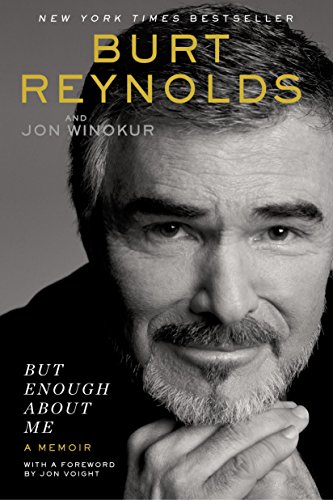
While doing my usual browsing around Barnes & Noble recently, I came across a real bargain – Burt Reynolds‘ 2015 memoir BUT ENOUGH ABOUT ME, for the low, low price of just $6.98! Naturally, being a long time Reynolds fan, I eagerly snapped it up and bought it (and no, Mr. Salesperson, for the umpteenth time, I do not want to join your book club!). Cowritten with Jon Winokur, who also coauthored a 2011 memoir with James Garner, the book is unlike your typical star ‘autobiography’, as Burt looks back on his life and, most importantly, the people who influenced him most, for better or worse.

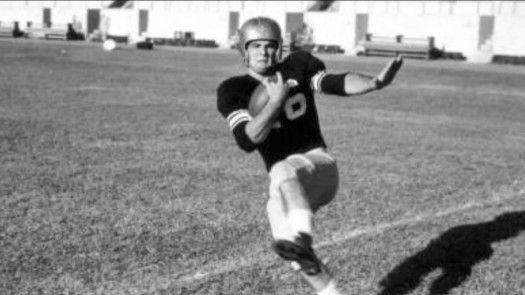
Florida State running back “Buddy” Reynolds, 1954

Burt (who died last September at age 82) was Hollywood’s #1 box office draw from 1978-82, and ranked in the top ten for 12 years, but the man certainly paid his dues to get there. A…

View original post 462 more words

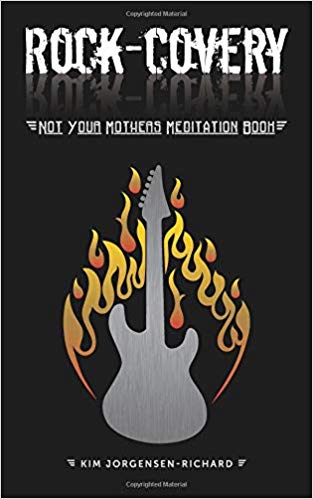
Book Review: ROCK-COVERY – Not Your Mother’s Meditation Guide by Kim Jorgensen-Richard


gary loggins's avatarcracked rear viewer

And now for something a little bit different…


Blogging about classic films and pop culture isn’t my only passion. Full Disclosure: I’ve personally been in recovery from alcohol and all other substances (and trust me, there were a LOT of other substances) for the past 15+ years. For the last ten of those years, I’ve worked in the substance abuse treatment field, helping others find their own pathway to recovery. Along the way, I’ve met a lot of good people in the field who share my passion for helping those who struggle with addiction issues. One of those is Kim Jorgensen-Richard, with whom I once shared an office, and when I started a new job this past January, Kim was working in the same building (in a different program).

Author Kim Jorgensen-Richard

I discovered I wasn’t the only writer in the house: Kim recently achieved a lifelong dream and wrote…

View original post 619 more words

2018 In Review: Lisa’s Top 12 Non-Fiction Books


All day today, I’ve been posting my favorites (and least favorites) of 2018.  If you’ve missed the previous entries …. well, that’s kind of on you.

Anyway, we have now reached the part of our program where I list my top twelve non-fiction books.  There was actually quite a lot of good non-fiction published this year.  The list below is a nice mix of memoirs, politics, and true crime.  Read them all and then be sure to come back here and thank me.

Here’s the list!

  1. The Infernal Library: On Dictators, the Books They Wrote, and Other Catastrophes of Literacy by Daniel Kalder
  2. Room to Dream by David Lynch and Kristine McKenna
  3. Bachelor Nation: Inside the World of America’s Favorite Guilty Pleasure by Amy Kaufman
  4. You’re on an Airplane: A Self-Mythologizing Memoir by Parker Posey
  5. I Am, I Am, I Am: Seventeen Brushes with Death by Maggie O’Farrell
  6. The Art of Horror Movies: An Illustraed History by Stephen Jones
  7. True Indie: Life and Death in Filmmaking by Don Coscarelli 
  8. Time Pieces: A Dublin Memoir by John Banville
  9. Blowing the Bloody Doors Off by Michael Caine
  10. The Contest: The 1968 Election and the War for America’s Soul by Michael Schumacher
  11. I’ll Be Gone in the Dark: One Woman’s Obsessive Search for the Golden State Killer by Michelle McNamara
  12. The Real Lolita: The Kidnapping of Sally Horner and the Novel That Scandalized the World by Sarah Weinman

I’ve got three more topics left to cover: music, television, and my favorite movies of the year.  For now, I need to take a small break and stretch my legs so expect to see the rest of my picks for the best of 2018 later tonight or tomorrow.

(Probably tomorrow, to be absolutely honest.)

Lisa Looks Back At 2018:

  1. Ten Worst Films of 2018
  2. The Best of Lifetime
  3. The Best of SyFy
  4. Lisa’s 10 Favorite Novels of 2018

2018 In Review: Lisa’s Top 10 Novels


Okay, I’ve had dinner and now I’m ready to get back to sharing my picks for the best of 2018!

We’ve now come to my 10 favorite novels of 2018.  I hate to say it but I didn’t read as many new novels as I should have this year.  I read a lot of old James Bond novels and I inherited about a dozen vintage Choose Your Own Adventure Books.  Those kept me pretty busy.

Plus, I also traveled a lot last year and I was also sick for several days.  I’ve always assumed that traveling and having a serious sinus infection would lead to reading more books and not less.  But apparently, it doesn’t work that way.  That sucked.

PLUS — I WASTED AN ENTIRE WEEK TRYING TO MAKE MY WAY THROUGH THAT SEAN PENN NOVEL!  Goddammit….

(Yes, it’s an extremely short novel but it didn’t feel short when I was reading it….)

Anyway, of the 2018 novels that I did read, here’s my top ten! 

  1. The Woman in the Window by A.J. Finn
  2. Need to Know by Karen Cleveland
  3. The Echo Killing by Christi Daugherty
  4. A Duke by Default by Alyssa Cole
  5. Hello Stranger by Lisa Kleypas
  6. Devil’s Day by Andrew Michael Hurley
  7. Wicked and the Wallflowers by Sarah Maclean
  8. Ghost Virus by Graham Masterson
  9. Hating you, Loving You by Crystal Kaswell
  10. The Chalk Man by C.J. Tudor

Up next, my ten favorite non-fiction books of 2018!

Lisa Looks Back at 2018:

  1. Ten Worst Films of 2018
  2. The Best of Lifetime
  3. The Best of SyFy

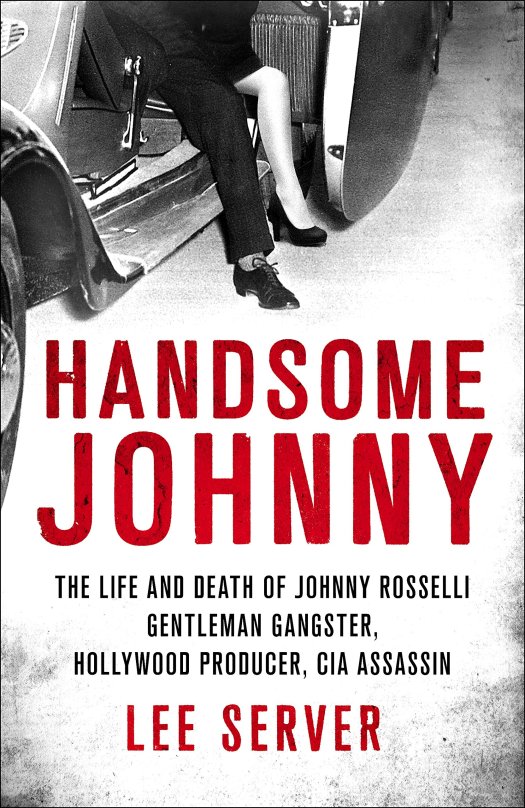
Book Review: HANDSOME JOHNNY, The Life and Death of Johnny Rosselli, Gentleman Gangster, Hollywood Producer, CIA Assassin by Lee Server (St. Martin’s Press 2108)


gary loggins's avatarcracked rear viewer

Ever since THE GODFATHER, I’ve been fascinated by the history of the Mafia in America. I’ve devoured just about every book on the subject, and consider myself a bit of an expert on this clandestine crime cartel. I believe it was while reading Ovid Demaris’s 1980 THE LAST MAFIOSO, a biography of gangster-turned-rat Jimmy “The Weasel” Fratianno, that I first became aware of the man known as Johnny Rosselli. His story captivated my interest, so when I saw a new biography of Rosselli was on the shelves at the local Barnes & Noble, I thought it’d make a great Christmas present… for myself! Naturally, I bought a copy, eager to learn more about this man who played a pivotal role in both the Mafia’s rise and the shadowy underbelly of American life in the 20th Century.

Author Lee Server is someone I’m unfamiliar with, which is strange, because his previously…

View original post 377 more words

Some Things I Liked In 2018


Since I don’t feel comfortable doing a traditional top ten list, I’m just going to list a few things that I liked in 2018.

When it comes to last year’s movies, my two favorite films were both comic book adaptations.  Black Panther and Spider-Man: Into The Spider-Verse both redefined what we traditionally expect from the comic book genre and they worked as both entertainment and as something a little bit deeper.

Among the other films I liked this year, Mission Impossible — Fallout reminded us of just how exciting a good action film can be while Game Night was hands down the best comedy of the year.  Deadpool 2 proved itself to be a worthy sequel while Won’t You Be My Neighbor?, Three Identical Strangers, Free Solo, and Shirkers made this a great year for documentaries.

David Peisner’s Homey Don’t Play That was a fascinating book about the history of In Living Color, examining both the show’s tumultuous history and how it continues to be relevant today.  Also worth reading: Thanks A Lot, Mr. Kibblewhite by Roger Daltrey and Cult City by Daniel J. Flynn.

In a year that seemed to be dominated by adaptations of comic books, it seems appropriate that one of the best comics was about the history of the medium.  Written by Fred Van Lente and illustrated by Ryan Dunlavey and Adam Guzowski, Comics For All was the second installment in their Comic Book History of Comics.  No matter how much you think you may know about comic history, you’ll learn something new from Comics For All.

When it comes to the year’s video games, I’m torn.  Red Dead Redemption II is a totally immersive gaming experience that challenges much of what we’ve come to expect from video games.  On the other hand, Marvel’s Spider-Man is one of the most purely enjoyable games that I’ve ever played.  If I had to pick a best, I’d go with Red Dead Redemption but Spider-Man is the game that I’ll probably end up replaying a month from now.

On television, I continued to enjoy and occasionally be baffled by HBO’s Westworld.  I also enjoyed playing around with Netflix’s Black Mirror: Bandersnatch, an interactive program that introduces you to a likable game designer and then give you the chance to totally mess up his life.

In the States, BBC America televised the the animated restoration of the “lost” Doctor Who serial, Shada.  As an episode of Tom Baker-era Doctor Who, Shada was just as disappointing as many have warned that it would be, an overextended mix of inside jokes about Cambridge.  However, as a piece of Doctor Who history, it was priceless.

Finally, as far as the year in music is concerned, I recommend The Who’s fifth studio album, Who’s Next.  I know Who’s Next came out in 1971 but good music is timeless.

Book Review: Thanks A Lot Mr. Kibblewhite: My Story by Roger Daltrey


On March 1st, 1959, a 15 year-old student at Acton County Grammar School brought an air gun to school.  Years later, the student would write about how he and a friend were “in the changing room, mucking about after football,” when someone fired the gun.  The pellet ricocheted off a wall and struck another student in the eye.

The student who brought the air gun was taken down to see Mr. Kibblewhite, the headmaster.  Mr. Kibblewhite announced, “We can’t control you, Daltrey.  You’re out.”  As the now-expelled student left the office, Mr. Kibblewhite added, “You’ll never make anything out of your life, Daltrey.”

Roger Daltrey, of course, went on to become the lead singer of The Who and is considered to be the epitome of a charismatic rock and roll frontman.  As for Mr. Kibblewhite, he went on to lend his name to the title of Daltrey’s autobiography.

As befits someone who, has a reputation for being one of the most down-to-Earth people in rock and roll, Thanks A Lot, Mr. Kibblewhite is a short and straight-forward account of Roger Daltrey’s life, from his youth in war-scarred London to his time as the frontman for one of the loudest bands in rock and roll to his current life as one of rock’s elder statesmen.  If it’s not as salacious as some other rock-and-roll tell-alls, that’s because Daltrey never gave into the excessive behavior that proved to be the downfall of many of his contemporaries (including, of course, his former Who bandmates, Keith Moon and Jon Entwistle).  As Daltrey tells it, he avoided hard drugs to such an extent that he was briefly kicked out of the band for flushing Moon’s stash of pills.

As is true with The Who’s best albums, the heart of Thanks A Lot, Mr. Kibblewhite is found in Daltrey’s close but often difficult collaboration with Pete Townshend.  Even after performing with Townshend for over fifty years, Daltrey still seems to be struggling with how he feels about his legendary bandmate.  Daltrey’s admiration for Townshend’s talent is obvious but he also writes that Townshend could be like “a scorpion with a good heart.”  Daltrey recounts not only the numerous times that Townshend was dismissive of the rest of the band in the press but he also tells the full story of the infamous fist fight in which Daltrey knocked Townshend out with one punch.  And yet, when Townshend is falsely accused of downloading child pornography, Daltrey is just as passionate about explaining how he knew his bandmate was innocent.

Daltrey also writes extensively about Keith Moon.  In Daltrey’s telling, Moon comes across as a unique, one-of-a-kind talent who was ultimately destroyed by his need to keep up with his own wild reputation.  Daltrey is open about often becoming exasperated with Moon but he also writes that, for him, The Who ceased to be The Who after Moon died.  Without Moon, Daltrey writes that The Who’s anthems were “now just songs.”

Thanks A Lot, Mr. Kibblewhite is a short book and Daltrey is such a straight-forward and no frills storyteller that it makes for good airport and airplane reading.  For fans of The Who, this book is essential.

Horror Book Review: Night of the Living Dead: Behind The Scenes of the Most Terrifying Zombie Movie Ever


Where would modern horror be without George Romero’s 1968 masterpiece, Night of the Living Dead?

Well, it’s hard to say.  Perhaps another film would have come along and influenced thousands of future directors and writers.  Maybe another film would have popularized zombies or mixed social commentary with horror.  Perhaps another film would have popularized the concept of body horror.  You never know.

Still, it’s hard not to think that modern horror would be a lot different if not for Romero’s low-budget, independent film.  So many movies have been influenced by Romero’s Dead films that it’s difficult to keep track of them all.  Even if you could discount the influence of Romero, what about the Living Dead films that were later made by John Russo?  Even if they don’t get as much attention as Romero’s films, their combination of comedy and horror continues to be influential to this day.

The 2010 book, Night of the Living Dead: Behind The Scenes Of The Most Terrifying Zombie Movie Ever, not only tells the behind-the-scenes story of Night of the Living Dead but it also examines the film’s lasting influence.  While the majority of the book is taken up with the production and reception of Night, it also discusses Romero’s subsequent Dead films, Russo’s Living Dead films, and all of the unofficial sequels and remakes as well.  Author Joe Kane interviews not only several of the people who worked on Romero’s film but also filmmakers like Danny Boyle, who discuss how Romero’s vision influenced their own.

Finally, the book also contains the original script of Night of the Living Dead!  Written by John Russo, the script makes for an interesting read.  Night of the Living Dead is often described as being some sort of “accidental” masterpiece but the script reveals that many of the film’s themes were there from the beginning.  At the same time, it also makes you appreciate not only the directorial skill of George Romero but also the performances of Judith O’Dea, Duane C. Jones, and even Karl Hardmann.  (If you thought Harry was bad in Night, reading the script will show you just how much Hardmann actually humanized an inherently unlikable character.)

This book is must have for horror fans like you and me.

Book Review: Room to Dream by David Lynch and Kristine McKenna


It’s been a few months since I read Room to Dream and I’m still thinking about it.  It’s definitely one of the most fascinating and frustrating Hollywood memoirs that I’ve ever read.

It’s fascinating because the book is not only about David Lynch but it’s also by him.  Lynch, in his own words, tells us about his childhood, his time as an art student, his struggle to complete Eraserhead, and all the rest.  He tells us about directing some of the greatest British thespians of all time in The Elephant Man and also shares with us the frustrations of directing Dune.  He tells us about Twin Peaks and how Mulholland Drive went from being a rejected pilot to being an award-winning film.

All of the familiar stories are here.  He tells us about the time when he was a child and he saw a naked and bloodied woman stumbling down the street.  (This image would later reappear in Blue Velvet.)  We hear about how he was essentially homeless while directing Eraserhead and how, during the casting of Blue Velvet, Dennis Hopper called him up and announced that he was Frank Booth.  Not surprisingly, Lynch writes extensively about the importance of meditation in both his life and his art.

At the same time, there’s also a lot of new stuff in this book.  Did you ever want to know who Lynch believes to have been behind the Kennedy assassination?  Well, it’s right there in the first chapter.  Want to know how Lynch actually feels about using drugs as a creative aide?  It’s in there.  Did you know that among the films that David Lynch has been offered (and turned down) were Return of the Jedi, American Beauty, Tender Mercies, and The Ring?  You do now.  He writes about his occasionally difficult but very real friendship with actor Jack Nance.  He writes about some of the legendary actors and producers that he’s met and what’s interesting is that he rarely has a bad word to say about anyone.  Even when he writes about how difficult Anthony Hopkins was on the set of the The Elephant Man, Lynch still allows that Hopkins may have just been dealing with stuff in his own life.  Lynch comes across as being as generous, artistic, and eccentric as you would hope that he would.

Clocking in at over 600 pages, the book has an interesting format.  The book is divided into sections, each one dealing with a different period of Lynch’s life.  Each section opens with Kristine McKenna discussing what was happening in Lynch’s life at the time and interviewing Lynch’s friends and collaborators.  It’s only after McKenna has given us the facts of what was going on in Lynch’s life that Lynch then gives us his interpretation and recollections of the facts.  It makes for a challenging but often interesting read.  One thing that immediately becomes clear is that Lynch is far more comfortable talking about his art than talking about his relationships with other people.  Lynch comes across as being the epitome of the artist who spend almost of all of his time in his own head.  Room to Dream gives us a chance to see the world through Lynch’s eyes and he tends to remember most of the events of his life as if they were just another atmospheric scene in one of his movies.

Lynch discusses his work with such enthusiasm that it’s impossible not to get carried away with him.  At that same time, this is not the book to read if you’re expecting Lynch to explain what’s going on underneath the surface of some of his more surrealistic films.  If you’re expecting Lynch to explain why Bill Pullman turns into Balthazar Getty in Lost Highway, you’ll be disappointed.  If you’re expecting Lynch to explain what’s real and what isn’t in Eraserhead, Mulholland Drive, and Inland Empire, it’s not going to happen.  And if you’re expecting to understand the finale of Twin Peaks: The Return after reading Room to Dream, you’re out of luck.  If anything, Lynch seems like even more of an enigma, albeit an incredibly likable enigma, after you read Room To Dream than before.

And yes, it can be frustrating but you know what?  That’s okay.  In fact, it seems appropriate.  The brilliance of David Lynch lies in the mystery.  When I first heard about Room to Dream, I feared that Lynch would reveal too much and the mystery would be lost.  Instead, it’s even more fascinating than ever.