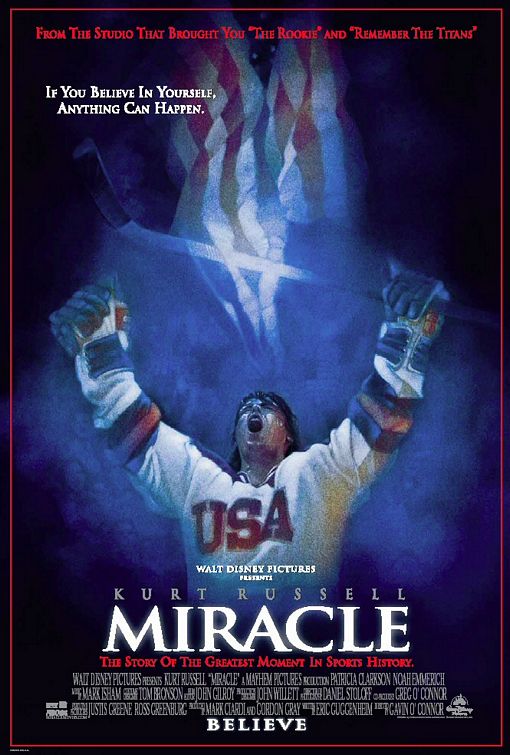
A Moment in Time: Miracle


Today, with my mother who couldn’t recall the film, I watched Miracle.

For those of you who don’t know, this film follows the rise of the 1980 USA Olympic hockey team as they prepare themselves for the inevitable clash against the unstoppable juggernaut of the USSR. Facing down the fact that the Soviets haven’t been defeated by the Americans since 1960, and that they’ve won three straight Olympic gold medals, the USA’s team of collegiate athletes nonetheless is looking at their own shot at the gold. I cannot recommend this film highly enough; it rests comfortable atop the pinnacle of sports movies ever made, and it tells a story that has all but been forgotten… at least, until mentioned.

Today, it’s commonplace to hear people talk about the greatest moment in sports history. The greatest call in the game. The greatest game ever played. The greatest goal ever scored. But, at least, for denizens of the United States, that honour is one that will never be taken from the 1980 Olympic squad.

Miracle‘s most endearing attribute is that it’s about a real story. And it’s a story that thrills people who salute the stars and stripes even in 2011, or it should. It’s a better story than that of the Marshall football team. It’s a greater story than any recounting of a sport on these shores. It’s a story that could not happen without another Cold War – the story of a team of beleaguered underdogs (whom we love so well) battling against the unstoppable Soviet Union, in a time before the internal failings of the Soviets were known. This was a match that meant more than anything possibly can in sports today, no matter what team you root for, or what your age happens to be.

For me, personally, Miracle follows events that transpired years before I was born. My memories as a young man are not of the implacable Soviet Union hanging like a dark cloud over half the world, but rather of their collapsing economy, unsustainable with the lack of infrastructure that had secretly crippled them for forty years. Of negotiations and compromise that saw the Berlin Wall torn down, and a tenuous alliance between the Russian Federation and the United States be born. I have never lived an era in which NATO seemed to hang as an aegis between my life and nuclear oblivion, or where the threat of communism seemed like one which would march across the globe and take from me everything I held dear.

But I still feel the chills across my skin, the goosebumps rising, during Miracle’s climactic moments – the semi-finals between the USA and the USSR. Unlike most other sports movies, where the true draw is the characters and the drama, and a scripted sporting event can never mean as much, the semi-finals game in Miracle is sung to the script of history. It was a real game, where nobody on earth knew the result before it was written. Al Michaels reprises his role as play-by-play announcer, dubbing over his own dialog from the original broadcast, and our actors re-enact the twists and turns of this amazing contest on the ice.

I write about it for three reasons. Each of them single lines from the film, and each of them uttered from the roughly 20-straight minutes of hockey that we are treated to as viewers at the end of the film. Kurt Russell delivers for us perhaps the greatest performance of his career, in what is debateably the greatest film of his career, and what is probably the greatest sports film of all time.

“They just benched the best goaltender in the world,” he assures his team after a first period in which the USA dared to tie the score and the Soviets pulled their goaltender, Vladislav Tretiak, in a game where everyone present knew they were lucky to just be trailing by one going into the break.

“He doesn’t know what to do,” Kurt Russell, as the real-life character Herb Brooks, assures us as he sees Soviet coach Viktor Tiknohov barking terse commands at his team halfway into the final period. Against all odds, the USA’s team is still in this game, as the crowd at Lake Placid New York tirelessly chants “U-S-A!”, waving American flags, their energy carrying that USA collegiate team against a squad that, while “amateur” themselves, were easily considered to be the best hockey team in the world.

Finally, as time begins to expire, the digital redubs that Al Michaels recorded of his play-by-play switch back to the original telecast. We hear an Al Michaels thirty years younger screaming into his mic, as the puck is cleared toward center ice, putting the victory literally out of the reach of the USSR, “Do you believe in miracles!?” he pauses an instant, as the time truly does expire, and then screams “Yes!”

And history goes wild.

What I Played Today: Majesty 2 and MLB 2K11


MLB 2K11

I bought MLB 2K11 on the first day of its release… and, having played hours upon hours of it, I’ve been dying to review it ever since. The core problem, however, is that there’s really not that much to say about a sports game. Especially a baseball game. Especially a baseball game that doesn’t really boast any new features over its predecessor from the year before. It’s the tightest baseball simulation with the best graphics that I’ve seen. You know, since last year. It still uses the one-touch control system that basically lets you play the entire game with only single presses (or maneuvers of the thumbsticks. Whatever.) to take any action. I would say the ease with which the game can be played is its best feature by far…

And it’s hard to criticize the game, since they’ve culled the irritating features over the years, until the tight baseball simulation is basically all that remains.

It’s worth noting that unlike other sports offerings (Madden, I’m looking at you!) MLB 2k11 does a fantastic job of keeping up with the big league rosters if you’re playing in an online format, or if you just hop straight in and want to play a game of baseball.

As you would expect, the game has all of the modern game modes. Many of the big achievements revolve around the My Player mode, which is also one of the most fulfilling modes… depending on the position you prefer. I would say, tentatively, that I’ve spent more time in My Player than in Franchise or Play Ball this year. It really is kind of fun to work your way up from AA ball into the big leagues, and then to carve a name out for yourself from there. I like this mode in MLB far better than I ever have in Madden, and I really can’t recommend it any more strongly.

Oh, and it’s worth noting… out of all of the 2K Sports offerings for baseball, this one is easily the best. It runs mostly alike to the 2K10 effort, but as you would expect, it’s a little tighter, and a touch better looking… and, really, with not much else to improve on that’s the story of the game. If you like baseball, or you have some hankering to play it, this game is definitely for you. If you’re looking to gain 1000 GS then this game will disappoint you with the amount of time required to earn some of the achievements. If you’re *that sort*, I wouldn’t bother with this title.

Majesty 2

The self-described fantasy sim game, Majesty 2, makes its triumphant return on Steam. I bought the gold collection when it became available partially out of nostalgia, and partially because I desperately wanted a strategy game to play that I hadn’t worn out. I could always return to StarCraft II, but for some reason Majesty 2 caught hold of my imagination, and drew me back in.

The outstanding feature of Majesty 2 as opposed to your generic RTS game is that much of the action is not under your direct control. Your armed forces consist of guards, who will defend your town and your palace in a very automated, very uninspired, way… and heroes, who do their own thing, unless they’re being paid. You can throw out contracts of various types (examples include ‘destroy target’, or ‘explore region’) in the form of flags, for which you announce a bounty you’re willing to pay. In an ideal world, your heroes will help you out, and dash to the rescue. Of course, the interest level of your heroes and their personal gumption depends both on their hero type and their hero level. For example, the Rogues from the Thieves Guild are a bit on the cowardly side and flee at the first sign of real trouble, while the Rangers Guild and its heroes are particularly excited about exploring the wilderness and battling beasts.

You personally control the construction of town structures and fortifications, and choose the path through the single player campaign; a rich experience which takes its decent share of time. This experience can actually get a little repetitive; you’ll want the missions to end a bit quicker, at the very least, no later than halfway through the campaign. No doubt if you’re better at the game than me, this will never become a problem.

L.A. Noire

Strictly as a tease… I’ve been playing a great deal of this game lately. A full review from me is forthcoming.

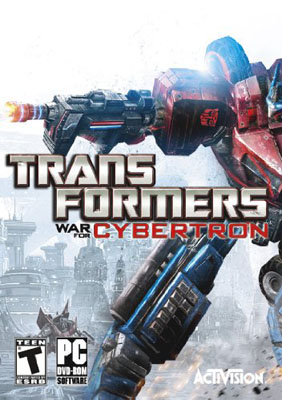
What I Played Today: Transformers: War For Cybertron


In my recent hunger for new games to play (not new to the world, just new to me, mind) I started browsing the Steam store… and playing some of the crap that was coming in off of my Gamefly subscription. In honour of the fact that I haven’t written a column in three weeks, I thought I’d throw out some quick thoughts on a game I’ve played quite a bit recently. Sadly, it’s not a new title anymore… but there it is. Maybe next time, Gamefly… maybe next time.

Transformers: The War for Cybertron – My most recent arrival from Gamefly. It’s a solid game. The game-play is pretty tight, and it does a pretty decent job of integrating the idea of both heavily armed and armored robots… as well as their ability to transform into things. The whole system is pretty simple – and you’ll discover over hours of game-play that it lacks a certain level of depth – but the game is certainly fun enough.

The single player mode has you taking command of a single Transformer in the service of either the Decepticons or the Autobots (both have their own full-length campaign mode, which combine together to tell a single story). We are taken far into Transformers Past and the initial battle for control of the planet Cybertron that began the million-year-long war between the two factions. Ambitious Megatron claims that he will build a galactic empire rightfully dominated by the power of the Cybertronians… while Optimus Prime and his Autobots battle based… well, mostly on principle. Honestly, we’re not given much background. Luckily, the story is simple enough; nobody is going to get lost in this narrative.

You’ll recognize the names, and the look, and even the transformations of the titular robots in disguise… but one of the game’s most disappointing features is that there isn’t the variety from Transformer to Transformer that you might be hoping for. Although each one has a unique loadout of one or two weapons, their unique transformation, and a pair of special abilities, all of these are drawn from the same pool (with the exception of the transformations… oh, and Megatron and Optimus Prime receive unique weapons… but they’re the only ones). Ultimately, you’ll probably end up fighting with whatever weapon you like best / whatever weapon you happened to find that will work for the given situation. This isn’t a terrible thing; after all, games like Halo are completely based on the concept of two weapon swaps, switching out weapons for new weapons and so on, and the model works.

Still, the game has some fun voice acting, some cool level designs… and it’s pretty fun to roll through. The levels are longer than I expected going in… which is both a plus and a minus. Since the gameplay is, on the whole, fun… it’s not debilitating… but some of the sequences definitely begin to drag before you’ll finish a given level. The sequences can be challenging, depending on your difficulty level, but there’s earnestly nothing in terms of tremendous innovation in any of the game-play sequences. Basically you’re thrust into a third-person shooter with a variety of terrain, weapons, and enemies… and you go to town. There’s nothing wrong with that, but there’s nothing to this game that really makes it feel Transformers-y… aside, again, from the transformations themselves. At times, these will help you out, and do add an element to the game.. but you’re going to want to spend most of your time in combat in your robot form, doing robot things.

Oh well.

The multiplayer component features a few modes  modes. The competitive multiplayer modes (Deathmatch, King of the Hill, etc.) bear some similarities in structure with Activision’s Modern Warfare 2, with perks and levels and so on. The co-operative multi-player is headlined with the by-now-completely-standard horde mode (called Escalation in this particular incarnation), where you face off against wave after wave of enemies. I know that there’s only so many permutations of multiplayer modes; particularly within a given genre. I accept that each game isn’t going to break new ground with its multiplayer modes or concepts. That having been freely admitted? There wasn’t much to get hooked on here.

If for some reason you haven’t been turned off by the movie franchise or the endless bastardization of the classic Transformers, and you enjoyed this game, there’s something to look forward to: A planned sequel in 2012.

April Power Poll


The rack has seen some serious action since I last addressed this topic back in March (not the smallest change has been the introduction of an entirely new physical rack. It’s more of a drawer now, but that has less torture-device correlations). As you may know, one of the most important ways in which I get access to video games over time is through my long-running subscription to Gamefly. I use the two-game package, because inevitably at least one of the two games sits around for ages while I play the other and any new releases… still, it does give me a way to play a bunch of games that I would never consider spending $60 on. In theory, GameFly will send you the games you really want at the top of your list. Of course, the reality is that when you build a queue of 40 games it’s sometimes a surprise to see what shows up in the post. Am I getting some A+ rated game I forgot I wanted to play two months ago, or something terrible that had some flashy reviews and bamboozled me? Well, if it’s the latter, at least I didn’t pay full retail.

Anyway, non-seq introductions aside, here once again is my Video Game Power Poll… in April. These are games that command significant time. If you think I have good taste in games, you may want to check some of these titles out. As always, I’ll try and give long-winded blurbs about each game as we go. And they’re still in reverse order. And no, I wouldn’t turn down sex for any of them. (Well, maybe for #1). Also, I’ve only got seven entries this month. I’m more dedicated than usual.

7. Call of Duty: Black Ops. Still standing strong months, and months, and months later. I’d actually taken a significant break from this title, but then my friend B and I played some the other night, and I was right back in. There’s something about the visceral pleasure of shooting people who think they’re doing a great job camping that never tires. Of course, when I first came back, the rust pretty much locked me up… and some of the game’s flaws have me longing for the next Modern Warfare release. When does that launch again?

6. Marvel vs. Capcom 3: Fate of Two Worlds. This one is really up and down depending on mood. I had whipped myself into a serious fighting game craze for a couple of weeks there… and it made me think harder about Mortal Kombat. I’ve had some predictable issues with the online multiplayer. I still hold strong to the belief that fighting games were meant to be played against people in the same room. You know, to avoid that whole lag issue.

5. League of Legends – It’s been suffering from some server instabilities in the last little while… but they thoughtfully gave out a pittance (and I do mean pittance) of in-game Riot Points to buy things with as compensation. I did buy some stuff from them to support disaster relief in Japan, and I saved a copy of the picture of their CEO holding up a huge cardboard check to my hard drive. This game is never going away, though, because they just keep improving it!

4. Bayonetta – This one is a GameFly rental. It’s actually kind of an old game by now, apparently. I had never even heard of it until it popped up while I was perusing GameFly’s database. It sounded worth a look, so I went for it. It’s visually stunning, but took some real getting used to after years of playing FPS, sports, and RPG games. Maybe I need to branch out more often.

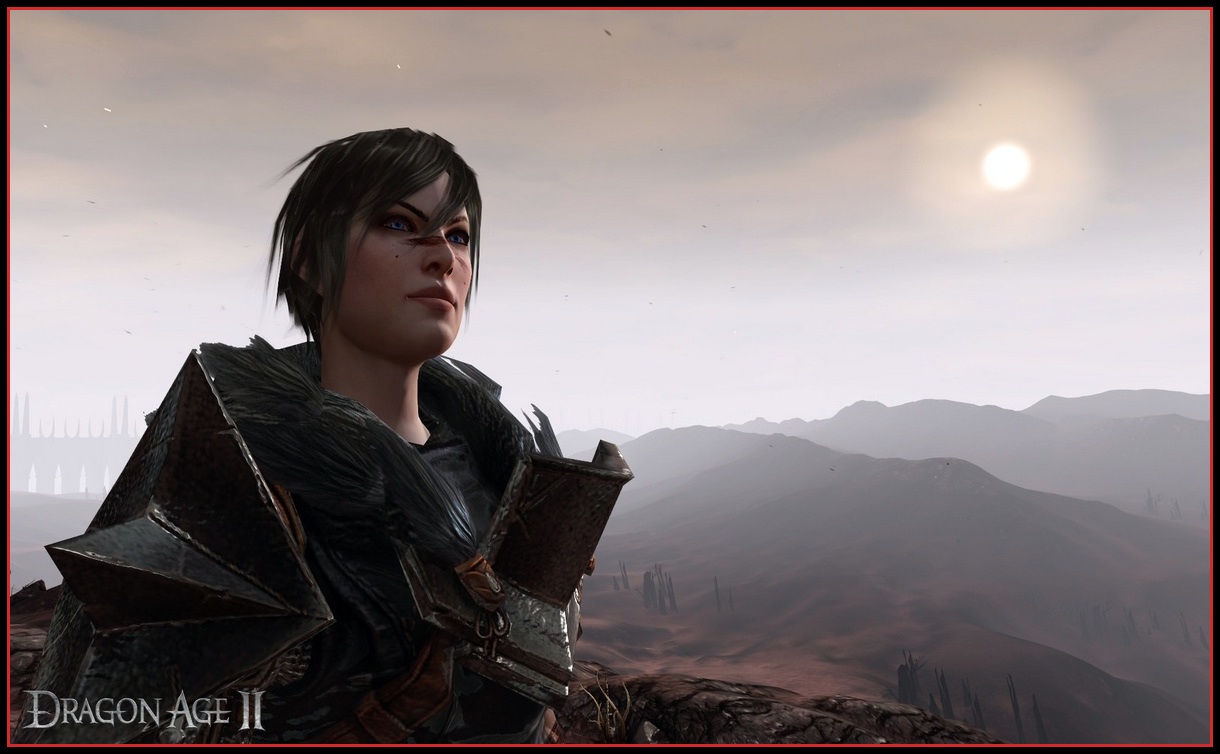
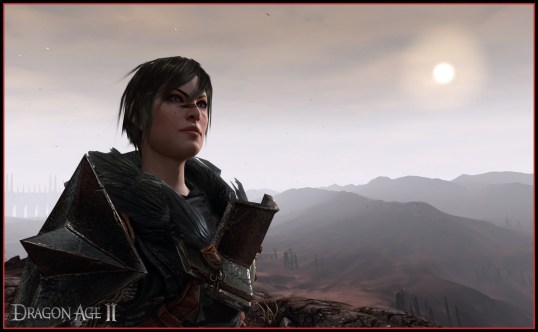
3. Dragon Age II. It still won’t die. There’s a lot of permutations to this one… and I love the fact that the automatic dialogue from Hawke changes based on the responses I frequently pick in-game… I love the characters. Wait, I did a whole review on this.

2. Red Dead Redemption. Another GameFly-er… finally. I actually had wanted to play this title since its launch, and I’m just now getting to it. Definitely going to be the subject of the next ‘what I played today’ style column. This one is definitely worth checking out for anybody who hasn’t gotten around to playing it yet. It’s very much in the style of Grand Theft Auto 4, but with a lot of improvements (in my mind) to the game-play. Of course, if you don’t like westerns, it’s probably a stay-away.

1. MLB 2K11 – I’ve been trying to author a review to this game for months. Seriously. I started writing the day of its launch after I bought it and powered through a few games straight. I love it. It has some weird glitches that are kind of frustrating, but if you want to play baseball, there’s a lot to like in this release… I guess pretty much like every year. Anyway, with all of the excitement over the baseball season itself, I’ve been glued to this title a lot. I suppose it will cool off in time (just as my Madden obsession inevitably does) but then again, the baseball season is a lot longer. I particularly like the ‘My Player’ create-a-player mode in this year’s offering, which is pretty meaty. Baseball is a good sport for it.

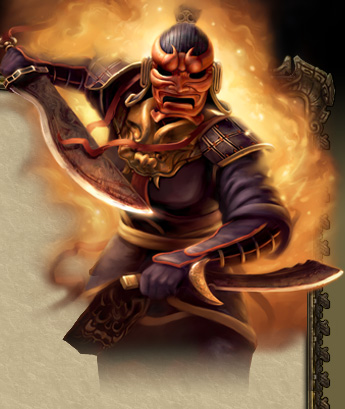
What I Played Today: Jade Empire


Every so often – because I like old games better than I like new ones, or so I’m told – I like to revisit a classic game. I’m sure, if you read my columns often, you’ve noticed that by now. Continuing this month’s theme of BioWare inundation (spurred, of course, by the release of Dragon Age II and the Arrival DLC) today I decided once again to play a little Jade Empire. Longtime WRPG fans will remember the title from its 2005 debut. Newcomers to BioWare’s camp may have missed this jewel. In the interests of saving the integrity of the game for anyone who never played the original release, I’m going to avoid serious game spoilers here, even though the game has been out for six years now.

The first thing I’ll say is that this game holds up better than most other original XBox titles with graphics that are bearable, at least, and smooth play on the XBox 360. I never played the game when it was originally launched on XBox, and only got into it after a friend recommended that I fork over the cash to buy it on the XBox Originals in Marketplace. Smooth emulation aside, I immediately fell in love with the title. Jade Empire offers a highly interactive game-play experience (more on this later) that is settled on the solid foundation of classic BioWare RPG structure. We slowly accumulate a group of loyal followers, whose personal story develops through conversation options between major plot developments in the overall story. Although many of these characters follow what we might call the “BioWare Rules” in terms of their personality archetypes (although Dawn Star is unconventional, she still reeks of Carth Onasi, doesn’t she?) they’re predictably detailed, with a diverse set of backgrounds and motivations. In this respect, I hardly think that Jade Empire is the gold standard for WRPGs. Its relatively simple story progression doesn’t lend toward diverse side missions undertaken in far-off locales.

The game’s outstanding feature, however, is not the party members, the story, the voice acting, the graphics… or even the interesting-in-theory morality system of competing philosophies. Unfortunately, while the idea of two philosophies competing against one another (Open Palm and Closed Fist) sounds compelling, and a refreshing departure from someone merely being good or evil, light or dark side, it amounts to the same thing. The complex motivations that would drive a practitioner of the Closed Fist according to the game’s story ultimately don’t matter; points are accrued by being a jerk, just as always. Sliding scale morality systems are always going to be imperfect in general, of course, while we’re on the subject… but I almost feel as if Jade Empire could have benefitted from a dual system; having both a good vs. evil slider, as well as competing philosophies (in this scenario, we might wish for more than two that are so diametrically opposed). Oh, and why can’t we ever have a philosophy of neutrality in these games? Wouldn’t that be fun? Maybe not.

The reason I keep revisiting Jade Empire, attempting to jump off for the third time, is because of the interactive game-play system. Even Mass Effect with its shooter based game-play doesn’t explore the potential as deeply as Jade Empire, which plays successfully like some kind of action game, only with distinct RPG elements. It lacks the elaborate combos that we might see from Devil May Cry or similar games, but it interweaves level-ups and equipped items just like a more traditional RPG. Unlike latter-day BioWare offering Dragon Age, we are truly rewarded in Jade Empire for dodging, and knowing when (and from where) to use our different martial arts styles and their different unique powers. Now, of course, those who are traditionalists and would rather have the stats decide things (this also includes people who just aren’t that good at action games) I suppose this is probably frustrating. I personally think it’s mild enough that once you get the hang of it almost anyone could have fun with the system and be successful in the game. For me, this outstanding combat system makes the game incredibly easy to just drop in to and play. In fact, every time I load it up and play, I angst over how much fun it is… and how it’s the one game amongst all of BioWare’s RPGs that never got a sequel.

Oh, yeah, and as a side bonus, the game features a 2-D scroller style airplane game where you pilot your airship and fire your weapon straight up toward a variety of aerial enemies and hazards that cross the screen and generally try to ruin your day. All of these sequences but the first one are optional, but they provide a nostalgic element for me…  and completing them provides a bunch of XP within the game, too.

And hey, maybe if enough people realize what a great game Jade Empire was… we’ll get that sequel after all.

On Special: 4 DLCs


Micro-transactions… are the future. In the future, the principle game will be less important than it even now is. We’ve already learned to expect from pioneers in the DLC field like BioWare that a retail game may be half of what it ends up being… and not through the antiquated idea of a full expansion (although those are still nice and profitable too, I’m sure) but rather through add-ons. DLC. Updates. Extras. Once we’re paying for little tidbits to enhance the game we’ve already paid full retail for, we are just walking, talking wallets for the developer.

In a way? This is actually a good thing. We can expect more content to be established over time and to bridge the gap from release to release. Does this seem lazier, and a way to push retail titles out faster? Unquestionably. However, even with full eyes-wide-open knowledge that I’m being exploited somehow… I’d earnestly rather be able to download and play a few new scenarios over the course of a year that eventually complete the game I had purchased… rather than finishing a more-complete-at-retail-launch game… and having nothing to play for a year.

Unfortunately, I think the developers realized this even before I did… and it led them to release games that weren’t even ready to go, reasoning that they could be completed later. Still, the idea of rushed production isn’t new. Let’s take the example that I’m sure some of us are still angry about… Knights of the Old Republic II. Obsidian’s sequel offering to the critically acclaimed original threatened to be better than BioWare’s classic original in literally every way. We had more characters, more sophisticated interactions, a more diversified playing field in terms of character customization as well as available items. We threatened to go to more places, more diverse locales, and places not quite so stubbornly grounded in the Star Wars trilogy canon. In short, the game threatened to be an all-time great. Oh, except that a third of the content was cut before release. It was released with roughly ten trillion bugs. It was released, in short, because the producers wanted to make money for Christmas… rather than put out a game that would endure even through 2011.

But if Knights of the Old Republic II were released in 2011… we would have gotten the HK factory. It would have been a $5 (U.S.) add-on, but we would have gotten it. We would have gotten patches and updates to make the game stable and play-able so that we could have gotten the HK factory. So that we could have gotten the Sith Academy. Or whatever else cut content we found ourselves to be lacking.

Given that I was going to buy Knights of the Old Republic II either way… and given that I’m going to buy incomplete DLC-driven money-grubbing games today… I guess I’ve just accepted, at this point, the inevitability of DLC and micro-transactions in general. If I can spend $5 at a time for some cool add-on, I do it almost without thinking. At least, for my favourite games. If the retail release is garbage, I’ll never think about it again. So I suppose that’s the line that developers have to walk in this brave new world. Make it good enough that I’m willing to play it on-and-off for a year. This will keep the game always in my head, so I’m already thinking about the sequel… and it will keep me happy, so that I don’t write scathing reviews about your product.

Phew. Rant over. Alright, here’s something that might potentially become a regular feature for me. Four (or more, but this time, four) DLCs or add-ons I played recently. My impressions, whether they were worth the money I shelled out, and what they did to the overall game. These are, in this case, in no particular order, but I did include the launch DLC for Dragon Age II… just because.

Jill Valentine / Shuma Gorath – Additional Characters for Marvel vs. Capcom 3 – It’s been two weeks (or more?) and I still earnestly can’t believe what I paid for these characters. As anyone could have guessed (and, really, since these two at least were in the game files anyway, it didn’t take a savant to anticipate) the first ‘major’ DLC for MvC3 is the addition of fan-favourites from MvC2. Unfortunately for my wallet, the idea of being able to use Jill Valentine and Shuma Gorath again somehow justified the cost. Given that these add-ons were basically unlocks (costing me roughly 100 KB of space on my XBox 360’s hard drive) and not new content at all, I’m extremely unimpressed with their addition. Couldn’t I have gotten this as a bonus for pre-ordering? I already forgave developers for adding cut content on later as DLC packs, but I feel like this reaches a point where content is deliberately cut in order to make a few extra dollars. Are video games not enough of a growth industry? I’ve got an idea – make a better game. Sell me a half dozen characters as an add-on, not two individual ones each of which cost me a few bucks. As much as it pains me, I really can’t discourage this DLC enough. What a disappointment!

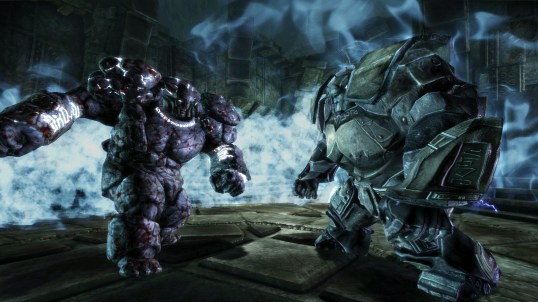
The Golems of Amgarrak – Add-on Scenario to Dragon Age: Origins – I reviewed this just today, so I won’t spend a ton of time on it. Considering its cost, and how much I enjoyed the original game, I can’t say that I regretted this purchase. After playing it, I’m sternly disapproving of the marketing of this DLC as some kind of super ultimate difficult challenge. I thought the Emerald and Ruby Weapons in Final Fantasy VII were harder… and they were literally just a matter of patience in game-play. And fine, say what you will, that in a game that allows tactical thinking you can’t make a challenge that is difficult for everyone yet also possible for everyone… but don’t try to tell people who really enjoyed the tactical combat of Origins and were hoping for more just how hard Golems would be. Because it wasn’t.

Arrival – Add-on Scenario to Mass Effect 2 – Very much following in the vein of the Overlord DLC, we are treated to what is ultimately an elongated single mission. For this scenario, we have Commander Shepard rolling solo, and the scenario is quite a bit more challenging than normal – mostly as a result of this solo-Shepard format. However, I can’t argue with the scenario design, which is fun to play through. The DLC is about the average BioWare-single-scenario-add-on length… but yet again, the marketing let me to expect something that I don’t feel like I got. Arrival didn’t do much to bridge ME2 and ME3 for me. Now, of course, I’ve envisioned scenarios in which it stands as a direct bridge, but the DLC still felt a little lazy to me… and not something that profoundly changes the way I felt about the setting. I was earnestly disappointed after the DLC that we’d received from the ME2 team in the past, with Shadow Broker, Kasumi’s Stolen Memory, and Project Overlord all head-and-shoulders above this offering. Still, it was fun, and if you’re hungry for a re-visit to ME2, Arrival isn’t a terrible choice.

The Black Emporium / The Exiled Prince – Launch DLC for Dragon Age IIAs a pleased pre-order customer of this game, I received both of these DLC packs via the usual unwieldy 4957 digit prize code entry which gave me permission to spend twenty minutes downloading add-on content for my launch copy of Dragon Age II. My fundamental issues with the format aside, I’m reasonably happy with the fact that I got these add-ons for free. The Black Emporium is little more than a curiousity, despite its potential. Its existence provides a solid jump to your Hawke in the early stages of the game, but you earnestly may never visit the in-game Emporium more than once… maybe twice.

As for the Exiled Prince… it was actually a very strong DLC. I may not have liked Sebastian Vael as much as I liked the game’s stock companions, but he has a very complete role in the story. He’s interwoven with elements of the plot, with events from the previous game, and with the most important underlying themes of Dragon Age II. He feels like an integral part of the story if you take the time to do each of his plot scenarios and speak with him when the opportunity is given. Of course, as is common with this game, the overall sheen of Exiled Prince is marred by the bugs it launched with. Most notable amongst them? Not being able to earn achievements from the DLC. I don’t mean to sound overly critical… but this is just unacceptable, particularly for customers who would have purchased this add-on after market, not received it for free with a pre-ordered copy.

What I Played Today: Golems of Amgarrak


I was in quite a mood after playing so much Dragon Age II, and (as that led to) another full play-through of Dragon Age: Origins. I had originally planned to continue straight on to Awakening, and just complete the whole series. But then, as I was on my roll, I remembered that I had purchased a couple of DLC packs for Dragon Age: Origins a while back on the cheap. They had some kind of sale for half price DLC, or some such. I’d taken that opportunity to pick up both Witch Hunt and The Golems of Amgarrak… but while I’d completed the former some time ago, I’d never bothered to sit down and play through Golems. I took a look at the achievements, because I’m like that, and I realized that I needed to complete the DLC on a minimum difficulty of Hard in order to receive my e-recognition for my accomplishments.

Harkening back, I recall that Golems of Amgarrak was touted as an extra-difficult bit of DLC… it was, ostensibly, much harder than the regular game, even on the Casual difficulty. In short, this DLC was not intended for the faint of heart. This did nothing but excite me, but I did go into it expecting a higher degree of difficulty, and felt that I should use some caution.  Although I might be ‘that guy’ when it comes to gaining achievements in an expedient manner, I’m strangely honourable about some of them. It seemed to me that if I were going to defeat the DLC’s final boss on a Hard or Nightmare difficulty, I might as well play the whole DLC on that difficulty. So, I set my difficulty, and I chose to import a Warden from an Origins playthrough at level 20, a Dwarven sword-and-board warrior.

The DLC took a couple of hours to play through all the way. It introduces a semi-new area (yet another re-skin of the default Dwarven Thaig that we saw four times or more between the Origins game and the various DLCs) that paves the way into a completely new area. Amgarrak itself is a completely unique area replete with colour-switch puzzles, swarms of enemies (mostly of the more difficult types. I assumed there would be Golems, but I was treated to a plethora of Revenants, Arcane Horrors, and high-ranked skeletons as well), and a bunch of loot. Most of the loot proved to be useless, but it did provide upgrades to the Golem which I picked up on my way in. As one might expect, the Golem is the key to the whole deal. It has significant healing abilities, and while it can’t always fight its way out of trouble, the Golem is tough enough to escape from danger so long as your party features some tankier types.

Ultimately, I found the DLC a little on the disappointing side. It was about as substantial as I expected (given the average length of BioWare’s DLC add-ons) with a fairly large area to run through and a whole new party. However, in lieu of adding substantially to the story (as Leliana’s Song does, and Witch Hunt debatably does) the idea behind Golems of Amgarrak was to provide a very challenging play experience within the tactical game engine of Dragon Age: Origins. Earnestly, I didn’t feel the need to adjust my tactics much from playing the original game. Tank-type characters are still able to mostly take care of themselves, and the most effective approach for me seemed to be to focus on healing. The only encounter I had to repeat was a surprisingly difficult swarm of golems which jumps out at you in an optional chamber while in the process of acquiring golem upgrades. I was not particularly impressed by the Harvester, which seemed to be mostly a matter of managing a group of enemies and keeping on top of healing.

Anyway, I think this polishes off my experience with Origins. I’m very much anticipating a DLC – any DLC add-on, really – for Dragon Age II.

Review: Dragon Age 2


Unfocused Ramblings

After a long wait, I hope to be back and better than ever. I was originally planning to go off the board with MLB 2K11… which is still getting a review I might add … but Dragon Age II consumed my life for a while, and I have to talk about it. BioWare and I have had a rocky relationship. The first game of theirs which I played was actually Neverwinter Nights… which I got about halfway through before my friend told me to stop playing it and go back and hit Baldur’s Gate II: Shadows of Amn instead. It was a formative experience for me. Up until that time, I would have described myself as an irredeemable JRPG fan. Since that fateful day, I’m not sure I’ve ever enjoyed a JRPG as much again. Naturally, this launched my love affair with BioWare. There have definitely been parts of that relationship that I’ve enjoyed more than others. For me, as much as I enjoyed Baldur’s Gate II, the current generation of these games is really the golden age of WRPGs in my eyes.

Is Dragon Age II the best WRPG that I’ve ever played? Ultimately, I would have to say no. Its release was too obviously rushed, which is evident in the plethora of bugs available for your gaming pleasure (some of them pretty damaging to your game experience, and all of those impossible to correct when playing the console versions). In years past, it was always true that the PC release was preferable because the developer could release patches that would solve a lot of the known bugs, and knowledgeable use of the game’s console could solve a lot of other problems. Obviously console games still don’t have the latter option, and only (relatively) recently gained the former. But as time has gone on and computers have easily outpaced what I need them for in terms of work, it became steadily less economically viable for me to upgrade my GPU three times a year… especially when I could own one XBox 360 for four years and counting.

The potential annoyance factor only comes out occasionally – when games are pushed through release with known bugs, and you have some agonizing wait for them to be fixed for the console version. Unfortunately, this was definitely the case with Dragon Age II and it sapped some of the luster off of what I otherwise felt to be an extremely fun offering from one of my favourite developers.

Oh, and a little disclaimer before I begin complaining in earnest. As I am wont to do, I’m going to table any discussions about DLC, micro-transactions, and EA’s 2010+ marketing strategy of bundling add-ons with pre-orders and adding content at regular intervals to bridge the gaps between releases. I think we can all agree that it is one of the more brilliant marketing ploys (not that we’re giving EA credit for coming up with it, but that doesn’t really detract from the idea itself) that we’ve seen… ever. I think we can also all agree that regardless of our personal feelings, on the whole, it works. This was the first game I’ve pre-ordered in years, and I did it entirely to gain access to the launch DLC that I’d otherwise have to pay for. It wasn’t particularly onerous, since I knew I was going to purchase the game anyway, and EA knew for a fact that they’d sold me a copy six months before launch. I’m sure some executives slept very soundly knowing that they’d suckered yet another fan into pre-ordering titles and sitting around in anticipation of Amazon’s launch day delivery time.

So how is Dragon Age II? As a sequel to the dark fantasy original, Dragon Age: Origins I would say that it both succeeds masterfully and disappoints completely. The feel of the two games is almost entirely different. In the original, we’re treated to a bleak literal-end-of-the-world scenario that is playing out before our eyes. Factions of whom we urgently require aid are fighting one another, the enemy is building in power, and in the grand tradition of Tolkien-esque fantasy, evil used to have a hell of a lot harder time of it. The sequel, rather, takes us through an eight-ish year period in the life of a single protagonist within the Dragon Age setting. It deals heavily with plot elements that were introduced in the original game and it has some obligatory cameos from characters we’ll recognize, but it otherwise is entirely stand alone. Gone is the overarching threat of a darkspawn-fueled apocalypse. Instead, the conflict centers around the city of Kirkwall, a deeply troubled metropolis that was formerly the center of a bustling slave trade in the ancient Tevinter Imperium.

We haven’t really gotten away from the slavery, however. Not only is Kirkwall infested with some of those very same modern-day Tevinter slavers, but the whole city lies under the pall of another form of slavery. As brutal as we may have found the treatment of mages in Ferelden – what with the vials of blood taken from every Apprentice that could allow them to be unerringly tracked down, or with the merciless hunting of unlicensed ‘Apostate’ mages – we only saw the tip of the iceberg in terms of both what mages have to suffer through, and what they’re capable of when they’re left unshackled. The picture painted by this conflict is an interesting one primarily for its gray morality. Very few issues in real life have the kind of clear-cut good and evil dynamics that we often see in video games. Real people are complex organisms with complex motivations. We are not a society of mustache-twirling villains tying maidens to railroad tracks only to be foiled by tights-wearing do-gooders from every angle. To an extent, we experienced this in Dragon Age: Origins as well. Both games mercifully liberate us from the point-based good-versus-evil system that characterized the Knights of the Old Republic games and others during that era.

In Dragon Age II we’re treated to a whole new system which bears a little resemblance to the party-favour style system we saw in Origins, but with a new twist. Now, our party members (as expected) either approve or disapprove of our protagonist, Hawke, and the actions we take as Hawke. The relative level of either ‘Friendship’ or ‘Rivalry’ (I’m sure you can figure out which is which) then begins to colour all of Hawke’s interactions with the rest of the party. Many of the changes are subtle, but Dragon Age II is rife with subtle-but-appreciated touches that make it stand out as a game above many of the other offerings in this same genre. These little touches serve ultimately to give this title a more authentic feel than many games that I’ve played over the years, and I appreciated the attention to detail. It seems an odd contrast with the various bugs, which, I really can’t state enough, were plentiful and ranged from mildly irritating to infuriating.

Oh, and while we’re unfocused, and while we’re talking about subtle details? An odd thing occurs in this game. One which I might have appreciated more than almost anything else in the whole thing. Each conversation option is responded to with a variant of the Mass Effect style conversation wheel – responses to the right tend to lead toward the conclusion of the conversation and have a certain tone, while ones to the left tend to be follow-up questions. Unlike Mass Effect, we are treated to some symbols which help to identify the tone of the message before Hawke plants her foot in her mouth. For example, a sarcastic or whimsical reply will be accompanied by a comedy mask icon. A decisive, aggressive reply is accompanied by a closed fist. A bribe is accompanied by an image of falling coins. And so on. Anyway, this in and of itself is nice, but the truly outstanding dialog feature of the game? If you reply consistently in one vein (i.e., if you are consistently sarcastic) then the filler dialog or automatic replies from Hawke begin to mirror that type of response. Again, using the ‘sarcastic Hawke’ as an example… the dialog which is default, that is, not under the control of the player. Eventually, if enough sarcastic replies are given in order to establish a pattern, Hawke will begin to respond in a sarcastic manner on her own. It adds a lot of character to Hawke solely based on how you’re already playing the game. I hope that you can see why I think this is one of the best (albeit very subtle) features that BioWare thoughtfully included for me in this title.

So, I suppose the real question is… what is Dragon Age II like? True to how it was promoted, it’s sort of a compromise between the FPS-action-with-RPG-elements style of Mass Effect 2 and the old-school WRPG tactical gameplay of Dragon Age: Origins. If what you loved most about Origins was how it harkened back to Baldur’s Gate II, you’ll probably find the combat system in Dragon Age II to be a bit on the shallow side. You’re still, of course, perfectly at liberty to pause the game, arrange your party, and launch a more tactical assault. On the harder difficulties, being discriminating and tactical pays off big dividends. However, the game clearly wants to draw in fans of the Mass Effect games with a pace that is overall faster, and a system that is much more streamlined. As a result of this intention, it’s pretty quick-paced… or, at least, it can be, with an optimized party on the lower difficulties. Don’t expect the same degree of difficulty that Origins could present, either, if you chose to visit Orzammar first and played on the higher difficulties. Although, again, on the higher difficulties Dragon Age II has its own challenges.

Let’s boil things down, shall we?

The Good

– It’s a beautiful, detailed, thoughtful world. We’re introduced to more of a setting we’ve been introduced to. In a lot of ways, Dragon Age II exceeds Mass Effect 2 in terms of expanding on an existing setting. If you were really drawn into the world of Dragon Age, you’ll find a lot to like in the sequel.

– The voice acting is exceptional. I can’t think of a single character whose voice acting was poor, whether you like the character or not (and – almost as a side note – I liked them all)

– The characters offer a lot to the narrative, and have some fantastic interactions. BioWare has done a stunning job letting the party members banter back and forth during quiet moments. Try different combinations. You won’t be disappointed!

– The slice-of-life style which follows a single character, Hawke, and her life is perhaps a bit less ‘epic’ on the overall than the Grey Warden’s quest, but it delves far deeper into the underlying themes of the setting.

– Combat system is streamlined and intuitive. You’ll recognize everything from Dragon Age: Origins and the menus are actually easier to navigate now.

– Party members have completely unique skills, maintain their own wardrobe, and maintain their personal opinions, which lets them keep a refreshing flavour each of their own.

– BioWare went out of their way to make crafting your own potions, Runes, poisons, grenades, and supplies more attractive. Given how frustrating it could be to locate certain components in Origins, it may almost seem like an overreaction for how simple things become in Dragon Age II – but it works well.

– Girthy. This game is pretty long. If you’re planning to do everything… settle in. You’re looking at forty hours of game-play or more.

– The DLC items (from every source!) are not the best items in the game. They’ll definitely serve you well in the early part of the game, but they’re outclassed by the mid-game, and they also don’t sell for a ton of money. Just having DLC gear won’t make this game a breeze for you, or render all other equipment useless. It’s a nice touch to actually be trying to upgrade my stuff, rather than just equipping Blood Dragon Plate and calling it a day.

The Bad

– Buggy. Buggy. Buggy. Buggy. I really can’t overstate this. Every game launches with bugs, but this one launches with an unacceptable amount, and an unacceptable severity. Patches have already cleared up a couple of them (even for the console versions) but I was still frustrated to see the sloppy polish on what is otherwise a very delicious fruit.

– Much of the tactical aspect of gameplay is gone. Baldur’s Gate II could be a serious pain in the ass sometimes, but it really rewarded good planning and a thorough knowledge of spells and mechanics. Dragon Age: Origins made a strong compromise between viable-console-game and hardcore-tactical-gameplay… this element isn’t nearly as strong in Dragon Age II.

– Did I mention the bugs? Seriously. Hopefully more of the issues in this game can be patched out.

– Overused sets. Although the set pieces are beautiful and I love the look of the game, it suffers from a bit of the Mass Effect syndrome, where there are a hundred caves which are all built using the same “cave” layout and look. Very disappointing to see a step backward here after what we saw from Origins, Awakening, and Mass Effect 2. I can only assume this is another aspect of rushed production.

– We revisit too many places. I understand the scope of the game, its focus on Kirkwall and the surrounding environs, and whatever else… but while I don’t mind re-treads within the city (especially in, as the game runs on, a number of years) it seems like there should be more unique locales around the city. It feels lazy for us to revisit the same places over and over again for quests in each Act of the game. I’ll mention it once more… it was probably intended to have a few more locales, and that was probably scrapped for time. I’m in no position to complain because I bought the game, and I loved it, but I would have loved it more if EA/BioWare had spent another month catering to my discerning tastes.

– The game seems to lack focus at times in terms of the narrative. I actually appreciated this characteristic as it seemed to mirror how a real person’s life would tend to pan out… but it does seem out of place in a video game. At times, it’s not clear where the game is headed.

– This may sound stupid, but I’m far from above personal pique, so… way too much energy spent on promoting the game prior to launch. Although their strategy of offering DLC items for interacting with people on the BioWare website or whatever else might have drawn in a couple of new fans, it almost assuredly annoyed a lot of fans who were planning to buy the game anyway.

The Bottom Line

BioWare has me, at least, hook line and sinker. In spite of my various whiny complaints. I can’t wait for their next release.
Video Game Power Rankings


Recently, as I settled myself into my cheap office chair, I realized that there was a stack of 360 games which was sitting on the table between my actual workspace (computers, etc.), and the TV with the 360 hooked up to it. My mouth twisting in annoyance, I inspected these games, determining which ones needed to go where on ‘the rack’. The rack is where games go to die after they’ve escaped immediate interest, especially in a climate like March of 2011… a climate in which new games are constantly being released.

A few games went on the rack. Others, I knew, had to stay out. Why? Because they’re go-to games. They’re games I need on-demand. This is 2011. If it takes me longer than 20 seconds to achieve video game bliss, I am doing it wrong. But it did get me thinking. What games are sitting on top of that stack? Which ones does Steam claim I’m addicted to? Which PC games are relevant enough to where I actually keep track of their DVDs?

So I thought, why not talk about video games the way I talk about sports? Why not have a power poll? After all, there are games which dominate my time, and those which do not. Not all of the games which occupy my attention are new. Not all of them are critically acclaimed. Not even all of them I would take the time to review (unless someone really wanted me to, I guess. I can probably write 2,000 words about any video game at this point). But these games do share a certain quality which sets them above and beyond the average title. These are games that I actually want to keep playing. Some games might make the list, from time to time, simply because I need to finish them in order to write a review (or, from a more fiscally responsible standpoint, mail them back to Gamefly) … but not all. Not even most. That stack which remains ever at my fingertips is video gaming bliss.

At least, today, it is. Tomorrow, who knows? So I thought I would share a few titles from ‘the stack’. You can think of that as a metaphor from now on. It represents the sum total of my gaming experience, from 360 titles through Steam downloads. These are the kind of games that I’d think about, for a flickering flame of an instant before slapping myself back to reality, turning down sex for. These are games which I can disappear into, and later boast about the accomplishments rather than hanging my head in shame over the time-sink. I think that’s enough adieu. Let’s agree to stop for now, shall we? Instead, let’s dive into the power poll, in reverse order…

8. Call of Duty: Black Ops – Not nearly the time-sink that it used to be. This reduction in attention has nothing to do with the game itself – which is still pretty fun – but rather due to the inundation of new games forcing their way in. If I had to pick just one multiplayer game to jump into with my friends, it would still be this one… but I’m not sure there’s any reason to play Black Ops solo right now.

7. Command and Conquer: Red Alert 3 – Steam tells me that I love this game, and that I’ve spent prohibitive amounts of time playing it. Unfortunately in this case, Steam is right. I actually had never picked up RA3 on its retail release, but I was unable to refuse Steam’s recent sale on latter-day C&C products. I was hooked pretty much on entry, through a combination of nostalgia and longing for a legitimate RTS release. Ever since I burned out on StarCraft II for no discernible reason, I’ve been looking for another strategy game to fill the void. I guess this one is it. At least, for now.

6. Civilization 5 – A perennial power-poll contender. The Civ series is a fall-back position for me. Anytime I hunger for immersion and a way to kill a two-hour-block, I fall back on this series. Ever since I embraced the latest incarnation over Civilization IV it’s been a no-brainer.

5. Bulletstorm – As I’ve stated before, this is a great game. I’m just not sure how replayable it really is. Given time, I’m sure I could play through the single player again and love every instant of the carnage… but in the meantime, the lack of variety in the multiplayer mode has this one shelved behind some of the newer titles, and some of my perennial all-stars.

4. Marvel vs. Capcom 3: Fate of Two Worlds – The DLC for Jill Valentine and Shuma Gorath is hideously overpriced. That having been said, having Jill back in the fold has totally re-ignited my interest in the game. I now play it as a kind of bridge between other more ‘serious’ games. I remain terrible at multiplayer MvC3. If you want easy winds, challenge me.

3. League of Legends – Continuing their unending trend of new champions, game state patches, and new content, Riot Games continues to impress with their tactical multi-player smash. I’m sure the microtransactions in this game are making everyone involved rich, too… which bothers me only in that I’m not involved in the collection of cash.

2. MLB 2K11 – I play two sports games every season; MLB 2KXX and Madden NFL. I will sometimes also trot out NCAA Football… but not often. Anyway, the latest version of MLB 2K isn’t exactly a re-invention of the wheel. We’ve known the rules of major league baseball since 1898, and Bud Selig remains as committed to stagnation as ever. There’s not a ton of new features to be desired in this latest incarnation, but the graphics are even better than ever, and the pitching and hitting controls are as good as I could conceive of a way to make them. There isn’t much to hate in this latest title.

1. Dragon Age II – Immersive doesn’t begin to cover this one. I’ve heard a lot of the complaints about this game… and my succinct retort would probably be something like: “I love this game. I hate listening to reason. So let’s not discuss it.” Frankly, that, and the enormity of what I have to say about this title, are the core reasons that I haven’t tried to review it yet. Fear not… thoughts are forthcoming… but I suppose after a certain point a true review doesn’t do anyone any good.

Initially, I had intended to make this a ten-game feature.. .but then I figured, why push it? These are the games that currently snare me. I’m playing them a lot. If you don’t know them, they might be worth checking out, and I’m certainly open to discussion. Also, if anyone wants to suggest new games to me that you’d desperately like to see reviewed, or that you think I’d really like… well… don’t be a stranger.

Game Review: Bulletstorm


Unfocused Ramblings

I loved Gears of War. I just want to establish that before I begin a rant that no doubt is going to feel very much like some kind of savage attack at the heart of that game. My problem with Gears of Wars is simple. There’s just too much ultra-real-gritty-brown-and-gray in today’s media. It’s not confined to Gears. It’s everywhere. Films have taken a darker ultra-realism tone, video games seem to be obsessed with avoiding an artistic style in favour of an ultra-realistic one. I’m sure this trend was fueled by a hundred different factors – not the least of which being that people expect HD graphics to look like real life – and it’s not even wholly a bad thing. It’s just everywhere.

So imagine my surprise when Epic’s new first person shooter game isn’t gritty or ultra-realistic at all. Here’s the first and strongest thing I can say about Bulletstorm: It’s almost an anti-Gears of War. The setting is shiny and vibrant. There are colours everywhere. I don’t have trouble making out details of the setting because of the lack of contrast between surfaces. And it’s ridiculous over-the-top action. Now, of course, it’s also a traditional first person shooter rather than an over-the-shoulder affair and it isn’t cover-based, so it’s not in quite the same genre as Gears of War… but I’d say there are certainly some strong parallels in places. It’s just that Bulletstorm feels like a much livelier game.

Which is ironic, because the game is about a dwindling group of people trapped on the surface of a hostile alien world which is completely overrun with toxic mutants, carnivorous plant life, and five hundred foot tall monsters with a foul temper.

Bulletstorm is, at its heart, about over-the-top action. Throughout the game, you will acquire points by slaying enemies. The caveat is that the game doesn’t reward precision or efficiency, but creativity. Although a small point bonus is given for shooting an enemy with a devastating headshot, a much bigger one is given for kicking him off the side of a chasm into a swirling tornado which has become charged with lightning and presumably ending his day in a less-than-desireable way. These point bonuses are universally referred to as Skillshots, and there are a couple hundred of them, encompassing virtually every conceivable creative killing. Oh, at this point it might be worth mentioning that this isn’t a game for your young kids. Trust me. The language is strong, the violence is insane, and the themes of bitterness, revenge, and despair aren’t particularly accessible to the under-20 crowd. Of course anyone can appreciate a good action game… and this is definitely one of those, because you’ll be moving non-stop, even while you try to find creative ways to dispatch your hapless foes and occasionally take cover from the devastating fire being flung back at you.

Like Gears of War, Bulletstorm features a quick-switching weapon trio. We haven’t got any grenades, but we do have a supertech gadget called a Leash. This is the game’s outstanding feature, as it allows you to manipulate your environment in many ways, gripping objects, flinging them from place to place, and so on. Of course, it distinguishes itself from other physics-heavy weapons (like Half-Life 2’s famous gravity gun) in that it also directly manipulates your enemies themselves. You’ll use the Leash to draw enemies out from behind cover so they can be kicked onto some metal wreckage (for good bonus points!) or to maneuver an explosive container for a timely detonation. The Leash definitely offers the most potential for manipulation and fun, but of course there are some enemy types which are (mostly) immune to it except in special circumstances by virtue of being either too large or too fast… but you’ll be relieved to know that even at the end of the game’s single player mode most enemies are ready to be tossed around like rag dolls.

In addition to the Leash, Bulletstorm features a variety of weapons. We have the obligatory assault rifle, a high-caliber pistol, a sniper rifle with remote controlled bullets, a gun that launches drills, among other stand-outs. In addition to their basic firing mode, each weapon has an upgraded ‘charge’ mode which can be purchased (with those ever useful score points) that can be used in special circumstances. The ‘Peacemaker’ assault rifle, for example, can use its charge mode to fire a special hundred-shot clip instantly into a foe. This will literally disintegrate one or more opponents if you land it, with the accompanying visual effects. The Leash itself has an upgraded charge mode called the Thumper which will use a wide-area application of force to launch your enemies into the air and crash them into the ground. It has more applications than it sounds like, and can occasionally be used to dramatically clear an entire field of enemies.

The weapons are re-loaded, re-armed, and equipped at the discretion of the player who will use special containers called DropKits which will accept the currency of the player’s score (achieved, again, through killing enemies through the skillshots) in exchange for the player’s choice of weapons, charge ammo, regular ammo, Thumpers, and so on. This interface also features a handy database of skillshots. You know,  just in case there was a weapon effect that you hadn’t considered.

Game Modes

Bulletstorm features a feature-length single player campaign of what to me felt like ‘appropriate length’. I didn’t time my run through it, but I can say that I was neither left wanting more nor lamenting the time spent on it. It tells the story of Grayson Hunt (voiced by Steve Blum, of anime dub fame), a bitter alcoholic space pirate and his squad. In the opening moments, Grayson makes a poor decision amidst an alcohol-induced haze which lands he and his remaining friends on a hostile alien world. Before all is said and done, Grayson is left with only his emergency-rebuilt pal Ishi, who is now half machine and partially in the grips of a psychotic AI. Recognizing that, despite Hunt’s mistakes, their best chance lies in cooperation, Hunt and Ishi take off across the hostile alien terrain. They discover the overgrown remains of what seems to be a giant tourist-friendly resort which has apparently been taken over by inhuman mutants, hostile plant life, and others.

It also features the Echoes mode, which is essentially a series of time trials that take you quickly through sequences from the single player game only without the story bits and dialogue, and with the bonus of a timer. As a result, these levels are completed quickly, and they heavily emphasize using the point-boosting skillshots in order to achieve a high score (in this case, rewarded by Stars, which are essential to completing a number of Achievements/Trophies).

Multiplayer is another outstanding feature as long as you have some fun folks to play with. The game mode, which is called Anarchy, is similar to a Hordes or Firefight mode from other FPS titles. However, the Bulletstorm twist (as you might expect) is that the game is based around racking up a high score through the use of skillshots. The environments in Anarchy mode provide some extra opportunities to earn some skillshots not seen in the single player mode, which is good, because the team’s aggregate score must pass a certain minimum in order to advance out of the current round. A premium higher than survival or the overall massacre of your enemies is on using the terrain features correctly in order to maximize player score. Although it’s certainly a great deal of fun (at least, initially), you may ultimately find that there’s not a ton of variety to be had in the Anarchy mode. The main variation is in the specific details of the maps, but there’s not a PvP aspect to it, and the AI is the same as it would have been in the single player campaign mode.

The Bottom Line

The single key word to Bulletstorm is: fun. It’s not thought-provoking (although the characters are oddly compelling), and it’s not breaking new ground all over the place, but it is a great deal of fun just to sit down and play. It’s worth re-emphasizing that this isn’t a game for younger kids… the characters swear like sailors.

The Big Question

Is it now required by law (as opposed to just by convention) that every game needs to set itself up for its own sequel?

Game-Play

The game plays pretty tightly. Occasionally you’ll find the hit tracking on the melee attack isn’t so good against enemies who are right up in your grill, but this is only a problem when trying to pull off specific skill shots and not an overall problem when playing the game. Despite having quite a few mechanics going for it, Bulletstorm’s control system is simple and intuitive. If you’ve mastered the controls of any first-person shooter in the past you’ll have no trouble with Bulletstorm. Despite its variety of game modes, Bulletstorm is ultimately a bit limited in terms of the variety of experiences that it provides. However, as long as you ration your exposure, you could very well find the game fun forever.

Graphics

As we expect from Epic, the graphics in Bulletstorm are gorgeous. More importantly, we see some varieties in colour, with lush green foliage all over the place and a clear sky above. Now, of course, there are some areas of the game which are more breathtaking than others, but all of the sets were gorgeous in design, and some of the set pieces were very epic, and very cool. You’ll have such encounters as a hydroelectric dam which is coming to pieces around you (including its massive water-turning wheels), and trying to escape not only from enemies but also from terrain pieces aboard a fast-moving train. The character models are also very pretty, although some of the textures will sometimes break down in close-ups. The best character design in the game definitely has to go to Ishi and his newly-installed machine parts. You’ll also be treated to a number of interesting visuals directly tied to how you finish off your enemies, but those I’ll leave you to discover on your own.

Sound

The score is proficiently done and fits the settings pretty well. For the most part, the tracks are forgettable (although I do very much enjoy the main theme which plays on the menu and at places during the single player campaign). The voice acting is all very well done. I particularly like the voice acting for Ishi, which has been digitally modified to have a mechanical edge to it. His banter with Grayson is a little reminiscent of what you get between Dom and Marcus in Gears of War, but with a more genuinely hostile edge to it. The sound for the game’s effects, weapons and other features is tight and complete. Nothing to complain about in the sound department with this title.

Multiplayer

The Anarchy mode is definitely a lot of fun, but it’s not something that most people are going to want to play every day. Given the style of the game it’s not insane that there isn’t a strong PvP multiplayer component to Bulletstorm, but by its nature PvE multiplayer is going to have some limitations that there are no ways to overcome – human enemies will think creatively, and want to hurt you. AI opponents just do whatever they’re programmed to do.