This is a difficult song to introduce. It is not a gradual build-up to an overwhelming conclusion–an accurate description of my other favorite song by them, Wretched Wisdom. It’s not post-metal in that sense (granted most of their songs aren’t.) No, I want to say it reminds me first and foremost of Opeth circa My Arms Your Hearse. The styles aren’t at all alike, but in a similar manner it flows from movement to movement, each astoundingly memorable and neither oppressively aggressive nor tame, before winding down into a slow, apprehensive timebomb anticipating the final desperate explosion that catches you off guard no matter how convinced you are that it’s coming. And though the Drudkh influence is obvious, it’s much like Opeth in that there’s really very little it can be compared to.
If you are familiar with Krallice, the song should strike you from the get-go for beginning in stride rather than exploding out of a wall of feedback or gradually building into anything.
As a final note, notice how significant the bassist’s role is in this song. It’s a feature rather uncommon to the genre.
If you listen to only one version of this, I recommend the studio cut in spite of the poor sound quality on youtube. If you feel inclined to hear it twice though, this second, live video really lets you grasp what’s going on. It wasn’t until I saw them live that I was compelled to really dive into the studio version of this song and realized what a masterpiece it was.
I have never been to Russia. I imagine they have cities and cars and year-end clearance sales and pizza delivery just like anyone else. But that’s just being boring and realistic. I would rather think of Russia as that savage, untamed land to the east, from whence road the Hun and the Mongol–a mysterious, Dionysian place in which primeval landscapes produce warriors with the spirits of beasts. Arkona seem to perfectly capture this. Their music dances care-free about you but is poisonous to the touch.
There’s something about Slavic languages that sounds ruthlessly vicious when screamed–a very different vibe from the power and command of Germanic tongues. At the same time, that typical deep Russian chorus sound is always so encompassing, embracing everything around it except, perhaps, the listener. Arkona employ ample quantities of both, and fuse it with brilliant folk. If someone described a sound as “one with nature” to me I’d probably roll my eyes, but the nature here presented is a pack of wolves delighting in the kill.
I don’t know, this particular song has just really struck me lately. Ot Serdtsa K Nebu is one of my most listened-to albums, but perhaps because of the lengthy intro I never took sufficient notice of the opening track before. “Shrouds of Celestial Sage”, or “Pokrovy Nebesnogo Startsa”, or “Покровы Небесного Старца”, however you want to write it, isn’t Arkona’s most beautiful song, but I think it might be their greatest success at melding such meledies with a characteristically eastern savagery.
The explosion at 5:03 is one of the most epic moments in metal, and the sound quality of a youtube video cannot do it justice. Also, Miss Masha Arhipova is the most awesome person ever. Yes, that’s her screaming.
I was going to write at length regarding Irish music for Saint Patrick’s Day, but, well-meaning admirer of Irish culture that I am, I have consumed far too many Guinness today to produce anything coherent. Instead I’m just going to post a few songs for the occasion. Perhaps if you are new to Irish music they’ll peak your curiosity.
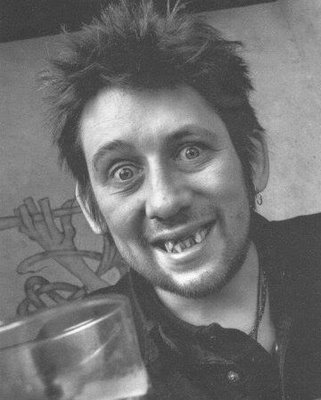
If you don’t like the Pogues songs in this mix more than all the rest, just keep drinking and you will eventually understand. (My hero Shane MacGowan is displayed above.)
Dropkick Murphys – The Spicy McHaggis Jig (original)
Dropkick Murphys – Loyal to No-One (original)
The Dubliners – Spancil Hill (19th century)
Dropkick Murphys – Fairmount Hill (19th century)
The Tossers – Good Morning Da (original)
The Tossers – Johnny I Hardly Knew Ye (19th century)
The Irish Descendents – Come Out Ye Black and Tans (20th century)
Flogging Molly – Salty Dog (original)
The Pogues – The Sickbed of Cuchulainn (original)
The Pogues – Boys from the County Hell (original)
The Pogues – Streams of Whiskey (original)
The Pogues – If I Should Fall from Grace with God (original)
The Chieftains (with Sinead O’Connor) – The Foggy Dew (17th century)
Dropkick Murphys – Kiss Me, I’m Shitfaced (original)
The Pogues – The Parting Glass (16th century)
Happy Paddy’s Day! Maybe next year I’ll actually write something before I’m too far gone. Until then, as Arleigh said to me, ” Good night and stay drunk!”
Turisas’s last release, The Varangian Way, got my vote for album of the year in 2007. It was a concept album, as so many monumental releases have been, telling the story of a band of viking soldiers of fortune traveling through Kievan Rus, intent on joining Byzantium’s Varangian Guard. Through sweeping symphonics, gritty folk, and a small but significant dose of progressive rock, the travelers encounter new lands, pass through Veliky Novgorod, party hard in king Yaroslav’s court, long for home while daring Dnieper rapids, and eventually arrive at the most majestic city in the world. (The back cover of the album is a map of Russia with each track title placed in its relevant location.) The lyrics might be shallow at times, and the English of questionable quality, but Turisas harness the power of names in a way I’ve never encountered before. When the central character raises “a toast to our generous host . . . ruler of Rus from coast to coast”, it’s the chanting of the Norse rendering of his name–Jarisleif! Jarisleif!–that really drills home the ruler’s greatness. The final, triumphal ending never mentions “Constantinople”. Nygård shouts “Tsargrad!” The chorus responds with “Konstantinopolis!” “The Golden Horn lives up to its name.” And the final resounding proclamation: “Great walls! Great halls! Greatest of all, Miklagard!”
I think it is the historic allusions, and the intensity with which they are employed, that really tip the scales from mere greatness to a masterpiece. If you have any fascination with history, you can’t help but be sucked in.
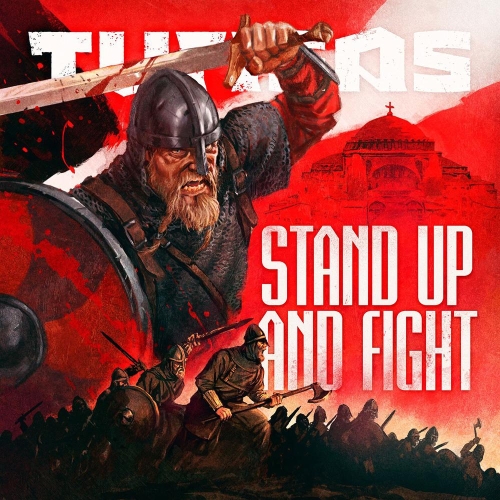
Stand Up and Fight is not nearly so consistant. At face value it certainly appears to be a continuation of the concept album. Hagia Sophia graces the cover. The opening track is called “The March of the Varangian Guard”, and the final track “The Bosphorus Freezes Over”. After a few listens, I caught on that, these three references aside, the album really has nothing to do with The Varangian Way. If you dig into the lyrics though, there are a few other Easter eggs.
The track most musically reminiscent of The Varangian Way is Venetoi! Prasinoi!
(Due to some bs copywrite issue you’ll have to click the link to hear this one.)
It’s a song about a chariot race, something I tend to associate with earlier Roman culture. If you plug “Venetoi” into wikipedia though, it redirects you specifically to the “Byzantine era” subsection of chariot racing. The use of lesser known names though isn’t at all emphasized like it is in The Varangian Way. The allusions are more subtle, meant I think to give a feeling of continuity without forcing the band to focus exclusively on one general topic. Track title aside, this song could take place in Rome proper.
Of course, The Varangian Way’s lyrics were dubious at times–(What the hell does the Nile river have to do with traveling through Rus to Constantinople?)–and their English was, if usually grammatically sound, not always quite on the mark. In the absence of allusions and grand proclamations, this is much more apparent on Stand Up and Fight. Consider Fear the Fear.
It opens with the lines “Bravery, as we’ve seen on TV: Explosions and swords, hot girls in reward.” How awkward is that? The song continues on with more words than most, and I’m pretty sure they’re attempting to convey some sort of message, but I don’t have a clue what it is. Yet the awkwardness isn’t always a bad thing. Skip to the last minute, and you’ll hear Nygård screaming “Die! Die you sucker! Let me go! Let me free motherfucker!” The way he does it, it’s just as cool as it is corny. It reminds me of Devin Townsend and Mikael Akerfeldt’s epic duet at the end of Ayreon’s “Loser”. … Well, that’s really a stretch, but that song is fucking awesome in ways I can barely comprehend, and I’ll take any excuse to link it:
.
Corny lyrics also play a hand in my favorite song on the album, Hunting Pirates.
(Due to some bs copywrite issue you’ll have to click the link to hear this one.)
Ok, first of all, it’s called Hunting Pirates. What the hell? The stuff Nygård babbles is ridiculous. “Kill them all! Let them die! Scum they are! Foe of mankind!” The music though, and his vocal style, are so fun that the cheese is almost a good thing. Besides, when he shouts “It is you who are the bad guys!” he’s not necessarily out to save the world. Plenty of folk metal bands are equally ridiculous, Turisas just take the less popular side. If if was a song about being a pirate, I’d laugh at the lines and not think twice about them.
My verdict on Stand Up and Fight: It’s catchy. It’s corny. It’s not The Varangian Way, but it’s miles beyond Battle Metal. Bare with the lyrics; they definitely overextend themselves in contemplation a few times, but for the most part it might only be their cultivation of a “good guy” persona that makes them appear any worse for wear than Alestorm’s demands for “more wenches and mead.” I mean, when I saw them live Nygård was chugging a bottle of vodka throughout the set.
Oh, while I was looking around youtube for functional links (without much success) I did find this:
Apparently this leaked in mid-December, but with all the holiday hassle I’ve only this weekend been able to start catching up on music again.
So, I’m on my third listen through this at the moment, and I’m kind of stumped on how to discuss it without revisiting their entire discography. I think if any other band released The King is Dead I wouldn’t give it the time of day. At face value it’s a standard countrified rock album that doesn’t present anything particularly special. I’ll even go so far as to say if The Decemberists released it five years ago it would have marked their end as the kings of indie rock. (Pun slightly intended?) But it has to be considered in its proper place and time.
Colin Meloy’s lyrical brilliance has been present since the get-go. Anyone who’s heard their “5 Songs” EP from 2001 should recognize in My Mother was a Chinese Trapeze Artist the same wit that prevailed in later, more famous works.
What did change over the years was their quality as musicians and song-writers. “5 Songs” boasted nothing comparable in musical creativity to 2002’s Cataways and Cutouts. With each new album a higher bar was set, and practically every song that followed rose to the challenge. Lyrically, Meloy probably peaked in 2005, with The Mariner’s Revenge Song on Picaresque.
From there the comedy act was cut back; Meloy returned to a more subtle cleverness. The band took the same turn musically, and with 2006’s The Crane Wife reached what might be the highest point in indie music. If not the most inspired album of the genre–I reserve that title for Neutral Milk Hotel’s In the Aeroplane Over the Sea–I have to consider it the all-around best. Here are Yankee Bayonet and Sons and Daughters as examples.
Then, in 2009, The Hazards of Love happened. It wasn’t completely unprecedented; in 2004 they released The Tain EP, an experimental break from their standard sound, which attempted, quite successfully I think, to create something far more thematic and sophisticated than mere indie rock. The Hazards of Love added to this 18 minute experiment five years of experience, and produced what can only really be described as a rock opera. Coming in at just under an hour, the album is a single piece, not a collection of independent songs. It deserves to go down in history as one of the greatest musical accomplishments of all time. It can’t be captured in a single movement, but here are two excerpts to give you an idea.
Now it’s 2011, about time for a new album, and I don’t think the band need be too full of themselves to ask “Where the hell do we go from here?” They surely knew they couldn’t top what they’d just accomplished any time soon, so they didn’t even bother trying. Is The King is Dead a “safe” album? A sort of “sorry guys” to the fans who just weren’t prepared for the intensity and complexity of Hazards of Love? Hardly, though it could be misconstrued as such. I think it’s The Decemberists coming down off their own high. I imagine it’s difficult to be as… musically intelligent as they are without some fear of becoming pretentious. Getting back to some good old country rock was the natural thing to do. I don’t imagine anyone expected to hear another Hazards of Love, but don’t be disappointed that it’s not another Crane’s Wife either. It’s pretty damn good for what it is, it just doesn’t reach for the stars.
I’ll post up four songs from the new album. Don’t Carry It All is the opening track. It’s worth noting that the fiddle and accordion interlude in Rox in the Box is from the Irish traditional song Raggle Taggle Gypsy (see variations by The Irish Descendants and The Chieftains). It’s not worth noting that This is Why We Fight, which I decided not to post, sounds like it’s straight off an Our Lady Peace album, and furthermore that my obsession with Our Lady Peace is a very embarrassing secret.
I know how to smell a scam, and this thing reeks. But I couldn’t write it off so easily, because I found it through a band’s official tour schedule. So I started looking around at a bunch of different band sites, a bunch of reputable music magazines, everything I could think of, and sure enough, it appears to be legit. If it is a scam, it’s about the most well played one I’ve ever encountered. I honestly think this is real.
So you probably figure, ok, cruises are for yuppies and old people, it’s probably going to be a lot of cheesy hair metal, washed up gimmicks, and no name bands. It certainly isn’t going to be the most impressive names in metal, all playing at least two sets a piece, chilling on the deck getting hammered with the fans between performances, right? …Right?…
Blind Guardian, Týr, Finntroll, Ensiferum, Korpiklaani, Amon Amarth, and Iced Earth top the lineup. I’m not fucking kidding. This cruise includes Nevermore, Marduk, Sonata Arctica, Moonspell, Rage, Epica, Dark Tranquility, Testament, Obituary, Exodus, Fear Factory, Gamma Ray, Unleashed, and a Bathory cover band consisting of members of Mayhem, Einherjer, Dimmu Borgir, Thyrfing, and Primordial.
On a cruise ship.
I think I just crapped my pants.
According to the creator of all this, “I live in Vancouver, BC, very close to the cruise ship terminal. So one day about three years ago I was sitting with my friends on my balcony having a few beers. Obviously we had one too many, because I remember asking those guys, hey, wouldn’t that be cool to charter one of these and put a heavy metal festival on? That was when 70000TONS OF METAL was born.”
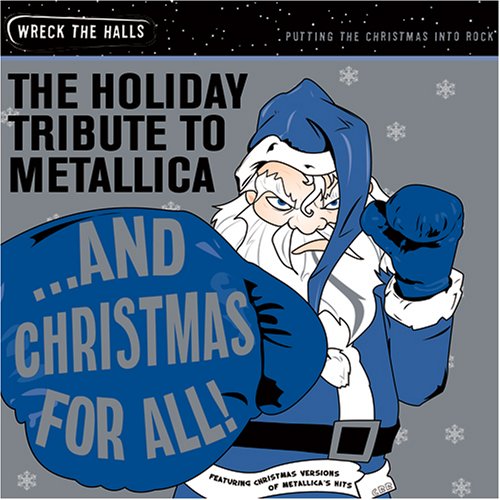
You probably haven’t heard of Michael Armstrong, but you might have heard of his musical project, Rockabye Baby. Armstrong (not to be confused with the Christian pop singer of the same name) has made his claim to fame by taking music by the likes of Radiohead, Tool, and Nirvana, and, through copius glockenspiel, converting their best hits into lullabies. But don’t roll your eyes at another Richard Cheese just yet. The Rockabye Baby albums are actually pleasant to listen to in their own right.
I suppose Christmas music was the logical next step.
It’s hard to give credit where credit is due concerning these; I’ve seen a number of different names associated with the Rockabye Baby series, but Armstrong’s definitely pops up the most. Individual credits for each album are difficult to come by. I’m pretty sure he is the composer of this holiday absurdity, but don’t quote me on it.
Happy Halloween. Hope you enjoy the conclusion to my black metal countdown.
10. Bathory – Bestial Lust
Were I outlining a history of black metal, this song probably wouldn’t make the cut. By mid-80s standards it might be black metal, but by early Bathory standards it’s pretty straight forward thrash. That is, from a stylistic perspective it was already in 1985 a throwback to the genre Bathory had evolved out of. But it’s such an awesome song that, thrash and black metal being so intimately tied in the 80s, I think I can justify it. I considered giving the ten slot to In Conspiracy with Satan instead. Feel free to humor it as the more appropriate choice.
9. Mörk Gryning – Tusen år har gått
When I think of quintessential black metal, stylistically speaking, the first album that comes to mind isn’t In the Nightside Eclipse, De Mysteriis Dom Sathanas, or any other obvious staple. It’s Mörk Gryning’s 1995 release, Tusen år har gått. This inexplicably forgotten Swedish band managed to capture every stereotype element of black metal perfectly in their debut release. If I personally ever aspired to start a black metal band, this album is what I would try to emulate.
8. Immortal – The Call of the Wintermoon
But when it comes to influence, to the legends go the glory. Immortal gained much of their fame for later works, with Call of the Wintermoon known best for its ridiculous music video, not the song itself. I avoided showing that video for a reason. 1992’s Diabolical Fullmoon Mysticism is less noisy than a lot of its contemporaries, and its dark character shines through all the more because of it. This album, and this song especially, set a standard for black metal aesthetics. It’s one of the first to be so distinct from thrash that the influence is no longer immediately apparent.
7. Burzum – Key to the Gate
Varg Vikernes’s works being so album-oriented, I could think of very few individual tracks that maintained their greatness apart from their larger vision. But Key to the Gate always, for me at least, stood apart. The intro is absolutely demented, and yet it progresses into a well-structured song. For me it really captures Varg himself, a mind half brilliant and half warped beyond rationality. In explaining his historic past, Varg has been known to change his story frequently. Sometimes the church burnings, the murder, the primitivism all appears to be part of a rational and not altogether disagreeable plan. Sometimes he reveals himself a racist, homophobic, paranoid imbecile. The 2010 release Belus, his first in over a decade, is in striking contrast to Dissection’s Reinkaos. Following Jon Nödtveidt’s jail term for murdering a homosexual African man, his creative genius had left him. His next album was a failure, and he took his life not long after. Varg made some rather bold statements about Euronymous’s sexual orientation in explaining his motivation for murder (not to mention some claims to white supremacy that surpassed mere confusion to the point of complete ridiculousness). Yet after serving more than twice as long as Nödtveidt, his next album was a brilliant continuation of the old Burzum, as though no time had passed at all. There is a sort of unnatural complexity to him, and his music alike.
6. Dissection – Where Dead Angels Lie
But Jon Nödtveidt’s significance in at least this one instance should not be overlooked. Storm of the Light’s Bane, released in 1995, features perhaps the single most memorable black metal song I’ve ever heard. At least for a brief three years, Sweden’s Dissection was rivaling anything Norway had to offer. As so many black metal stories go, Nödtveidt’s suicide was nothing approaching traditional. I read that he blew his brains out sitting in the middle of a pentagram surrounded by candles, with a grimoire open before him.
5. Gorgoroth – Ritual
I wouldn’t go so far as to say Gaahl is overrated, but Hat, their vocalist from 1992 until 1995, suits me best. Their debut Pentagram is just as unforgiving as their later works, but with a lo-fi value that captures an essence of evil more effectively than brute force. The third track, Ritual, struck me the first time I heard it and remains still one of my favorite songs of the genre. (And it shares so much in common with Nattefrost that I almost have to believe it had a direct influence on his solo project.)
4. Darkthrone – Transilvanian Hunger
This one kind of goes without saying. If Kathaarian Life Code initiated the second wave of black metal, Transilvanian Hunger predicted its future. Primitive and raw on a whole new level (it was recorded three years before Ulver’s Nattens Madrigal), the album’s trance-like appeal might have some relation to Varg Vikernes’s lyrical contributions. I imagine it was more a matter though of fewer minds leading to a more consistant focus. It was the first Darkthrone album involving Nocturno Culto and Fenriz exclusively as band members.
3. Emperor – I am the Black Wizards
Emperor’s self-titled 1993 EP briefly pre-dates In the Nightside Eclipse and, along with two other EPs/demos of the era, features many of their first album’s classics in their unrefined, original forms. I wouldn’t go so far as to call the originals better (Emperor’s reunion performance of the song at Wacken 2006 is by far the best version of it out there), but the original appeals best to that rawness with which the second wave of black metal made its mark. All of the refined features that set Ihsahn’s song-writing apart–the heavy synth, the complex movements, the difficult guitar riffs–are present, but in this early form they still took second stage to that demented ethos black metal embraced for a few years in the early 90s.
1. Mayhem – Funeral Fog
“Please excuse all the blood.” Dead’s suicide note, the artistic photographed rearrangement of his splattered brains for use on a future album cover, clothing buried with dead animals for weeks to reek of decay, Euronymous’s brutal cold-blooded murder with a knife to the skull, Varg Vikernes’s inclusion as the album’s bassist AFTER murdering its lead guitarist, the burning of the Fantoft stave church, the trial that lead to Faust’s confession of murdering a random stranger, Tchort’s imprisonment for grave desecration, Samoth’s imprisonment for arson… Black metal consumed itself in a real life horror story unrivaled in fiction between 1991 and 1993, and it all culminated in the release of De Mysteriis Dom Sathanas. Funeral Fog must be appreciated with an eye towards the literal insanity that surrounded it. “In the middle of Transylvania, all natural life has from a long time ago gone. It’s thin and so beautiful.” We reflect on Elizabeth Bathory and Vlad Tepes as the real life icons of evil from which the cultural genre known as horror, 20th century serial killers not withstanding, was born. But in the early 90s, the middle of Transylvania was southern Norway.
Happy Halloween!
I leave you with a final treat that couldn’t stylistically make the cut.
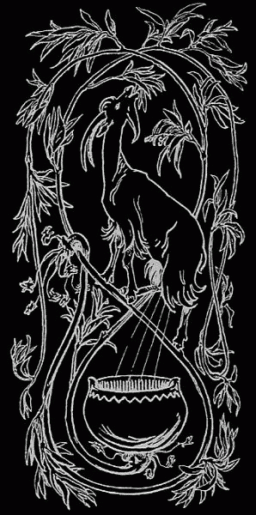
I don’t think I could have possibly stumbled upon a more appropriate image for this penultimate entry in my music column than the goat Heiðrún feeding on Yggdrasil. (Well, technically Læraðr.) I’ll today be concluding my compilation of songs that, while still being “black metal” in some sense, extend well beyond the boundaries of the genre.
10. Hardingrock – Faens Marsj
In 2007, Ihsahn and his wife Ihriel teamed up with Hardinger fiddler Knut Buen to merge Ihsahn’s evolving progressive black metal with Norwegian folk music. If the vocals are the only real trace of black metal remaining in this particular track, I think the appeal is no less apparent.
9. Temnozor – Busov’ Vran’
(Темнозорь – Бусовы Враны)
Temnozor’s 2010 release is easily their best in my opinion, and certainly their most folk-infused. That this Russian band in 2007 released a split with Nokturnal Mortum might be telling. Their ability to harness folk as a sort of primitivism has evolved tremendously, and it herein shows. The gripping dynamics of Russian vocalization are inseparable from the overall sound. It’s no wonder this is a predominantly Eastern European movement.
8. Boris – Luna
Pretty much any obsessive Boris fan will tell you they’re the most innovative band in existence, and I totally buy into the hype. Boris has, over the years, consistently denied all forms of classification, seeming to incorporate a new style of music on practically all of their myriad releases while remaining always recognizably Boris. In 2009 they contributed one track to a split with stoner metal band Torche, and in doing so gave black metal a unique new form. It’s an unfortunate shame that the last two minutes of this song, in which they transition into an Electric Wizard-esque doom metal outro, aren’t available on youtube. But for the purposes of this column, this song’s significance still comes through. Boris eat musical styles and shit roses. This is one of them.
7. Agalloch – Limbs
Where were you the first time you heard Ashes Against the Grain? I think a lot of people can actually answer that. Pale Folklore and The Mantle were brilliant and unique albums, but THIS, this was something innovative on a whole new level. I remember the thought striking me almost immediately: “Woah, post-black metal exists.” Any use I’ve ever made of the term originated from my first listen to Ashes Against the Grain. Isis’s Oceanic was probably my favorite album at the time, and here was everything I liked about it taken to by the best band at creating musical imagery that I’d to that point known. The marriage couldn’t have gone better. Ashes Against the Grain will go down in history as groundbreaking and unique, one of those albums that predicts the future without ever wholly conforming to it. It always was a stretch to associate Agalloch with black metal, but in so far as musical genres are merely generalizations, the most unique bands always seem to fit into all and none simultaneously.
6. Ulver – Hymn VI: Of Wolf and Passion
The first 18 seconds of this song are about a decade ahead of their time. They’re absolutely beautiful–downright uplifting. I guess I never really thought of unadulterated black metal as something that could be triumphant. Sure, bands put it to positive use by incorporating folk and the like, but here you have nothing but blast beats and tremolo, a basic Norwegian breakfast, speaking of something glorious. Perhaps black metal’s origin naturally associates it with the dark and devilish, but very briefly, in 1996, Ulver showed that the same unbridled intensity could turn itself towards any honest end. Of Wolf and Passion. An apt title.
5. Nokturnal Mortum – In the Fire of Wooden Churches
I said you hadn’t seen the last of them. Another NeChrist masterpiece, In the Fire of Wooden Churches is an eclectic, constantly transitioning song that almost never repeats and ends triumphant. This video extends a few minutes beyond the end of the song. Its proper length is about 7:11.
4. Peste Noire – Ballade Cuntre Les Anemis De La France
Ballade cuntre lo Anemi francor got my 2009 album of the year vote. To quote my brief review of it, “This is brilliant, fascinating, unlike anything I’ve ever heard before. As has been said, the ambiance of hate is gone. What replaces it is something I can’t quite define, but it’s captivating. If Famine hadn’t coined it “Black’n’Roll” I think the term still might have popped up, but it’s a whole lot more than that. The 60s-70s rock and roll styles it incorporates, while similar in construct, conjure nothing of the sort to mind. Instead, it gives this sort of disturbingly lively essence to a dismal, filthy Dark Age. Track three feels like I’m dancing circles around someone in a torture chamber randomly sticking hot pokers into them and really enjoying it.” You are listening to track three.
3. Krallice – Wretched Wisdom
Listening to Wretched Wisdom while driving through a barren pillar-studded wasteland in Arizona was one of the most amazing experiences of my life. This is the gut-wrenching scream of an absolute desolation stumbling hopeless at last into the depths of insanity. And here the term post-black applies more than ever.
2. Nokturnal Mortum – NeChrist: The Dance of Swords
Alright, this is my last Nokturnal Mortum entry. Honest. I’ve very little left to say about this band, but I hope you can see why I chose this as their best song. I said of their first entry “this isn’t just a statement about the past, it is a violent declaration of war on the present.” NeChrist might be the celebratory feast on the night of that declaration.
1. Alcest – Le Secret
In 2005, Neige decided it was time to take a new approach with his black metal project. He wanted to write something beautiful, and that he did. The album Le Secret is 27 minutes long and consists of two songs. Neige himself regarded the work as widely misunderstood, and seems to have concluded since that black metal just isn’t a compatible medium for some things. His next album was more on the order of shoegaze, with little in the way of black metal remaining, and his 2010 release, while significantly heavier, largely distinguished the black metal from the shoegaze elements as a sort of contrast between dark and light.
Souvenirs d’un autre monde and Écailles de Lune are both fabulous albums, make no mistake. But Le Secret is so much more. It’s one of those works that can never be repeated, because beyond musical genius it requires a sort of innocence. Those 18 seconds for which I glorified Ulver… here they stand on their own, independent and beautiful.
Before proceeding to the two concluding posts of this column, I thought I’d turn off the distortion for a day and present an assortment of haunting little tunes that really serve the season well.
I actually encountered a lot of trouble finding what I was looking for on youtube and had to settle for a few secondary options, but a few dismal video accompaniments aside, I think this turned out rather nicely.
Tenhi – Kielo
This Finnish track is a case in point. The only Tenhi album I’ve heard is their 1998 release, Kauan. Someone sent it to me a good ten years ago, and I’d have all but forgotten them save for this song. Unfortunately the album version, which features a much more morbid arrangement, was not available, but this piano rendition certainly has its merits.
Kiss the Anus of a Black Cat – Sevenfold
I love Kiss the Anus of a Black Cat for so many more reasons than their name alone. One of the few bands I know hailing from Belgium, Kiss the Anus released their first album, If The Sky Falls, We Shall Catch Larks, in 2005. It’s impressively dark. They’ve managed four more releases since, incorporating a variety of styles, but none of them struck me so much as their first. I had hoped to showcase the song Sevenfold, but at least my second favorite on the album was available. Enjoy, and check them out. They just put out a new album earlier this month.
And please excuse the video image. Neither I nor the band had any part in it. >_>
Death in June – Runes and Men
“Apocalyptic folk” has such a nice ring to it, though “neofolk” might be a bit more practical. Douglas Pearce met David Tibet in 1983. Both artists had formed their associated projects, Death in June and Current 93, by then, but it was when their complementary ideas mingled that the style really came into its own. Their mutual fascination in the arcane left a grand mark on music for decades.
Current 93 – Whilst the Night Rejoices Profound and Still
And on that note, here is a sample from the album that really got me into David Tibet’s music, 1998’s Soft Black Stars. This video replaces the last instrumental 30 seconds or so with a minute of silence, but it’s what I could find.
Current 93 – Anti-Christ and Barcodes
Though I may be deemed a bit uncreative for posting two consecutive songs by the same artist, off the same album no less, I think this intensely bleak, desperate number should serve as a fitting end to the first half of my list. From here I’ll be shifting focus a bit. Again, this song ends about 1 minute before the actual video does.
Steve Von Till – The Spider Song
Steve Von Till, better known as a member of Neurosis, has written some absolutely brilliant solo material, but not this song. The credit goes to Townes Van Zandt, a country/folk tragedy who died of a drug overdose in 1997. Where Van Zandt’s song was peculiarly upbeat for its moving lyrics, I think Steve Von Till really captured its true essence. He brings American folk alive in a way that just wouldn’t quite fit in anywhere else.
Of the Wand & the Moon – Raven Chant
This Danish band debuted in 1999 with Nighttime Nightrhymes and, after an impressive eleven releases over the next six years, stopped recording rather abruptly in 2005 and haven’t released anything since. I think Raven Chant, off their first album, is the highlight of their short history.
Matt Uelmen – Tristram
If I measured by last.fm play counts alone, this would be my all-time favorite song by a landslide. I never even played Diablo, but whatever spark of genius brought this to Matt Uelmen’s head is equally appreciable out of context. There’s not much I can say about it, but I’ve been known to leave it on repeat for hours and not get bored.
Burzum – Han Som Reiste
I read once that Varg Vikernes intended each of his albums to be a sort of spell, attempting to first invoke a trance-like state and then communicate to the listener subconsciously through music over the remainder of the album. I also read once that Varg Vikernes thinks Hitler is part of an enlightened alien race hiding out beneath Antarctica. But whatever you might say of the guy, Han Som Reiste, appearing in the middle of Det Som Engang Var, certainly left its mark on me, the first time I heard it and every time since.
And lastly: Summoning – Menegroth
I think this song best captures what I had in mind today, if it breaks thoroughly with the criteria I started from.
Enjoy your Halloween week; I’ve still got two more posts to follow.



 Through the Shattered Lens