It’s always a good day when you can start off with something new from Haim.
Enjoy!
It’s always a good day when you can start off with something new from Haim.
Enjoy!
Much as with my Love Boat reviews, I am preempting my review of the next episode Monsters until next week so that I can focus my energies on our upcoming St. Patrick’s Day/Kurt Russell’s birthday extravaganza.
Monsters, “our favorite show,” will return next week with a review of a Monsters take on A Christmas Carol.
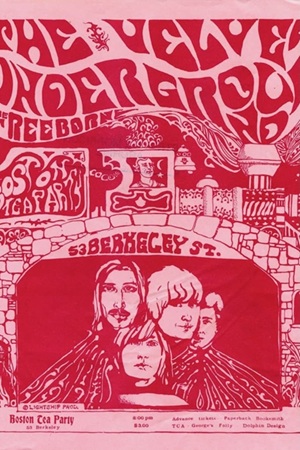 In the late 60s, The Velvet Underground often performed at the Boston Tea Party, a concert venue in — you guessed it! — Boston. Lou Reed described the Boston Tea Party as being the band’s favorite place to play and the Velvets’ performances at the venue would eventually become legendary. The Velvet Underground would attract an audience made up of bikers, Harvard students, MIT Students, Northeastern Students, celebrities, and a young Jonathan Richman.
In 1967, artist Andy Warhol attended a performance and filmed the show. He got 33 minutes of footage, one that doesn’t quite work as a concert film but which does work marvelously as a time capsule. While the music itself is often distorted (and this is not the film to watch if you’re wanting to hear your favorite songs performed live), Warhol’s camera does capture the feel of the psychedelic 60s, complete with strobe lights, sudden zoom shots, and an audience that alternates between moving to the music and standing still in a state of stoned contemplation. Warhol films like someone who has just gotten his first camera and can’t wait to experiment and see what it can do. The end result is actually rather likable, even if it is often incoherent. The enthusiasm and the excitement of filmmaking and capturing history comes through. When you’re first learning and experimenting with film, there’s nothing cooler than a sudden close-up or a sudden pull back to reveal the size of the crowd. The film finds Warhol having fun with the camera and the footage is ultimately rather hypnotic.
It’s a true time capsule. Here is The Velvet Underground in Boston.

Though I may have had to preempt this week’s review of The Love Boat, I can still express my love for the show with today’s song of the day! As this performance shows, the Love Boat really does have something for everyone.
Hi, everyone! I’ve been doing weekly reviews of The Love Boat for a while. I really enjoying the series but I’m going to have to hold off on posting my next review until next week. That’s because the next episode is a two-hour musical spectacular and, as I’m busy getting things set up for our big St. Patrick’s Day/Kurt Russell’s birthday celebration on the 17th, I’m not going to have time to watch the whole thing until next week.
So, The Love Boat is preempted this week but it will return next week! We’ll set sail then!
4 Shots From 4 Films is just what it says it is, 4 shots from 4 of our favorite films. As opposed to the reviews and recaps that we usually post, 4 Shots From 4 Films lets the visuals do the talking!
Since we already highlighted Cabaret today, here are a few the classic films that we released the same year.
4 Shots From 4 1972 Films

The Godfather (1972, dir by Francis Ford Coppola, DP: Gordon Willis)
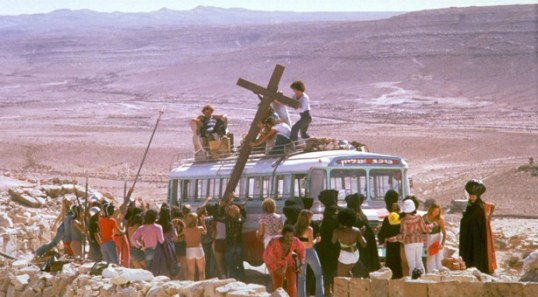
Jesus Christ Superstar (1973, dir by Norman Jewison, DP; Douglas Slocombe)
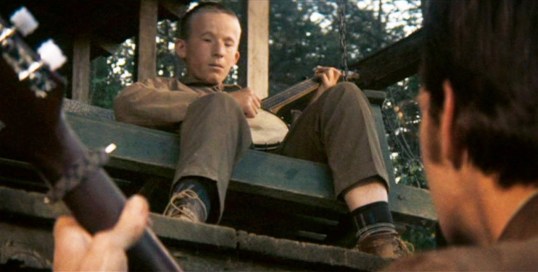
Deliverance (1972,dir by John Boorman, DP: Vilmos Zsigmond)
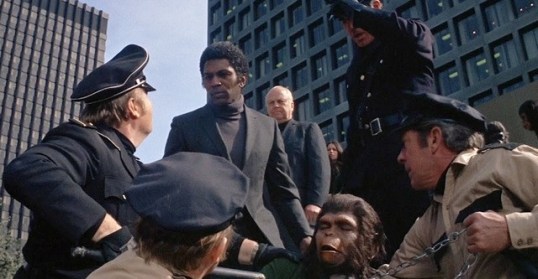
Conquest of the Planet of the Apes (1972, dir by J. Lee Thompson, DP: Bruce Surtees)
Today, the Shattered Lens wishes a happy birthday to the one and only Liza Minnelli. Here she is, in today’s scene that I love, performing Money with Joel Grey in 1972’s Cabaret.
Welcome to Georgia!
Yes, the 1976 film Dixie Dynamite is supposedly set in Georgia but it’s hard not to notice that all of the hills and mountains in the background look like they’re from California. The story features two sisters, Dixie (Jane Anne Johnston) and Patsy (Kathy McHaley), who go into the moonshine business after their father drives his car off a cliff. Their father was the best moonshiner in the business and they aim to carry on his legacy, despite the efforts of Sheriff Marsh (Christopher George) and banker Charlie White (R.G. Armstrong). Blowing up their stills and threatening to auction off their land isn’t going to stop these two from doing whatever it is exactly that they’re doing in this film. Eventually, the sisters steal a bunch of dynamite and start blowing stuff up. Normally, I’d say “Woo hoo!” but this film even makes random explosions seem as boring as the 4th of July in Canada.
Warren Oates plays Mack, a motocross champion who occasionally helps the daughter’s out. At least, I think he’s helping them. To be honest, it’s not always easy to tell what Mack’s purpose actually is in this story. He tends to show up randomly, usually after all the action has ended. He’s kind of a useless friend, to be honest. Warren Oates brings his rough-hewn charm to the roll and you’re usually glad to see him, if just because the actresses playing the sisters are genuinely lousy, but you’re never quite sure what he’s doing there. Watching the film, one gets the feeling that Oates just dropped by the set whenever he felt like it and filmed a scene or two.
It’s really not that crazy of a possibility. Actor Steve McQueen makes a cameo appearance in this film, riding a motorcycle and challenging Oates. McQueen didn’t make many films in the 70s. Let’s consider some of the films that he turned down: The Great Gatsby, Jaws, Apocalypse Now, The Driver, The French Connection, Sorcerer, and Hard Times. None of those films appealed to McQueen but he was still willing to show up for a day’s worth of shooting on Dixie Dynamite. Of course, McQueen does go uncredited.
This is an odd film, full of slow spots that not even actors like Warren Oates, Christopher George, and R.G. Armstrong can make up for. Director Lee Frost was best-known for his softcore exploitation films and Dixie Dynamite is full of odd transitions and jump cuts, leading me to suspect that the film was originally meant to be a lot more like a typical Frost film before it was decided to go in a PG-direction as well.
Perhaps the oddest part of the film is that the daughter’s final scheme to get revenge on the sheriff and the banker involves stealing two dead bodies from the local morgue. The bodies are made up and dressed to look like Dixie and Patsy so that the sisters can fake their own death. I can understand that and even give them credit for hatching a clever plan. But I still find it weird that the film never really explains how the bodies were stolen or why they were in the morgue in the first place. What are the chances that Patsy and Dixie would head down to the morgue and find two look-alikes?
The film features dynamite, Warren Oates, and corpse-stealing but it’s still incredibly dull. That’s just weird.
Enjoy the pain!
Welcome to Late Night Retro Television Reviews, a feature where we review some of our favorite and least favorite shows of the past! On Tuesdays, I will be reviewing Pacific Blue, a cop show that aired from 1996 to 2000 on the USA Network! It’s currently streaming everywhere, though I’m watching it on Tubi.
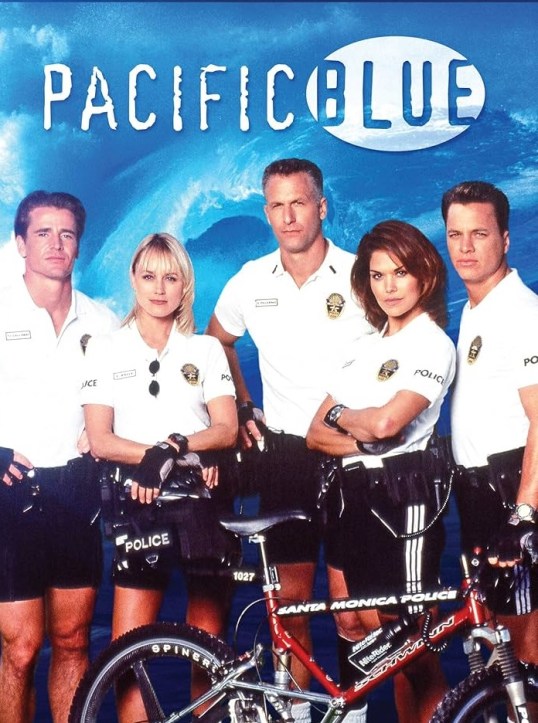
Eh, who cares?
Episode 1.9 “Moving Target”
(Dir by Mickey Dolenz. originally aired on April 27th, 1996)
When TC’s former lover, ex-model Rebecca Reynard (Jacqueline Collen), is nearly shot by a mysterious gunman, TC takes it upon himself to serve as her bodyguard. Chris rolls her eyes because that’s how Chris reacts to every situation. We’re nine episodes in and Chris still doesn’t really have a personality beyond being perpetually annoyed. To the surprise of no one, Rebecca turns out to be hiding some deadly secrets of her own and TC comes to realize that his former and current lover is actually a stone cold sociopath. This is one of those traumatic developments that will probably never be mentioned again.
(I thought TC had a girlfriend. She was present in the pilot but has never been heard from since.)
Meanwhile, former boxer Victor returns to the ring to help Palermo win a bet against a smarmy lifeguard. The boxing storyline — which features Victor facing off against the one opponent who beat him during his previous pugilist career — was actually interesting. Too bad the show ended without actually revealing who won the big fight. I think we were supposed to be satisfied with the fact that Victor found the confidence necessary to step back into the ring. No, Pacific Blue. You haven’t earned the right to end on a note of ambiguity. Not yet.
This episode was directed by former Monkee Mickey Dolenz. Unfortunately, not even a Monkee can make cops on bikes look cool.
 Through the Shattered Lens