Boxing Time (2016, directed by Evan Jacobs)


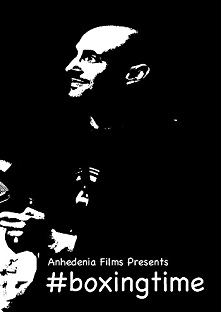
About as pointless as a film can get, Boxing Time is 65 minutes of a boxing promoter named Art (played by director Evan Jacobs) talking on his phone.  He tries to convince his wife to allow him to talk to his daughter.  He talks to the boxing commissioner, who is being a real pain about the upcoming fight.  He talks to people who want to fix the fight.  Art talks and talks.  Usually, only his side of the conversation is shown and the movie doesn’t even show us the boxing match that everyone is so worked up about.  After all the build up, the movie cheats the audience by not letting them watch the main event.

It’s set up as a found footage film with a title card explaining that Art was filming himself because he had been diagnosed as having a paranoid personality disorder and that the footage comes from the last month of Art’s life.  Despite knowing that we’re watching the last days of a doomed man, it’s hard to care about Art.  He’s not a sympathetic character and watching him talk on the phone for 65 minutes is about as much fun as watching anyone talk on the phone for 65 minutes.  Boxing Time (also known as #boxingtime because why not?) is an extended acting exercise that ends up lying flat on the canvas.

The Brawler (2019, directed by Ken Kushner)


The Brawler is a biopic of boxer Chuck Wepner (adequately played by Zach McGowan).  A resident of Bayonne, New Jersey and nicknamed “The Bleeder” because of how much he usually bled in the ring, Wepner was the first boxer to face Muhammad Ali (played by Jerrod Page, who looks and sounds like Ali but who has none of his fabled charisma) after Ali’s famous defeat of George Foreman.  No one gave Wepner much of a chance.  Ali barely bothered to train for the match and falsely accused Wepner of using racial slurs while talking to him.  To everyone’s shock, Wepner not only went 15 rounds with the champ but he even knocked Ali off of his feet.  Wepner ultimately lost the fight but he won the hearts of many of the people watching.  He also inspired Sylvester Stallone to write and star in a movie called Rocky.

Though he was famous being “the Real Rocky,” Wepner initially didn’t make a dime off of Rocky or any of the sequels that followed.  While Stallone became a superstar, Wepner got addicted to cocaine, fought exhibition matches against Andre the Giant and a bear, and finally ended up in prison.  After getting out of prison, Wepner returned to his old job of selling liquor and made money signing memorabilia.  After he nearly got arrested as a part of a fraudulent autograph scam, Wepner finally took Stallone to court and sued for the money that he felt Stallone owed him.  Stallone settled, making Chuck Wepner the only man to go the distance with both Muhammad Ali and Sylvester Stallone.

If the plot of The Brawler sounds familiar, maybe you’ve seen one of the many documentaries that have been made about Chuck Wepner.  Or maybe you saw Chuck, a 2016 film about Chuck Wepner that starred Liev Schrieber.  The Brawler hits all of the same points as Chuck, so much so that it almost feels like an unofficial remake.  (Both films even features a voice-over narration from the actor playing Chuck.)  The main difference between the two films is that The Brawler spends a lot more time on Wepner’s time as a drug addict and it also portrays Stallone (played unconvincingly by Anthony Mangano) in a much more negative light.  Even though Wepner screws up every opportunity that he’s offered (including a chance to appear in Rocky II), it’s Stallone who is portrayed as being a villain because he didn’t always return Wepner’s calls and Stallone’s assistants were sometimes rude.  While Chuck spends all of time whining about how unfair his life is, Stallone comes across as being often clueless but hardly malicious in the way he treated Chuck.  It’s not easy to make a Hollywood superstar into a more sympathetic character than the poor underdog who is suing for the money that he’s owed for inspiring one of the most successful franchises of all time but The Brawler manages to pull it off.  In Chuck, Wepner is an inspiring underdog who never lets life keep him down.  In The Brawler, Wepner is a self-destructive child who lets down everyone who tries to help him.  When it comes to Chuck vs The Brawler, it’s Chuck by a clear knock-out.

The most interesting thing about The Brawler is that Burt Young has a cameo as a man watching the Wepner/Ali fight in a bar.  You have to wonder how Stallone felt about that.  Et tu, Paulie?

Missile X: The Tehran Incident (1979, directed by Leslie H. Martinson)


The international terrorist and casino owner known as The Baron (Curd Jurgens) has stolen a Soviet-made nuclear warhead.  With the help of Prof. Nikolaeff (John Carradine), the Baron is planning on dropping the warhead on an international peace conference that is being held off the coast of Iran.  American Alec Franklin (Peter Graves) and Russians Konstanine Senyonov (Michael Dante) and Galina Fedorovna (Karin Schubert) want to prevent the Baron from doing that but, in order to stop the Baron, they’re going to need the help of Leila (Pouri Baneai), a member of the Shah’s secret police.

Missile X was a German-Italian-Spanish co-production that was shot on location in Tehran with the full cooperation of the Shah of Iran.  The film goes out of its way to attempt to present the Shah-era Tehran as being a modern and welcoming city, the type of place that anyone would by a fool not to choose for a vacation.  The Shah’s secret police are portrayed as being friendly and heroic and the only time the name “Ayatollah Khomeini” is mentioned is when Alex and Leila are listening to a radio and a news report mentions that Khomeini is far away in Paris.  Leila turns off the radio in the middle of the report, as if to say, “There’s someone will never have to think about again.”  Unfortunately, for both the film and the world at large, that was the case.  In an example of truly bad timing, Missile X was not released in the United States until December 10th, 1979, six days after Khomeini officially took control of Iran and a month into the Iran hostage crisis.  By the time the film was released, the Shah had long-since fled Iran and was seeking asylum and medical care in the United States.

As for the film itself, imagine a Bond film with no car chases, no exciting action sequences, no creative gadgets, and no one-liners.  Imagine also that the main Russian was played by an American who don’t even attempt to speak with any sort of accent.  On top of that, imagine if James Bond himself came across less like a ruthless super spy and more like an insurance executive trying not to overspend on the company account while on a business trip.  Curd Jurgens actually did play a memorable Bond villain in The Spy Who Loved Me but he sleepwalks his way through Missile X.  Not even giving him a mute henchman with a knife-hand can make the Baron seems dangerous.  Even if you can overlook all of that, the Baron’s plan never makes sense.  What does he have to gain from blowing up a peace conference?  Alec and Konstantine both agree that the Baron’s actions will probably start World War III and lead to the end of the world but it’s never explained why the Baron would want that.  Presumably, the Baron would end up getting blown up with everyone else.

Of course, you don’t have to imagine any of this.  You can just watch Missile X — The Tehran Incident.

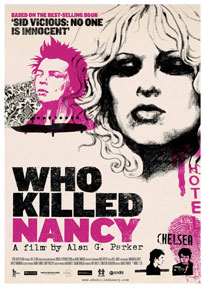
Who Killed Nancy? (2009, directed by Alan G. Parker)


On October 12th, 1978, a 20 year-old, heroin addict named Nancy Spungeon was discovered dead in the bathroom of her room at the Chelsea Hotel.  Nancy was best-known for being the girlfriend of Sid Vicious, the bassist of the Sex Pistols.  The police arrested Vicious and charged him with second degree murder.  Vicious initially said that he couldn’t remember what had happened the previous night because he had been knocked out on barbiturates.  While being interrogated, Vicious changed his story and said that he and Nancy had an argument during the night but that he hadn’t meant to kill her when he stabbed her.  Later, Vicious said that Nancy fell on the knife but Vicious was such a heavy drug user that many felt it was doubtful he had any real memory of anything that might have happened that night.  After pleading not guilty, Vicious was released on $50,000 bail but he was sent right back to Riker’s after assaulting Todd Smith (brother of Patti Smith) at a nightclub.  At Riker’s Vicious went through a detox program before being once again released on bail.  Vicious died of a heroin overdose the night after he was released.

Who Killed Nancy? is a documentary about Sid and Nancy’s relationship and Nancy’s death.  The film features interviews with friends and cotemporaries of the couple.  (Glen Matlock is the only former Sex Pistol to be interviewed, though Malcolm McLaren is heard in archival footage.)  Sid Vicious comes across as being a deeply damaged individual with no impulse control.  Listening to some of the things that Vicious did before finding fame as the sneering face of punk rock, it is easy to believe that, as much as he did love Nancy, he was also capable of losing his control and killing her.  Glen Matlock’s flatmate describes how he was traumatized for life by watching Sid strangle a stray cat.  Others describe Sid as being childlike and almost innocent, a shy virgin until he met Nancy.  But anyone who could strangle an animal has obviously got some screws loose.

However, the documentary also makes a convincing argument that, even if he was capable of impulsive violence, Vicious was so wasted on the night of Nancy’s death that he couldn’t have even lifted a knife, much less stabbed someone with it.  The documentary suggests that Nancy was murdered by one of the many drug dealers who were coming in-and-out of the couple’s hotel room.  Unfortunately, due to his own public image, it was easy for the press and the public to assume that Sid committed the crime and, suicidal after Nancy’s death, it was easy for Sid to convince himself that he must have been responsible.  If the documentary is correct about Sid’s innocence, at least one person got away with murder.  It’s an interesting documentary.  You do have to feel bad for Nancy.  Even in death, none of the interviewees seems to be willing to say anything nice about her.  After all these years, she is still being blamed for Sid Vicious’s downfall but, as this documentary makes clear, Sid was probably doomed whether or he met Nancy or not.

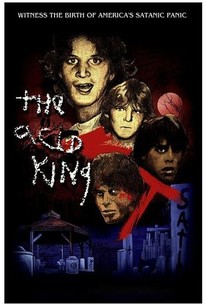
The Acid King (2019, directed by Dan Jones and Jesse B. Pollack)


In 1984, a Long Island-based teenage drug dealer and wannabe gangster named Ricky Kasso murdered a childhood friend named Gary Lauwers, reportedly because he was angry that Gary had stolen some drugs from him.  While tripping on LSD, Ricky brutally stabbed Gary to death in the woods.  Ricky later said that he demanded that Gary say “I love Satan,” while killing him.  Ricky claimed to be a Satanist, though he never actually learned how to spell the name of his supposed Dark Lord and instead would tag walls with graffiti exhorting the viewer to “Hail Satin.”

Not being the smartest drug dealer/Satanist to ever grace the state of New York, Ricky spent the next two weeks bragging about the murder and taking his friends to view Gary’s corpse.  While none of the people who saw Gary’s body ever called the police, rumors started to spread about what had happened.  Acting on an anonymous tip, the police arrested Ricky and two of his friends.  Ricky Kasso, the self-described “Acid King,” committed suicide in his jail cell a month after murdering Gary Lauwers.  Supposedly, the other inmates in the jail egged Ricky on while he hanged himself.  No one liked the Acid King.

Ricky Kasso had been in-and-out of trouble for the majority of his short life and, at the time of the murder, he was living on the streets because his family had kicked him out of the house.  What set Ricky apart from other murderous drug dealers was that he claimed to be a Satanist and that he demanded that Gary declare that he loved Satan before killing him.  This played right into the burgeoning Satanic Panic of the 80s and, in death, Ricky became a symbol of the Satanic conspiracy that many were convinced had taken hold of the teenagers.  (Especially teenagers who, like Ricky, listened to AC/DC.)  A book called Say You Love Satan was written about Kasso and his crimes.  Though the book has since been discredited, it was a best seller when initially published.  (I can still remember, when I was a kid, coming across a copy in Waldenbooks and reading a few pages.)  Ricky Kasso became a cult figure, inspiring both filmmakers and bands.  Meanwhile, all of Ricky and Gary’s former friends had to deal with the burden of being branded as Satanists by the rest of America.  Heavy metal music was blames for leading kids like Ricky into Satanism.  Tipper Gore campaigned for the labeling of offensive music.  Satin would have been proud.

The Acid King is an eye-opening documentary about the case, featuring interviews with the people who knew both Ricky and Gary.  While criticizing the way the case was reported on by the press, The Acid King also makes it clear that Ricky Kasso was a twisted individual.  (More than one interview subject describes him as being evil.)  The documentary takes a look at how Ricky and his friends were essentially abandoned by their parents in their privileged community, leaving them with next to no guidance on how to deal with the real-life consequences of their actions.  Of course, for the media, it was much easier to blame Satanism and heavy mental music than it was to ask where the parents were while Ricky Kasso was plotting to kill Gary Lauwers.

The first half of the documentary deals with Ricky and Gary.  The second half features interviews with the horror filmmakers and the musicians who were inspired by the sordid media coverage of Ricky’s crimes.  Lori S, the lead singer of Acid King, took the name of the band from a passage in Say You Love Satan while director Jim VanBebber, while being totally dismissive of the book’s claim that Ricky was directly inspired by Satan, still directed a short film about Ricky Kasso.  The second half is a less interesting than the first, until you consider that none of these people would have heard about Ricky Kasso if not for the attempts of people like Tipper Gore to turn him into the poster child for her crusade against heavy metal music.  Instead of scaring people away, the Tipper Gores of the world made Ricky Kasso, a barely literate idiot, into a cult figure.  Again, Satin would be proud.

The Acid King provides a valuable service by separating the fact from the rumors, revealing that the mundane truth is even more disturbing than the sordid fiction.
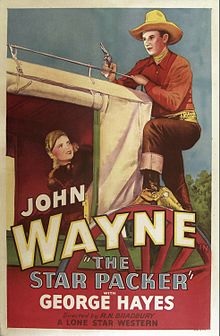
The Star Packer (1934, directed by Robert N. Bradbury)


A mysterious outlaw known as the Shadow is terrorizing turn-of-the-century Arkansas.  He and his gang have killed the last few sheriffs of Little Rock.  No one is sure who the Shadow is or how he communicates with his gang but somehow, he is always one step ahead of the law.  However, the Shadow didn’t count on federal agent John Travers (John Wayne) riding into town and declaring himself to be the new sheriff.  Working with his Native sidekick, Yak (Yakima Canutt), Travers sets out to expose the Shadow and take him down.  Along the way, he falls for Anita (Verna Hillie), the niece of rancher Matt Matlock (Gabby Hayes).  Luckily, Anita knows her way around a gun too.

This is one of the 50 B-westerns that John Wayne made before Stagecoach made him a star.  The Star Packer is more interesting than some of Wayne’s other poverty row productions because The Shadow is a more interesting and much more clever villain than the usual greedy but dumb outlaws that Wayne went up against in these movies.  The Shadow actually has a clearly thought-out plan and, for once, Wayne can’t defeat the bad guys on his own.  In The Star Packer, it takes a community to stand up to evil.  As always with Robert Bradbury’s westerns, the fights and the stunts are impressive.  Fans of Wayne’s B-period will probably especially be interested to see the legendary stuntman, Yakima Canutt, play a good guy for once.  He and Wayne both do a good job in this 52 minute programmer.

Neath The Arizona Skies (1934, directed by Harry L. Fraser)


Chris Morrell (John Wayne) is an honest cowboy who keeps an eye on Nina (Shirley Jean Rickert), a little girl whose Indian mother died when Nina was just a baby.  When oil is discovered on land that belonged to Nina’s mother, Nina is offered $50,000 for the land.  Because Nina is only eight years old, her legal guardian will be responsible for taking care of the money.  Chris and Nina set out to find Nina’s father so that he can sign the guardianship papers and make Chris into Nina’s legal guardian.

When outlaw Sam Black (Yakima Canutt) decides that he would rather be Nina’s legal guardian, Chris sends Nina to a ranch owned by his old friend, Bud Moore, while he defeats Sam and his men.  At the ranch, it turns out that Bud Moore has died and the new ranch owner is another outlaw named Vic (Jack Rockwell) and Vic wants Nina’s oil claim for himself.  What Vic doesn’t know is that Nina’s father is one of his ranch hands.

For a 52 minute programmer, there’s a lot going on in ‘Neath The Arizona Skies.  There’s actually too much going on and, with that short of a run time, it feels as if more than a few important plot points were glossed over, like how Chris came to look after Nina in the first place.  John Wayne is stiff but likable as Chris while Yakima Canutt does his usual double duty as both an outlaw and a stuntman.  There are a few good action scenes, especially when Chris runs off Sam’s gang for the first time.  Sheila Terry plays Wayne’s love interest, who has to be first convinced that Chris isn’t actually an outlaw.  As Nina, Shirley Jean Rickert is energetic but you’ll quickly get tired of her yelling, “Daddy Chris!” whenever anything happens.  This isn’t one of the best of the 50 poverty row films that Wayne appeared in before Stagecoach made him a star but, even in this film, there are still hints of the screen presence that would later become Wayne’s trademark.

Paradise Canyon (1935, directed by Carl Pierson)


Someone is passing counterfeit bills on the Mexican border and the government thinks that it might be Doc Carter (Earle Hodgins), the manger of a traveling medicine show.  Working undercover, Treasury agent John Wyatt (John Wayne) joins Doc Carter’s medicine show as a trick shooter.  John discovers that Doc Carter is a quack and the miracle cure that he sells is 90% alcohol but that Doc Carter isn’t a counterfeiter.  Instead, Doc Carter is being framed by his former partner, Curly Joe (Yakima Canutt).  When John tries to tell the Mexican authorities about Curly Joe is doing, he discovers that Curly Joe has framed him as well!

This was the last of the B-programmers that John Wayne made for Monogram Pictures and it was the only one of Wayne’s films to be directed by Carl Pierson.  As he did in almost all of his early B-pictures, John Wayne gives a tough but likable performance.  He’s the most cheerful undercover agent that I’ve ever seen.  The action scenes are rudimentary and Pierson was obviously not as creative a director as some of the other filmmakers that Wayne worked with early in his career.  Carl Pierson was no Robert Bradbury.  But the medicine show angle does bring a different angle to the story, with Wayne getting to show off his trick shooting skills and Earle Hodgins providing comedic relief with his miracle cure.  Of course, John has a romance with pretty Linda (Marion Burns), who is Doc Carter’s daughter and who is also known as Princess Natasha.

Though it may not be one of the best of the 50 movies that John Wayne made before getting his star-making role in Stagecoach, Paradise Canyon will still be appreciated by fans of both the Duke and the simple but entertaining B-westerns of the past.

Sagebrush Trail (1933, directed by Armand Schaefer)


Accused and convicted of a murder that he didn’t commit, John Brant (John Wayne) breaks out of prison in Maryland and, following the advice of Horace Greeley, he goes west.  After making a narrow escape from the authorities, he meets and befriends Joseph Conlan (Lane Chandler).  Conlan brings Brant into his gang, where Brant starts out as a cook but is soon being assigned to help rob stores and stagecoaches.  Despite his time in prison, Brant is no criminal and he secretly thwarts every robbery that the gang tries to pull off.  When the gang starts to suspect that Brant might be an undercover cop, Conlan is the only one willing to stand up for him and help him.  Conlan is also responsible for the murder that Brant was accused of committing.

John Wayne as a hardened escaped convict?  Maybe the older John Wayne could have pulled that off but, in 1933, Wayne was still too cheerful and easy going to be believable as someone who had spent the last few months doing hard time.  Fortunately, even early in his career, Wayne was convincing when riding a horse or shooting a gun and that’s probably all that the audience for these short programmers demanded.  There’s also an exciting scene where Wayne is forced to swim across a pond while his pursuers shoot at him.  As the criminal with a conscience, Lane Chandler steals the film.

Fans of westerns will want to keep an eye out for legendary stuntman Yakima Canutt, playing yet another outlaw gang leader.  Yakima Canutt started out his career risking his life as a rodeo rider and then went on to risk his life ever more as Hollywood’s most daring stunt performer.  When he got too old to continue doing stunt work, he became a second unit director, for John Ford and others.  He staged Ben-Hur‘s famous chariot race and was credited with making sure that not a single horse was hurt and not a single human was seriously injured during filming.  Yakima Canutt lived to be 90 years old, outliving most of the actors from whom he doubled as a stuntman.

The Dawn Rider (1935, directed by Robert N. Bradbury)


Cowboy John Mason (John Wayne) rides into a frontier town.  He is planning on working with his father, rancher Dad Mason (Joseph De Grasse).  Unfortunately, John arrives just in time to witness his father being killed by a gang of thieves.  John is wounded while chasing the thieves but, once he recovers, he’s determined to get vengeance against the man who killed his father.  That man is Rudd Gordon (Dennis Gordon), who is also the brother of Alice Gordon (Marion Burns), the woman who nursed John back to health and who is also engages to marry John’s best friend, Ben McLure (Reed Howes).

There is a little deliberate humor to be found in The Dawn Rider.  Every time someone is shot, the undertaker (Nelson McDowell) steps out of his office and measures the body while the town doctor celebrates having some business coming his way.  Otherwise, this is one of the most serious films that John Wayne made in the years before Stagecoach made him a star.  John Mason is determined to get revenge, even if his obsession means hurting his best friend’s fiancé.  (Though John Mason is less fanatical, it is easy to imagine him growing up to be The Searchers‘s Ethan Edwards.)  Ben has to decide whether to support his friend or the woman that he loves.  (Complicating matters is that John is in love with Alice, too.)  John Wayne and Reed Howes are a good team and Dennis Gordon is a convincing villain.  There’s a good action scene involving John protecting a gold shipment from the gang and the final shootout is handled well.  This 55-minute programmer undoubtedly taught many young viewers about frontier justice, even if they didn’t pick up on the film’s ambiguity.  The Dawn Rider is one of the more mature of John Wayne’s early films and offers hints of the actor that John Wayne would eventually become.