Terry Jones, RIP


I just heard the incredibly sad news that Terry Jones has died.  Jones, who was one of the founders of Monty Python and a respected medieval scholar, was 77 years old.  It was announced three years ago that Jones was suffering from a rare form of dementia so his death was not unexpected but it still hurts.

When I was a kid and I was watching Monty Python’s Flying Circus for the first time, I initially did not fully appreciated Terry Jones.  I liked him because I liked every member of Monty Python and every British comedy fan grows up wishing that they could have been a member of the group.  (My favorite was Eric Idle.)  But it was sometimes easy to overlook  Terry Jones’s performance on the show because his characters were rarely as flamboyant as some of the other ones.  He was never as grumpy as John Cleese nor was he as sarcastic as Eric Idle.  Michael Palin (who was Jones’s writing partner long before the two of them become members of Monty Python) cornered the market on both unctuous hosts and passive aggressive countermen.  Meanwhile, Graham Chapman played most of the upright authority figures and Terry Gilliam provided animation.  Terry Jones, meanwhile, often played screeching women and bobbies who said, “What’s all this then?”

It was only as I got older and I came to better appreciate the hard work that goes into being funny that I came to appreciate Terry Jones and his ability to always nail the perfect reaction to whatever lunacy was occurring around him.  It was also as I got older that I started to learn about the origins of Monty Python and what went on behind the scenes.  I learned that Terry Jones was a key player.  Along with writing some of Monty Python‘s most memorable material, he also directed or co-directed their films.  On the sets of Monty Python and the Holy Grail, Life of Brian, and The Meaning of Life, Jones provided the structure that kept those films from just devolving into a collection of skits.

Unlike the other members of Monty Python, Terry Jones never really went out of his way to establish an acting career outside of the group.  Instead, he wrote screenplays and serious books on both medieval history and Geoffrey Chaucer.  Appropriately, for a member of the troupe that changed the face of comedy, Jones often challenged the conventional views of history.  Terry Jones was the only man in Britain brave enough to defend the Barbarians.

On the last day of the ninth grade, my English teacher, Mr. Davis, rewarded us for our hard work by showing us what he said was the funniest scene in film history.  The scene that he showed us came from the Terry Jones-directed Monty Python’s The Meaning of Life and it featured Jones giving a literally explosive performance as Mr. Creosote.

With thanks to both Mr. Davis and Terry Jones:

Terry Jones, Rest in Peace.

Music Video Of The Day: The Lady Don’t Mind by Talking Heads (1986, directed by Jim Jarmusch)


Today is Jim Jarmusch’s birthday.  Jarmusch, who is one of the godfathers of American independent film, is 67 years old.

As a director, Jarmusch frequently casts musicians in his films.  From John Lurie, who appeared in Jarmuch’s first films (Permanent Vacation, Stranger Than Paradise) to the members of the Wu-Tang Clan and Tom Waits, Jarmusch has always shown an appreciation for musicians as actors.  It’s not surprising that, along with feature films, Jarmusch has also directed his share of music videos.  Jarmusch has done videos for everyone from Neil Young to Tom Waits but, according to his entry at the imdb, his first music video was for Talking Heads’s The Lady Don’t Mind.

The Lady Don’t Mind was the first single from Talking Heads’s sixth studio album, the best-selling Little Creatures.  This video came out two years after Jarmusch’s second film, Stranger Than Paradise.

Enjoy and happy birthday, Jim Jarmusch!

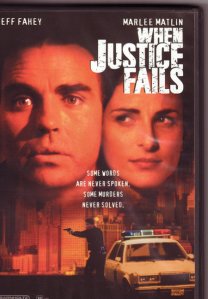
When Justice Fails (1999, directed by Allan A. Goldstein)


In New York City, two men have been murdered in the same ritualistic way.  Both of the men were accused rapists who beat the system, getting their charges dismissed due to legal technicalities.  When detectives Tom Chaney (Jeff Fahey) and Rod Lambeau (Carl Marotte) discover that assistant D.A. Katy Wesson (Marlee Matlin) was the prosecutor on both of the dead men’s cases, she becomes their number one suspect.  However, Chaney has his doubt about her guilt, especially after he goes on a few dates and starts sleeping with her.  Katy is an enigma with a traumatic childhood and penchant for picking up men in nightclubs but is she a murderer?  Other suspects include a creepy artist named Josh (Charles Powell), who also works as the deaf Katy’s interpreter, and Katy’s overdramatic mother (Monique Mercure).

That a direct-to-video thriller from 1999 would be a rip-off of Basic Instinct is not a shock.  Almost every thriller released between 1992 and 2000 was at least partially cloned from Basic Instinct.  What sets When Justice Fails apart is that it’s probably the only Basic Instinct clone to actually feature it’s two main characters discussing the ending of Basic Instinct post-coitus.  (For the record, Chaney thinks that the final shot means that Sharon Stone was the murderer while Katy says that the ice pick showed that the director was playing a joke on the audience.)  I guess When Justice Fails deserves some credit for being willing to so directly acknowledge the film that inspired it but, when you’re a mediocre film, you probably don’t want to intentionally remind audiences that they could be watching something better.

When Justice Fails actually gets off to a good start, with Jeff Fahey playing another one of his driven loners and Marlee Matlin really committing to the role of the film’s femme fatale.  The movie even manages to avoid the usual awkwardness that comes from having a hearing character repeating everything that a deaf character either signs or writes down.  The early scenes have a Law & Order feel to them, with Chaney and Lambeau interviewing witnesses on the busy streets of New York and also talking to a world-weary coroner.  It would have been a surprise if Stephen Hill had suddenly shown up and said, “Your case is weak and this trial could drag on through election day.  Make him an offer.  Man 1.  Depraved indifference.”

Unfortunately, once Chaney sleeps with Katy, the movie becomes increasingly implausible and goes downhill.  There just aren’t enough suspects to generate any suspense over who the murderer is ultimately going to turn out to be.  The surprise at the end is only a surprise because it didn’t occur to Chaney to run a routine background check on one of his suspects, something that I would think most cops would do at the start of a murder investigation.  Marlee Matlin is a terrific actress who is always interesting to watch but When Justice Fails ultimately fails to be very memorable.

Goin’ South (1978, directed by Jack Nicholson)


Jack Nicholson was not an overnight success.

Nicholson was 17 years old when he first came to Hollywood in 1954.  Looking to become an actor, Nicholson toiled as an office worker at the MGM cartoon studio, took acting classes, and went to auditions.  It would be four years before he even landed his first role, the lead in the Roger Corman-produced The Cry Baby Killer.  When that film failed to become a hit, Nicholson spent the next ten years doing minor roles and occasionally starring in a B-picture.  He auditioned for some big parts, like Benjamin Braddock in The Graduate, Buck Barrow in Bonnie and Clyde, and Guy Woodhouse in Rosemary’s Baby, but his big break continued to allude him.  By 1969, Nicholson was so disillusioned with acting that he was planning to instead pursue a career as a director.  However, before Nicholson officially retired from the acting game, he received a call from the set of Easy Rider.  Depending on who you ask, Rip Torn, who had previously been cast in the role of alcoholic George Hanson, had either quit or been fired.  Bruce Dern, the first choice to replace Torn, was busy filming They Shoot Horses, Don’t They?  Nicholson agreed to step into the role and the rest is history.

Easy Rider may have made Jack Nicholson one of the world’s biggest film stars but he never lost his ambition to direct.  In 1971, he made his directorial debut with Drive, He Said, a film about campus unrest.  At the time, the film flopped at both the box office and with critics and quickly sunk into obscurity.  (It has subsequently been rediscovered and, in some cases, positively reevaluated.)  After the failure of Drive, He Said, it would be another seven years before Nicholson again got a chance to direct.

Nicholson’s second film as a director, Goin’ South, is a comedic western.  Nicholson plays Henry Lloyd Moon, an unsuccessful outlaw who used to ride with Quantrill’s Raiders.  When Moon is captured in Longhorn, Texas, he is sentenced to be hanged.  Fortunately, for Moon, Longhorn has a special ordinance.  Any man condemned for any crime other than murder can be saved from the gallows if a local woman agrees to marry him and take responsibility for his good behavior.  As a result of this ordinance, Longhorn is populated almost exclusively by single women and reformed outlaws.

While standing on the gallows, the cocky Moon is stunned to discover that none of the women want to marry him.  Finally, an old woman emerges from the crowd and announces that she’ll become Moon’s wife.  When Moon hops off the gallows and thanks her, the woman drops dead.  Fortunately, another, younger woman, Julia Tate (Mary Steenburgen, making her film debut), steps forward.

Once they’re married, the lecherous Moon discovers that Julia is a virgin and that the only reason she married him was so she could force him to work in the secret gold mine that’s hidden underneath her property.  The railroad will soon be taking over the land and Julia wants to get all of the gold before she leaves town for Philadelphia.  Though Julia, at first, wants nothing to do with Moon, he eventually wears her down through sheer persistence and the two fall in love.

Complicating matters is Deputy Towfield (Christopher Lloyd), who is upset because he feels that Julia was meant to be his wife.  Also, the members of Moon’s former gang (including Danny DeVito and Veronica Cartwright) show up at Julia’s house and discover the truth about the mine.

Goin’ South gets off to a good start.  The scene on the gallows, where Moon waits for someone to marry him and save his life, is genuinely funny and Nicholson and Steenburgen have a playful chemistry for the first hour of the movie.  Nicholson leers even more than usual in this film but the script is written so that the joke is always on Moon.  Much of the film’s humor comes from Moon always overestimating both his charm and his cleverness.  However, once Moon and Julia finally consummate their marriage, the movie loses whatever narrative momentum it may have had and gets bogged down with the subplots about Towfield and Moon’s gang.  There are funny moments throughout but the story gets away from Nicholson and the film is reduced to a series of set pieces, none of which build up to much.

Not surprisingly, Nicholson gets good performances from his cast, which is largely made up by the members of his 1970s entourage.  Along with Danny DeVito and Christopher Lloyd, longtime Nicholson associates like Tracey Walter, Ed Begley Jr., Richard Bradford, Jeff Morris, and Luana Anders all appear in small roles.  John Belushi plays the tiny role of Deputy Hector.  (Goin’ South was actually the first film in which Belushi was cast, though production didn’t actually begin until after Belushi had finished working on National Lampoon’s Animal House.)  Unfortunately, despite all of the good performances, the script doesn’t do much to develop any of the characters.  Belushi especially feels underused.  (Because Belushi had moved on to Animal House by the time the film went into post-production, Nicholson ended up dubbing several of Belushi’s lines himself.)

Drive, He Said was largely considered to have failed at the box office because Nicholson remained behind the camera so he took the opposite approach with Goin’ South.  Nicholson is in nearly every scene and he gives one of his broadest performances.  It works for the first half of the film, when Moon is constantly trying to get laid and failing every time.  But, during the second half of the movie, Nicholson’s failure to reign in his performance works to the film’s detriment.  When the movie needs Nicholson to be romantic, he’s still behaving like a horny cartoon. Whenever he looks at Mary Steenburgen, it seems as if his eyes should be popping out of his head, Tex Avery-style.  He’s an entertaining cartoon, but a cartoon nonetheless.  As a result, Goin’ South is often funny but it still feels very inconsequential.

Like Drive, He Said, Goin’ South was both a critical and a box office flop and it temporarily turned Nicholson off of directing.  It would be another 12 years before he would once again step behind the camera.  In 1990, Nicholson directed The Two Jakes, the sequel to one of his best films, Chinatown That would be Nicholson’s last film as a director.  Nicholson acted for another 20 years, following the release of The Two Jakes.  To date, he made his final screen appearance in 2010, with a supporting role in James L. Brooks’s How Do You Know.  Nicholson has disputed claims that he’s officially retired, saying that he’s instead just being more selective about his roles.  Even though it’s been ten years since we last saw him on screen, Jack Nicholson remains an American icon and a living legend.

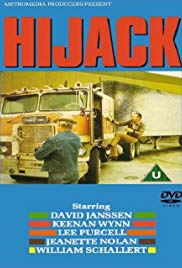
Hijack! (1973, directed by Leonard Horn)


Jake (David Janssen) is a down-on-his-luck trucker who is offered job by a mysterious man named Kleiner (WIlliam Schallert).  If Jake agrees to transport a cargo across the country, he will get not only $6,000 but Kleiner will also pull some strings get Jake back in the good graces of the trucking company.  If Jake takes the job, he will be given a slip of paper with a phone number on it and, according to Kleiner, that piece of paper will get him out of any trouble that he runs into along the way.  The only condition is that Jake is not allowed to know what he’ll be transporting.  Jake agrees and soon, he and his partner Donny (Keenan Wynn) are driving the truck through the desert.  They are also being followed by a group of men who will stop at nothing to steal the cargo.

This made-for-TV movie is called Hijack! but no one ever gets hijacked.  Instead, with the exception of a brief romantic interlude between Jake and a truck stop waitress (Lee Purcell), this is a nonstop chase movie but the chase itself is never exciting enough to justify that exclamation mark in the title.  It was probably made to capitalize on the success of Steven Spielberg’s made-for-TV classic, Duel, but it never come close to capturing the nerve or intensity of that film.  There’s one good scene where the bad guys come after the truck in a helicopter but otherwise, this is a pretty anemic stuff.  Even the eventual reveal of what Jake and Donny are hauling across the desert is a let down.

David Janssen specialized in playing grizzled loners and Keenan Wynn specialized in playing eccentric old coots so both of them are adequate in the main roles.  The bad guys are largely forgettable and, as she did in so many other TV movies in the 70s, Lee Purcell brings what life that she can to an underwritten role.

4 Shots From 4 Films: Happy Birthday, Richard Lester!


4 Shots From 4 Films is just what it says it is, 4 shots from 4 of our favorite films. As opposed to the reviews and recaps that we usually post, 4 Shots From 4 Films lets the visuals do the talking!

Today, retired director Richard Lester is 88.  Richard Lester made films about everyone from The Beatles and the Three Musketeers to Robin Hood and Superman and, along the way, he changed the face of pop culture forever.

Despite being forever associated with the swinging London of the 60s, Richard Lester was born in Philadelphia and started his career directing episodes of a western television series called Action in the Afternoon.  After moving to London in the 50s, Lester went to work for the BBC and directed episodes of The Goon Show.  In 1959, he directed the Oscar-nominated short film, The Running Jumping & Standing Still Film.  One huge fan of that short film was John Lennon and, when the Beatles were looking for someone to direct their first movie, it was Lennon who suggested Richard Lester for the job.

And the rest is history.

4 Shots From 4 Films

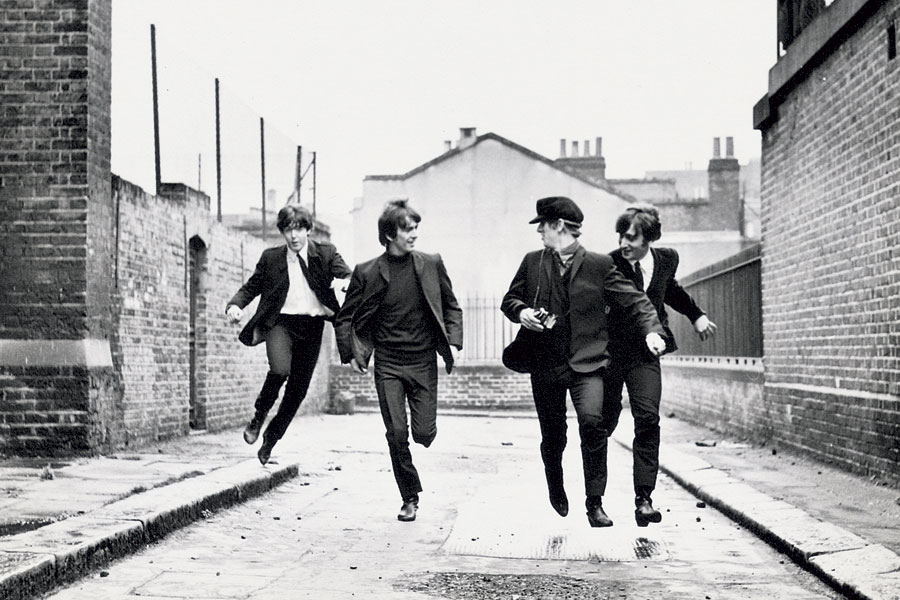
A Hard Day’s Night (1964, directed by Richard Lester)

Petulia (1968, directed by Richard Lester)

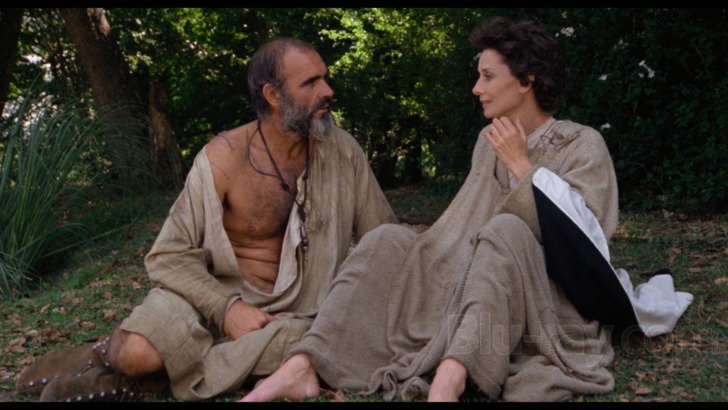
Robin and Marian (1976, directed by Richard Lester)

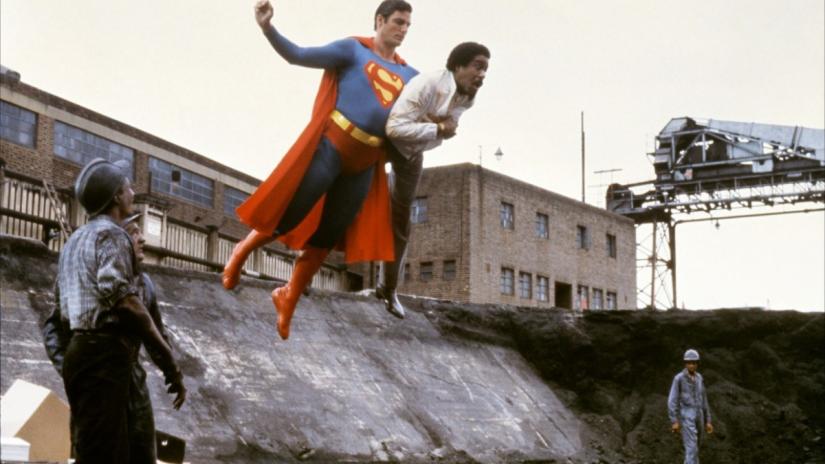
Superman III (1983, directed by Richard Lester)


Music Video of the Day: I Didn’t Mean To Turn You On by Robert Palmer (1986, directed by Terence Donovan)


Today’s music video of the day is for Robert Palmer’s cover of I Didn’t Mean To Turn You On, a song that was originally recorded by Cherelle in 1984.  Palmer, whose songs epitomized the 80s, would have been 71 years old today.

If this video looks familiar, that may be because it shares the same concept behind Palmer’s videos for Addicted To Love and Simply Irresistible, both of which were also directed by photographer Terence Donavon.  Once again, Palmer, looking like he should be trading commodities on Wall Street, performed while a group of statuesque models “played” his band behind him.   The video, however, added another group of models, dressed in white, who danced to the music and who had better rhythm than the models who made up Palmer’s band.

Enjoy!

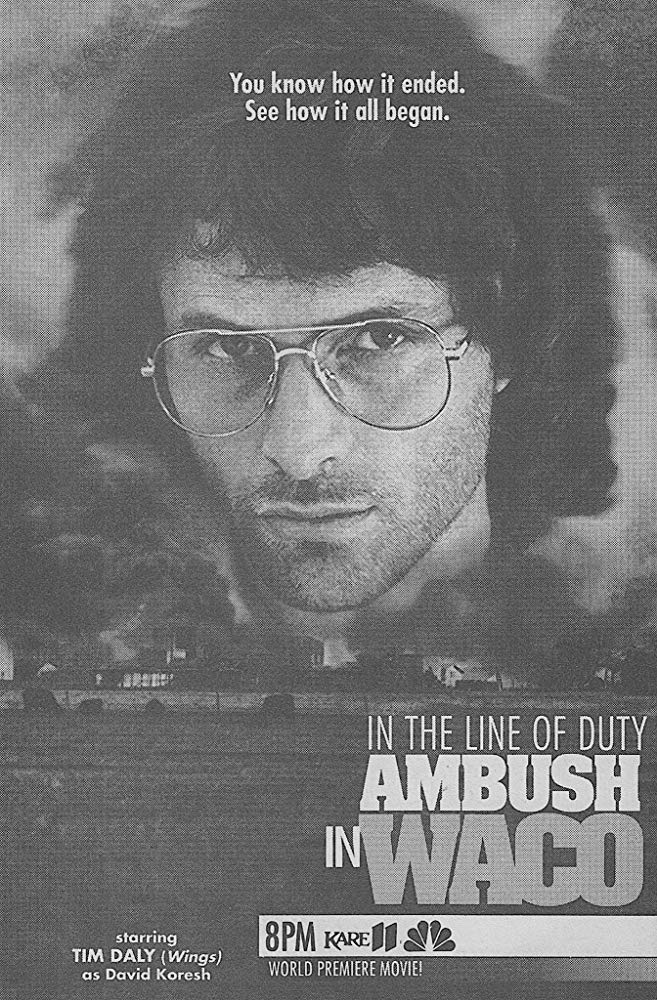
In The Line Of Duty: Ambush In Waco (1993, directed by Dick Lowry)


In Waco, Texas, a scruffy and frustrated musician named David Koresh (Tim Daly) has announced that he is the messiah and is gathering followers to live with him in a compound.  The Branch Davidians, as they are known, spend hours listening as the increasingly unhinged Koresh gives lengthy sermons.  There are rumors that Koresh is abusing the many children who live in the compound and that he is stockpiling weapons for a confrontation with the government.

The ATF makes plans to raid the compound and take Koresh into custody.  Under the supervision of Bob Blanchard (Dan Lauria), the agents run several practice raids.  However, when the day of the actual raid comes, they discover that the David Koresh and the Branch Davidians aren’t going to give up so easily…

Ambush in Waco is a dramatization of the infamous raid that led to a 51-day stand-off between the government and the Branch Davidians, a stand-off that ended with the compound in flames and the deaths of several innocent children.  Over the years, the siege in Waco has often been cited as an example of both government incompetence and law enforcement overreaction.  Instead of arresting Koresh during one of his many trips into town, the ATF decided to do a dramatic raid for the benefit of the news cameras and they were unprepared for what was waiting for them inside of the compound.  After 51 days of negotiations, the FBI tried to force Koresh out and, in the eyes of many, were responsible for the death of every man, woman, and child inside of the compound.  For many, the events in Waco represent the government at its worse.

You wouldn’t know that just from watching Ambush In Waco.  This made-for-TV movie was put into production while the siege was still ongoing.  As a result, the film shows the events leading up to the initial raid but nothing that followed.  Since it would be years before the full extent of the government’s incompetence at Waco would be uncovered, Ambush in Waco today feels like propaganda, a whitewash of a shameful moment of American law enforcement history.  The ATF is portrayed as being thoroughly professional while Koresh is a dangerous madman who is on the verge of trying to lead a violent revolution.  Today, we know that wasn’t the case.  Koresh may have been a loser with delusions of grandeur but he probably would have been content to spend the rest of his life hidden away in his compound.  Meanwhile, newly appointed Attorney General Janet Reno was so eager to prove her toughness that the situation was allowed to get out of control.  That’s not something you’ll learn from watching Ambush in Waco.

Of course, that doesn’t mean that David Koresh wasn’t a bad dude.  Tim Daly is this film’s saving grace, giving an outstanding performance as an unstable, wannabe dictator.  Ambush in Waco shows how someone like Koresh could end up attracting so many followers and it also shows how even the most well-intentioned of people can be brainwashed.  Though the film may not convince us that the ATF was justified in their actions, it does show us why we should be weary of anyone who claims to have all the answers.

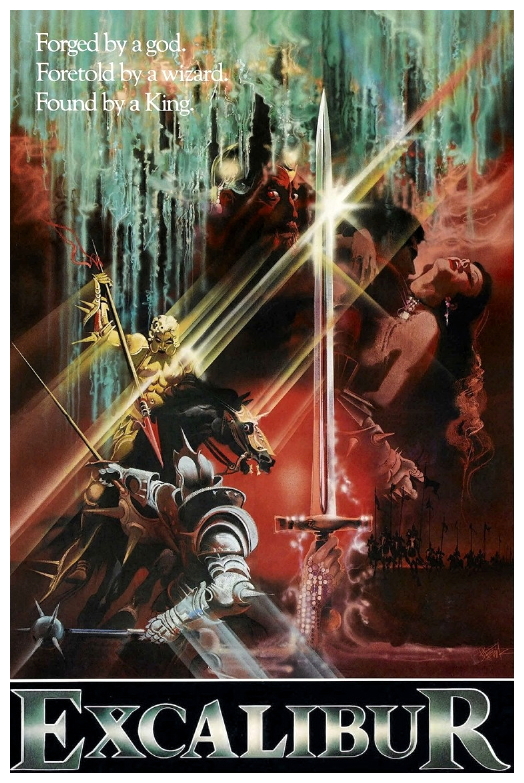
A Scene That I Love: “The Sword Has Been Drawn” from John Boorman’s Excalibur (1981)


Today is the 87th birthday of director John Boorman.

A former journalist and documentarian, Boorman got his start as a feature film director in 1965 when he was offered the chance to direct Catch Us If You Can, an enjoyable take on A Hard Day’s Night that starred the Dave Clark Five.  Boorman went on to establish himself as one of the most idiosyncratic and unique directors working in the British film industry.  Among the films that Boorman would direct: Zardoz, Deliverance, Point Blank, The General, Hope and Glory, and The Emerald Forest.  Among the films that Boorman was offered but turned down: The Exorcist, Fatal Attraction, Rocky, and Sharky’s Machine.  Few directors can claim a filmography as varied and unique as John Boorman’s.

During the 70s, Boorman made an unsuccessful attempt to put together a film version of Lord of the Rings.  Boorman intended to tell the entire story in just one film but he couldn’t find financial backing for his epic vision.  So, instead, Boorman directed Excalibur, an film about King Arthur which, thematically, has as much in common with Tolkein as it does with Malory.

Starring Nigel Terry, Nicol Williamson, Helen Mirren, Patrick Stewart, Gabriel Byrne, and Liam Neeson, Excalibur is my personal favorite of the many cinematic adaptations of the Arthurian legend.  (I like it even more than Monty Python and the Holy Grail, though it’s a close race.)  In the scene below, Arthur (Nigel Terry) first removes Excalibur from the stone.  By removing the sword, Arthur confirms that it his destiny to bring “the Land,” (as Britain is referred to as being in Excalibur) together.  Not everyone is convinced but Leondegrance knows a king when he sees on.  (That’s not surprising, considering that he’s played by Patrick Stewart.)

Music Video Of The Day: Where The Streets Have No Name by U2 (1987, directed by Meiert Avis)


“The object was to close down the streets. If there’s one thing people in LA hate, it’s streets closing down, and we’ve always felt bands should shake things up. We achieved it because the police stopped us filming. Were we worried about being arrested? Not at the time…”

— Adam Clayton on the video for Where The Streets Have No Name

How close did the members of U2 come to getting arrested for performing on the rooftop of a liquor store in the middle of downtown Los Angeles?  It depends on who you ask.

The video’s director, Meiert Avis, claimed that everything in the video is a hundred percent authentic and that the events show in the video happen in “almost real time.”  When the police showed up, U2 was in the process of giving a live concert in downtown Los Angeles.  Before being shut down by the police, the band performed an 8-song set.  (Of course, four of those songs were performances of Where The Streets Have No Name.)  The video’s producer, Michael Hamlyn, came close to being arrested while he was arguing with the police after they ordered the band to descend from the roof.

However, U2’s then-manager, Paul McGuinness, said in 2007 interview that the video deliberately exaggerated the extent of the band’s conflict with the police.  According to McGuinness, the band was actually hoping that the police would give them some free publicity by forcefully shutting down the performance.  Instead, the police apparently kept giving the band extensions so that they could finish up the video.  In this telling, Bono claiming that the police were shutting them down was less about what was actually happening and more just Bono being Bono.

Whatever the truth may be, enjoy!