Music Video of the Day: Start Me Up by the Rolling Stones (1982, directed by Hal Ashby)


“The story here is the miracle that we ever found that track. I was convinced – and I think Mick was – that it was definitely a reggae song. And we did it in 38 takes – ‘Start me up. Yeah, man, cool. You know, you know, Jah Rastafari.’ And it didn’t make it. And somewhere in the middle of a break, just to break the tension, Charlie and I hit the rock and roll version. And right after that we went straight back to reggae. And we forgot totally about this one little burst in the middle, until about five years later when somebody sifted all the way through these reggae takes. After doing about 70 takes of ‘Start Me Up’ he found that one in the middle. It was just buried in there. Suddenly I had it. Nobody remembered cutting it. But we leapt on it again. We did a few overdubs on it, and it was like a gift, you know? One of the great luxuries of The Stones is we have an enormous, great big can of stuff. I mean what anybody hears is just the tip of an iceberg, you know. And down there is vaults of stuff. But you have to have the patience and the time to actually sift through it.”

— Keith Richards on Start Me Up

Since today is Oscar Sunday, let’s start the day with a video that was directed by an Oscar winner.

Hal Ashby got his start as an editor and a favorite collaborator of director Norman Jewison.  Ashby won his only Oscar for editing the 1967 best picture winner, In the Heat of the Night.  Ashby then went on to become a director himself and, in that role, he was responsible for some of the most important films of the 1970s.  Check out this list of credits: Harold and Maude, The Last Detail, Shampoo, Bound for Glory, Coming Home, Being There, and Let’s Spend the Night Together.  All of these films were directed by Hal Ashby.

Let’s Spend The Night Together was a Rolling Stones concert film and I imagine that his work on that film is probably what led to Ashby directing this music video.  Like a lot of the great 70s directors, his career struggled as people like Don Simpson took over Hollywood and the industry’s focus shifted away from empowering directors to keeping studio executives happy.  While Ashby found himself practically unemployable in Hollywood, he was still able to make a living with work like this video and directing television episodes.

Hal Ashby died in 1988 of pancreatic cancer.  Bruce Dern famously said that the way Ashby was treated in Hollywood was the “most disgusting thing” that he had ever seen over the course of his long career.  Fortunately, movies are forever and Ashby’s work has since been rediscovered and continues to influence aspiring filmmakers all over.  Richard Linklater is a huge fan and paid homage to Ashby with Last Flag Flying.

Enjoy!
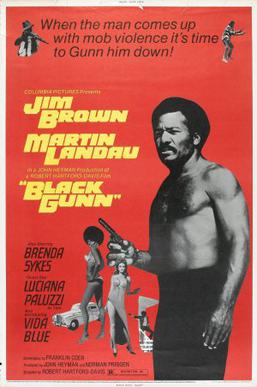
Black Gunn (1972, directed by Robert Hartford-Davis)


A war has broken out in Los Angeles.

The Black Action Group (B.A.G.) has robbed a Mafia bookmaking operation.  The Mafia, led by used car dealer Russ Capelli (Martin Landau, in his slumming it years), is less concerned with the money as they are with the fact that one of the militants, a Vietnam vet named Scott Gunn (Herbert Jefferson, Jr.), has also stolen a set of ledgers that could reveal every detail of their organization.  Capelli sends the psychotic Ray Kriley (Bruce Glover, father of Crispin) on a mission to track down Scott and kill him.

What the Mafia didn’t count on is that Scott’s older brother, Gunn (Jim Brown), is the owner of Los Angeles’s hottest nightclub.  When Scott approaches his brother, Gun tells him that he doesn’t care about the B.A.G. or any of their politics.  Still, Gunn allows Scott to stash the ledgers at his club and to hide out at his place.  When Scott still ends up getting murdered by Kriley, Gunn sets out to get revenge.

For the most part, Black Gunn is a standard blaxploitation movie with all of the usual elements, a cool nightclub, the mob, black militants,an anti-drug scene and a speech about why it’s important to not sell out to the man, and a hero played by an actor who may not have been able to show much emotion but who still radiated coolness.  Not surprisingly, Jim Brown is the main attraction here and he delivers everything that his fans have come to expect from him.  Blaxploitation regulars Bernie Case and Brenda Sykes also appear in the film.  Casey plays the head of B.A.G. while Sykes is wasted in a one-note role as Gunn’s girlfriend.  Among the villains, it’s fun to watch the glamorous Luciana Paluzzi plays a gangster’s niece and Bruce Glover is just weird enough to make Kriley interesting.  Though Martin Landau would end his career with a deserved reputation for being one of America’s greatest character actors, he spent most of the 70s sleepwalking through roles in low-budget action and horror films and his performance in Black Gunn is no different.  Having Capelli be both a car salesman and a gangster is a nice touch but otherwise, he’s just not that interesting of a character and Landau is only present to get a paycheck.

Black Gunn has some slow spots but the final shoot-out between the militants and the gangsters is exciting and so brutal that it will be probably take even the most jaded blaxploitation fan by surprise.  Black Gunn is hardly a classic but, like its hero, it gets the job done.

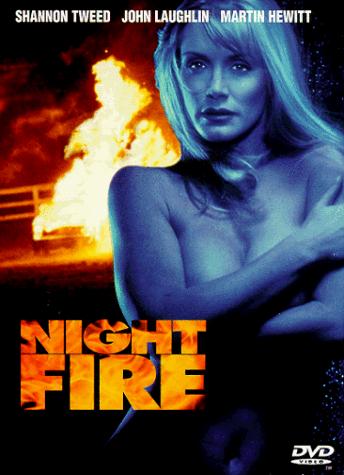
Cinemax Friday: Night Fire (1994, directed by Mike Sedan)


Night Fire is yet another 90s neo-noir starring Shannon Tweed.

In this one, Tweed plays Lydia.  Lydia is a work-obsessed millionaire who is unhappily married to Barry (John Laughlin).  Lydia and Barry’s sex life has come to a halt.  Lydia wants romance.  Barry wants to tie her up in bed and run a knife over her body.  Even though they have retreated to an isolated ranch house to try to fix their marriage, Lydia simply cannot bring herself to leave her work behind.

One day, while Barry is attempting to drown Lydia in the hot top, two drifters suddenly show up and claim that they’re having car trouble.  Cal (Martin Hewitt) and Gwen (Rochelle Swanson) are wild and uninhibited and everything that Lydia is not.  Lydia is uncomfortable with the idea of them staying at the house while Barry just wants to watch the two of them have sex.  Eventually, the expected mate swapping does occur but there’s a twist.  Barry hired Cal and Gwen to show up at the ranch and help him turn on his wife.  But it turns out that Barry has another, more sinister motive for wanting Cal and Gwen to spend the weekend.

Night Fire is typical of the type of films that used to show up on late night Cinemax.  The plot is mostly just an excuse to get everyone naked and most viewers will be able to see the big twist coming from a mile away.  From the very first scene, it’s obvious that Barry is not to be trusted.

On the plus side, Night Fire features one of Shannon Tweed’s best performances.  Tweed, who has always been a better actress than most critics give her credit for being, gives a smart and believable performance as Lydia.  The script often forces Lydia to do things that fly in the face of logic and it seems to take her forever to figure out that there’s something strange going on.  Lydia would probably seem unbearably daft if she wasn’t played by Shannon Tweed, who is capable of keeping the audience on her side even when she’s playing a role that, on paper, shouldn’t make any sense.  Tweed is smart enough not to play Lydia as being frigid but instead as someone who is just frustrated that her immature husband has invited two complete strangers to spend the weekend with them.  Rochelle Swanson and Martin Hewitt are impressive as the two drifters while John Laughlin is sabotaged by dialogue that reveals him to be untrustworthy from the first minute that he shows up.

Night Fire may not be perfect but it should keep fans of 90s-era Shannon Tweed happy.


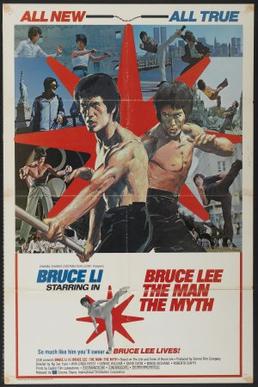
Bruce Lee: The Man, The Myth (1976, directed by Ng See-yuen)


In 1958, a Hong Kong teenager named Bruce Lee (played by Ho Chung-tao, credited under the name Bruce Li) is upset that his mother is forcing him to go to college in America.  His martial arts instructor assures Bruce that he is meant for great things and encourages him to bring his philosophy of life to all of the people of the world.

In America, Bruce finds fame as a martial arts instructor and he pursues a career as an actor.  However, everywhere he goes, he’s told that no major American studio would ever be willing to invest money in an “unknown Chinese actor.”  Bruce finds brief fame with a supporting role on The Green Hornet but his Hollywood prospects sputters when he announces that he refuses to play any demeaning stereotypes.  Taking control of his own career, Bruce returns to Hong Kong and produces his own films.  He becomes an international superstar before dying under mysterious circumstances at the age of 32.

Following the death of the real-life Bruce Lee, there were hundreds of martial arts films released that featured look-alike actors who were credited with names like Bruce Ly, Bruce Lei, Bruce Lai, and Bruce Le.  These films often featured Lee either fighting the Tongs or some other sort of international conspiracy.  Many of them also speculated about the cause of his death or flat out presented Lee as having faked his death in order to escape from his enemies.  (Typically, these films would feature at least some footage of Lee’s funeral and the real Bruce Lee lying in his coffin.)  So many of these films were released that they eventually were grouped under their own genre, Bruceploitation.

Of the faux Bruces who appeared in Bruceploitation films, Ho Chung-tao was the most successful.  Credited as Bruce Li, he not only bore a strong physical resemblance to Bruce Lee but he was also one of the few Bruce imitators to have any on-screen charisma as well.  Bruce Li may not have been Bruce Lee but, of the imitators, he was the best.  (He was also one of the most frequently frustrated, retiring from acting at the age of 40 because he was sick of only being allowed to play Bruce Lee.)

Bruce Lee, The Man, The Myth is a generally straight-forward biopic.  It covers all of the big events of Lee’s life and, unlike a lot of other Bruceploitation films, it mostly sticks to the facts.  That doesn’t mean that there aren’t a lot of fights to be found in this film.  Lee is constantly getting into fights but, for the most part, they’re just with people who want to challenge the great Bruce Lee and see if he’s really as impressive as everyone says that he is.  Other than a strange but fun scene where Bruce is approached by the daughter of a mafia boss, this film does not portray Lee as being a crime fighter or a secret agent.  Like many Bruceploitation film, this movie hints that Lee faked his own death but, in the version I saw, a narrator dismisses the reports of Lee’s survival as just being rumors.  (The narrator also says that if Bruce is still alive, he’ll emerge from hiding in 1983.  Draw your own conclusions.)

Bruce Lee, The Man, The Myth is an entertaining biopic.  When it comes to a Bruceploitation flick, all that most people really ask for is that the Bruce imitator be convincing and that the fights be exciting.  On both counts, Bruce Lee, The Man, The Myth delivers.

Original Gangstas (1996, directed by Larry Cohen)


Original Gangstas opens with shots of the deserted streets and burned-out store fronts of Gary, Indiana and narration telling us how a once great American city came to be in such disrepair.  The steel plant closed and put much of the city out of work.  While the politicians and the police looked the other way, violent street gangs rose up and took over entire neighborhoods.  Now, Gary is a shell of its former self.  Even the local movie theater has closed down.  The narrators tells us that the last movie to play at the theater was Star Wars.

Led by Spyro (Christoper B. Duncan) and Damien (Eddie Bo Smith, Jr.), the Rebels are the most feared and powerful gang in Gary.  They rule through violence and intimidation.  Talk to the police and your business is liable to get torched and you’re likely to get shot.  However, Spyro and Damien have finally gone too far and now, two men who previously escaped from Gary are returning to town to dish out some justice.

John Bookman (Fred Williamson) is a former football player who wants to avenge the shooting of his father.  Jake Trevor (Jim Brown) is a boxer who once killed a man in the ring and who wants revenge for the death of his son.  When they were young men, John and Jake were the original Rebels and now they’re getting the old gang back together again.  With the help of Laurie (Pam Grier), Bubba (Ron O’Neal), and Slick (Richard Roundtree), the original gangstas are going to take back the streets of Gary.

Original Gangstas was released at a time when, largely thanks to the influence of Quentin Tarantino, people were just starting to feel nostalgic for the old blaxploitation movies.  The main appeal of the film, not surprisingly, is that it brings together so many of the great blaxploitation stars and sets them loose in what was then the modern era.  (Jim Kelly is missed.)  When John and Jake talk about how they’re responsible for the Rebels, they could just as easily be talking about how they’re responsible for both all of the independent crime films that came out in the wake of Reservoir Dogs and Pulp Fiction.

Original Gangstas is a tribute to both the Blaxploitation genre and the oversized personalities that made that era so memorable.  Neither Fred Williamson, Jim Brown, nor Richard Roundtree were particularly good actors but they all had so much screen presence and such an innate sense of cool that it didn’t matter whether they could convincingly show emotion or not.  (Original Gangstas gives all of the big dramatic scenes to Pam Grier, who was not only naturally cool but a damn good actress to boot.)  The minute Fred Williamson lights his cigar, he control the entire movie.  He and Jim Brown make a good team and Original Gangstas is an entertaining and violent trip down memory lane.

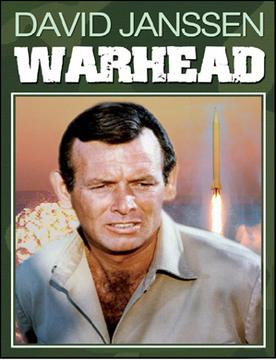
Warhead (1977, directed by John O’Connor)


Somehow, a nuclear bomb falls out of an American airplane that happens to flying over the border between Israel and Jordan.  Luckily, the bomb doesn’t explode but now it’s just sitting out in the desert where anyone can stumble upon it.  CIA operative Tony Stevens (David Janssen) just happens to be on vacation in the Middle East so he’s recruited and sent off to find the bomb before anyone else finds out about it.

At the same time, a group of Israeli soldiers, led by Captain Ben-David (Christopher Stone) and Lt. Liora (Karin Dor), are searching for a group of Palestinian terrorists, led by Malouf (Tuvia Tavi).  As soon as Tony finds the bomb, he is captured by Malouf.  He is then rescued by Ben-David but now Tony has to deal with two interested parties who want the bomb for themselves.

Warhead is a confusing movie that seems like it is trying to say something about the Middle East and America’s role as an international policeman.  Captain Ben-David feels that the Americans are being selfish with their refusal to allow other countries to develop their own nuclear missiles while Tony argues that the world would be plunged into war if everyone had the bomb.  (Remember, this film is from the 70s and was made at a time when the U.S. and the Russians were pretty much the only nuclear super powers.)  The film ends on a nihilistic note, with almost everyone either dead or disillusioned but why?  The acting is so bad and the production is so shoddy that it’s hard to figure out what this movie is trying to say.  Is Ben-David right about American arrogance or is Tony right to argue that deterrence is the only way to keep the world safe?  The movie doesn’t seem to know.  David Janssen was usually the ideal actor to play grizzled tough guys but, in this movie, he was clearly just collecting a paycheck and hopefully enjoying the chance to do some sight-seeing in the Holy Land.  The most intriguing character in the movie is a beautiful Israeli sniper played by Joan Freeman but she is killed off early and forgotten.

Warhead premiered on TV but was obviously originally intended for a theatrical release.  There’s a very gratuitous rape scene that is so awkwardly edited that it’s easy to see that it was cut down once it became apparent the movie was never going to play in theaters.  (The scene could have just as easily been removed from the film without effecting the narrative but I guess the networks wanted to give all of the dads and teenage boys a reason to not change the channel.)  According to the information I’ve found online, Warhead was filmed in 1973 but sat on the shelf for four years.  Watching the movie, it’s easy to see why.

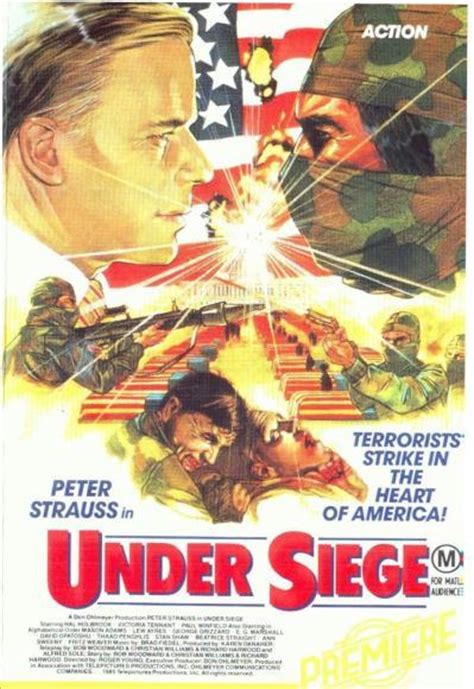
Under Siege (1986, directed by Roger Young)


Let’s say that you are the governor of Arkansas and, once again, your state is running out of money and will soon not be able to afford to pay its bills.  What do you do?

That was the problem facing Governor Bill Clinton in 1986.  His solution was to allow a big Hollywood production to come down to Little Rock and film someone throwing explosive devices at the state capitol.  The capitol building at Little Rock looks like a smaller version of the capitol building in Washington D.C.  The producers of Under Siege needed to shoot a scene where terrorists attempt to blow up Congress.  Even though the state capitol wasn’t actually blown up in the film, the dome did end up with extensive burn marks that were visible for years afterwards.  Many people in Arkansas were not amused that they had to allow a film crew to set their capitol on fire just to pay the bills.  Still, if Bill Clinton hadn’t agreed to blow up the state capitol building, Arkansas could have gone bankrupt and then he probably would have lost his reelection bid in 1986.  If Bill Clinton wasn’t reelected, he never would have been elected to the presidency in 1992, Hillary Clinton would never have been elected to the Senate in 2000 and, in 2016, the Democrats wouldn’t have been stuck with the only possible nominee who could have actually lost to Donald Trump.  When you look at it that way, Under Siege is one of the most significant films ever made.

As for the film, it’s a 3-hour, made-for-TV movie about what happens when Islamic extremism hits home.  Notorious terrorist Abu Ladeen (Thaao Penghlis) has managed to sneak into the United States and is hiding out in Detroit.  He directs a series of attacks on beloved American institutions.  Not only is the Capitol Building bombed but a mall is also attacked.  While President Maxwell Monroe (Hal Holbrook, who was born to play presidents) tries to keep America from falling apart, his hawkish advisers tell him that now is the time to launch a strike against Iran, despite Iran claiming to have nothing to do with the attacks.  Only the director of the FBI, John Garry (Peter Strauss), and the Secretary of Defense, Andrew Simon (Paul Winfield), argue that the president should exercise caution.  Garry is convinced that the attacks are the result of homegrown, domestic extremism and not an international conspiracy.  Garry is a very hands-on FBI director.  He’s the type of FBI director who will chase a terrorist down a street in Washington D.C.  Let’s see James Comey do that shit.

Under Siege probably seemed outlandish in 1986 but it seems prophetic today.  The film’s depiction of both terrorism and the government’s shady response to it turned out to be accurate.  That doesn’t mean that it’s a very good movie.  It was co-written by Bob Woodward of Watergate and Washington Post fame, so of course John Garry is righteous beyond belief and the solution to all of America’s problem begin with contacting a newspaper editor and blowing the whistle.  America may be under siege but a strongly-worded editorial is here to save the day.

Under Siege used to regularly show up on late night television and the DVD was popular overseas.  (In France, it was called Au Revoir, America.)  Not surprisingly, after 9-11, it vanished from circulation.  If you can find a copy, watch it and ask yourself, “Would I blow up my state capitol just to pay the bills?”

4 Shots From 4 Films: Special Michael Cimino Edition


4 Shots From 4 Films is just what it says it is, 4 shots from 4 of our favorite films. As opposed to the reviews and recaps that we usually post, 4 Shots From 4 Films lets the visuals do the talking!

In life, Michael Cimino was often controversial.

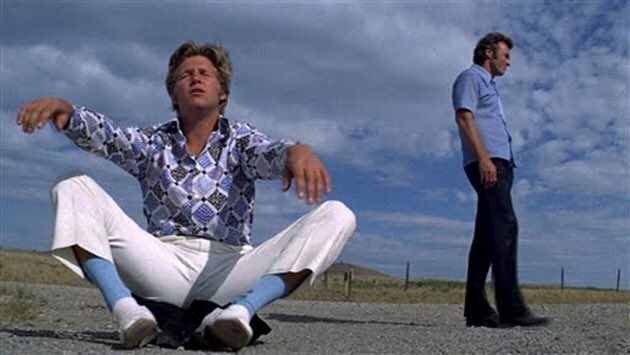
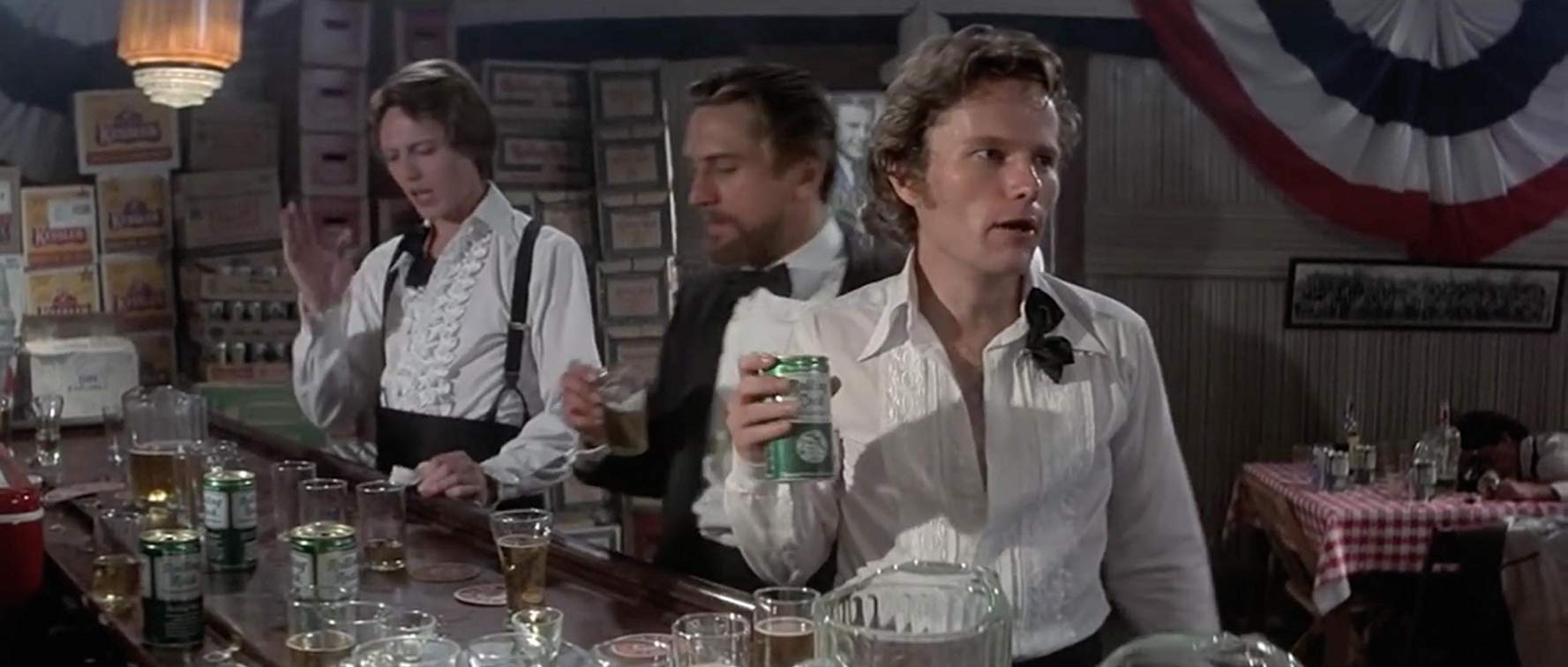
Cimino hit box office gold with his first film as a director, Thunderbolt and Lightfoot.  With his second film, The Deer Hunter, he won the Academy Award for Best Director.  With his third film, Heaven’s Gate, he nearly bankrupted United Artists.

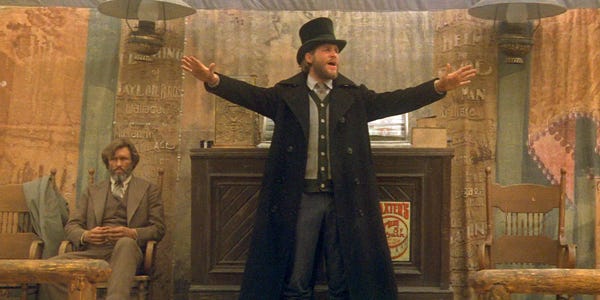
Heaven’s Gate was Cimino’s passion project, an epic western that was based on the historical Johnson County War.  Considering that Cimino had just won an Oscar, expectation were high when production began in 1979.  Soon, however, ominous reports started to come back from the set.  It was said that Cimino was a perfectionist and a megalomaniac who was demanding so many takes and retakes that the filming was quickly falling behind schedule.  The modestly budgeted production soon went overbudget and overschedule.  After nearly a year of shooting, Cimino finally allowed the studio executives to view his first cut.  It was over five hours long.

Though the film was eventually edited down to a more manageable length, the damage had been done.  By the time Heaven’s Gate was finally released, the title was already being used a byword for fiasco.  The film lost a ton of money and, at the time, it was savaged by critics.  Cimino would only direct four more films after Heaven’s Gate and none of them were a success at the box office or with critics.

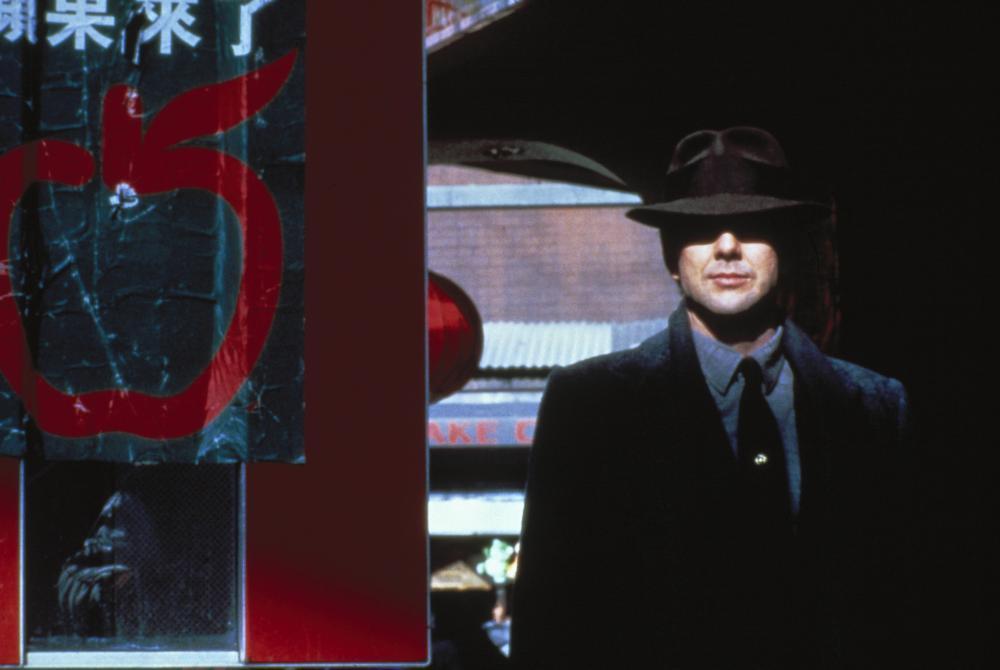
However, once the initial hype died down, some critics started to take another look at Cimino’s films.  Heaven’s Gate has been reevaluated and is now considered by many to be a minor classic.  Cimino’s Year of the Dragon has also developed a strong cult following.  Though Cimino himself died in 2016, he is a director who is currently in the process of being rediscovered.

Today would have been Michael Cimino’s birthday.  Because he told so many conflicting stories about his past, there is some controversy about the year of Cimino’s birth.  Most people agree that it was probably 1939.  Today, on his birthday, let’s take a moment to honor this unfairly dismissed talent.

4 Shots From 4 Films

Thunderbolt and Lightfoot (1974, directed by Michael Cimino)

The Deer Hunter (1978, directed by Michael Cimino)

Heaven’s Gate (1980, directed by Michael Cimino)

The Year of the Dragon (1985, directed by Michael Cimino)

Music Video Of The Day: If I Only Had A Brain by MC 900 Ft Jesus (1994, directed by Spike Jonze)


Once upon a time, there was a televangelist named Oral Roberts.  Oral was very successful and he even had his own university in Oklahoma.  One day, Oral said that he had a vision of someone telling him that he needed to build a hospital on the campus of his university and that, of course, he would need people to send him money to help him do that.  That someone was Jesus and, according to Oral, Jesus was 900 feet tall.

Mark Griffin, a classically trained musician who had recently graduated from the University of North Texas, happened to hear what Oral said.  Griffin, who had played in several local Dallas bands, was on the verge of launching a new career as a rapper.  Griffin took the name MC 900 ft Jesus and the rest is history.

As MC 900 ft Jesus, Mark Griffin developed a strong cult following.  He still has one, even though he retired from the business in 2001.  (He had performed a few times post-retirement and there are annual rumors that he’s on the verge of making a comeback.)  If I Only Had A Brain was one of his more popular songs, thanks to this music video from Spike Jonze.

Enjoy!

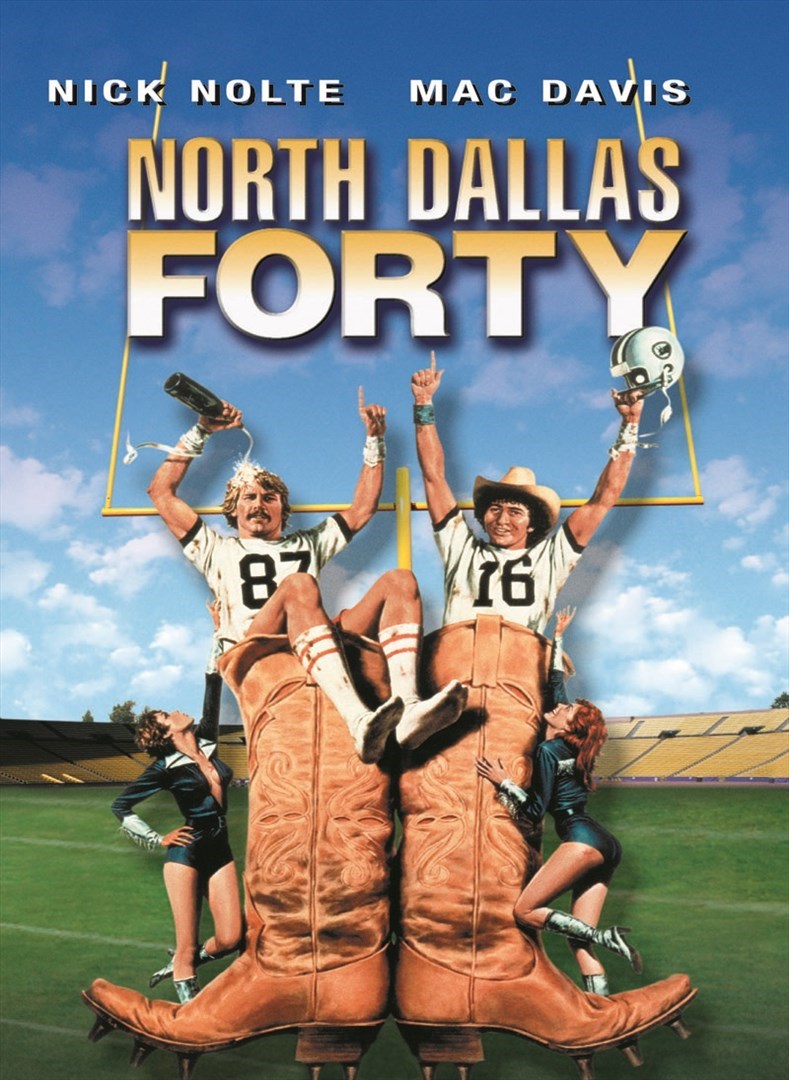
North Dallas Forty (1979, directed by Ted Kotcheff)


Pete Gent was a college basketball star at Michigan State University who, in 1964, received a tryout with the Dallas Cowboys.  Intrigued by the $500 that the team was offering to any player who attended training camp that summer, Gent accepted.  Despite the fact that Gent had never before played football, the Cowboys were impressed with his athleticism and they signed him to the team.

For five seasons, Gent played wide receiver.  During that time, he caught a lot of balls, became close friends (or so he claimed) with quarterback Don Meredith, and got under the skin of Coach Tom Landry with his nonconformist attitude.  After several injuries kept him off the field during the 1968 season, Gent was traded to the Giants who waived him before the next regular season began.

Out of work and with no other team wanting to sign him, Gent wrote a thinly veiled autobiographical novel about his time with the Cowboys.  North Dallas Forty was published in 1973 and it immediately shot up the best seller charts.  When the book was published, football players were still regularly portrayed as being wholesome, all-American athletes and the Dallas Cowboys were still known as America’s Team.  North Dallas Forty shocked readers with its details about groupies, drugs, racism, and gruesome injuries.  The NFL, of course, claimed that Gent was just a disgruntled former player who was looking to get back at the league.  When asked about the book (which portrayed him as being a marijuana-loving good old boy), Don Meredith was reported to have said, “If I’d known Gent was as good as he says he was, I would have thrown to him more.”

Meredith had a point, of course.  In the book, Pete Gent portrays himself as not only being the smartest man in football but also as having the best hands in the league.  Men want to be him.  Women want to be with him.  And the North Dallas Bulls (which is the book’s version of the Dallas Cowboys) don’t know what they’re losing when they release him for violating the league’s drug policy.  Today, when you read it and you’re no longer shocked by all of the drugs and the sex, North Dallas Forty comes across as mostly being a case of very sour grapes.

Luckily, the film version is better.

Nick Notle plays Phil Elliott, a broken-down receiver who wakes up most mornings with a bloody nose and who can barely walk without first popping a hundred pills.  Phil is a nonconformist and a rebel.  He loves to play the game but he hates how it’s become a business.  Mac Davis plays Seth Maxwell, the team’s quarterback and Phil’s best friend.  Seth is just as cynical as Phil but he’s better at playing politics.  G.D. Spradlin is B.A. Strother, the cold head coach who is a thinly disguised version of the legendary Tom Landry.  In the novel, B.A. Strother was portrayed as being a hypocritical dictator.  The film’s version is more sympathetic with Strother being portrayed as stern but not cruel.  Strother even tells Phil that he “can catch anything.”

Both the film and the book take place over the course of one week leading to a big game against Chicago.  In the book, Phil says that he and Seth don’t care about whether or not they win.  In the movie, they much do care but, at the same time, they know that they’re being held back by a system that cares more about whether or not they follow the rules than if they win the game.  While Phil’s teammates (including Bo Svenson as Joe Bob Priddy and John Mantuszak as O.W. Shaddock) behave like animals, Phil falls in love with Charlotte Caulder (Dayle Haddon), who doesn’t care about football.

Pete Gent was originally hired to write the film’s screenplay but left after several disagreements with producer Frank Yablans.  (The screenplay was completed by Yablans, directed Ted Kotcheff, and an uncredited Nancy Dowd.)  The movie loosely follows the novel while dropping some of its weaker plot points.  As a result, the film version has everything that made the novel memorable but without any of Gent’s lingering bitterness over how his career ended.  The novel used football as a metaphor for everything that was going wrong in America in the 60s and 70s but the movie is more of a dark comedy about one man rebelling against the system.

There’s only a few minutes of game footage but North Dallas Forty is still one of the best football movies ever made, mostly because Nick Nolte is absolutely believable as an aging wide receiver.  He’s convincing as someone who can still make all the plays even though he’s usually in so much pain that it’s a struggle for him to get out of bed every morning.  He’s also convincing as someone who loves the game but who won’t give up his freedom just to play it.  This is a definite improvement on the novel, in which Phil seemed to hate football so much that it was hard not to wonder why he was even wasting his time with it.  Country-and-western signer Mac Davis is also convincing as Seth Maxwell and fans of great character actors will be happy to see both Charles Durning and Dabney Coleman in small roles.

Whether you’re a football fan or not, North Dallas Forty is a great film.  Coming at the tail end of the 70s, it’s a character study as much as its a sports film.  It’s also one of the few cinematic adaptations to improve on its source material.  As a book, North Dallas Forty may no longer be shocking but the movie will be scoring touchdowns forever.