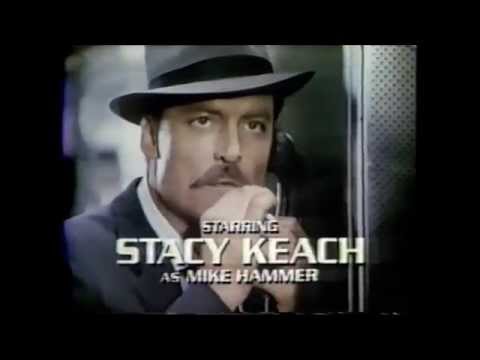
Murder Me, Murder You (1983, directed by Gary Nelson)


When two employees of an all-female courier service are murdered, Private Investigator Mike Hammer (Stacy Keach) is on the case.  The service was owned by his ex-girlfriend, Chris (Michelle Phillips), and she wants him to protect her while she testifies in front of a grand jury.  It turns out that her courier service has gotten involved in some shady business, transporting deliveries between a helicopter company and a South American dictator.  Chris fears that she’ll be murdered to keep her from testifying.  Hammer agrees to protect her and she tells him that he has a 19 year-old daughter who he’s never met.

While Chris is testifying, she suddenly dies on the stand.  The doctors say that it was a heart attack but Hammer knows that it was murder.  Hammer sets out to not only get revenge for Chris but also to find his daughter, who has disappeared into the world of underground pornography.  It’s all connected though, as is traditional with Mike Hammer, it can sometimes be difficult to keep up with how.

Murder Me, Murder You was a pilot film for a brief-lived but fondly-remembered Mike Hammer TV series that aired in the 80s.  Murder Me, Murder You takes Mickey Spillane’s famous detective into what was then the modern age but it allows him to remain a man of the hard-boiled noir era.  Hammer’s narration is tougher than leather, he’s more interested in listening to swing music than new wave, and he still dresses like an old-fashioned private eye, complete with a fedora on his head.  As played by Stacy Keach, he’s also just as dangerous and quick to kill as Hammer was in Spillane’s original novels.  In the novels, Hammer was an unapologetic brute who often bragged about how much he enjoyed killing criminals and communist spies and whose closest associate was his gun, which he nicknamed Betsy.  When Spillane’s novels were filmed, the violence of Hammer’s character was often downplayed.  (A notable exception was Robert Aldrich’s Kiss Me Deadly, which suggested that Hammer was such a fascist that he would eventually be responsible for the end of the world.  The Mike Hammer of Spillane’s novels would probably dismiss Kiss Me Deadly as being red propaganda and set out to deliver American justice to the Hollywood communists who wrote it.)  In Murder Me, Murder You, Mike Hammer is just as brutal an avenger as Spillane originally imagined him to be.  With his hulking frame, grim eyes, and his surly manner, Stacy Keach is the perfect Mike Hammer.

Murder Me, Murder You is a convoluted and often difficult-to-follow murder mystery but with Keach’s bravura lead performance, a strong supporting cast (including notable tough guys Tom Atkins and Jonathan Banks) and good direction from TV movie vet Gary Nelson, this movie comes about as close as any to capturing the feel of Mickey Spillane’s original novels.  Murder Me, Murder You was released on DVD fourteen years ago.  Though it is now out-of-print, copies are still available on Amazon.
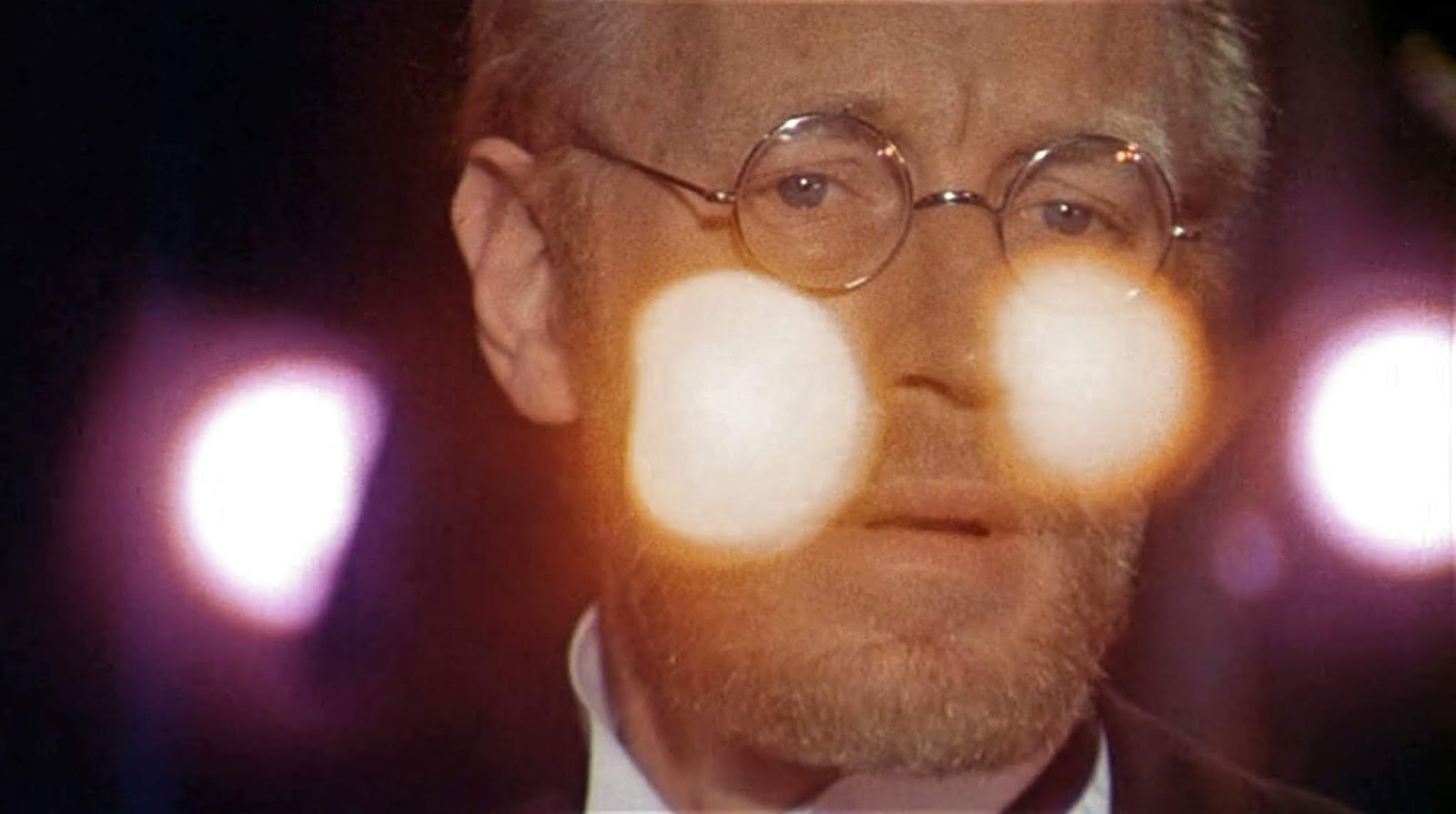
4 Shots From 4 Films: R.I.P., Max von Sydow


Steppenwolf (1974, directed by Fred Haines)

I woke up to the sad news that Max von Sydow, one of the greatest actors of all time, died yesterday.  He was 90 years old and he leaves behind a truly amazing filmography.  He played saints, sinners, assassins, exorcists, generals, poets, doctors, and even ordinary men who were just trying to make it day-to-day.  That he was nominated for only two Academy Awards over a career that lasted 71 years was a major oversight on the Academy’s part.  He was an actor who was as capable in arthouse films as he was in the latest installment of a legendary sci-fi franchise.

It’s hard to take a career as long and productive as von Sydow’s and narrow it down to just four shots from four films so I’m not going to try.  The shots are below are some of my favorite von Sydow performances but they’re hardly definitive.  Max von Sydow gave so many good and memorable performances that it’s hard to know where to start.  Below are 4 shots from 4 films from a truly remarkable career.

Max von Sydow, R.I.P.

4 Shots From 4 Films

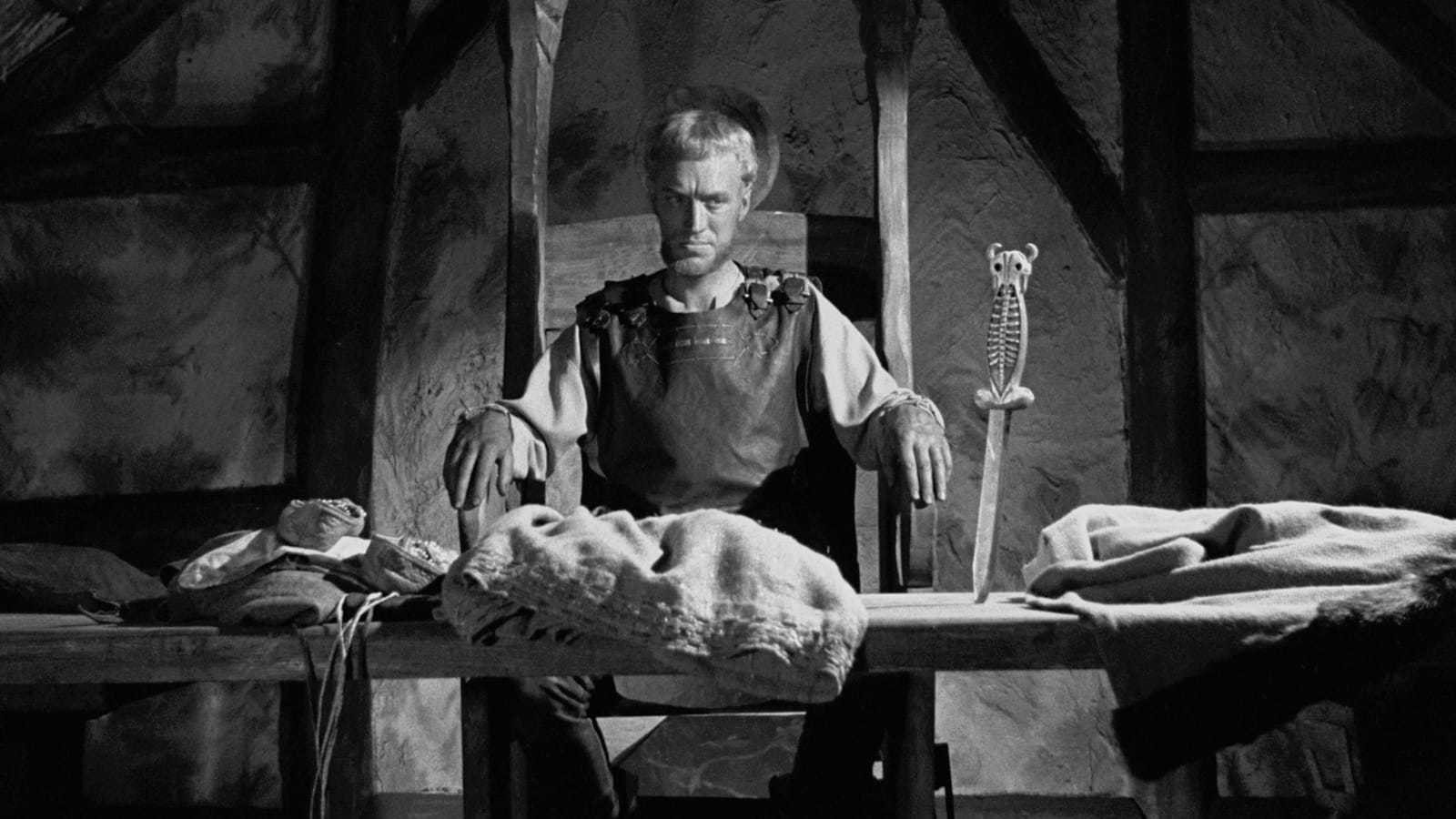
The Virgin Spring (1960, directed by Ingmar Bergman)

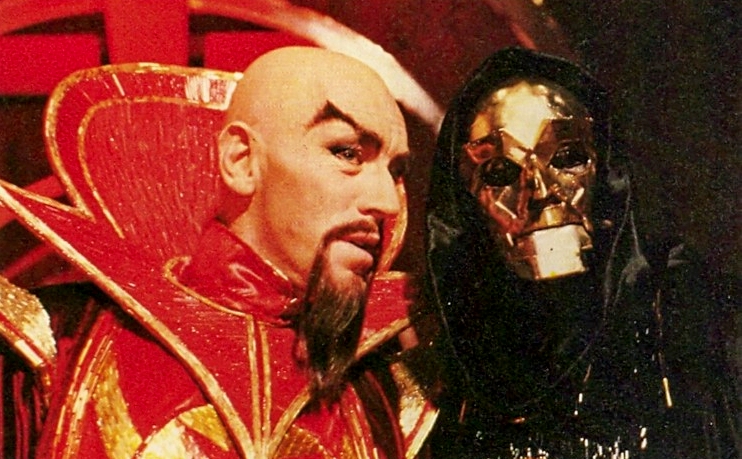
Flash Gordon (1980, directed by Mike Hodges)

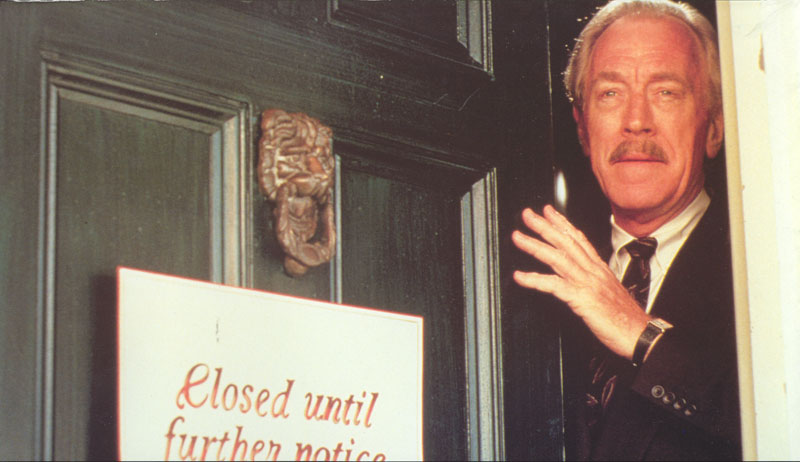
Needful Things (1993, directed by Fraser C. Heston)

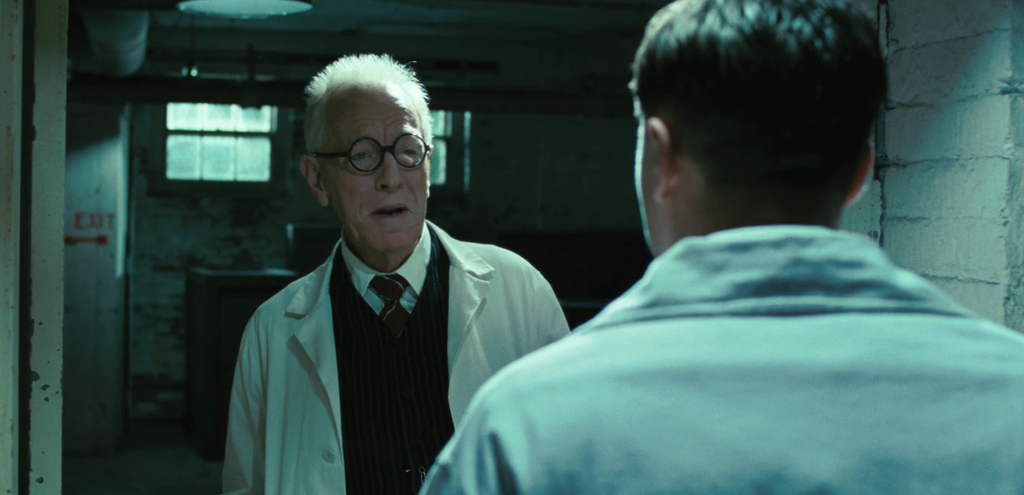
Shutter Island (2010, directed by Martin Scorsese)

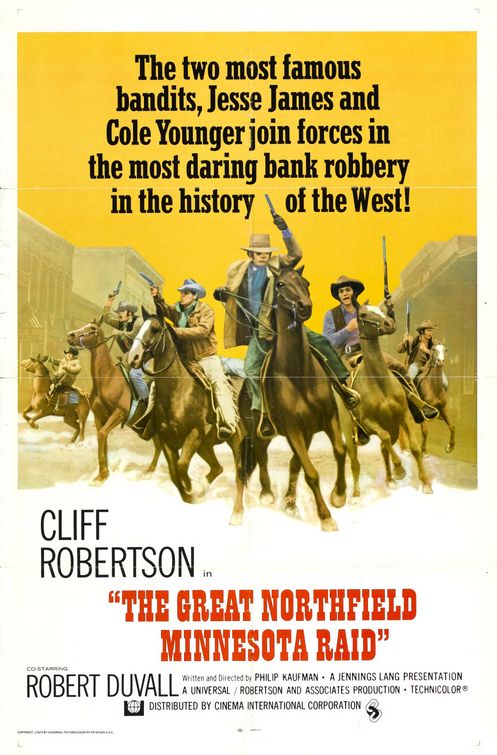
The Great Northfield Minnesota Raid (1972, directed by Philip Kaufman)


Despite having received pardons from the Missouri legislature in recognition of their military service to the Confederacy, Jesse James (Robert Duvall) and Cole Younger (Cliff Robertson) simply cannot stop robbing banks.  The James-Younger Gang has set their sights on the bank in Northfield, Minnesota, which is said to be the biggest bank west of the Mississippi.  Cole arrives in Northfield before the rest of the gang and scouts the location.  What he discovers is that most of the town’s citizens aren’t putting their money in the bank because they all assume that it will eventually be robbed.  With Jesse determined to pull off the crime of the century, Cole and Jesse have to figure out not only how to escape after the robbery but also how to get the people to deposit their money in the bank’s vault in the first place.

Philip Kaufman is a director who made a career out of reinterpreting history (his best known film is The Right Stuff) and, when it was first released in 1972, The Great Northfield Minnesota Raid was a revisionist western that mixed moments of comedy with moments of brutal violence.  Today, of course, presenting Jesse James and Cole Younger as being ruthless outlaws is no longer that daring of a narrative choice.  In The Great Northfield Minnesota Raid, Robert Duvall plays Jesse as being the western equivalent of a corrupt businessman, sending others to do his dirty work and not accepting any of the consequences for his own bad decisions.  Robertson plays Cole as being more a free spirit, an outlaw who is determined to enjoy himself.  Both of them give interesting performances but they also seem to be too contemporary for the characters that they’re playing.

Like most revisionist westerns of the early 70s, the film is full of hints that the old west and the time of the outlaws is coming to an end.  There’s a steam engine sitting outside of the bank and Kaufman spends almost as much time focusing on people reacting to that as he does on the planning and execution of the robbery.  When the robbery does finally occur, it’s not an easy robbery like you might find a 1940s western.  Instead, it’s a violent comedy of errors that leaves much of the film’s characters dead or wounded in the streets of Northfield.  The contrast between the quirky comedy of the first part of the film and the violence of the robbery is occasionally interesting but it often feels forced.  Sometimes, Kaufman seems like he’s trying too hard to be Sam Peckinpah.  In the end, Kaufman often doesn’t seem to be sure what he’s trying to say with this film.  He seems to be suggesting that Jesse and Cole are soon to be relics of a bygone era but why then cast Duvall and Robertson in the roles and have them play the roles like two mid-level hoodlums in 20th Century New York?

It’s an interesting but muddled film that never quite works.  For the definitive film about the James/Younger Gang, check out Walter Hill’s The Long Riders.

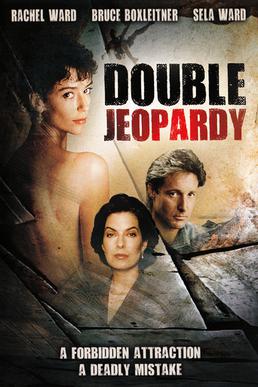
Double Jeopardy (1992, directed by Lawrence Schiller)


Salt Lake City is riveted by the sensational murder trial of mountain climber Lisa Burns Donnelly (Rachel Ward).  Lisa killed her ex-boyfriend, Eddie.  She says that she did it in self-defense after Eddie raped her.  The prosecution claims that she murdered Eddie after he caught her cheating on him with another man.  Lisa’s lawyer, Karen Hart (Sela Ward), is up for a judgeship.  Her husband, Jack (Bruce Boxleitner) is Lisa’s ex-boyfriend.  What Karen doesn’t know is that, other than Lisa, Jack is the only person who witnessed what happened the night of the murder because, just moments before, he and Lisa had been committing PG-13-rated adultery in her shower.

One of the interesting things — in fact, maybe the only interesting thing — about Double Jeopardy is that several online sellers claim that the film stars Aaron Eckhart.  It is true that Eckhart is in the movie.  It was shot in Salt Lake City while he was a student at BYU and it was his film debut.  However, Eckhart has about a minute of screen time and about five lines.  He plays a Marine named Dwayne who someone meets in an airport.  His big line is, “Semper Fi, babe!”

As for the film, since it’s set in Salt Lake City, there’s a lot of talk about how Lisa is being unfairly judged for her unconventional (read: non-Mormon) life style and there’s a heavy-handed subplot about Jack trying to put on a production of The Crucible but it doesn’t add up too much.  It would probably have been easier for the movie to make a point about religious and moral persecution if Lisa wasn’t actually guilty of murdering Eddie.  Instead, the movie leaves you thinking, “Maybe those Mormons have a point.”

Double Jeopardy tries hard to be something more than your standard legal thriller but it’s pretty forgettable.  Rachel Ward was always a great femme fatale and Sally Kirkland gives a good performance as the cop who sees through both Lisa and Jack.  The film was produced for Showtime at a time when cable was still trying to prove that it could provide original content worth paying for so there’s some cursing and sideboob tossed in, as if to say, “See?  You don’t get this on NBC!”  Otherwise, this is a by-the-numbers made-for-TV movie.

Cinemax Friday: The Hit List (1993, directed by William Webb)


Charlie Pike (Jeff Fahey) is an assassin with a conscience.  He learned how to kill while serving in the military and now, he uses his skills to help out the Committee, a shadowy organization of lawyers who are determined to take out the leaders of organized crime.  When Charlie announces that he has decided to retire from the killing game, the Committee’s Peter Mayhew (James Coburn!) asks him to take on one more job as a personal favor to him.

Mayhew puts Charlie in contact with the beautiful and alluring Jordan (Yancy Butler, making her film debut).  Jordan is the widow of a businessman who was murdered by the mob.  Jordan asks Charlie to kill the man who killed her husband.  Charlie agrees but, after he does the job, he discovers that the man he killed was actually a government informant who was scheduled to testify to Congress!  Someone double-crossed Charlie and now, Charlie’s got both the police and another group of assassins trying to track him down.  Jordan claims that Mayhew told her that the informant was responsible for her husband’s death.  Mayhew denies it and says that Jordan must have set Charlie up.  Charlie has to figure out who to trust before it’s too late.  Complicating matters is that Charlie and Jordan have become lovers.

The Hit List is essentially a 40s film noir reinterpreted for the direct-to-video age.  Jeff Fahey has the Alan Ladd role while Yancy Butler does her best imitation of Lana Turner.  Fahey was one of the best actors to routinely star in the neo-noirs that used to populate late night Cinemax and The Hit List features one of his best performances.  Fahey is a convincing killer but he still brings enough humanity to the role that you believe Charlie could find himself falling for Jordan.  Yancy Butler is a sultry and sexy femme fatale and James Coburn is James Coburn, supercool, slick, and always in control.  It shouldn’t be too hard to figure out which one of the two is betraying Fahey but all three commit to their roles and give enjoyable performances.  I especially liked the scene where Mayhew accuses Jordan of double-crossing Charlie and James Coburn grins like he’s having the time of his life.  James Coburn was one of those actors who could liven up and improve any scene in any movie and he proves that here.

The Hit List is a well-made B-noir that’s elevated by its cast and which will leave you nostalgic for Cinemax in the 90s.

4 Shots From 4 Films: Special Robert Clouse Edition


4 Shots From 4 Films is just what it says it is, 4 shots from 4 of our favorite films. As opposed to the reviews and recaps that we usually post, 4 Shots From 4 Films lets the visuals do the talking!

Today, we pay tribute to director Robert Clouse, who was born 92 years ago today.  Best-known for directing Bruce Lee’s biggest hit, Enter The Dragon, Clouse was responsible for some of the most memorable action films of the 70s and the 80s.  He was an action auteur who never got the respect that he deserved but we can pay tribute to him today.

4 Shots From 4 Films

Enter The Dragon (1973, directed by Robert Clouse)

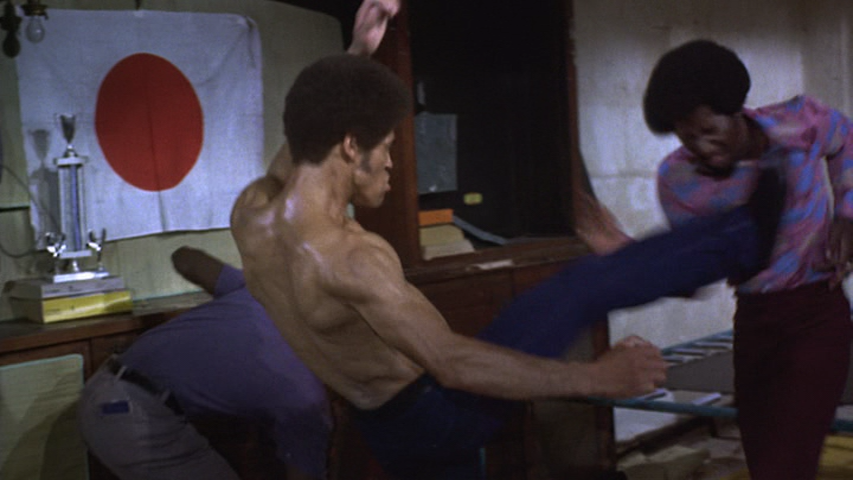
Black Belt Jones (1974, directed by Robert Clouse)

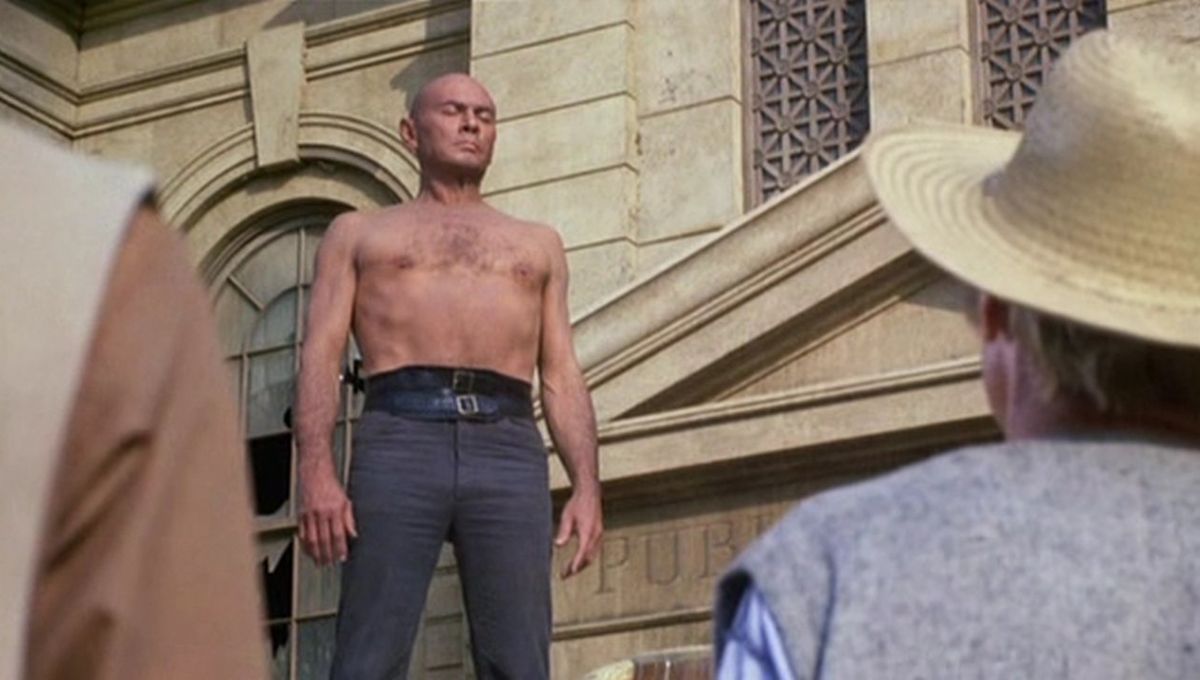
The Ultimate Warrior (1975, directed by Robert Clouse)

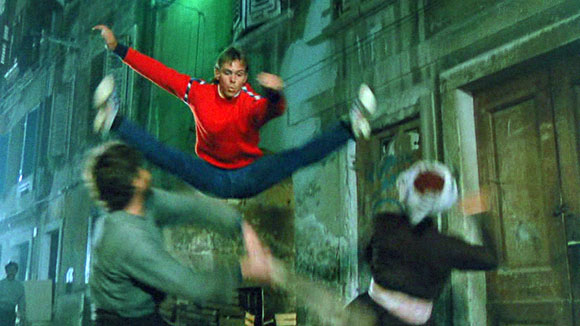
Gymkata (1985, directed by Robert Clouse)

Scenes That We Love: The Bandit Fools Smokey in Hal Needham’s Smokey and The Bandit


Today would have been Hal Needham’s 89th birthday and that means that it’s time to celebrate with Smokey and the Bandit.

Before he made a name for himself as a director, Hal Needham was a legendary stuntman.  In 1977, the same year that Smokey and the Bandit came out, Gabriel Toys even sold as a “Hal Needham Western Movie Stunt Set,” which came with a spring-launched Hal Needham action figure.  When Needham went into directing, he made unpretentious movies for people who wanted to have a good time at the theater.  The majority of his films featured fast cars, tough good old boys, and spectacular action.  They also often featured Burt Reynolds doing what he did best.  Needham made the type of movies that never won Academy Awards but which audiences loved.  In fact, audiences still love them.  When I watch Smokey and the Bandit, I always want to quit my job and just smuggle Coors east of the Mississippi for a living.  I know that Coors is legal now so there’s no need to smuggle it but that’s the power of a good Hal Needham film.

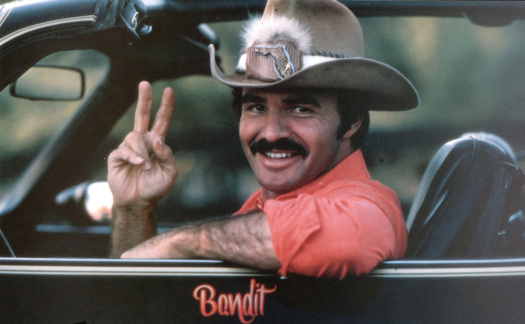
In the scene below, the Bandit (Burt Reynolds) and Snowman (Jerry Reed) manage to avoid getting caught by the Mississippi Highway Patrol.  Not only do we get to hear Eastbound and Down but this scene also features the moment that Hal Needham knew the film was going to be a hit.  He later said that, as soon as Burt Reynolds broke the fourth wall and stared straight at the camera with “that shit-eating grin on his face,” he knew that audiences were going to love the Bandit.

And he was right.

Hal Needham died in 2013 and Burt Reynolds followed him five years later.  However, their legacy lives on.  The characters of Rick Dalton and Cliff Booth in Quentin Tarantino’s Once Upon A Time in Hollywood were based on Burt and Hal.  If anyone could have taken on and beat the Manson family single-handed, it would have been the great Hal Needham.

A Real American Hero (1978, directed by Lou Antonio)


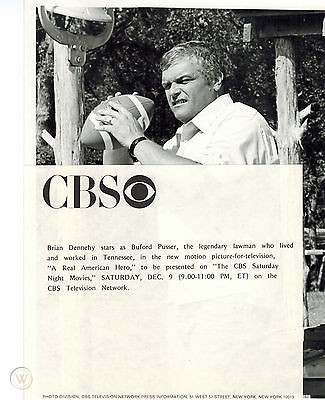
Based on the title, you might think this made-for-TV movie is about G.I. Joe but instead it’s about Buford Pusser, the club-wielding sheriff who battled bootleggers in Tennessee and who might have been murdered by them.  While he was still alive, Pusser was played by Joe Don Baker in the original Walking Tall.  After Pusser’s mysterious death, Bo Svenson took over the role for two sequels and a Walking Tall television series in 1981.  Meanwhile, in A Real American Hero, the role is played by Brian Dennehy.

Though Pusser may be played by a different actor than in the original movies, A Real American Hero finds him still dealing with same threats.  As a result of getting some bad moonshine at the Dixie Disco, two teenagers are dead and two are blind.  Buford is determined to take down the owner of the Disco, Danny Boy Mitchell (Ken Howard).  Unfortunately for Buford, Danny Boy has a mole in the sheriff’s department and always manages to clean up his club before Buford arrives.  When Buford does arrest Danny, the case is thrown out of court because Buford didn’t have probable cause or any real evidence beyond hearsay.

Buford’s solution is to start enforcing every single law on the books, even the ones that haven’t been relevant for over a century.  Buford knows that stopping Danny Boy for a misdemeanor would give him probable cause to search him for any evidence of smuggling moonshine.  For instance, Buford pulls Danny Boy over because he’s driving a vehicle but, in violation of a law written in 1908, he doesn’t have a man walking in front of the car and waving a red flag.  Another time, he gives Danny Boy a ticket because, in violation of a law from 1888, he never ties his carriage to a hitching post and a law written in 1910 legally defines all cars as being carriages.

The problem is that, if Buford only enforces the law against Danny Boy, he could be accused of police harassment.  So, everyone in the country has to be held to the same standard, which means that everyone in town is soon getting ticketed and jailed for the minor offenses as Danny Boy and his associates.  Everyone gets angry with Buford but, after Danny Boy tries to assassinate the sheriff while he’s got his kids in the car, they change their minds and support being overpoliced.

A Real American Hero was obviously an early attempt at a pilot for a Buford Pusser TV series.  Bulky Brian Dennehy is physically right for Buford but he’s never as convincing a redneck as Joe Don Baker was in the role.  Plus, it’s impossible to watch Dennehy hauling people into court for not hitching their “horseless carriages” without being reminded of Dennehy harassing Sylvester Stallone at the start of First Blood.  Despite a subplot where Pusser tries to help a former prostitute re-enter society, Buford comes across more like a jerk than a real American hero.  Meanwhile, Ken Howard does his best but Danny Boy is still just a generic television bad guy.  If he wasn’t selling moonshine in Buford’s county, he’d probably be further down south, trying to frame the Duke boys for a bank robbery.

This one is for Walking Tall completists only.

Music Video Of The Day: (This is Not a) Love Song by Public Image Ltd. (1983, directed by ????)


Once upon a time, a record company exec made the mistake of asking Johnny Lydon if he could write and record a nice and commercial love song for Public Image Ltd.’s next album.  This is how Lydon responded:

This Is Not A Love Song is repeated a total of 44 times in this song.  The other lyrics are all meant to satirize the corporate mindset as Johnny announces that he is going to sell out:

I’m adaptable and I like my new role
I’m getting better and better
And I have a new goal
I’m changing my ways where money applies

This video was shot in Century City, which was the center of the Los Angeles business community in the 80s.

Enjoy!

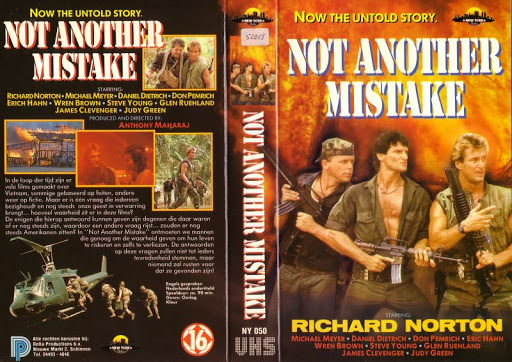
Not Another Mistake (1989, directed by Anthony Maharaj)


Not

Another

Mistake

As the title indicates, this is another Nam film, where a veteran reenters the jungle and finally rescues the POWs who were left behind when the United States fled Saigon.  With Sylvester Stallone, Chuck Norris, and even Gene Hackman leading the way, these films were all the rage during the 80s.  They provided American audiences with a chance to go back and win the only war that, up to that point, America had lost.  Not only did they provide wish-fulfillment for audiences but they also confirmed what several suspected, that the only reason the U.S. lost in Vietnam was because our soldiers’s hands were tied by generals and Washington pencil pushers.  If we had just let our men go in and fight the VC guerrilla-style, these films say, Saigon never would have fallen.

Not Another Mistake came out towards the end of the cycle and you know what type of film you’re about to get into as soon as the “A Troma Team Release” skyline appears at the start of it.

Don’t let that skyline scare you off.  Not Another Mistake is slightly better than the average Troma film.  Admittedly, that’s not exactly a high bar to clear.

Richard Norton plays Richard Straker, who served in a special ops unit during Vietnam and who was a key part of Operation Black Thunder.  In other words, he’s a badass.  After the war ended, Straker raised a family and found success as a businessman.  One night, he returns home and interrupts a home invasion.  He kills the thugs but not before his wife and daughter each suffer a slow motion death.  (Straker has Vietnam flashbacks while shooting the thugs.)  Straker spends a year drinking and then goes to Vietnam to lead a raid on a POW camp.  What’s interesting is that Straker’s family being murdered doesn’t really figure into the rest of the plot.  He never brings up his tragic past nor does it appear to have made him more willing to take crazy risks or anything else you’d expect it to do.  Instead, his family is gunned down because I guess the movie had to start in some way.

Once Straker is sent to Vietnam, he’s given a ragtag group of soldiers to command.  None of the soldiers have any personality but then again, neither do any of the POWs or the camp guards or anyone else in the movie, other than Straker.  Richard Norton has appeared in a lot of movies like this and his appeal has always been that he seems like he could probably do everything that he does on film in real life.  Norton is convincing in the action scenes and he does okay in the big dramatic scenes, like when he rescues an old friend, just to discover that, after years in a POW camp, the man is nearly dead.

It takes a while for Not Another Mistake to really get going.  There’s a lot of extremely dark jungle scenes where you can’t really see what’s going on.  Things pick up once they get to the POW camp and the rescue operation leads to some exciting action scenes.  There’s a good chase scene on a train and this film features some of my favorite example of one man being able to blow up gigantic buildings with just one grenade launcher.  One thing that I appreciated about the film is that it attempted to be honest about what type of state a person would be in after spending 20 years in a POW camp.  This isn’t one of those films where the POWs can pick up a discarded machine gun and immediately follow Chuck Norris into battle.  Also, as easy as it is compare Not Another Mistake to the other POW rescue films of the 80s, it has a surprisingly dark and abrupt ending, which suggests that maybe the film was meant to be more than just an exercise in jingoistic wish fulfillment.  It’s the type of sober ending that you never would have seen happen to Norris or Sylvester Stallone but Richard Norton handles it like a champ.

Too long by at least 30 minutes and severely hampered by a low budget, Not Another Mistake still has enough surprises and enough Richard Norton to stand out from the rest of the POW rescue genre.  If you’re a fan of the genre, watching this won’t be another mistake.