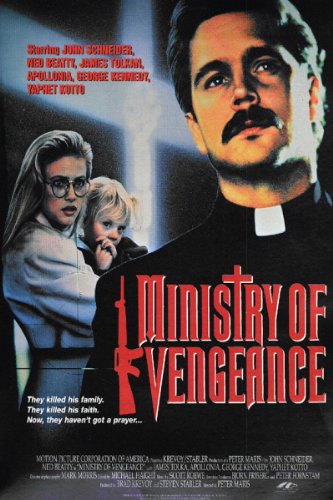
Ministry of Vengeance (1989, directed by Peter Maris)


David Miller (John Schneider) is a former soldier who served in the Vietnam War.  Though David managed to survive the war, the majority of his platoon did not and he is still haunted by the day when he was forced to blow up a kid who was working for the VC.  After getting out of the army, David renounces violence and war and he becomes an Episcopal priest.  (His denomination is never really made clear but he wears a collar and he’s got a family so I assume he’s Episcopal.)  He marries Gail (Meg Register) and they have a daughter named Kim (Joey Peters).  Eventually, the Millers find themselves in Rome, where David works with a kindly minister named Hughes (George Kennedy) and preaches the word of the God and the gospel of nonviolence.

Unfortunately, the Millers just happen to be in an airport when it’s attacked by a group of terrorists led by Ali Aboud (Robert Miano).  As David watches, Aboud personally executes his wife and daughter.  Though David survives the attack because Aboud says, “Leave the priest alive!,” his faith is shaken and he goes from renouncing violence to renouncing peace.  After the local CIA agent (Yaphet Kott) refuses to tell David the name or the location of the terrorist who killed his family, David just happens to open up a magazine and finds himself staring at a picture of Ali Aboud.  Ministry of Vengeance may claim to be about faith but it’s mostly about coincidence.

After David discovers that Aboud is in Lebanon, he decides it’s time for him to fly over and dispense some “eye for an eye” justice.  First, David has to get trained by his old drill instructor (James Tolkan).  Once he’s back in fighting shape, David heads off to Lebanon, little aware that Aboud is actually a CIA informant and that the agency is prepared to kill to protect its assets.

Ministry of Vengeance is one of those direct-to-video films where the majority of the budget was spent on getting a handful of “name” actors to make a brief appearance and give the entire production the feel of being a legitimate movie.  So, along with George Kennedy and Yaphet Kotto, Ned Beatty shows up as a quirky minister in Lebanon while Prince’s former protegee, Apollonia Kotero, plays Beatty’s daughter.  None of them get to do as much as you might like.  It’s always good to see Kotto, even if he’s appearing in a bad film, but his role here is mostly just a glorified cameo.  Most of the film is about John Schneider, trying to balance his faith with his desire for vengeance.  That’s a potentially interesting angle to bring to the story but the movie’s handling of the issue is shallow.  David has doubts about his mission but only when it’s convenient for the film’s narrative.

There are a few good action scenes.  James Tolkan is a blast in the R. Lee Ermey roll of the hardass drill sergeant.  Otherwise, Ministry of Vengeance is as forgettable as a guest sermon.
Music Video Of The Day: Stacy’s Mom by Fountains of Wayne (2003, directed by Chris Applebaum)


Adam Schlesinger, R.I.P.  Fuck COVID-19.

Adam Schlesinger wrote this song and he intended for it to be a tribute to the Cars.  The opening guitar riff was meant to sound like the riff from Just What I Needed.  The video itself is full of references to the Cars.  Keep an eye out for the license plate that reads, “I ♥ RIC,” not to mention the the boy in the opening scene who appears to be meant to be an adolescent version of Ric Ocasek.  Schlesinger even invited Ocasek to appear in the video but Ocasek never replied to the invitation.

The video also pays homage to Fast Time At Ridgemont High, with Stacy’s mom taking the place of Phoebe Cates.  Stacy’s mom is played by Rachel Hunter, so who can blame the main character for having a crush?  Apparently, before settling on Hunter, the band hoped to cast Paulina Porizkova in the role.  Porizkova was, of course, married to Ric Ocasek.

Enjoy!

Thank you for the music, Adam.


Song of the Day: That Thing You Do (R.I.P., Adam Schlesinger)


Earlier today, COVID-19 claimed the life of singer-songwriter Adam Schlesinger.  Schlesinger was only 52 years old.

Adam Schlesinger may be best known for his work with Fountains of Wayne but he also wrote and produced songs for several films.  He was Oscar nominated for writing the title song to That Thing You Do, one of the best rock and roll films of the 90s.  The song was not only catchy but it was also the epitome of everything that was great about pop music.  With this song, Schlesinger and the film paid tribute to every single band that has ever had a one-hit wonder.

In tribute to Adam Schlesinger, here’s That Thing You Do:

You,
Doin’ that thing you do,
Breaking my heart into a million pieces,
Like you always do
And you,
Don’t mean to be cruel,
You never even knew about the heartache,
I’ve been going through
Well I try and try to forget you girl,
But it’s just so hard to do,
Every time you do that thing you do
I,
Know all the games you play,
And I’m gonna find a way to let you know that,
You’ll be mine someday
‘Cause we,
Could be happy can’t you see,
If you’d only let me be the one to hold you,
And keep you here with me
‘Cause I try and try to forget you girl,
But it’s just so hard to do,
Every time you do that thing you do
I don’t ask a lot girl,
But I know one thing’s for sure,
It’s the love I haven’t got girl,
And I just can’t take it anymore
‘Cause we,
Could be happy can’t you see,
If you’d only let me be the one to hold you,
And keep you here with me
Cause it hurts me so just to see you go,
Around with someone new,
And if I know you you’re doin’ that thing,
Every day just doin’ that thing,
I can’t take you doing that thing you do
RIP, Adam Schlesinger.

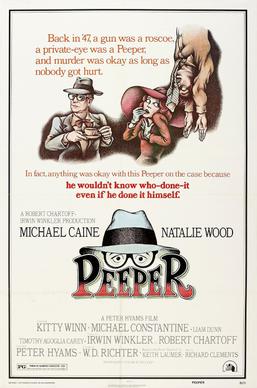
Peeper (1975, directed by Peter Hyams)


Peeper gets off to a good start, with a Humphrey Bogart look alike standing on a dark street corner and reading the opening credits in a reasonable approximation of Bogart’s unmistakable voice.  It all goes down hill from there.

Peeper stars Michael Caine as Leslie C. Tucker, a cockney private detective who is working in Los Angeles in the late 40s.  Tucker is hired by a shady businessman named Anglich (Michael Constantine).  Anglich explains that he knows that he has a daughter but he doesn’t know who or where she is.  He wants Tucker to track her down.  It doesn’t take much time for Tucker to conclude that Anglich’s daughter might be a member of the wealthy and quirky Pendergrast family.  In fact, Tucker thinks that Anglich’s daughter might be Ellen Pendergrast (Natalie Wood, who seems to be bored with the role).  It should be a simple enough case to solve but there are numerous complications along with two thugs (played by Timothy Carey and Don Calfa) who, for some reason, are out to get Anglich and Tucker.

It’s hard to know what to make of Peeper.  It’s meant to be an homage to the detective films of the 40s but it also tries to parody the genre.  Unfortunately, Peter Hyams has never been a director known for his light touch and, in this film, his idea of comedy is to have everyone shout their lines.  (Michael Constantine is the worst offender.)  Michael Caine is also miscast in the lead.  The film tries to get some comedic mileage out of Caine delivering Bogart-style dialogue in his cockney accent but it’s a joke that’s never as funny as the film seems to think.

Peeper was a critical and box office failure but fortunately, there were better things in store for both Michael Caine and Peter Hyams.  Hyams went on to direct Capricorn One while Michael Caine established himself as one of the most durable character actors around.

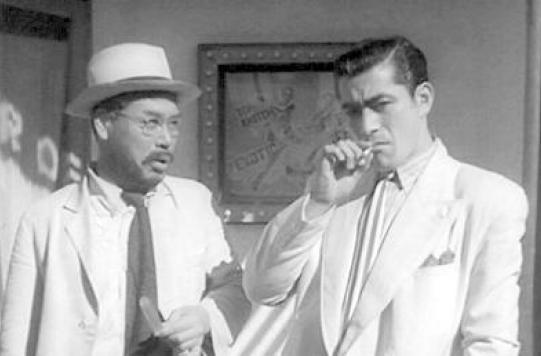
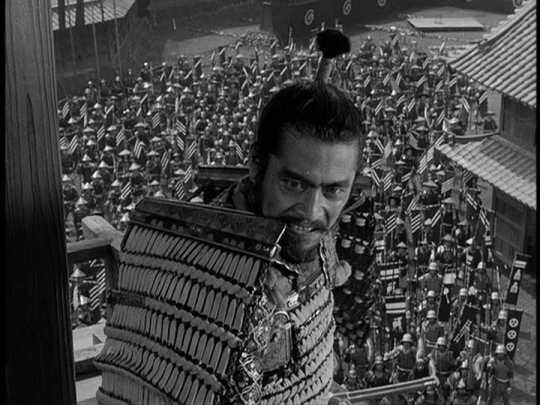
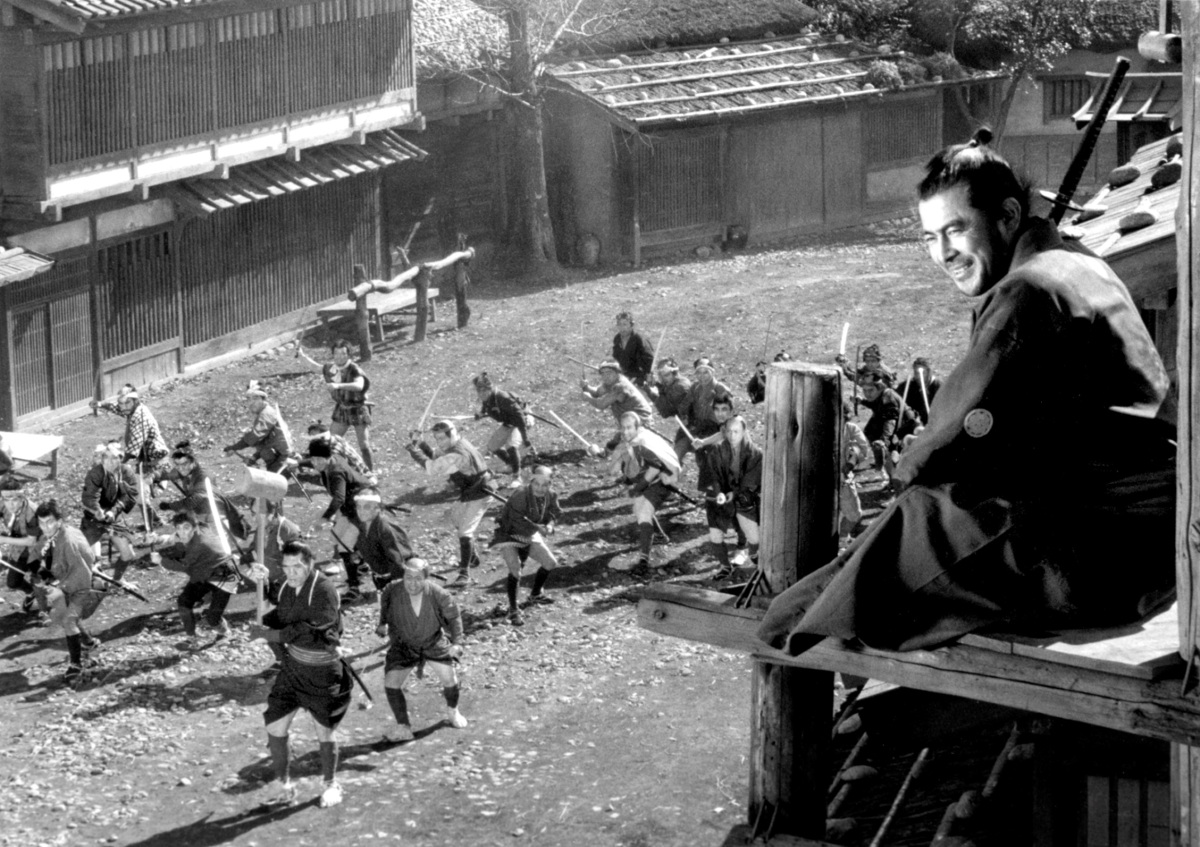
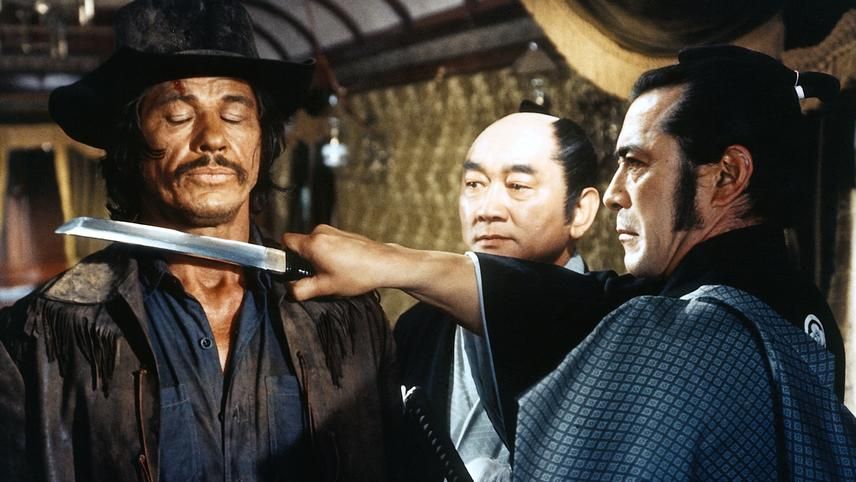
4 Shots From 4 Films: Special Toshiro Mifune Edition


4 Shots From 4 Films is just what it says it is, 4 shots from 4 of our favorite films. As opposed to the reviews and recaps that we usually post, 4 Shots From 4 Films lets the visuals do the talking!

100 years ago today, the great Japanese actor Toshiro Mifune was born in Qingdao, Shandong, China, which was under Japanese occupation at the time.  After working as a photographer and as an assistant cameraman, Mifune made his acting debut in 1947, playing a bank robber in Snow Trail.

Mifune would go on to become an international superstar, appearing in hundreds of films before his death in 1997.  Sixteen of those films would be directed by Akira Kurosawa and Mifune’s performances in Kurosawa’s yakuza and samurai films would go on to inspire actors the world over.  When Sergio Leone adapted Yojimbo into A Fistful of Dollars, Clint Eastwood based his performance on Mifune’s performance in the original.  George Lucas would later create the character of Obi-Wan Kenobi with Mifune in mind.

In honor of the man and his career, here are

4 Shots From 4 Films

Drunken Angel (1948, directed by Akira Kurosawa)

Throne of Blood (1957, directed by Akira Kurosawa)

Yojimbo (1961, directed by Akira Kurosawa)

Red Sun (1971, directed by Terence Young)

Music Video Of The Day: Things Have Changed by Bob Dylan (2000, directed by Curtis Hanson)


Normally, today would be April Fool’s Day but this year, I don’t think anyone’s in the mood for any of that.  To quote today’s music video of the day, things have changed.

Bob Dylan wrote this song for a really good movie called Wonder Boys.  (The movie’s good and the Michael Chabon novel that it’s based on is even better.)  Dylan went on to win an Oscar for this song and I can still remember the night that he performed it at the Oscars.  On the night of the ceremony, he was in Australia so both his performance of the song and his acceptance speech was live streamed into the Shrine Auditorium.  The entire performance was a close-up of Dylan, without any camera movements or cuts to the audience.  It was eerie but effective and appropriate because Bob Dylan is an artist who has always tried to control his own image.

This video was directed by the late Curtis Hanson, who also directed Wonder Boys.

Enjoy!

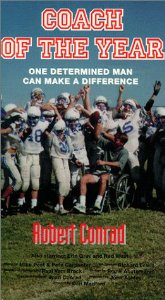
Coach of the Year (1980, directed by Don Medford)


Jim Brandon (Robert Conrad) used to be a member of the Chicago Bears, until he was drafted and sent to Vietnam.  While Jim was serving his country, he was wounded in battle and when he returns to the United States, he’s now in a wheelchair.  With his playing days over, Jim still wants to put his athletic abilities to good use.  When the Bears front office tells him that they want to place him in the PR department as a glorified mascot, Jim tells them to forget about it and then starts to search for any opportunity to work as a coach.  Unfortunately, no one is willing to take a chance on a coach who can’t walk across the field.

While he looks for a job, Jim is living with his sister (Erin Gray) and her son, Andy (Ricky Paull Goldin).  When Andy gets caught (not for the first time) breaking the law, he is sent to the local reform school.  It’s while Jim is visiting his nephew that he notices that the students at the Illinois State Training School for Boys like to play football.  Jim suggests that the school needs an official team and that he would be the perfect person to coach them.

At first, the boys are rebellious and refuse to show Jim any respect but Jim slowly wins them over.  When a prep school’s football team visits the reform school and makes some snide remarks, Jim challenges them to a game.  If Jim’s team wins, it will not only prove that Jim can coach but it will also give the members of the team a needed boost of self-respect.  If Jim loses, he’ll get fired and his team will probably try to escape before boarding the bus back to reform school.

Coach of the Year was a TV movie and there’s nothing surprising about it.  It’s a typical example of an “inspiring” sports film, where an underdog team is led to victory by an underdog coach.  The two teams play each other twice in the movie and, just as surely as you’ll be able to guess who wins the first game, you’ll also be able to guess who manages to beat the odds and win the second game.  The film’s main selling point is that Robert Conrad gives a good performance as Jim Brandon.  Conrad is believable as both a coach, a former star athlete, and a man who is not yet prepared to surrender his pride.  Though Jim’s clearly the hero, the movie doesn’t idealize him.  Sometimes, Jim can be too stubborn for his own good.  Supposedly, in real life, Conrad was always the celebrity who ended up taking his appearances on Battle Of The Network Stars too seriously and that’s the way that Conrad plays Jim.  It doesn’t matter if his team is made up of a bunch of juvenile delinquents or that their games are just for exhibition.  Jim’s determined to win.

Coach of the Year is on Amazon Prime.  Unfortunately, Battle Of The Network Stars is not.


Sahara (1983, directed by Andrew V. McLaglen)


The year is 1927 and famed automobile designer R.J. Gordon (Steve Forrest) dies before he can enter his latest creation into the Trans-African Auto Race across the Sahara Desert.  Wishing to keep her father’s dream alive and prove that she’s just as good a driver as the boys, R.J.’s daughter, Dale (Brooke Shields), enters the race in his place.  Since women are not legally allowed to compete, Dale has to pretend to be a man.  She does this by wearing a fake mustache, which she tosses off as soon she drives over the start line.  It has to be seen to be believed.

Dale and her team set out on the race and they quickly get caught up in a tribal war between two separate factions of Bedouins.  Dale is captured by the lascivious Rasoul (John Rhys-Davies), who attempts to have his way with her.  Fortunately, Dale is rescued by Rasoul’s nephew, Sheikh Jafar (Lambert Wilson).  Jafar is enchanted by Dale’s beauty and wants her to marry him.  Dale eventually agrees but, the morning after the wedding, she sneaks out of Jafar’s tent, jumps back in her car, and rejoins the race.  When she gets captured by the other Bedouins, they force her to stand on a rock while surrounded by panthers.  Like Brooke with a mustache, it has to be seen to be believed.

Sahara was produced by Cannon Pictures.  Menahem Golan, who gets a story credit along with his usual producers credit on this film, was a self-described fan of Rudolph Valentino and Sahara was his attempt to pay homage to Valentino’s performance in The Sheik, as well as cashing in on the adventure zeitgeist that had been launched by the box office success of Raiders of the Lost Ark.  With a budget of $15 million, Sahara was one of Cannon’s most expensive films and the end result was a mix of high production values and typical Golan-Globus goofiness.  The desert cinematography may be impressive but this is still a strangely old-fashioned movie starring Brooke Shields as a race car driver who speeds through the desert without once getting a hair out of place.  As attractive as she was, Brooke was never much of an actress and requiring her to show more than one emotion at a time, as Sahara often does, seems like the ultimate act of hubris.  Say what you will about the films that Cannon made with Bronson and Norris, the two Chucks always seemed like they were perfectly cast.  Shields also has no chemistry with Lambert Wilson, who looks embarrassed at having to pretend to be Rudolph Valentino.  On the plus side, Raiders of the Lost Ark alumni Rhys-Davies and Ronald Lacey are both present in the film and seem to know better than to take any of it seriously.  Rhys-Davies especially always seems to be on the verge of laughing at his terrible dialogue.

Though the view may be impressive, the script is bad and the lead actors are lost.  Avoid Sahara at all costs.

Music Video Of The Day: I Love Rock N Roll by Arrows (1976, directed by ????)


Though everyone is probably most familiar with Joan Jett’s cover of the song, I Love Rock N Roll was originally recorded by a London-based group called Arrows.

Though Arrows were only together for three years (from 1974 to 1977), they were popular with British teenagers and they even had their own TV show on Granada Television, where they would play their own songs and introduce other acts.  This video for I Love Rock N Roll comes from that television show.  This is probably from the same episode of the show that Joan Jett saw in 1976 while she and the Runaways were on tour in the UK.  She liked the song so much that she covered it when she made her first solo album.  Her version, of course, went on to become a huge hit.

(As popular as they were in the UK, Arrows were basically unknown in the United States.  During the time they were together, they only performed in the U.S. once and that was for an episode of Don Kirshner’s Rock Concert in 1975.  When Jett released her version of I Love Rock N Roll, most American listeners were unaware that it was a cover.)

The song was written by Alan Merrill, who was the lead singer for Arrows.  Sadly, Merrill, who was sick with COVID-19, died on Sunday.  Today’s music video of the day is dedicated to his memory.